
You’d expect the record of who inherits a throne to be the most carefully finished document in any kingdom’s archive. Every word chosen, every name spelled out, every signature witnessed in triplicate. That’s the myth, anyway.
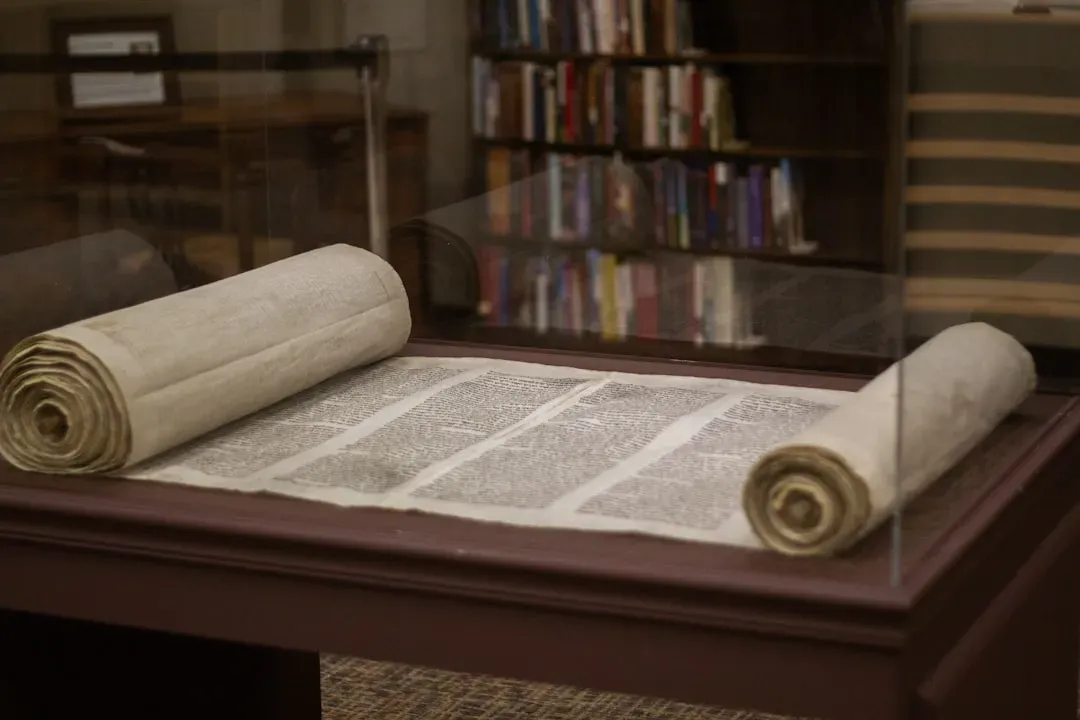
The reality, according to the archivists who’ve actually sat with these vellum pages, is far stranger. Some of history’s most consequential accession records just stop. Mid-sentence, mid-clause, sometimes mid-word – as if the clerk’s hand froze the instant the truth got too dangerous to commit to ink.
These aren’t torn pages or fire-damaged scraps. The parchment is often intact, the handwriting calm and steady right up until the moment it isn’t. That’s what makes the following 14 documents so unsettling – and why historians still argue over what was really happening the second the quill lifted off the page.
#14 – The Coronation Ledger That Ends Mid-Sentence

The first red flag most people gloss over is a coronation ledger that literally ends in the middle of a sentence. Archivists found a vellum register detailing the order of procession, the oaths, the attending nobles – until halfway down a page, the clerk writes “On the matter of the succession dispute, it was agreed that -” and that’s it. No next word. No next page. No follow-up copy in any parallel archive.
Medieval scribes were methodical. If they ran out of space, they appended more pages; they didn’t leave half a bound volume blank. Experts strongly suspect the agreement that followed was politically explosive, possibly naming a different heir than the one who eventually took the throne. What’s most unsettling is that this “half sentence” gets referenced in later disputes, as if everyone at the time knew exactly what it said – everyone except us.
Fast Facts
- The ledger records the full ritual – procession, oaths, attending nobles – right up until the break.
- The final sentence halts on the word “agreed,” with nothing following it anywhere in the archive.
- No duplicate register or later transcription exists to fill in the missing clause.
- Later succession disputes cite the missing agreement as if its contents were common knowledge.
#13 – The Noble Patent That Lists Heirs, Then Just Stops

On paper, patents of nobility are boring: name, lands, duties, and heirs. One widely studied patent starts conventionally, laying out the succession line for a powerful magnate family – primary heir, then “failing his issue,” down the expected chain. Then the clerk writes, “and in the event that the second line should be extinguished, the rights shall pass to -” and stops. No name. No clause. The sentence ends on a conjunction.
This isn’t a torn page or faded ink – the parchment is intact, the script simply stops, which means the omission was deliberate. Some legal historians argue it was a weapon: leave the final recipient blank so the crown could plug in a “loyal favorite” later. Others think the family forced the scribe to halt the moment they realized how much power they were signing away. Either way, courts later pretended the succession was perfectly clear when the actual document says otherwise.
#12 – The Regency Act Draft With No Final Clause

Transition documents during minority reigns are usually over-lawyered, not underwritten. Yet one regency act draft, preserved in a state archive, meticulously outlines who can sign decrees, who commands the army, who oversees finances – until the final article, on the young sovereign’s personal guardianship and religious upbringing, begins, runs two lines, and cuts off mid-paragraph.
There’s no sheet damage, no ink spill, no different colored ink hinting at later tampering. It’s as if the most sensitive question of all – who actually controls the child – never made it to the page. Later propaganda battles revolved exactly around that guardianship, which suggests the council may have kept it deliberately ambiguous so every faction could claim legitimacy at once. An unfinished law, it turns out, can start a war just as easily as a clear one.
#11 – The Church Register That Fades to Blank at the Worst Moment

For ecclesiastical accession – bishops and abbots – the key moment is investiture, when church and crown agree who gets the crozier and the revenue. One cathedral chapter kept a pristine series of investiture entries for over a century. Then comes a controversial appointment tied to a royal favorite. The scribe records the opening formula, the attending canons, even notes “after heated debate” – and then the ink line thins out and stops mid-line.
The rest of the page is immaculate and completely blank. No water damage, no worming, no chemical fading – just a missing decision. We know the favorite eventually took the office because his seal shows up on later documents, which means someone got the job without any surviving record of the chapter agreeing to it. Some historians call it a “ghost accession”: power transferred, paperwork simply never finished.
#10 – The Colonial Charter That Never Names Its Governor

Early colonial charters are notorious for vague boundaries, not for skipping the name of the first governor. Yet one famous charter lays out trading rights, tax exemptions, and religious observance in exhausting detail, then reserves the power to appoint a “Governor and Captain-General” and begins describing his authority “over all forts and plantations hereafter established by -” before the text simply stops. No personal name ever appears.
We know someone governed the territory – surviving letters are signed by a man later styled as the first governor – but there’s no surviving formal document naming him to the role. That gap mattered enormously once a rebellion broke out, with both sides waving around “the charter” to justify themselves. If the omission was an accident, it was an oddly convenient one for whoever later claimed emergency powers.
Quick Compare
- Accident theory: a rushed clerk simply forgot to insert the governor’s name during final transcription.
- Sabotage theory: a rival faction blocked the appointment from ever being finalized on paper.
- Convenience theory: leaving the name out let multiple claimants invoke “the charter” once rebellion broke out.
#9 – The Royal Marriage Contract That Cuts Off the Dowry Clause

Accessions often hinge not just on blood but on marriage contracts that secure alliances and dowries. One dynastic marriage capitulation, central to a later succession crisis, survives intact right through its religious provisions and inheritance rights – until it reaches the crucial line: “Regarding the lands and revenues to pass to the issue of this union, should the elder line fail, it is hereby agreed that -” Then nothing. No missing folio, no seal, just an unfinished sentence.
Decades later, that same clause was cited as justification for a distant cousin’s claim to the throne. Everyone swore the contract “clearly stated” the succession path. The actual surviving text does not say that at all. The uncomfortable middle ground is that the contract was intentionally left unresolved to preserve negotiating leverage – and then opportunistically “remembered” once blood had already been spilled over it.
#8 – The City Statute Book That Abandons Its Own Election Rules

Republican city-states loved codifying elections down to the last ballot-counting detail. One influential city’s statute book carefully covers trade, crime, and civil life, then opens a brand-new chapter: “On the method of electing future chief magistrates, so that no faction may unjustly prevail.” The first article starts strong. The second begins, breaks off after a few words, and never returns.
No follow-up chapter, no errata, no marginal note explaining why. For the rest of the statute book, there’s simply no finished section on how the city’s leader should be chosen – and the same period shows a surge of contested elections and ad hoc “emergency” councils. Some historians think a reform effort met resistance from entrenched elites and quietly died. Others suspect the stub was left on purpose: reform in name only, with nothing that actually limited anyone’s power.
#7 – The Dynasty Chronicle That Stops Exactly at a Coup

Court chronicles were the PR machines of royal houses, built to make every succession look smooth and divinely blessed. One chronicle covers three generations in obsessive detail – births, councils, heavenly omens – and then, on the exact year a younger brother overthrows his reigning sibling, the narrative reaches the month of the coup and simply ends on that year’s heading. Nothing is written underneath. The following pages are blank.
Later copies pick up with the victorious brother’s line as if nothing happened, neatly skipping over how power actually changed hands. The break aligns too perfectly with the political earthquake to be random page loss. New regimes routinely destroyed or froze records that admitted they weren’t the “rightful” heirs, and ending the chronicle right before the coup conveniently avoided writing an origin story that was too obviously stained with blood.
#6 – The Peerage Roll That Drops a Line Without Comment

Aristocratic accession can usually be tracked through peerage rolls – neat lists of titles, holders, and dates. One roll, updated continuously in the same neat hand for decades, records an extremely powerful dukedom with the current holder named, followed by “after whom the said dignity shall pass to his rightful issue according to prior agreements, and should his line fail, then to -” Full stop. The next line jumps to an unrelated barony.
There are no erasures, no smudges, no scraped-off name – just an unfinished sentence sitting where the fate of a dukedom should be. Years later, two rival branches of the family went to war, each claiming those “prior agreements” named them. Some genealogists chalk it up to clerical laziness. Others believe the chronicler was pressured by both sides and chose silence over retaliation, which says a lot about how “neutral” a neutral record really is.
Worth Knowing
- Peerage rolls were meant to be dry, procedural entries kept in the same steady hand for decades.
- A missing heir’s name in one dukedom entry left the door open for two rival branches to go to war.
- No erasures or scrapings appear on the page – the sentence was simply never finished.
- Genealogists remain split between “clerical accident” and “pressured silence” as the likely cause.
#5 – The Succession Ordinance That Never Gets Signed

In one constitutional monarchy, reformers spent years drafting an ordinance to settle female inheritance, morganatic marriages, and religious conversion once and for all. The elaborate working copy proceeds article by article until it reaches the explosive question of whether children from “unequal” marriages could ever inherit – and the article ends with a comma. No verb. No final judgment. The signature block underneath is blank.
Despite that, later lawyers quote the “spirit” of the unwritten clause as if it squarely supported their side. The only hard evidence is that the single most controversial decision about accession was never actually recorded in the final text. The uncomfortable explanation is that the monarch and council may have let the ordinance languish unsigned on purpose – an unfinished law can be more useful than a clear one when you want maximum flexibility later.
#4 – The Council Minutes That Break Off at “Irregular Birth”
Council minutes about succession are usually stilted but thorough. In one notorious session, the royal council debated the king’s rumored illegitimate son and whether he could ever be recognized as heir. The minutes proceed normally until a member states that “in consideration of certain facts regarding the prince’s irregular birth and the queen’s -” and the sentence cuts off mid-word. There are no more minutes for that entire year.
Later pamphlets claim this very meeting “decisively settled” the prince’s status. Our only official record of that settlement is a sentence fragment. Whatever was said about the queen clearly became too dangerous to leave in the register – some suspect the clerk was ordered to stop mid-debate, others think the finished minutes were recopied and the raw notes deliberately erased. Either way, historians are left relying on hostile gossip to fill in a gap the record itself refuses to close.
#3 – The Imperial Edict Draft That Names No Successor at All

In empires where rulers could, in theory, choose among several relatives, succession edicts mattered more than bloodline myths. One emperor, obsessed with procedure, left drafts for nearly every major decision except this one. His “edict on succession” survives only as a half-filled wax tablet: title inscribed, introduction praising stability, a long preamble condemning “usurpation and arrogance among lesser princes” – and then, right where you’d expect “therefore we designate our heir as,” the lines sit blank.
No final sealed version has ever surfaced. Yet three princes later claimed the throne, each insisting the emperor had chosen him privately. Some scholars think he died unexpectedly before committing to a name. Others believe he deliberately avoided naming anyone, betting that the uncertainty would keep his sons from turning on each other while he was still alive – even if it guaranteed chaos the moment he wasn’t. Sometimes the missing half of an accession record didn’t vanish. It simply never existed.
#2 – The Testament That Names an Heir, Then Trails Off on a Condition

Private testaments can shape public accessions, especially in small principalities. One ruler’s will, written in his own shaky hand, declares: “I hereby recognize my daughter as my universal heir and successor to all my rights and dignities, provided that she shall -” The sentence continues a few more words – “not contract marriage with -” – and then the line fails. The letters are barely formed. The rest of the page is empty.
Physicians think he may have suffered a stroke mid-sentence. If so, the single condition limiting his daughter’s accession was never fully written down. After his death, opponents argued that any marriage she made was invalid because it might have broken that unspoken condition. Literalists said the incomplete clause was legally meaningless; traditionalists insisted everyone “knew what he meant.” In the end, the vagueness was settled by whoever had more troops, not by whoever had the better reading of a half-written line.
#1 – The Succession Register With a Deliberately Blank Name

The most chilling example on this list isn’t accidental at all. In one kingdom, clerks maintained an official succession register listing, in order, who would inherit the crown under current law. At one point, after several healthy princes and princesses, the register reads: “In the event that all foregoing lines be extinguished, the crown shall pass to the person henceforth to be designated as -” followed by a conspicuously empty space. Beneath it, in smaller script: “By later insertion.”
That later insertion never happens. The space stays blank forever. Yet in a later succession crisis, a powerful general claims the deceased king had privately intended his line to fill that exact slot. This isn’t a missing page – it’s a pre-cut hole in the constitution. Some historians call it cowardice: a king who wanted a fallback heir but never dared write him down. Others call it calculated genius: keep every ambitious noble hoping he might be “the one,” and none of them rebel while the slot stays open.
At a Glance
- The register pre-plans for every royal branch to die out, then leaves a name-shaped blank in its place.
- A note promising “by later insertion” sits directly beneath the empty space.
- That promised insertion never happens – the blank stays empty for the life of the document.
- A powerful general later claims the missing slot was privately meant for his own line.
The Bottom Line

When people talk about succession, they love clean family trees and tidy timelines. The actual documents tell a messier, more human story. Again and again, the crucial accession record doesn’t go missing in some random fire – it stops right where the politics get dangerous.
A ledger trails off at a succession deal. A will fails mid-condition. A register leaves a name-sized hole where an heir should be. These aren’t boring clerical glitches, and I don’t buy the idea that they’re all coincidences of decayed parchment or overworked scribes. They’re pressure points where power, fear, and self-preservation quietly overruled the supposed need for a complete record.
The uncomfortable truth is that ruling elites often benefited more from ambiguity than clarity. An unfinished clause can be remembered three different ways depending on who’s holding the army that year. So the next time someone insists “the law was always clear” about who should have taken a throne, ask to see the actual text – and look very carefully at the exact spot where the ink suddenly stops. That’s usually where the real story is hiding.