You’ve never actually experienced “right now.” Not once. By the time your brain finishes assembling the moment you think you’re living in, it’s already milliseconds old – a rerun dressed up as breaking news.
That’s just the opening crack in the illusion. The deeper you go into relativity, quantum mechanics, and cosmology, the less time looks like the tidy, ticking, one-way street your gut insists it is. Physicists don’t debate whether your intuition about time is wrong – they debate how wrong, and in how many different directions at once. Here are 14 properties of time that hold up in the equations and fall apart in the imagination.
#14 – Your Feet Are Younger Than Your Head, and Physics Can Prove It

Your body assumes seconds are absolute. Physics says your “second” is negotiable depending on where you’re standing. Sit on a mountain and you age a hair faster than someone at sea level, because gravity itself bends time.
This isn’t theoretical. Fly an atomic clock around the planet, compare it to one that stayed in a basement, and they drift out of sync – reliably, measurably, every time. GPS satellites correct for this constantly, or your map app would slowly lie to you. Stronger gravity means slower time, which means, quite literally, your feet are younger than your head. Tiny difference. Real difference.
Fast Facts
- GPS satellite clocks run about 38 microseconds faster each day than clocks on Earth’s surface, a mix of gravitational and velocity effects.
- The 1971 Hafele-Keating experiment flew atomic clocks around the world and found measurable time differences compared to a stationary clock.
- Gravitational time dilation was first confirmed in 1959 with the Pound-Rebka experiment, measuring tiny frequency shifts in light climbing a tower.
- Without correcting for relativity, GPS location data would drift off by several miles within a single day.
#13 – Speed Turns Your Personal Clock Into Taffy

If gravity can stretch time, velocity can twist it. Special relativity says the faster you move relative to someone else, the slower your clock ticks compared to theirs – and this isn’t an optical trick, it’s stitched into the fabric of space and time together.
Send one twin on a near-light-speed trip and leave the other on Earth, and the traveler comes home younger. That’s the twin paradox, and it’s been confirmed in particle accelerators and satellites, not just chalkboards. Push the math far enough and a single human lifetime could pass while millions of years tick by everywhere else. There is no universal “rate” of time. Everyone drags around their own.
#12 – There’s No Such Thing as a Universal “Right Now”
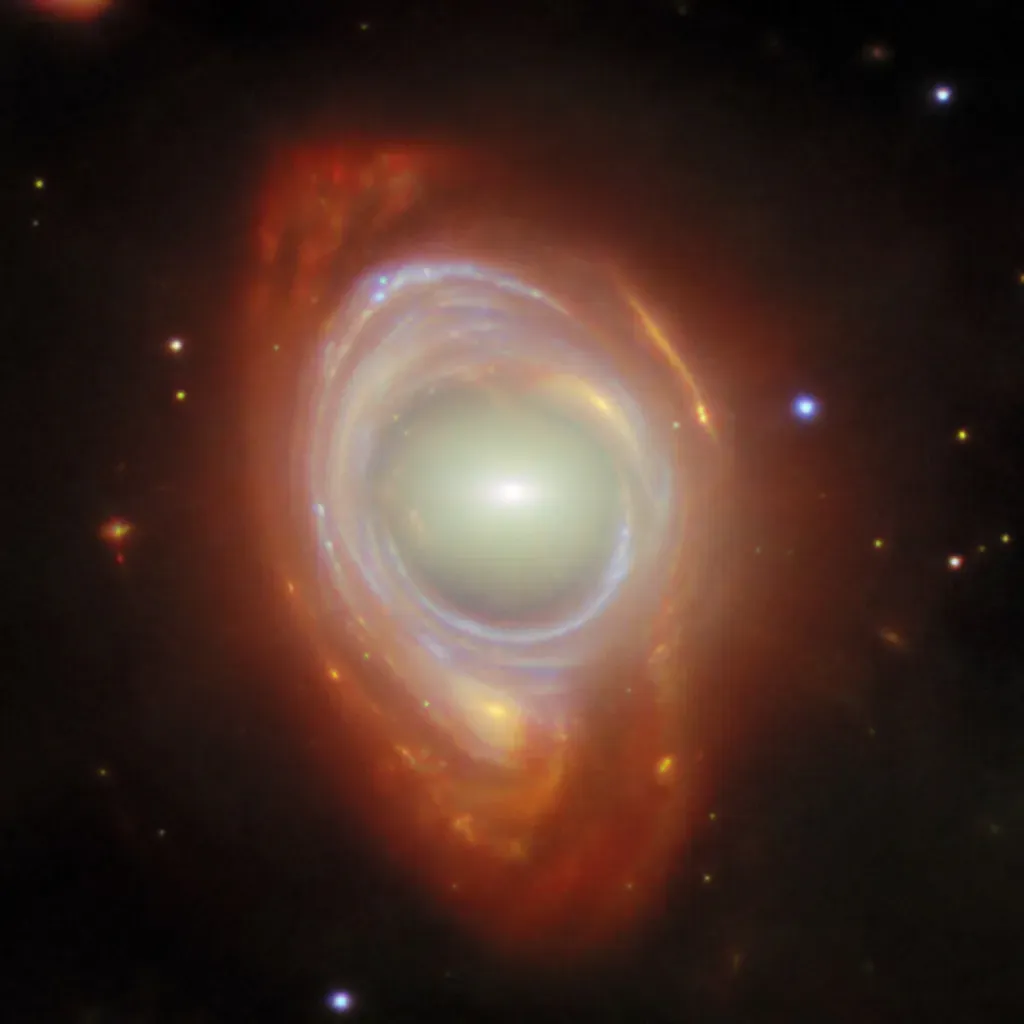
You assume that if it’s 3:42 p.m. for you, it’s also “right now” for a star in Andromeda. Relativity says that assumption is false. Simultaneity isn’t a fixed fact of the universe – it depends entirely on how you’re moving.
Two observers moving differently can genuinely disagree about which of two events happened first, and both can be correct in their own frame. Your “now” is just a thin slice through a four-dimensional block of spacetime, and someone else’s slice is cut at a different angle. The comforting idea of one shared cosmic heartbeat ticking for everyone at once? That’s a feeling your brain generates, not something the universe actually provides.
#11 – Physics Doesn’t Actually Care Which Way Time Points

Life feels like a one-way road. Coffee spills and spreads; it never leaps back into the cup. But zoom into the fundamental equations – Newton’s laws, Maxwell’s equations, Schrödinger’s equation – and they run just as smoothly backward as forward. Flip the sign on time in the math, and almost nothing objects.
The one exception is thermodynamics, where entropy tends to increase, giving us the sense of a forward “arrow.” But even that’s a statistical tendency, not an ironclad rule. In principle, spilled coffee could un-spill itself; it’s just staggeringly improbable. Cause-then-effect, the backbone of how you experience your entire life, turns out to be more of a cosmic habit than a hard law of nature.
#10 – Many Physicists Think the Future Already Exists
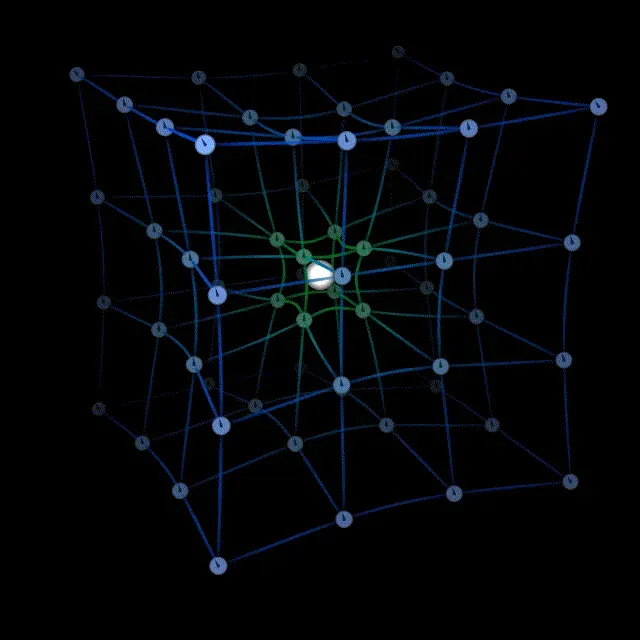
You probably assume the future is open, unwritten, waiting to be decided. A lot of working physicists would quietly disagree. In the “block universe” picture that falls naturally out of relativity, past, present, and future are all equally real – permanent, fixed parts of a four-dimensional structure. Your life is a worldline already carved into that block. You just experience it one frame at a time.
This isn’t fringe speculation; it’s a straightforward reading of the math if you take relativity at face value. Philosophers hate it. Free-will advocates hate it even more. But if spacetime really is geometry, moments don’t “happen” so much as they simply exist, and your sense of time flowing is more like a flashlight beam moving across a mural that was already painted.
The distinction between past, present, and future is only a stubbornly persistent illusion.
Albert Einstein
#9 – Before the Big Bang, There May Be No “Before”
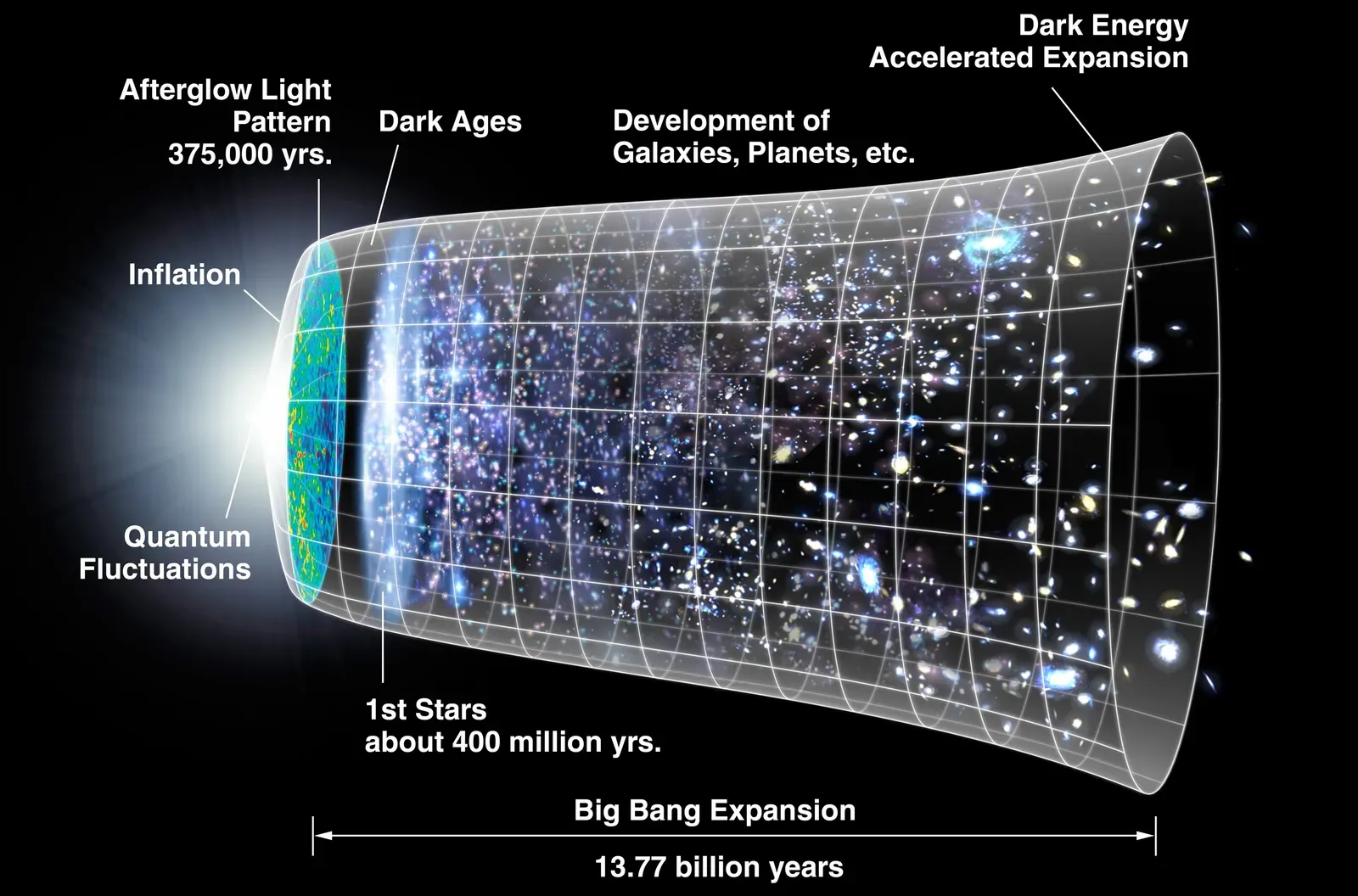
Ask a kid what happened before the Big Bang and you’ll get an imaginative answer. Ask a cosmologist and you might get something stranger: the question itself may not mean anything. In many serious models, time as we experience it begins at the Big Bang. There’s no clock quietly running backstage before that.
Everything in your daily life has a cause that came before it – eggs from chickens, houses from builders – so your brain screams for a “before the universe.” But if time is part of what got created, asking what came before it is like asking what’s north of the North Pole. The question collapses on itself. A few quantum gravity models sneak in something like a “prior phase,” but nothing resembling the simple ticking clock you’re picturing.
#8 – Quantum Physics Doesn’t Respect a Clean Past-to-Future Order
Classically, events lock into place in order: this, then that, no exceptions. Quantum experiments keep punching holes in that story. In delayed-choice experiments, how you measure a particle right now appears to determine whether it “was” a wave or a particle earlier – after the fact.
In entanglement experiments, measuring one particle instantly affects the description of its partner light-years away, in a way that resists a tidy timeline. Physicists argue over the right interpretation – many-worlds, retrocausality, relational quantum mechanics – but nobody claims any of it feels intuitive. The clean mental movie of “solid past causes open future” simply doesn’t match what’s happening in the lab.
#7 – Below a Certain Scale, “Instants” May Not Exist at All

You picture the present as an infinitely thin slice, sliceable forever if you zoom in enough. Classical physics agrees with you. Combine quantum mechanics with gravity, though, and things fall apart. Many theorists suspect there’s a smallest meaningful unit of time – Planck time, roughly 5.39 x 10⁻⁴⁴ seconds – below which “before” and “after” stop meaning anything.
If that’s correct, the smooth river of time you imagine is a mirage. Reality might tick in tiny quantum frames instead, with time itself emerging from something deeper and non-temporal. It’s a strange thought: you can casually talk about “splitting seconds” on your phone, with no idea that below a certain threshold, physics itself just shrugs and stops answering.
Worth Knowing
- Planck time is derived from three fundamental constants: the speed of light, the gravitational constant, and Planck’s constant.
- The related Planck length, about 1.6 x 10⁻³⁵ meters, marks roughly the smallest distance where familiar physics is thought to still apply.
- The entire 13.8-billion-year history of the universe amounts to roughly 10⁶¹ Planck times, a number too large to meaningfully picture.
- No experiment has ever probed anywhere near this scale directly; it remains purely theoretical territory for now.
#6 – Your Brain Fakes the “Now” You’re So Sure You’re Living In

You treat your sense of the present as a live, direct feed of reality. Neuroscience says it’s closer to a highlight reel. Your brain runs on delays – signals take tens to hundreds of milliseconds to process – so what you experience as “this instant” is actually a stitched-together, slightly back-dated reconstruction.
Experiments show your brain can reorder events and smooth over gaps to give you a seamless story that never actually happened in that order. In some illusions, something you perceive later literally rewrites what you remember “seeing” first. Your strongest intuition – that you’re riding the very edge of time as it happens – is a neurological trick, not a window into physics.
#5 – The Arrow of Time Might Just Be a Cosmic Accident
Eggs break but don’t unbreak. Smoke disperses but never re-gathers. You age but don’t get younger. We call this the arrow of time and blame it on entropy – the universe’s tendency toward disorder. Here’s the part researchers openly admit is strange: this entire one-way story depends on how the universe happened to start.
If the early universe had begun in a typical high-entropy state, there would be no strong arrow of time at all. The only reason entropy can keep climbing is that it started in a bizarrely, improbably low-entropy state. So the direction you feel in every memory and every aging cell traces back not to some fundamental law, but to a freak accident of cosmic history nobody fully understands.
Quick Compare
- Thermodynamic arrow: entropy increases, driven by the universe’s oddly low-entropy start.
- Cosmological arrow: the universe expands rather than contracts, at least for now.
- Psychological arrow: memory only works in one direction, from past to present.
- Radiative arrow: waves spread outward from a source far more often than they converge inward.
#4 – Somewhere in the Math, Time Might Run in Reverse
“Time running backward” sounds like movie fiction, but certain solutions to general relativity’s equations – and some speculative cosmological models – genuinely allow regions where the arrow of time points the opposite way, or loops instead of running straight. In those patches, what looks like the “future” to us might resemble our “past,” with entropy decreasing instead of increasing.
Nobody knows if these regions are physically real or just mathematical curiosities that nature quietly forbids. Some physicists think we simply live in one branch of a larger, time-symmetric structure, with another branch running its own arrow in the opposite direction. Either way, the frameworks we trust the most permit scenarios that make “time only goes one way, everywhere, always” look like wishful thinking.
#3 – Some Models of the Universe Never Actually End

Most people quietly assume there’s a finish line coming: heat death, a big crunch, some final curtain call. Plenty of serious cosmological models disagree. They allow time to stretch on indefinitely, with no final moment, no last tick, no game-over screen – even if everything interesting has long since faded into a cold, thin soup.
Our storytelling brains crave a beginning, middle, and end. Physics feels no obligation to hand us one. In eternally inflating multiverse models, new “pocket universes” can keep budding off forever, each starting its own fresh arrow of time even as ours winds down into boredom. “No before” and “no after” end up coexisting in the same universe, in different senses, and plain English was never built to hold both at once.
#2 – Time Might Not Be Fundamental at All
Ask most people what’s most basic about reality and they’ll say “space and time.” Cutting-edge theoretical physics increasingly toys with a more radical idea: time might not be fundamental – it might be something that emerges, like a pattern built out of simpler ingredients.
Think of temperature. No single molecule has a temperature; it only emerges once you’ve got billions of them bouncing around together. Time might work the same way, arising from deeper, timeless relationships between quantum states. Some versions of the Wheeler-DeWitt equation, a serious attempt at quantum gravity, have no time variable in them at all – just “change without time,” which sounds absurd until you remember our language evolved for hunting and gossip, not quantum cosmology.
At a Glance
- The Wheeler-DeWitt equation, formulated in the 1960s, is a leading attempt to merge quantum mechanics with general relativity.
- In its purest form, the equation describes the universe’s wave function with no time variable at all.
- Some physicists resolve this “problem of time” by suggesting time emerges from correlations between subsystems, not from a master clock.
- The idea echoes how temperature emerges from the motion of many particles, none of which is “hot” on its own.
#1 – Your Sense of Time Flowing Is Almost Certainly an Illusion

Here’s the part most people don’t want to hear: the single thing you’re most certain about – that time “flows,” that the present feels alive and moving – is probably a construction your brain builds for you, not a fact about the universe. Physics doesn’t see a flowing river; it sees static relations, or a frozen block of spacetime. Thermodynamics sees a statistical arrow. Neuroscience sees a delayed, edited highlight reel.
None of that means time isn’t real. It means your time and the universe’s time are two very different things wearing the same name. You feel free to shape a future that some models insist is already fixed. You feel the past is locked in stone, yet quantum experiments muddy even that. The very instinct evolution sharpened in you – a vivid, forward-sliding “now” – may be one of the least trustworthy guides to what reality actually looks like.
The Bottom Line
Stack all fourteen of these together and the verdict is blunt: the universe’s time and your lived time barely resemble each other. Relativity kills the idea of a shared “now.” Thermodynamics ties the arrow of time to a freakishly special beginning nobody’s fully explained. Quantum experiments shred the clean past-to-future story. Neuroscience exposes your “present moment” as delayed and quietly doctored. And the more speculative frontiers hint that time itself might be a side effect, not a foundation.
Some people find that depressing. I find it clarifying. If your gut instincts about something as basic as time are this far off, it’s worth asking what else you’ve been trusting on autopilot. Time didn’t get simpler the more we studied it – it got stranger, and honestly, that’s the more interesting universe to live in. Did we miss a property of time that broke your brain worse than these? Say so in the comments and make your case.