
Most people assume modern tech can copy anything humans ever built – after all, we’ve got quantum computers and rockets that land themselves. But dig a little deeper, and you hit a weird truth: some ancient and early-modern inventions still refuse to be fully reproduced, even with today’s tools.
Replicas crack, formulas fail, and “recreations” quietly cut corners that the originals never did. In a few cases, we’re not even sure what the original really was. Engineers, materials scientists, and historians have been trying for decades – and keep coming up short. Here’s what the evidence, the failures, and the few honest experts actually say.
#13 – Stradivarius Violins’ Exact Acoustic Formula

These aren’t just expensive old violins; they’re the most studied musical instruments on Earth – and we still can’t agree on why they sound the way they do. Every few years a lab claims to have “finally cracked the Stradivarius secret,” and every few years, blind tests and acousticians quietly disagree. Modern luthiers can build phenomenal instruments, sometimes preferred by soloists in blind trials. But reproducing a true Strad, tone and response included, has repeatedly failed under scrutiny.
Analyses show unusual wood density, microscopic chemical treatments, and centuries of aging patterns that combine in ways we can’t precisely reverse-engineer without time itself. Some researchers even argue that previous “success” stories cherry-picked tests and players.
- Chemists find traces of mineral preservatives.
- Acoustic engineers model complex resonance patterns.
And yet, every serious attempt depends on approximations and educated guesses. But that’s nothing compared to what we found about #12…
#12 – Damascus Steel with True Wootz Microstructure
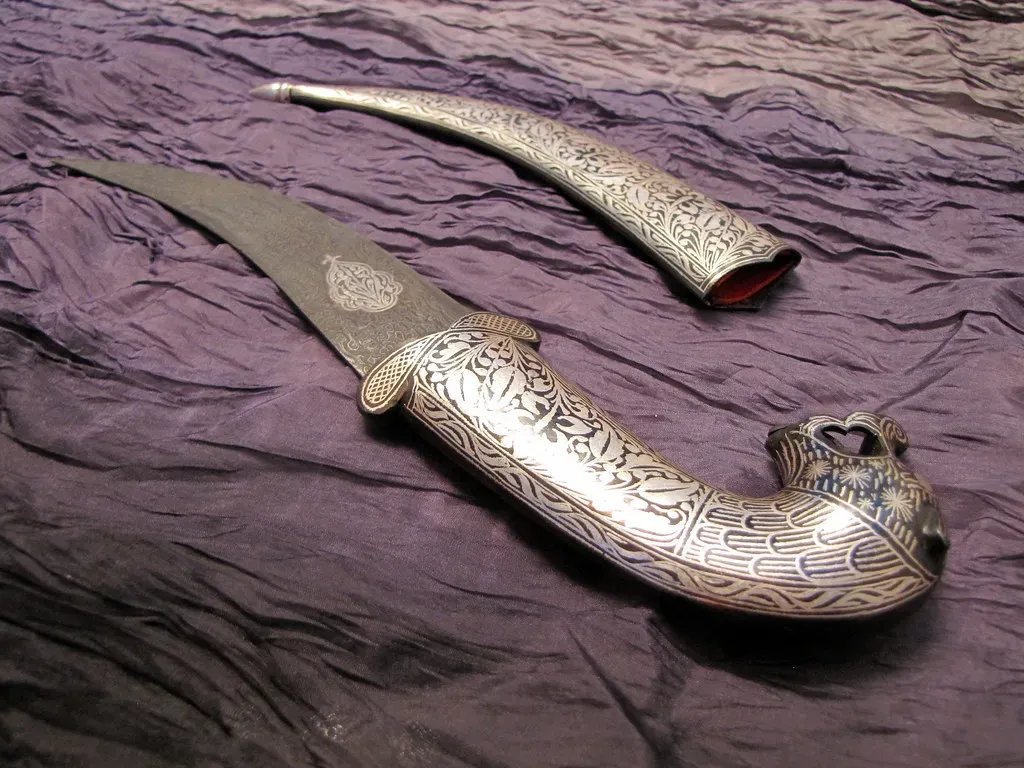
Damascus steel swords from the Middle Ages weren’t just pretty; accounts describe blades that stayed razor-sharp, resisted shattering, and supposedly sliced through lesser swords. Modern metallurgists can make pattern-welded “Damascus,” but that’s mainly cosmetic. The original crucible-made wootz Damascus, with its distinctive microstructure, remains stubbornly out of reach.
Electron microscopes reveal nanostructured carbides and banding patterns tied to very specific ore chemistry and slow, carefully controlled cooling. We can mimic the pattern, but the exact combination of impurities, furnace atmosphere, and forging cycles that produced historical Damascus has proved maddeningly fragile: change one variable and the magic collapses.
Engineers have tried:
- Using reconstructed crucible methods with similar ores.
- Simulating historical thermal cycles in controlled furnaces.
Results: sometimes close, never consistently identical across batches. While hobbyists online claim “perfect recreations,” specialists quietly note the missing micro-features. But that’s nothing compared to what we found about #11…
#11 – Roman Concrete That Gets Stronger in Seawater

Most people think concrete is a solved problem – then you look at Roman harbor structures still standing after nearly 2,000 years of waves, salt, and storms. Meanwhile, modern marine concrete often needs major repair within 50-100 years. The Romans mixed volcanic ash, lime, and seawater into a recipe that actually gains strength over time as minerals continue to crystallize.
We’ve identified key ingredients: pozzolanic ash, lime clasts, and interactions that form durable minerals like aluminous tobermorite. That part is known. What’s still not fully reproducible at scale is the whole system: sourcing comparable volcanic materials, matching impurities, and duplicating slow, low-temperature production that modern industry finds uneconomical. Researchers have created Roman-inspired mixes in labs and small pilot projects, but they often trade off cost, workability, or curing time. The uncomfortable reality: our “advanced” concrete is optimized for speed and price, not centuries-long performance.
Fast Facts
- Roman harbor concrete has survived nearly 2,000 years of constant wave and salt exposure.
- Modern marine concrete often needs major repair within just 50 to 100 years.
- Key ingredients: volcanic ash, lime clasts, and seawater mixed together.
- The rare mineral aluminous tobermorite keeps forming and strengthening the mix over centuries.
- Today’s industry treats the slow, low-temperature Roman method as too costly to scale.
But that’s nothing compared to what we found about #10…
#10 – The Antikythera Mechanism’s Full Design Philosophy
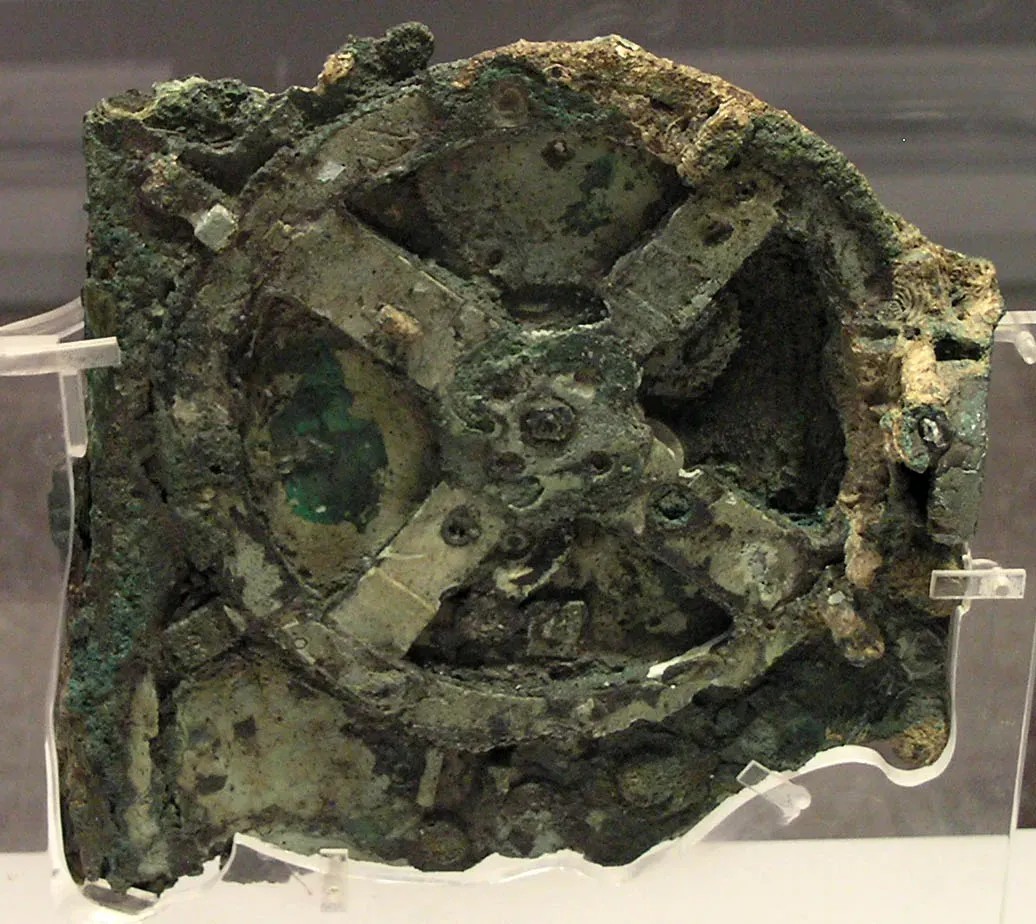
The Antikythera Mechanism is often called the world’s first analog computer: a Greek gearwork device from around the 2nd century BCE that modeled celestial motions. X-ray imaging has revealed insane internal complexity – dozens of finely cut bronze gears in a compact space. Modern artisans have built reconstructions, but here’s the catch: no two “working models” agree on all the internal gearing and intended functions.
We understand a lot: eclipse prediction, lunar phases, perhaps planetary cycles. But inscriptions are fragmentary, some gears are missing or corroded, and engineers must fill gaps with assumptions. Every reconstruction embeds modern design biases – gear trains we think should be there – rather than guaranteed historical reality.
This means:
- We can build a device that behaves plausibly like the original.
- We cannot claim to have reproduced the exact original mechanism or its full capability.
As a result, every “final model” is really a hypothesis in brass. But that’s nothing compared to what we found about #9…
#9 – The Wright Brothers’ Exact Wing-Warping Flight Control

You’d think the pioneers of powered flight would be trivial to copy. Engineers replicate jets, hypersonic gliders, drones – so what’s so hard about a fragile 1903 biplane? The airframe is easy. The subtle, integrated flex-and-warp control system the Wrights used is not.
Their control authority depended on a very specific, flexible structure, pilot technique, and fabric tension that’s shockingly hard to recreate faithfully. Modern replicas typically cheat:
- They substitute safer materials or hidden control surfaces.
- They adjust geometry for stability and regulatory requirements.
Even highly authentic reconstructions sometimes show handling quirks unlike period pilot reports. The original brothers constantly tweaked the design based on wind-tunnel data and flight experience that was never fully documented in modern engineering language. So while we can build something that looks like the Flyer, re-creating its exact dynamic behavior and feel is still more art than science. But that’s nothing compared to what we found about #8…
#8 – Greek Fire, the Byzantine Naval Incendiary

Greek Fire was the medieval equivalent of a classified weapons program. Byzantine ships used a pressurized system to project a burning liquid that, according to chroniclers, could ignite on water and cling to hulls. Modern chemists have proposed everything from petroleum-based mixtures to quicklime-enhanced cocktails, but no formula has been definitively matched to historical performance.
Key problems:
- Descriptions are exaggerated, biased, or decades after the fact.
- No physical sample has survived, only texts and depictions.
Several labs and hobbyists have produced sticky, water-resistant incendiaries – but these are often dangerous guesswork and still fall short of the legendary combination of range, burn intensity, and reliability. There’s also a delivery-system angle: pumps, nozzles, and ship integration that most “YouTube recreations” ignore. Historians increasingly suspect that Greek Fire’s real “secret” was a tightly controlled, state-run production and training system, not just a recipe. Either way, nobody today can honestly claim a verified, fully reproducible version. But that’s nothing compared to what we found about #7…
#7 – Mesoamerican Rubber Balls with Their Unique Bounce
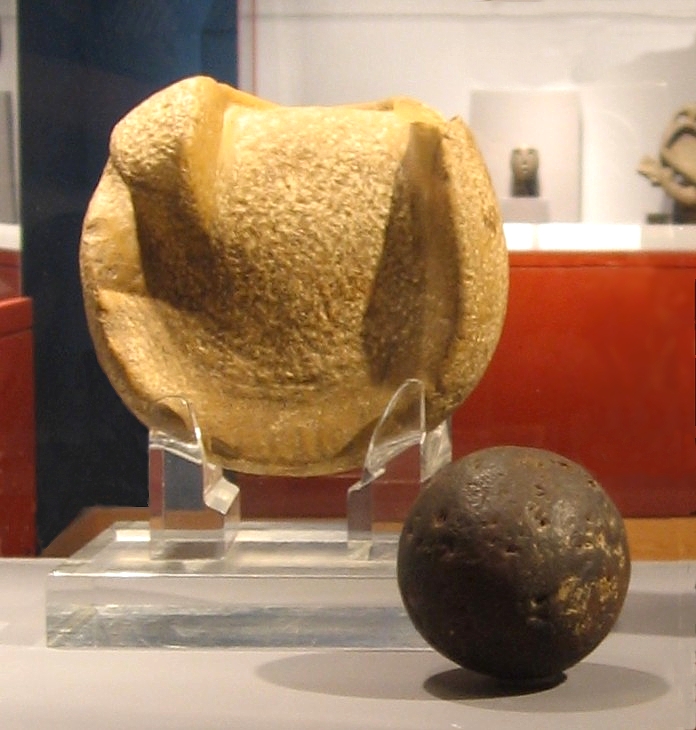
Ballgames in ancient Mesoamerica weren’t played with leather soccer balls; they used vulcanized rubber made from local latex and plant additives. Spanish accounts describe balls that bounced with an elasticity Europeans had literally never seen before. Modern chemists can make rubber, obviously – but exactly matching those pre-industrial recipes and properties has proven trickier than expected.
We know they used latex from Castilla elastica trees mixed with juice from plants like morning glory. The ratio, preparation temperature, kneading time, and aging all influence the resulting polymer cross-linking. Experimental archaeologists have gotten close, but often with trade-offs: too brittle, too sticky, or good bounce but poor longevity.
Worth Knowing
- The latex came from Castilla elastica trees native to Mesoamerica.
- Morning glory vine juice acted as a natural cross-linking agent long before industrial vulcanization existed.
- Bounce quality depended on ratio, temperature, and kneading time – variables never written down.
- Regional differences in plant chemistry make a single “master recipe” nearly impossible to pin down today.
Two issues keep blocking an exact match: regional variation in plant chemistry we can’t easily reconstruct, and oral-tradition techniques never recorded in written, technical form. So yes, we have much “better” rubber by modern standards – but recreating that specific, ritual-sport material remains an ongoing, partly speculative experiment. But that’s nothing compared to what we found about #6…
#6 – The Voynich Manuscript’s Cipher (If It Even Is One)
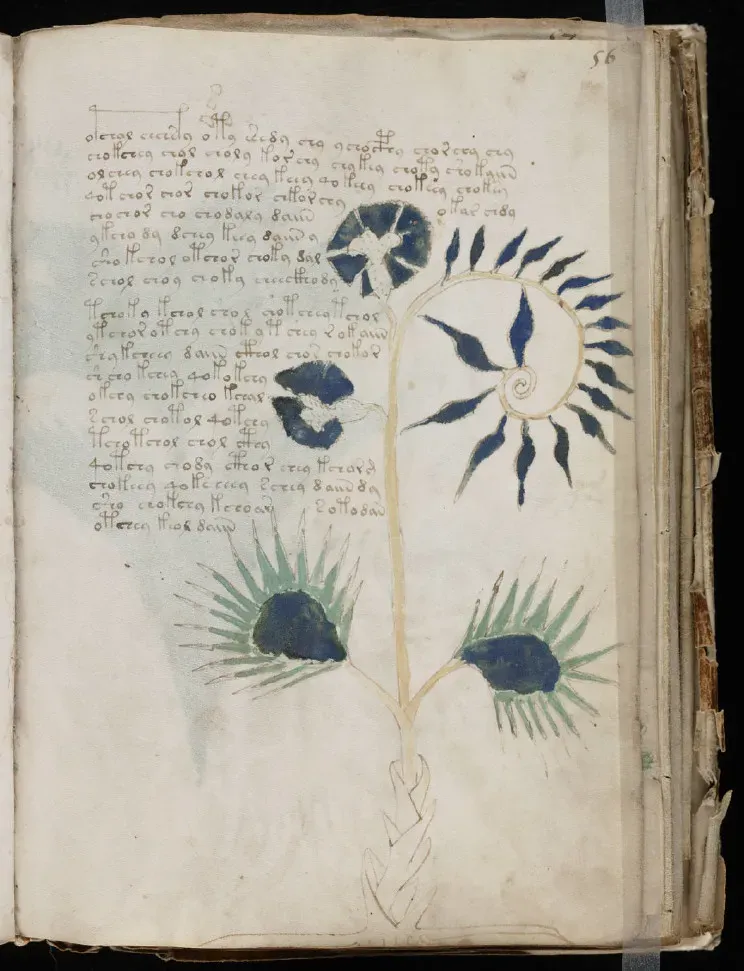
From a strict engineering perspective, the Voynich Manuscript is a system: script, encoding, possibly an information-compression scheme. Cryptographers, linguists, and computer scientists have thrown modern algorithms at it for decades. No one has produced a broadly accepted, fully decoded reading that explains all pages, drawings, and patterns in a coherent way.
Attempts fall into two camps:
- “It’s a real language” theories with partial, inconsistent translations.
- “It’s a hoax” theories that struggle to model its statistical structure.
Stylometry shows non-random properties; glyph sequences look language-like, not like simple noise. But every claimed solution so far either fits only subsets of the text or requires special pleading. The brutal truth: despite modern computing power, we can’t reproduce the underlying generative rules well enough to decode or convincingly fake an equivalent manuscript. Whether the “invention” here is an ingenious cipher, a con artist’s pseudo-text engine, or an unknown language system, engineers of information theory still can’t pin it down. But that’s nothing compared to what we found about #5…
#5 – The Original “Baghdad Battery” Functionality (If Any)
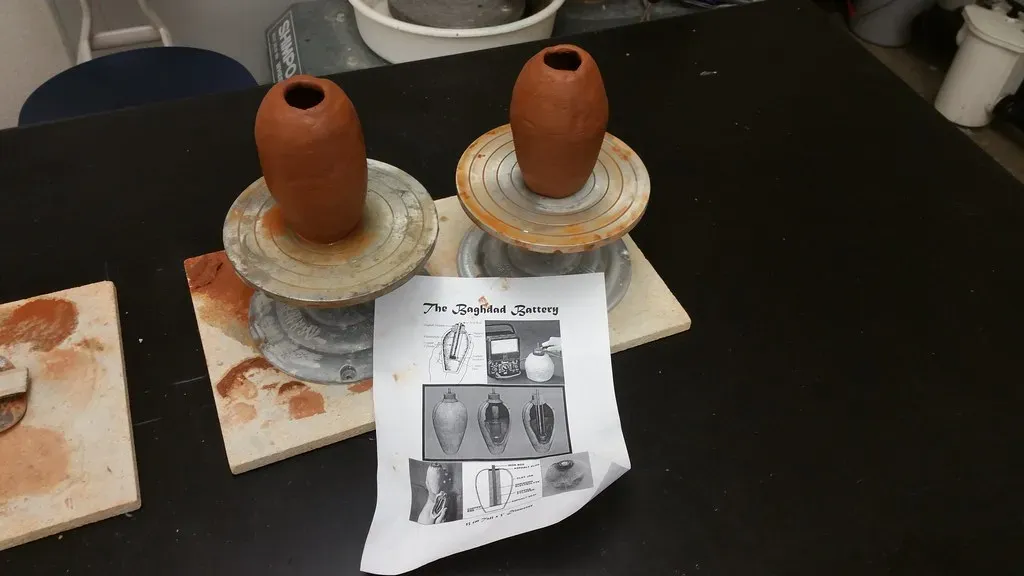
The so-called Baghdad Battery – ceramic jars with copper cylinders and iron rods from ancient Mesopotamia – has long been claimed as evidence of ancient electrochemistry. Modern tinkerers pour acidic juice or vinegar in replicas and get small voltage readings. However, no one has conclusively demonstrated that these artifacts were intended or widely used as electrical devices, nor replicated any practical, documented application from that era.
Serious archaeologists note that there are no associated wires, switches, or consistent usage context, and that alternative explanations, such as storage or ritual objects, fit the evidence just as well. Engineers can turn the design into a crude galvanic cell, but that’s projecting modern understanding backward, not reproducing a proven ancient system.
Quick Compare
- Electrochemical theory: Replicas generate a faint voltage with acidic liquid, but no wires or switches have ever been found nearby.
- Storage or ritual theory: The jars closely match known scroll- or object-storage vessels from the same region and era.
- Mainstream verdict: Most archaeologists favor the mundane explanation over the ancient-battery theory.
The “lost invention” here may be a narrative we built, not a technology they lost. Ironically, what we keep failing to reproduce is a robust evidence chain more than the object itself. Still, the gap between what’s physically possible and what’s historically supported keeps this case unresolved. But that’s nothing compared to what we found about #4…
#4 – The “Dendera Light” and Other Alleged Ancient Electric Devices

Carvings at Dendera in Egypt are often claimed to show oversized “light bulbs” with cables and power sources. Fringe documentaries love this. Electrical engineers, on the other hand, roll their eyes – not because they think ancient people were stupid, but because there’s zero corroborating infrastructure: no power plants, wiring systems, or replacement parts.
Modern enthusiasts build working “Dendera light” replicas using high-voltage power supplies, noble-gas tubes, and careful insulation. But here’s the key: every working model quietly injects modern physics and hardware that do not appear in the archaeological record. We can force the iconography into an electric-lamp project, but that’s creative cosplay, not a faithful reproduction. Experts argue the carvings are symbolic – lotus, snakes, sun disks – not technical diagrams.
In this case, our repeated failure isn’t about engineering limits; it’s about trying to reproduce a technology that probably never existed in the first place. And yes, that means some viral “ancient tech” memes are just wrong. But that’s nothing compared to what we found about #3…
#3 – The Full “Golden Record” Production Pipeline
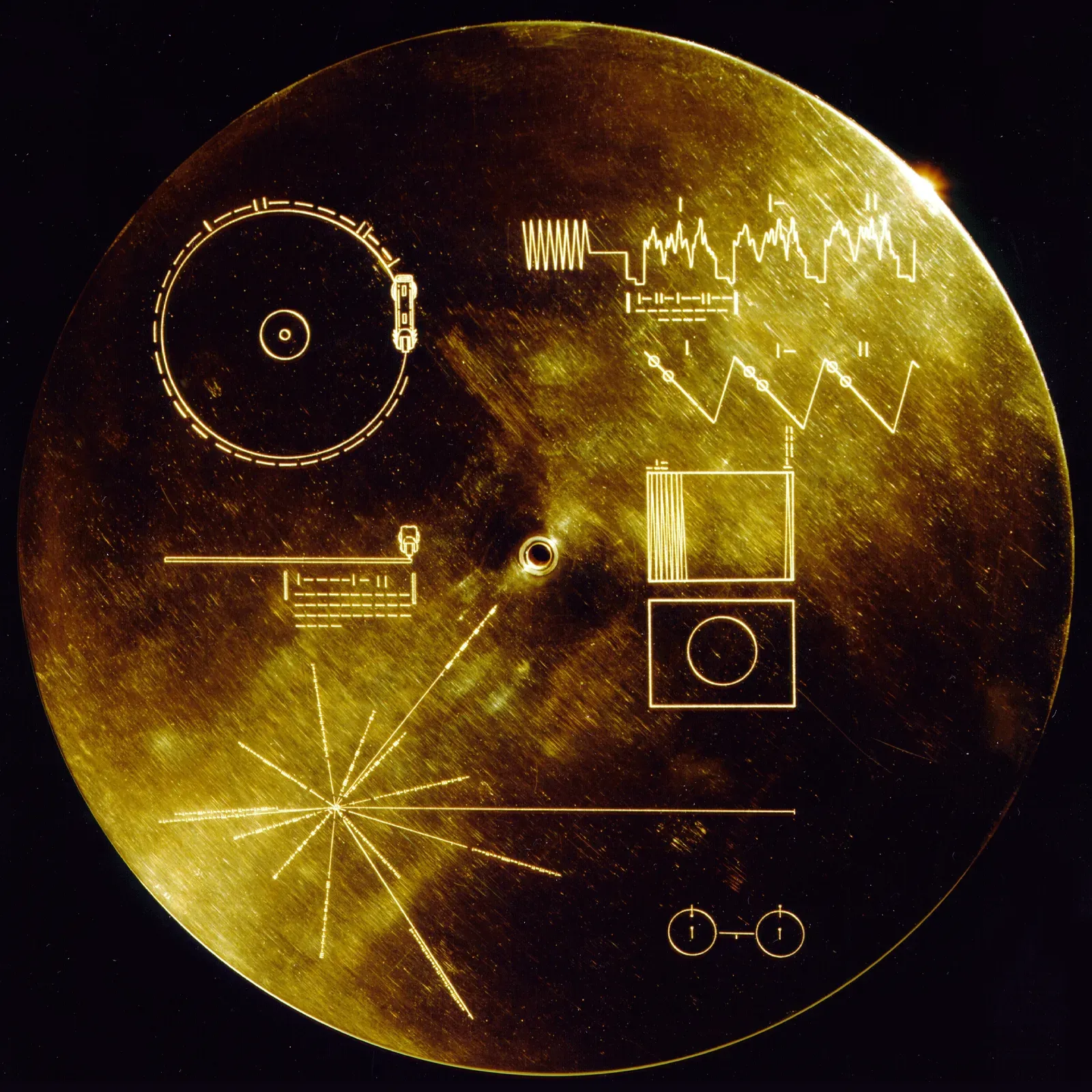
The Voyager Golden Records aren’t lost, but the exact process of making them is. These gold-plated copper discs, launched in 1977, were engineered to survive cosmic radiation and micro-impacts for potentially a billion years. NASA’s documentation covers a lot, yet several production details – vendor-specific treatments, exact material tolerances, and subtle encoding/engraving techniques – would be hard to reproduce perfectly today.
Why? Because some suppliers, processes, and chemistries were one-off or short-lived, and quality control happened under constraints and practices now changed or gone. We could absolutely make a new interstellar record, arguably more robust. But duplicating that specific artifact, with identical trace impurities, plating microstructure, and all undocumented shop-floor adjustments, is nearly impossible. Even the original engineers have said that a true “Voyager Record 2.0” would be a fresh design, not a strict re-run. This is a modern reminder: even with CAD files and specs, real-world manufacturing always hides irreproducible quirks. But that’s nothing compared to what we found about #2…
#2 – Quicksilver Amalgam Mirror-Making at Historic Quality

Before float glass and modern coatings, the best mirrors were made with tin-mercury amalgam. The process was toxic and eventually abandoned. Curious conservators and materials scientists have tried to recreate historic French and Venetian mirrors at original clarity and longevity – and have repeatedly run into safety, regulatory, and subtle quality issues that make truly faithful reproduction almost unreachable.
Authentic amalgam mirrors required large sheets of low-defect glass rolled and polished by hand, plus skilled control of amalgam thickness, adhesion, and curing. Modern safety rules (for good reason) heavily restrict mercury handling, and workers no longer train in those specific techniques. The result: most “restorations” and replicas quietly swap in aluminum or silver backings, maybe with aged patinas to look old.
The lost invention isn’t reflective glass itself; it’s a tightly integrated, extremely hazardous artisanal ecosystem we aren’t willing – and arguably shouldn’t try – to bring back. The irony is brutal: we could, in theory, reproduce it, but social, legal, and ethical constraints won’t let us. But that’s nothing compared to what we found about #1…
#1 – Closed-Cycle, Truly Reusable Nuclear Systems (as First Envisioned)
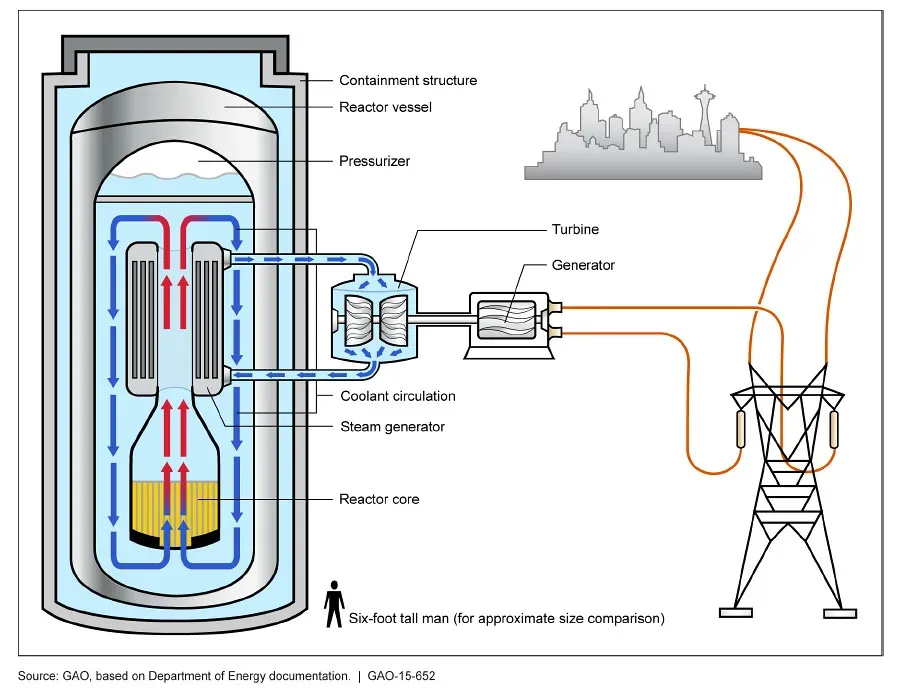
Nuclear engineers in the mid-20th century proposed reactor concepts that sound almost mythical today: closed fuel cycles, molten-salt reactors, breeder systems that could, on paper, “burn” waste and operate safely for decades with minimal refueling. Prototypes like the MSRE (Molten-Salt Reactor Experiment) proved parts of this vision.
Yet despite having better simulation tools and materials now, we have not reproduced a fully realized, commercial closed-cycle system at scale. Early teams operated under different regulatory, political, and economic assumptions, and some tacit engineering knowledge – how small teams integrated safety, chemistry, and operations – was never fully captured in a way modern programs can just “reload.”
Why It Stands Out
- The Molten-Salt Reactor Experiment ran successfully at Oak Ridge National Laboratory in the 1960s.
- Closed-cycle designs promised to “burn” existing nuclear waste instead of storing it for millennia.
- Modern advanced reactor projects still routinely slip on timelines and budgets.
- The real bottleneck isn’t physics – it’s rebuilding the tight-knit engineering culture that made the originals work.
Current projects try to reinvent or “modernize” those ideas, but timelines slip and designs morph under cost and safety pressures. In effect, we keep failing to reproduce not just a reactor, but an entire socio-technical environment that made those experiments possible. That’s the most sobering lost invention of all: a kind of engineering culture we no longer know how to rebuild.
The Bottom Line
When you strip away the myths and YouTube sensationalism, a pattern emerges: the most stubborn “lost inventions” aren’t magic gadgets – they’re complex systems where materials, tacit skills, and social context all locked together in ways we haven’t fully recreated.
Stradivarius violins, Roman concrete, Damascus steel, Greek Fire, even early nuclear visions all expose the same uncomfortable truth: specs and blueprints are the easy part; capturing the lived, messy, iterative know-how is where we quietly fail. Some popular claims (like ancient light bulbs) collapse under evidence. Others, like wootz steel or Byzantine incendiaries, remain genuinely unresolved. The real question isn’t “Were the ancients more advanced than us?” It’s harsher: How many of our own “cutting-edge” technologies will become tomorrow’s irreproducible legends once the last experts retire?
Which invention on this list do you think we’re most dangerously close to losing again – and why?