
Most people picture ancient metalwork as crude bronze swords and rusty nails held together by luck. That picture is wrong, and not by a little.
Scattered through peer-reviewed papers and museum vaults are objects so precise, so pure, or so stubbornly resistant to time that trained chemists have gone on record saying they shouldn’t be possible with the tools available at the time. Some of these cases are almost certainly overhyped. A few are outright myths dressed up as mysteries. But a surprising number remain genuinely unresolved, and the data behind them is stranger than the legends. Here’s what the lab work actually says about 14 ancient metal objects that, on paper, shouldn’t exist at all.
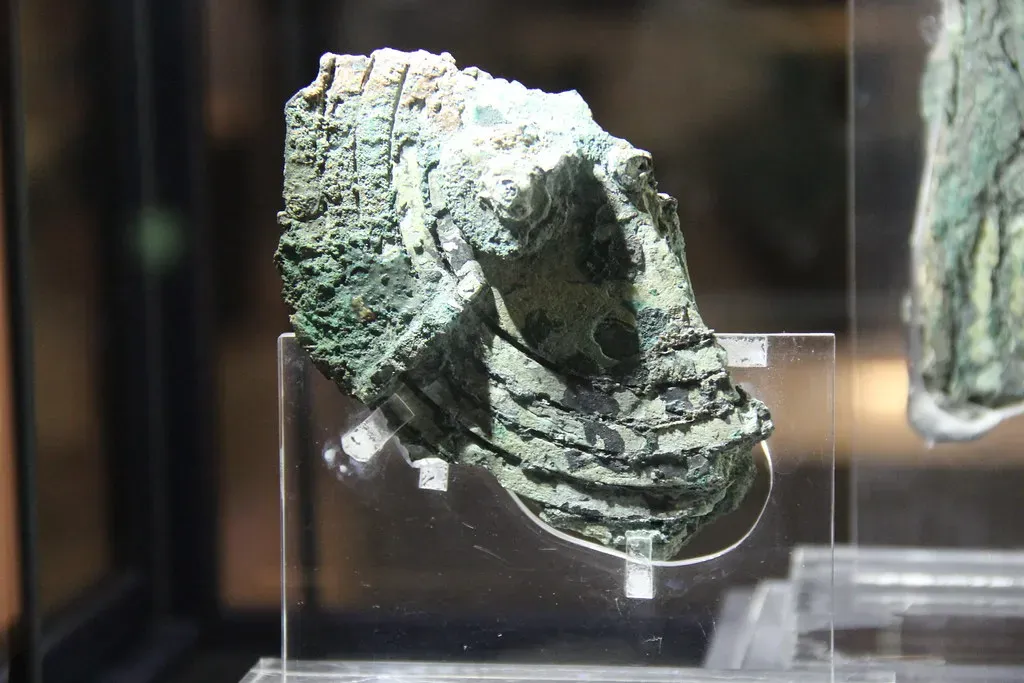
#14 – The 2,000-Year-Old Antikythera Bronze Gears
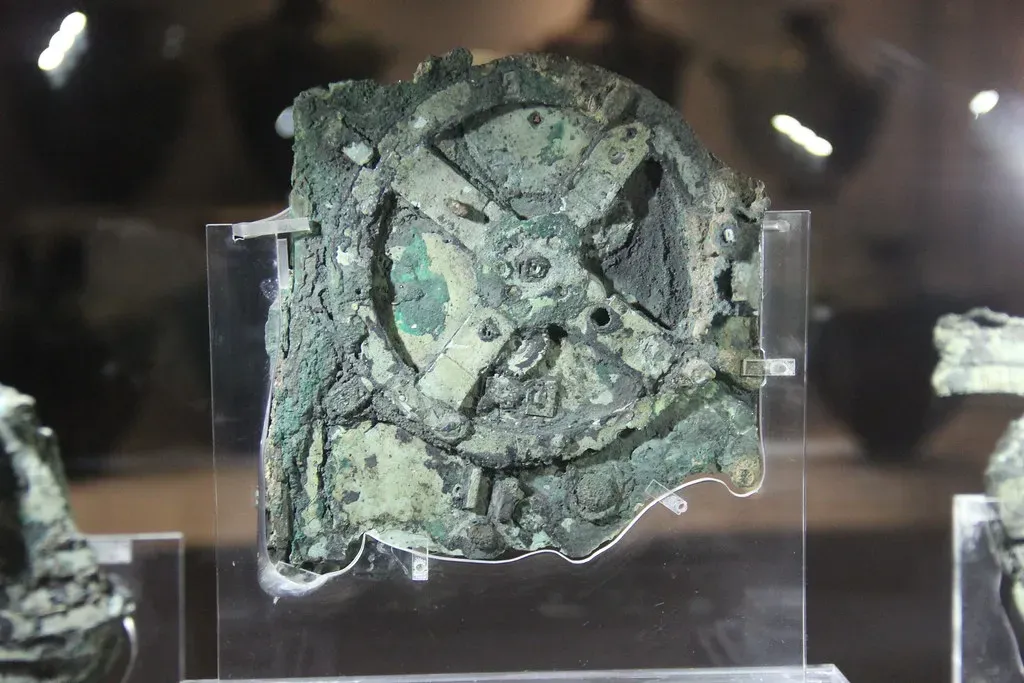
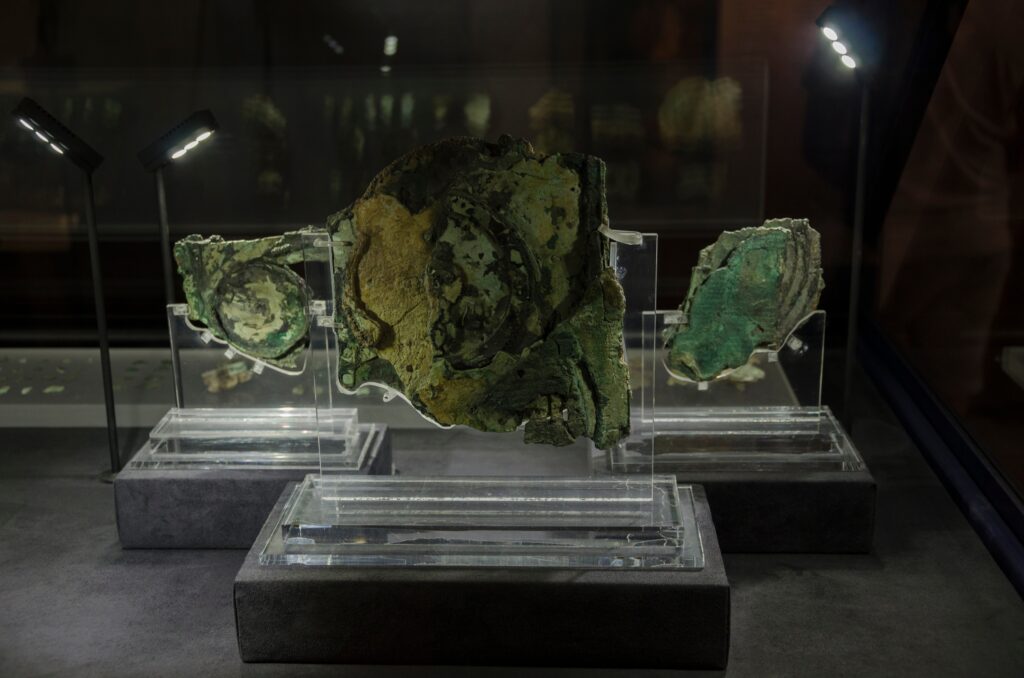
When divers pulled a corroded lump off a Greek shipwreck in 1901, nobody guessed they were holding a computer. It looked like scrap bronze fused to rock, the kind of thing you’d toss in a bucket and forget about.
X-rays changed everything. Buried inside were at least 30 precision-cut bronze gears with tooth profiles and tolerances that historians insisted ancient craftsmen “shouldn’t” be able to achieve. The gear ratios track the Sun, Moon, eclipses, and even planetary motion with shocking accuracy for something built around 100-50 BCE, and to a modern machinist, the metallurgy still feels uncomfortably advanced.
What actually unsettles chemists and engineers isn’t the object itself, it’s the invisible ecosystem it implies. You don’t stumble into a geared computer by accident. Someone needed bronze formulations that cast cleanly and repeatable cutting techniques for tiny, uniform teeth, which means an entire tradition of complex bronze devices existed and simply didn’t survive.
#13 – The Baghdad “Battery” Copper Jar
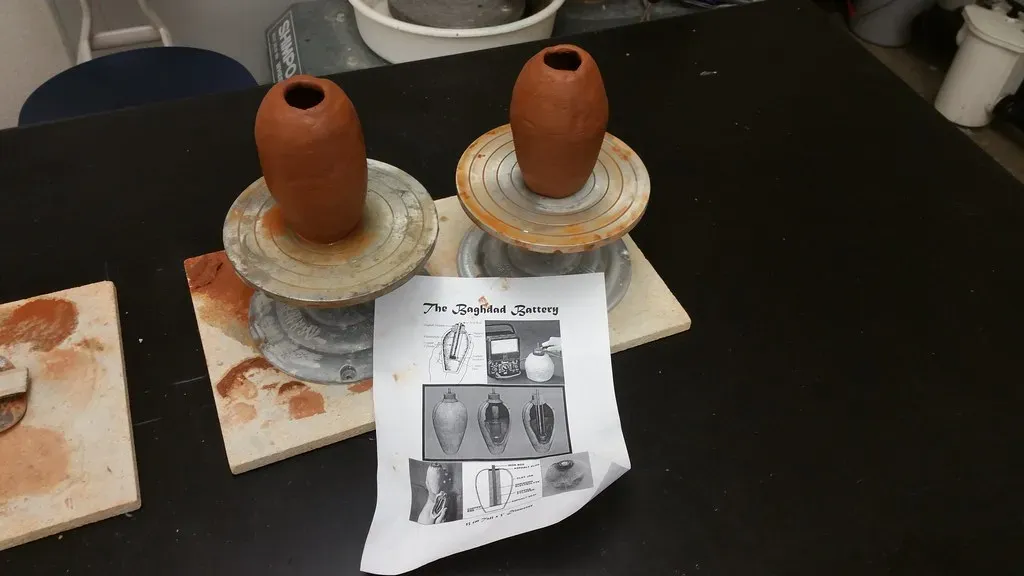
Discovered near modern Baghdad in the 1930s, this unassuming clay jar held a copper cylinder, an iron rod, and traces of acidic residue. That’s not a random combination. It’s exactly what you’d build if you wanted a simple copper-iron battery, and replicas using vinegar or lemon juice really do generate small but measurable voltages.
The chemistry checks out cleanly: iron dissolving as the anode, copper acting as the cathode, acid serving as the electrolyte. Here’s the catch, though. There is zero written evidence that Parthian or early Sassanian craftsmen understood electricity as a concept.
Many archaeologists argue it was just a storage jar and the “acid” residue is coincidental. Chemists push back with a blunt point: functionally, it’s a replicable electrochemical cell whether the builders understood the theory or not, and it could plausibly have been used for electroplating thin metal films or producing mild ritual shocks meant to feel like magic. Battery or coincidence, the argument still hasn’t been settled.
#12 – The Delhi Iron Pillar That Refuses to Rust
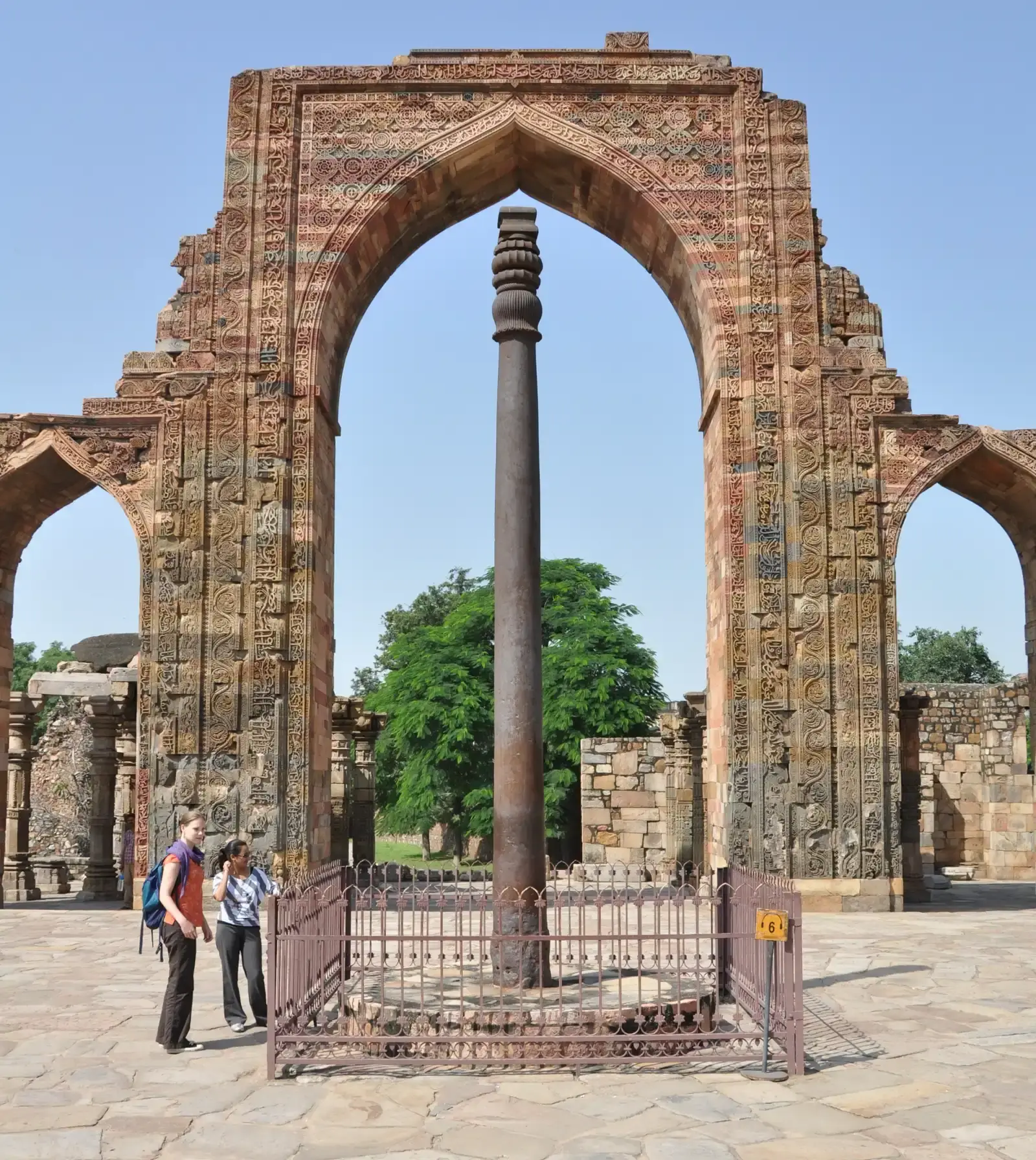
Stand next to the Delhi Iron Pillar and you’re looking at something that should be a pile of orange flakes by now. It’s roughly 7 meters tall, weighs over 6 tons, and has sat exposed to monsoon rain and open air for somewhere between 1,500 and 1,600 years. It shows only light surface rust.
X-ray and spectroscopic studies found the answer hiding in the chemistry: a phosphorus-rich wrought iron that, in Delhi’s specific climate, forms a protective passive film of iron hydrogen phosphate and iron oxide. That microscopic layer seals the surface and slows corrosion to a crawl, and textbooks long assumed you needed modern alloy design to pull that off.
Fast Facts
- Height: roughly 7 meters, weight: over 6 tons
- Exposed outdoors for an estimated 1,500 to 1,600 years
- Condition: only light surface rust, no structural flaking
- Secret ingredient: phosphorus-rich wrought iron, not a modern alloy
- Protective layer: a thin film of iron hydrogen phosphate and iron oxide
Instead, ancient Indian smelters hit a chemical sweet spot almost by accident, using charcoal and ore impurities most people would consider flaws. The uncomfortable part is simple: plenty of modern outdoor iron structures don’t last half as long, and materials scientists still haven’t fully industrialized the recipe those ancient smiths stumbled into.
#11 – The Roman Lead Ingots That Are Too Pure to Be Ancient
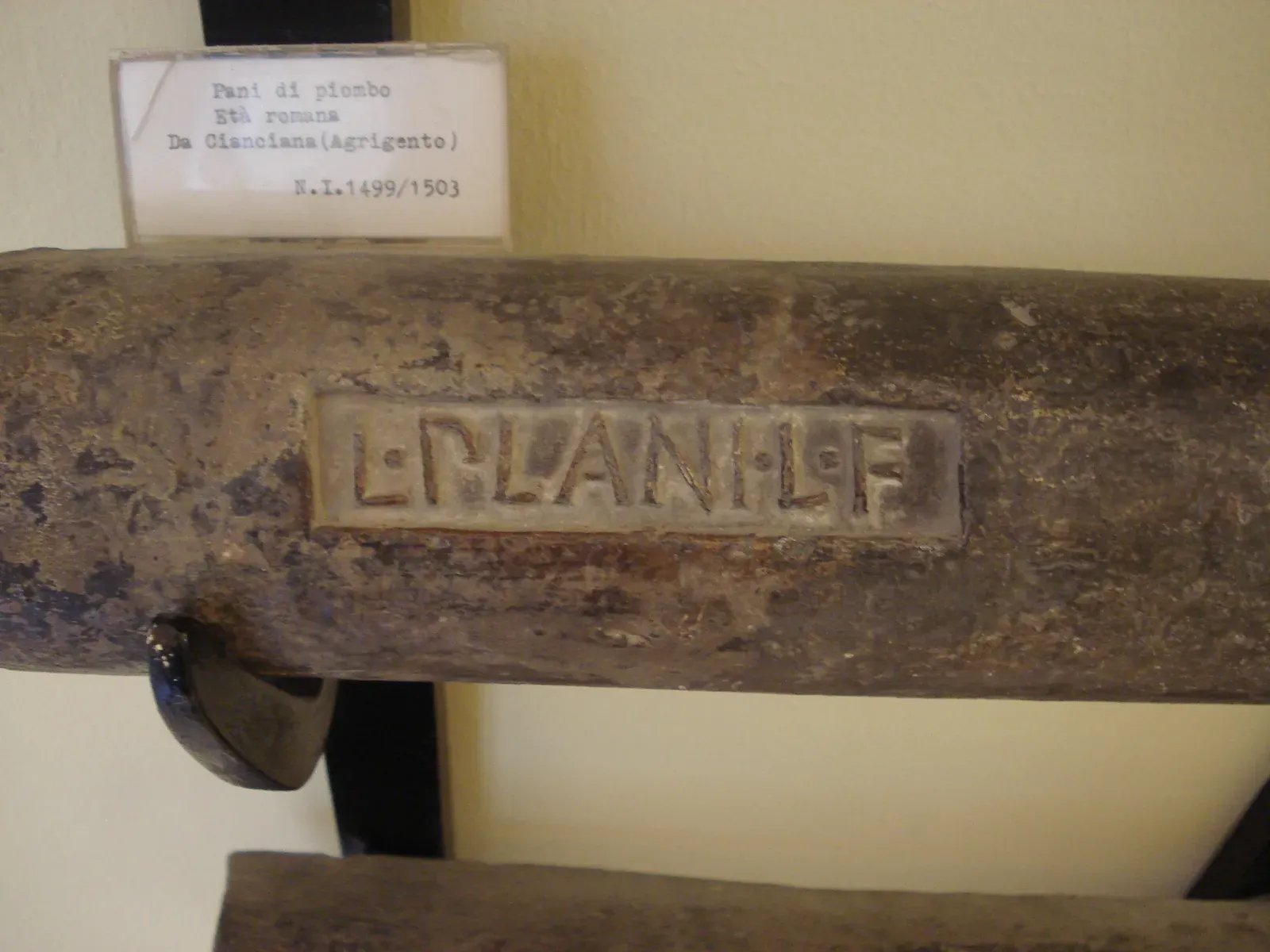
Roman mining conjures images of dirty, crude metal hauled out by slaves. Then chemists actually analyzed the cargo from preserved shipwrecks and found neatly cast lead ingots with remarkably low levels of silver, copper, and bismuth, purity levels that rival much later industrial standards.
To sell lead at that scale, Romans had to master controlled cupellation and repeated oxidation refining, techniques usually credited to far later eras. Lead is soft and forgiving to work, but stripping it down to consistent purity demands sustained high-temperature furnaces and careful process control, not guesswork.
The real shock isn’t that Romans pulled this off once. It’s the scale of it. Entire cargo holds of near-identical ingots point to standardized refining across an empire-wide supply chain, and some metallurgists argue the isotope data flatly contradicts the “dirty ancient tech” stereotype most of us grew up with.
#10 – The Mercury Rivers Hidden Inside China’s First Emperor’s Tomb
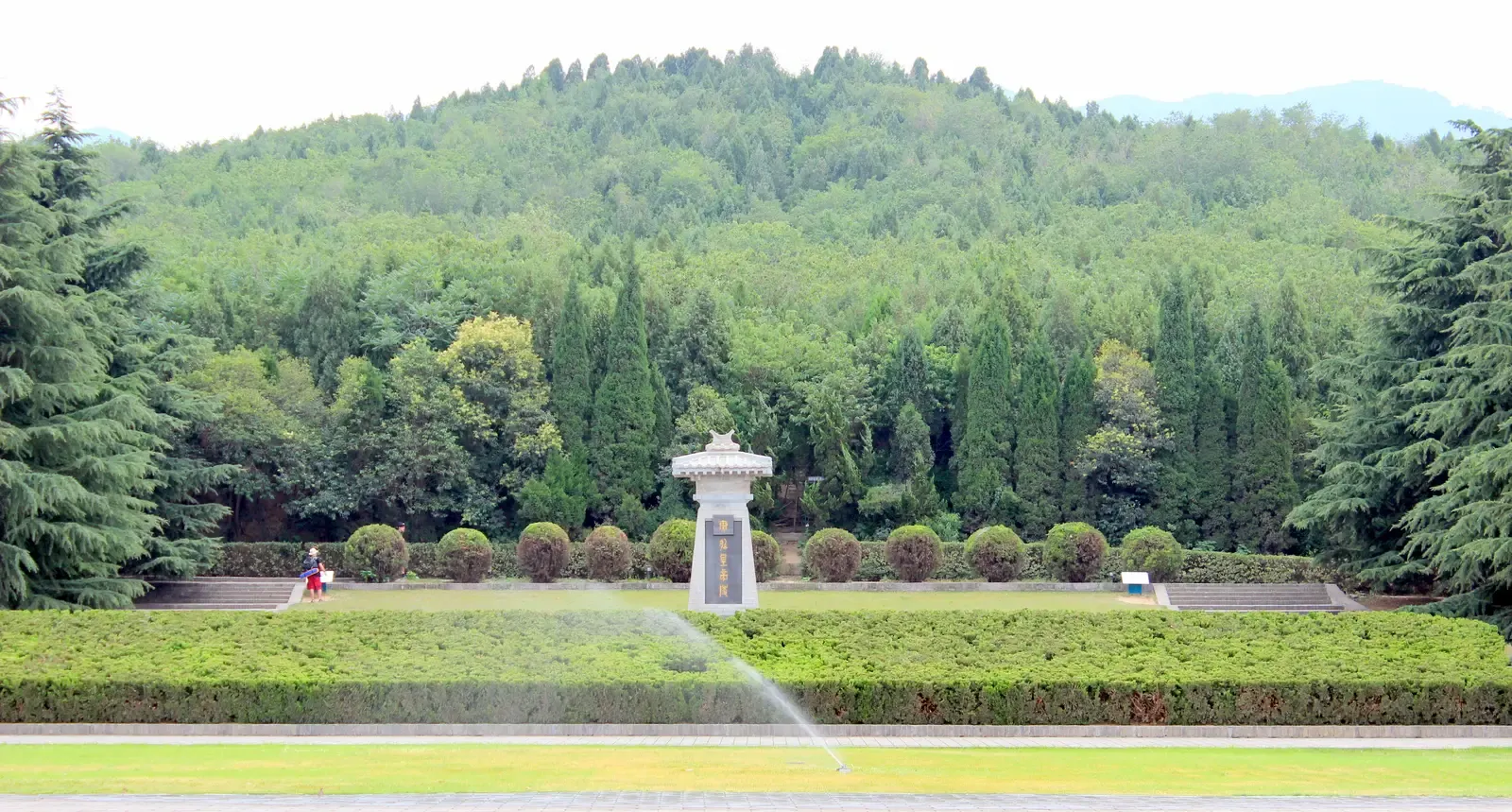
Ancient Chinese records describe something that sounds like fantasy: rivers of liquid metal flowing beneath Qin Shi Huang’s sealed underground palace, built to mimic real oceans. For centuries, that read as pure legend.
Then modern geochemical surveys scanned the soil above the unexcavated tomb mound and found mercury concentrations far beyond any natural background level. Mercury is a liquid metal at room temperature, brutally toxic, and mining or transporting it at scale 2,200 years ago required serious control over cinnabar ore and high-temperature roasting.
The idea of deliberately engineering a sealed mercury environment is something even modern conservators approach with extreme caution. Archaeologists have kept the tomb closed for preservation and safety reasons, so we likely won’t see the metalwork inside for decades. But the soil chemistry alone already hints at a level of metallurgical ambition that feels far too modern for its timeline.
#9 – The High-Tin Bronze Mirrors That Shouldn’t Hold Together
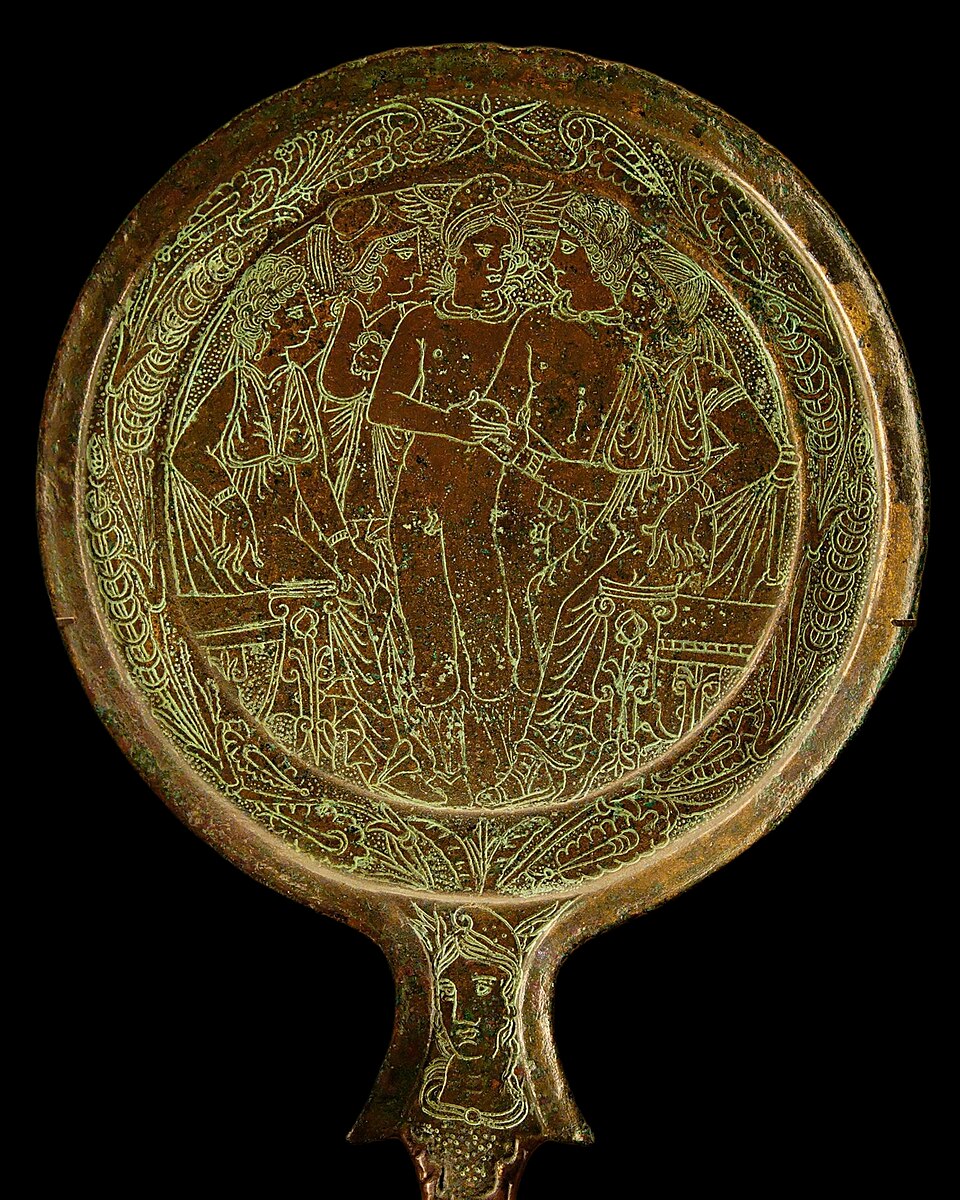
Standard bronze runs about 10 to 12 percent tin. Push much higher than that and the metal typically turns brittle, cracking like glass under the slightest stress. Ancient Chinese artisans ignored that limit entirely, routinely crafting mirrors with tin content reaching 20 to 30 percent.
These mirrors are thin, cast in intricate patterns, and polished to a glass-like, almost silvery reflection that still dazzles under museum lighting today. Metallurgically, that alloy ratio should have failed. The workaround appears to be a careful mix of controlled molds to minimize internal stress, slow cooling regimes tuned to favor specific intermetallic phases, and painstaking hand polishing rather than heavy mechanical working.
Quick Compare
- Standard bronze: 10-12% tin, ductile, workable, dull finish
- High-tin mirror bronze: 20-30% tin, brittle by modern rules, mirror-bright finish
- Standard bronze relies on basic casting; mirror bronze needed controlled molds and slow, tuned cooling
- Result: an alloy that should shatter, yet survives as a functional reflective surface
The result functions almost like an early metal optic, with reflective properties closer to modern white metals than dull, workaday bronze. Plenty of historians still underplay just how deliberate that alloy and heat-treatment choice really was.
#8 – The Pre-Columbian Gold Alloys That Behave Like Engineered Materials
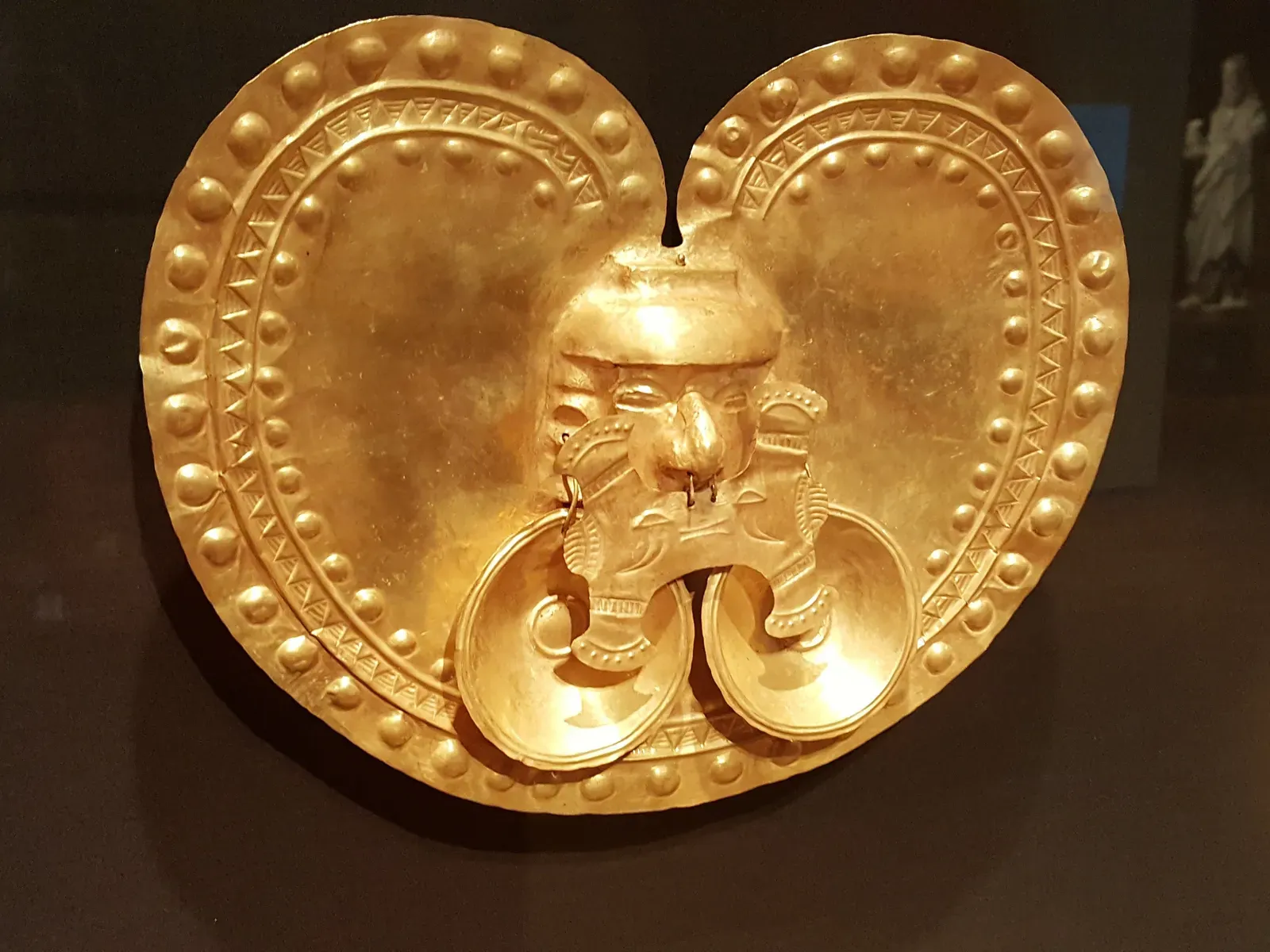
Across Colombia, Peru, and Central America, archaeologists keep finding tunjos, nose rings, and intricate ornaments made from tumbaga, a gold-copper alloy whose ratios are suspiciously consistent within specific regions and time periods. That kind of consistency doesn’t happen by accident.
Chemical analyses show many pieces cluster tightly around particular compositions optimized for a warm gold color at reduced gold content, improved hardness compared to pure gold, and excellent castability for fine detail work. Then there’s depletion gilding: artisans leached copper from the surface using organic acids or careful heating, leaving a rich gold skin over a cheaper core underneath.
To a modern metallurgist, that’s textbook surface engineering, not folk art. Officially these are filed as “ornamental” objects, but the underlying control of diffusion and corrosion borders on genuine pre-industrial materials science, and most people still only talk about the artistry while the chemistry quietly does the heavier lifting.
#7 – The Shroud of Turin’s Impossibly Fine Iron Particles
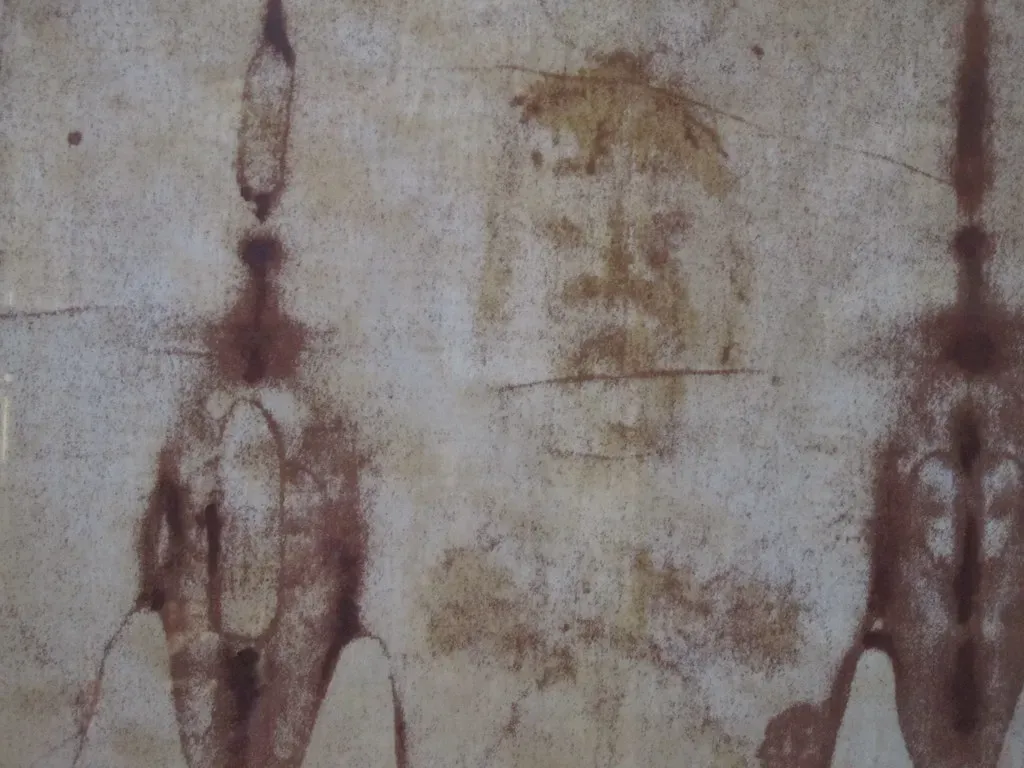
Set aside whatever you believe about the Shroud itself. Under electron microscopes, its fibers show submicron iron oxide and other metallic particles embedded in very specific image areas, distributed in a way that doesn’t line up neatly with simple brush painting.
Some researchers argue the particle sizes and surface patterns suggest a more complex origin involving evaporation, diffusion, or micro-aerosols rather than pigment applied by hand. Even chemists skeptical of any miraculous explanation admit one uncomfortable detail: if it’s a forgery, the maker somehow created a stable, ultra-thin metallic “ghost” image that hasn’t flaked off the way ordinary paint does after centuries.
The iron isn’t forming thick crusts, it’s a thin layer that appears anchored directly into the cellulose fibers themselves. That doesn’t prove impossible technology. It does make the Shroud a genuinely stubborn outlier in the history of textiles and metallic pigments.
#6 – The “Mythical” Orichalcum That Turned Out to Be Real Brass
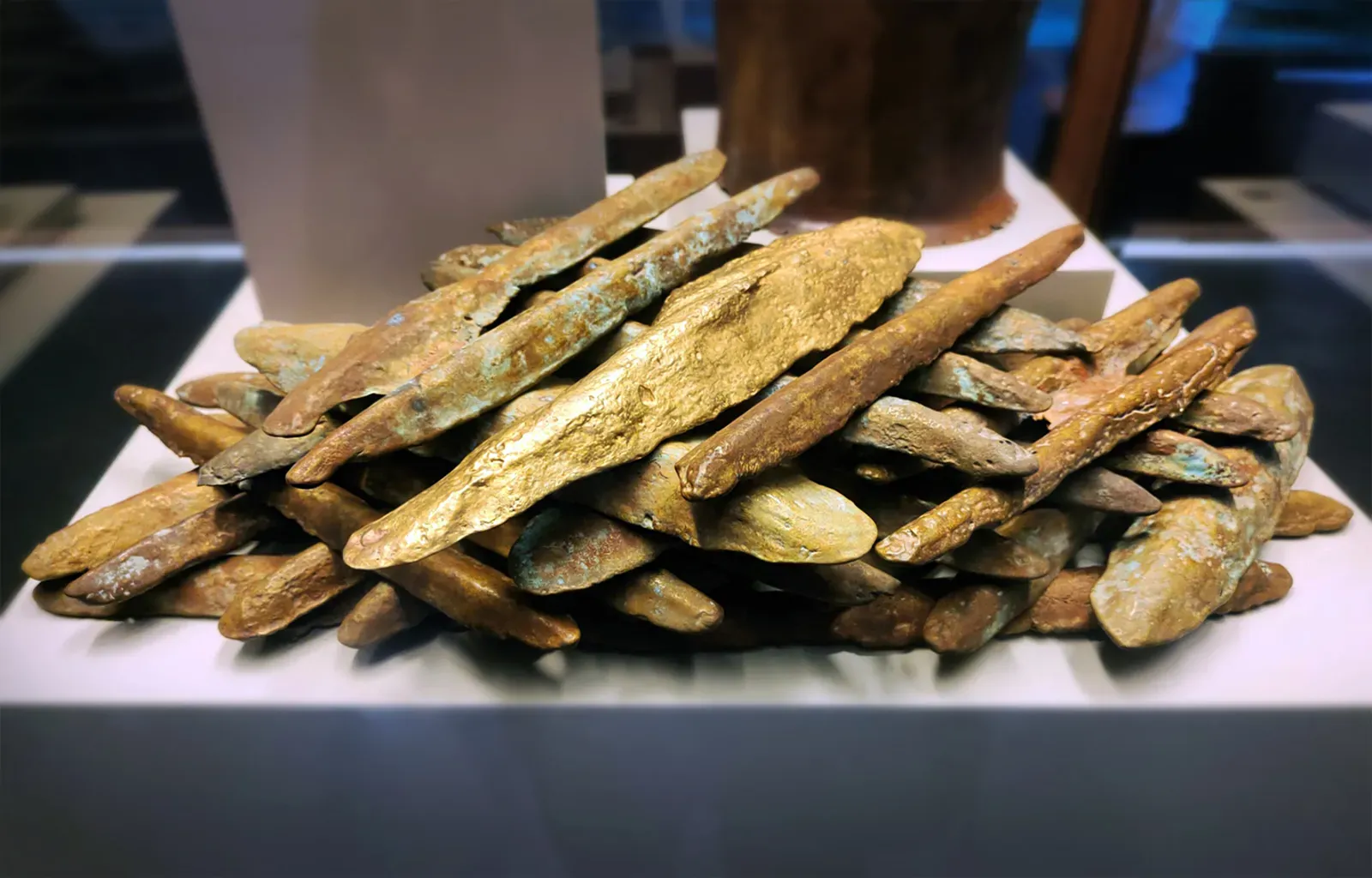
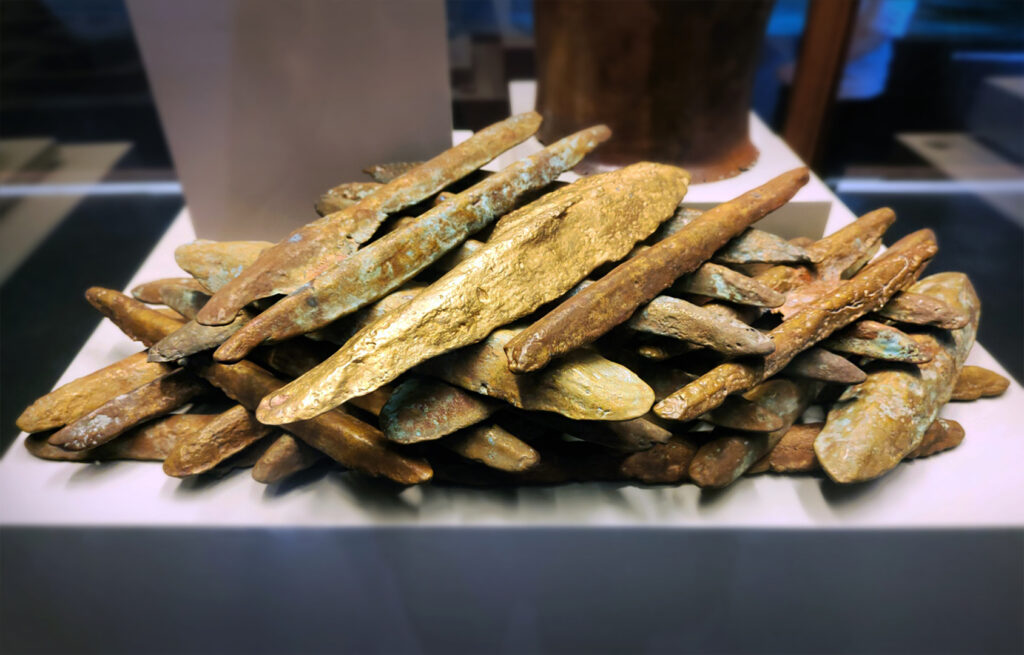
For centuries, orichalcum sounded like something out of Atlantis, a legendary golden metal tied to elite architecture and myth. Then a 2014 shipwreck off Sicily surfaced dozens of yellowish ingots, and chemical analysis identified them as a copper-zinc alloy with trace nickel, lead, and iron.
Making consistent brass is harder than it sounds. Zinc boils away at high temperatures, so controlling its content requires careful cementation techniques and tightly managed furnace atmospheres, mastery most historians assumed didn’t arrive until much later.
Worth Knowing
- Found in 2014 off the coast of Sicily, still packed in a sunken ship’s hold
- Chemistry: a copper-zinc alloy with trace nickel, lead, and iron
- Estimated origin: around the 1st century BCE
- Legend status: long described in myth as a rare, almost magical metal tied to Atlantis
These ingots show zinc levels and impurity profiles that look deliberate, not accidental. That means someone around the 1st century BCE knew how to mass-produce a proto-brass expensive-looking enough to pass as an exotic legendary metal, quietly turning myth into an industrial product with a paper trail.
#5 – The Sky-Metal Daggers Forged From Fallen Meteorites
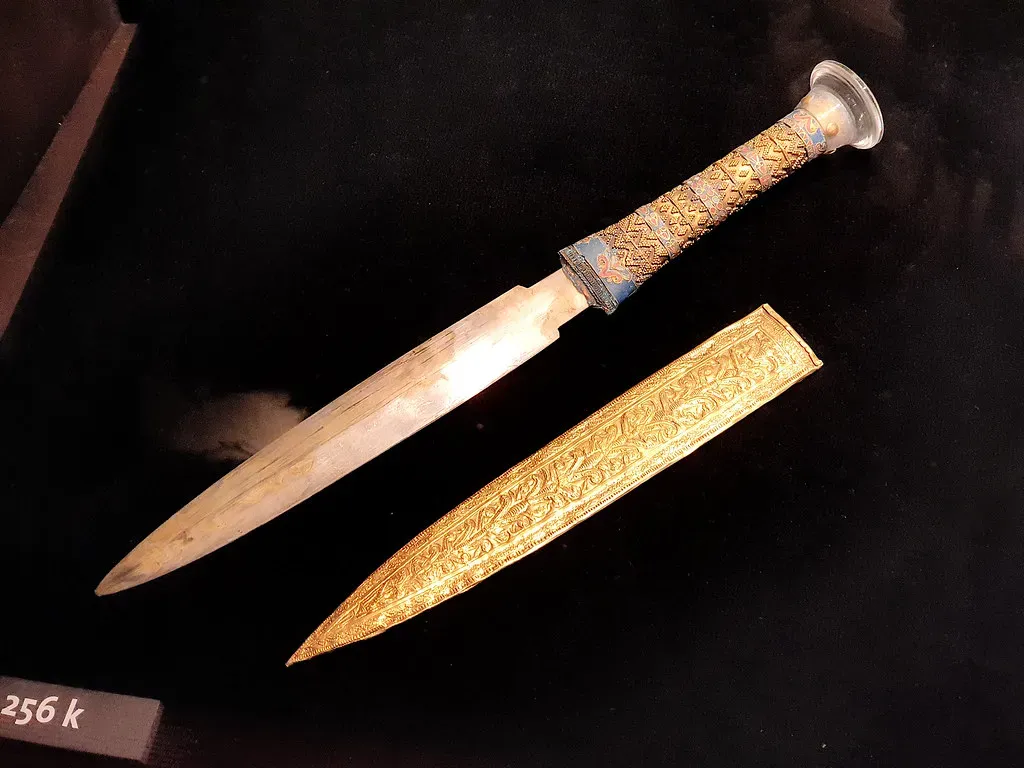
Long before anyone built a blast furnace, some cultures were already working with iron, just not the kind pulled from the ground. Egyptian tombs and other early sites contain beads and tools made from meteoritic iron, identifiable by their elevated nickel and cobalt content.
Without smelting technology, that iron is nearly impossible to extract from terrestrial ore. So ancient artisans hammered meteor fragments at room temperature over charcoal fires into usable shapes instead. Tutankhamun’s iron dagger is the most famous example, its nickel content matching iron meteorites rather than anything mined from the earth.
To a Bronze Age craftsman, this would have felt literally like working sky metal, yet the blade is well-forged, polished, and fitted with gold and crystal. It blurs a line textbooks like to draw cleanly: “no workable iron before this date.” People were handling advanced nickel-iron alloys thousands of years earlier, just not at industrial scale.
#4 – The South American Iron That Won’t Corrode Like It Should
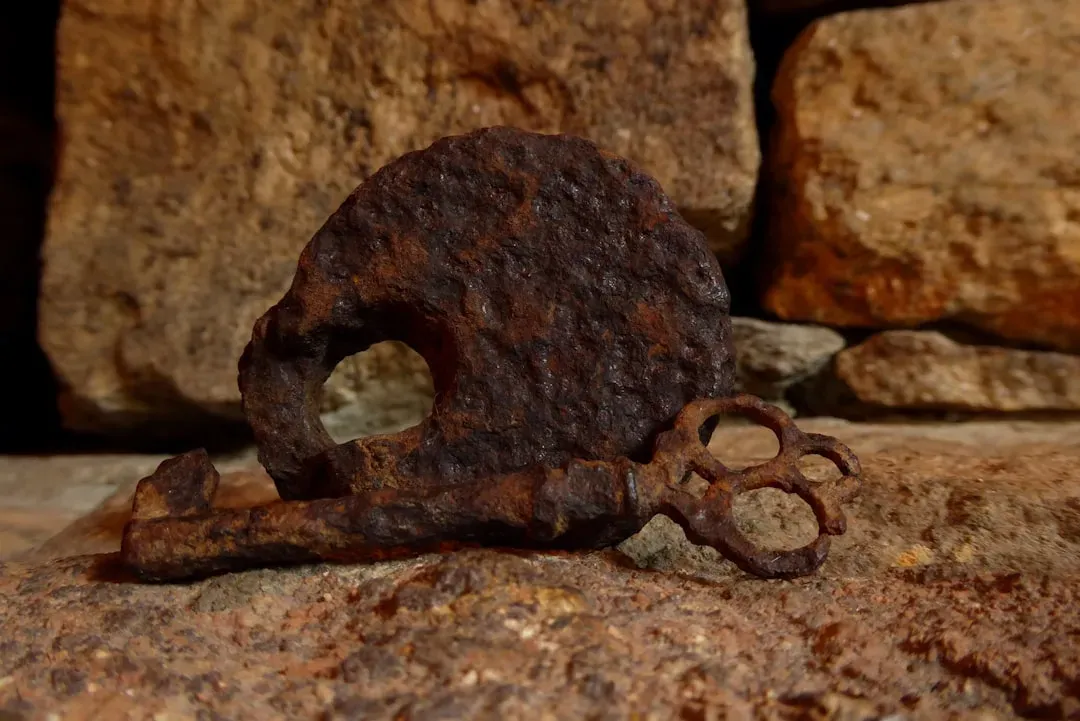
Tropical soil is brutal on buried metal. It’s damp, acidic, and microbially active, the kind of environment that should reduce iron to rust within a few generations. Yet a handful of pre-Columbian and early colonial iron objects recovered from that exact environment have turned up with surfaces that are still relatively intact.
Preliminary analyses on these pieces report elevated chromium and phosphorus in some samples, along with unusual corrosion layers that appear to slow further attack rather than accelerate it. The sample size is small and contamination is always a risk with old field digs, so caution is warranted.
Still, the idea that indigenous or hybrid workshops accidentally produced chromium-bearing iron through specific ore selection isn’t far-fetched at all. Industrial stainless steel is a 20th-century invention as a concept, but passivating films form naturally whenever the right elements happen to align, and if even a fraction of these finds hold up under closer study, they’d quietly move the timeline on “stainless-like” behavior.
#3 – The Roman Lead Coffins With Corrosion No One Can Replicate
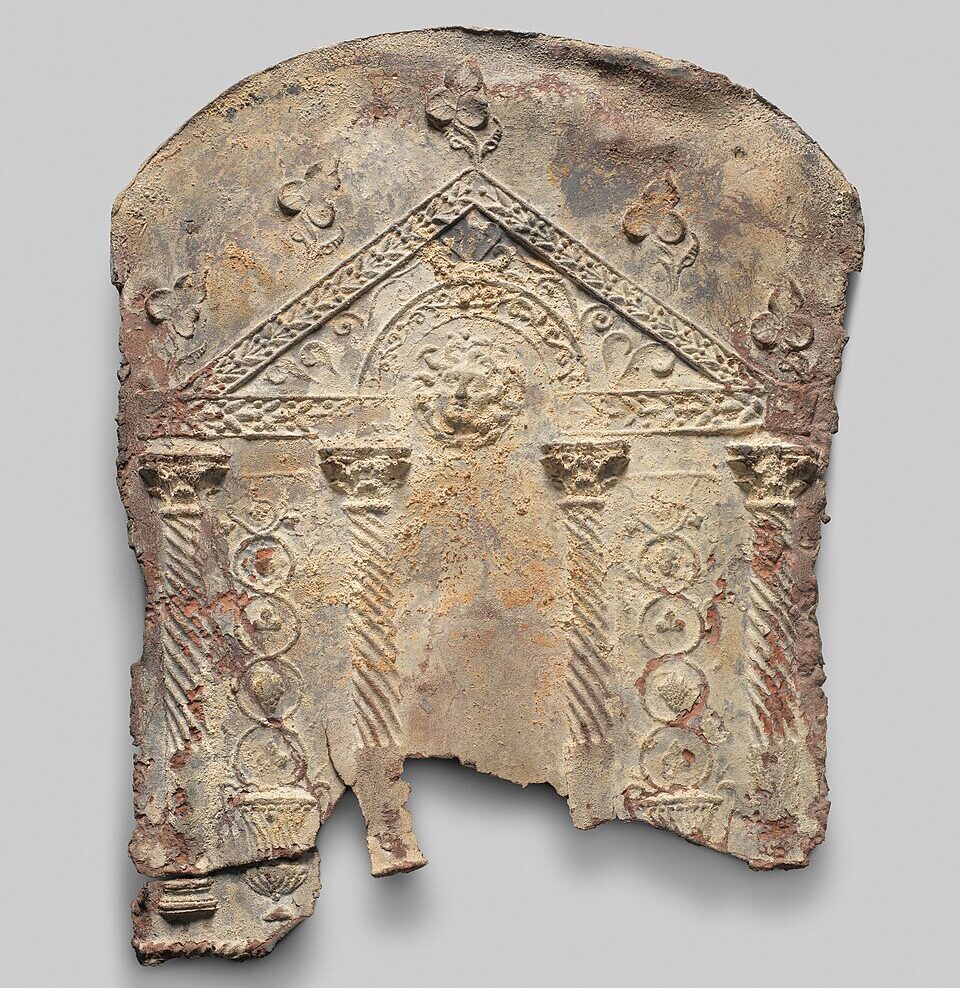
Lead usually corrodes in a boring, predictable way, forming simple carbonate crusts over time. Certain Roman funerary lids and coffins broke that pattern, revealing multi-layered corrosion structures with alternating carbonates, oxides, and trace metal inclusions that hint at either unusually complex burial environments or alloy recipes nobody has fully modeled yet.
A few samples show micro-structures suggesting gradual diffusion of silver or copper into the corrosion layers, along with periodic redox cycles that formed intricate, almost tree-ring-like patterns inside the metal itself. Chemists trying to reproduce these exact layers in controlled lab conditions keep coming up short.
Were Romans deliberately adding trace elements for some symbolic burial effect, or did organic grave goods create oscillating chemical micro-climates nobody has correctly simulated? Nobody’s sure. What’s left behind looks less like decay and more like petrified forests of lead crystal, refusing to fit neatly into any corrosion handbook.
#2 – The Baigong Mountain “Pipes” That Sparked a UFO Frenzy
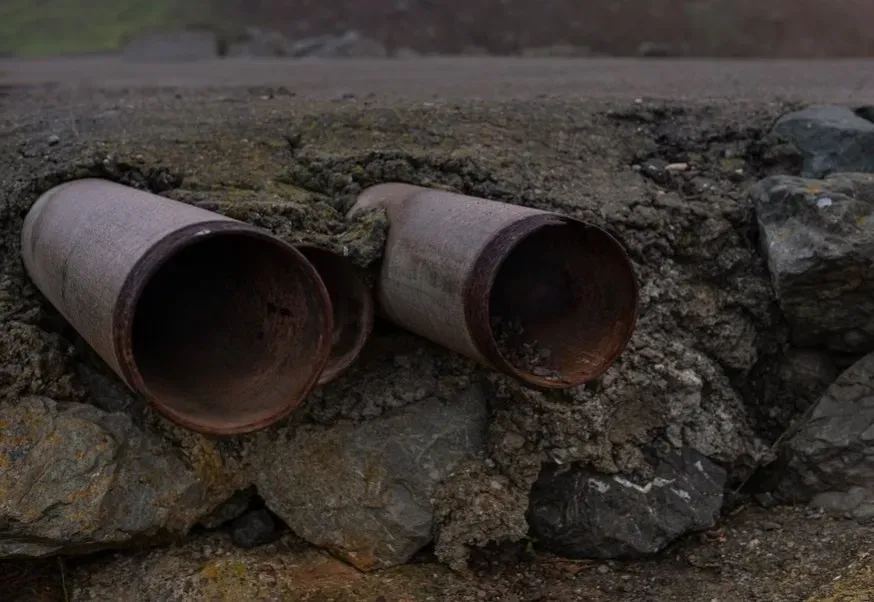
Near Baigong Mountain in China, reports surfaced of metallic cylinders protruding from rock and embedded in nearby sediment, and early tests reportedly found iron mixed with unusual or poorly identified rare elements. That combination was enough to set off a wave of UFO and “impossible metallurgy” theories that spread far faster than the actual science.
More careful follow-up work suggests at least some of these are natural concretions, mineralized root casts or iron-rich nodules that simply happen to look pipe-shaped from a distance. The “mystery elements” may just reflect limited, sloppy early analysis rather than anything exotic.
Still, a few samples show semi-hollow forms and rust behavior similar to low-carbon steel, enough to keep geochemists divided between mundane geology and genuine oddity. What’s clear is that the original claim of fully artificial, precision-cast pipes is almost certainly wrong, but stripping away the hype hasn’t fully closed the file either.
#1 – The Out-of-Place “Machined” Metal Objects That Refuse to Die
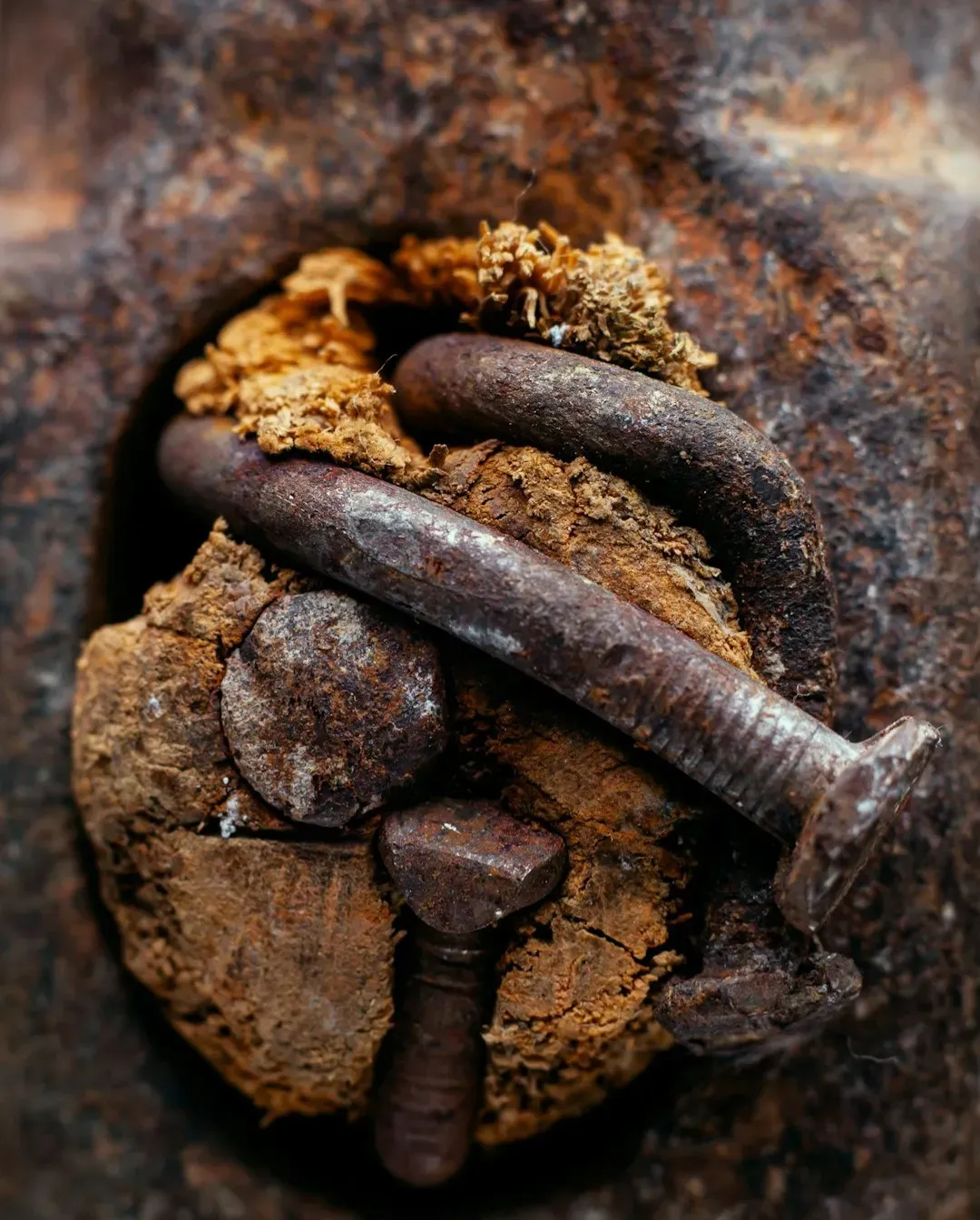
You’ve probably heard at least one version of these stories: a “perfect steel cube” pulled from 19th-century coal, a “metal screw” embedded in solid rock, aluminum objects sitting in prehistoric strata that predate aluminum smelting by millennia. When chemists and geologists actually get hands on real samples, most of these claims collapse fast.
Misdated sediments, modern contamination from tool fragments or old fence wire, and natural crystal formations mistaken for machining explain the vast majority of cases. But here’s the part that keeps this file open: a small subset of finds is poorly documented and impossible to re-examine, originals lost, chains of custody broken beyond repair.
At a Glance
- “Steel cube” in coal: usually traced to a misdated seam or a modern tool fragment
- “Screw” in rock: typically a natural crystal or concretion, not a machined thread
- Aluminum in old strata: almost always modern contamination from nearby debris
- The real problem: many original samples are lost, so a handful of claims can’t be fully closed either way
That leaves a stubborn cloud of unresolved claims that honest scientists can’t fully validate or completely debunk either. Responsible experts will tell you straight that extraordinary age claims for advanced alloys don’t survive contact with current evidence. Yet the pattern of misidentified, misreported, and occasionally genuinely odd metal pieces keeps that OOPArt drawer half open, and that half-open drawer is exactly why this list still matters.
The Bottom Line
Strip away the clickbait, and a harder truth remains standing: the official story of ancient metallurgy still has real holes in it.
From a weatherproof iron pillar and a precision bronze computer to meteor-iron daggers and engineered gold alloys, our ancestors were far better metalworkers than most school textbooks give them credit for. At the same time, plenty of the loudest “impossible metal” claims fall apart the moment a competent chemist gets an actual sample to test.
The real scandal here isn’t aliens. It’s how consistently we underestimate documented human skill, generation after generation, discovery after discovery.
Personally, I think the “nothing to see here” crowd is just as wrong as the “ancient super-tech” believers. Somewhere between those two extremes sits the actual truth: local geniuses, lost recipes, and accidental breakthroughs that never made it into the textbook version of history. We’re clearly missing chapters. Did we leave out an artifact you think genuinely shouldn’t exist? Make your case in the comments.