
Everyone assumes we’ve basically won the decoding game by now. Machine learning reads dead languages, universities run entire departments dedicated to ancient scripts, and every few months a headline screams that some “lost language” has finally been cracked.
So it’s a little unsettling to learn that a working list of ancient writing systems remains stubbornly, officially unsolved – not because nobody tried, but because the smartest people in the field have quietly stopped trying. Some of these scripts belonged to civilizations bigger than ancient Egypt, hiding in plain sight on stone, clay, and wood, refusing to give up a single confirmed sentence. What’s stopping researchers isn’t a lack of effort or funding. It’s something colder: missing context, suspected forgeries, dead languages with zero descendants, and texts so short that even AI has nothing to chew on. Here are the 11 scripts professional linguists have essentially admitted defeat on, and the exact reason each one refuses to talk back.
#11 – The Phaistos Disc: Archaeology’s Favorite Dead End
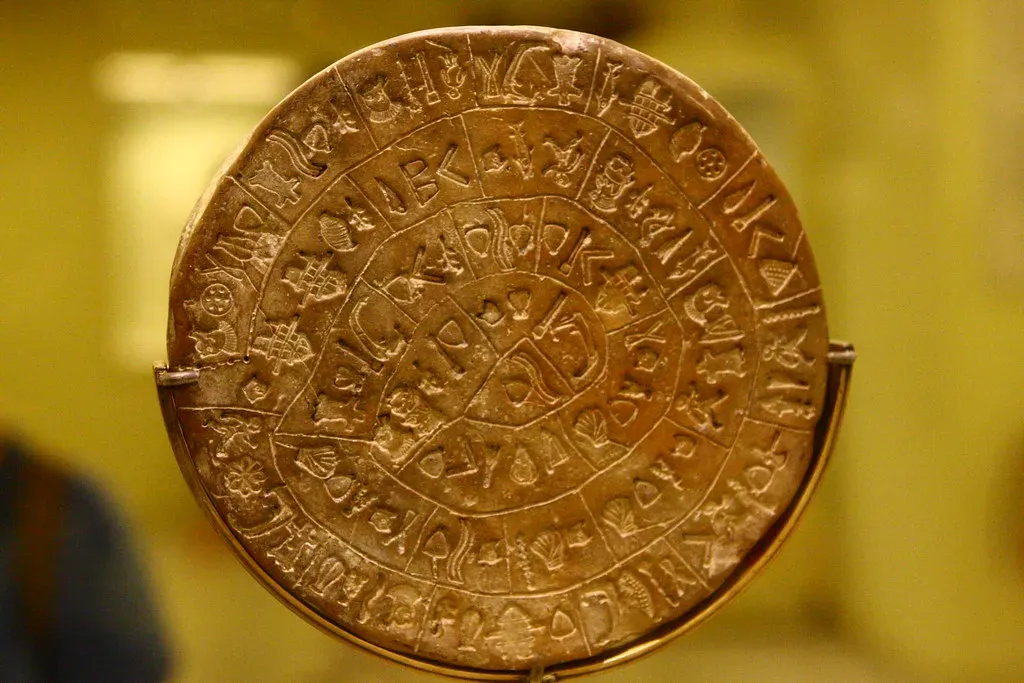
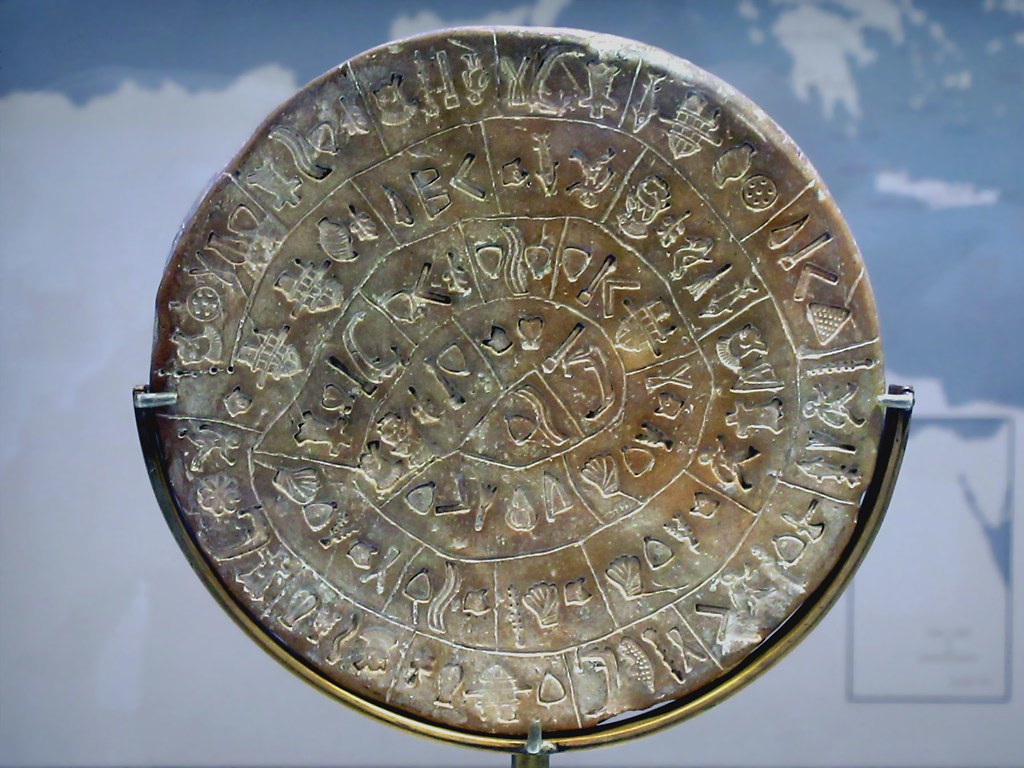
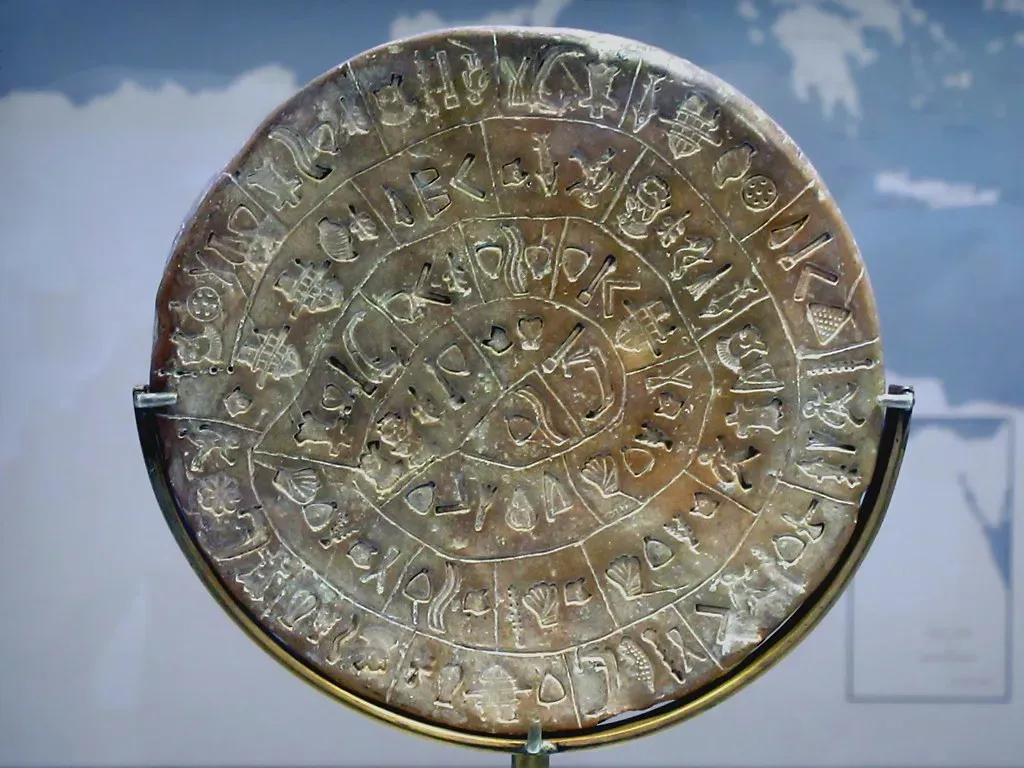
Researchers used to call the Phaistos Disc the “Rosetta Stone of Crete.” Now, many privately call it a linguistic sinkhole. Discovered in 1908 on Crete, it’s a clay disc stamped with spiraling symbols that don’t match any other known corpus.
Fast Facts
- On July 3, 1908, Italian archaeologist Federico Halbherr, his student Luigi Pernier, and a team were excavating the site of a Minoan palace at Phaistos, in southern Crete when they made the find.
- The disc is covered on each side with a spiral text, consisting of a total of 241 occurrences of 45 distinct signs, which were created by pressing individual sign stamps onto the soft clay before firing.
- That “stamped, not carved” production method gives it an oddly industrial look for the Bronze Age – almost like ancient movable type.
- It is now on display at the archaeological museum of Heraklion, still the only object of its kind ever found anywhere.
That’s the core problem: one object, no parallels, no bilingual text. Without a second sample, you can’t test patterns, check grammar, or even confirm the direction of reading with confidence.
Some scholars now suspect it may not be a true writing system at all, but something closer to a symbolic board game or ritual object – meaning there may be nothing to “decipher.” Others argue it’s a forgery planted to impress early excavators.
The result? Serious epigraphers largely avoid it. Journals still occasionally accept wild “solutions,” but major reference works treat the disc as undeciphered and probably undecipherable. But #10 shows the same fate can swallow an entire lost civilization, not just one clay disc.
#10 – The Indus Script: Too Short to Save
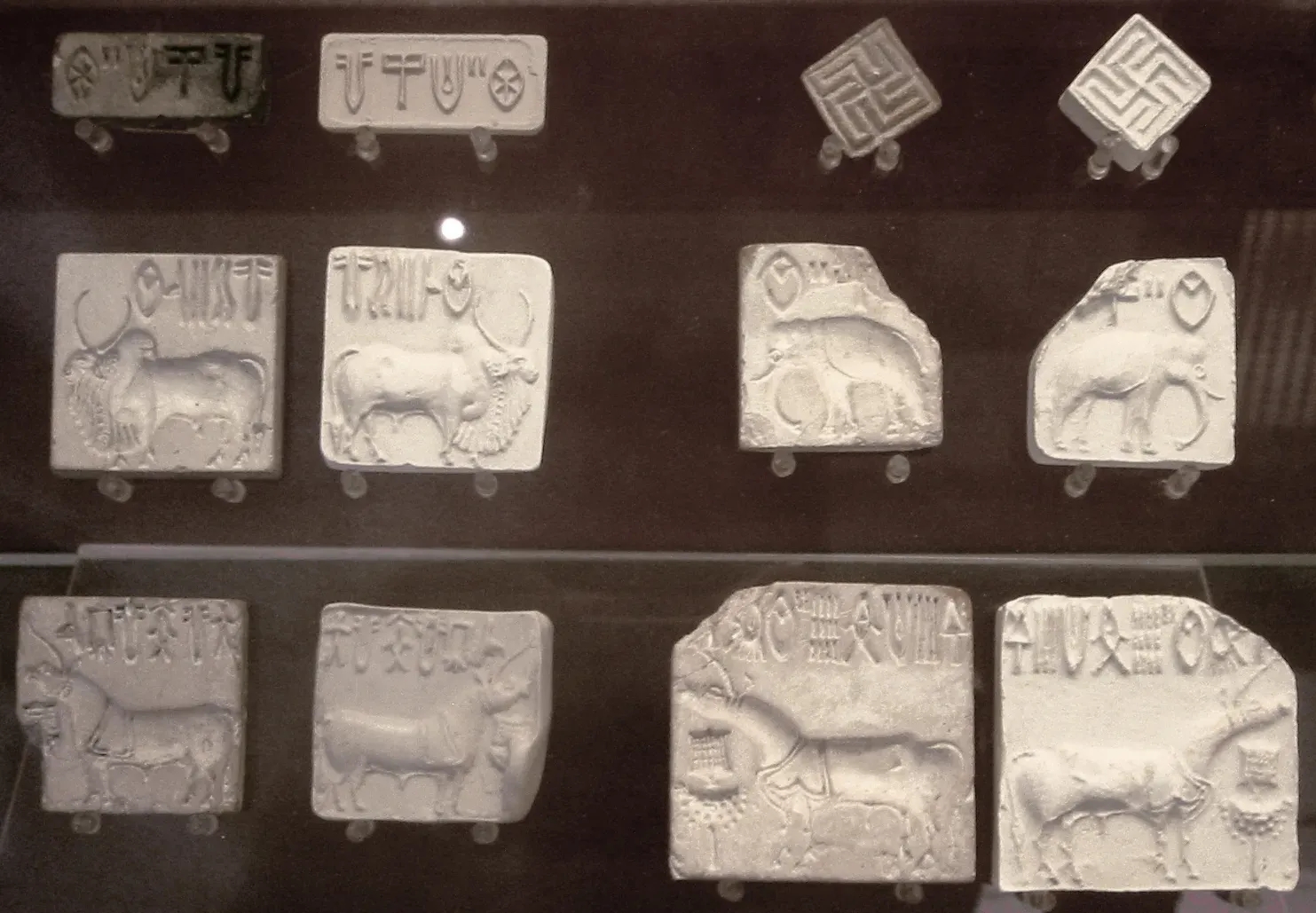
The Indus Valley Civilization was once bigger than ancient Egypt and Mesopotamia combined, yet its script remains mute. The seals and pottery markings from sites like Harappa and Mohenjo-daro show tiny strings of symbols – usually 3 to 7 signs long.
That’s the fatal issue. Most sequences are so short that statistical methods can’t reliably detect grammar or word boundaries. You can’t crack a “language” made mostly of license-plate-length fragments.
To make things worse, scholars still fight over whether this is even a full writing system. A vocal minority claims it’s just non-linguistic symbols used for trade or clan identity, while others insist it encodes a Dravidian language, maybe an ancestor of Tamil.
But nobody has a Rosetta Stone-style bilingual to prove it either way. After a century of excavation and computation, major teams quietly say the same thing: we need longer texts, and those probably don’t exist anymore. Yet even that mystery looks almost tidy next to what happened to Linear A.
#9 – Linear A: The Script That Lost Its Language
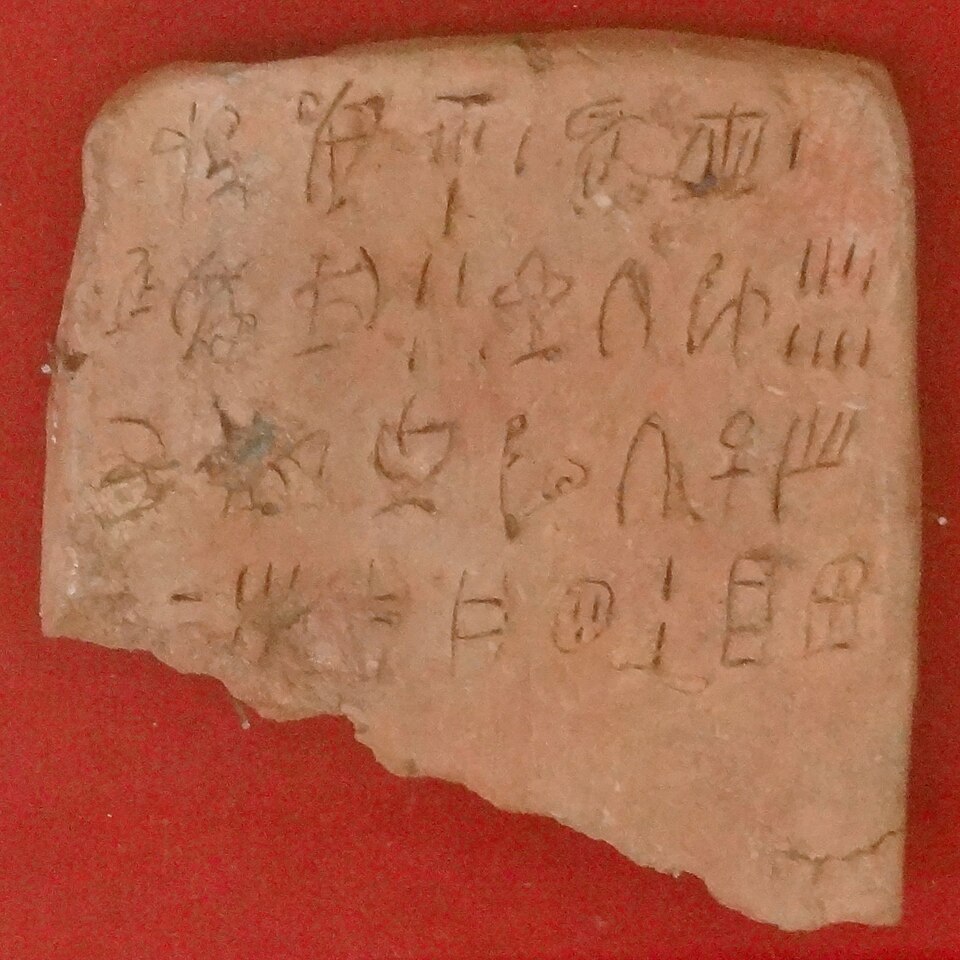
Most people don’t realize we actually cracked Linear B, the script used by Mycenaean Greeks, through brute-force comparison – because we already knew ancient Greek. Linear A, used earlier on Crete, looks similar but hides a critical twist: it records a completely unknown language.
Quick Compare
- Linear B: Used by Mycenaean Greeks; language identified as an early form of Greek; cracked in 1952 once scholars realized which tongue it recorded.
- Linear A: Used earlier on Crete; language still unidentified after a century of study; no confirmed descendant language has ever surfaced.
- Shared signs: Many symbols look nearly identical between the two scripts, but the words they spell in Linear A don’t behave like Greek at all.
- Surviving texts: Mostly religious offerings and accounting lists, rarely personal names – the exact ingredient that helped crack Linear B in the first place.
So even where the signs overlap with Linear B, the words they spell aren’t Greek and don’t match any known language family with certainty. Researchers have tried everything: linking it to Anatolian languages, Semitic tongues, even exotic “lost” families.
Nothing sticks, because the vocabulary doesn’t reliably match anything outside Crete. The surviving texts are mostly accounting and religious lists, which rarely contain personal names that could anchor an identification.
Today, mainstream scholarship treats Linear A as “partially phonetic but linguistically unidentified” – academic-speak for “we have sounds, but no idea what’s being said.” Proto-Elamite takes that exact frustration and multiplies it by three thousand years.
#8 – Proto-Elamite: When Even Numbers Won’t Help
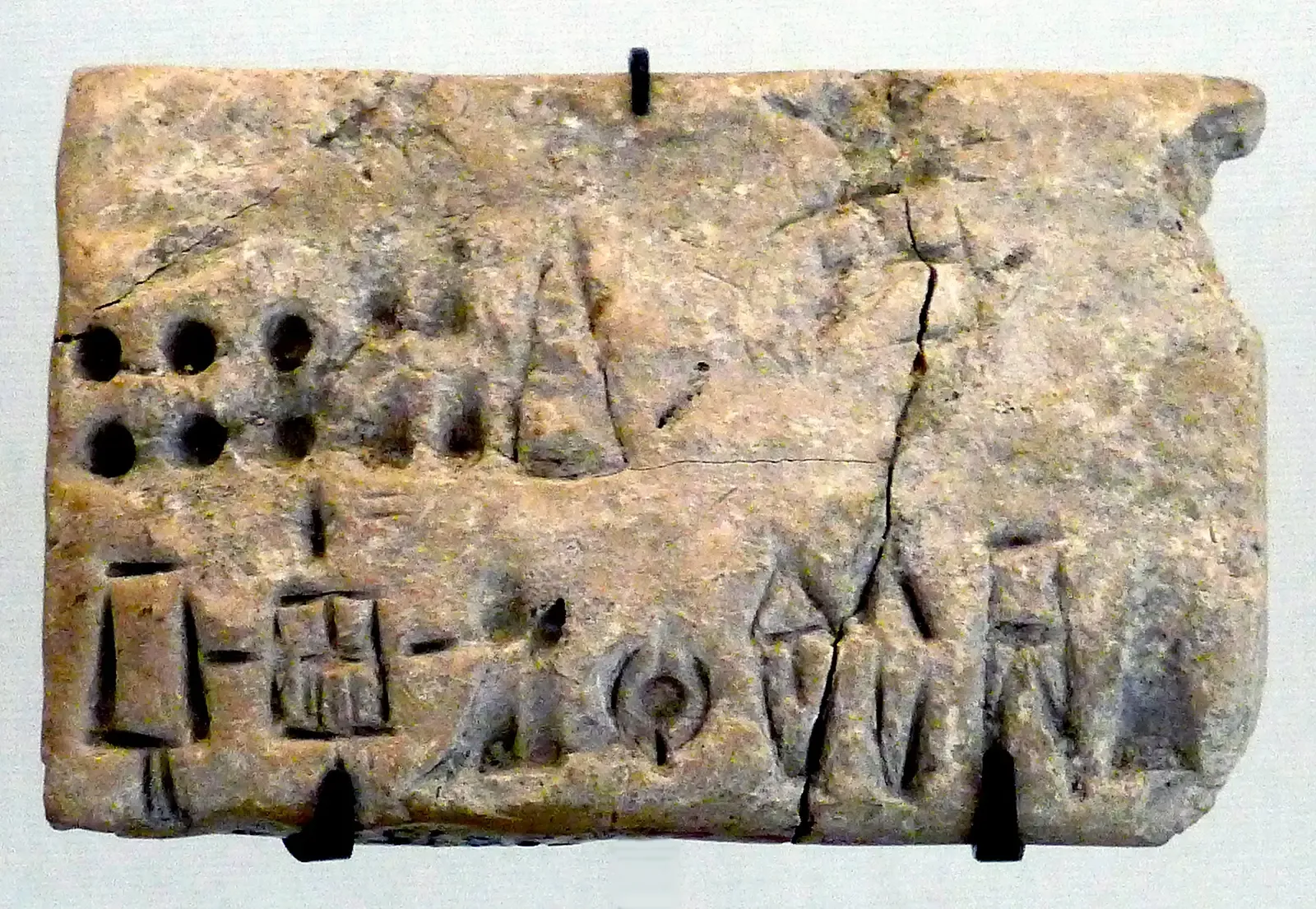
Proto-Elamite, used in what’s now Iran around 3000 BCE, looks like cuneiform’s weird cousin. For decades, linguists hoped it would fall once Sumerian and Elamite studies advanced. It didn’t.
The big clue is that many tablets are administrative, full of tallies and rations. Those should be the easy part: numbers, commodities, names. Yet even there, only parts of the numerical system are securely read, and the “words” attached to them remain largely opaque.
The killer problem is chronological distance. Proto-Elamite is centuries older than later Elamite texts, and researchers aren’t even sure the underlying language is the same one. Without a recognized descendant, you can’t match roots or grammar.
High-profile digital projects have thrown imaging, machine learning, and international teams at it, and the consensus quietly shifted: full decipherment is “unlikely without new, radically different evidence.” Compared to what’s coming next, though, Proto-Elamite almost looks solvable.
#7 – Rongorongo of Easter Island: Writing, or Something Else Entirely?
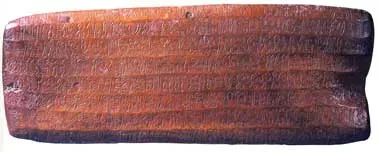
If any script was born for internet conspiracy theories, it’s Rongorongo from Rapa Nui. Wooden tablets covered with looping glyphs, read in a bizarre “reverse boustrophedon” pattern, look like pure science fiction.
For a while, many assumed this was a true script encoding the Rapa Nui language. Now a growing number of scholars openly doubt that. There isn’t a single confirmed instance of Rongorongo being read as meaningful running text.
Worth Knowing
- Today, the rongorongo script survives on less than 30 objects – tablets, staffs, and fragments combined.
- The largest collections are in Paris and Honolulu, with others held in Chile and Russia.
- Radiocarbon testing on one tablet held in Rome found it dates to between 1493 and 1509 – over 200 years before Europeans arrived on Rapa Nui, proving at least some tablets predate contact.
- With no bilingual text and no living tradition of trained readers, computer-built “glyph dictionaries” remain educated guesses, not confirmed translations.
Part of the tragedy is timing. By the time serious documentation began in the 19th century, local experts who allegedly knew the system had been killed, displaced, or converted, and the oral explanations that survived were contradictory or clearly reconstructed after the fact.
Statistical studies found repetition patterns, but they’re just as compatible with mnemonic or ceremonial sequences as with full writing. Mainstream linguistics now lists Rongorongo as undeciphered and possibly not fully linguistic – a double dead end few researchers want to build a career on. The Vinca symbols raise an even more basic question: is this writing at all?
#6 – The Vinca Symbols: Script, Graffiti, or Just Wishful Thinking?
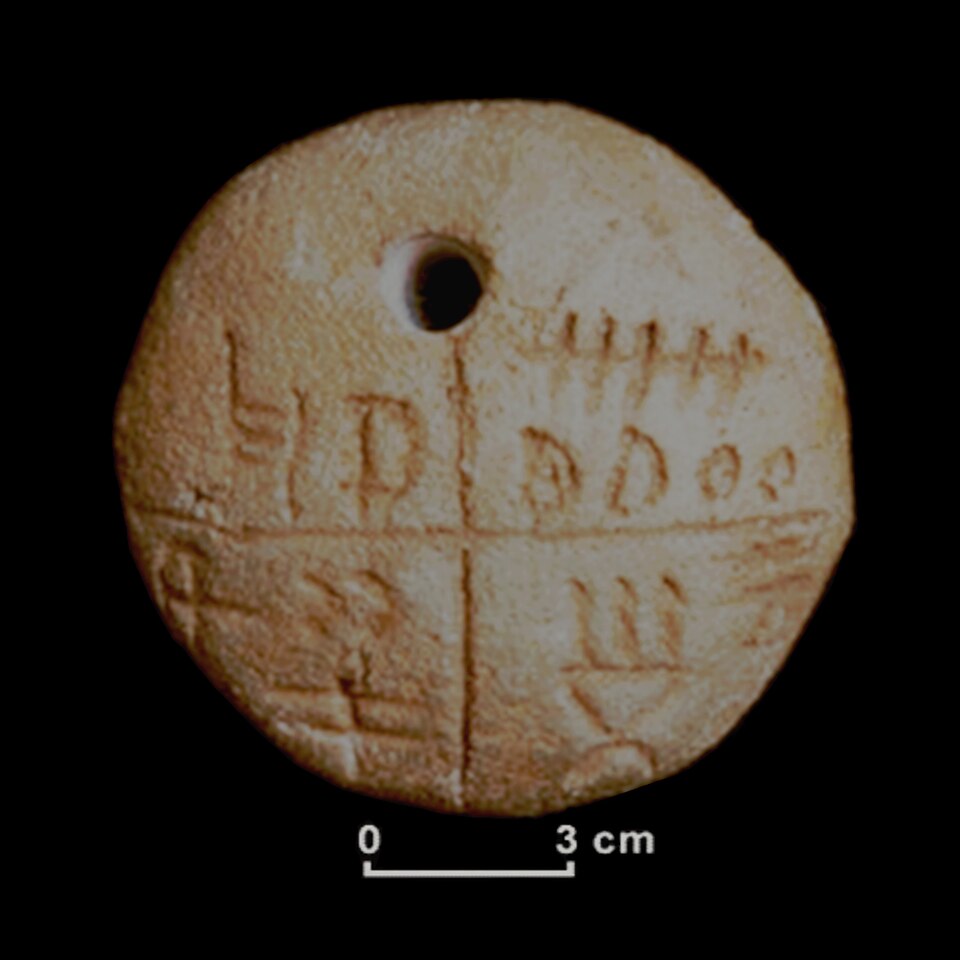
Photos of the Vinca symbols – little marks on Neolithic pottery from the Balkans – circulate online with bold claims like “oldest writing in the world.” Most experts are far less impressed.
The marks are inconsistent, often isolated, and never appear in clearly structured, sentence-like sequences. That’s a red flag, because real writing systems quickly show ordering rules; random scratches don’t.
A handful of archaeologists and independent researchers keep pushing the “true script” angle, arguing for a lost Balkan civilization with writing predating Mesopotamia. Linguists largely see that as wishful thinking, built on a thin, context-poor evidence base riddled with selection bias.
Official overviews now tend to call Vinca marks “proto-writing at best,” which is a polite way of saying nobody’s even sure there’s a language to decode. You can’t decipher something that might not be writing. The Cascajal Block asks the exact same question, just an ocean away.
#5 – The Cascajal Block: A Lone Voice from the Olmec Heartland

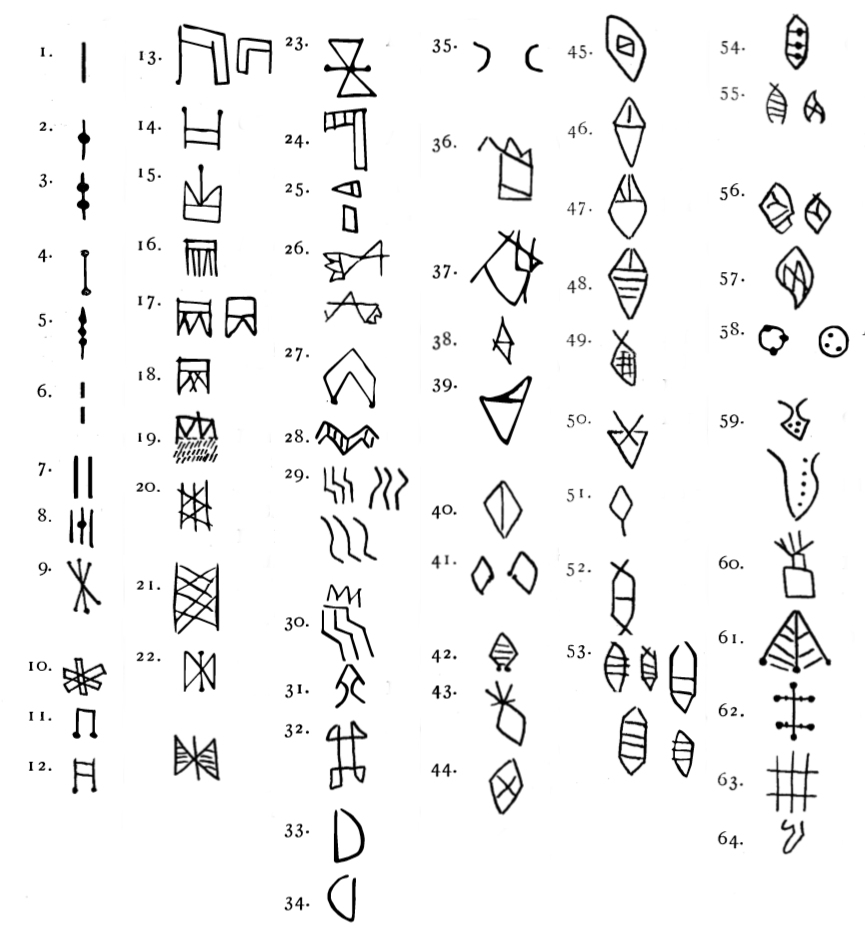
In 2006, the Cascajal Block from Mexico was hailed as the earliest writing in the Americas, linked to the Olmec civilization. It’s a flattened stone covered with 62 signs, some repeating, arranged in what looks tantalizingly like ordered rows.
The problem? To this day, no other artifact uses the same system. We have one text. That’s it – no variant inscriptions, no clear regional evolution, no obvious descendants.
For epigraphers, that’s a nightmare. You can’t test hypotheses when every pattern you “find” might just be coincidence in a sample size of one, and some skeptics even question whether the block’s layout is modern-influenced.
Most specialists accept its authenticity, but admit the script remains unclassified and essentially frozen. With zero bilinguals and no larger corpus, serious decipherment proposals have stalled out completely. Linear Elamite proves that “solved” and “stalled” can somehow describe the exact same script.
#4 – Linear Elamite: Claimed “Solved,” Still Basically Stuck
Every few years, a press release breathlessly announces that Linear Elamite – another script from ancient Iran – has finally been deciphered. The reality on the ground is far less glamorous.
While there are promising proposals, many leading scholars remain unconvinced. The corpus is tiny, and suspected readings often rest on a handful of royal names guessed from archaeology, not purely from the script itself. That’s a huge methodological red flag.
It gets worse. Some of the same signs also occur in Proto-Elamite, which is still largely unread, and disagreements over sign values cascade into wildly different “translations” of the same text.
Official catalogues still list Linear Elamite as only partially deciphered at best, with no consensus grammar or lexicon. In practice, the field has functionally given up on a clean, textbook-style solution arriving anytime soon. The Singapore Stone shows what happens when history itself destroys the evidence.
#3 – The Singapore Stone Inscription: A Text With No Family
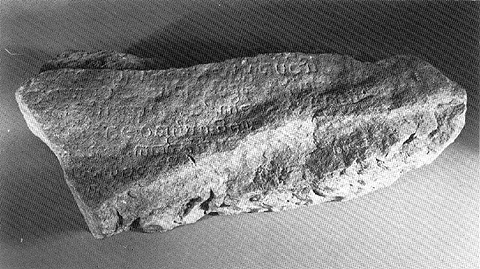
Tourists see the replica of the Singapore Stone as a quaint relic; linguists see a complete headache. The original sandstone slab, once standing at the mouth of the Singapore River, was blown apart in the 19th century.
Only fragments survive, inscribed with a script that doesn’t map cleanly onto any known South or Southeast Asian system. We may not even have full lines of text, just broken shards of something larger.
Various scholars have tried forcing it into scripts like Nagari or Kawi, assigning letters where shapes roughly match. The results have been contradictory, highly speculative, and linguistically unsatisfying.
With so much of the inscription literally destroyed, most modern experts consider the odds of a secure decipherment vanishingly small. Many regional epigraphers now quietly focus on better-preserved inscriptions instead. The Olmec world hides an even messier version of this same problem.
#2 – The Olmec “Writing” Beyond Cascajal: Patterns That Go Nowhere
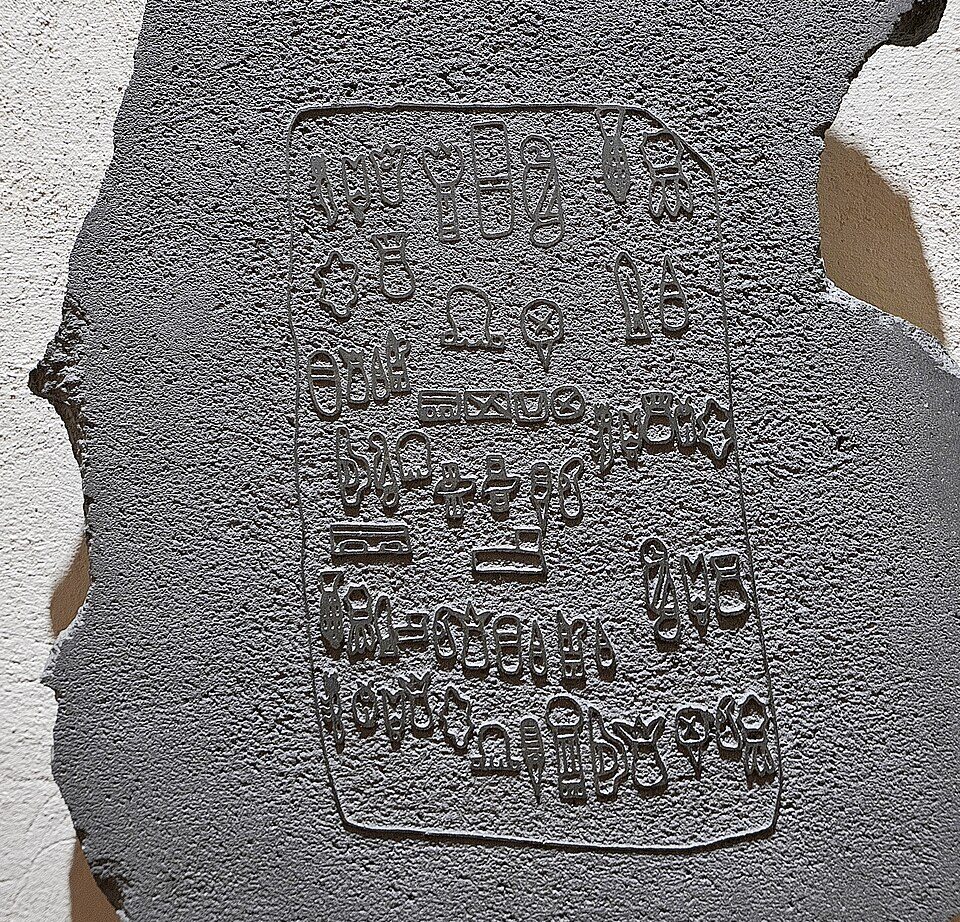
Even beyond the Cascajal Block, archaeologists have found scattered symbols on Olmec-era artifacts across Mexico. Popular articles love to mash these together and claim a grand “Olmec writing system” lurking behind them.
Most serious scholars are far more cautious. The symbols are rare, often isolated, and highly context-dependent, appearing on celts, figurines, or altars without any clear sequencing rules.
That puts them in the same uncomfortable category as Vinca: probably symbolic, maybe proto-writing, but not yet demonstrably a full script. Attempts to treat various Olmec marks as letters or syllables run into the same wall every time – no long texts, no repeating formulae, no bilinguals.
Linguists hate forcing evidence to fit a desired narrative, and that’s exactly what a lot of “Olmec decipherments” look like. The quiet consensus is that, for now, there’s simply not enough to work with, and there may never be. And then there’s the manuscript that finally broke linguists’ patience completely.
#1 – The Voynich Manuscript: The Script Everyone Is Tired Of
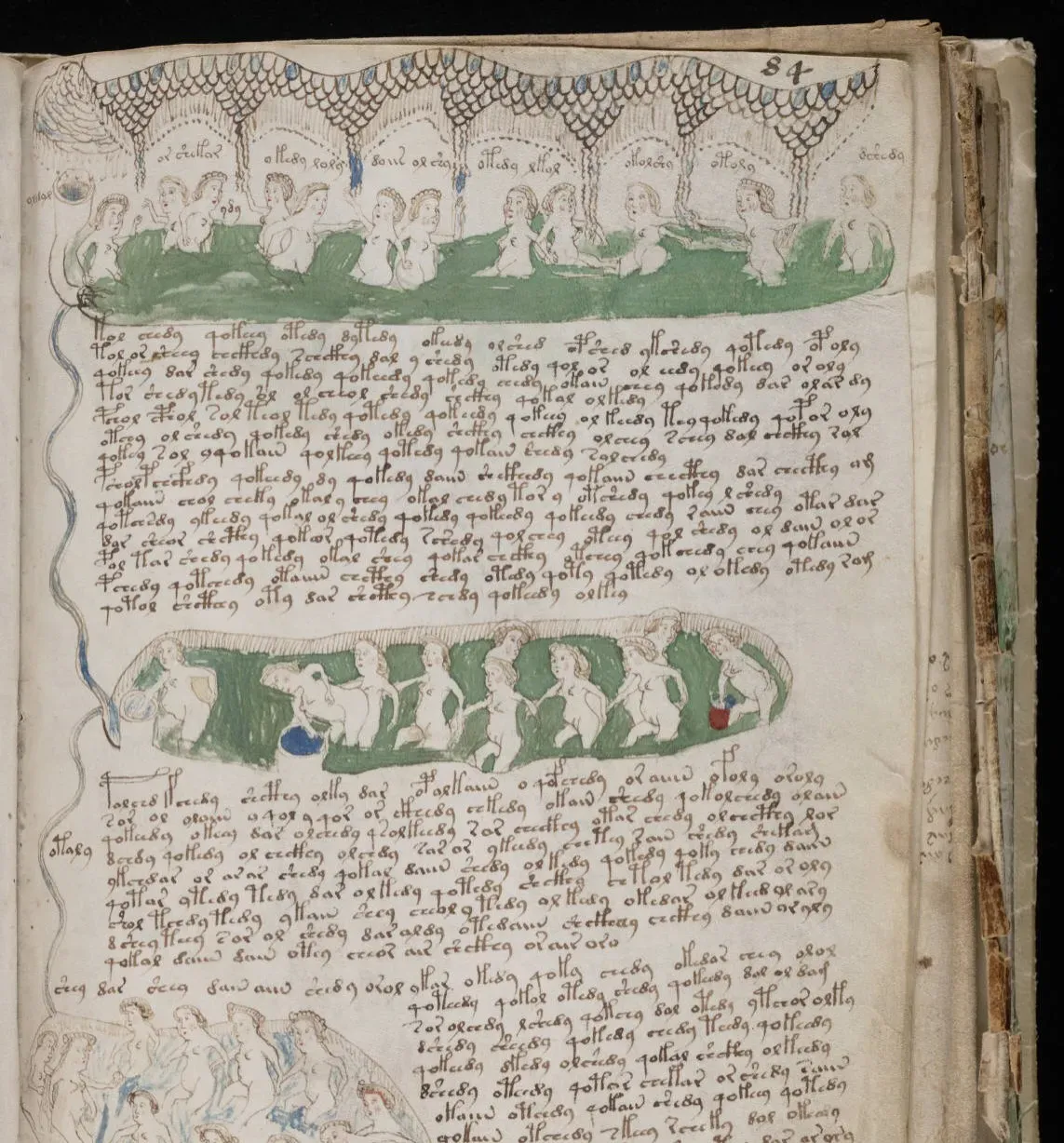
The Voynich Manuscript might be the most famous undeciphered book in the world – and the one professional linguists are most exhausted by. Written in the 15th century in an unknown script, full of bizarre plants and naked bathers, it has spawned more crackpot “solutions” than any other document in history.
Every few months, someone claims they’ve cracked it: it’s Latin, it’s Turkish, it’s proto-Romance. Nearly all of these fall apart under basic scrutiny within days.
“the most challenging type of a decipherment problem”
University of Alberta research team, Transactions of the Association for Computational Linguistics
Here’s the awkward truth: the text shows statistical patterns like a real language, but those patterns are also perfectly compatible with an elaborate hoax or a meaningless pseudo-text. Nobody actually knows if there’s anything meaningful to read at all.
After decades of false alarms, many serious historical linguists now actively avoid Voynich work because the signal-to-noise ratio is so bad, with the field flooded by amateur theories. The manuscript isn’t just undeciphered; it’s become professionally radioactive. That’s about as close to “we’ve given up” as academia ever says out loud.
The Bottom Line
Taken together, these scripts reveal an uncomfortable truth: not every ancient mystery is waiting for a clever hacker or a new AI model to finally crack it. Some systems are probably too fragmentary, too isolated, or maybe not even true writing in the first place.
In plain language, the evidence just isn’t there, and no amount of enthusiasm can conjure it back. Linguists aren’t being lazy; they’re being honest about the limits of data and method.
Personally, I think the real story here isn’t failure, it’s restraint – knowing when to stop pretending a solution is just around the corner. That’s a deeply untrendy opinion in a world that worships “we solved it” headlines.
Did we miss a script you think still has a fighting chance, or one you’re convinced is a hoax? Drop your take in the comments.