
Imagine pressing rewind on the universe. Galaxies shrink, stars un-form, atoms unstick from one another, and eventually even matter thins out into a hot, dense blur. At what point, exactly, does the last conscious experience flicker out? Is there some moment in the deep past when the lights of awareness go completely dark?
That is the unsettling edge of the question behind our title. If consciousness only appears when a brain is around, then almost all of cosmic history played out in total inner silence. But if consciousness is somehow built into the fabric of reality itself, then something – in some sense – was always there, experiencing. The problem is: our best science is powerful on matter and energy, but hazy and divided on mind. So let’s walk through what we actually know, what we speculate, and where things get truly weird.
How Old Is the Universe, and When Did Brains Show Up?
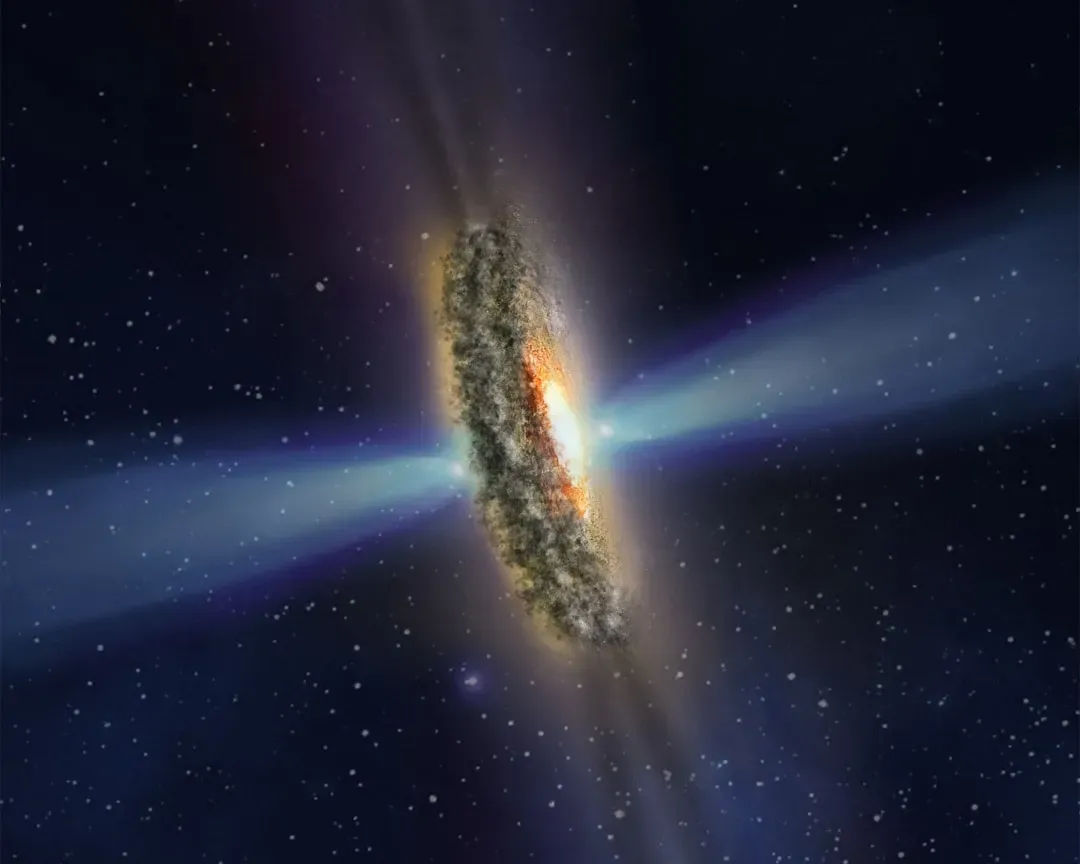
The universe is currently estimated to be about thirteen and a half billion years old, give or take a bit. For a long stretch of that time there were no stars, no planets, and definitely no brains – just an expanding, cooling soup of particles and radiation. Stars only start forming a few hundred million years after the Big Bang, and planets with complex chemistry take even longer to appear.
On Earth, the first life seems to have emerged roughly four billion years ago, but those early organisms were nothing like us. For most of our planet’s history, there were no nervous systems at all, and then only very simple ones. Brains with anything like human-level complexity are extremely recent, on the scale of hundreds of thousands of years, not billions. So if you tie consciousness strictly to complex brains, you’re saying that for more than nine billion years, the universe did everything it did without any subject, anywhere, feeling a thing.
The Standard View: Consciousness as a Late Evolutionary Trick
The mainstream scientific view in fields like neuroscience and cognitive science is straightforward, even if it leaves some big questions unresolved: consciousness is what happens when certain kinds of brains reach a certain level of complexity and organization. On this picture, consciousness is not a basic ingredient of reality; it’s more like a special pattern that emerges in biological systems under very particular conditions.
That means consciousness is contingent, fragile, and probably rare. If no sufficiently complex brain exists, then there is no conscious experience being had by anything anywhere. Worlds without brains are worlds without joy, pain, colors, sounds, or thoughts – they are just particles doing their thing. Under this standard view, the universe did not become aware of itself until relatively late, perhaps only when creatures like us evolved to look back and wonder where we came from.
The Hard Problem: Why Is There Anything It Feels Like to Be?
But here is the catch: even if you explain every neural circuit in a brain, you still haven’t obviously explained why any of that should be accompanied by an inner life. Why should patterns of electrical activity feel like anything from the inside instead of just being complex computations with no one home? This puzzle is sometimes called the hard problem of consciousness.
We can map brain regions that light up when you see red, recall your childhood, or feel afraid, and we can show how specific lesions disrupt specific experiences. But that only gives us correlations between brain states and experiences, not a clear reason why some physical systems seem accompanied by a subjective perspective at all. This gap is what drives people to wonder whether consciousness is really just a late add-on or whether something about it might be more basic than our usual material story allows.
If Consciousness Needs a Brain, the Universe Was Mostly a Silent Movie
Let’s stay, for a moment, with the conservative view: consciousness depends on brains. In that case, for most of cosmic history the universe played out like a movie with no audience. Stars were born and exploded, galaxies collided, black holes devoured gas and light, and absolutely none of it was felt. There were events, but no experiences; a staggering amount of drama, but zero inner point of view.
Even on Earth, for billions of years, there was only mindless chemistry and then simple life that very likely had no conscious experience at all. Only after nervous systems evolved and branched into more complex organisms could anything like a sensation, a mood, or a thought appear. On this view, consciousness is as contingent as a particular mountain range: if conditions had gone differently, there might have been no beings anywhere who ever felt love, fear, or curiosity. That is a sobering picture, even if it fits comfortably with a lot of current science.
The Radical Alternative: Consciousness as a Fundamental Feature of Reality
Now consider the more provocative possibility: that consciousness is not something reality produces late in the game, but something woven into reality from the start. In this camp you find ideas sometimes grouped under labels like panpsychism, which say that at a very basic level, all physical things possess some primitive form of experience or subjectivity, however faint or structureless it may be. Your brain, on this view, does not conjure consciousness from nothing; it organizes many tiny sparks of proto-experience into the rich awareness you know.
In that case, the early universe was never completely dark on the inside. There would have been rudimentary, unimaginably simple forms of “what it is like” associated with even the most basic physical processes. You and I would just be very complex arrangements of something that has been present, in microscopic form, all along. That does not mean rocks have thoughts or stars feel heartbreak; it means that the ingredients that eventually give rise to thought were never purely lifeless to begin with.
Does Physics Leave Room for a Conscious Universe?
At first glance, modern physics seems coldly indifferent to consciousness. Its equations describe fields, particles, forces, and spacetime, not dreams, pains, or colors. Yet physics is also deliberately silent about inner life; it tells us how things behave from the outside, not whether there is anything it is like to be them from the inside. That silence cuts both ways. It makes it hard to argue that consciousness is in the equations, but also hard to prove it is not.
Some thinkers have suggested that to really understand the link, we might need to treat consciousness as an additional basic ingredient alongside mass, charge, or spin. Others propose that the strange probabilistic nature of quantum mechanics might have something to do with observation or awareness, though this remains controversial and very speculative. The honest state of play is this: physics explains what stuff does incredibly well, but it does not yet explain why some of that stuff has an inner point of view. Whether that gap demands a new kind of theory, or just better neuroscience, is still an open argument.
If consciousness is somehow fundamental, then the idea that something was always experiencing everything becomes less mystical and more like a radical reinterpretation of what “matter” actually is. Instead of dead stuff that suddenly wakes up under certain conditions, matter would be more like a spectrum of experiential potential, with complex brains sitting at one rich end of that spectrum. Whether that is true or not, it at least offers a coherent way to imagine a universe that was never entirely devoid of awareness.
Brains as Lenses: From Tiny Glimmers to Complex Inner Worlds
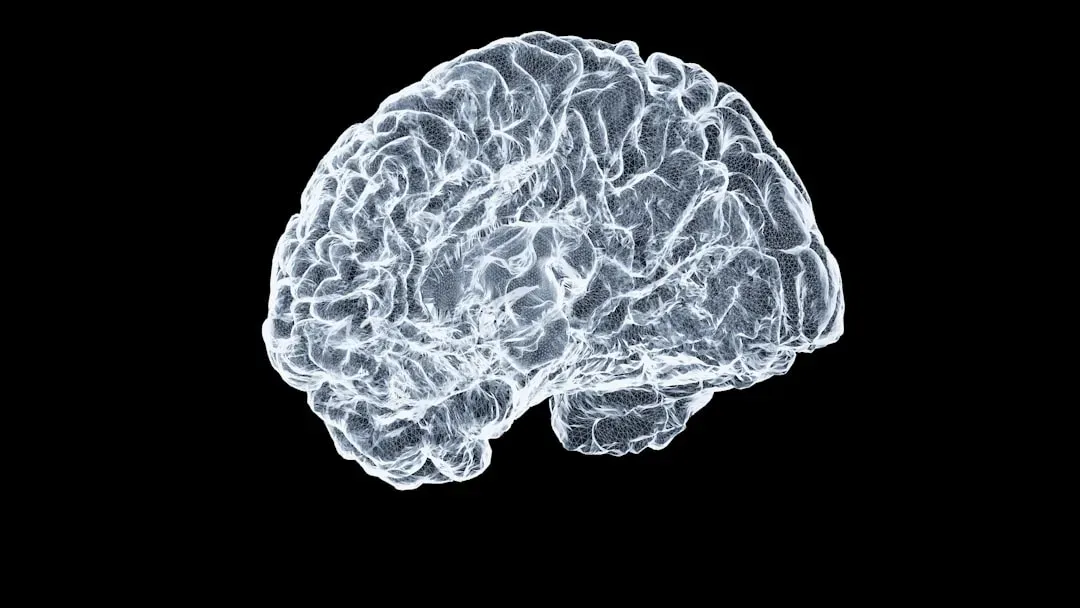
One way to split the difference is to think of brains not as generators of consciousness from nothing, but as lenses or organizers of something more basic. Imagine consciousness as a kind of fundamental “field” in the way physicists talk about fields, and brains as intricate instruments that shape and focus that field into the particular experiences you and I have. A simple organism would be like a cheap, blurry lens; a human brain would be like a high-end camera networked to a supercomputer.
This picture preserves what neuroscience has discovered: damage the lens, and the experience changes or disappears. Alter brain chemistry, and inner life shifts. But it also allows for the possibility that the raw existence of experiencing is not manufactured from scratch by biology, but concentrated and patterned by it. In this sense, the universe may always have had faint, structureless “glimmers,” with complex creatures turning those glimmers into vivid inner movies. It is speculative, but it has the advantage of not requiring consciousness to pop into existence from pure non-experience.
Why This Matters for How We See Ourselves
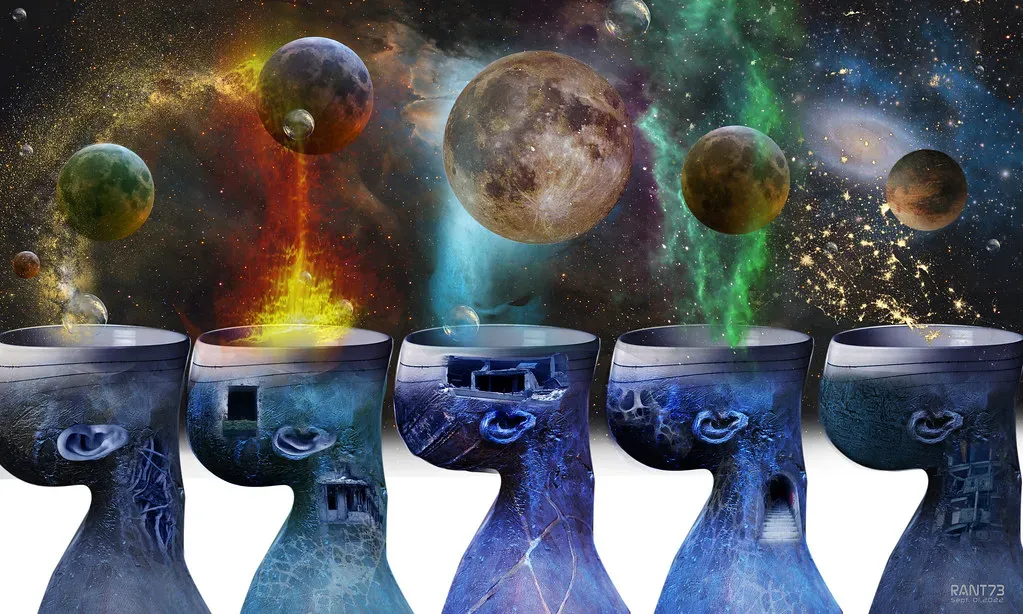
This might sound like pure armchair speculation, but it quietly reshapes how we see our place in the cosmos. If consciousness is a late and fragile accident, then we are extremely rare sparks in an otherwise indifferent sea of matter. That can feel both humbling and isolating: the universe does not care, and we are temporary flukes that briefly become aware and then disappear back into silence.
If, on the other hand, consciousness is in some way fundamental, then being conscious is not a freakish glitch but a deep expression of what reality has been doing from the beginning. We would be one way that the universe experiences itself with more clarity and complexity, not the only time it ever did. Personally, I find that second perspective oddly comforting: it makes inner life feel less like an exception, and more like a natural flowering of whatever the world is at its core, even if we still do not really understand that core.
So Was the Early Universe Unconscious? An Opinionated Take
Given what we actually know, I think it is risky to claim that consciousness obviously requires brains and could not possibly be more basic. The evidence clearly shows that our particular style of rich, self-reflective awareness depends on the brain in all sorts of detailed ways. But that does not automatically prove that the basic fact of there being any experience at all is only ever created by brains, rather than being shaped and intensified by them. That jump from “depends on” to “created from nothing by” is more philosophical than scientific.
So my opinion is this: the safe, sober view is to admit we do not yet know whether the early universe was internally dark or suffused with unimaginably simple forms of proto-experience. The brain-based story is tidy and familiar, but it may be incomplete. The idea that something was always experiencing everything is bold, maybe even a bit wild, but it takes seriously just how strange consciousness is and how stubbornly it resists being treated as a late-stage byproduct. Between a universe that spent nine billion years completely unconscious and one where awareness, in some primitive form, is woven into the fabric from the start, I would tentatively bet on the latter – not because it is comforting, but because our current theories still leave so much explanatory space. If you had to guess, which kind of universe would you rather be living in?