
Most people assume scientific discoveries get locked in the moment they’re announced: dig up a fossil, run a test, publish a paper, done. But history says otherwise. Some of the most famous “facts” science ever handed us – the ones stamped into textbooks, museum halls, and pop culture – were actually built on reconstructions that quietly fell apart the moment someone bothered to look closer.
From dinosaur skeletons wearing the wrong skull to a human ancestor that turned out to be a hoax, researchers have spent the last century walking back conclusions everyone assumed were settled. The unsettling part is how long some of these mistakes survived in plain sight before anyone challenged them. Here’s what actually happened, starting with a bird you’ve probably been picturing all wrong.
#11 – The Dodo Wasn’t the Fat, Clumsy Bird You Picture
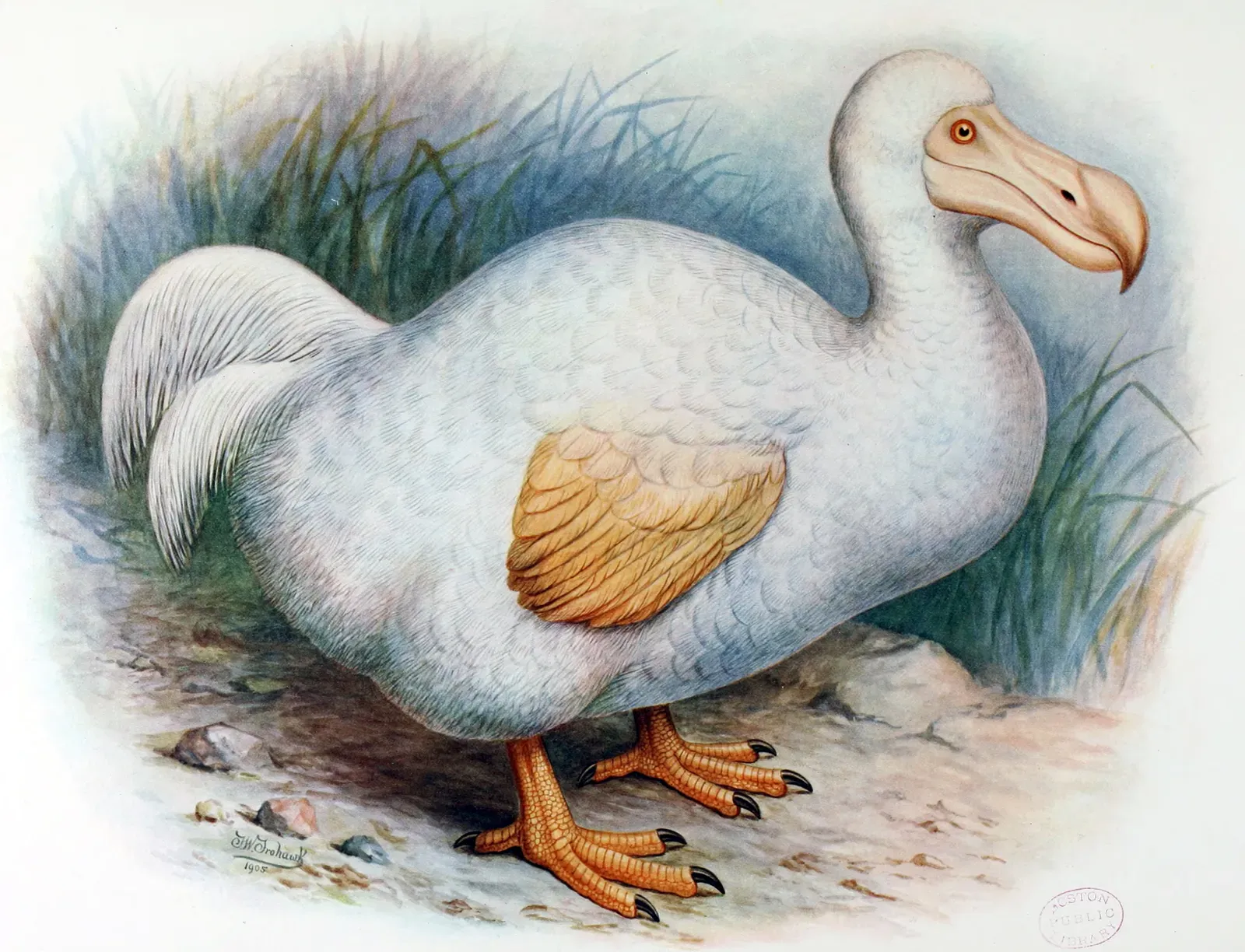
The dodo has been cemented in pop culture as slow, obese, and doomed by its own stupidity.
That image mostly comes from 17th-century sailor sketches and a handful of overfed captive birds drawn in European menageries, not from healthy wild specimens. Later analysis of dodo skeletons suggested the birds in the wild were leaner and more streamlined, with sturdier legs built for covering ground quickly through Mauritius’s forest floors.
Researchers now argue the “fat and foolish” dodo was likely a reasonably agile forager, not the waddling cartoon it became. The extinction itself wasn’t about clumsiness either – it was driven by introduced predators and habitat loss after human settlers arrived, a far less flattering story about us than about the bird. The “stupid dodo” label has stuck around anyway because it’s a better punchline than “victim of invasive species.”
#10 – Saturn’s Rings Weren’t Always Thought to Be Made of Debris
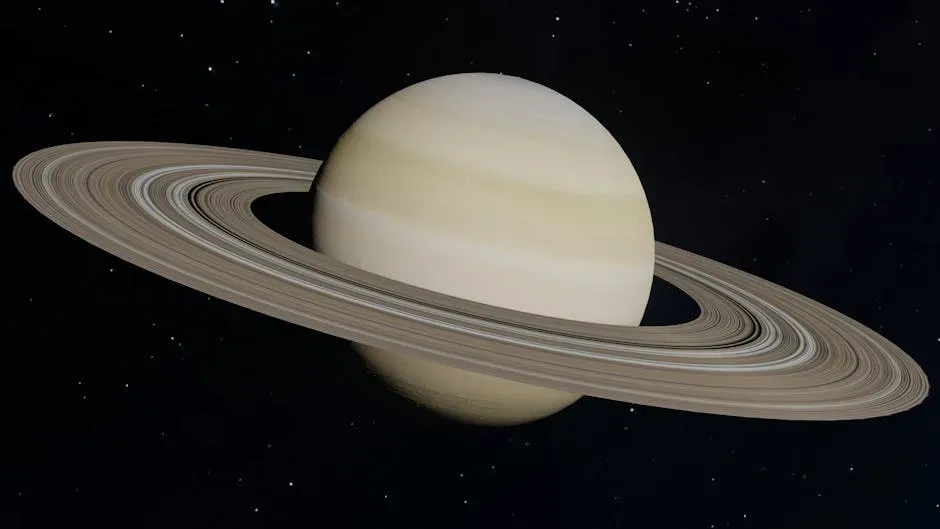
Early telescope observers assumed Saturn’s rings were solid, continuous sheets circling the planet like a giant disc.
That idea held for centuries until mathematical analysis in the 1800s showed a solid ring would tear itself apart under gravitational stress. It took spacecraft flybys in the late 20th century to actually confirm what the math predicted: the rings are countless individual chunks of ice and rock, ranging from dust grains to house-sized boulders, all orbiting independently.
The “solid ring” model that dominated public imagination for generations was never physically possible, yet illustrations kept depicting Saturn with smooth, uniform bands long after scientists knew better. Spacecraft data later revealed the rings are also far thinner and more dynamic than early astronomers imagined, with gaps carved out by small embedded moons. The gap between what telescopes could see and what was actually true stretched on far longer than most people realize.
Fast Facts
- Made of countless ice and rock chunks – from dust grains to house-sized boulders
- 19th-century math proved a solid ring would rip itself apart
- Not confirmed as debris fields until late-20th-century spacecraft flybys
- Small embedded moons carve visible gaps between the ring sections
#9 – A Cambrian Fossil Was Reconstructed Completely Upside Down

For years, one of the strangest fossils from the Cambrian explosion was drawn walking on spines that were actually its back.
Paleontologists initially reconstructed the creature with its row of spikes pointing downward like legs and a soft, wavy structure on top serving as some kind of tentacled back. Further specimens with better preservation revealed the entire orientation had been flipped: the “legs” were actually defensive spines running along the top of the animal, while the true legs were the soft, thin structures underneath.
The fossil had essentially been walking upside down in every scientific illustration for years. Researchers had also mistaken which end was the head, adding a second layer of correction once clearer specimens turned up in China. It’s a case that gets taught in paleontology courses specifically because it shows how confidently wrong even careful scientists can be with incomplete fossil evidence.
#8 – Continental Drift Was Mocked for Decades Before It Was Proven Right
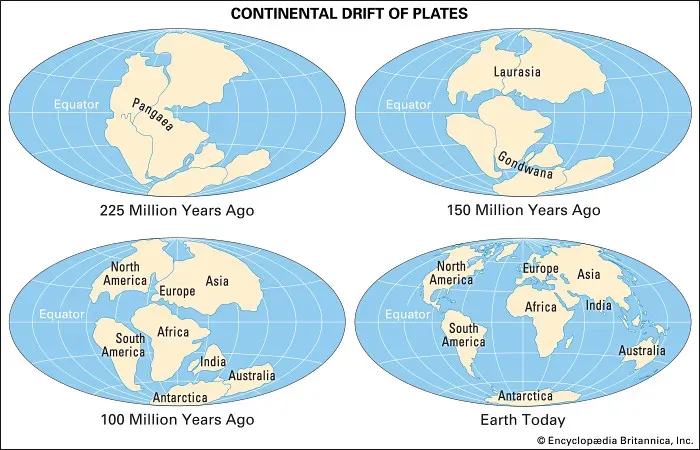
When a meteorologist proposed that continents physically moved across Earth’s surface, the geology establishment didn’t just disagree – they ridiculed him.
The idea, first pitched in the early 1900s, was dismissed largely because its original proponent couldn’t explain a believable mechanism for how massive landmasses could plow through solid ocean floor. Geologists mocked the theory publicly for decades, treating it as an outsider’s fantasy rather than serious science.
Scientists still do not appear to understand sufficiently that all earth sciences must contribute evidence toward unveiling the state of our planet in earlier times.
Alfred Wegener
It took the discovery of seafloor spreading and magnetic striping on the ocean floor in the 1960s to finally validate what had been dismissed for half a century. The scientist who first proposed continental drift died before ever seeing his idea vindicated as plate tectonics. Textbooks had to be quietly rewritten once the evidence became undeniable, turning a mocked fringe theory into the foundation of modern geology.
#7 – “Junk DNA” Turned Out to Be Running the Show

For decades, scientists confidently wrote off 98 percent of the human genome as evolutionary leftovers with no real purpose.
The term was coined in 1972 by geneticist Susumu Ohno, built on the assumption that only the small fraction of DNA coding directly for proteins actually mattered. Fair or not, that label stuck for decades, defining the vast majority of our genetic material as biological debris.
That assumption collapsed once a massive international sequencing project began systematically mapping what those forgotten regions were actually doing. Later estimates suggested the vast majority of the genome carries some form of biochemical activity, largely regulatory switches that control when other genes turn on and off. Recent research has gone even further, showing that ancient viral DNA embedded in our genome, once dismissed as genetic junk, may play powerful roles in regulating gene expression during early human development. What scientists once tossed in the trash turned out to be running much of the show.
At a Glance
- 1972: Geneticist Susumu Ohno coins the term “junk DNA”
- Roughly 98% of the human genome was originally written off as non-coding filler
- Large-scale sequencing later found most of that DNA shows biochemical activity
- Ancient viral DNA fragments now appear to help regulate early human development
#6 – Neanderthals Weren’t the Hunched Brutes We Were Taught
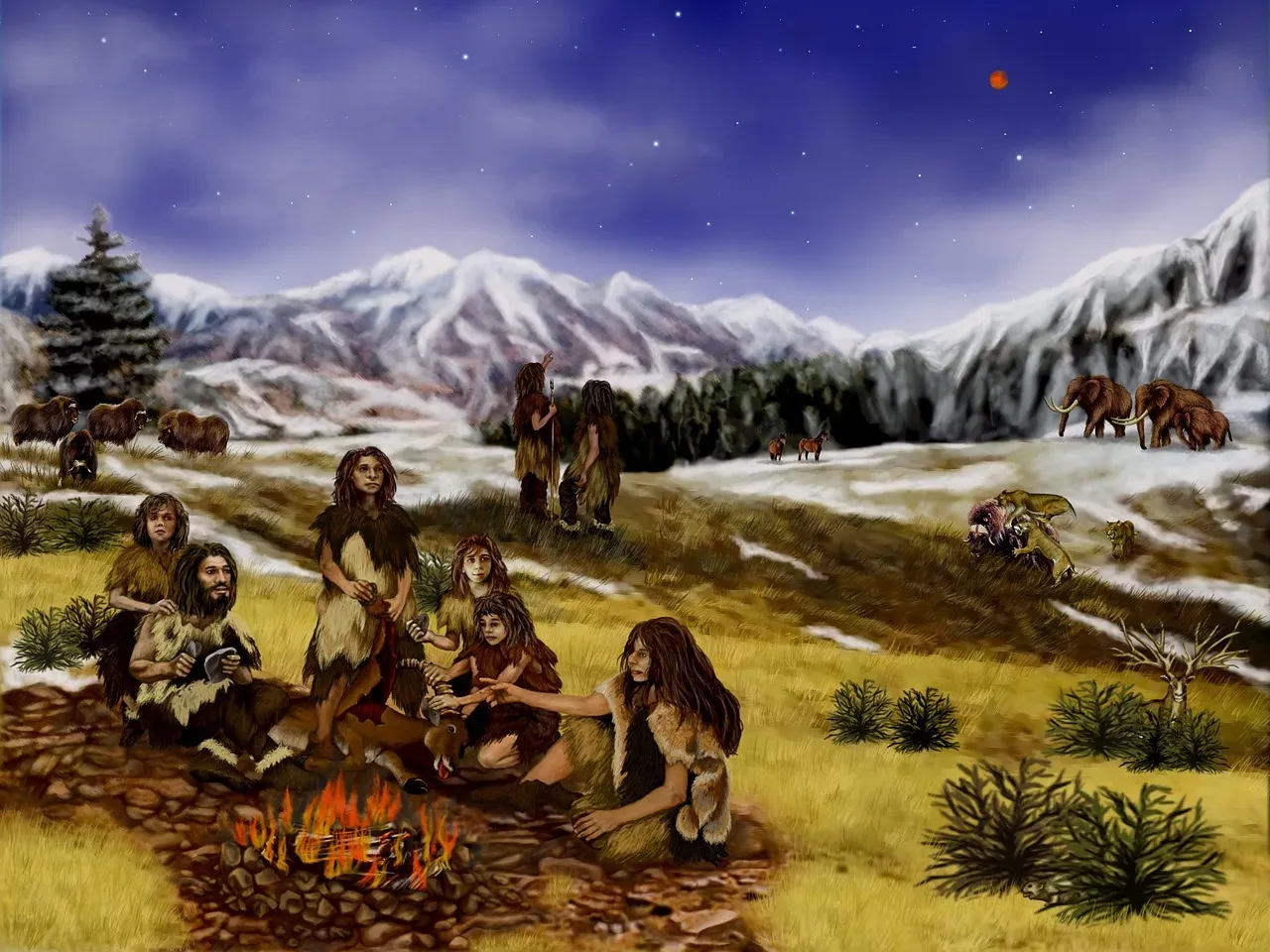
The image of a slouching, knuckle-dragging Neanderthal wasn’t based on typical anatomy – it was based on one sick old man.
Discovered in France in 1908, the skeleton known as the ‘Old Man of La Chapelle’ was reconstructed with a severely curved spine, bent knees, flexed hips, and a head jutting forward. That single stooped posture became the blueprint for how an entire species was imagined for the next fifty years.
Later re-examination revealed the man suffered from severe osteoarthritis, and researchers found that many features once thought unique to Neanderthals actually fall within normal modern human variation. A more recent reassessment using modern imaging went further, concluding the specimen had the same lower back and neck curvature as any modern human, directly contradicting the hunched, half-erect model. The “primitive slouching brute” was, in truth, an elderly, arthritic man who very likely walked upright just like the rest of us.
#5 – Stomach Ulcers Weren’t Caused by Stress or Spicy Food
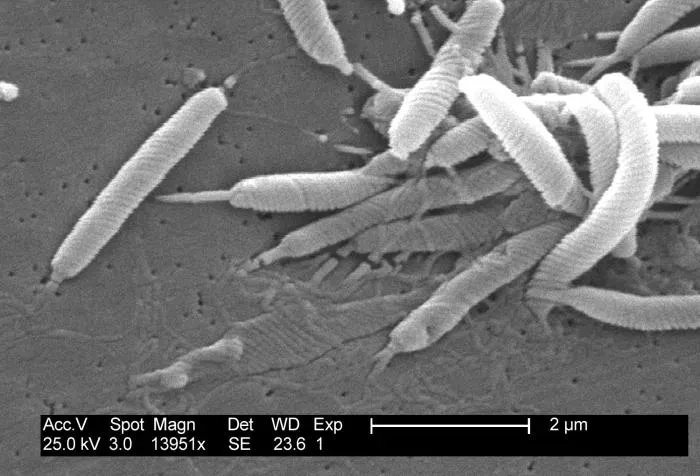
For most of the 20th century, doctors were certain ulcers came from stress, acid, and poor diet – and they treated patients accordingly for decades.
Medical consensus held firm that excess stomach acid, worsened by anxiety and lifestyle, was the root cause of peptic ulcers. Treatment focused almost entirely on acid-blocking medication and stress reduction, an approach that managed symptoms without ever addressing the actual source.
Two Australian researchers challenged that consensus by identifying a corkscrew-shaped bacterium living in the stomach lining of ulcer patients, a discovery so contested that one of them reportedly drank a culture of the bacteria himself to prove it caused illness. The medical establishment resisted the bacterial explanation for years, even after strong evidence emerged, because “stress causes ulcers” had been unquestioned dogma for generations. The researchers eventually won the Nobel Prize once the bacterial cause was fully accepted, and antibiotics – not antacids – became the real cure. It remains one of medicine’s most stubborn refusals to update a wrong idea.
#4 – T. Rex Didn’t Stand Upright Like a Scaly Kangaroo
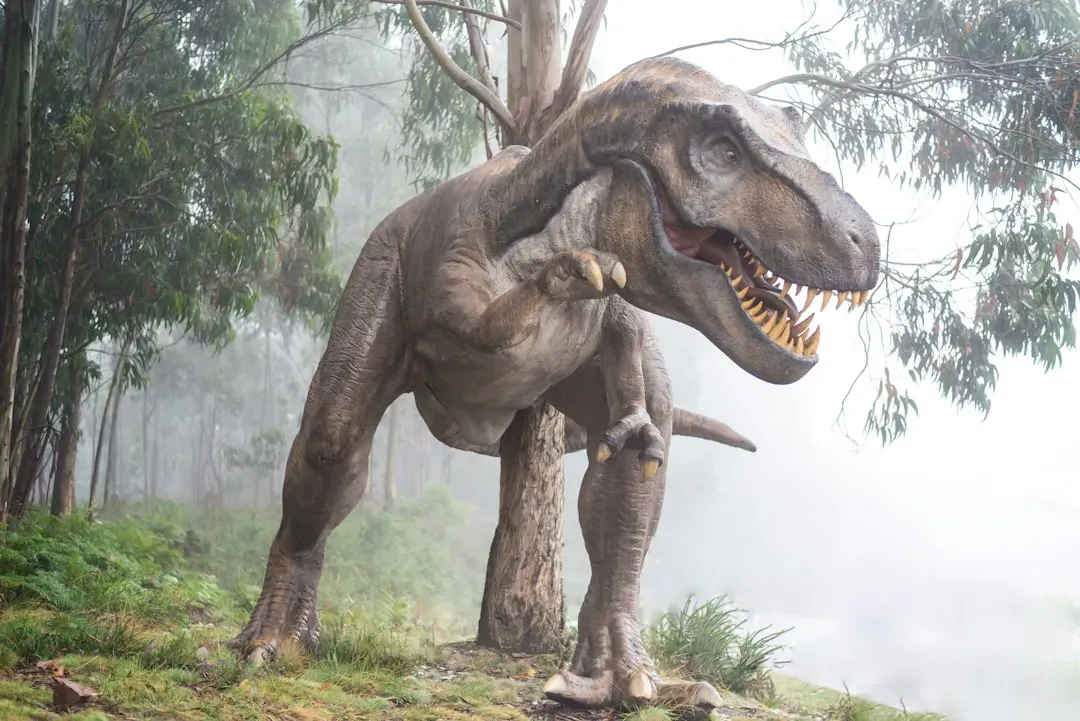
The T. rex that terrified generations of museum visitors was propped up in a posture that biomechanics simply cannot support.
In 1915, paleontologist Henry Fairfield Osborn unveiled a nearly complete T. rex skeleton at the American Museum of Natural History, standing upright like a kangaroo and balancing on its tail. That tripod pose dominated illustrations, films, and museum halls for decades.
Since the 1960s, scientists have known the upright pose couldn’t be correct – the dinosaur’s body was actually held more or less horizontal, with its tail balancing out its massive head, both cantilevered out from powerful rear legs. The correction took so long to reach the public that a 2013 study found most students still drew T. rex in the scientifically dead upright posture, with 63 percent of pre-college students and 72 percent of college-age students still sketching it standing tall with a dragging tail. It wasn’t until Jurassic Park popularized the horizontal-spine version in 1993 that the corrected posture finally started overtaking the old myth in public imagination.
Quick Compare
- Old model (1915): Upright, kangaroo-style tripod pose balanced on the tail
- Corrected model (1960s onward): Horizontal spine, tail counterbalancing the head
- Public lag: A 2013 study found most students still drew the outdated upright pose
- Turning point: Jurassic Park’s 1993 horizontal T. rex helped the correction finally stick
#3 – Ötzi the Iceman Wasn’t a Simple Accident Victim
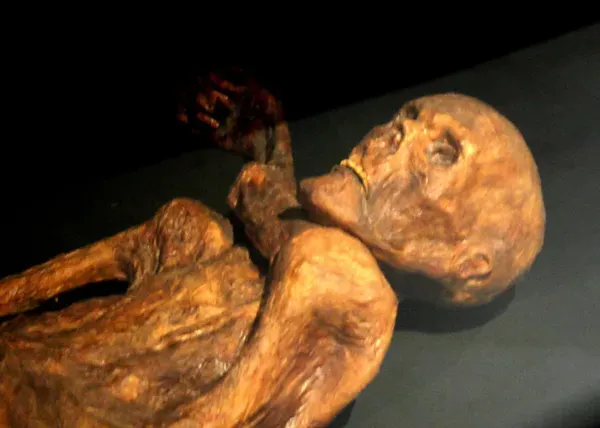
When hikers found a 5,000-year-old mummified body frozen in the Alps in 1991, researchers assumed he’d simply gotten caught in a storm and died of exposure.
That theory held for roughly a decade, treating the remarkably preserved body as a tragic but unremarkable case of a traveler overwhelmed by alpine weather. A closer forensic reexamination years later turned that story upside down: imaging revealed an arrowhead lodged deep in his shoulder, along with defensive wounds on his hands, indicating he’d been in a violent confrontation shortly before death.
The “accidental death by weather” theory was replaced with evidence of what researchers now describe as one of the oldest documented homicides ever discovered. Further analysis suggested he’d been on the run, possibly wounded earlier, before finally collapsing high in the mountains, alone and bleeding. What began as an archive-worthy accident became a genuine Bronze Age murder mystery, complete with a weapon, a wound, and a manhunt no one solved for five millennia.
#2 – The Most Famous Dinosaur Skeleton Ever Mounted Had the Wrong Head
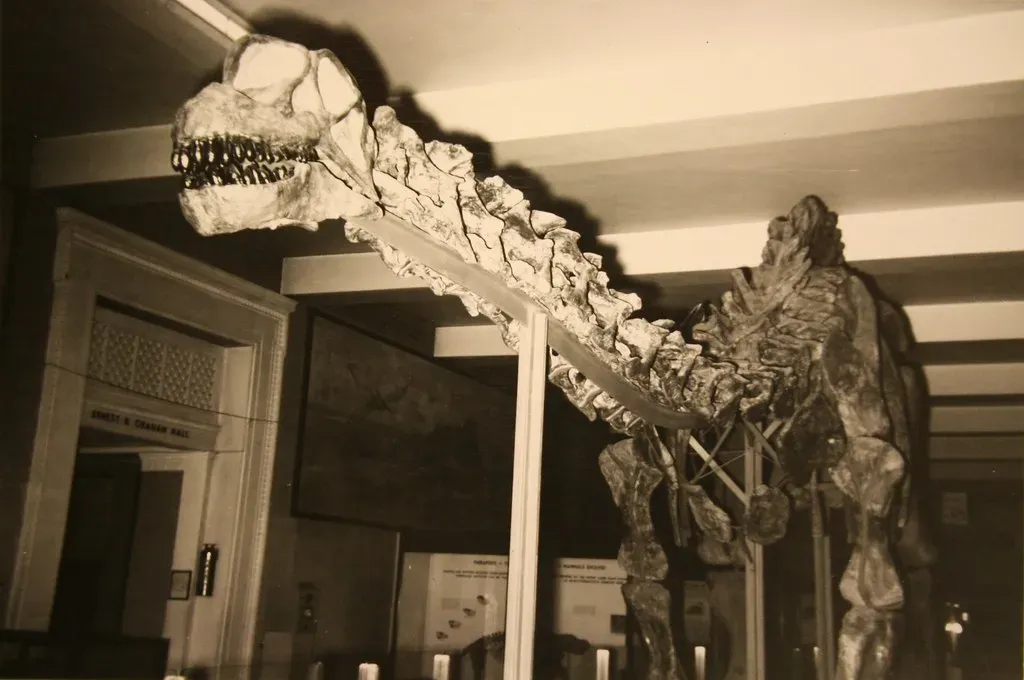
Brontosaurus captured public imagination for over a century, but the skull sitting on that iconic skeleton never actually belonged to it.
Even though the original paleontologist had published a full restoration of the dinosaur in his famous reference book, no skull had actually been found at the time the skeleton was assembled. What kind of head the animal had was pure speculation, so the reconstruction borrowed a skull thought to belong to a different genus entirely, found at a separate site, just to complete the display.
That mismatched head stayed bolted onto museum mounts for nearly seventy years before researchers finally proved it was wrong. A 1975 study re-describing the skull and jaws confirmed that many genuine sauropod skulls had simply been misassigned to the wrong genus based on superficial similarities. The name “Brontosaurus” itself was scrapped for most of the 20th century as scientifically invalid, only to be controversially reinstated in 2015 after new statistical analysis argued it deserved to stand as its own genus after all.
#1 – The “Missing Link” That Fooled Science for 41 Years Was a Fraud
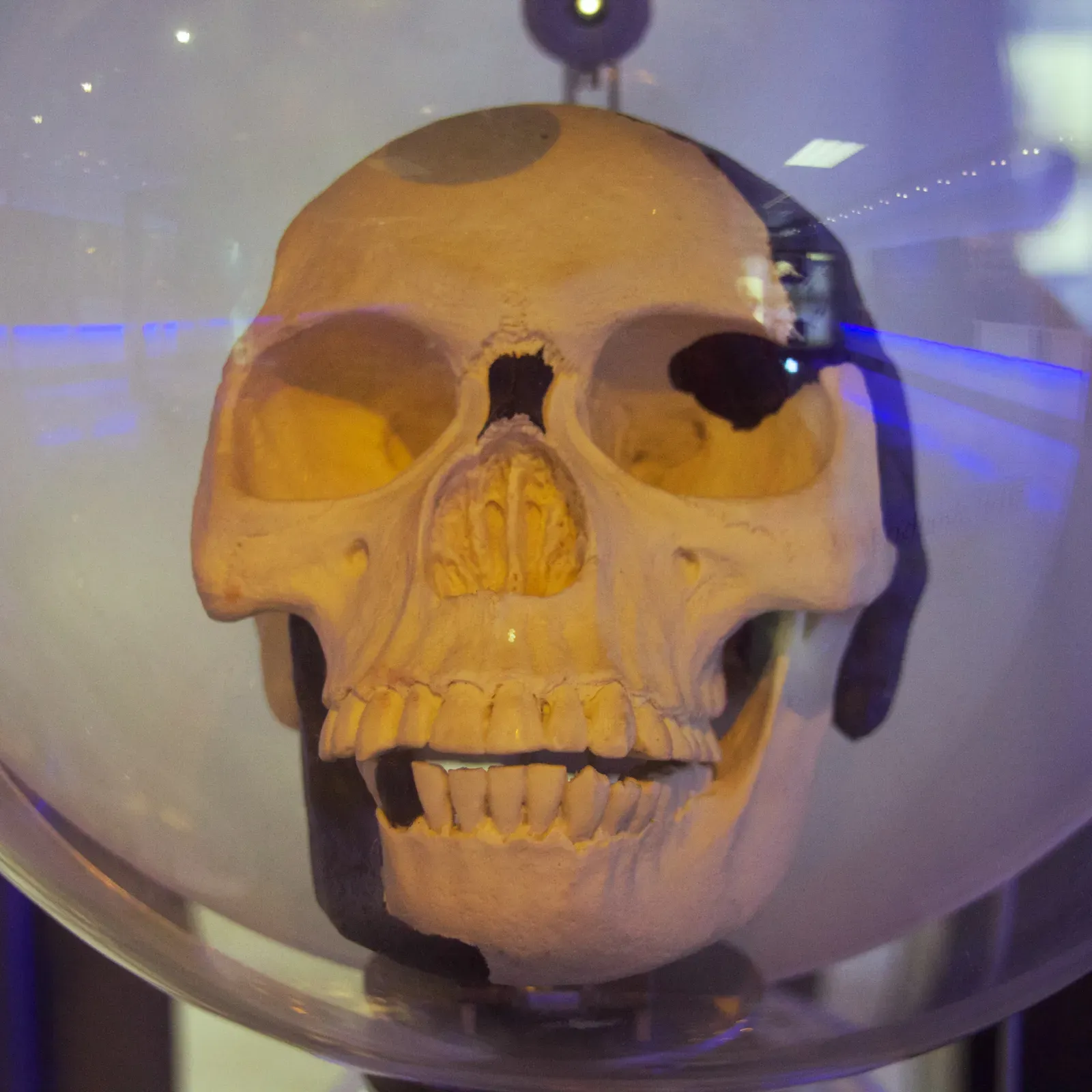
No entry on this list beats the sheer audacity of a discovery that wasn’t just misinterpreted – it was faked from the start, and the scientific world fell for it completely.
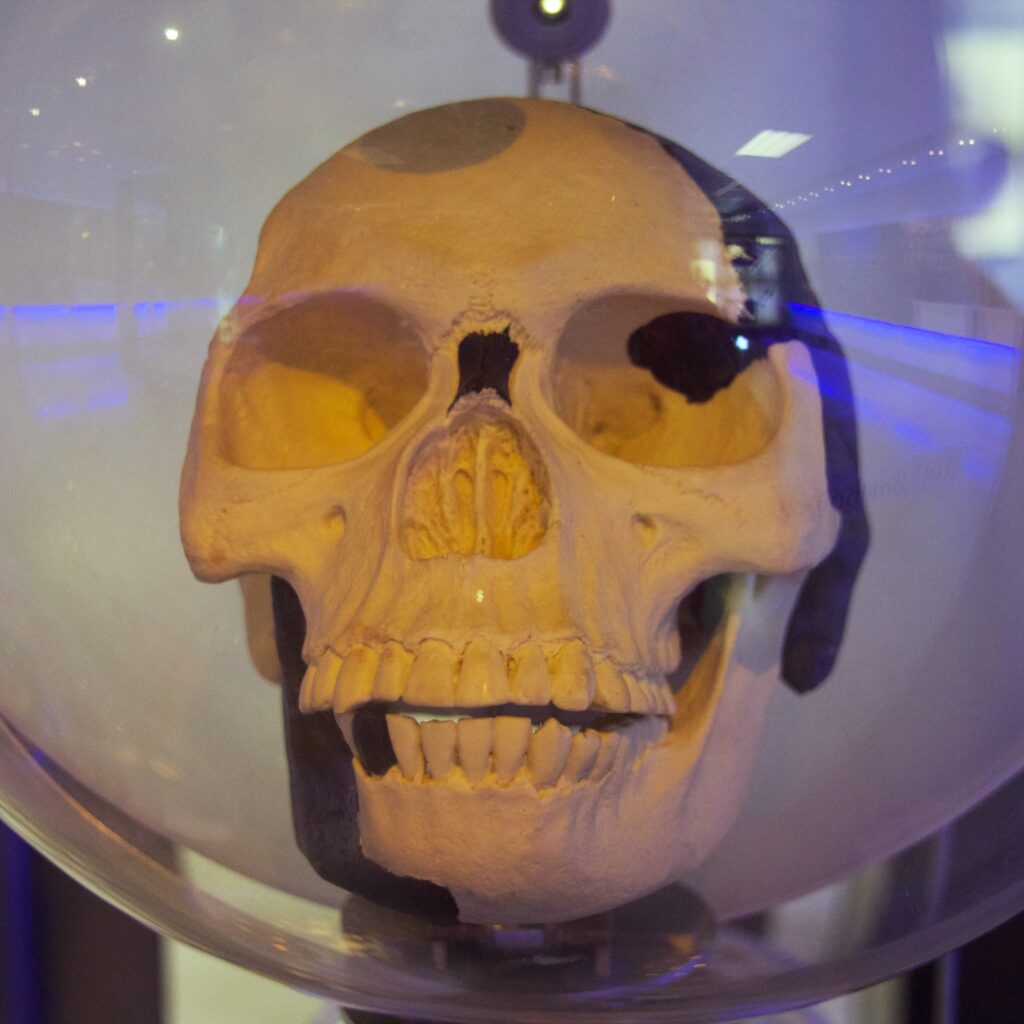
In 1912, an amateur archaeologist announced he’d found the “missing link” between apes and humans, presenting skull fragments and a jawbone that a prominent geologist reconstructed and hypothesized belonged to a human ancestor from 500,000 years ago. The find was formally named and celebrated at major scientific meetings, shaping evolutionary theory and even feeding nationalist arguments that human populations across continents evolved separately, rather than all humans descending from Africa.
It took 41 years for anyone to definitively prove the whole thing was fabricated. The “fossil” turned out to be an altered orangutan mandible and filed-down teeth, deliberately combined with the cranium of a fully modern, if small-brained, human. A 2016 forensic review finally identified the amateur archaeologist himself as the sole culprit. Legitimate discoveries elsewhere, including a genuine early human ancestor found in South Africa, were dismissed for decades partly because they didn’t match this fake. Science spent four decades chasing a ghost that never should have fooled anyone in the first place.
Worth Knowing
- 1912: An amateur archaeologist unveils the “missing link” find in England
- 1953: Fluorine dating and dental analysis expose the fossil as fabricated
- 2016: A forensic review finally pins the entire hoax on one person
- Collateral damage: genuine early human fossils from South Africa were dismissed for decades because they contradicted the fake
The Bottom Line
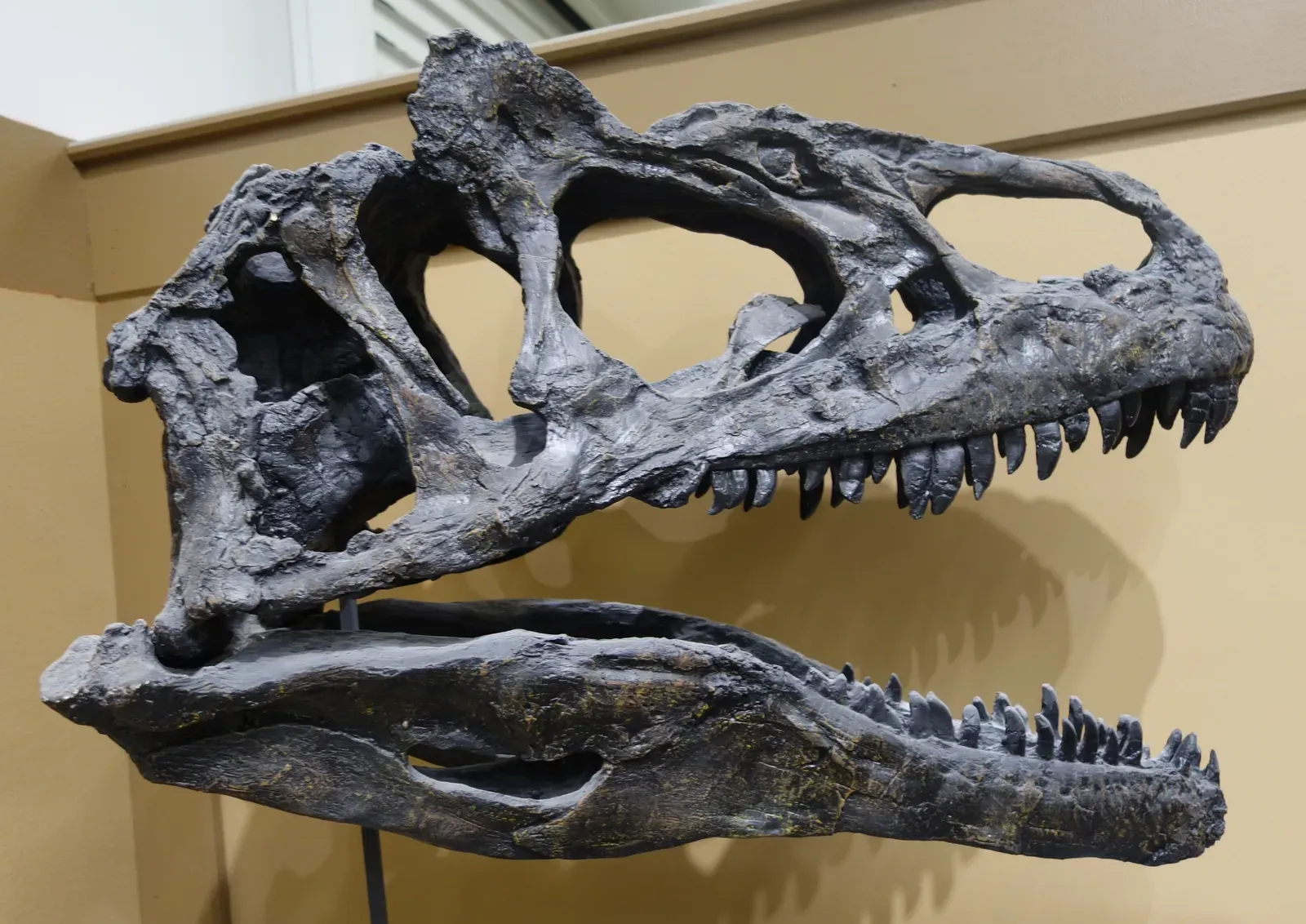
If there’s one thread running through all eleven of these reversals, it’s that confidence outran evidence almost every time.
Museums kept wrong skulls bolted onto famous skeletons for generations, one arthritic skeleton defined an entire species’ reputation, and one fabricated skull derailed human evolution research for over forty years. Science eventually corrects itself, but usually only after someone is stubborn enough to challenge decades of accepted dogma – and often only after the original believers are long dead.
Honestly, the most unsettling part isn’t that these mistakes happened. It’s how long institutions clung to them even after the doubts were sitting right there in the evidence. Which of these reversals shocked you the most? Drop your pick in the comments.