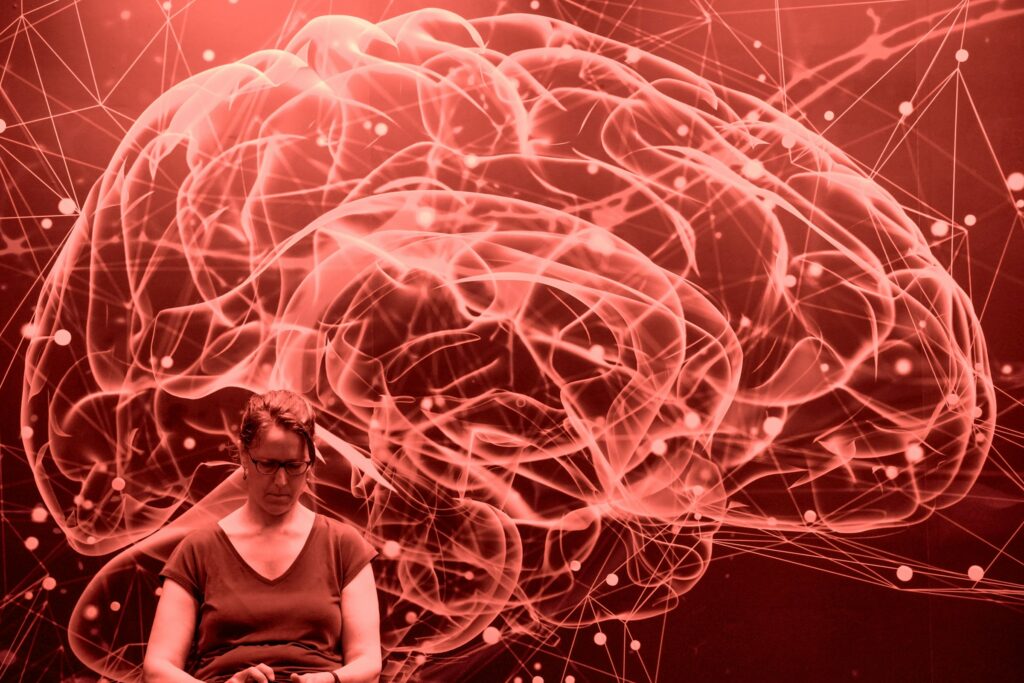

Imagine if every tiny piece of your brain somehow contained the pattern of your entire life: your first heartbreak, the smell of your childhood home, the way you feel when someone says your name. That is the radical, mind-bending idea behind the holographic brain theory. Instead of treating memory and consciousness like files in a neatly organized hard drive, this view suggests your mind is more like a shimmering hologram, where each fragment encodes the whole picture in a blurry, overlapping way.
It sounds almost mystical at first, but the roots of this idea are surprisingly grounded in serious neuroscience and mathematics. While the theory is controversial and far from proven, it offers a strikingly different way to think about who we are and how our experiences live inside us. If you have ever wondered why brain injuries do not always erase single memories like a ripped-out page from a book, or why your sense of self feels so unified despite billions of neurons firing chaotically, this holographic perspective might change how you think about your own mind.
What Does “Holographic Brain” Actually Mean?
When people talk about the brain as holographic, they are borrowing a specific idea from optics: in a hologram, every part of the plate contains information about the entire image. If you break a holographic plate into pieces, each piece still shows the whole object, just with lower resolution. Applied to the brain, this suggests memories and aspects of consciousness are not locked into tiny, isolated regions, but distributed in complex patterns across wide networks.
This does not mean every neuron knows everything, like some magical all-knowing cell. Instead, it means that information is stored in overlapping patterns, where many different areas share responsibility for representing the same experience. The result is a system that is messy, redundant, and weirdly robust. You can damage parts of it, and the overall picture often survives, just as a broken hologram still shows the full image, only fuzzier.
The Origins: From Karl Lashley to Karl Pribram
The holographic brain idea did not just appear out of thin air; it grew from decades of puzzling experimental results. In the mid‑twentieth century, psychologist Karl Lashley tried to find the exact locations of memories by training rats to run mazes and then surgically damaging different brain regions. He expected to discover precise “memory spots,” but what he found instead was frustratingly diffuse: performance declined more with total amount of brain tissue removed than with the specific area targeted.
Later, neuroscientist Karl Pribram took Lashley’s findings and tried to make sense of them using newer concepts from physics and signal processing. He argued that the brain might be storing information in interference patterns, a bit like how holograms work, relying heavily on distributed processing in cortical networks. While many researchers disagree with Pribram’s stronger claims, his work helped popularize the notion that memory and perception might be more about patterns and waves than about neatly labeled brain compartments.
How Holographic Storage Differs from the “File Cabinet” View
Most of us carry an intuitive picture of the brain as a kind of biological file cabinet: each memory sits in its own folder, somewhere in a clearly labeled drawer, and if that drawer is damaged, the memory is gone. This is simple, comfortable, and mostly wrong. Holographic theory suggests a radically different architecture, where information is smeared out over large populations of neurons through distributed activation patterns and synaptic weight configurations.
In this framework, what matters is not a single neuron or a small patch of tissue, but the overall pattern of activity and connectivity. Losing a few neurons is like scratching a holographic plate: you degrade the quality but do not surgically remove just one isolated memory. This view aligns more naturally with network models like artificial neural networks in machine learning, where knowledge is encoded in the weights across the entire system rather than in single, addressable cells.
Evidence for Distribution: Why Memories Survive Damage
One of the most compelling reasons people find the holographic brain hypothesis attractive is that it matches a basic clinical observation: brain damage often causes partial, graded deficits rather than cleanly erasing a single, well-defined memory. After strokes, trauma, or surgery, people may experience fuzzier recall, slower thinking, or difficulty with certain categories, but their autobiographical past is rarely wiped in neatly cut slices. It is more like a photograph losing contrast than like burning a single page from a diary.
Functional imaging also shows that recalling a memory lights up multiple, widely separated regions: visual areas, language areas, emotional circuits, and more all chip in. A memory of a childhood beach day might recruit visual cortex for the waves, somatosensory areas for sand on your feet, limbic structures for emotional tone, and prefrontal regions for narrative framing. That kind of multi-region coalition is exactly what a distributed, quasi-holographic storage scheme would predict.
On the flip side, this evidence does not conclusively prove a literal holographic mechanism is at work; it simply shows that memories are broadly distributed and highly redundant. Plenty of mainstream models in neuroscience can explain the same observations without invoking holography directly. The brain seems clearly non-local in how it stores information, but whether it is holographic in a strict physical sense is still an open, and heated, question.
Mathematical Echoes: Fourier Transforms and Neural Patterns
The holographic brain theory gets some of its scientific flavor from mathematics, particularly from the use of Fourier transforms. In holography, information about an object is encoded in interference patterns that can be mathematically described using Fourier analysis, which breaks complex signals into combinations of waves. Some neuroscientists have pointed out that the brain, especially in sensory areas, appears to use similar types of transformations when it processes signals like sound and vision.
For example, cells in the visual cortex respond to edges, orientations, and spatial frequencies in ways that look a lot like components of a Fourier decomposition of an image. In principle, a system that encodes information in such overlapping wave-like representations could function in a holograph-like way, where each piece of the network carries partial information about the whole input. Whether the brain literally implements something as clean and mathematically pure as optical holography is debatable, but the parallel is intriguing enough that it continues to inspire theoretical work.
Consciousness as a Distributed Pattern, Not a Single Seat
The holographic idea becomes even more provocative when applied to consciousness itself. Many people casually ask where consciousness is located, as if there might be a single throne in the brain where the “self” sits and watches the show. Modern neuroscientific evidence largely rejects that idea, and the holographic view pushes this further, suggesting that what we experience as a unified self may be an emergent pattern spread across vast, interacting networks.
Under this interpretation, there is no single neuron, or even single region, that is the true you. Instead, your conscious awareness is more like a standing wave formed by countless smaller ripples interacting. Damage to one part of the system can warp or dim the wave without making it vanish outright. Personally, I find this both unsettling and strangely liberating: if the self is a pattern rather than a point, it becomes easier to see how experiences, therapy, learning, and even culture can reshape who we are in deep but gradual ways.
Where the Holographic Theory Probably Overreaches
As captivating as the holographic brain idea is, it is important to be honest about where it likely goes too far. Some versions of the theory slide from reasonable claims about distributed, interference-like processing into grand, speculative territory, connecting the brain to cosmic holograms, exotic physics, or metaphysical ideas about reality itself. These leaps might be fun to think about, but they are not firmly backed by empirical neuroscience, and treating them as established fact confuses more than it clarifies.
Even at a purely biological level, the holographic metaphor can be stretched beyond its usefulness. The brain has clear functional specializations: vision is not processed the same way as smell, motor cortex is not interchangeable with hippocampus, and damage to specific structures can produce very specific deficits. That reality sits uneasily with any extreme claim that every part of the brain contains the whole in a literal sense. In practice, the best working view is probably that the brain is both highly distributed and highly modular, with patterns that overlap but are not truly uniform across all tissue.
Why This Matters for Memory, Identity, and the Future of Mind Science
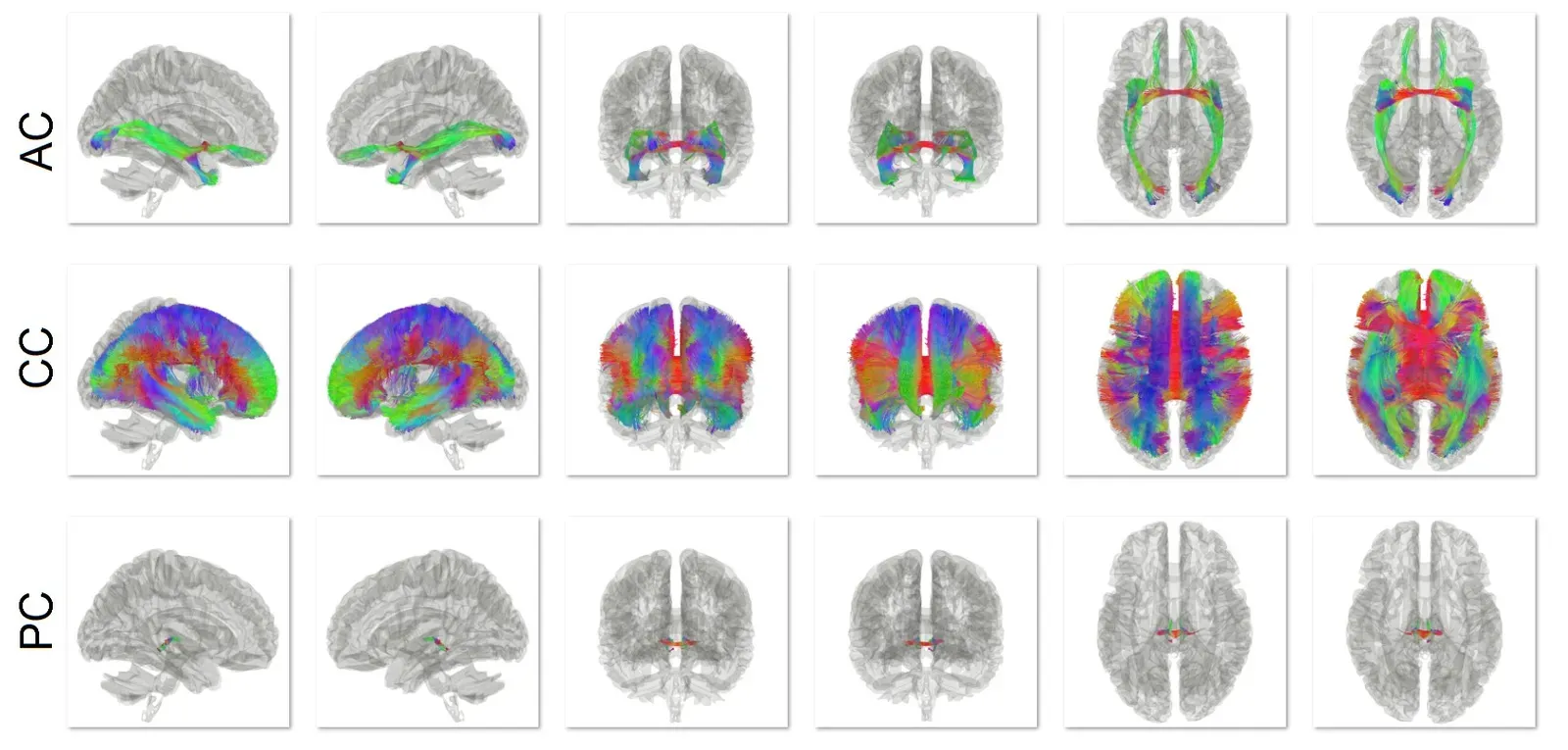
Debates about holographic brains are not just abstract fights among theorists; they change how we imagine memory, identity, mental health, and even future technologies like brain–computer interfaces. If memory is fundamentally distributed and pattern-based, then therapies might focus more on reconfiguring networks and less on “recovering” a single lost trace. It also lines up with why practice, repetition, and emotional salience matter so much: they reinforce patterns across many pathways rather than writing in one fragile spot.
Looking ahead, a more holographic, or at least more distributed, understanding of the brain could reshape how we try to build artificial systems that think and feel. Modern deep learning already mirrors some of these ideas, with knowledge spread across layers and weights rather than stored in explicit symbolic rules. As someone who has spent a lot of time watching both neuroscience and AI evolve, I am convinced that clinging to simple file-cabinet metaphors is holding us back. Even if the holographic label turns out to be imperfect, pushing toward pattern-based, whole‑system explanations feels like a necessary step forward.
Conclusion: A Beautiful Metaphor, a Partial Truth, and a Challenge
In my view, the holographic brain theory is both overhyped and underrated at the same time: overhyped when it is sold as a fully proven description of how the brain works, but underrated as a powerful metaphor that nudges us away from simplistic, localized thinking about mind and memory. The strongest evidence clearly supports distribution, redundancy, and overlapping representations, but it does not force us to accept a literal hologram living inside our skulls. The truth is probably messier: a hybrid of specialized structures and widely shared patterns, more like a city of overlapping neighborhoods than a perfectly uniform holographic field.
Still, there is something undeniably compelling about the idea that every part of your brain quietly carries echoes of the whole of you. It makes personal change feel possible, because patterns can be reshaped; but it also makes identity feel fragile, because patterns can blur. To me, that tension is the real gift of the holographic perspective: it forces us to see ourselves not as fixed objects, but as living interference patterns of experience, constantly being rewritten. When you think about your own mind that way, does it make you feel more like a solid thing, or more like a shimmering image that is always on the edge of shifting into something new?