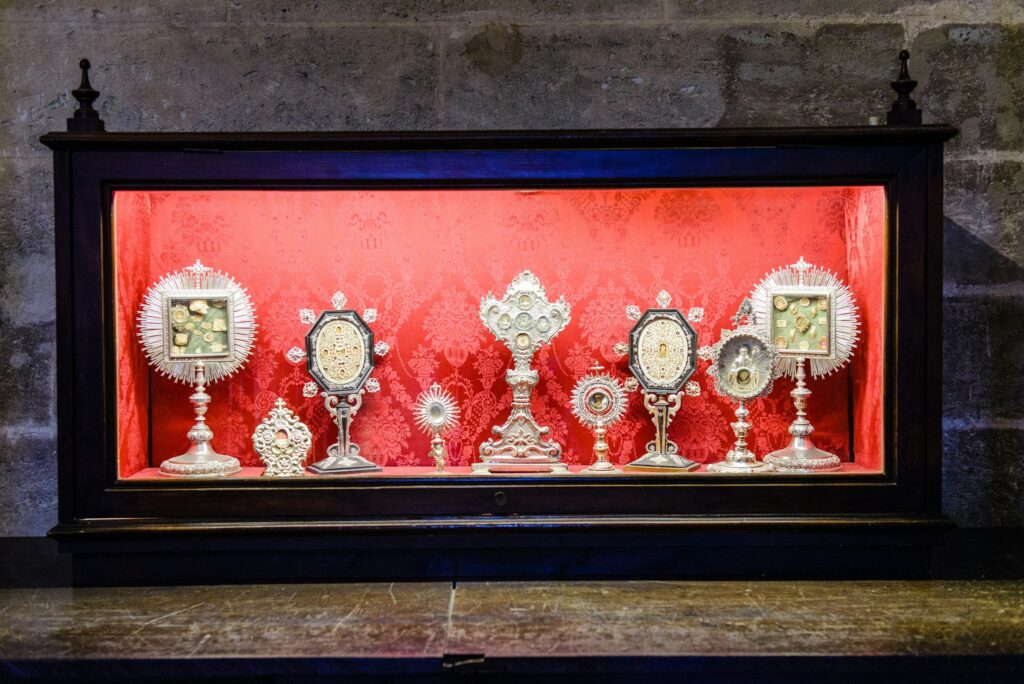

Most people assume the great relics in our museums and cathedrals have been vetted a thousand times over, protected by armies of historians who’d never let a fake slip through. They’re wrong.
Behind closed doors, curators, forensic chemists, and archaeologists have spent decades quietly walking back claims they once defended in public. Ink samples, tool marks, and radiocarbon isotopes don’t care about faith or reputation. One by one, they’ve exposed some of the world’s most revered objects as elaborate fabrications, and the confessions are stranger than the legends themselves. Here’s what historians actually admit once the cameras stop rolling.
#10 – The Cardiff Giant: America’s Favorite “Ancient” Corpse
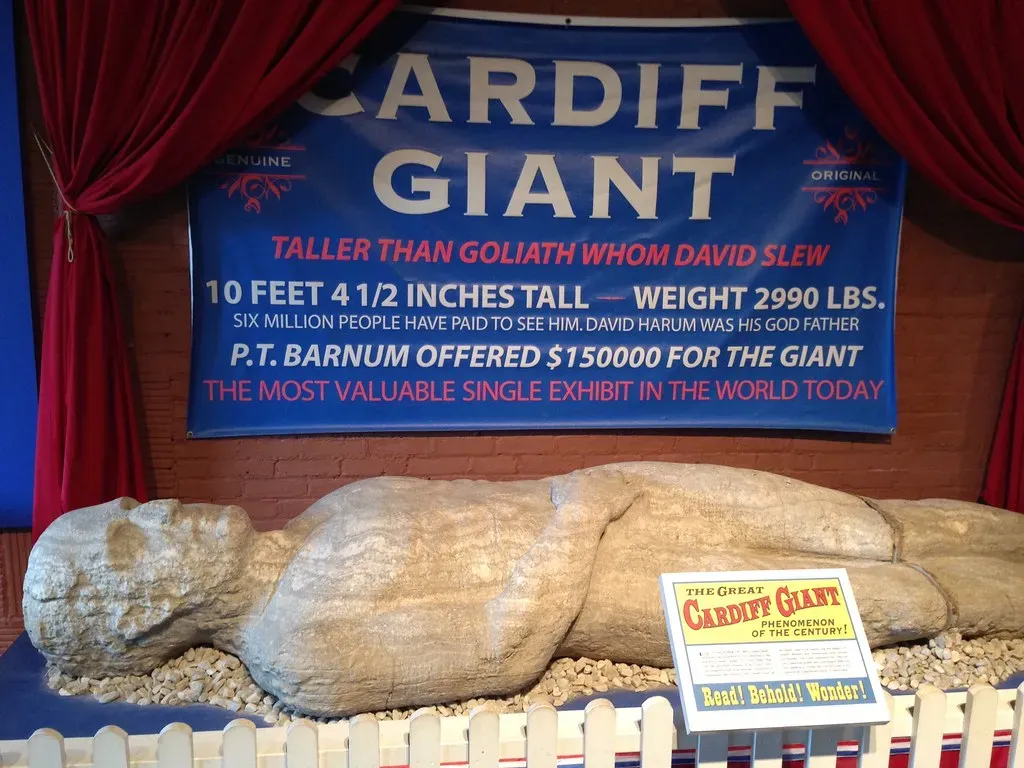
A ten-foot “petrified man” dug up on a New York farm in 1869 convinced thousands of Americans they’d found biblical proof of giants walking the earth.
Farmhands “discovered” the stone figure while digging a well in Cardiff, New York, and within days a tent went up charging fifty cents a look. Newspapers ran breathless coverage, and ministers cited it from the pulpit as evidence Genesis was literal fact. The giant was actually carved from gypsum a year earlier in Chicago, shipped by rail under cover of darkness, and buried specifically so it could be “found.”
The mastermind, a tobacconist named George Hull, later admitted the entire scheme was designed to embarrass a preacher who insisted giants had once roamed the earth. Even after Hull’s confession, showman P.T. Barnum built his own plaster copy and displayed it as the “real” giant, drawing bigger crowds than the original fake. Geologists eventually confirmed the gypsum couldn’t have survived underground unweathered for millennia.
Fast Facts
- Discovered October 16, 1869, on a farm near Cardiff, New York
- Ten feet tall, roughly 3,000 pounds, carved from a single block of gypsum
- Admission was 50 cents a head, drawing national crowds within days
- Now on permanent display at the Farmers’ Museum in Cooperstown, New York
Hull walked away rich and unrepentant. But that con was almost quaint next to the next relic on this list – a farmer’s rock that nearly rewrote American history for good.
#9 – The Kensington Runestone: A Minnesota Farmer’s Viking Fantasy
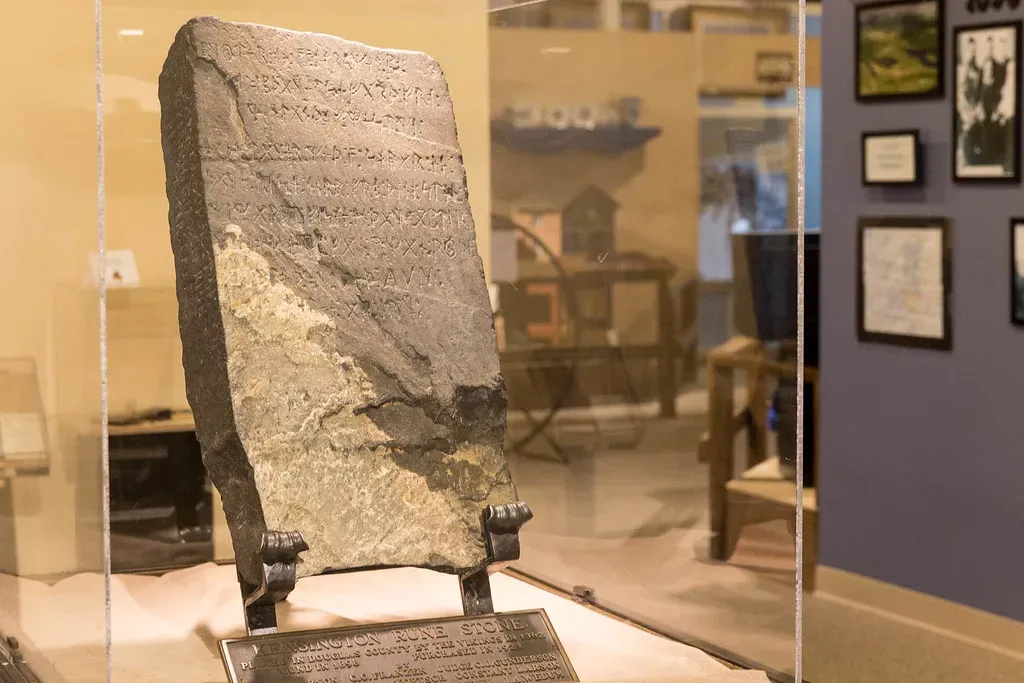
A Swedish immigrant farmer claimed he found a 700-year-old runestone tangled in his tree roots, and it nearly rewrote American history.
Olof Ohman unearthed the slab in 1898, its runes supposedly describing a Norse expedition to Minnesota in 1362, more than a century before Columbus. Scandinavian societies celebrated it and museums fought over it. Runologists eventually noticed the inscription used grammar and vocabulary that didn’t exist until the 1800s, including a form of Swedish unrecognizable to actual medieval Norse explorers.
Linguists specializing in Old Norse pointed out that several runes on the stone simply hadn’t been invented yet in the 14th century. Despite this, the stone still has a dedicated museum and passionate defenders who argue mainstream academia dismissed it too quickly out of bias. Most professional runologists now treat its authenticity as settled: a 19th-century hoax, likely created by Ohman himself with help from a local schoolteacher fluent in runic alphabets.
It remains one of the most stubborn “zombie facts” in American folklore. But that’s nothing compared to what electron microscopes did to a set of skulls once treated as ancient death gods.
#8 – The Crystal Skulls: Not Aztec, Not Ancient, Not Even Old
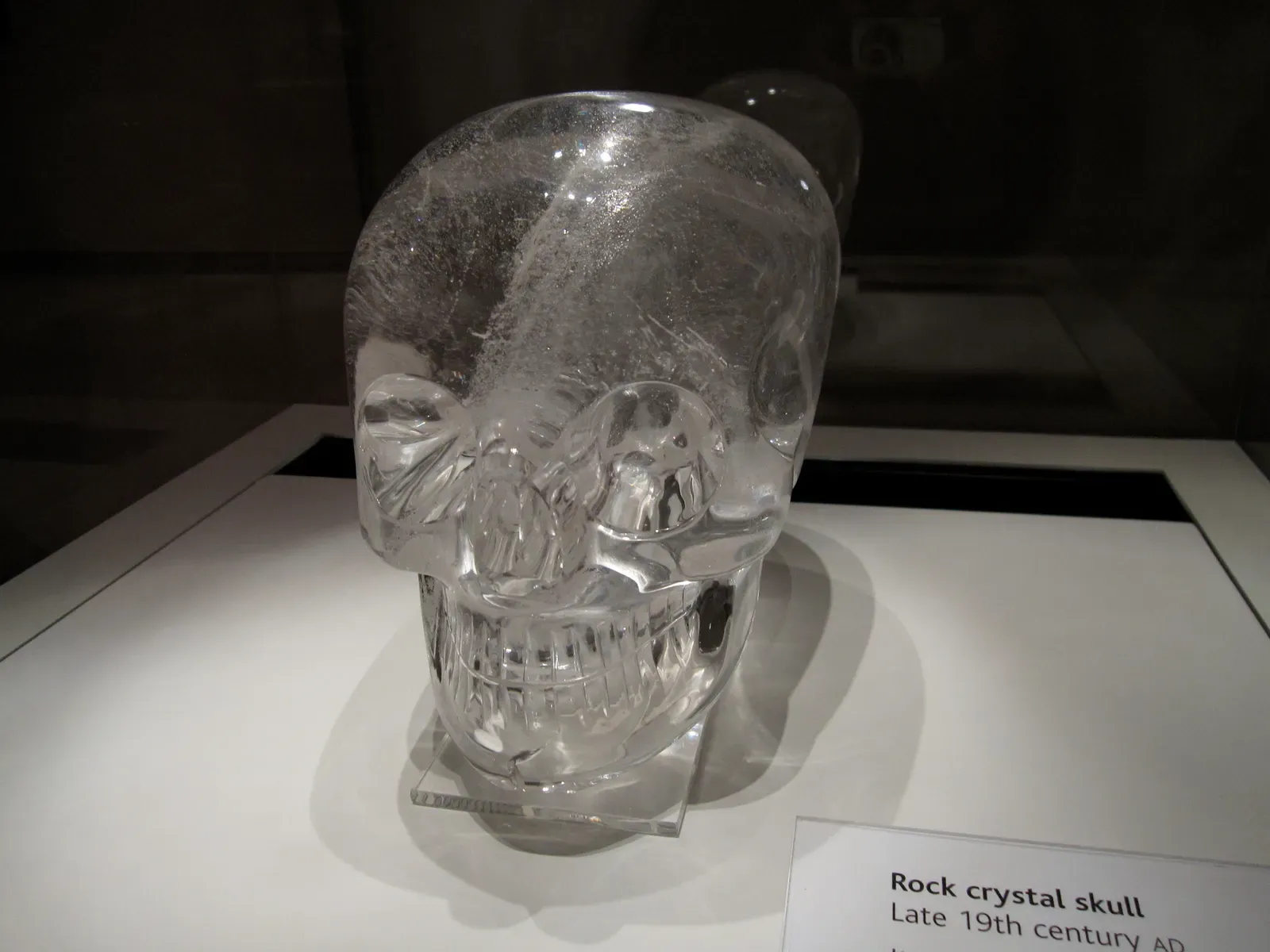
For a century, museums displayed life-sized crystal skulls as ancient Mesoamerican relics tied to Aztec death cults, until electron microscopes told a very different story.
A materials expert used scanning electron microscopy to study tool marks on the skulls and noted that modern tools and abrasives had been used on each one. That single detail unraveled decades of museum labeling at the British Museum, the Smithsonian, and the Musee du Quai Branly in Paris. Testing concluded the quartz could only be sourced from Brazil and Madagascar, meaning actual Aztecs and Mayans would never have had access to it.
The most famous specimen, the so-called Mitchell-Hedges “Skull of Doom,” fared no better. Investigations by the Linnean Society of London revealed that Mitchell-Hedges had actually purchased his skull at a Sotheby’s auction in London in 1943, not pulled it from a Belize jungle temple as his family long claimed.
Not powerful, not scary and not at all what it purports to be.
Smithsonian Anthropologist
That was the final verdict from a Smithsonian anthropologist who examined the skull directly – and it’s hard to imagine a more polite way of calling something a total fake. But that’s nothing compared to what happened when a museum’s own $9 million purchase turned into a three-decade identity crisis.
#7 – The Getty Kouros: A $9 Million Statue Nobody Can Explain
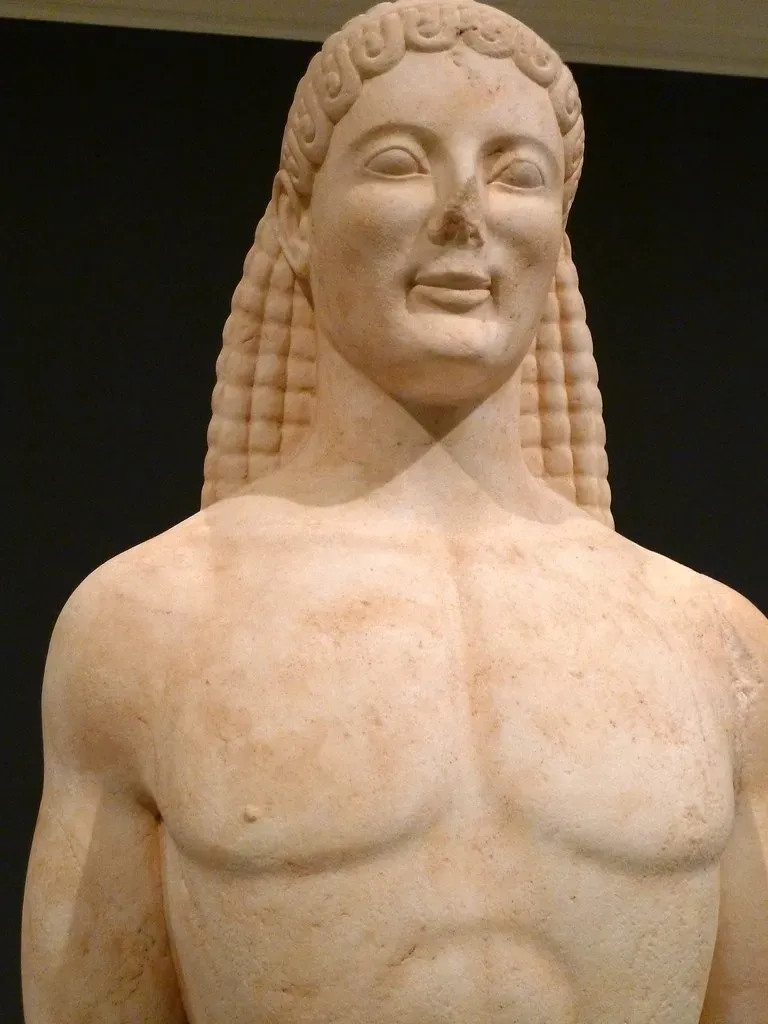
The J. Paul Getty Museum spent millions on an ancient Greek youth statue, then spent the next three decades unable to say whether it was real or a brilliant fraud.
In 1983, the Getty paid just under $10 million for a kouros, a rare ancient sculpture the seller dated to the sixth century BC and backed with paperwork that looked airtight. Geologists confirmed the marble came from an ancient Greek quarry, and a chemical “aging” process on the surface seemed to prove genuine antiquity. On paper, everything checked out.
Then the story quietly fell apart. Researchers eventually replicated that same aging process in a lab in a matter of months, not centuries, and investigators discovered the dealer who’d supplied the statue had forged its provenance documents from scratch. By 2018, the Getty’s own director stopped hedging.
It’s fake, so it’s not helpful to show it along with authentic material.
Getty Museum Director
Thirty-five years, $9 million, and a museum still can’t fully close the file. But that’s nothing compared to what we found about the relic Hitler personally seized because he thought it controlled the fate of the world.
#6 – The Spear of Destiny: Hitler’s Obsession Wasn’t Even Roman
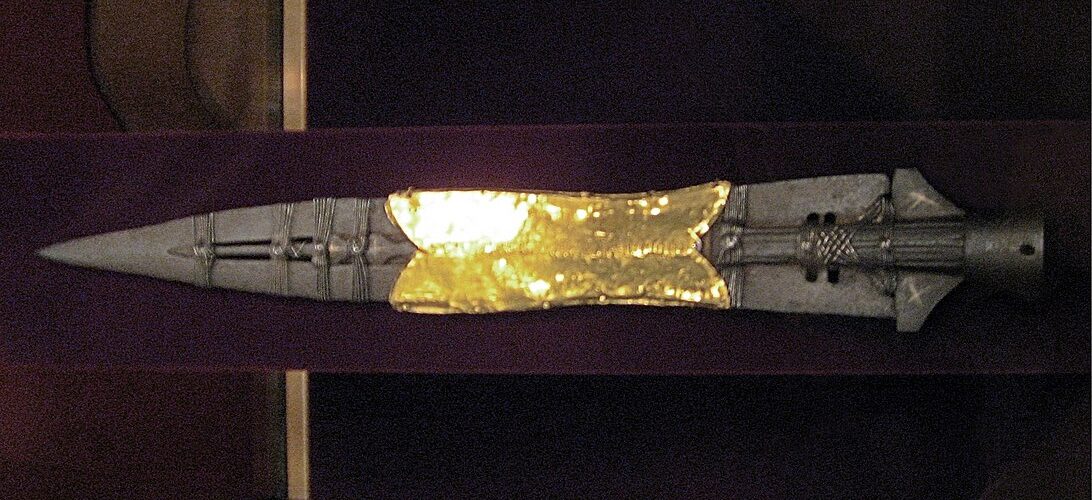
Legend says whoever holds the spear that pierced Christ’s side controls the fate of the world – Adolf Hitler certainly believed it, seizing the Vienna relic the moment Austria fell.
The Hofburg Treasury’s Holy Lance was displayed for centuries as the actual weapon a Roman soldier used at the crucifixion, complete with a supposed nail from the True Cross bound into its blade. Historians and metallurgists who examined the spearhead’s construction techniques identified it as a standard 7th-century winged lance, a European weapon style that didn’t exist until roughly 600 years after the crucifixion.
Multiple competing “Holy Lances” surfaced across Europe over the centuries – one in Vienna, one in the Vatican, another in Armenia – each claimed by different churches as the singular authentic relic. That alone should raise eyebrows: an object can’t have three separate “originals” scattered across three continents. Metallurgical dating consistently places the Vienna spear centuries after the crucifixion, making the Hitler mythology built around it historically impossible from the start.
Quick Compare: Three “Original” Holy Lances
- Vienna (Hofburg Treasury) – the Hitler-obsessed relic, metallurgically dated to the 7th century
- Vatican (St. Peter’s Basilica) – a rival fragment venerated independently of the Vienna spear
- Armenia (Echmiadzin) – a third lance honored as the true relic by the Armenian Church
He conquered a continent chasing a medieval blacksmith’s work. But that’s nothing compared to what happened when chemists found a substance in ancient ink that shouldn’t exist for another five hundred years.
#5 – The Vinland Map: The Forgery That Fooled Yale
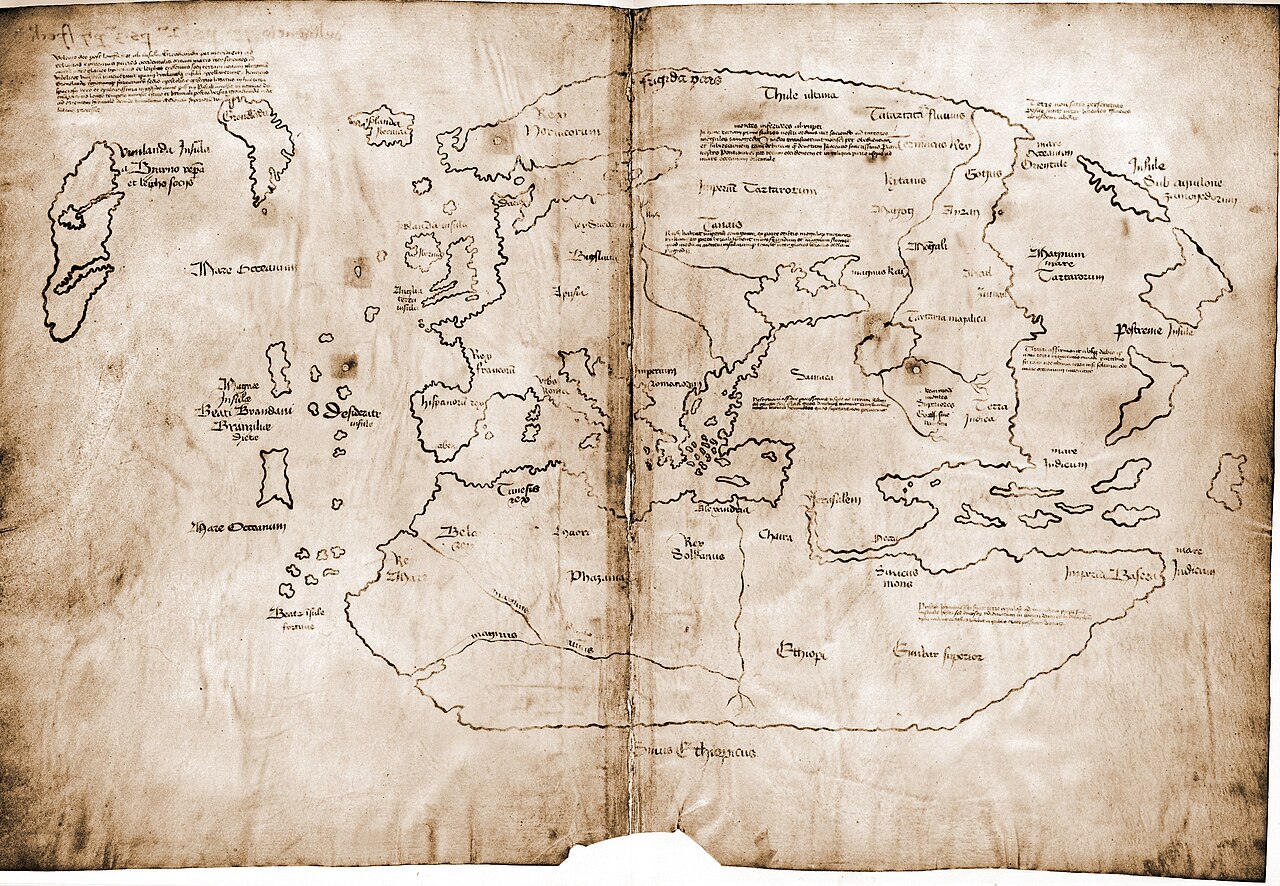
A single map convinced the academic world that Vikings beat Columbus to America by 500 years, until chemists found a substance that shouldn’t exist for another five centuries.
Yale unveiled the Vinland Map in 1965 as a stunning pre-Columbian record proving Norse explorers reached North America centuries before Columbus. Scholars were electrified. Then a research microscopist found something the ink should never have contained: anatase, a crystalline form of titanium dioxide that wasn’t manufactured as a pigment until the twentieth century.
Defenders pushed back for decades, arguing the anatase might have occurred naturally in medieval iron-gall ink. That argument collapsed once experts ran X-ray fluorescence spectroscopy across the entire document and found titanium in every single mark of ink on the page. Even the parchment turned out to be recycled from another medieval book in the same library, meaning a modern forger simply borrowed genuine old paper and wrote on it with twentieth-century ink.
Yale had unveiled a masterpiece of vision, patience, and chemistry – just not the kind they thought they were buying. But that’s nothing compared to a relic with not one, but six competing “originals” scattered across Europe.
#4 – The Veil of Veronica: At Least Six “Originals” Exist
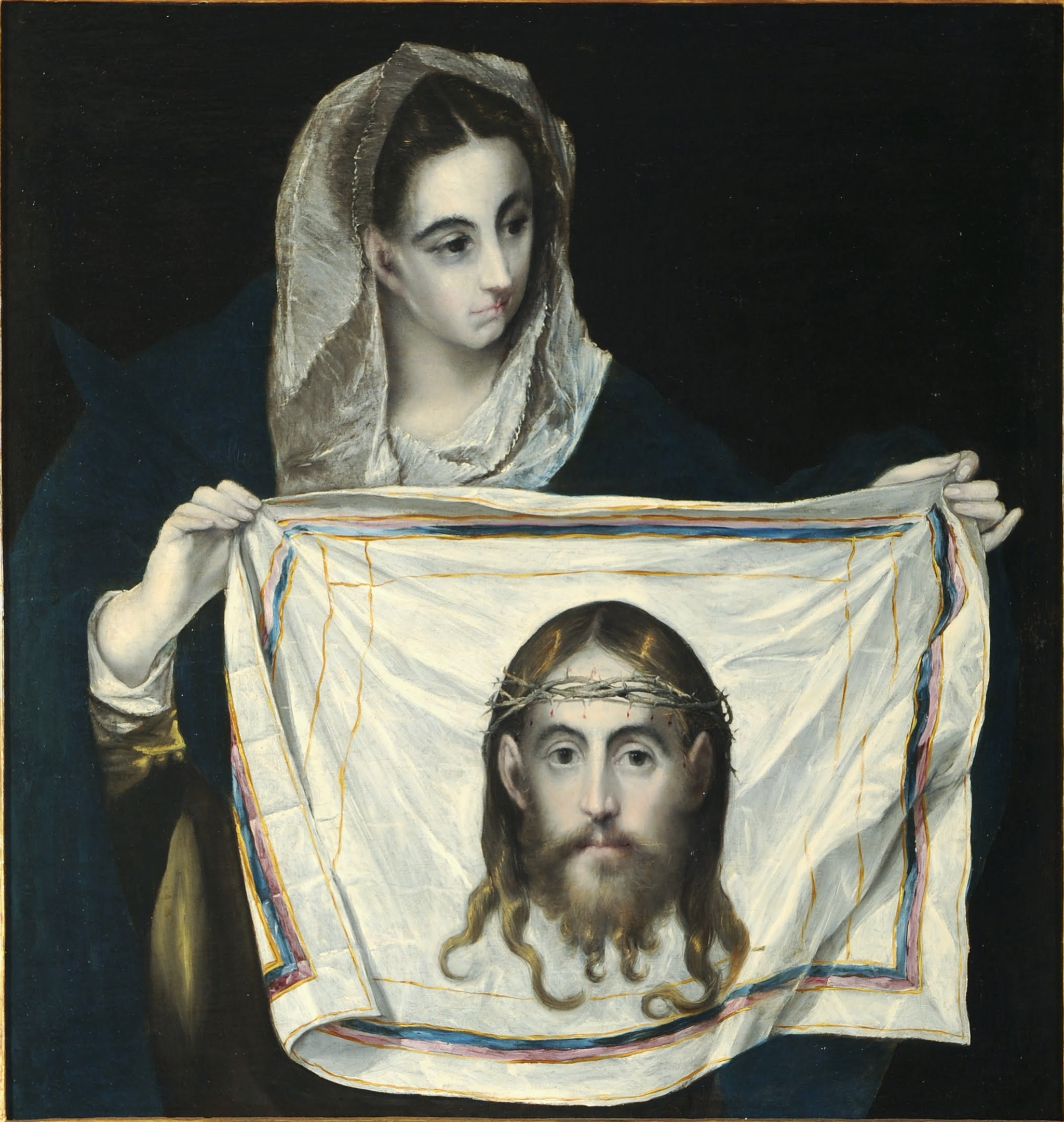
According to legend, a woman wiped Christ’s face on the road to Calvary and his image miraculously imprinted onto the cloth – the problem is that six churches across Europe currently claim to own that exact same veil.
St. Peter’s Basilica in Rome displays one version behind glass, rarely shown to the public and never scientifically tested in a manner satisfying independent researchers. A separate version in Manoppello, Italy, has drawn papal visits and pilgrims convinced it’s the genuine article, distinct from the Vatican’s own relic. Historians point out that the entire Veronica legend doesn’t appear in any biblical text or early Christian writing – it emerged centuries later, growing more elaborate with each retelling.
Art historians who’ve studied the surviving cloths note stylistic techniques and materials consistent with medieval and Renaissance workshops, not first-century Judea. No single version has ever undergone the kind of open, independently verified testing applied to other contested relics, largely because the churches holding them have resisted invasive examination.
Worth Knowing
- At least six churches across Europe claim to hold the “true” veil
- Rome’s version is rarely displayed and has never faced independent scientific testing
- The Manoppello cloth draws papal visits despite no verified link to the Vatican’s relic
- The legend itself appears nowhere in the Bible or early Christian writings
When an object can’t survive scrutiny because scrutiny is never allowed, that itself tells historians something. But that’s nothing compared to the relic firefighters risked their lives to save – one that’s never been tested at all.
#3 – The Crown of Thorns: Notre Dame’s Relic Has Never Been Tested
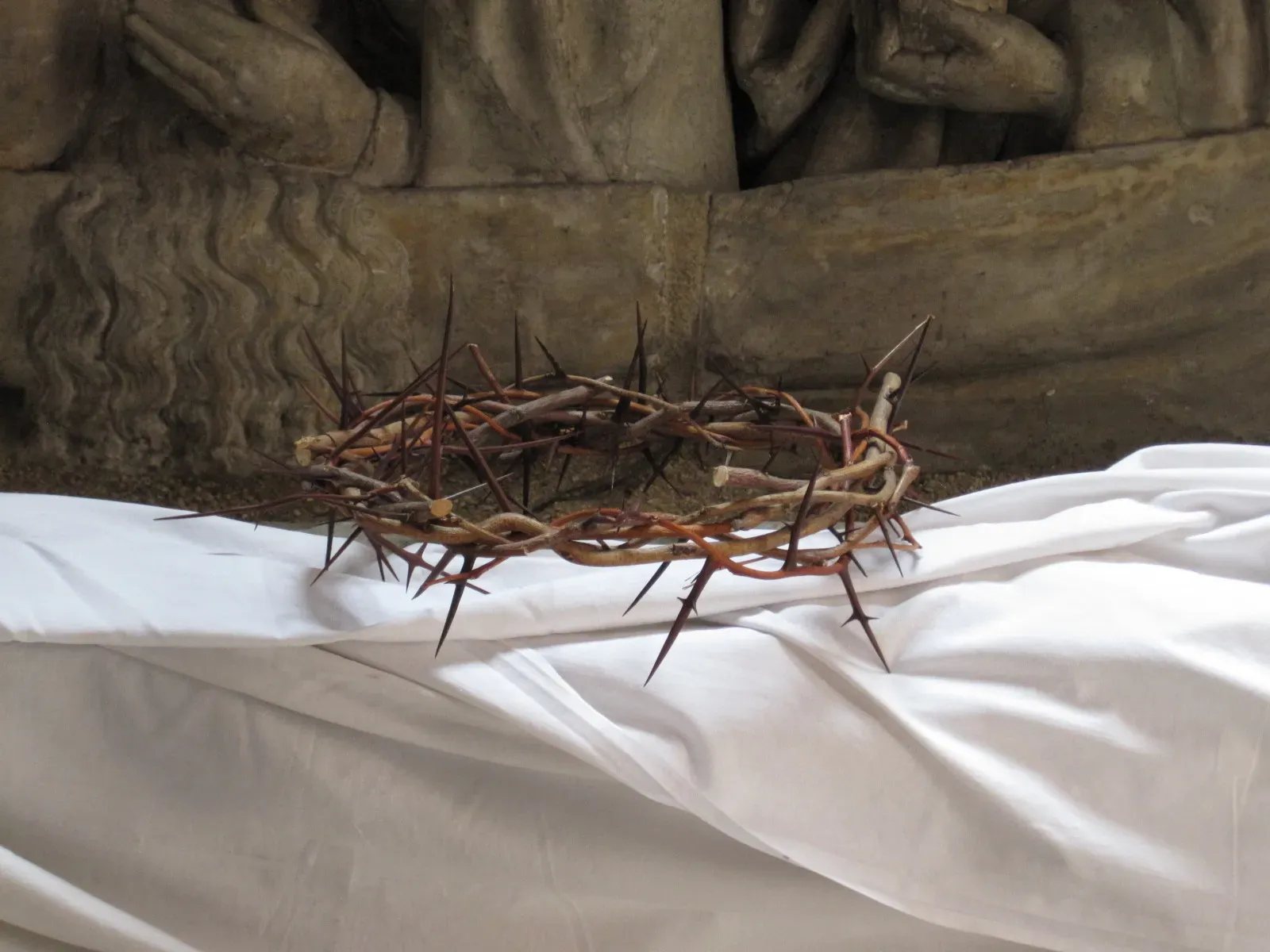
Firefighters risked their lives to save one object from the 2019 Notre Dame fire before anything else – a crown of thorns that has never once undergone scientific dating.
The relic, a circlet of rushes without any actual thorns still attached, has been housed in Paris since the 13th century after being purchased by King Louis IX from the cash-strapped Byzantine emperor for a sum historians estimate exceeded the cost of building the cathedral itself. That transaction alone raises questions – a relic changing hands as a financial commodity between empires isn’t exactly a hallmark of quiet, undisputed authenticity.
No carbon dating or forensic botanical analysis has ever been permitted on the crown, unlike the Shroud of Turin or the Vinland Map. Byzantine sources describe multiple “true” crowns circulating simultaneously in the medieval period, with individual thorns sold off separately as standalone relics to churches across Europe.
Historians studying the medieval relic trade note that this fragmenting-and-multiplying pattern – one object somehow producing dozens of “authentic” pieces – is a textbook sign of manufactured religious commerce rather than a singular preserved artifact. But that’s nothing compared to the bone box that split biblical archaeology into two warring camps.
#2 – The James Ossuary: The Trial That Split Biblical Archaeology
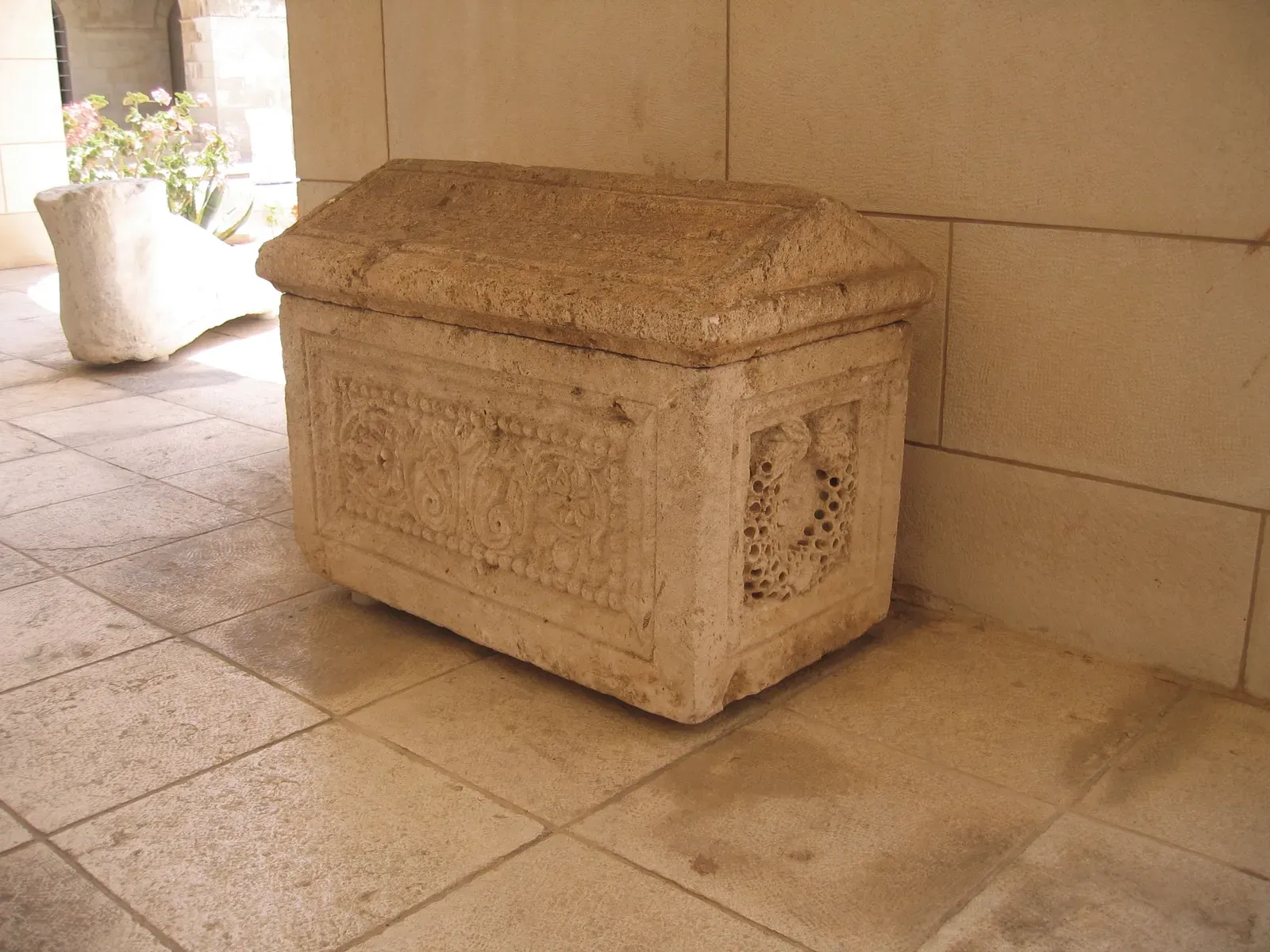
A limestone bone box surfaced in 2002 bearing an inscription that seemed to confirm Jesus had a brother named James, sparking what became known as the “forgery trial of the century.”
Biblical scholars called it the most significant archaeological find in decades. Then, in 2003, the Israel Antiquities Authority labeled it a forgery, and a geologist testifying for the prosecution laid out exactly how the fraud was pulled off: the inscription had been engraved, or at least cleaned, in modern times, then coated with a chalky solution dissolved in hot water and poured over the letters to fake decades of natural patina and blur the fresh cut marks.
His verdict was blunt – the inscription is a modern forgery. Yet after a trial dragging on more than five years, with 138 witnesses and over 400 exhibits, the judge acquitted the defendants, not because the evidence proved authenticity, but because prosecutors couldn’t prove forgery beyond reasonable doubt.
At a Glance: The Forgery Trial of the Century
- Charges filed: 2004, after the ossuary’s 2002 public debut
- Verdict delivered: March 14, 2012, by a Jerusalem District Court judge
- 138 witnesses and more than 400 exhibits entered over the trial’s course
- Outcome: acquittal – not proof of authenticity, just insufficient proof of forgery
Biblical archaeologists remain deeply split to this day, and that unresolved tension is itself the quiet admission: nobody can honestly claim certainty either way. But that’s nothing compared to the cloth that made the entire scientific community declare victory, only to keep arguing about it decades later.
#1 – The Shroud of Turin: Christianity’s Most Famous Relic, Medieval Origins
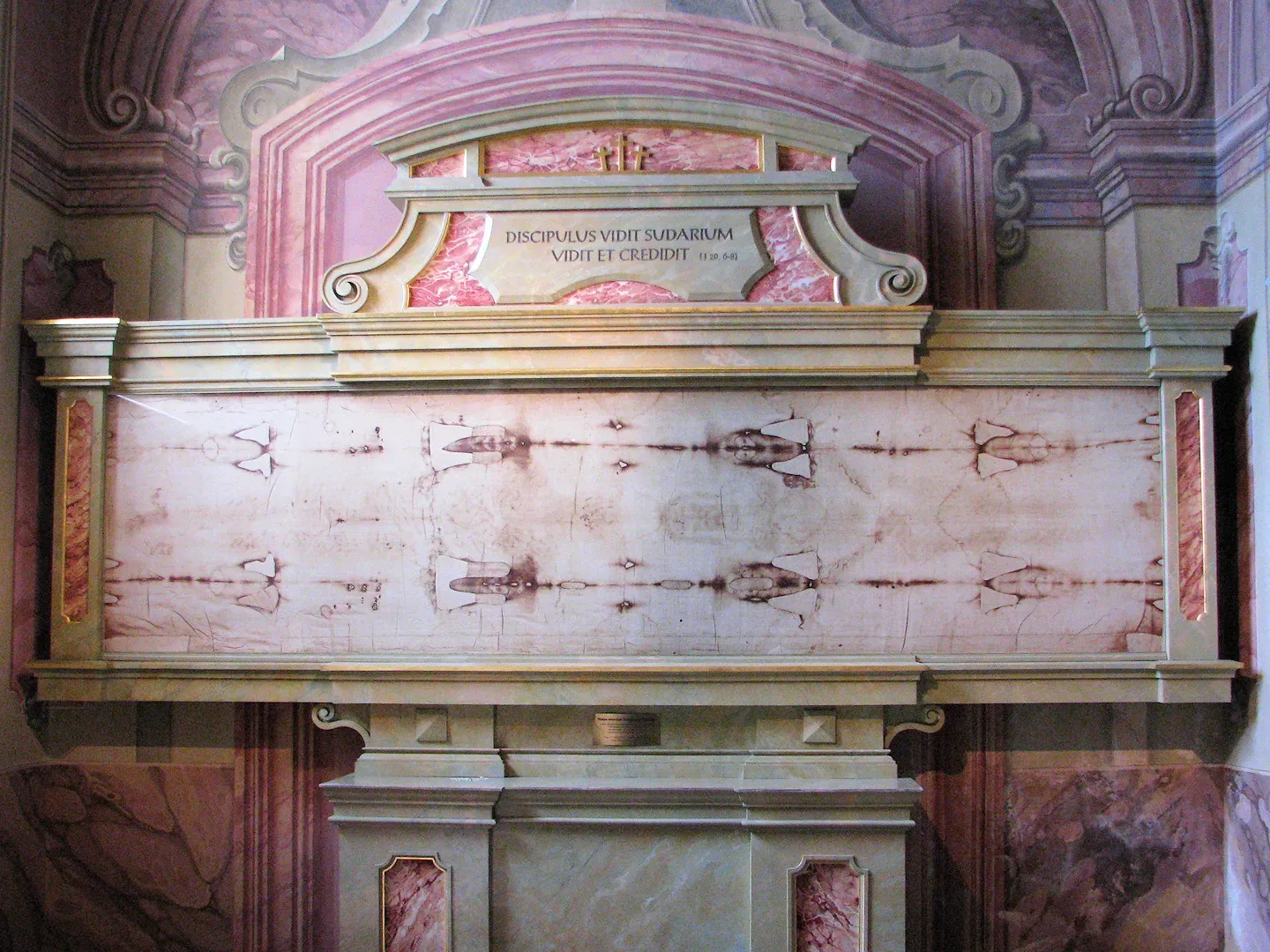
Millions of pilgrims have wept before this bloodstained linen believing it wrapped the body of Jesus Christ, but the world’s most rigorous dating labs concluded otherwise, and the fallout still hasn’t settled.
In 1988, an international team of scientists finally got permission to radiocarbon date snippets of the Shroud. The results were unambiguous: the cloth dated to somewhere between 1260 and 1390 AD, more than a thousand years after the crucifixion. Newspapers declared it a fraud overnight, and for a moment the scientific community, the Church, and skeptics alike all agreed the debate was over.
The historical paper trail backs the science up. In 1389, a bishop wrote directly to the Pope claiming a church dean had “falsely and deceitfully” obtained the cloth, and that the artist who painted it had confessed it was “a work of human skill and not miraculously wrought.” Defenders still argue the 1988 samples were contaminated by centuries of handling and fire damage, and the carbon dating once treated as gospel is now debated even among skeptics.
It’s the perfect final case study: even the most “settled” relic verdict in history has never actually managed to stay settled.
The Bottom Line
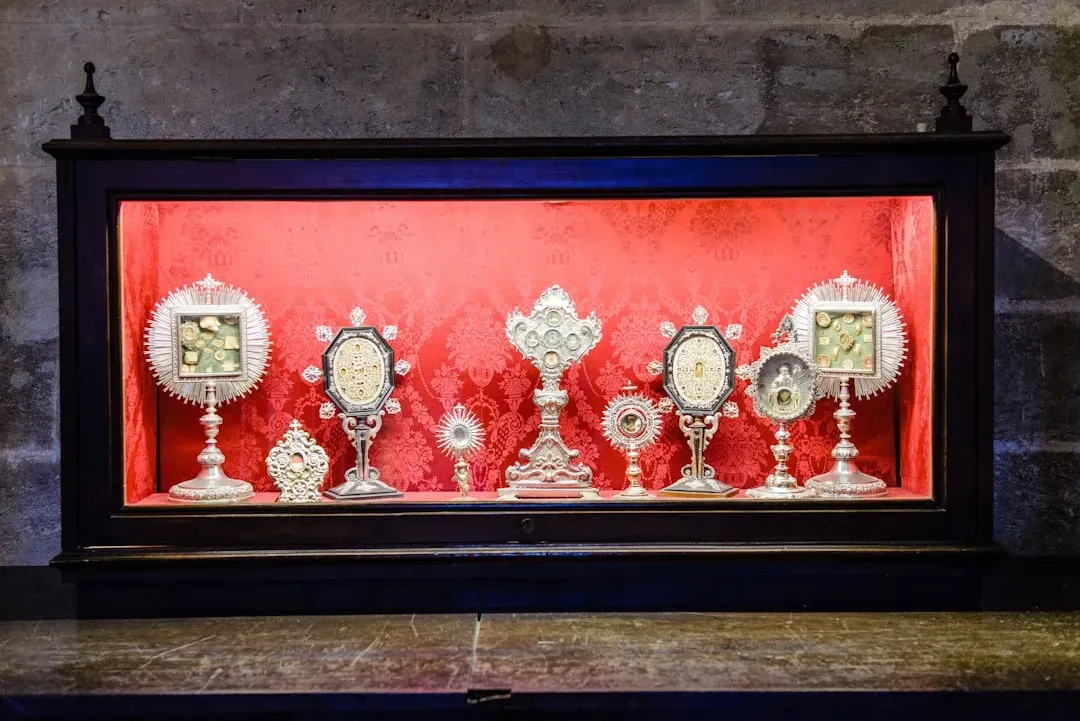
Here’s the uncomfortable truth museums don’t advertise: authenticity testing almost always favors skepticism, and relics survive on faith long after the science stops cooperating.
From a Chicago-carved “giant” to a $9 million statue nobody can fully defend, the pattern repeats endlessly – spectacular claims, thin provenance, and institutions slow to admit they got it wrong. The Shroud of Turin remains the most fought-over case precisely because too much money, faith, and pride rides on the answer.
Our honest opinion? When an object’s owners refuse independent testing, that silence is usually the loudest confession of all. Which relic do you think deserves fresh scrutiny? Tell us in the comments.