

Most people assume memory works like a video camera – recording every event perfectly and playing it back on demand whenever you need it. That assumption is quietly falling apart in psychology labs around the world. Researchers who spend their careers studying recall, forgetting, and false memory have found that the human brain is far messier, far more editable, and far less reliable than the textbooks once claimed.
Some of the field’s most famous “facts” – the size of working memory, the accuracy of flashbulb memories, even the courtroom-favorite experiments used to discredit witnesses – are being quietly rewritten in real time. Here’s what memory scientists actually admit once you look past the headlines, and it starts with a number almost everyone gets wrong.
#13 – Working Memory Isn’t “7 Items.” It’s Closer to 4.
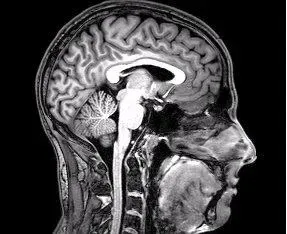
For nearly 70 years, popular psychology repeated the same number: you can hold about seven items in your head at once. That figure comes from a 1956 paper by George Miller, but Miller himself was cautious – he raised the question of whether it was anything more than a coincidence that people can discriminate roughly six or seven categories and recall about as many chunks. It was always meant as a rough estimate, never a hard rule.
Decades later, researcher Nelson Cowan went back through the data and found the real number was smaller. Cowan’s 2001 analysis concluded that when rehearsal is controlled, the actual capacity of short-term memory is closer to four chunks, not seven. That’s a massive downgrade from what most people still believe, and it means the designers, teachers, and marketers who build lists, menus, and slogans around “seven” may be quietly overloading everyone’s brain.
Quick Compare
- Old estimate (Miller, 1956): roughly 7 items held in working memory at once
- Revised estimate (Cowan, 2001): closer to 4 chunks once rehearsal is controlled for
- The gap: nearly half the capacity most textbooks and design rules still assume
#12 – Forgetting Isn’t a Glitch. It’s a Feature Your Brain Wants.

Most people treat forgetting like a failure. Researchers increasingly disagree. A 2019 study found that intentionally forgetting certain information actually improves memory for other things. Using an item-method directed-forgetting paradigm, scientists found across two experiments that recall was higher when a word pair was preceded during study by a to-be-forgotten word pair – and the effect was cumulative, meaning performance kept improving as more preceding items were marked for forgetting.
Neuroscientists studying memory cells back this up. Researchers suggest that rather than being a bug, forgetting may be a functional feature of the brain, letting it interact dynamically with a constantly changing environment. Even stranger, these “forgotten” memories can still be reactivated by surrounding cues or misleading experiences, resurfacing in updated form. Your brain isn’t losing files – it’s strategically archiving them.
#11 – “Flashbulb Memories” Feel Accurate. They Aren’t.
You probably remember exactly where you were during a major news event. That memory is likely wrong in ways you’ll never notice. Psychologists call vivid recollections of shocking news “flashbulb memories,” a term coined after studies on events like presidential assassinations.
But when researchers tested these memories against everyday memories using a real control group, the results were humbling. Consistency for flashbulb and everyday memories didn’t differ – both declined over time in exactly the same way. What did differ was confidence: self-ratings of vividness, recollection, and belief in accuracy dropped only for the everyday memories. The researchers concluded that flashbulb memories aren’t unique in their accuracy, only in their perceived accuracy. Your brain isn’t remembering 9/11 more precisely – it’s just more confident that it is.
#10 – Confidence and Accuracy Are Two Completely Different Things

Here’s an uncomfortable truth: the more certain you feel about a memory, the less that certainty tells you about whether it’s true. The clearest demonstration came from studies of the 1986 Challenger space shuttle disaster. Flashbulb memories are characterized by high subjective vividness and confidence, yet research consistently shows these memories are frequently inaccurate – especially in the details that can actually be checked. People swore up and down their recollections were exact, while directly contradicting their own earlier accounts.
Even stranger, some details got more wrong over time while confidence stayed completely flat. Studies show that people continue to report elaborate, richly detailed recollections and maintain high confidence in them even a decade later – regardless of actual accuracy. Confidence, it turns out, is a terrible lie detector, even to yourself.
#9 – Every Time You Recall a Memory, You Slightly Rewrite It

This is the finding that unsettles memory researchers most: remembering something can change it. The theory is called reconsolidation, and it flips the old “filing cabinet” model of memory on its head. Each time a memory is retrieved, it becomes temporarily unstable and vulnerable to alteration – so the next time it’s activated, you’re pulling up the version stored during your last retrieval, not the version stored after the original event.
You’re not remembering the original moment. You’re remembering the last time you remembered it. This isn’t a fringe theory anymore – it’s been replicated across species and memory types, from invertebrates to humans, across explicit and implicit, pleasant and aversive memories alike. Every retelling of your favorite story is quietly editing the master copy.
#8 – Your Memory Isn’t a Recording. It’s a Reconstruction Job.

Forget the idea that memories sit in storage, waiting to be replayed exactly as they happened. Researchers say your brain rebuilds them from scratch every time you access them. Your memories are not fixed recordings of an event but dynamic reconstructions that evolve – a process rooted in the same reconsolidation cycle. That means the “memory” you experience right now is part original event, part whatever mood, context, or new information you happen to be sitting in today.
This also explains why two people can remember the same event completely differently without either one lying. Memories stay active, flexible, and capable of change, which means remembering isn’t simply reading a file from storage – the act of remembering can actively reshape the memory itself. Your past isn’t fixed. It’s a living document your brain keeps quietly editing.
#7 – A Random Childhood Photo Can Plant a Memory That Never Happened

Want to implant a false memory in someone? You don’t even need a photo of the fake event – researchers found any old photo from a similar time period will do. In a study by Lindsay and colleagues, participants were shown a childhood photo from the same era as a fabricated event. Just seeing the photo produced more false memories, even when it had nothing to do with the actual invented story.
This matters far beyond the lab. Family photo albums, old home videos, and now AI-generated “memory” edits circulating online could be quietly seeding false recollections in people who have no idea it’s happening. Plausibility, it turns out, is contagious – once one detail feels real, your brain starts filling in the rest to match.
#6 – You Confuse Dreams, Photos, and Other People’s Stories With Your Own Memories

One of the biggest sources of false memory isn’t lying – it’s simple wiring confusion in the brain. Psychologist Aileen Oeberst explains that the content of a memory and the source of a memory are often stored separately in our minds. That separation can lead you to retrieve content without its correct source – mistaking images from a dream, or a family story you’ve heard a hundred times, for something you actually lived through.
That means the vivid “memory” you have of falling off your bike at age six might actually be your dad’s retelling of the story, relabeled by your brain as a lived experience. It isn’t deception. It’s a filing error your mind makes without ever telling you it happened. Once you know this, it’s hard to fully trust any early childhood memory again.
Worth Knowing
- Content and source are stored separately, so the brain can retrieve a memory without correctly tagging where it came from
- Dreams, photos, and secondhand family stories are common sources that get mislabeled as personal experience
- Early childhood memories are especially vulnerable since they’re often built from a mix of fragments and retellings
#5 – The Famous “Lost in the Mall” Study Is Far Harder to Replicate Than Everyone Assumed

For 30 years, one experiment has been cited constantly in criminal trials to cast doubt on victims’ memories. New research says it’s been oversold. A study led by researchers at Royal Holloway, University of London, and University College London – titled “Lost in the Mall? Interrogating Judgements of False Memory” – found that false memories are much harder to implant than memory researchers and expert witnesses have long claimed in court.
The original 1995 experiment claimed a quarter of participants could be talked into remembering being lost in a mall as a child. When researchers reexamined the raw data decades later, that story got shakier fast. Legal teams, including Harvey Weinstein’s defense, have leaned on this experiment for years – and it turns out the underlying science was never as airtight as the courtroom version suggested.
At a Glance
- 1995 original claim: about 25% of participants “remembered” being lost in a mall as a child
- Recent replication: led by researchers at Royal Holloway, University of London, and University College London
- Real-world use: cited in criminal defense strategy for three decades, including in the Harvey Weinstein case
- New conclusion: false memories are harder to implant than the courtroom version of the study suggested
#4 – When False Memories Do Form, People Barely Remember Any Real Details

Here’s the twist almost nobody talks about: even in the studies that “proved” false memories were easy to plant, participants remembered almost nothing specific. Researchers focused on six core details of the fake “lost in the mall” story – things like crying, being helped, being reunited with family. Participants deemed to have a false memory recalled, on average, just one and a half of those details with any confidence. Thirty percent recalled none at all.
That’s a shockingly thin basis for calling something a “memory.” Investigators were often more convinced a false memory existed than the participants themselves were – people in these studies were cautious about what they claimed to remember, far more cautious than the researchers judging them. The gap between what scientists claimed and what subjects actually said is the quiet scandal running through this entire field.
#3 – False Memories Can Be Undone – Sometimes in a Single Conversation
If memories can be implanted, can they be removed? A 2024 study says yes, and it’s easier than expected. Researchers first planted false autobiographical memories in young adults with help from their parents, then tried to reverse them without ever revealing the trick. After experiencing both reversal methods, participants’ belief in their false memories dropped to as low as 15 percent. A year later, follow-up testing showed belief had fallen even further, to just 5 percent.
The method itself was surprisingly simple: teaching people that memory has sources – photos, stories, dreams – and that being pressured to recall something repeatedly can actually create false memories in the first place. Elizabeth Loftus, who pioneered false-memory research decades ago, called the approach genuinely useful. If a false memory can be dismantled with a short debrief, how many “memories” are we all quietly protecting that were never real to begin with?
#2 – Even 9/11 Memories Faded Fast, Despite Feeling Permanent

If any event should produce a permanent, accurate memory, it’s a national tragedy watched in real time by millions. Even that memory decays faster than people admit. One of the most detailed flashbulb-memory studies followed people for a full year after September 11th. Only about 66 percent of subjects’ memories checked out as accurate a year later.
Emotions fared even worse – people’s recollections of how they actually felt that day were accurate only 40 percent of the time. That’s a one-third error rate for the facts and a majority error rate for the feelings. People weren’t lying about their reactions; their brains had simply rewritten them. The intensity of the moment created a powerful sense of “I’ll never forget this,” but strength of feeling and strength of accuracy turned out to be two completely unrelated things.
Fast Facts
- Study window: a full year of follow-up after September 11th
- Factual accuracy at one year: about 66%
- Emotional accuracy at one year: only 40%
- Confidence in these memories stayed high even as accuracy dropped
#1 – Courts Have Been Leaning on Shaky Memory Science for Decades

This is the finding that should worry everyone, not just psychologists: real legal outcomes have depended on memory research that’s now being quietly walked back. For decades, expert witnesses cited classic false-memory experiments to argue that abuse survivors’ detailed memories might be fabricated. Now the researchers behind the newest replication are sounding the alarm themselves.
Emeritus Professor Chris Brewin warned that the findings underscore the danger of applying laboratory research to real courtrooms, since people in these studies were consistently more cautious about what they claimed to remember than investigators gave them credit for. This isn’t an academic footnote. It has already shaped real defense strategies in high-profile cases, including historical sexual abuse trials – Harvey Weinstein’s defense team among them – where this research was cited specifically to cast doubt on accusers’ memories. When the foundational science gets revised, every case that leaned on the old version deserves a second look.
The Bottom Line
Human memory isn’t the reliable hard drive we’ve been told it is. It’s editable, reconstructive, and shaped more by confidence and repetition than by actual accuracy. Working memory holds fewer items than we thought, forgetting is doing useful work behind the scenes, and even our most emotional, “unforgettable” memories fade in ways we never notice happening.
The most unsettling part isn’t the lab findings themselves – it’s what happens when those findings get used in courtrooms to judge real people’s credibility. If the researchers who built this field are now quietly walking back decades-old claims, maybe it’s time the rest of us stopped trusting our own memories quite so blindly. Which of these findings surprised you the most? Drop it in the comments.