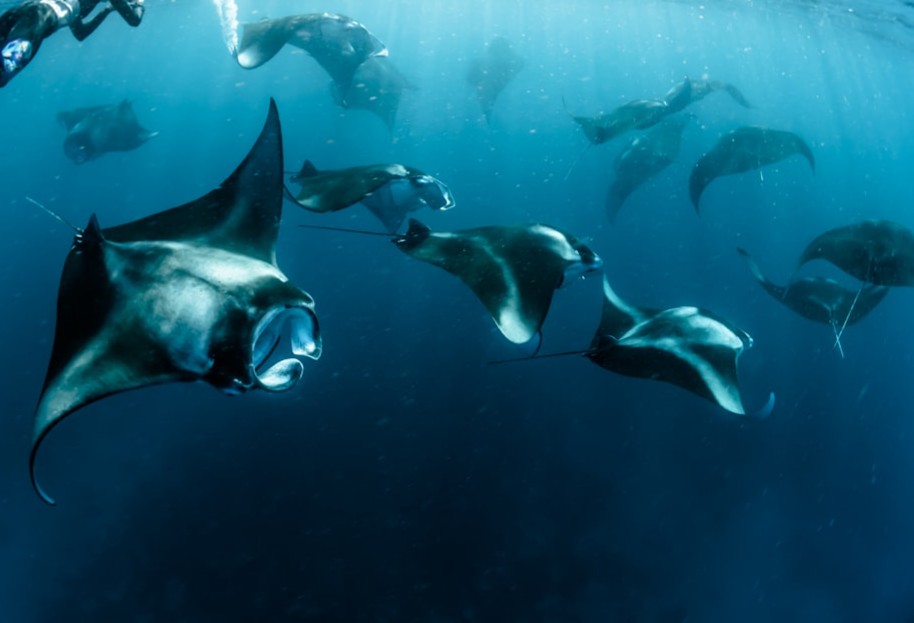

You have probably seen those slow‑motion clips where a manta ray suddenly rolls into a perfect underwater cartwheel, like a flying carpet doing a backflip. It looks playful and almost choreographed, but what you are really watching is a very specialized feeding strategy that has evolved over millions of years. When you understand what is going on in that moment, the behavior stops being just beautiful and starts to feel incredibly smart. As you picture those spiraling giants, it helps to remember what they are chasing: clouds of tiny plankton drifting in the water. You are not looking at a predator sprinting after one big target, you are watching an animal trying to grab as much soup as possible with its mouth wide open. Each somersault is a way to solve very practical problems: how to stay in the richest water, how to avoid wasting energy, and how to grab more food than your competitors swirling around you.
1. Staying Inside Dense Plankton Patches
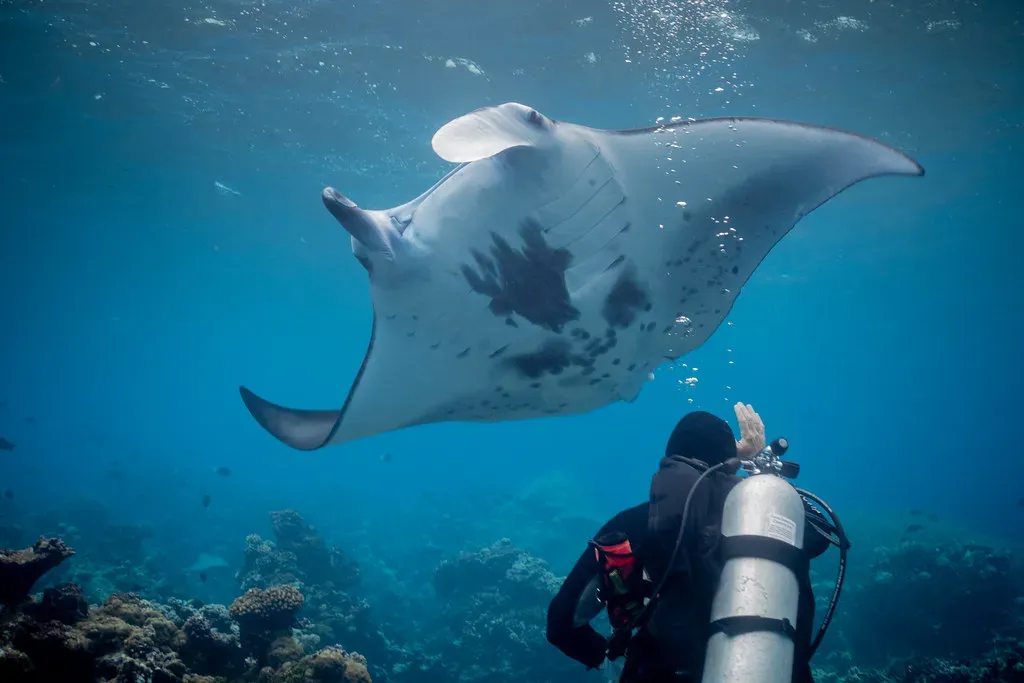
Imagine you are swimming through a room filled with glitter, and the thickest cloud is right in front of your face. If you just keep going straight, you rush out of that glitter cloud almost immediately. Manta rays face the same challenge with plankton: if they swim straight through a dense patch, they leave the best part behind in seconds. By rolling into a somersault, they loop right back into that same rich patch instead of leaving it. You can think of this move as drawing circles in a bowl of soup instead of drifting through it once in a straight line. The somersault lets a manta stay almost parked inside a moving buffet, repeatedly passing its huge, open mouth through the highest concentration of food. For an animal that depends on tiny prey, hanging inside that thickest plume, even for a little longer, can make a real difference to how much energy it gets from a single feeding event.
2. Slowing Down Without Stopping the Flow
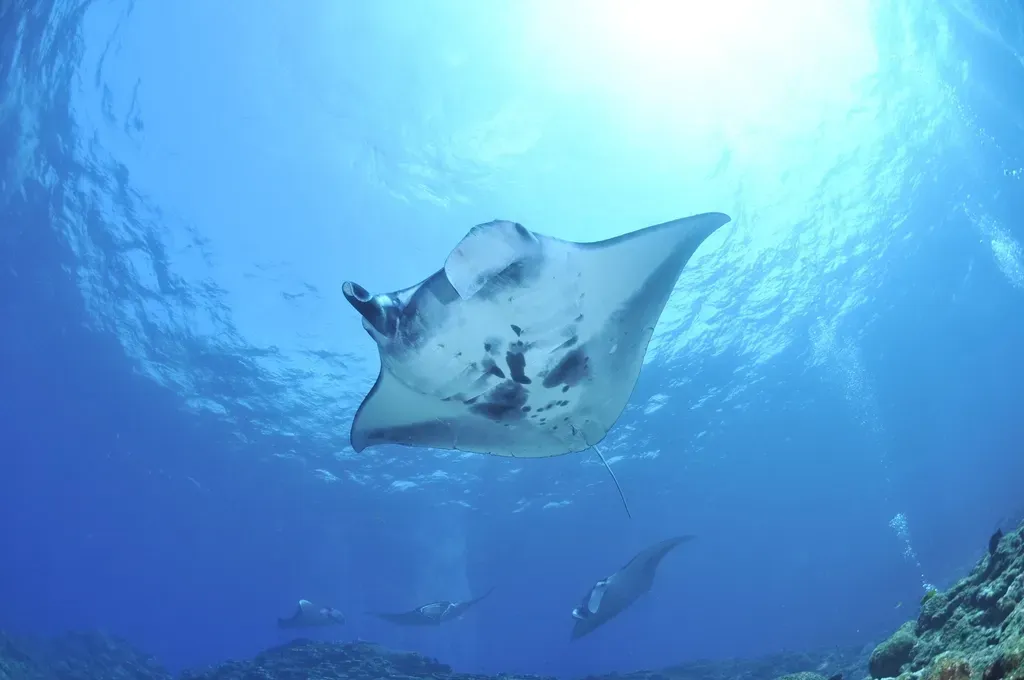
When you open your mouth underwater and try to swim fast, you instantly feel the drag. Manta rays have an even bigger challenge because their mouths are enormous compared with their bodies. If they raced straight through the water, they would move too quickly past the plankton to capture it efficiently, and they would spend a lot of energy fighting resistance at the same time. Somersaults help them solve both problems at once. By flipping, a manta temporarily slows its forward progress while still keeping water flowing steadily into its mouth. As it rolls, its body traces a compact loop, so it does not cover much distance, but the motion keeps the water moving over its gill rakers where the plankton gets trapped. This means you see an animal that seems almost hovering in place, but in reality it is carefully balancing speed and drag to feed without burning more energy than the meal is worth.
3. Maximizing Time With Mouth in Feeding Position
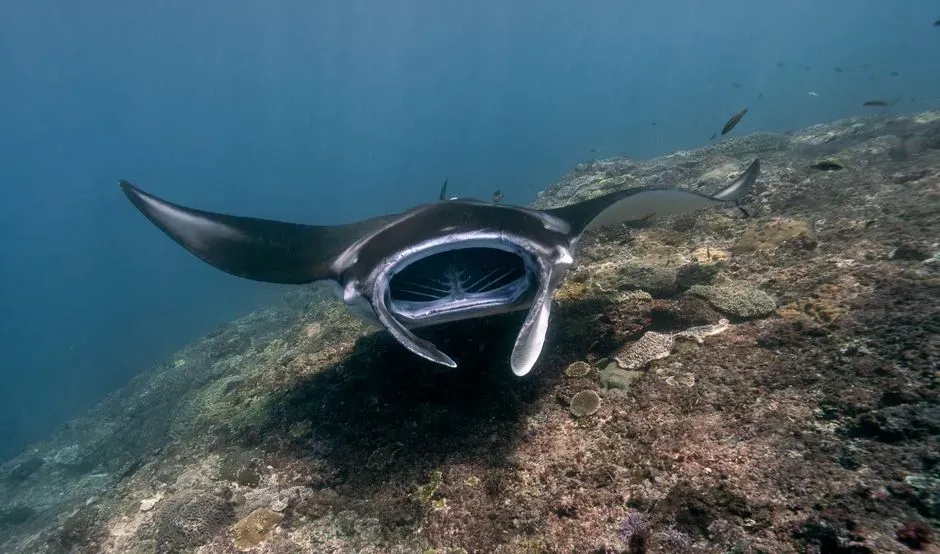
If you picture a manta ray gliding normally, its mouth is forward, but it will only pass through a good patch of plankton once before it is gone. During a somersault, its mouth stays in the prime position for much longer, sweeping repeatedly through almost the same chunk of water. You can think of it as swinging a net back and forth where you know fish are concentrated, instead of casting once and hoping you lined it up right. The rolling motion gives the manta a way to keep its mouth facing into the thickest flow as long as possible. Each turn lets it reset its “starting line” without needing a long U‑turn or a big loop around the area. So, every time you see that spiraling move, you are basically watching an attempt to stretch out the best part of the meal, keeping the mouth locked on target instead of gliding on and leaving the good stuff behind.
4. Using Currents and Upwellings to Their Advantage
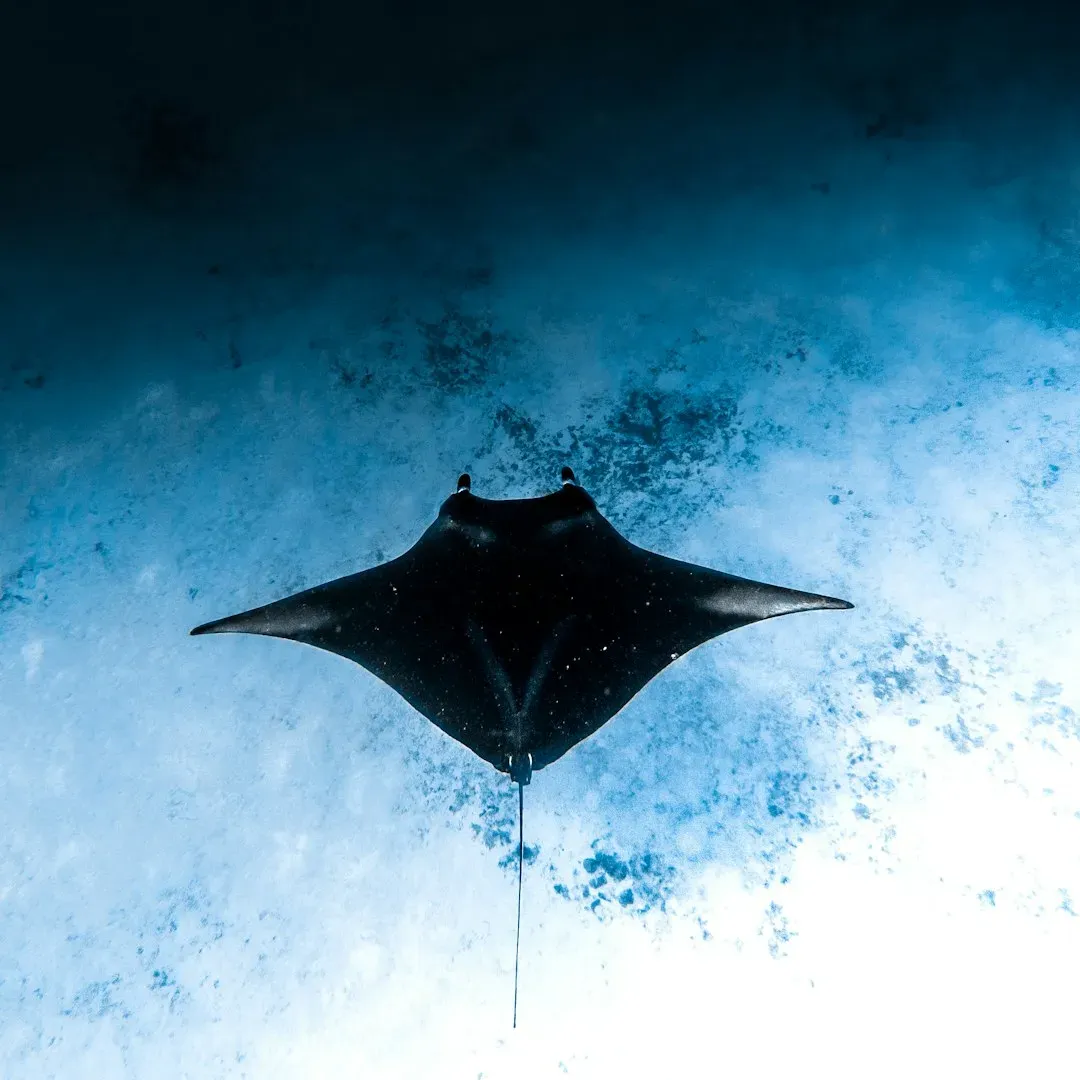
You often find manta rays feeding where currents hit a reef, a rock, or a steep underwater wall. Those places act like invisible conveyor belts, pushing plankton into concentrated streaks or spirals in the water. If you stand in a river and see leaves swirling in a small whirlpool near a rock, you already understand the structure mantas are trying to exploit. Their somersaults let them lock into those swirling patches instead of drifting away with the current. As they roll, mantas are not just turning randomly; they are responding to the shape of the water itself. By curving their path into a looping spin, they can stay inside a rotating pocket of food created by the current, a bit like how a kite surfer rides the same wave again and again by turning at just the right moment. When you look closely, the somersaults are a way for them to ride the physics of moving water rather than fight it.
5. Reducing Competition While Sharing the Same Buffet
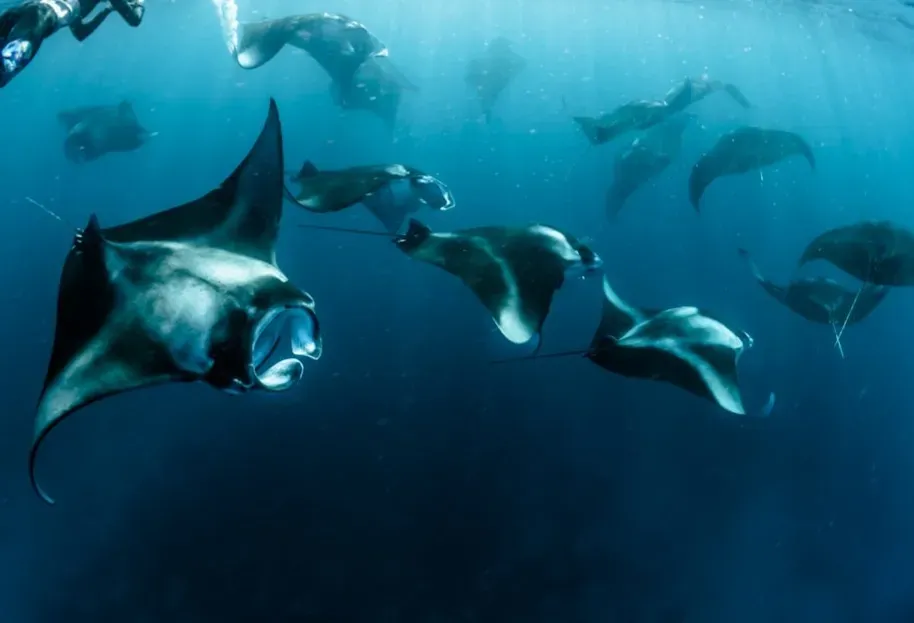
In many feeding hotspots, you do not see just one manta ray; you see several circling, crossing, and flipping through the same general area. If everyone simply lined up and swam straight, they would quickly bump into each other, or worse, push one another out of the best feeding lane. By somersaulting, an individual manta can carve out a tiny vertical “bubble” of space to feed in while others move past or around it. You can compare it to a few people using the same salad bar: some walk along the line, while one person might stay at a single tray and refill their plate from there. The spinning manta is that person holding their ground. The move lets it stick to a promising patch of plankton instead of constantly giving way to neighbors. That way, everyone can still feed in the same zone, but each ray gets a chance to focus on its own little pocket of food.
6. Fine‑Tuning Body Angle for Optimal Filtration
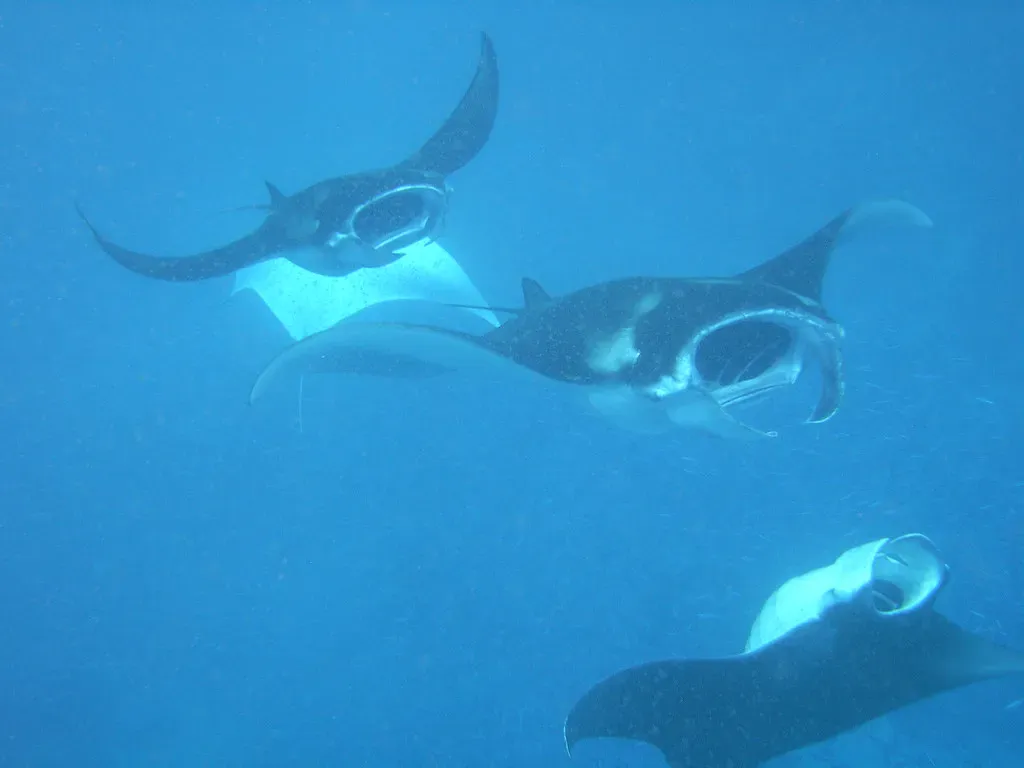
Manta rays are filter feeders, which means they rely on funneling water through specialized structures in their gills to trap tiny organisms. How you angle a giant, flat body in moving water makes a big difference to how that flow behaves. During a somersault, a manta can tweak its body angle, wing tilt, and mouth orientation multiple times in a single loop, constantly testing where the intake feels richest and most efficient. As the ray rolls, its cephalic fins – those horn‑like lobes by the mouth – can curl and uncurl, narrowing or widening the funnel that channels water and plankton in. You can think of it like adjusting the nozzle on a garden hose: small changes dramatically alter how the water comes through. By blending those tiny adjustments with the rolling body movement, the manta is essentially fine‑tuning its feeding machine on the fly so that each pass through the same patch counts a little more.
7. Adapting to Patchy, Unpredictable Food Clouds
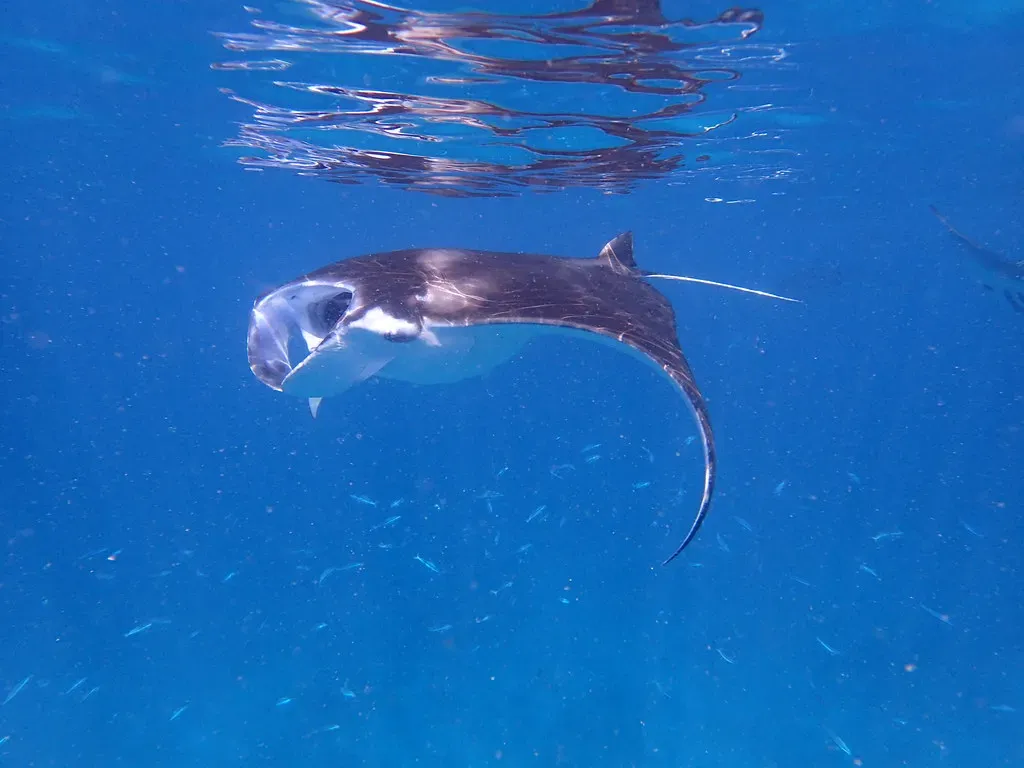
Plankton is not evenly spread in the ocean; it forms clumps, filaments, and layers that can shift quickly with wind, tides, and currents. If you had to eat in a room where food appeared in random, drifting pockets, you would probably change direction often and loop back on spots that seemed promising. Manta somersaults are a flexible strategy in exactly this kind of patchy environment, letting them react and adjust instead of committing to long, straight swims. By flipping, a manta can re‑sample the same area from slightly different angles and depths to see if that rich patch is still there or if it has moved. If the food has thinned out, it can break out of the loop and glide on; if it is still dense, it can keep rolling in place. You are watching an animal built for a world where the buffet table never holds still, and somersaults are the equivalent of constantly checking and rechecking where the next good mouthful is hiding.
8. Conserving Energy Over Long Feeding Sessions
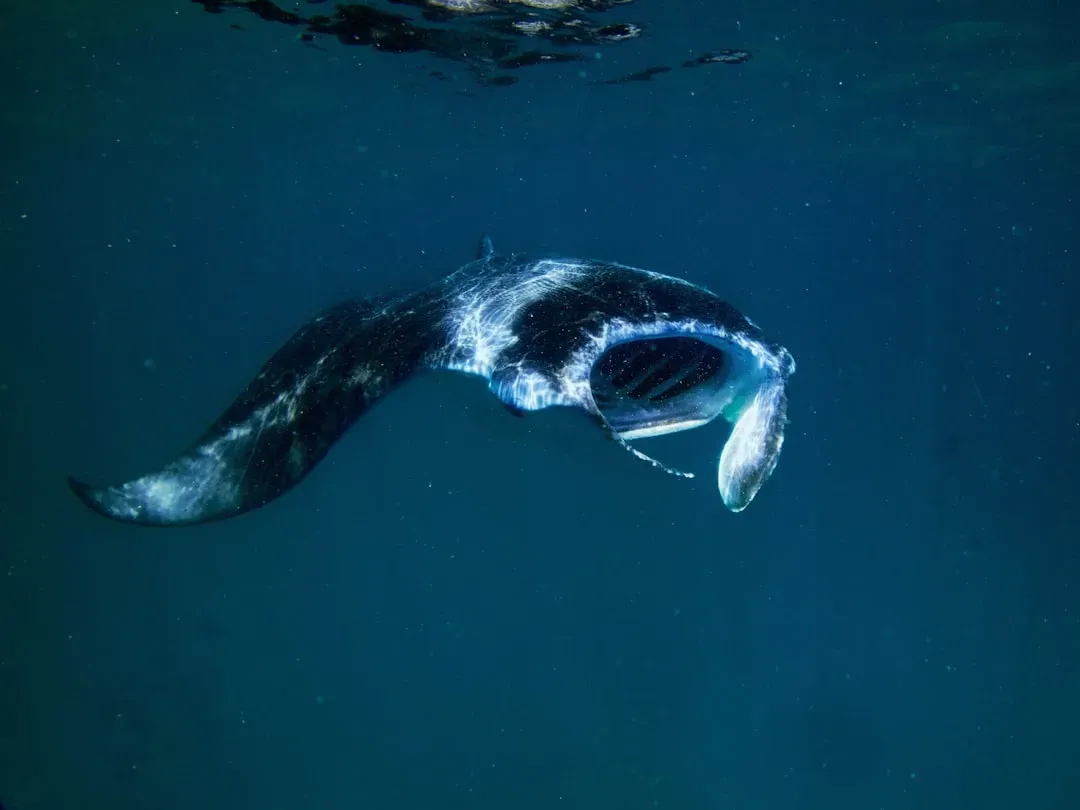
You might assume that spinning a forty‑hundred‑pound body in the water would be exhausting, but in the ocean, gentle, controlled rolls can actually be quite efficient. Gliding in big circles or swimming long, straight distances through thin plankton would burn a lot of fuel for very little payoff. Somersaults, done slowly and precisely, let mantas stay close to a rich food source without traveling far, which keeps their energy budget in better balance. Think of it as the difference between running around a field hoping to bump into snacks, versus pacing in a small circle around a table you already know is loaded. Over time, the energy you save adds up. For a manta ray that has to travel huge distances between feeding grounds and may need to refuel quickly when it finds one, somersault feeding is a way to make sure the calories spent on movement do not outpace the calories gained from all those tiny plankton bites.
When you put all these reasons together, those graceful underwater flips stop looking like random showmanship and start to feel like a carefully tuned survival strategy. You are seeing an animal that has learned to stay in the thickest part of the food, to work with the water instead of against it, and to squeeze as much value as possible from every hard‑won feeding opportunity.
Next time you watch a manta ray somersault through a cloud of plankton, you will know you are not just witnessing a beautiful dance, but a quiet, precise negotiation between body, water, and food. Does it change how you see that slow‑motion roll, knowing it is less a trick and more a finely honed way to stay alive?