
Most people picture archaeology as a sober, evidence-first science – dig it up, test it, and the truth wins. That’s the myth. The reality is messier: some of the biggest “discoveries” in the history of the field were flat-out hoaxes that fooled museums, universities, and the public for decades. Sometimes for over a century.
Careers were built on forgeries. Textbooks repeated claims that were never true. A few of these fakes were so convenient, so perfectly timed, that obvious red flags got waved away for generations. Here’s the full countdown of 20 hoaxes that got away with it far longer than they should have – and the exact moment each one finally fell apart.
#20 – The Piltdown Man “Missing Link”
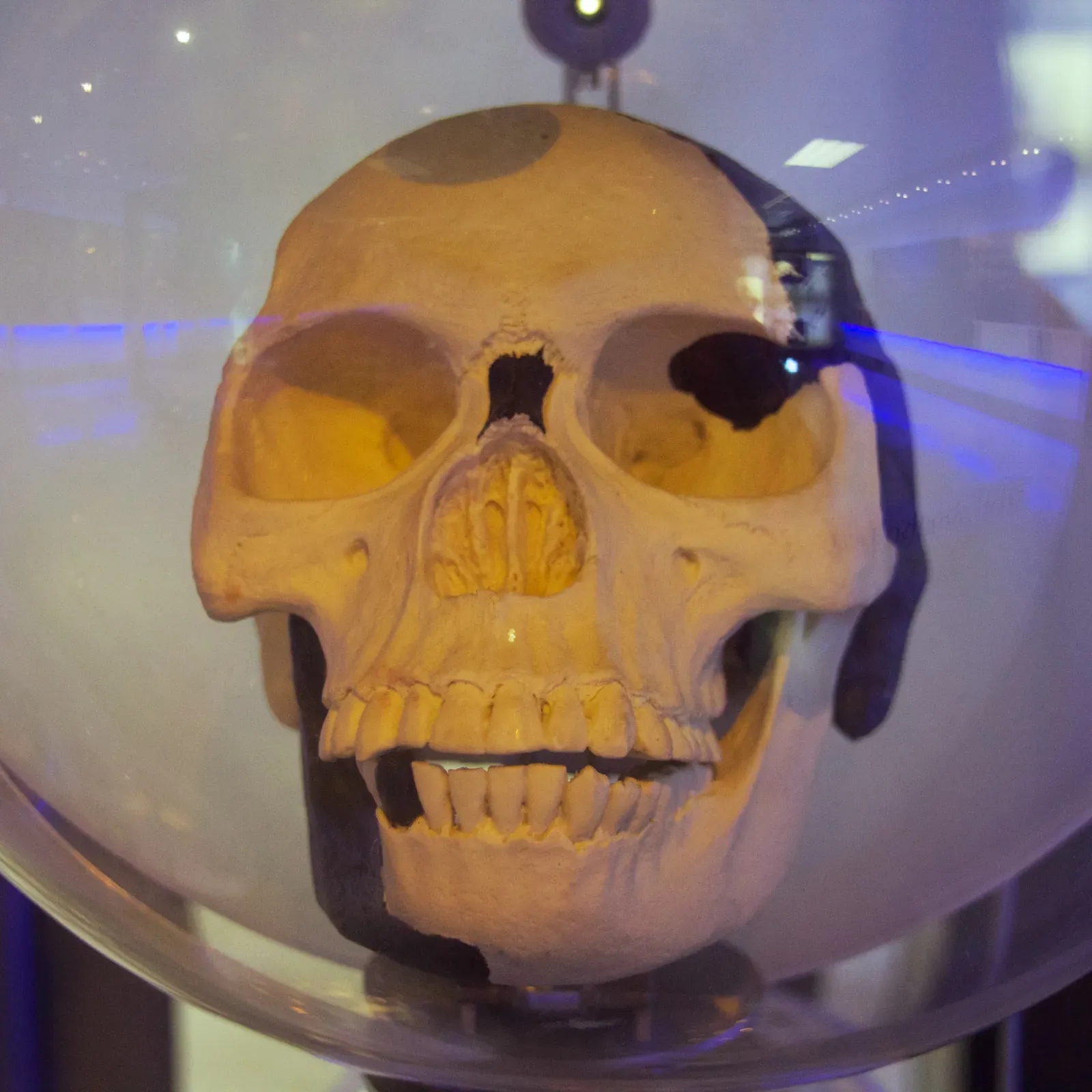
For decades, Piltdown Man was the fossil that supposedly proved human evolution happened in Britain. Discovered in 1912 by Charles Dawson in an English gravel pit, the skull fragments looked almost too perfect: a human-like cranium paired with an ape-like jaw. Newspapers ran with it instantly.
It placed the cradle of humanity in England instead of Africa or Asia, which is exactly why British scientists fell in love with it and brushed aside the weird mix of traits. Critics who questioned it got branded as cranks. It took until 1953 for advanced testing to expose the truth: the skull was medieval human, the jaw belonged to an orangutan, and both had been chemically stained to fake age. This wasn’t a mistake. It was a deliberate, carefully built fraud that took over 40 years to unravel.
Fast Facts
- Unearthed in 1912 near Piltdown, Sussex, England
- Presented as a human cranium fused with an ape-like jaw
- Not exposed as fake until 1953 – a 41-year run
- Both pieces were chemically stained and the teeth deliberately filed down
#19 – The Davenport Tablets and the Midwest’s Fake Lost Civilization
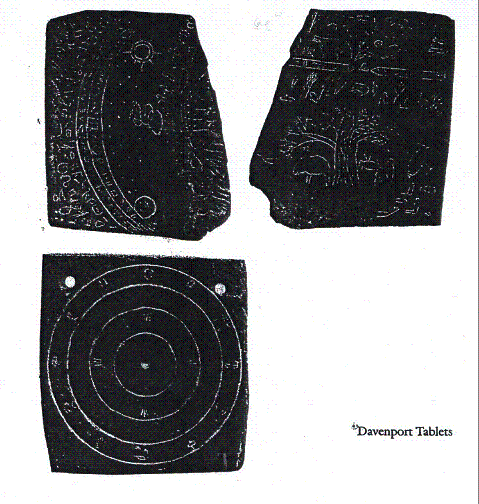
Nineteenth-century America was obsessed with the idea that Old World civilizations had secretly reached the Midwest. The Davenport Tablets rode that wave perfectly. In the 1870s, inscribed stone tablets “appeared” in burial mounds near Davenport, Iowa, covered in strange scripts and elaborate scenes.
Local clergymen and amateur archaeologists promoted them as proof that Native American mounds had foreign origins, which conveniently fit their own religious and racial narratives. Critics noticed the inscriptions looked suspiciously modern, but nobody wanted to hear it. Eventually, detailed study found tool marks from metal instruments, mismatched weathering, and scripts copied straight out of books. The tablets were planted forgeries, likely by locals chasing hometown prestige – yet they were cited as serious evidence for years.
#18 – The Cardiff Giant: A Carved Sideshow Passed Off as a Biblical Corpse
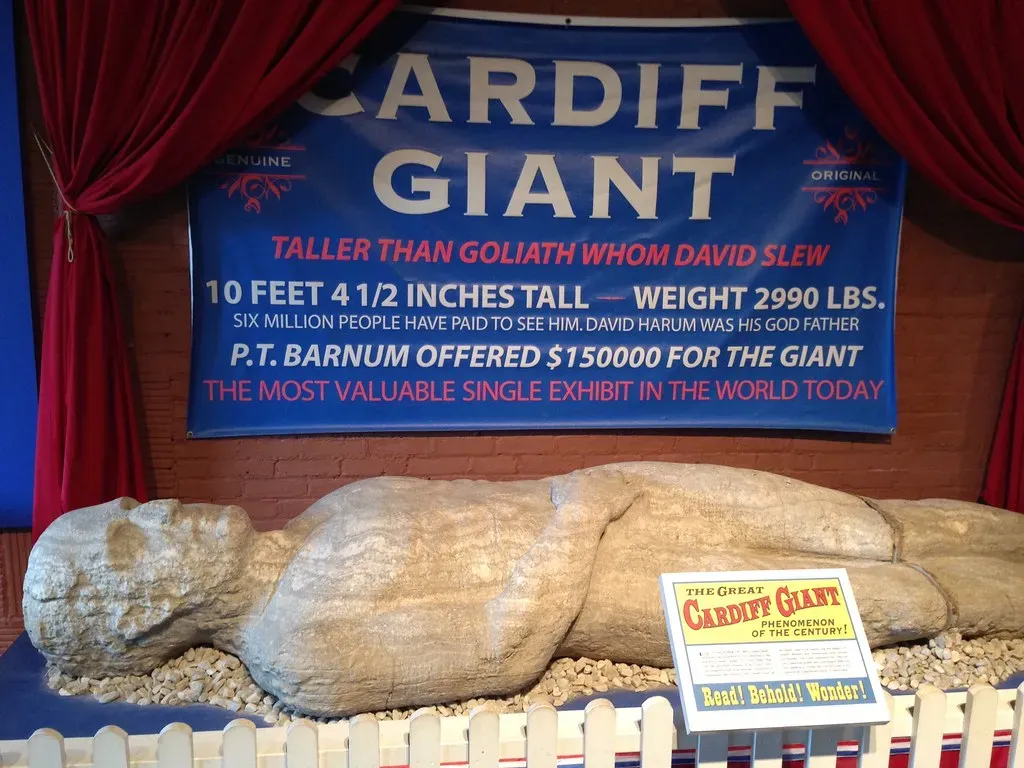
The Cardiff Giant wasn’t subtle science – it was a straight-up sideshow scam that still fooled people who should have known better. In 1869, a “petrified man” nearly 10 feet tall was unearthed on a farm in Cardiff, New York, and crowds poured in to see it.
People paid admission to view what ministers claimed was proof of the biblical “giants in the earth” – a carved gypsum statue treated like living scripture. Some scientists called it fake immediately, but others hedged, worried about losing access to the spectacle. Later confessions confirmed it: carved, artificially aged with stains and needles, buried, then “discovered” on cue. Even after the hoax was exposed, it kept touring as paid entertainment, and some believers still insisted scientists were covering up the truth.
#17 – The Vinland Map: A Viking Discovery That Was Actually 20th-Century Ink
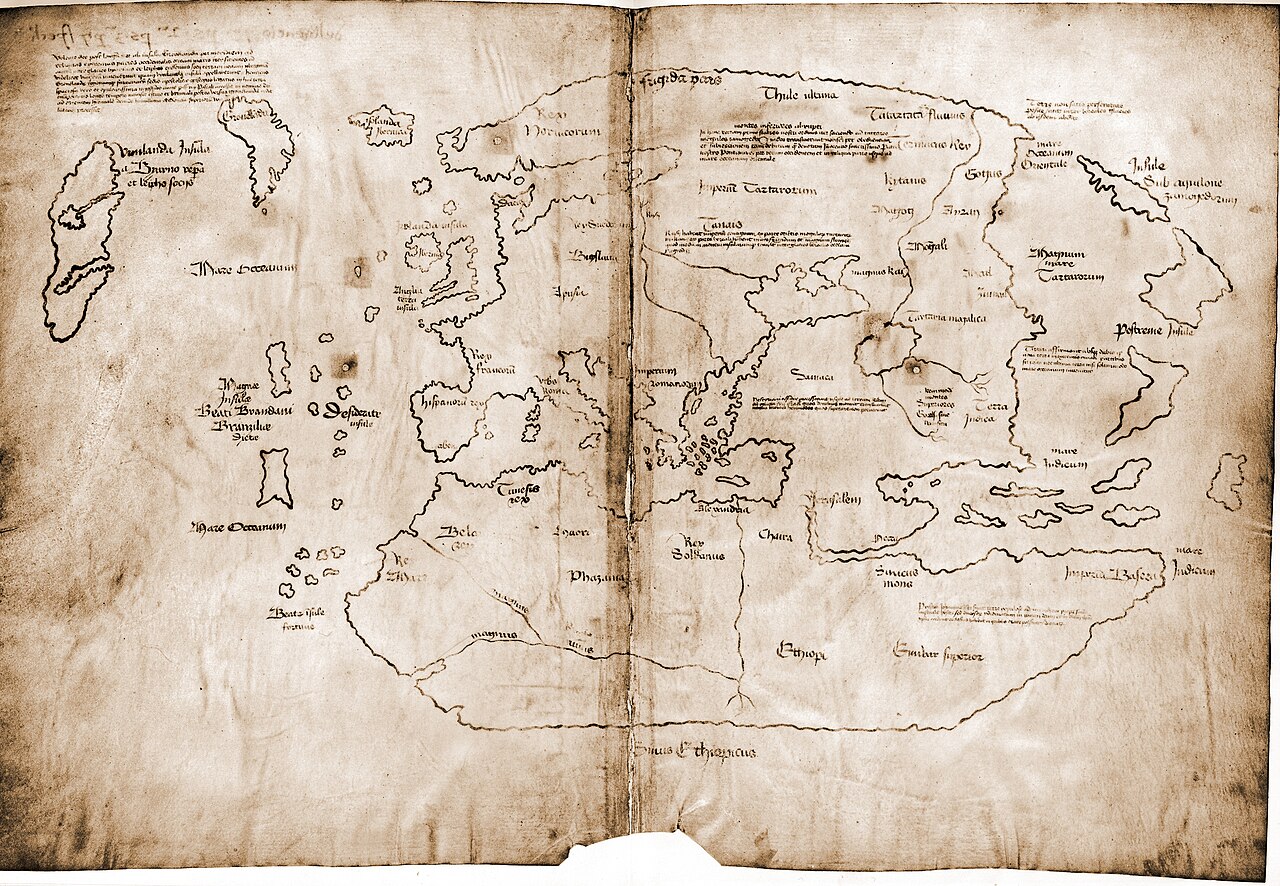
For decades, the Vinland Map was treated as proof that medieval Europeans had mapped North America centuries before Columbus. Museums displayed it, documentaries praised it, and it landed in Yale’s collection after surfacing in the 1950s.
The timing was almost too perfect – scholars had just embraced evidence of real Viking landings in Newfoundland, and this map looked like the missing puzzle piece. The unusually dark, crisp ink got explained away as “good preservation.” Then chemical testing found titanium-based pigments that didn’t exist in the Middle Ages. Layered analysis of the parchment revealed anachronisms everywhere. It’s now considered a 20th-century forgery drawn on genuinely old vellum, though a small camp still refuses to let it go.
#16 – The Shroud of Turin: A Medieval Relic Business Model
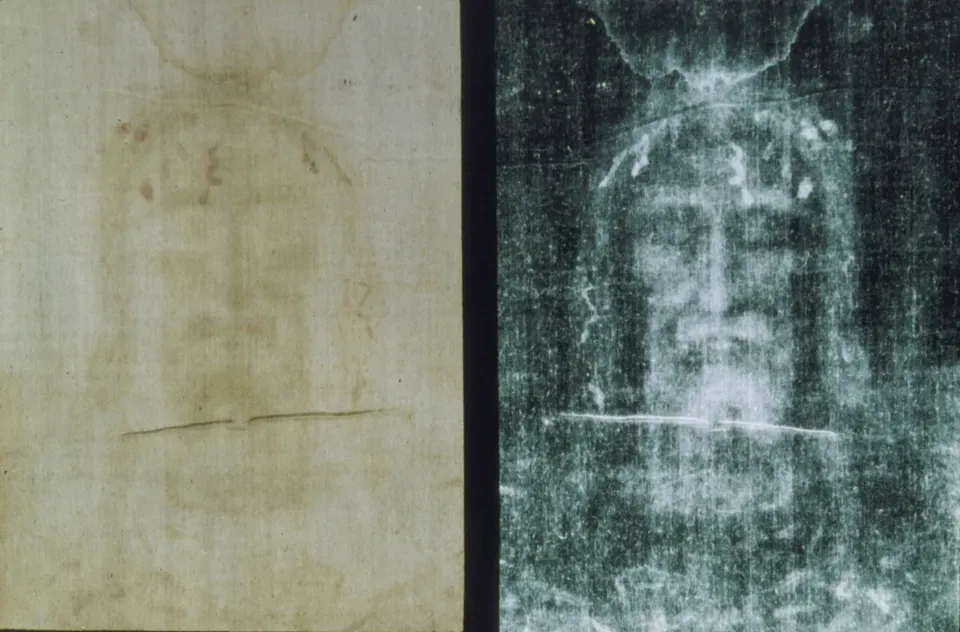
The Shroud of Turin is the lightning rod of archaeological controversies – part relic, part tourist magnet, part scientific headache. The linen cloth, bearing the faint image of a crucified man, has been venerated for centuries as the burial shroud of Jesus.
But radiocarbon dating from multiple independent labs placed its origin around the 13th–14th century – right when the medieval relic trade was booming and churches had every financial incentive to commission convincing fakes. Historical records of the shroud before that period are patchy at best. Supporters point to pollen traces and unexplained image characteristics; critics point out that medieval artisans were plenty skilled. Unlike the other hoaxes on this list, this one survives less because of evidence and more because people need it to be real.
Worth Knowing
- 1988 testing involved three separate radiocarbon labs working independently
- Results converged on a medieval origin, roughly the 1260s to 1390s
- No solid historical record of the shroud exists before the mid-14th century
- It remains one of the most studied and re-tested objects in the world
#15 – The Etruscan Terracotta Warriors That Fooled the Met
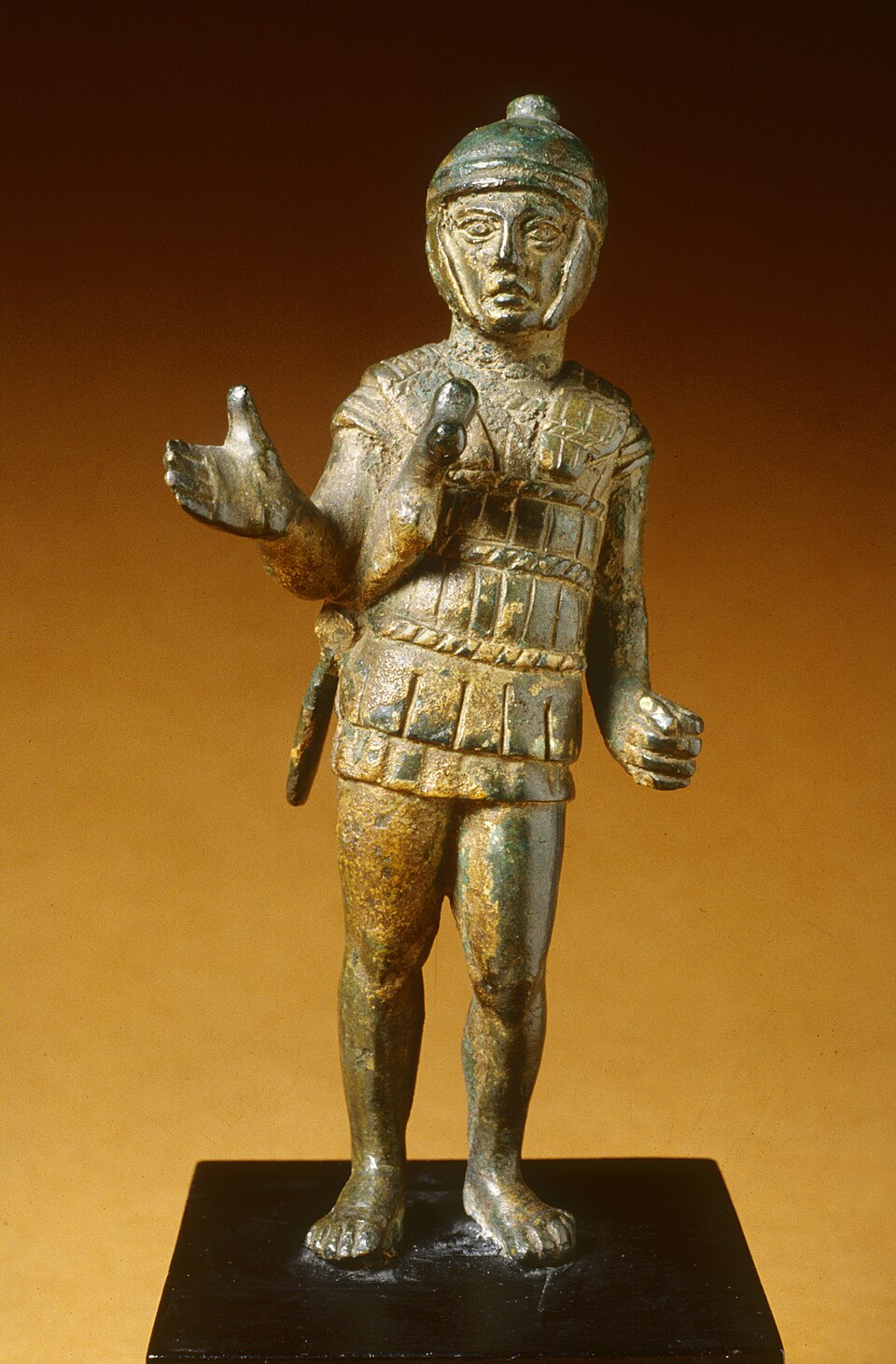
In the early 20th century, the art world thought it had struck gold: imposing Etruscan terracotta warriors and sarcophagi that would redefine an ancient culture. These pieces landed in top museums, including New York’s Metropolitan Museum of Art, and were treated as masterpieces.
Experts overlooked awkward proportions and suspiciously “modern” facial expressions because when a world-class museum buys something, everyone assumes it’s real. A few scholars quietly doubted them, but challenging a major institution was risky. Decades later, chemical analysis of the clay and glazes exposed modern pigments and 19th-century tool marks. Then letters from the actual forgers surfaced, describing the commissions in detail. These were forged Picassos in clay form – and they fooled the best in the business.
#14 – The Glozel Discoveries: A French Village Torn Apart by a Fake Culture
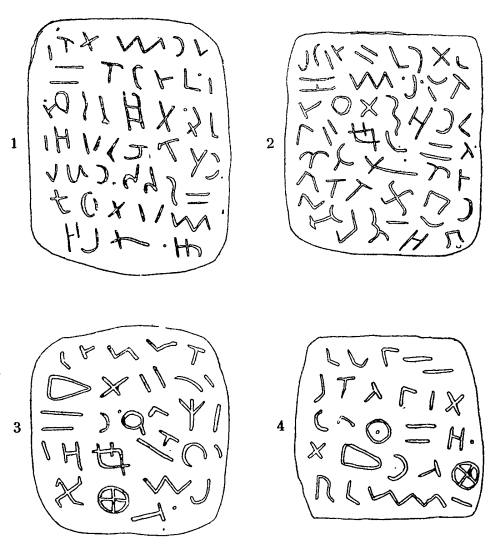
In 1924, a French teenager plowing a field near Glozel unearthed inscribed tablets, ceramics, and bones tucked in a hidden chamber. Local teacher Emile Fradin backed the find, and the story exploded: an unknown ancient culture with its own writing system.
Some scholars rushed to call Glozel a revolutionary site that rewrote European prehistory, while others smelled a hoax instantly. The giveaway was the artifacts themselves – Paleolithic-style engravings mixed with Iron Age-style scripts, all from one tiny plot of land. Investigations spiraled into lawsuits and academic feuds. Scientific testing eventually showed many objects were fired at modern kiln temperatures. A stubborn minority still insists it’s real to this day, which tells you how deep local pride can run.
#13 – The Calaveras Skull: Gold Rush “Proof” That Humans Predated Mammoths
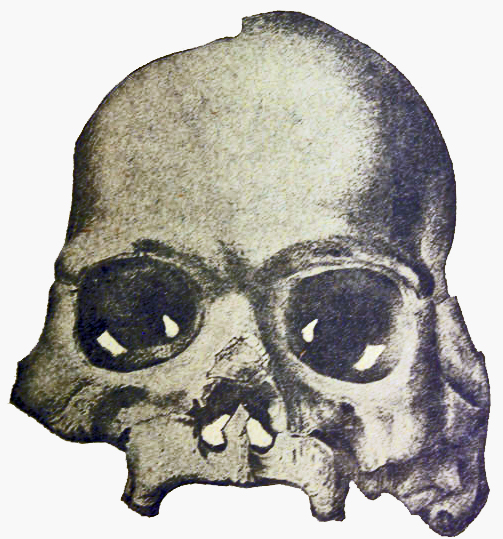
California’s Gold Rush produced more than fortunes – it produced one of archaeology’s most brazen hoaxes. In 1866, miners in Calaveras County claimed to find a human skull buried deep in ancient gravel, implying humans had lived in North America millions of years earlier than anyone thought.
This conveniently backed the pet theory of a popular local geologist who believed humans were far older in the Americas than mainstream science accepted. Nobody stopped to ask how an intact skull could survive that kind of geological pressure. Later analysis showed it was only a few hundred years old and had almost certainly been planted, and witnesses eventually admitted it started as a joke. Even so, it kept appearing in lectures for decades because it fed a tidy story about “science versus narrow-minded elites.”
#12 – The Michigan Relics: A Fake Lost Tribe of Israel
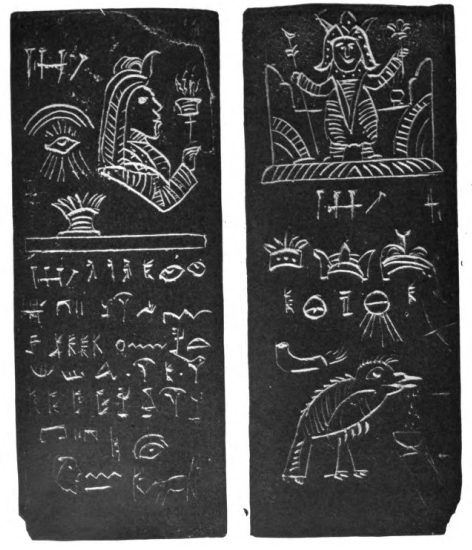
If you want a case study in how religious agendas can fuel archaeological nonsense, the Michigan Relics deliver. Starting in the late 19th century, hundreds of “ancient” clay, copper, and slate tablets appeared across Michigan, decorated with pseudo-scripts and scenes that suspiciously mirrored Bible stories.
Promoters claimed the tablets proved an ancient Near Eastern or “lost tribe of Israel” presence in North America, conveniently supporting certain theological narratives of the time. Experts quickly spotted repetitive motifs, shallow tool marks, and scripts matching no known writing system. One of the key finders eventually admitted to fabricating pieces outright. The real damage: genuine Native American sites in the region got overshadowed by these theatrical fakes for years.
#11 – The Fujimura “God’s Hand” Scandal That Rewrote Japanese Prehistory
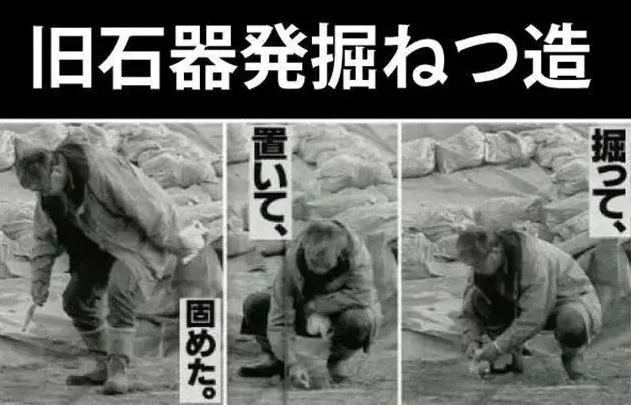
This one didn’t happen in the 1800s – it exploded in the 1990s, proving modern archaeology isn’t immune either. Shinichi Fujimura, nicknamed “God’s Hand” for his uncanny ability to unearth spectacular Paleolithic artifacts, kept pushing back the known timeline of human occupation in Japan.
The media adored him, museums trusted him, and entire careers got built on sites he “discovered.” When someone produces miracle evidence over and over, that should trigger scrutiny – it didn’t. In 2000, reporters caught Fujimura on camera secretly burying artifacts at a dig site before the official excavation. Investigations revealed a pattern of planted objects going back years. Whole chapters of Japanese prehistory had to be rewritten, and the hardest part wasn’t the wrong dates – it was admitting how thoroughly hero-worship had blinded an entire field.
I was tempted by the Devil. I don’t know how I can apologize for what I did…
Shinichi Fujimura
#10 – The Acámbaro Figures: Clay Dinosaurs Partying With Humans
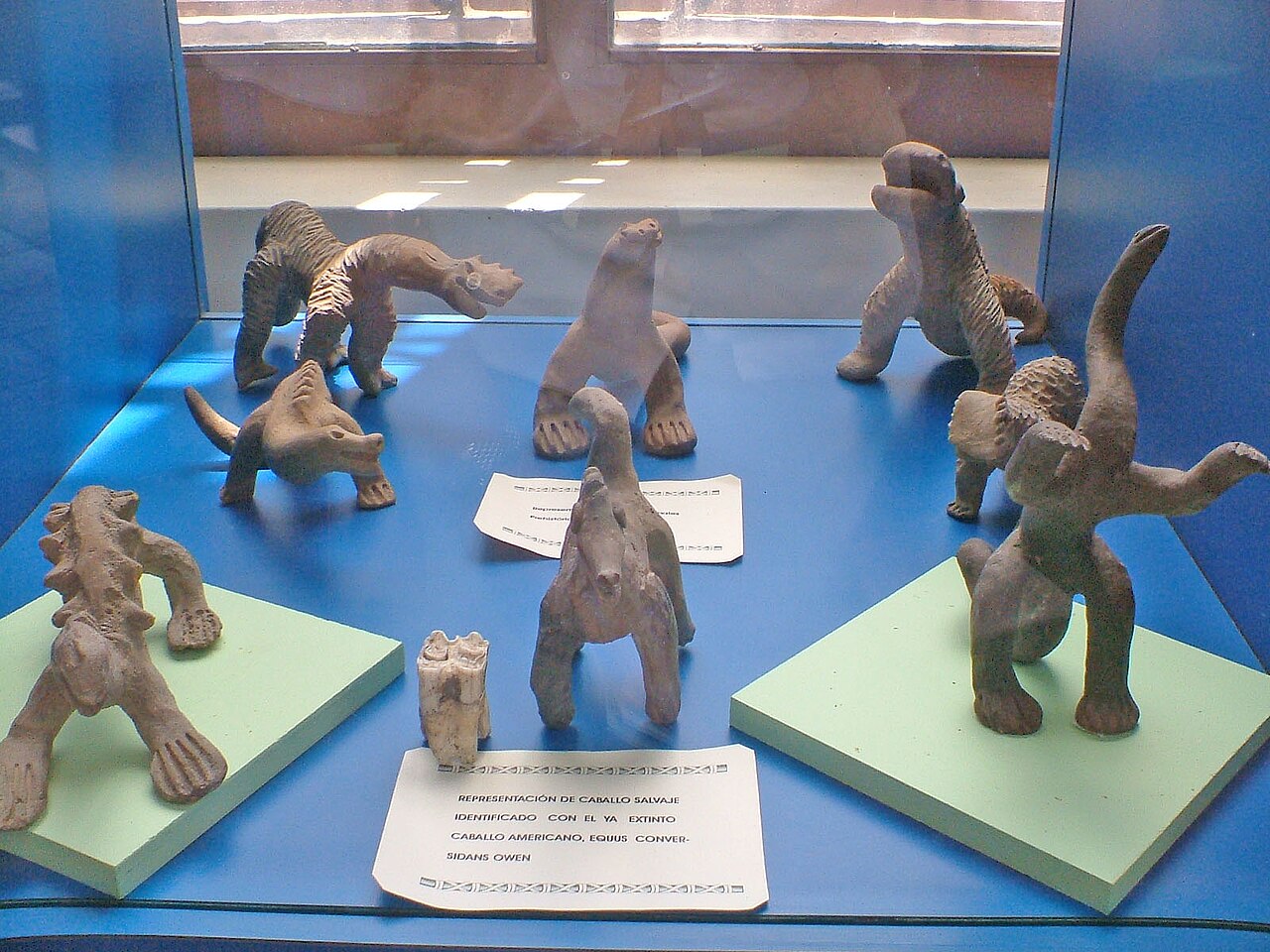
If you’ve ever seen photos of clay dinosaurs and humans hanging out together, you’ve met the Acámbaro figures. In the 1940s, thousands of small terracotta figurines were “found” near Acámbaro, Mexico – humans, dinosaurs, mythic creatures, bizarre hybrids, all in one collection.
Creationist authors jumped on them as proof that humans and dinosaurs coexisted, supposedly demolishing mainstream geology in one blow. The figures collapse under basic scrutiny: minimal natural aging, styles that copy early-20th-century pop-culture dinosaur depictions, and manufacturing marks that look distinctly modern. There’s essentially no legitimate stratigraphic context to date them. Most archaeologists consider them mass-produced tourist fakes – yet they still circulate online as “evidence scientists can’t explain.”
#9 – The Kensington Runestone: Minnesota’s Viking Fantasy
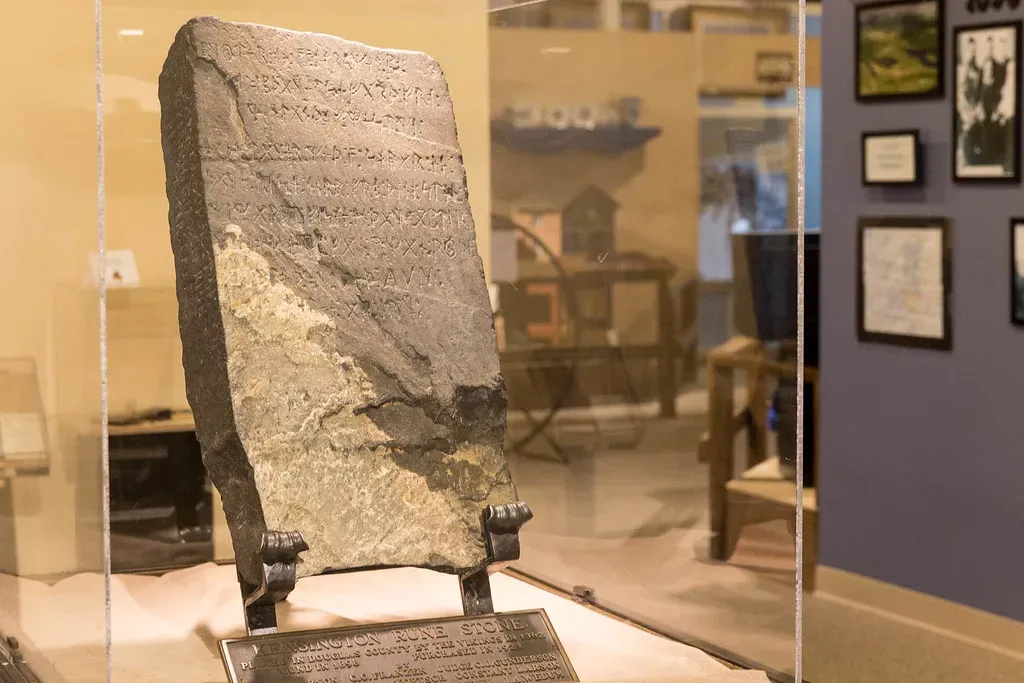
In Minnesota, plenty of people are still deeply attached to the idea that Vikings carved a runestone there in the 14th century. The Kensington Runestone, allegedly found in 1898, bears an inscription describing a Norse expedition dated to 1362.
It arrived at exactly the right moment: Scandinavian immigrants in the Midwest wanted a heroic past, and a literal stone declaring “we were here first” scratched that itch perfectly. Linguists have since pointed out anachronistic grammar and rune forms that match 19th-century Scandinavian usage, not medieval script. The weathering pattern looks suspiciously fresh too. But because debunking it means puncturing a beloved community identity, defenders still accuse academics of bias.
#8 – The James Ossuary: A Real Box With a Faked Bible Connection
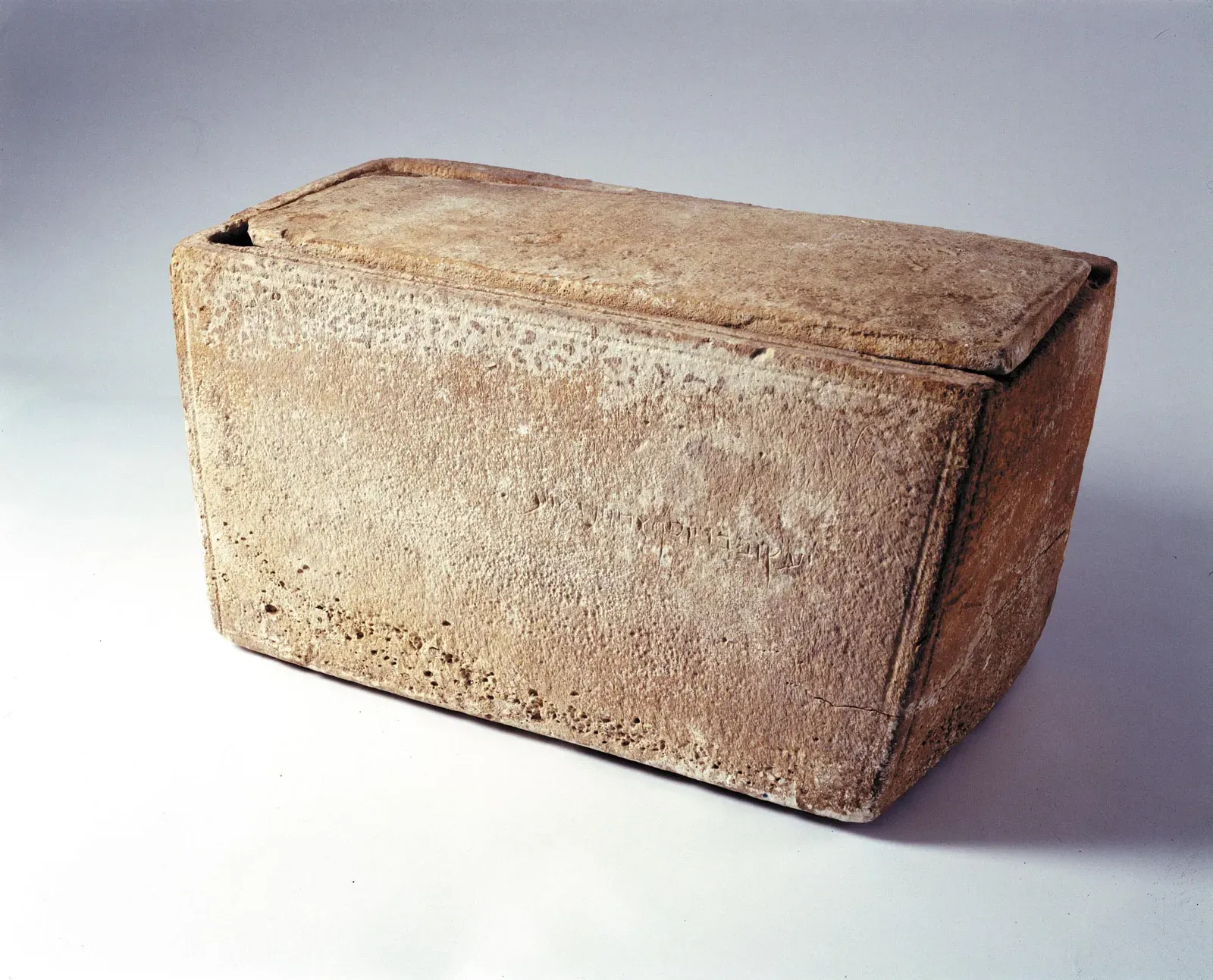
In 2002, an unassuming limestone bone box burst onto the scene with a blockbuster inscription: “James, son of Joseph, brother of Jesus.” The media lost its mind instantly.
If authentic as inscribed, it would be the first archaeological artifact directly linked to the family of Jesus, with massive religious implications. But the patina covering parts of the inscription looked uneven, and stylistic quirks raised red flags fast. Israeli authorities charged the owner with forgery in a sprawling antiquities-fraud case. The trial’s outcome was messy, but most epigraphers now believe the box itself is genuine while the “brother of Jesus” portion was carved on later – real artifact, doctored text, and a case study in how money and media attention warp scholarship.
#7 – The Tiara of Saitaphernes: Even the Louvre Got Played
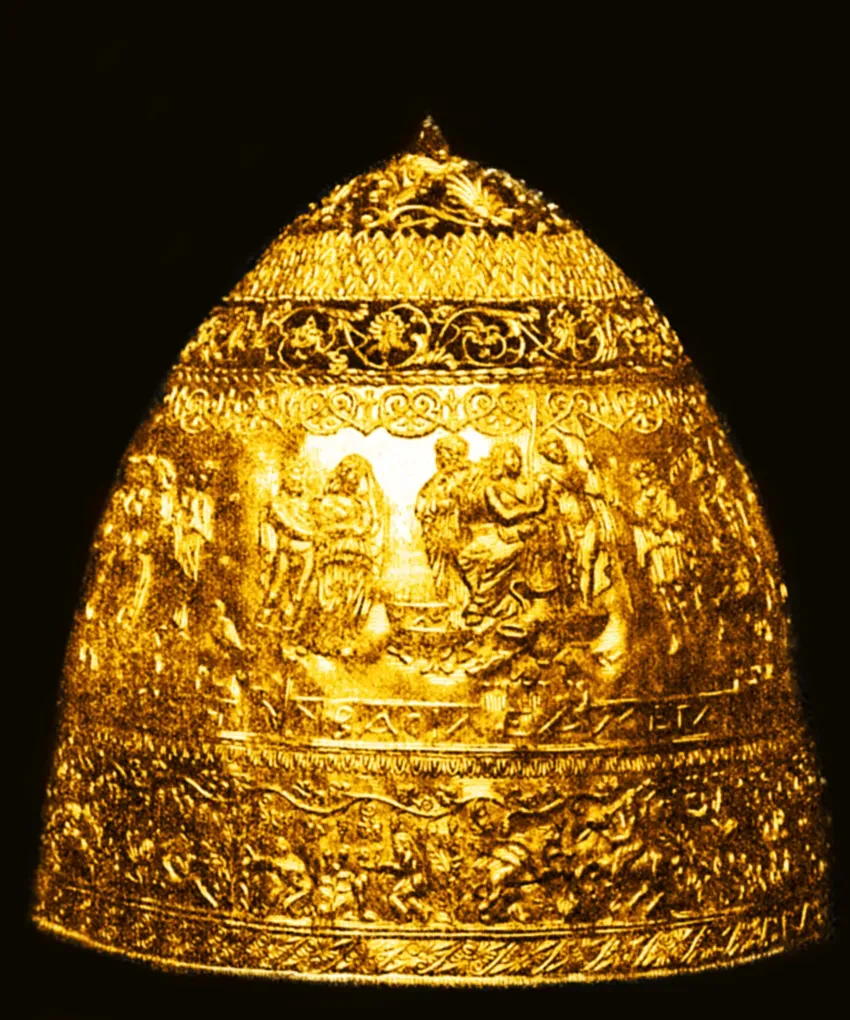
If you think only backwater collectors get duped, the Tiara of Saitaphernes proves otherwise. In the late 19th century, the Louvre paid a small fortune for a supposedly ancient gold tiara belonging to a Scythian king, tied to a dig in the Russian Empire.
The craftsmanship was dazzling, and the story sounded just plausible enough to sail past scrutiny – the Louvre proudly displayed it as a crown jewel of its antiquities collection. Then experts noticed odd tool marks and inscriptions that didn’t quite fit the period. A goldsmith in Odessa eventually came forward and admitted he’d made the tiara himself, on commission, in modern times. One of the world’s top institutions had fallen for a high-end forgery, and the embarrassment was enormous.
At a Glance
- Purchased by the Louvre in 1896 for 200,000 gold French francs
- Actually crafted in 1894 by Odesa goldsmith Israel Rouchomovsky, on commission from two dealers
- Displayed as genuine for seven years before the truth surfaced in 1903
- Rouchomovsky later became a celebrated artist and earned a gold medal in Paris
#6 – The “Dorset” Ivory Carvings the Art Market Manufactured
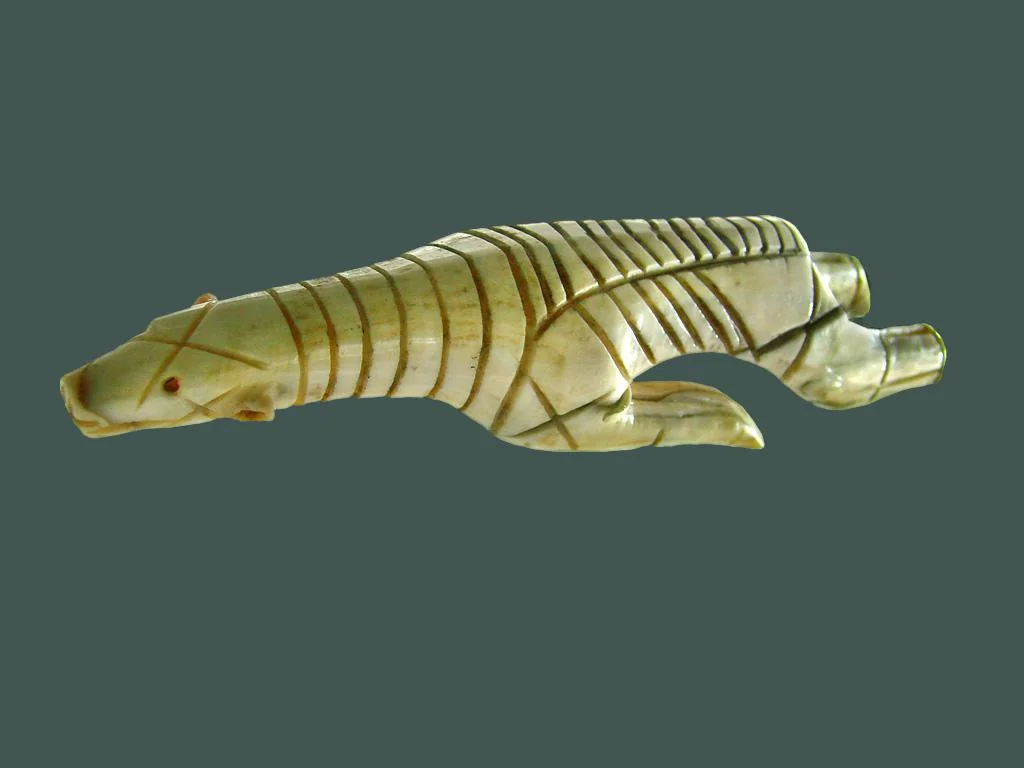
The Arctic isn’t the first place you’d expect an archaeology scandal, but it has one. In the early 20th century, a series of small ivory figurines were attributed to the ancient Dorset culture of the Canadian Arctic, praised for their richly detailed human and animal forms.
They quickly made their way into museum displays and publications as iconic Dorset art, shaping how the public understood a little-known culture. Later stylistic analysis suggested some pieces were modern creations, or genuine artifacts heavily “enhanced” by dealers chasing collector demand. Tool marks and patination didn’t match securely excavated Dorset pieces. The market wanted striking, authentic-looking Arctic art, so someone simply manufactured it – and it distorted our picture of Arctic prehistory more than most people realize.
#5 – The Jesus’ Wife Papyrus: A Hoax That Fell Apart on the Internet
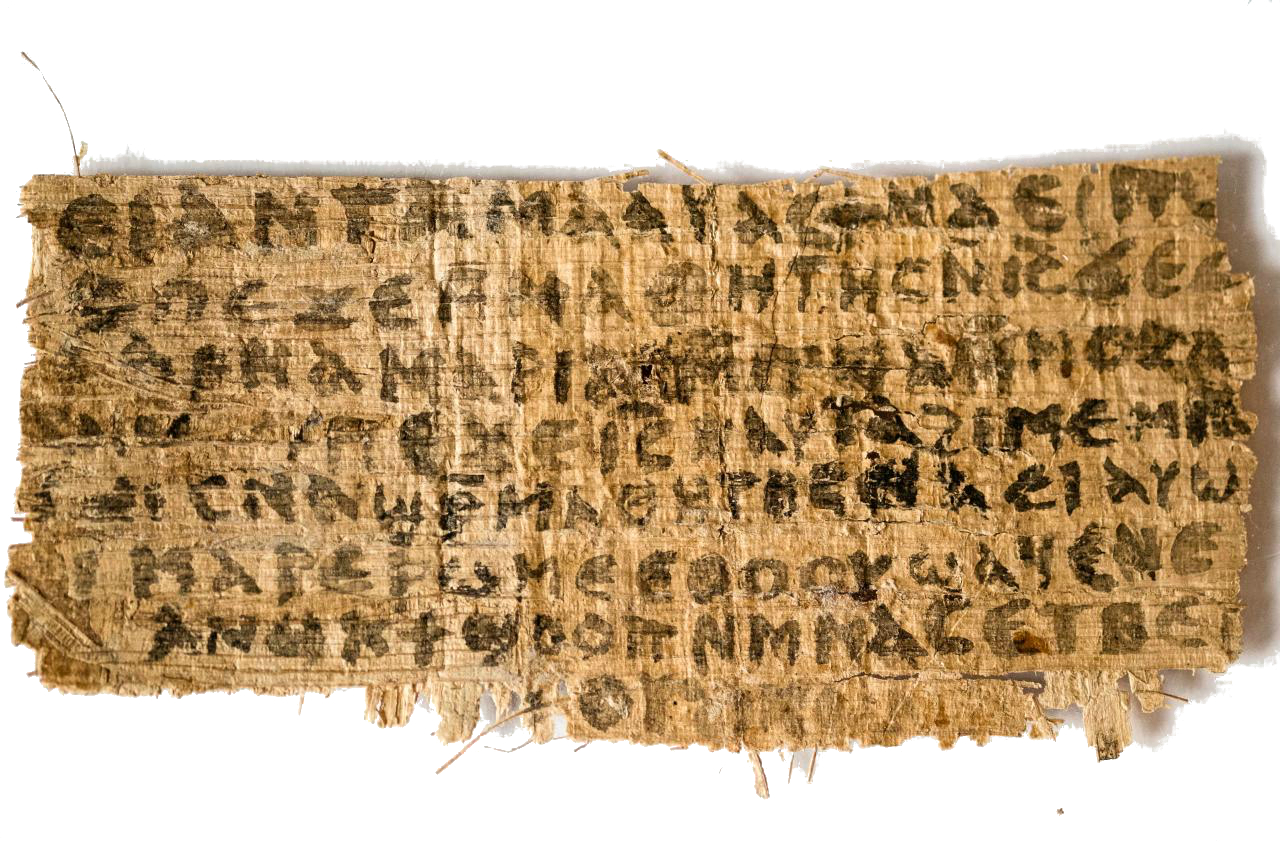
In 2012, a tiny Coptic papyrus fragment was unveiled with a sensational line: “Jesus said to them, ‘My wife…'” Major outlets jumped on it within hours, and debate erupted instantly over whether early Christians believed Jesus was married.
The implication was explosive enough that some scholars embraced it as a window into early Christian diversity, while others urged caution. Within a few years, researchers linked the fragment’s text to a modern online edition of the Gospel of Thomas – down to identical typos. Investigations into its provenance uncovered a murky collector, forged documents, and a suspicious chain of custody. It now stands as a near-certain modern forgery, and proof that even elite institutions can be seduced by a headline-ready narrative.
#4 – Burrows Cave: Illinois’ Never-Verified Treasure Trove
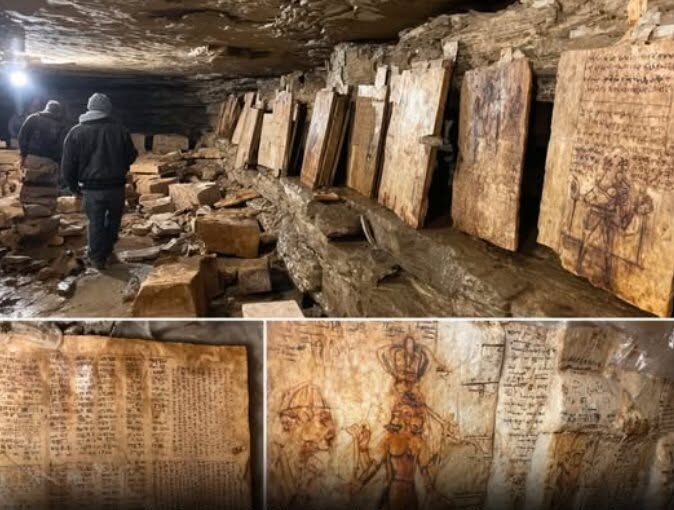
Burrows Cave is the Bigfoot of Midwestern archaeology – endlessly claimed, never properly verified. In the 1980s, Russell Burrows said he’d found a cave in Illinois packed with inscribed stones, coins, and sculptures supposedly proving contact between Old World civilizations and ancient America.
The grab-bag of scripts – Egyptian, Greek, Phoenician, you name it – was so over the top it should have triggered instant skepticism, yet fringe writers celebrated it as proof of a suppressed history. No reputable excavation has ever confirmed the cave even exists, and the artifacts mix iconography that never belonged together. The “treasure” conveniently becomes inaccessible whenever real inspection looms. A site nobody can independently examine isn’t a mystery – it’s a red flag with a marketing budget.
#3 – The Ica Stones: Dinosaurs, Surgery, and a Cottage Industry
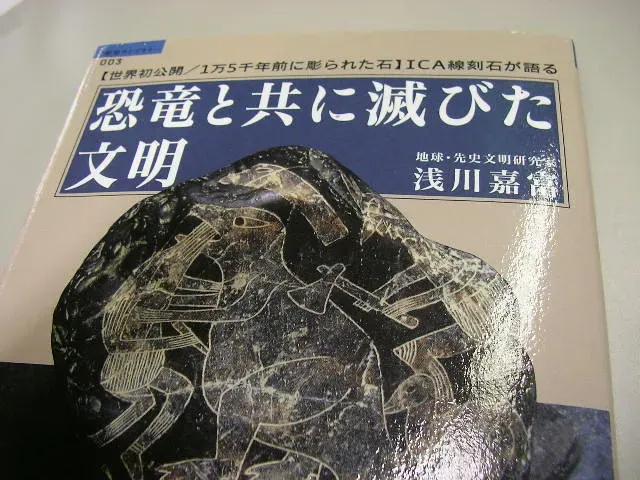
Peru’s Ica Stones look Instagram-ready today: dramatic engravings of dinosaurs, advanced surgery, and star charts carved onto smooth river stones. Starting in the 1960s, thousands of them surfaced around Ica, marketed as proof of a lost civilization with impossible knowledge.
Creationists and ancient-alien enthusiasts eagerly adopted them as evidence that mainstream science was hiding history, complete with claims of humans riding dinosaurs and performing organ transplants. Local farmers later admitted to carving many of the stones themselves with modern tools, even demonstrating the technique for journalists. The dinosaur imagery often copies 20th-century textbook illustrations, anatomical errors included. Baking and polishing can fake the patina in an afternoon – this is a cottage industry, not an ancient library.
#2 – The Crystal Skulls: Victorian Craftsmanship, Not Aztec Magic
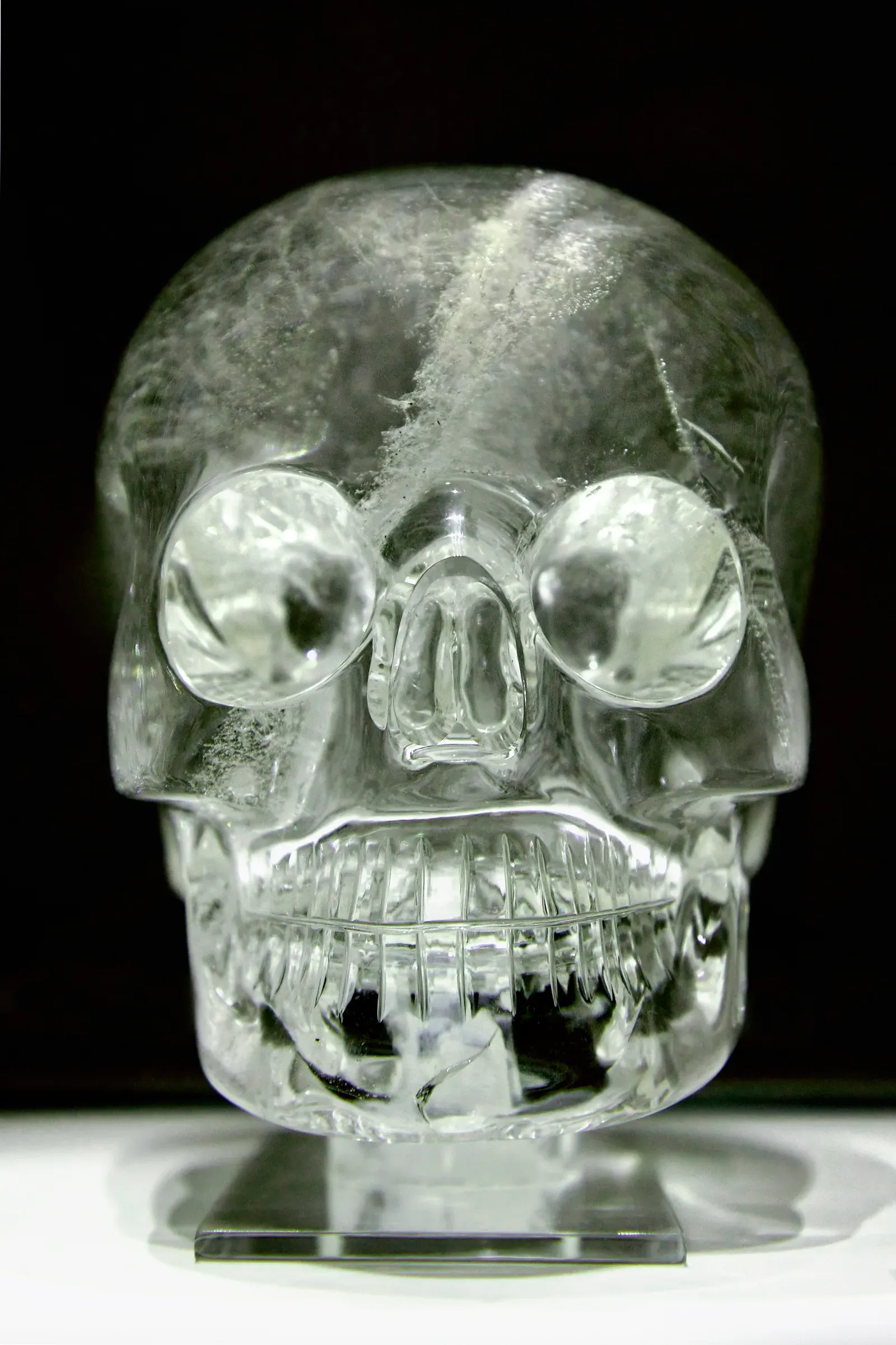
Most people know crystal skulls from movies and New Age shops, but few realize how thoroughly debunked they are. In the late 19th and early 20th centuries, several quartz crystal skulls were sold as ancient Mesoamerican masterpieces, and institutions like the British Museum and the Smithsonian acquired them.
Their flawless polish and eerie realism fed myths about lost technologies and Atlantean wisdom, and the public fell for the story faster than scrutiny could catch up. Modern analysis under magnification found rotary-wheel and abrasive tool marks consistent with 19th-century lapidary work, not pre-Columbian carving. No documented excavation has ever produced a comparable skull in a secure archaeological context. They’re impressive pieces of Victorian craftsmanship – not Mayan or Aztec relics – yet they’ve become permanent pop-culture icons anyway.
#1 – The Piltdown Pattern: Why Hoaxes Keep Winning
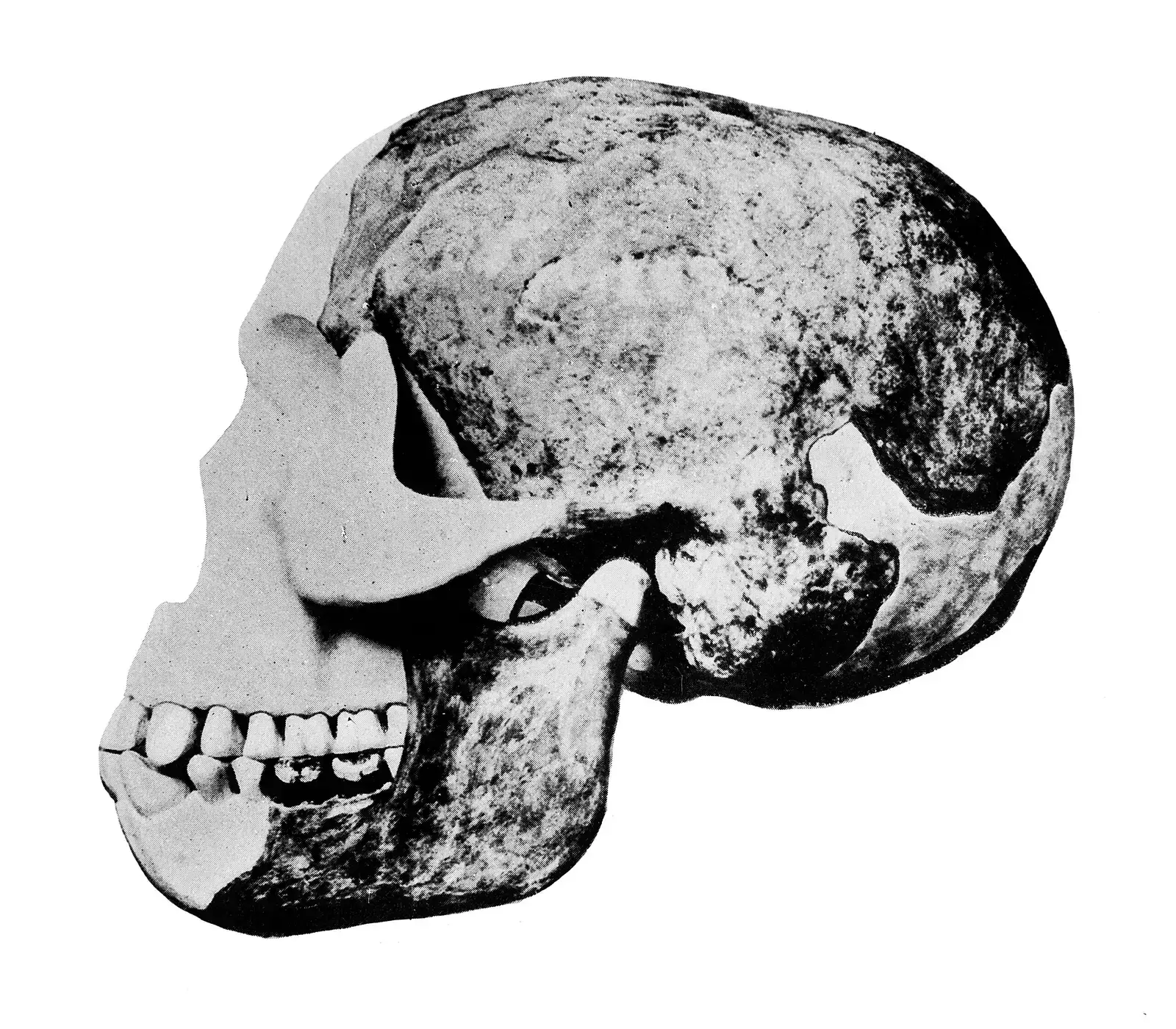
The most unsettling hoax on this list isn’t a single fake object. It’s the pattern Piltdown Man exposed back in 1953 – and one we still haven’t fixed. Every case here shares the same skeleton: a find appears that perfectly confirms what a particular group desperately wants to believe, whether that’s national pride, religious doctrine, ethnic identity, or a headline-grabbing story.
Experts who should be skeptical get emotionally invested. Doubters get marginalized as cranks. Museums enjoy the attention, and media simplifies nuance into a clean, shareable claim. By the time hard science catches up – better dating, chemical analysis, honest context checks – the hoax has already imprinted on the public imagination. From Piltdown to dinosaur-riding humans, the real constant was never clever forgers. It’s our own willingness to stop asking questions the moment a story feels too good.
Quick Compare
- Fueled by national pride: Piltdown Man, the Kensington Runestone
- Fueled by religious belief: the Cardiff Giant, the Michigan Relics, the Shroud of Turin
- Fueled by profit: the Tiara of Saitaphernes, the Ica Stones, the crystal skulls
- Fueled by career ambition: Fujimura’s “God’s Hand” scandal, the forged Etruscan warriors
The Bottom Line

Taken together, these hoaxes prove archaeology isn’t just about bones and pottery shards – it’s about human psychology. Fake giants, forged maps, and doctored relics succeeded because they flattered someone’s worldview or promised a dramatic rewrite of history. Universities, museums, even churches have all been complicit at times, choosing exciting narratives over uncomfortable doubt.
That’s not a fringe problem. It’s baked into how discoveries get made public in the first place. The unpopular truth is that slow, skeptical, method-heavy archaeology almost always beats the flashy “game-changer” – and if a find perfectly confirms what people already want to believe, suspicion should be the default reaction, not celebration.
Did we miss a hoax you think deserves a spot on this list – or do you still believe one of these might be real? Say which one in the comments, and make your case.