You probably walk past their shells on the beach without realizing you’re looking at one of the most extraordinary survivors on Earth. Horseshoe crabs look like something that escaped from a science‑fiction movie, yet they’re real, they’re older than the dinosaurs, and in a very literal way, they help keep you alive today. Once you get to know them, it’s hard not to feel a mix of awe, protectiveness, and a little bit of guilt. I still remember the first time I flipped one over as a kid (gently!) and saw all those legs moving at once. It was equal parts creepy and mesmerizing. If you’ve ever had that same shiver of curiosity, you’re in exactly the right place. Let’s dive into ten amazing facts that will completely change how you see these “living fossils.”
1. You’re Looking at a Creature Older Than the Dinosaurs
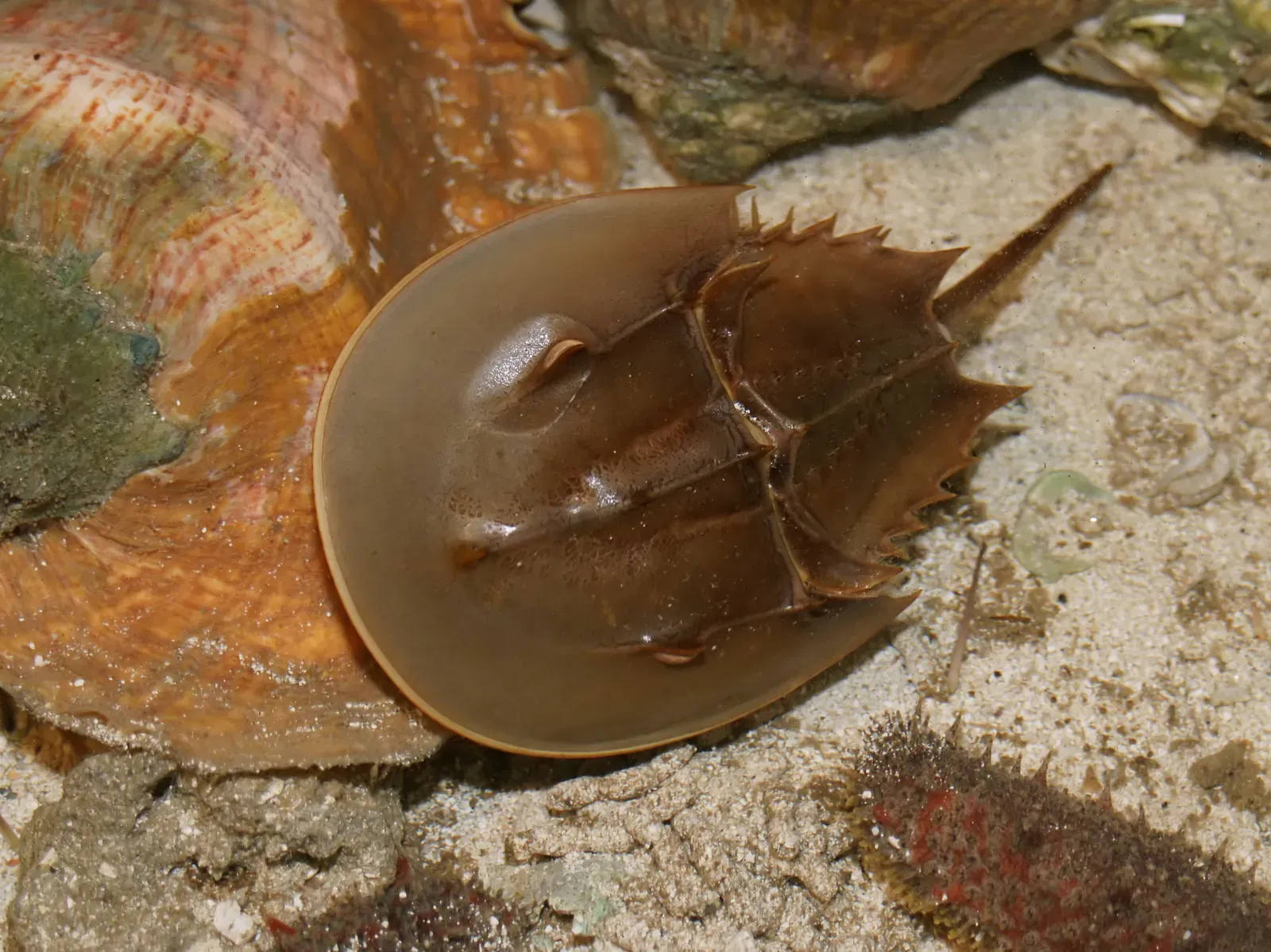
When you see a horseshoe crab, you’re staring at a lineage that has been around for roughly hundreds of millions of years, long before dinosaurs ever stomped across the planet. Fossil evidence suggests that early relatives of today’s horseshoe crabs were already cruising shallow seas at least a hundred million years before the first dinosaurs appeared, and some estimates place their origin closer to the middle of the Paleozoic era. In other words, they’ve watched entire empires of animals rise and fall while their own basic design stayed remarkably stable. If you could time‑travel to an ancient shoreline hundreds of millions of years ago, you’d recognize these animals instantly. Their domed “helmet,” spiky tail, and row of legs underneath would look comfortingly familiar, even though everything else around you might feel alien. That staying power is why scientists often call them living fossils: you’re not just seeing an animal, you’re seeing a successful blueprint that nature never really had to redesign.
2. They Aren’t Actually Crabs at All
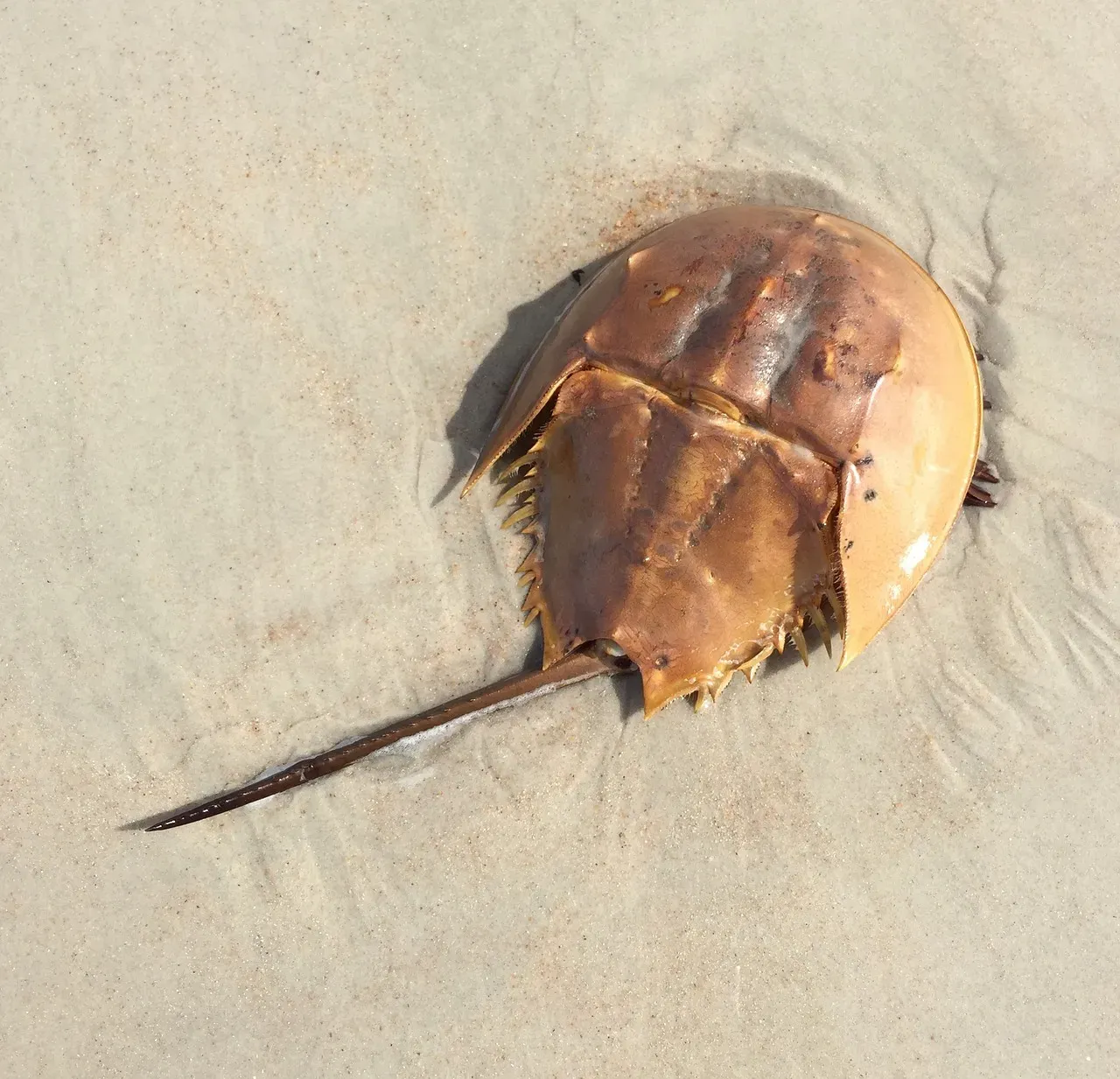
The name “horseshoe crab” makes you think you’re dealing with just another kind of crab, but you’re not. When you get down to their family tree, these creatures are much more closely related to spiders, scorpions, and ticks than to true crabs or lobsters. They sit in their own ancient group of arthropods and share features with other “chelicerates,” like the mouthparts and the basic body layout. So when you watch a horseshoe crab shuffle along the sand, you’re basically watching a distant, armored cousin of a spider in scuba gear. That might sound unsettling, but it’s also a powerful reminder that what you see on the surface doesn’t always reflect what’s going on under the hood. Once you know this, the whole animal starts to make more sense: the hard shield, the jointed legs, the strange way they feed and breathe all echo that deep arachnid heritage.
3. Their Blue Blood Quietly Protects Your Health
Here’s one of the weirdest and most important facts: a horseshoe crab’s blood is blue, not red. Instead of iron‑based hemoglobin like you have, they use a copper‑based molecule called hemocyanin to carry oxygen, which turns their blood a vivid blue when it meets air. That alone is pretty wild, but the story gets even more surprising when you learn why humans care so much about it. Inside that blue blood are special cells that react very strongly when they encounter certain bacterial toxins. When scientists discovered this, they realized you could use an extract from horseshoe crab blood to test vaccines, intravenous drugs, and medical devices for contamination. If you’ve ever had a vaccine, IV drip, or even a pacemaker or artificial joint, there’s a good chance horseshoe crab blood played a part in making sure it was safe for you. You might never see one in person, but you already owe them a quiet thank‑you.
4. They Look Fierce, but You Don’t Need to Be Afraid
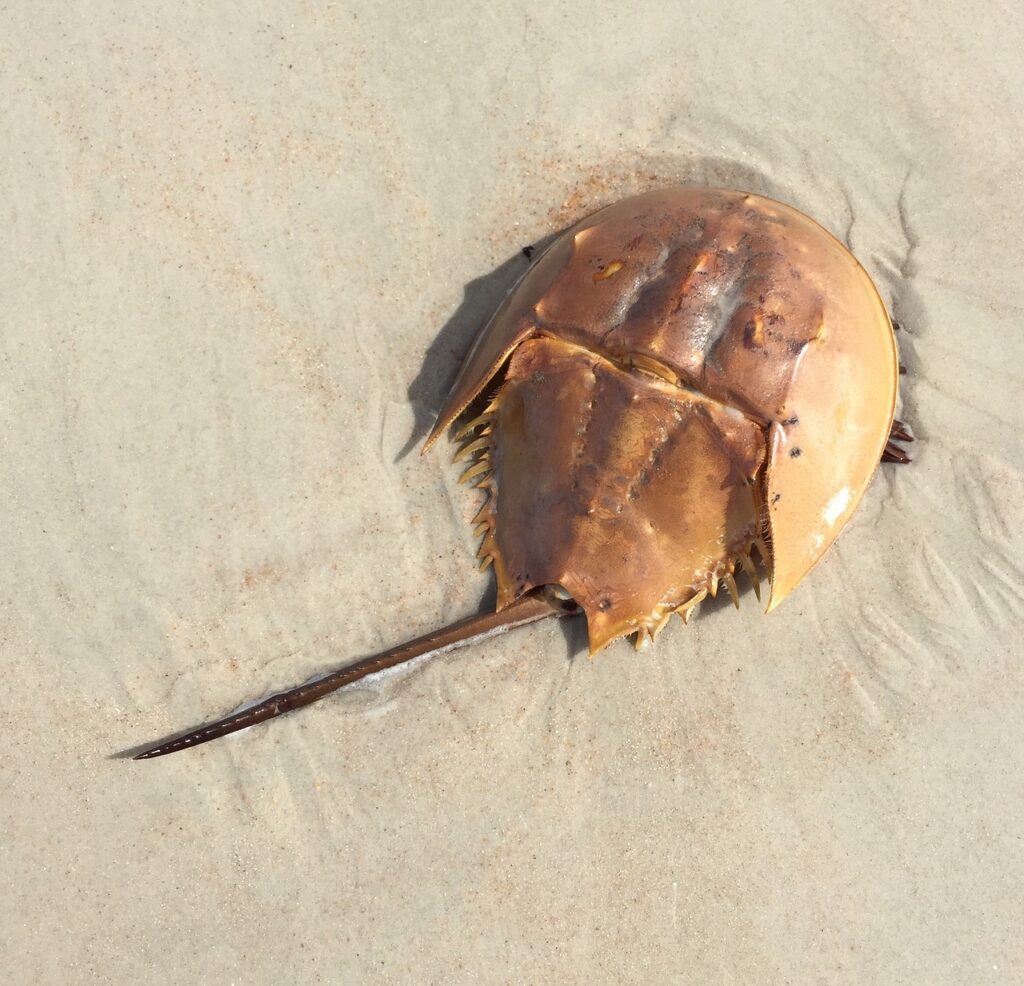
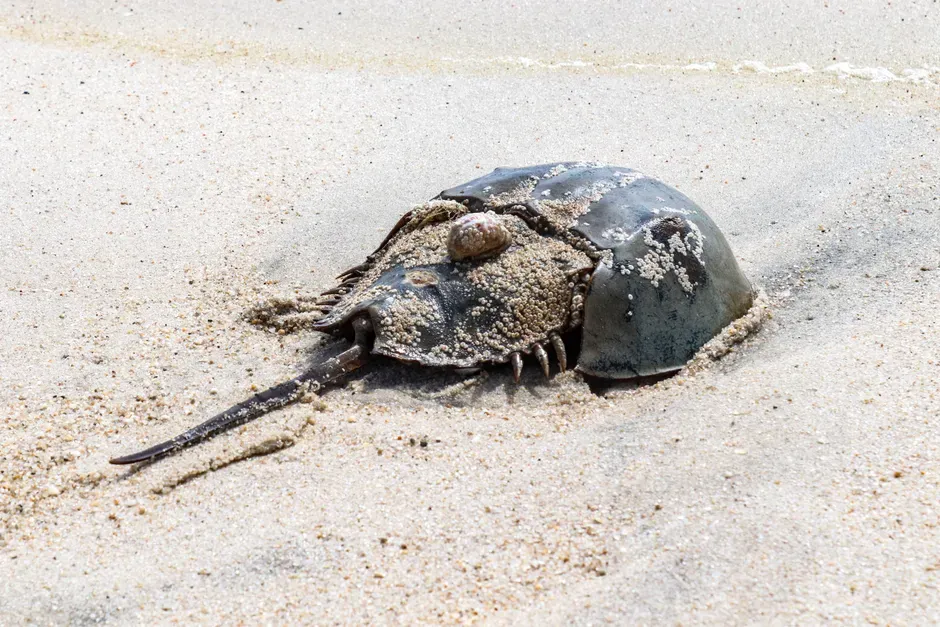
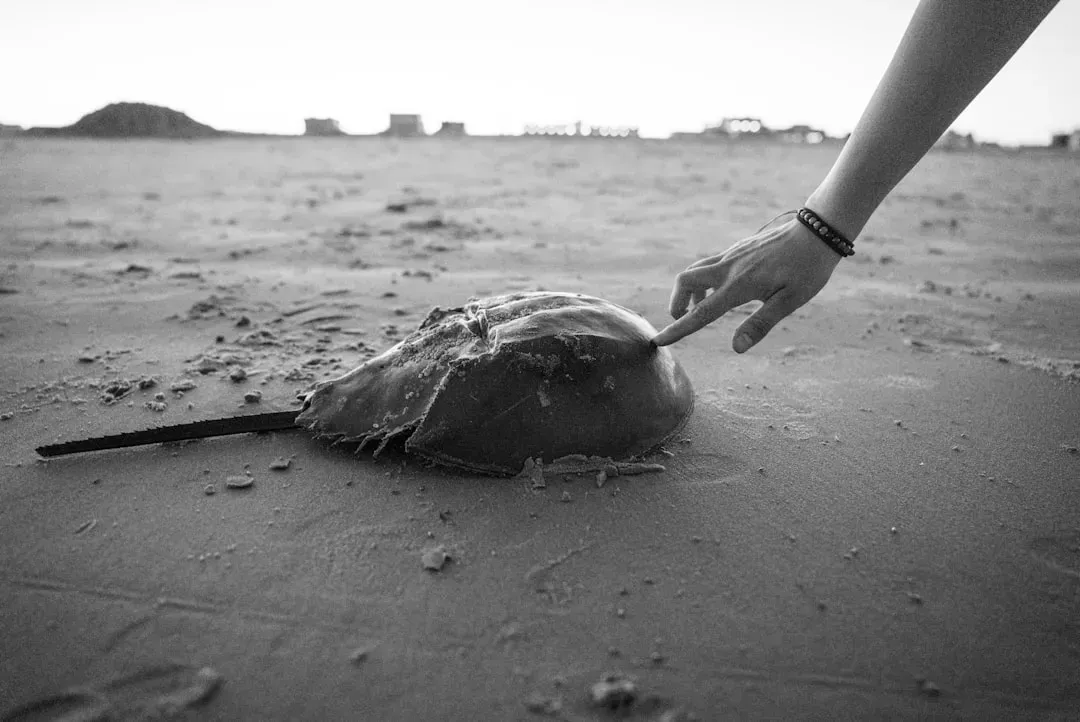
At first glance, a horseshoe crab can look like a medieval weapon that washed ashore: armored shell, spikes, and a long, rigid tail. It’s easy to assume that tail is a stinger, something that might jab you if you get too close. The truth is much gentler. That tail, called a telson, is basically a built‑in lever. When a horseshoe crab gets flipped over by waves, it uses the tail to push itself back upright, not to attack anything. If you’re careful, you can actually help one that’s stuck upside‑down by lifting it gently by the sides of the shell and turning it over, keeping clear of the gills and the tail. They don’t bite, they don’t sting, and they’re not interested in hurting you at all. Their mouth is tucked underneath their body, surrounded by walking legs, and they mostly spend their time rooting through the sand for worms and small clams. Once you know how harmless they are, that “scary” look starts to feel more like an old suit of armor than anything dangerous.
5. You’re Seeing Almost the Same Design Their Ancestors Had
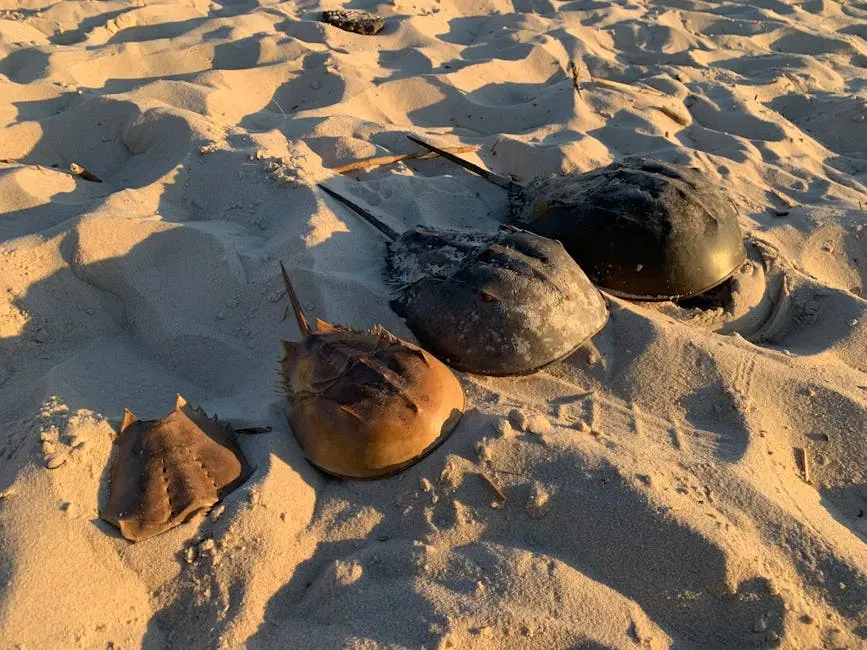
One of the most mind‑bending things about horseshoe crabs is how little they’ve changed over time. When paleontologists compare fossilized horseshoe crabs from hundreds of millions of years ago to the ones you see on a beach today, the basic shape is strikingly similar: the rounded front shield, the ridged midsection, the tail, and the arrangement of legs and gills underneath. You are looking at a body plan that evolution locked in a very long time ago because it just worked so well. Think about all the animals that have come and gone in that same span of time: giant armored fish, towering dinosaurs, even whole forests of now‑vanished plants. Through all those upheavals, this simple, low‑slung design kept doing its job. It’s like a tool that never really needed an upgrade. When you watch one trundle across the sand, you’re watching a strategy for survival that has outcompeted countless flashier, more specialized creatures. That quiet, stubborn success is part of what makes them so compelling.
6. They See the World Very Differently From You
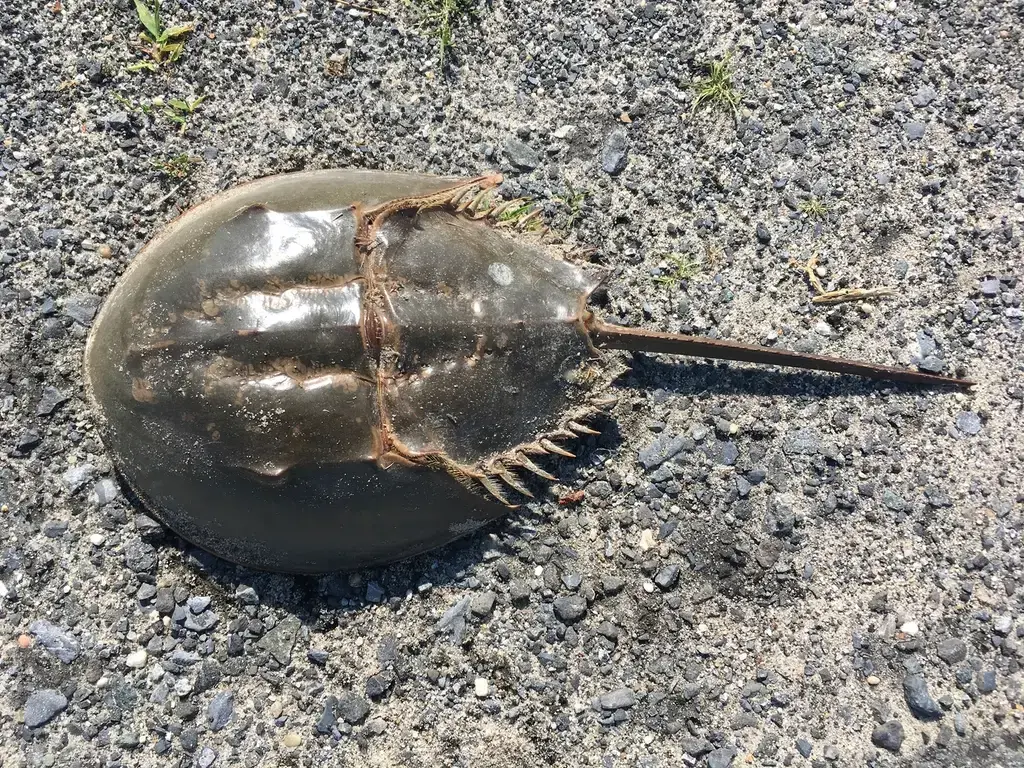
If you take a closer look at the front of a horseshoe crab’s shell, you’ll notice a pair of beady eyes on top. Those are just the beginning. These animals actually have multiple sets of eyes: big compound eyes on the sides of the shell, simple light‑sensing eyes arranged along the top, and even additional light receptors near the tail. You’re dealing with a creature that samples light in many directions, in ways that are very different from your own two‑eye setup. Scientists have used horseshoe crab eyes for decades to study how vision works because their visual system is relatively simple and accessible. For you, that means the next time you spot one on a moonlit beach, it’s seeing that world in a very different way but with tools that helped shape our understanding of biology. Their eyes are tuned to subtle changes in light, which likely helps them navigate when they come ashore to spawn at night. You might just see a dark shape scuttling in the surf, but it’s reading the sky and the water with a whole network of tiny, ancient sensors.
7. Their Nighttime Beach Parties Feed Entire Migrations
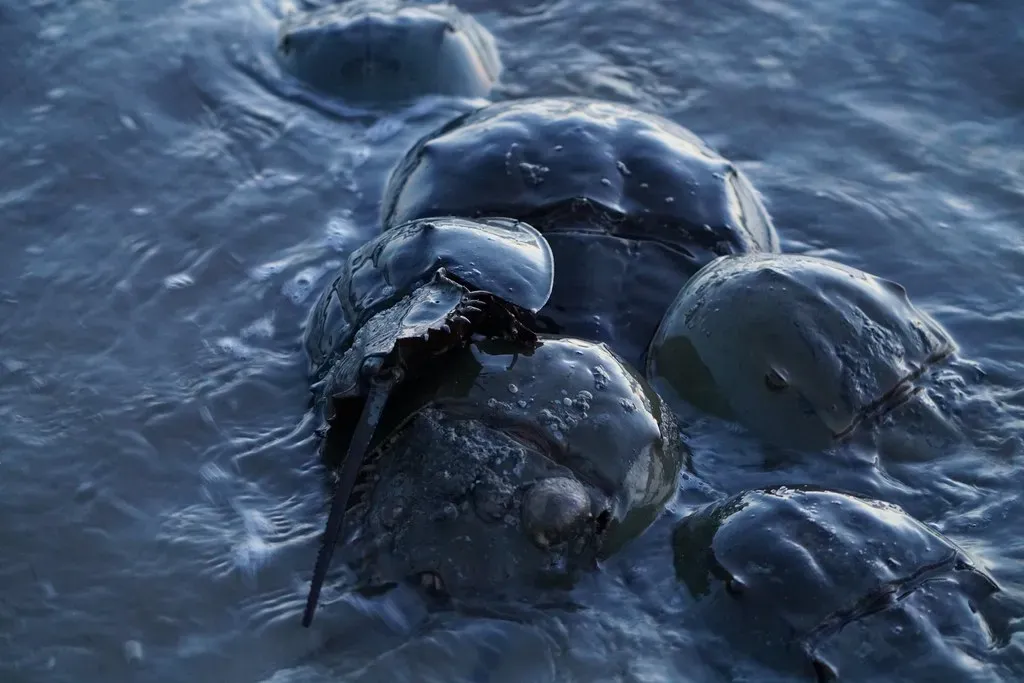
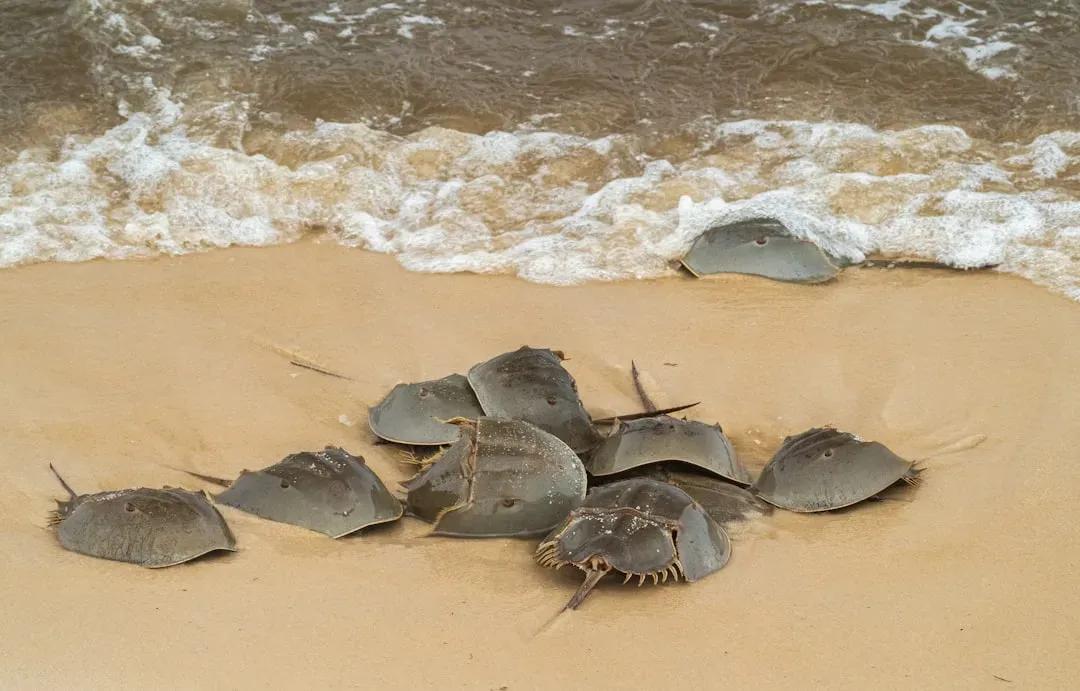
If you ever get the chance to visit a beach during a big horseshoe crab spawning event, you’re in for a scene that feels almost otherworldly. Around the time of spring high tides, thousands of adults haul themselves up onto sandy shores to mate and lay eggs in the wet sand. It looks chaotic – shells bumping into each other in the surf – but there’s a precise rhythm tied to the moon, tides, and temperature that brings them all together. Those buried eggs are more than just the next generation of horseshoe crabs; they’re a seasonal buffet that many other animals depend on. Migratory shorebirds time their long journeys so they can stop over and gorge on these protein‑rich eggs, fueling flights that span entire continents. Fish, crabs, and even sea turtles feed on them too. When you watch a single horseshoe crab, it might not seem like much, but multiplied across a whole bay, they become a crucial link in a much larger food web.
8. They Breathe With Book‑Like Gills Under Their Shell
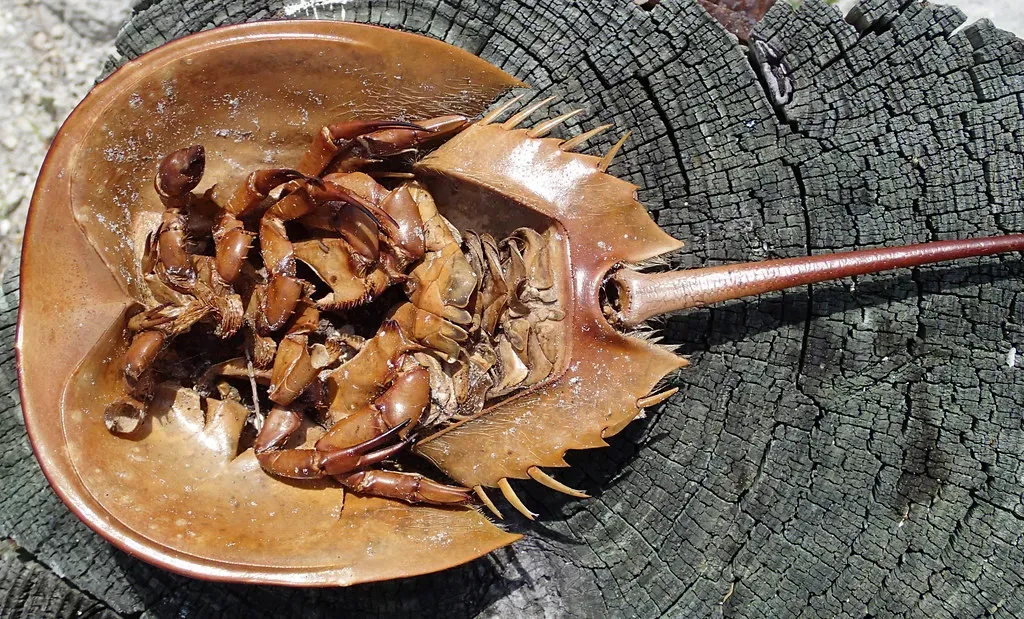
If you gently lift the back edge of a horseshoe crab’s shell (or look at a shed shell), you’ll see delicate, layered structures that look almost like small stacks of pages. These are known as book gills, and they’re how the animal breathes. Water flows over those thin, leaf‑like layers, and oxygen passes into the blood through a wide surface area, like air passing over the pages of a fanned‑out book. It’s a clever system, simple but effective. Those gills are so efficient that a horseshoe crab can survive for a while out of water as long as the structures stay moist. That’s why you sometimes see them slowly moving on wet sand or in very shallow water as waves roll in and out. For you, it’s a reminder that even a creature that looks clunky and armored has incredibly delicate machinery hidden underneath. If you ever handle a live one, keeping those gills wet and protected is one of the kindest things you can do.
9. They Live Slow, Long Lives and Grow by Shedding
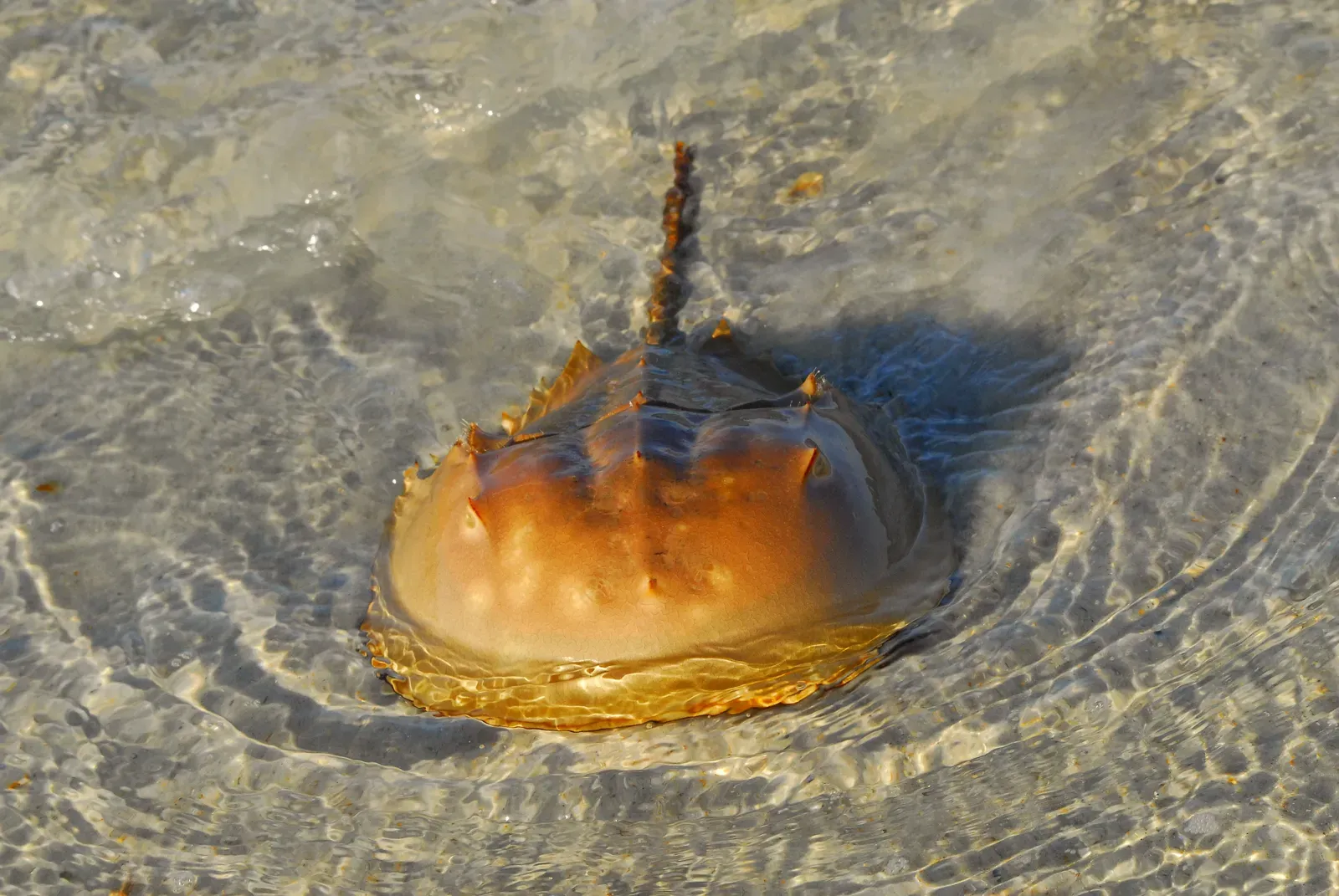
You might think of them as ancient just in terms of their lineage, but an individual horseshoe crab can also rack up a surprisingly long life. It takes years for them to reach maturity, and they grow by molting – shedding their hard outer shell so a larger one can harden in its place. Young horseshoe crabs go through multiple molts, leaving behind perfect, empty shells that look like tiny, ghostly versions of the real thing. If you’ve ever found one of those on the beach, you were holding a cast‑off suit of armor, not a dead animal. This slow, deliberate way of growing means they don’t bounce back quickly if large numbers of adults are removed from the population. When you combine natural pressures with harvesting for bait and for their valuable blood, you can see how the balance can tip. Understanding their life cycle helps you see why conservationists worry about them. You’re not just looking at a creature that survived mass extinctions in the distant past; you’re looking at an animal whose future now depends heavily on what you and your generation choose to do.
10. Your Future Medicines May Depend Less on Their Blood – If You Help
For decades, the medical world leaned heavily on horseshoe crab blood to test vaccines and other injectable drugs for dangerous bacterial toxins. That created a strange situation: your health benefited from their biology, but large numbers of crabs had to be captured and bled to make it all work. Many are returned to the water afterward, but not all survive, and in some regions their numbers have declined. You’re part of the same human story that both relies on them and puts them at risk. The hopeful news is that scientists have been developing synthetic and lab‑grown alternatives that mimic the key compounds from horseshoe crab blood without needing to bleed the animals. As those alternatives spread and regulations adapt, the pressure on wild populations can ease. When you stay informed, support responsible seafood and bait practices, and speak up for the protection of coastal habitats, you’re helping to decide whether this line of living fossils keeps scuttling along your beaches for centuries to come.
Conclusion: An Ancient Neighbor You Can Choose to Protect
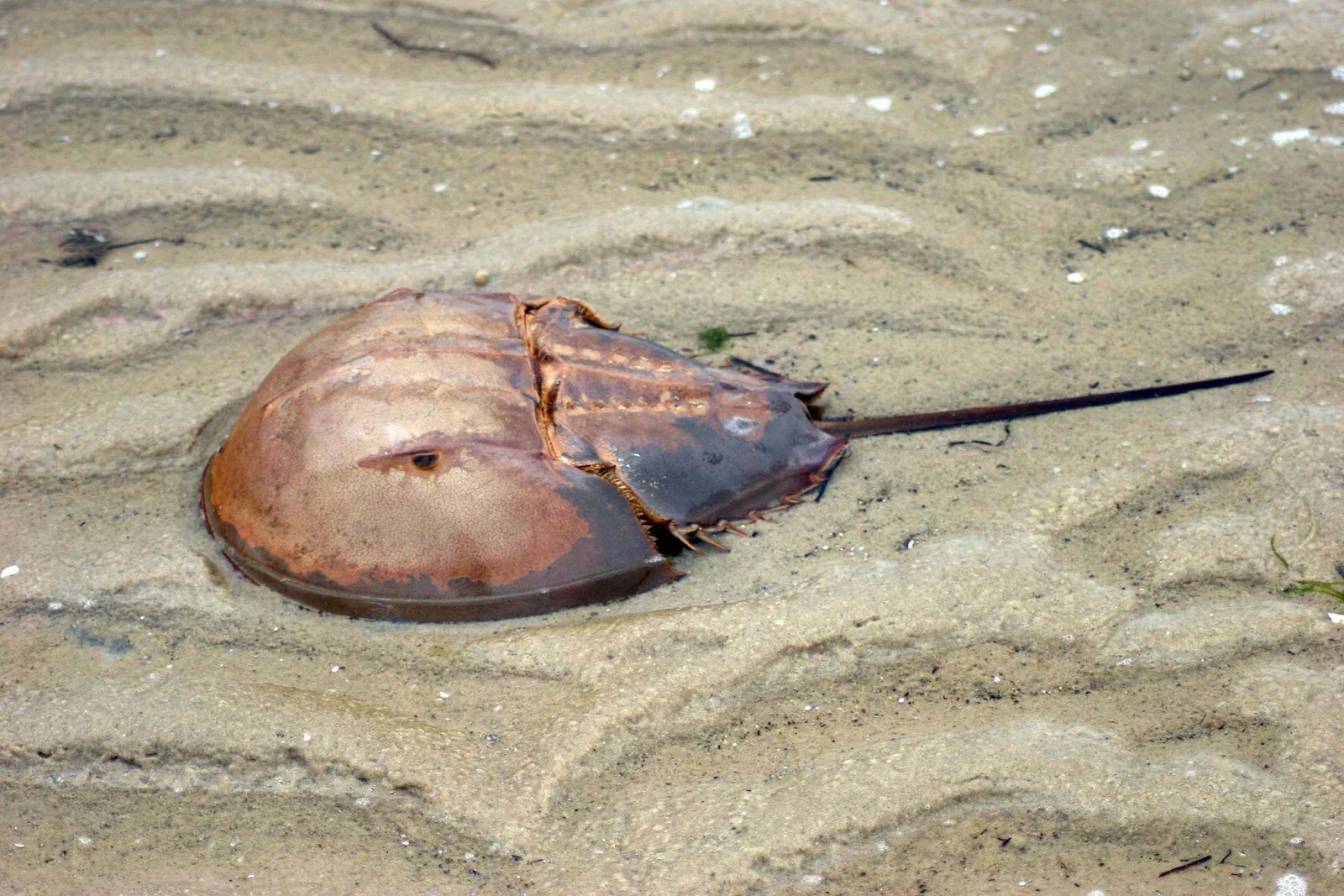
Now that you know what you’re really looking at, a horseshoe crab on the sand is impossible to ignore. You’re seeing a survivor from ancient seas, a distant cousin of spiders, a silent partner in modern medicine, and a keystone in coastal food webs. It may move slowly and look a bit like a rusty helmet, but its story is faster and stranger than almost anything else sharing your shoreline. Next time you spot one, you can see it with new eyes: not as a creepy relic, but as a quiet, resilient neighbor that has endured more planetary drama than you can imagine. The real question now is simple and personal: when an animal has carried its lineage through hundreds of millions of years, how will you help make sure it survives yours?