If you’ve ever fallen down a late‑night internet rabbit hole about “out‑of‑place artifacts,” you know how strangely thrilling it feels. A hammer buried in rock supposedly hundreds of millions of years old, a spark plug entombed in a “geode,” delicate human footprints alongside dinosaurs – on the surface, it sounds like the universe is trolling us. Part of you wants it all to be true, because if the history we learned in school is wrong, then the world is a lot weirder and more magical than anyone admits.
But when you start looking closely – really closely – the story shifts from “ancient mystery” to something more interesting: how humans misread nature, how genuine geological processes can look like sci‑fi evidence, and how our brains cling to a good story even when the facts don’t cooperate. Let’s walk through nine of the most famous so‑called impossible artifacts, see what the claims are, and then look at the official, science‑based explanations that almost never make the headlines.
1. The London Hammer: A Modern Tool in Ancient Rock?
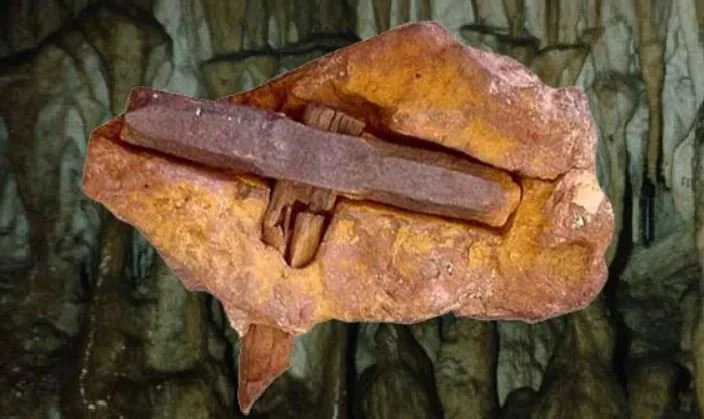
The London Hammer is a favorite in fringe books: a hammer with a wooden handle encased in hard, whitish material that looks like solid stone, allegedly found in Texas in rock said to be many hundreds of millions of years old. At first glance, it feels like a smoking gun – how could a clearly modern‑style iron hammer end up sealed inside “Cretaceous” strata, long before humans evolved? The story is told and retold with a sense of quiet outrage, as if mainstream geology is trying to pretend it doesn’t exist.
Geologists and historians, however, see something far more ordinary once you strip away the drama. The hammer itself is consistent with nineteenth‑ or early twentieth‑century tools used by local miners and settlers, and crucially, the hard material around it is not original bedrock. It appears to be a concretion: relatively recent sediment and minerals that hardened around the hammer in a process that can happen on human time scales. In other words, a dropped hammer got cemented into natural “concrete,” which can look ancient to an untrained eye. When you know that minerals can lithify quickly in the right conditions, the mystery largely evaporates.
2. The Coso Artifact: A Spark Plug Trapped in a “500,000‑Year‑Old” Geode
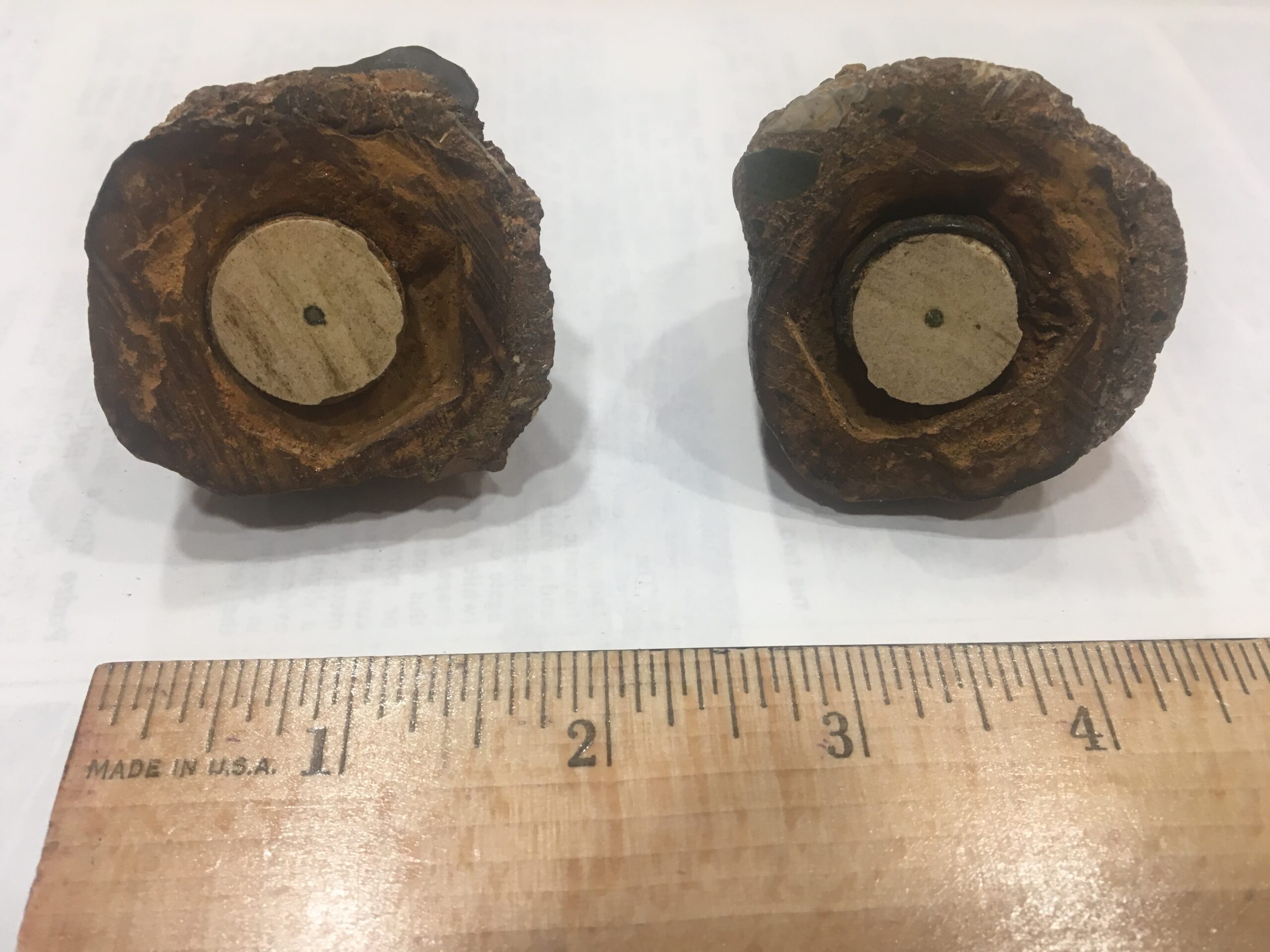
The Coso artifact might be the most meme‑worthy of the bunch: an object looking like a spark plug found inside a hard nodule of material in California in the 1960s, loudly proclaimed as half a million years old. Photos show a corroded metal core with porcelain‑like insulators, all wrapped in a rock‑like shell. The implication pushed in paranormal circles is obvious – our understanding of human technology timelines must be completely wrong, or some lost civilization was building engine parts long before modern humans existed.
The official explanation is far less romantic but much more consistent with what’s actually known about geology and technology. Mechanical experts who examined detailed photos identified the object as a fairly standard twentieth‑century spark plug, very similar to those used in early engines from the 1920s and 1930s. The surrounding “geode” is not a true geode with ancient crystal growth, but a concretion of clay, sand, and rusted material that hardened over decades, not eons. Natural cementing of sediment around bits of metal is surprisingly common, especially in mining or industrial areas. So what you really have is a lost spark plug that nature entombed in a lumpy mineral coffin – not a message from prehuman engineers.
3. Human Footprints in Dinosaur Tracks: The Paluxy River Controversy
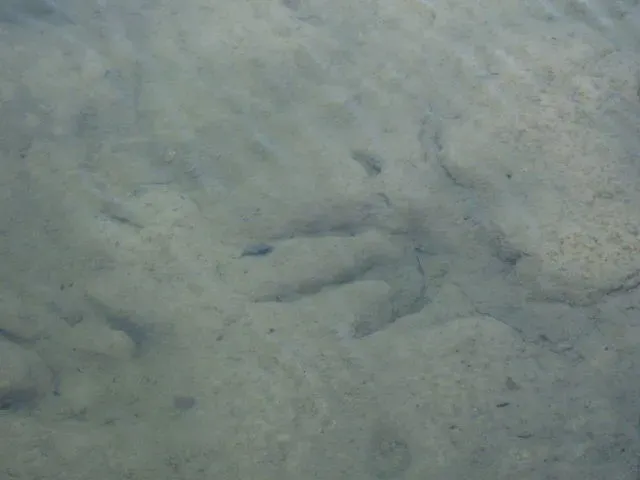
The Paluxy River tracks in Texas have been used for decades as supposed proof that humans and dinosaurs walked side by side. Photos circulate of long, human‑like impressions cut into limestone right alongside clear dinosaur tracks, and it’s hard not to feel a jolt the first time you see them. If taken at face value, they would overturn an enormous amount of geological and evolutionary evidence about the separation of humans and non‑avian dinosaurs by tens of millions of years.
When scientists actually examined these tracks up close, a very different and much messier reality emerged. Many of the “human” prints turned out to be eroded or partially infilled dinosaur tracks whose toes and claw marks had worn away, leaving an elongated, vaguely human‑shaped impression. Others were outright hoaxes, carved into the rock to sell curios to tourists and credulous visitors in the early twentieth century. As careful documentation, repeated measurements, and better preservation efforts spread, even some creationist organizations backed away from using Paluxy as evidence. The official consensus is now that there are real dinosaur tracks there, badly misinterpreted ones, and some carved fakes – but no genuine human footprints in dinosaur‑era rock.
4. The Klerksdorp Spheres: Precision Objects from Billions of Years Ago?
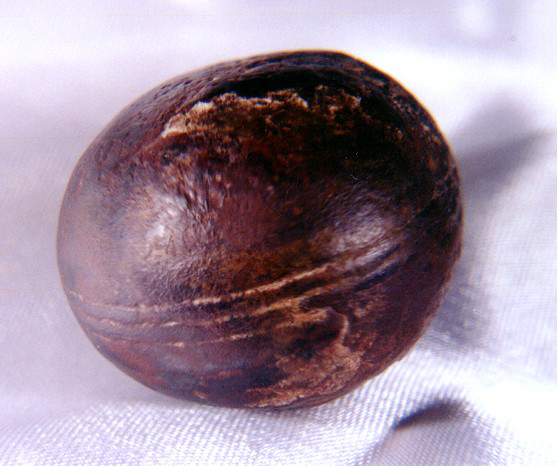
In South Africa, miners have found small, rounded metallic or mineral objects – some with shallow grooves – embedded in Precambrian rock layers that are more than two billion years old. Photos online show smooth, almost machined‑looking spheres, and they’re often held up as proof of alien tinkering or an impossibly advanced ancient civilization. The argument goes: nature doesn’t make perfectly shaped metal balls with grooves, so someone must have.
Geologists who have studied the spheres in situ and under the microscope describe them very differently. Many of these objects are not pure metal balls but concretions of minerals such as hematite or pyrophyllite, shaped by natural crystal growth, sedimentary processes, and slow deformation over immense time. Grooves can form from natural layering, differential weathering, or pressure lines as the rock around them shifts and compresses. Once you accept that geological processes can produce surprisingly regular shapes – think of hexagonal basalt columns or spherical concretions in Utah – the need to invoke lost machinists from deep time fades. The official view is that Klerksdorp spheres are examples of nature’s tendency to echo geometric patterns, not artifacts manufactured by unavailable hands.
5. The Iron Pillar of Delhi: Rust‑Proof Technology Lost to History?
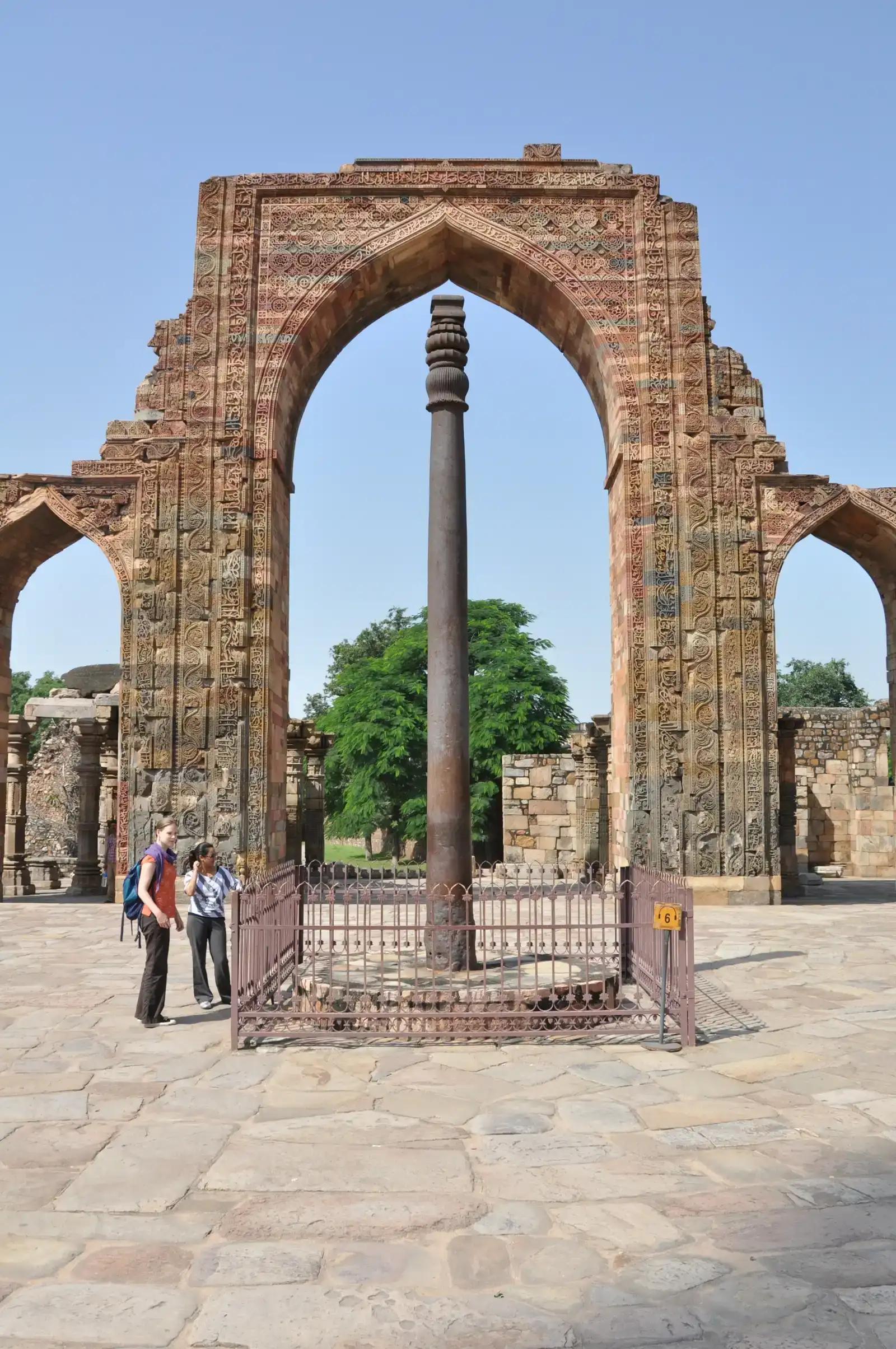
The Iron Pillar of Delhi, standing more than seven meters tall and dating back roughly a millennium and a half, is often said to be an impossibility: a massive iron column that “never rusts” despite centuries of exposure. The popular narrative suggests that ancient Indian metallurgists possessed some secret, advanced technology for creating corrosion‑proof iron that modern engineers still struggle to match. It sounds like a rebuke to the idea that technological progress moves in a straight upward line.
The reality is more subtle but no less impressive. Detailed scientific studies have shown that the pillar does corrode, but extremely slowly, and the reasons are well understood in terms of chemistry and environment. The iron was produced with a high purity and specific combination of slag inclusions, and the local climate is relatively dry. Over time, a thin, adherent film of iron hydrogen phosphate formed on its surface, acting as a protective layer that significantly slows down further rusting. Rather than being evidence of a lost magical process, the pillar showcases how skilled ancient artisans, working with the materials and methods of their time, inadvertently created conditions for remarkable stability. The official explanation honors their craft without needing to overthrow our understanding of metallurgy.
6. Ancient Nails, Chains, and Bells in Coal Seams
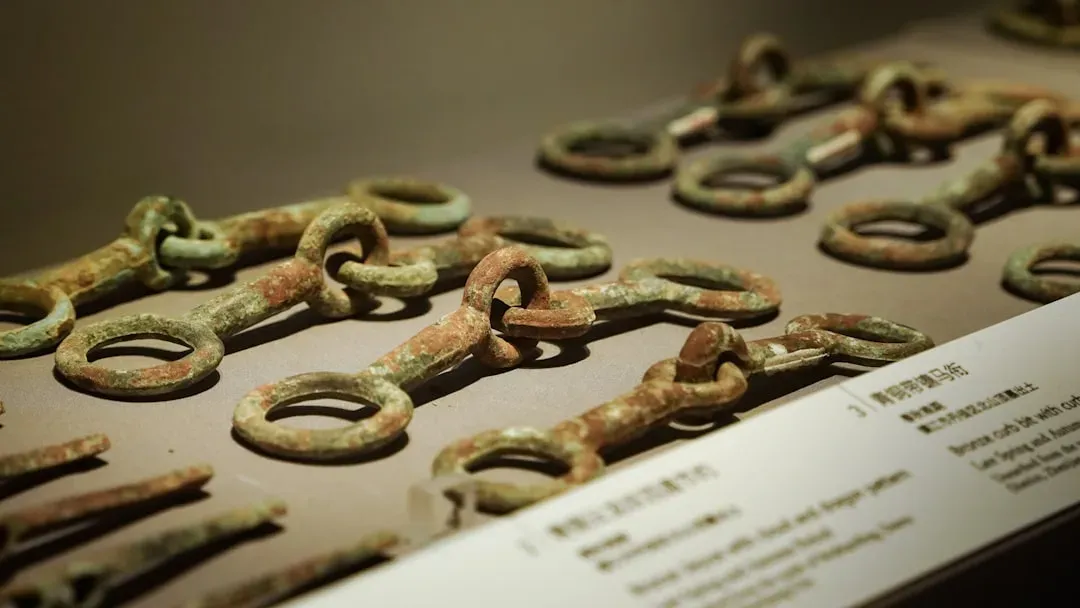
Stories of iron nails in solid sandstone, metal chains inside chunks of coal, or even a small bell allegedly found encased in coal have circulated for well over a century. The punchline is always the same: if these coal seams formed hundreds of millions of years before humans, then finding human‑made metal objects inside them would blow up the entire geological timescale. The visual of someone splitting coal and finding a bell or chain is deeply cinematic, which makes it perfect viral material even in old newspapers.
Geologists and historians point out a few sobering realities that undercut the drama. First, coal mining and handling is messy: seams are fractured, transported, sorted, and broken apart by machinery long before a piece reaches a person’s hands, which makes contamination from nearby mining debris or surface objects extremely likely. Second, the verifiable documentation for most of these finds is weak – no careful notes on exact location, no controlled excavation, no preserved sample in a museum that can be re‑examined with modern tools. In cases where similar claims have been testable, the objects turn out to be from the nineteenth or twentieth century, embedded in secondary mineral growths or fractured coal rather than original, undisturbed layers. The official position is that these anecdotes do not meet the standards required to rewrite geological history, and contamination plus human storytelling is the far more parsimonious explanation.
7. The Nampa Figurine: A Tiny Human Image from Beneath Lava and Sediment
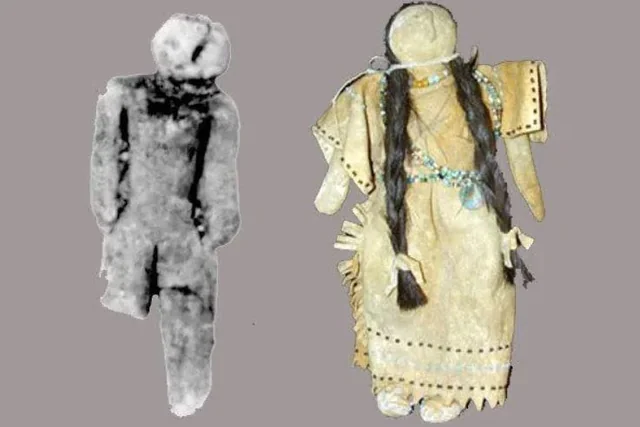
In the late nineteenth century, workers drilling a well near Nampa, Idaho, reportedly brought up a small, baked‑clay figurine of a humanlike figure from hundreds of feet below the surface. The claim is that it came from beneath layers associated with very ancient sediments and lava flows, which would place a realistically crafted artifact far earlier than any accepted human presence in that region. The idea of a tiny figure rising out of deep earth taps directly into our mythic sense of hidden civilizations buried under our feet.
From a scientific standpoint, the entire case hinges on context, and that’s where things fall apart. The figurine itself looks stylistically similar to late prehistoric or even more recent Native American miniatures and dolls – objects that absolutely did exist in the region in relatively recent times. Drilling operations can easily pull material from shallower horizons or from the surface down into the borehole, then redeposit it at greater depth. Without modern, tightly controlled recovery methods and documentation, it’s extremely risky to assume that depth in a well equals undisturbed geological age. The official explanation is that the figurine is a relatively recent human artifact that became mixed into deeper material during drilling, not evidence of an impossibly ancient civilization hiding under Idaho.
8. The Antikythera Mechanism: A Computer Too Advanced for Its Time?
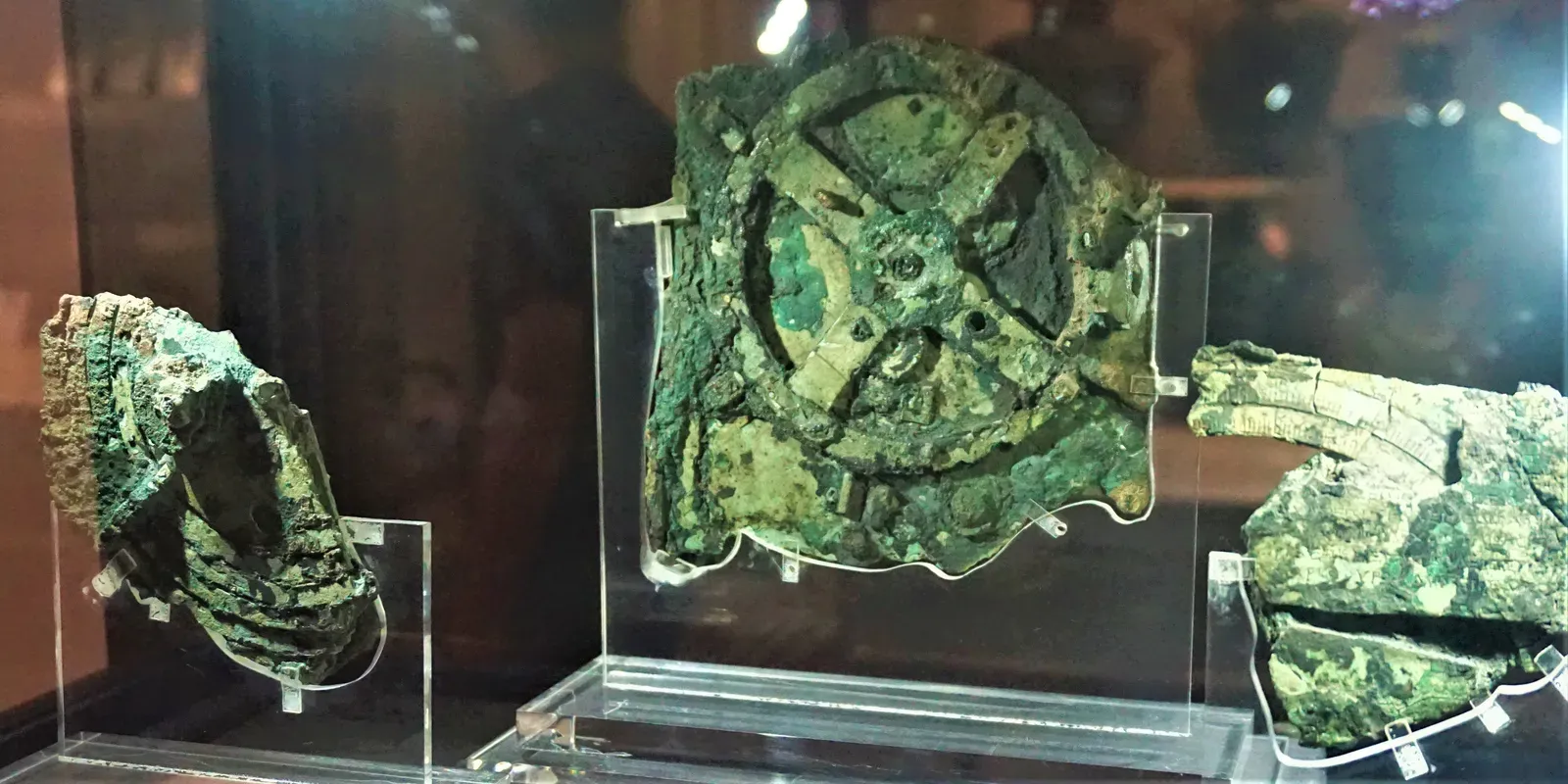
When divers recovered the Antikythera mechanism from a shipwreck off the Greek island of Antikythera in the early twentieth century, it seemed impossibly sophisticated: corroded bronze gears and dials that turned out, after careful study, to model the motions of the Sun, Moon, and possibly planets. Many people still react with disbelief when they learn such intricate gearwork existed more than two millennia ago, long before the mechanical clocks of medieval Europe. It’s often framed as a device that “shouldn’t exist” in that era’s technological landscape.
The mechanism is genuinely extraordinary, but it doesn’t require lost continents or visits from extraterrestrials to make sense. Historians of science and engineering see it as the peak of a Greek tradition that combined astronomy, mathematics, and craftsmanship, with conceptual roots already present in surviving texts that describe gear‑driven devices. The official view is that the Antikythera mechanism is rare, not impossible: an elite piece of tech from a wealthy, knowledge‑rich culture whose artifacts mostly did not survive because bronze was frequently melted down and recycled. Rather than contradicting the historical record, it fills in a spectacular, missing chapter and reminds us that human ingenuity has spiked to surprising heights long before the digital age.
9. The “Out‑of‑Time” Ooparts of Popular Culture: A Pattern of Misread Evidence
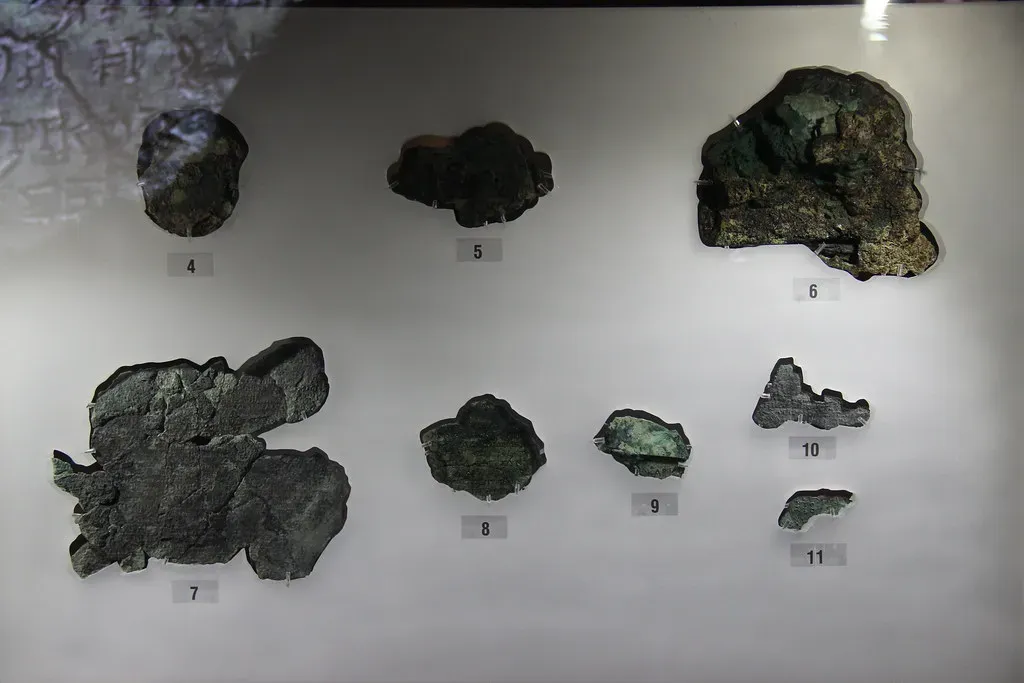
Beyond the big headline cases, there’s an entire ecosystem of smaller “ooparts” (out‑of‑place artifacts) that circulate in books, videos, and social media: supposed metal screws in ancient rock, mysterious carvings that look like light bulbs or spaceships, or fossilized objects that allegedly resemble modern tools and machines. Often, these stories come with a sense of righteous frustration, claiming that museums and universities refuse to investigate or are engaged in a coordinated cover‑up. The emotional hook is real: nobody likes feeling like they’re being talked down to by experts.
When these cases are traced back to original sources, a familiar pattern emerges. Many supposed artifacts are misidentifications of natural mineral formations, erosion patterns, or ordinary objects that entered older sediments through cracks, burrows, or human activity. Others rely on poor or nonexistent provenance, with no clear record of where, how, and by whom the item was found. The official scientific stance is not that anomalies never occur, but that extraordinary claims need extraordinary, repeatable evidence – controlled excavation, multiple lines of dating, peer‑reviewed analysis. In most oopart stories, those elements are missing, and once the gaps are acknowledged, the mystery shrinks dramatically.
Conclusion: Why We Crave Impossible Artifacts More Than Solid Explanations
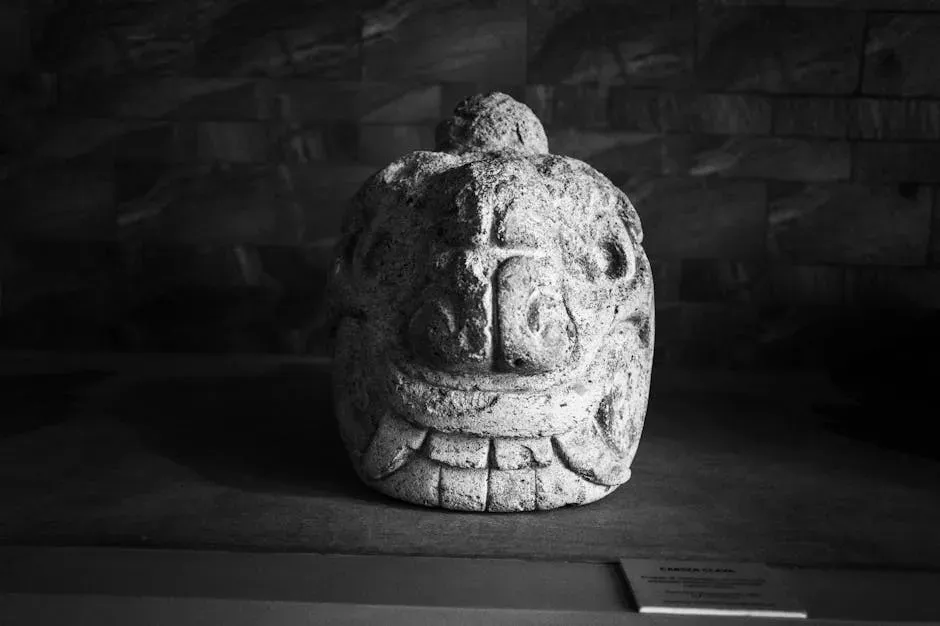
Looking across these nine cases, a theme jumps out: the artifacts themselves are usually less weird than the stories wrapped around them. Hammers in concretions, spheres shaped by mineral growth, misread footprints, and high‑end ancient devices all become far more sensational once they’re cut loose from careful context. I’ll admit, a part of me wants the wild versions to be true; the idea that a single nail in coal could rewrite everything feels intoxicating, like finding a glitch in the Matrix. But wanting a story to be true is not the same as having the evidence to support it.
In my view, the official explanations are not boring at all – they’re actually more satisfying, because they show how much we can figure out with careful observation, good methods, and a willingness to question our own wishful thinking. Geology, archaeology, and history are already full of genuine surprises; we don’t need to force every odd find into a secret‑civilization narrative to feel wonder. The real mystery worth wrestling with is why we keep preferring the dramatic answer over the disciplined one. When you hear about the next “impossible artifact,” will you reach first for the conspiracy, or for the patient, evidence‑based story that takes a little longer to unfold?