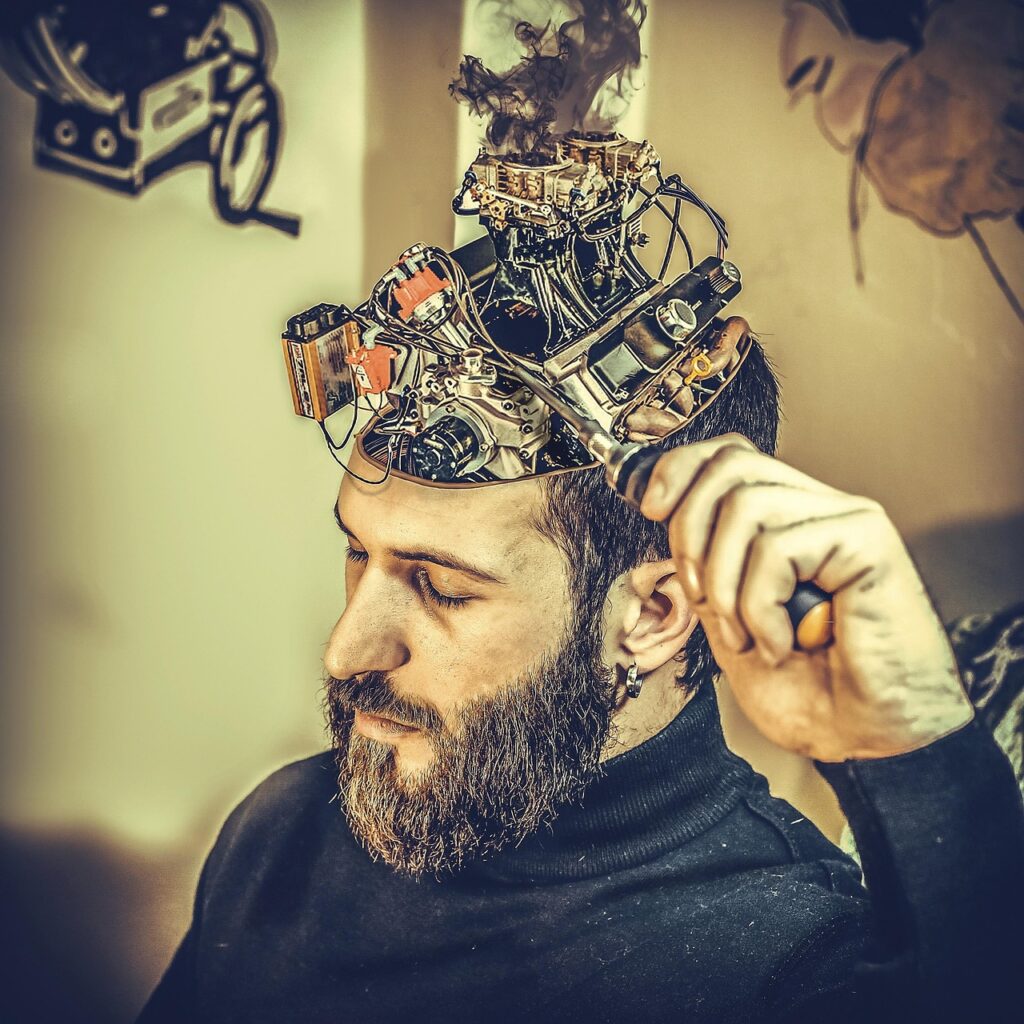
Right now, as you read this, your brain is quietly running “what if” scenarios in the background like a high‑end gaming PC rendering worlds you never consciously see. You imagine replies you never send, arguments you never have, futures you will never live, and you do it so automatically that it feels like simply “thinking.” But a growing body of psychological and neuroscientific research suggests something far stranger: your mind is not just reacting to reality, it is continuously predicting, rehearsing, and simulating alternate realities in order to survive.
Once you notice this, everyday life starts to look different. That sense of déjà vu, the way you replay a conversation in the shower, the sudden flash of dread before a risky decision – these are not random quirks. They are the visible tip of a huge underground structure of mental simulations that shape your emotions, habits, and even your identity. Let’s dig into what your brain is actually doing behind the scenes, and why it matters far more than you think.
Your Brain Is a Prediction Machine, Not a Camera
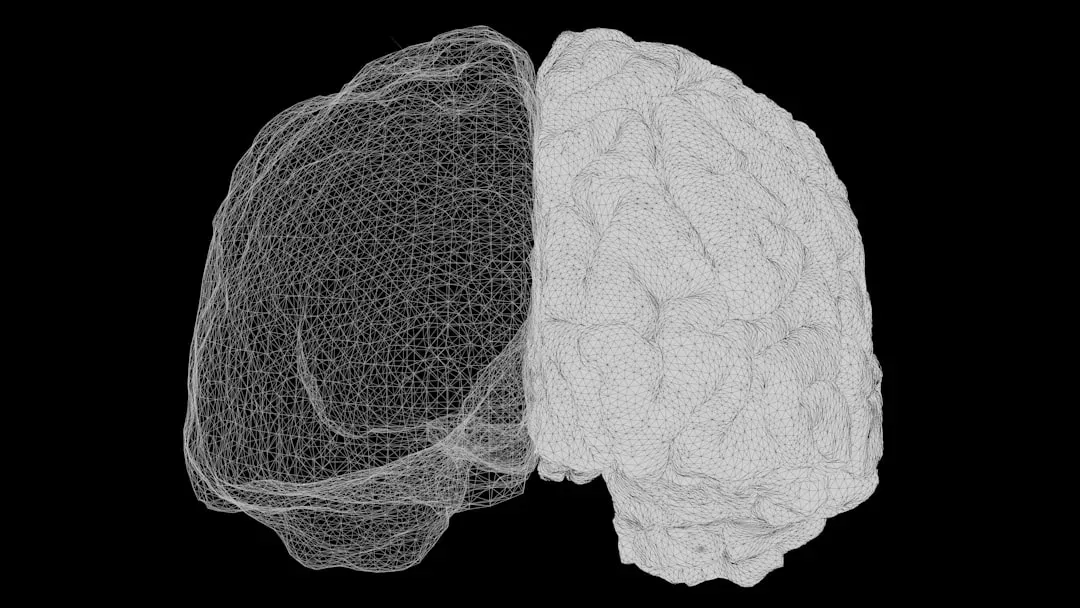
We like to believe we “see the world as it is,” but your brain is closer to a prediction engine than a camera. Instead of patiently waiting for information to arrive through your senses, it constantly guesses what will happen next and then checks if it was right. This process is sometimes described as predictive processing: the mind generates a model of reality and updates it whenever the outside world proves it wrong.
In practice, that means you experience the world through a mix of incoming data and your brain’s best guesses. When you walk into your kitchen, your brain has already preloaded what a kitchen “should” look, smell, and sound like. That is why you can glide around in the dark, why you can catch a ball without consciously solving physics equations, and why familiar environments feel oddly smooth and effortless. You live inside a rolling forecast, not a raw livestream.
Daydreaming Is Your Built‑In Simulation Engine

Think about how often your mind drifts off during a boring meeting or while you are scrolling your phone. You imagine a different job, rehearse a date, or replay a memory while changing what you said. That is not laziness or distraction; it is your brain running low‑stakes simulations of alternate realities. Psychologists sometimes call this mental time travel: we mentally jump into the future or back into the past and explore what could happen or what could have happened.
These daydreams can look silly from the outside, but they serve a serious purpose. By experimenting in your head instead of in real life, you get to test out choices and their emotional impact without risking everything. It is like letting a flight simulator crash a dozen times so the real plane does not. Over years, this private habit of wandering thought quietly trains your judgment, teaches you what to avoid, and shapes what you dare to reach for.
“What If I Had…”: Counterfactual Thinking and Regret

Whenever you catch yourself thinking “If only I had done this instead,” you are inside a special kind of mental simulation called counterfactual thinking. Here, the mind rewrites history, changes one or two details, and watches a different storyline unfold. It happens after a breakup, a failed exam, a missed opportunity, or even a near miss in traffic. The brain cannot change the past, but it can re‑run the script and study the alternate version of events.
This can hurt, of course. Regret can feel sharp, heavy, and endlessly repetitive. But it also has a teaching function: by simulating where a different choice would have led, your mind tries to update its rules for next time. The problem is that this system is not always balanced. Some people get stuck in endless reruns of “I should have,” turning a useful learning tool into a kind of mental self‑punishment. The brain’s simulation power is a gift, but without boundaries it can become a trap.
Anxiety as a Future‑Catastrophe Simulator

When you are anxious, your brain is not just worried; it is running horror‑movie simulations of the future on repeat. You imagine losing your job, failing in public, getting sick, being rejected, or watching something terrible happen to someone you love. Each imagined scene triggers a real emotional response, so your body reacts as if danger is already here. The heart races, breathing changes, and your muscles tense, even though nothing has actually happened yet.
From an evolutionary angle, this makes a brutal kind of sense. A nervous brain that overestimates threats is more likely to keep you alive than a chill brain that underestimates them. The problem is that modern life rarely matches the threats our wiring is expecting. So the same system that once helped your ancestors avoid predators now makes you catastrophize unread emails and delayed replies. You are not broken; your simulation engine is just overfiring in a world it was never designed for.
The Social Mind: Simulating What Others Think of You
Human beings are intensely social, and our simulation habit extends to other people’s minds. You constantly guess what others are thinking, how they might react, and what they truly mean but do not say. Psychologists call this theory of mind: your ability to build internal models of other people’s beliefs, desires, and intentions. Without realizing it, you run simulations like “If I say this, they will probably feel that” or “If I do this, they might judge me.”
This is why social situations can feel so exhausting. You are not only managing your own actions; you are juggling dozens of virtual versions of everyone around you. At its best, this allows for empathy, kindness, and smooth conversation. At its worst, it fuels social anxiety, overthinking, and mind‑reading errors where you assume others hate you or are talking about you when they are not. The catch is that your simulations feel real, even when they are wildly inaccurate.
Memory Is Not a Recording, It Is a Reconstruction
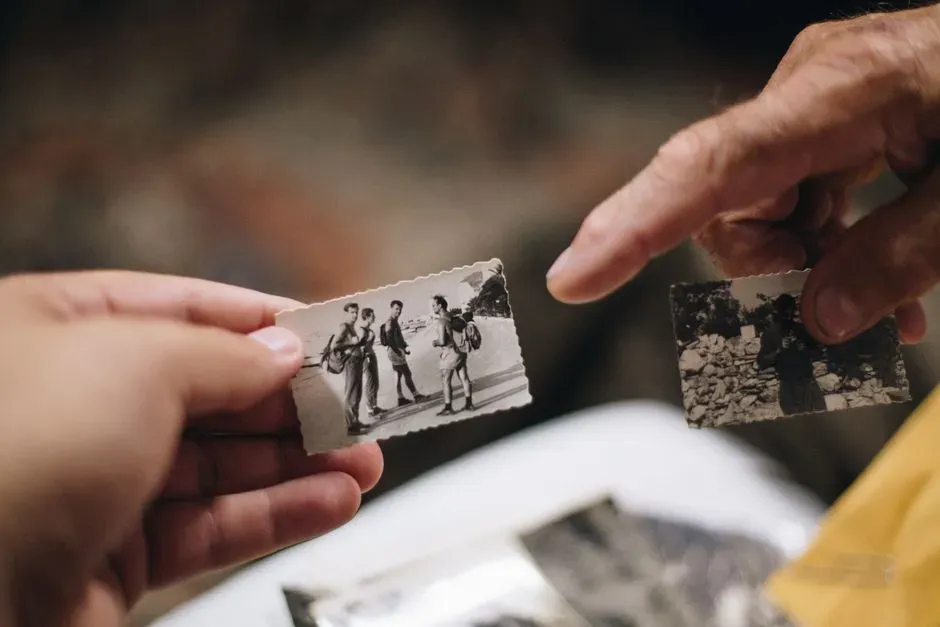
We tend to think of memory as a mental video archive that we can replay whenever we want. In reality, each time you remember something, your brain is partially rebuilding it from scattered traces and filling the gaps with plausible details. In other words, remembering is itself a kind of simulation. You take fragments of what happened, combine them with what usually happens, and stitch together a story that feels solid and continuous.
This is why two people can swear they remember the same event differently, and both feel fully convinced. Your brain is not lying on purpose; it is generating the most believable version of events based on what it has. The same machinery that allows you to imagine the future also helps you reconstruct the past. Past and future, in your mind, are more like editable timelines than fixed recordings, and your sense of self lives right at the center of those shifting simulations.
Dreams: Nightly Alternate Universes

Every night, your brain throws you into bizarre alternate realities where physics bends, people change shape, and timelines collapse. Dreams are the most obvious example of the mind’s simulation power turned all the way up. While you sleep, your brain still runs predictions and stories, but with the usual checks from your senses turned way down. The result is a wild mash‑up of memories, emotions, fears, and wishes woven into strange but emotionally vivid episodes.
Some researchers argue that dreams help you rehearse threats, process emotional experiences, or strengthen important memories. Others see them as the brain’s attempt to make sense of random activity. Either way, what you experience each night is not just noise. It is your simulation system experimenting freely, without the constraints of waking reality. You might wake up and laugh it off, but for your brain, those unreal moments are still training material.
Micro‑Simulations: Every Tiny Choice You Make

Even small decisions are powered by rapid‑fire mental simulations that flicker by too quickly for you to notice. Choosing what to eat, whether to speak up in a meeting, or whether to text someone back all involve gut flashes of “If I do this, then that will happen.” You usually feel this as a vague sense of leaning toward one option rather than another, but underneath that feeling is an entire forecasting process comparing possible outcomes.
Most of the time, this happens in fractions of a second. Your brain draws on past experience, cultural rules, and emotional memories to rate different options without holding a formal debate. That is why people often say they “just knew” something was a bad idea or had a “feeling” something would work out. Intuition is not magic; it is the compressed output of countless tiny simulations layered over a lifetime of learning.
When Simulations Go Wrong: Rumination and Obsession
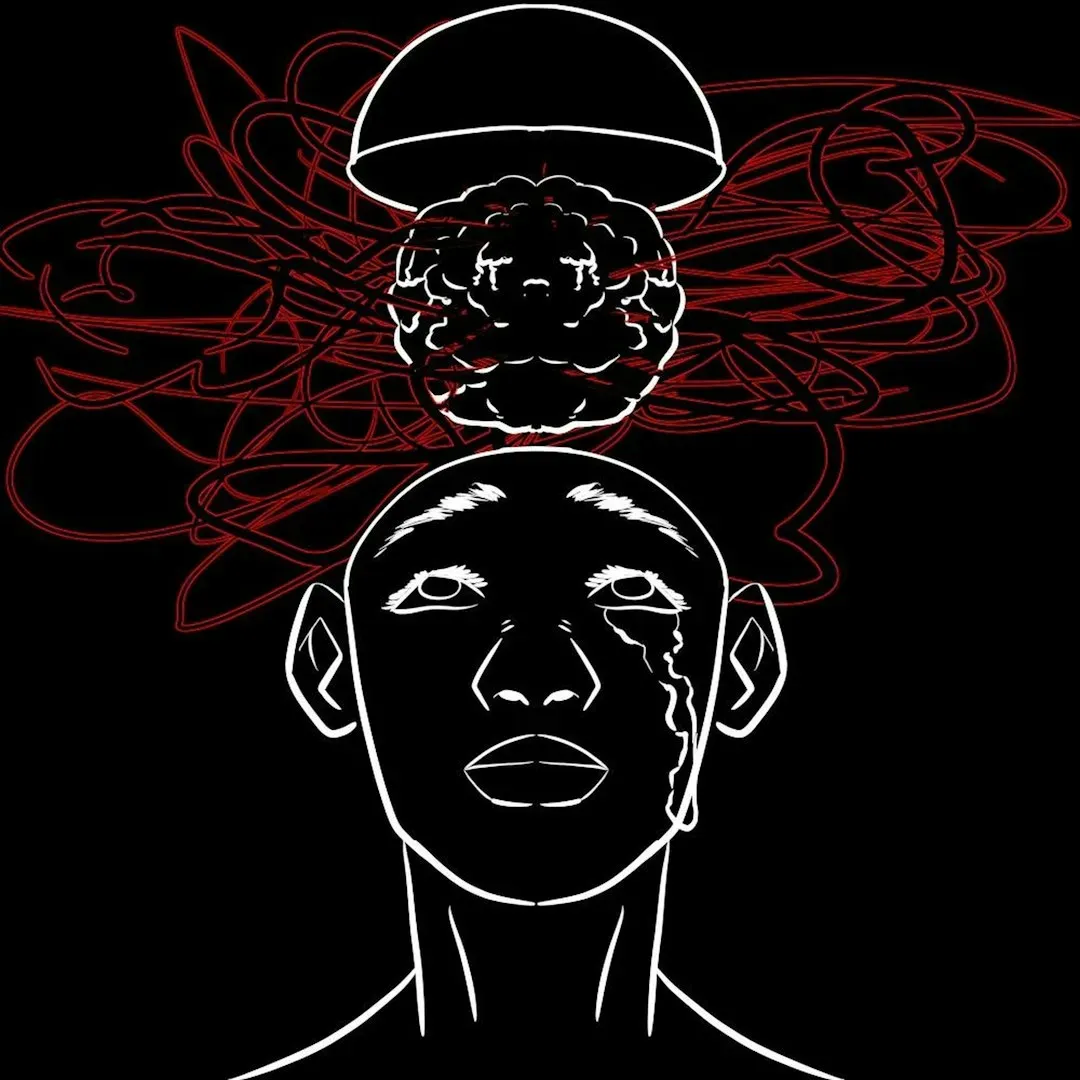
There is a dark side to all this mental modeling: sometimes the simulation engine gets stuck. Rumination is what happens when your mind replays the same scenario endlessly without reaching a conclusion or taking action. You go over the same argument, the same mistake, or the same fear so many times that it becomes a mental groove you cannot climb out of. Instead of learning from the simulation, you drown in it.
Obsession works similarly, but with a sharper focus and often a sense of compulsion. The brain keeps generating threatening or disturbing scenarios and then demands reassurance or rituals to neutralize them. In these cases, the very mechanism that is meant to protect and prepare you turns into a source of suffering. It is like having a powerful engine with no brakes: impressive in theory, exhausting in real life. Recognizing that these loops are misfiring simulations can be the first step in dealing with them more gently and more strategically.
How to Use Your Simulation Engine Intentionally

The most interesting part of all this, at least in my view, is that we are not entirely at the mercy of our mental simulations. You can deliberately steer them. Athletes visualize their performance, speakers mentally rehearse talks, and people recovering from trauma slowly learn to imagine safer outcomes. Guided imagery, cognitive‑behavioral techniques, and simple habits like journaling are all ways of turning the simulation engine from an accidental background process into a conscious tool.
On a smaller, everyday level, you can notice when your brain is launching into worst‑case predictions and ask it to run best‑case or realistic‑case versions as well. You can re‑script painful memories in therapy, practice more compassionate “what ifs,” and even design rituals that signal to your brain that a scenario has been thought through enough. You will never stop simulating alternate realities – that is how the human mind works – but you can absolutely influence which versions get the most airtime.
Conclusion: You Live in One World, but Your Mind Lives in Many
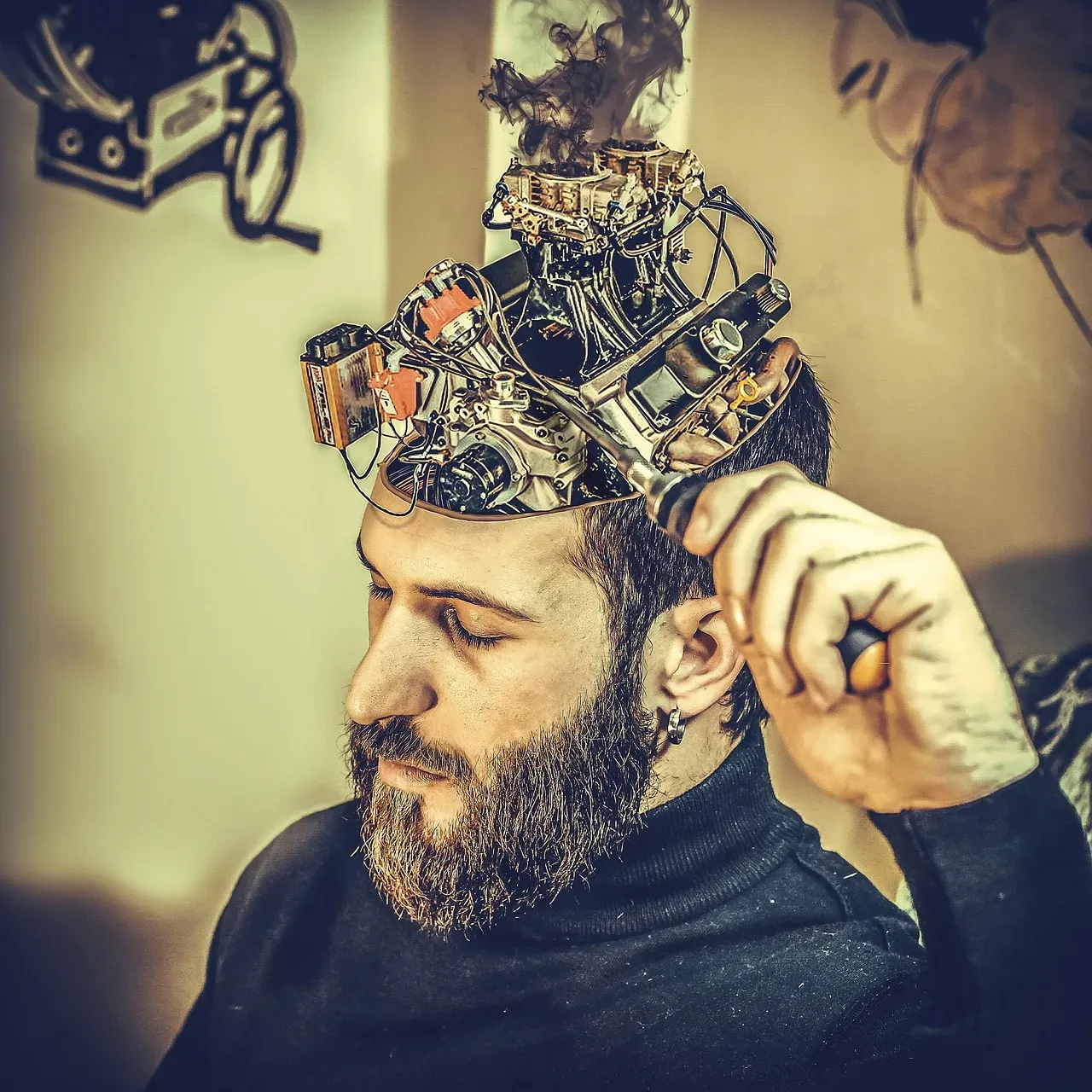
Once you see your brain as a nonstop simulation engine, ordinary life stops looking so ordinary. Your regrets, your anxieties, your private fantasies, and even your gut feelings are not random noise; they are side effects of a system that constantly predicts, edits, and rehearses versions of reality to keep you alive and make sense of your life. In my opinion, pretending we are purely rational or purely “in the moment” seriously underestimates how much of our experience is shaped by these invisible what‑ifs swirling under the surface.
The tricky part is that these simulations feel like truth, even when they are just one out of many possible stories your brain could tell. The real skill of modern life might be learning to respect this machinery without worshipping it: to listen to your predictions, but not be ruled by your fears; to learn from regret, but not be crushed by it; to imagine bold futures, but not lose touch with the present. If your mind is going to keep generating alternate realities anyway, why not start choosing which ones deserve your attention the most?