
Almost everyone has that running commentary in their mind: replaying conversations, planning what to say, arguing with itself, even narrating your day like a podcast that never switches off. It feels so ordinary that we barely notice it, yet when you ask scientists to explain exactly how the brain creates this inner voice, the answers suddenly get very fuzzy. We can roughly map where language lives, how sound is processed, and which regions fire when we think, but the leap from electrical patterns to the felt experience of a voice in your head is still a deep mystery.
I still remember the first time I realized not everyone’s inner voice works the same way. A friend told me they “think mostly in pictures,” and my brain almost short-circuited trying to imagine that. That conversation captures where neuroscience is right now: we have powerful tools that can peer into the brain in real time, but they show an astonishing variety of inner experiences that do not fit into one neat, simple model. The voice in your head looks less like a single feature and more like a dazzling, improvised performance using half the brain as a stage.
The Inner Voice Is Real, Common, and Weirdly Hard to Define

If you stop reading for a moment and silently say your own name, that familiar mental “sound” is what researchers often mean by inner speech or the inner voice. Surveys suggest that a large share of people experience this kind of ongoing inner monologue at least some of the time, while a significant minority report a near-constant inner narrative that feels like a radio show only they can hear. Others say they have more fragmentary words, short phrases, or situational “pop-ups” instead of a smooth, uninterrupted stream.
What makes inner speech so tricky is that it sits in a gray zone between talking, hearing, and pure thought. You are not actually producing sound, but you can “hear” tone, accent, and rhythm. You are not moving your mouth, but the language feels embodied and expressive. When scientists ask people to describe their inner voice, they get wildly different answers: some experience crisp, word-for-word sentences; others describe hazy impressions that only become verbal if they focus on them. So even before you put someone in a brain scanner, you are already wrestling with a phenomenon that resists a one-size-fits-all definition.
Brain Imaging Shows the Inner Voice Uses the Same Circuits as Speaking and Listening
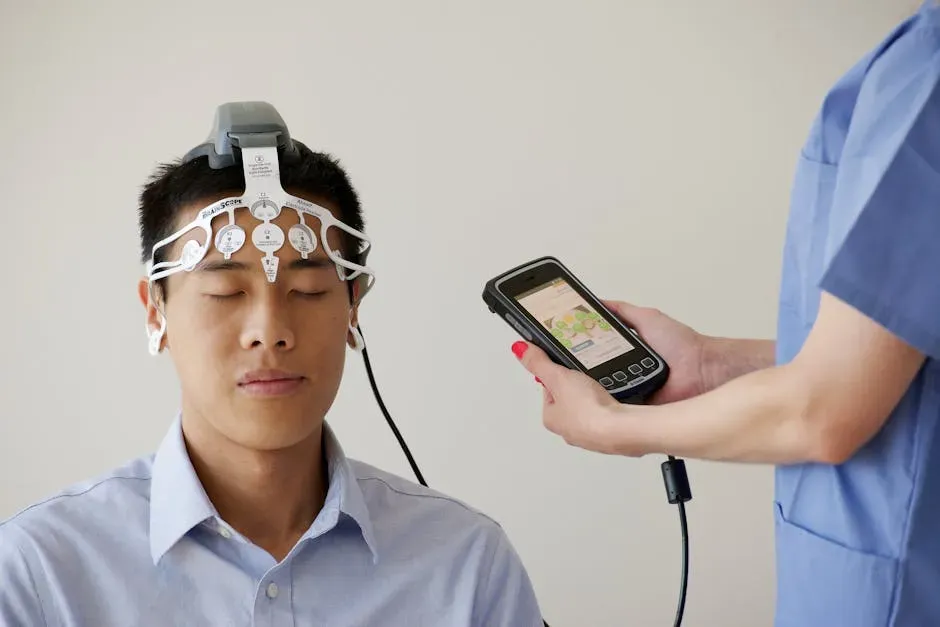
When people silently talk to themselves in the lab, brain scans light up in areas already famous for handling language and sound. Regions in the left frontal lobe that are active when you speak out loud often fire when you rehearse words internally, as if the brain is running a muted version of its speech machinery. At the same time, areas in the temporal lobes that help you understand spoken language and process sounds also become more active, which fits with the feeling that you are both “speaking” and “hearing” your own words.
This overlap has led some scientists to describe inner speech as a kind of covert speech: your brain generates a motor plan as if you were about to say something, but then cancels the actual movement at the last second. The sensory parts of the brain still receive the prediction that sound is coming, so you end up with a vivid internal experience of a voice without any air moving through your throat. This model helps explain why, when people move from thinking silently to speaking out loud, the shift can feel surprisingly smooth and almost automatic.
Prediction, Copies, and Why Your Inner Voice Usually Feels Like “You”

One of the leading ideas in neuroscience is that the brain is constantly predicting what will happen next, including what you yourself are about to do or say. When you prepare to speak, the brain sends a command to your speech muscles but also generates an internal copy of that command, a kind of “heads up” to the sensory system about the sound that is expected. Because of this advance warning, the sound of your own voice normally feels less surprising and more controllable than someone else’s voice.
Many researchers think a similar predictive system operates during inner speech, just with the volume turned way down. The brain generates a subtle motor plan as if you were going to talk, creates an internal copy for the sensory system, and your auditory regions then register that as the inner voice. Since the prediction matches what you intended to say, the experience feels woven into your sense of self, not like an external intrusion. When that prediction process goes wrong, some scientists suspect the brain may mislabel its own internally generated “voice” as coming from somewhere else, which could contribute to certain types of auditory hallucinations.
Why Some People Barely Have an Inner Monologue (and Others Can’t Turn It Off)

Despite popular memes claiming that everyone experiences a nonstop inner narrator, studies and first-person reports paint a more complex picture. Some people say they think mostly in images, abstract concepts, or wordless feelings that only occasionally crystallize into inner speech. Others describe their internal monologue as so relentless that it is exhausting, with constant commentary on every decision and event. Still others sit somewhere in the middle, flipping between visual and verbal modes depending on what they are doing.
Neuroscience is only starting to explore how these differences show up in the brain. It may be that people who rely heavily on inner speech show stronger or more frequent coordination between language and motor regions, while more visually inclined thinkers lean harder on visual and spatial networks. Personality, culture, and habit probably shape these patterns too. Just as some people naturally hum to themselves while working and others prefer silence, our brains may develop preferred “default” ways of representing thought that gradually feel like second nature.
Development: How Children Learn to Talk to Themselves in Their Heads
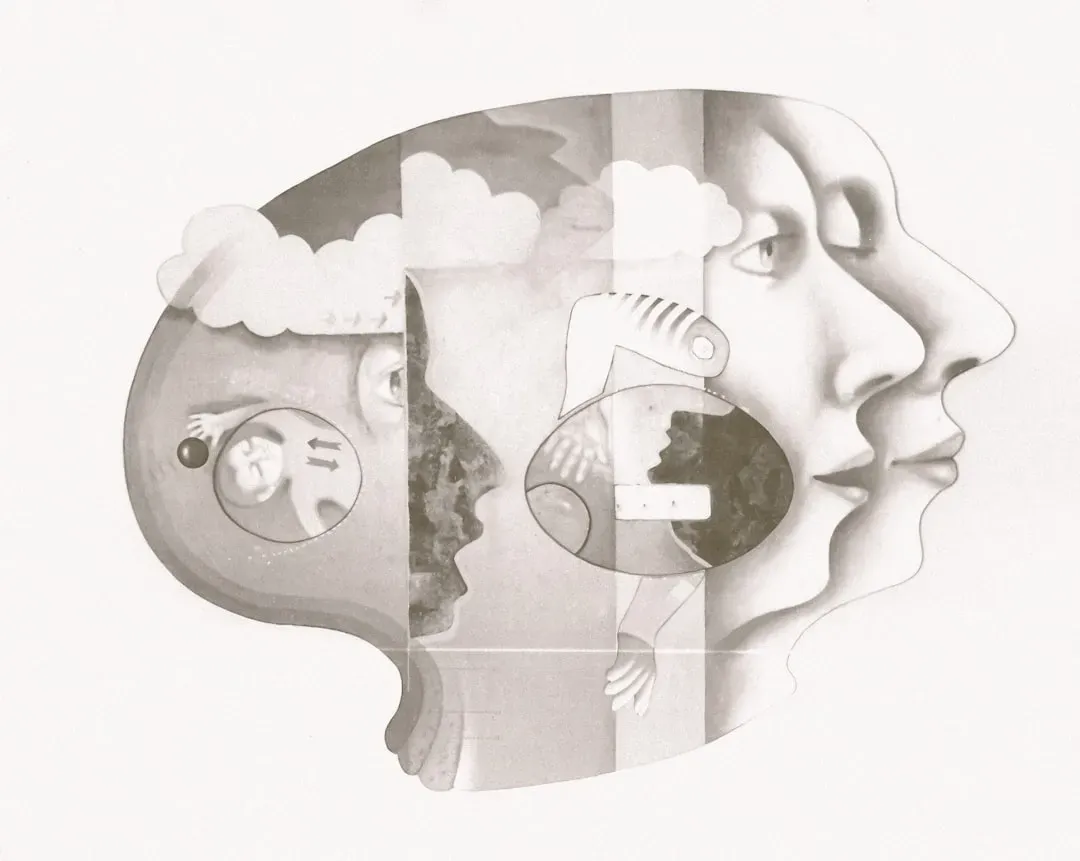
The inner voice does not arrive fully formed; it seems to grow up along with us. Young children often talk out loud to themselves when they are solving puzzles, playing pretend, or working through a difficult task, a behavior researchers call private speech. Over time, much of this external self-talk becomes internalized. Instead of narrating every step aloud, kids start whispering under their breath, mouthing words silently, and eventually shifting the whole process wholly into the mind.
This developmental path suggests that inner speech may begin as external conversation turned inward: first with caregivers, then with toys and imaginary characters, and finally with an internal version of the self. Some theories propose that this internalized dialogue is crucial for self-control and planning, because it lets a child give themselves instructions, encouragement, or warnings even when no one else is around. That might be why talking to yourself – quietly or in your head – often spikes when you are trying to focus, resist temptation, or navigate something emotionally intense.
Personally, when I think back to childhood, I can almost feel that shift from muttering to myself to silently rehearsing what to say in class. It is like learning to carry a portable coach in your mind, one that gets quieter on the outside but much more sophisticated on the inside as you grow.
When the Inner Voice Turns Against You: Anxiety, Rumination, and Mental Health

For all its benefits, the inner voice can become a serious problem when it gets stuck in negative loops. Many people with anxiety or depression report an internal monologue that feels harsh, repetitive, and catastrophizing, replaying mistakes and imagining worst‑case scenarios on repeat. Instead of helping you plan and regulate your emotions, the voice starts to act like an inner critic that never sleeps, draining attention and making it hard to see situations clearly.
Therapies that focus on thoughts, such as cognitive behavioral approaches and mindfulness-based practices, often zero in on this inner commentary. The goal is not to silence the inner voice altogether but to change your relationship with it: to notice automatic negative thoughts, question their accuracy, and practice more flexible, compassionate self-talk. From a brain perspective, that likely involves reshaping networks that connect emotional centers with language and control regions, so that the content and tone of your inner speech gradually become less hostile and more helpful.
Inner Voices, Hallucinations, and the Blurred Line Between “Me” and “Not Me”

One of the most unsettling clues about inner speech comes from people who hear voices that feel as if they come from outside themselves, as can happen in conditions like schizophrenia and in some trauma-related disorders. Brain imaging studies have found that, during these auditory hallucinations, many of the same language and auditory regions that support ordinary inner speech are active, sometimes in patterns resembling those seen when people listen to real voices. Yet the person experiencing them often insists that the voice is not theirs, even if it uses their memories, fears, or private worries.
This has led to a provocative idea: what if some hallucinated voices are the brain’s own internally generated “speech” that has lost its usual self-tag, so it is misclassified as alien or external? In that view, the core problem is not that the brain is manufacturing sound from nowhere, but that its prediction and monitoring systems are not correctly recognizing the source. While this theory does not capture every kind of hallucination and is still debated, it highlights how delicate and complex the boundary is between feeling like the author of a thought and feeling like its audience.
AI, Brain-Computer Interfaces, and Why the Inner Voice Still Stumps Us
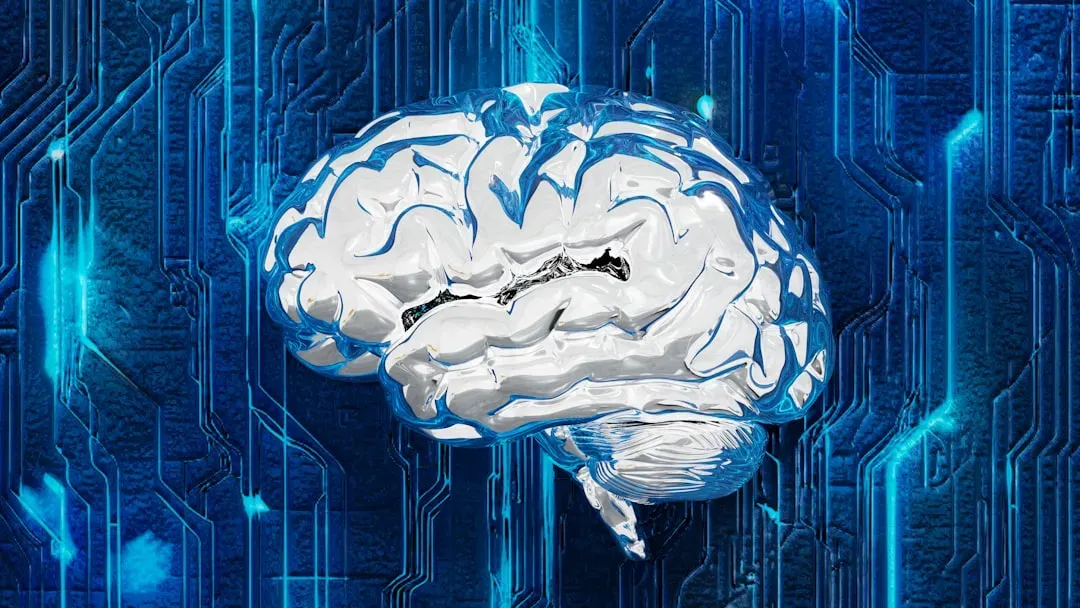
In the last few years, scientists have started using brain-computer interfaces and advanced machine learning to decode language directly from brain activity. In some experiments, people imagine speaking words or sentences while their brain signals are recorded, and computer models learn to map those patterns onto text with improving accuracy. These efforts show that inner speech is not a ghostly phenomenon beyond measurement; it leaves reliable traces in neural activity that can, in principle, be read out by algorithms.
Yet even the most impressive decoding systems so far only deal with small vocabularies, constrained tasks, and heavily trained models that work for a single individual. They can approximate the content of what someone is trying to “say” internally, but they do not capture the felt quality of internal dialogue, its spontaneity, or the way it merges seamlessly with emotions and memories. Watching a model guess your imagined words is astonishing, but it does not explain why having a voice in your head feels like having a self. That gap – between pattern and experience – is precisely where the mystery still lives.
Why the Voice in Your Head Might Be the Best Evidence That Your Brain Is Stranger Than You Think

To me, the most striking thing about the inner voice is how ordinary and how bizarre it is at the same time. On one hand, it helps you rehearse job interviews, remember grocery lists, comfort a friend, and resist sending that late‑night text you will regret. On the other hand, it is a pure mental construction with no sound waves, no moving air, nothing you could point a microphone at, yet it feels vividly like a voice, often with tone, personality, and attitude. Neuroscience can point to the networks involved and sketch out plausible mechanisms, but when you step back, it is hard not to be impressed that a lump of biological tissue can simulate a radio station only you can hear.
My opinion is that we have been underestimating what inner speech reveals about consciousness and overestimating how close we are to “solving” it. The voice in your head is not just a side effect of language; it is a window into how the brain knits together prediction, memory, emotion, and identity into a running story about who you are. As we keep probing it with scanners and algorithms, I suspect we will not only refine our models of the brain but also be forced to rethink some of our assumptions about the mind itself. When you listen to that quiet commentary later today, maybe ask yourself: did you ever imagine something so familiar could be this deeply strange?