
You know that tiny spider in the corner of the room that suddenly hijacks your entire attention span? Your heart speeds up, your eyes lock on it, and you keep “checking” that it’s still there even when you desperately want to look away. It feels irrational, embarrassing even, like a personal flaw or secret phobia you should have grown out of years ago.
But neuroscience is painting a very different picture. What looks like overreaction is actually an ancient threat-detection system doing exactly what it was designed to do tens of thousands of years ago. The twist is that this system has basically never received a software update, so it keeps treating a house spider on a white wall like a venomous predator in the savannah grass. Once you see it that way, your reaction starts to feel a lot less like weakness and a lot more like a built‑in survival feature that is simply out of date.
The Brain’s Old Survival Software: Why Spiders Hijack Your Attention
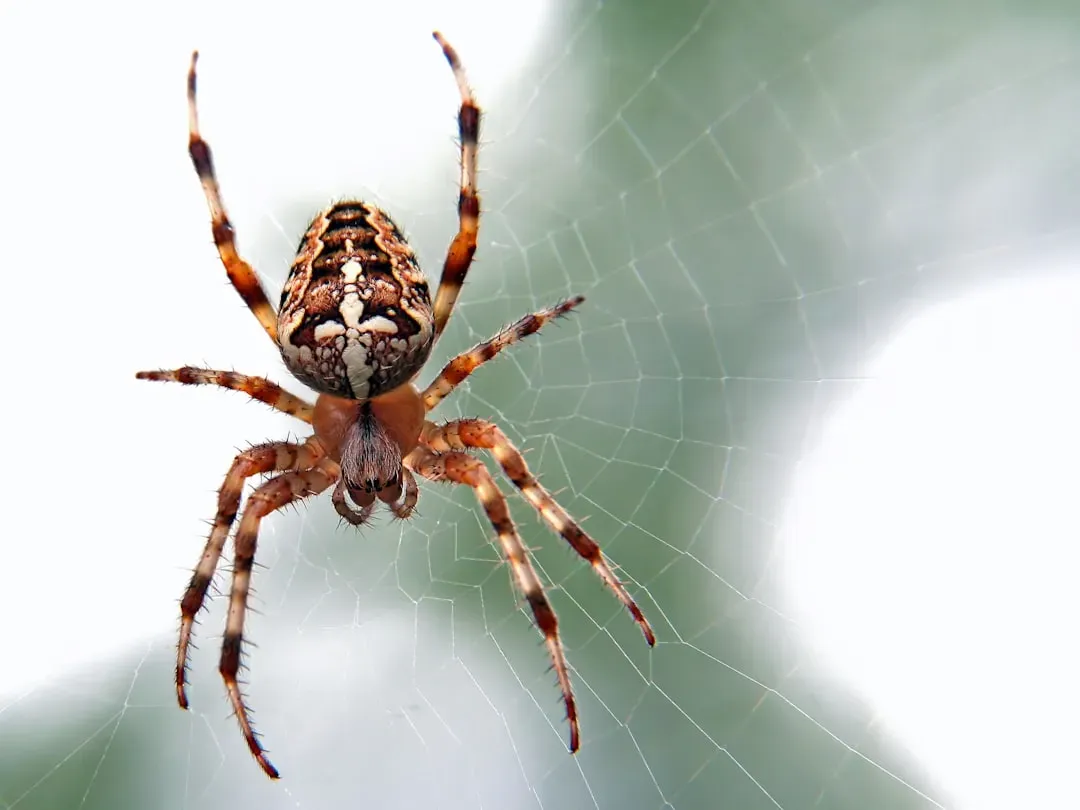
Long before smartphones and office chairs, your ancestors lived in environments full of things that could kill them quickly and quietly, including venomous spiders and other small creatures hiding in bark, rocks, and dark corners. The human brain evolved a set of fast, automatic circuits to notice subtle, potentially dangerous shapes and movements in the periphery, long before conscious reasoning could kick in. That meant that even a faint hint of a threat could trigger an immediate orienting response: eyes snap to the target, body tenses, attention narrows.
When you spot a spider today, that same old circuit lights up as if you’re still barefoot in a cave instead of standing in a carpeted living room. Your attention is dragged toward the spider because that is literally the system’s job: do not let the organism ignore something that might be deadly. This response can feel disproportionate because, in most modern contexts, that spider is not actually a major threat, but your brain is still running a survival operating system that was designed in a world where being wrong about a spider could have far more serious consequences.
Why It Is Not “Just” Arachnophobia: The Spectrum From Preference to Panic

A lot of people quickly label any intense reaction to spiders as arachnophobia, but the picture is more nuanced. True phobia involves strong, persistent, and often disabling fear that significantly interferes with daily functioning, sometimes even when the spider is not present but only imagined. What many people experience instead is a hardwired vigilance and discomfort that shows up as watchfulness, a racing heart, or a compulsive need to keep an eye on the spider until it is removed or contained.
This more moderate response is still built on an ancient circuit tuned for survival, not necessarily a full-blown clinical condition. In other words, you might not meet any medical criteria for a phobia, even if your brain still insists that you track that spider like a security camera. Calling every strong reaction a “phobia” can actually obscure how universal and deeply biological this attention lock is. It is not simply about personality, courage, or maturity; it is about the brain’s base-level settings for threat detection, which are largely shared across humans.
The Visual System Is Wired to Spot Spidery Shapes and Sudden Movement
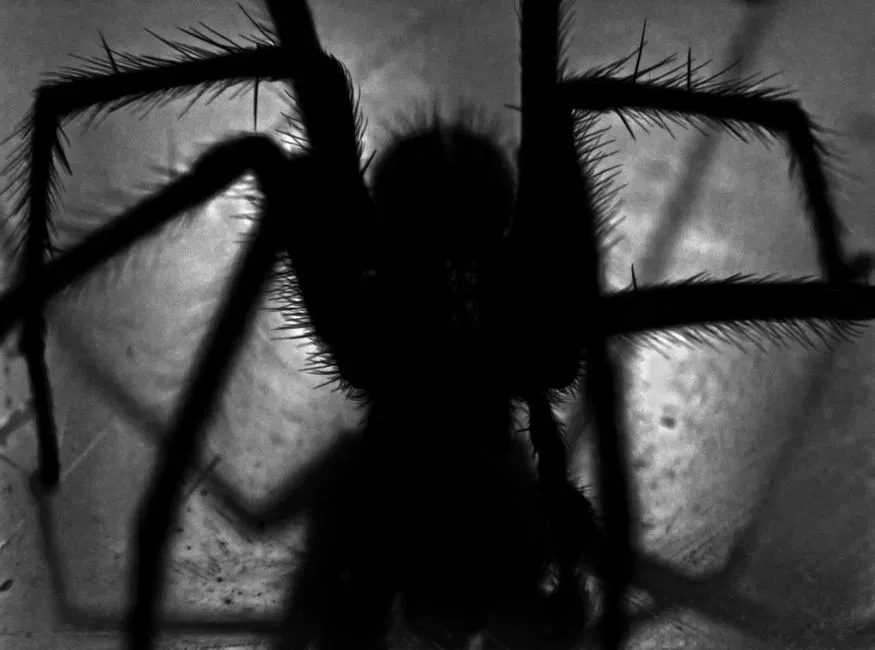
Your eyes are not passive cameras; they are active, constantly scanning organs wired to highlight certain patterns over others. Rapid movements, irregular shapes, and high-contrast silhouettes are all features that quickly grab visual attention because they might signal danger. Spiders, with their many legs and jerky, unpredictable motion, happen to match several of those attention-grabbing criteria at once, especially when they suddenly appear in your peripheral vision.
Experiments have shown that people tend to detect spider-like shapes or images faster than neutral objects, even when those images are flashed for just a brief moment. This bias seems to operate before conscious thought has much of a chance to weigh in, pointing to low-level visual processing that is primed to say: “Notice that. Right now.” Even if you tell yourself you are being silly, those rapid early visual filters are already on the job, sending a priority alert that makes your gaze snap back to the spider again and again.
The Amygdala: Your Internal Alarm Bell That Overrules Logic

Deep inside your brain sits the amygdala, a small almond-shaped structure heavily involved in processing fear, threat, and emotional salience. When something looks even vaguely like it could be dangerous, the amygdala can fire off a signal that ramps up your body: heart rate increases, muscles tense, and attention narrows. This often happens faster than your rational, thinking brain can say, “Relax, it’s just a harmless house spider.” By the time logic gets a turn, your body is already in a mild state of alert.
The amygdala also has powerful connections to visual areas and attention networks, which means it can bias what you notice and what you keep watching. If the amygdala has flagged the spider as important, your eyes will naturally tend to return to it, as if pulled by a magnet. This is not a character flaw or a lack of willpower; it is the architecture of your nervous system prioritizing survival over comfort. In a very real sense, that little node of neural tissue is voting against your desire to look away because, evolutionarily, staying locked on potential danger was a safer bet.
Why Reassurance Rarely Works: Evolution Prioritized False Alarms

One question that frustrates a lot of people is why they cannot simply talk themselves out of this response. You can know intellectually that most spiders in your home are not lethal, yet your body refuses to “believe” you. From an evolutionary standpoint, this makes uncomfortable sense. The cost of a false positive – overreacting to a harmless spider – was relatively small, maybe just some wasted energy or stress. The cost of a false negative – ignoring a truly dangerous spider – could have been severe injury or death.
Because of this asymmetry, evolution tilted the system toward erring on the side of overreaction, and that bias is still built into your brain chemistry and circuits. Logical reassurance comes from slower, higher-level brain regions that evaluate facts and context, but the threat system operates more like an emergency override. When those two systems clash, the one concerned with keeping you alive tends to win. So even if you keep repeating that there is nothing to fear, your ancient circuitry quietly replies, “Just in case, let’s keep watching.”
The Attention Trap: How Threat Steals Mental Bandwidth

Once the brain classifies something as potentially threatening, it is not content to simply notice it once and move on. Threat-related stimuli are incredibly good at capturing and holding attention, effectively stealing mental bandwidth from everything else you are trying to do. You might be attempting to answer emails, watch a show, or have a conversation, but part of your mind keeps drifting back to the spider’s location, as if running a background safety check on a loop.
This ongoing monitoring does not just waste attention; it amplifies your own sense of unease. Each time you check on the spider and find it still there – or even worse, discover it has moved or disappeared – your brain reads that as more evidence that vigilance is necessary. Over time, this can create a self-reinforcing attention trap: the more you look, the more anxious you feel, and the more anxious you feel, the more you look. It is a perfect storm of ancient circuitry colliding with modern environments where real danger is rare but perceived threat still feels incredibly real.
The Ancient Circuit Never Got the Memo About Modern Life

Here is the core issue: your nervous system is operating with assumptions that fit a world your body no longer lives in. In that older world, small, venomous animals posed a recurring and significant danger, so a rapid, sticky attention response was life-saving. Nobody sat down to reprogram these circuits when humans invented glass windows, vacuum cleaners, and pest control. The same network that once protected hunters and gatherers in forests and caves now triggers in studio apartments and office buildings.
That lack of an update means your internal threat-detection hardware is wildly conservative compared to the actual risks you face today. It reacts to a single spider in the bathroom almost as if your survival hangs in the balance, because that is what it evolved to do, not because it has carefully analyzed present-day statistics about spider-related harms. Understanding this mismatch does not instantly erase the reaction, but it can shift how you judge yourself. Instead of seeing your response as childish or irrational, you can recognize it as a legacy system doing its best with very old instructions.
Can You “Update” the Circuit? Training a Calmer Threat Response

The good news is that while you cannot swap out your ancient circuitry for a new model, you can influence how it behaves over time. Repeated, controlled exposure to spiders or spider-related images in safe conditions can gradually teach the brain that these cues are not as dangerous as the old software assumes. This kind of learning works by creating new associations: instead of pairing spiders with panic or disgust, your nervous system starts to pair them with boredom, mild discomfort, or even neutral curiosity.
Simple practices like controlled breathing, grounding techniques, and deliberately shifting your attention can also help modulate the intensity of the reaction once it starts. You might not stop your eyes from darting to the spider the first time, but you can shorten how long you stay locked in or how big the emotional spike feels. Over time, small wins accumulate, and the alarm circuits begin to fire less harshly because they are constantly receiving evidence that the situation is not as critical as they initially predicted. It is not a magic fix, but more like slowly updating a very old program with repeated patches.
Why I Think Our “Overreactions” Deserve More Respect
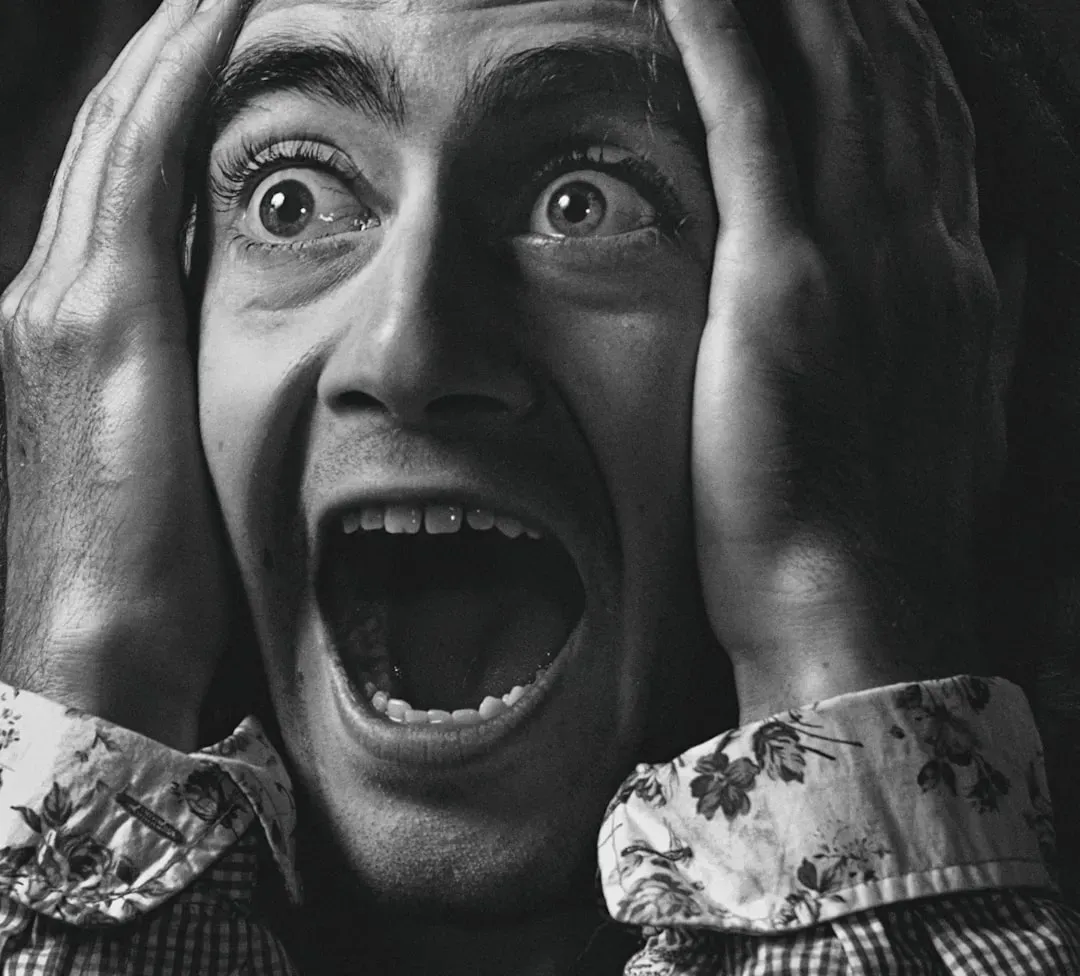
From my perspective, the most important shift is not about forcing yourself to stop reacting, but about reinterpreting what that reaction means. When you freeze or fixate on a spider, it is tempting to beat yourself up or assume you are uniquely weak. Yet, when you zoom out and look at the neuroscience, what you see is a species-level survival feature that has simply been carried forward into a different era. In that light, your jumpiness is not a personal failing; it is a side effect of winning the evolutionary lottery of survival.
I think we underestimate how much kindness we owe ourselves for carrying this ancient hardware around in a world it was never designed for. You are trying to live a calm, rational life while your deepest brain circuits are still on the lookout for hidden fangs in the dark. That tension will never fully disappear, but it can be softened by understanding and training, not shame. The next time you cannot look away from a spider, maybe the question is not “What is wrong with me?” but “What would it look like to work with this ancient circuit instead of fighting it?”