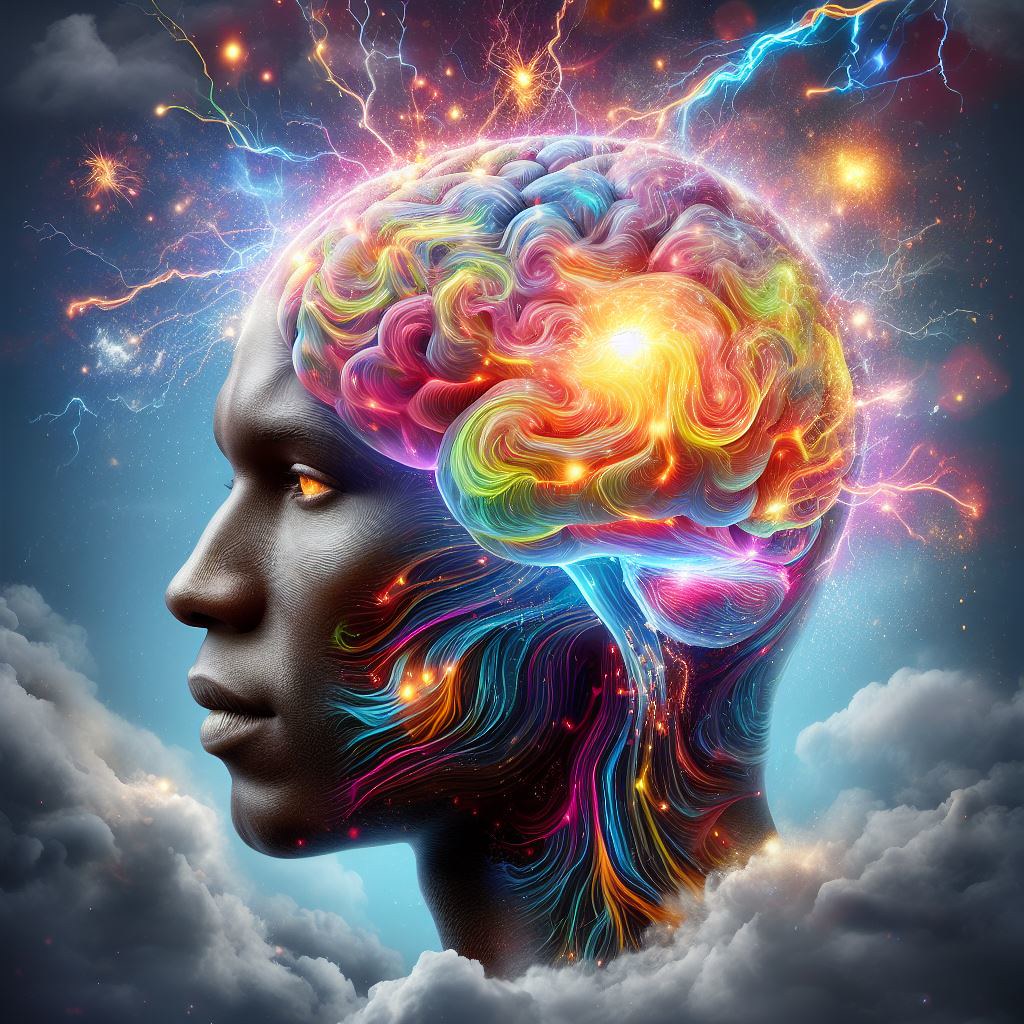
If you stop for a second and notice what it feels like to be you right now, something quietly astonishing shows up. You are not just a biological machine crunching data; you are having an experience: colors, sounds, emotions, a sense of being here. That simple fact has started to bother some of the smartest scientists and philosophers on the planet far more than how neurons fire or how memory works.
Modern consciousness research is slowly accepting a strange idea: the hardest question about the mind is not how your brain processes information, but why any of that processing should come with a private inner movie. In other words, why is there a “you” inside at all, instead of everything running anonymously in the dark? Once you realize how weird that is, it becomes almost impossible to unsee.
The “Hard Problem”: Why There Is Something It Is Like To Be You
When you touch a hot stove, neurons fire, muscles contract, and you pull your hand away. Science is getting pretty good at tracking that chain of events. But there’s a missing piece: the painful feeling, the sharp “ouch” that lights up your awareness. You can describe every physical step in the process and still not explain why it hurts, or why it feels like anything at all instead of being a silent reflex arc.
This gap is what philosophers call the hard problem of consciousness. Easy problems, relatively speaking, are things like how the brain recognizes faces, or how you focus attention. Those are still complicated, but at least they are about functions you can model and measure. The hard problem asks something deeper and more unsettling: why does any of this processing show up from the inside, as a world you experience, instead of just being neural traffic with no witness?
The Difference Between Intelligence And Experience
You might assume that once a system is sophisticated enough, consciousness just naturally appears. But when you look closely, intelligence and experience start to look like very different things. A chess engine can beat you without feeling triumphant, a recommendation algorithm can predict your tastes without enjoying music, and even advanced AI can generate fluent text without any hint of an inner life.
This matters for you because it shows that smart behavior alone does not guarantee there is something it feels like to be that system. Your smartphone can answer questions, navigate traffic, and label your photos, yet nothing suggests it is having a day, or that it cares about what happens to it. Your brain, though, gives you a vivid inner world. Consciousness research is increasingly focused on that gap: why your information-processing comes with a lived perspective, while most other complex systems apparently run in silence.
Neurons, Synapses, And The Limits Of Brain Maps
Neuroscience has mapped an enormous amount of brain territory. You can point to areas linked with visual processing, decision-making, language, and even certain emotional states. Brain scans can reveal patterns that predict what you are looking at or whether you are paying attention. On paper, it looks like you are closing in on the full wiring diagram of the mind.
Yet as those maps get better, the mystery of experience only deepens. Knowing which region lights up when you see red does not tell you why red has that particular raw feel in your awareness, instead of being a neutral code the brain uses behind the scenes. You can imagine a world where the physical story is exactly the same, but there is no subjective glow, no inner scene, no you to witness it. The fact that you do have that inner scene seems to demand an extra step of explanation that a wiring diagram, by itself, simply does not provide.
Is Consciousness A Fundamental Feature Of Reality?
Because traditional explanations keep running into the same wall, some researchers are willing to entertain a bolder idea: maybe experience is not something that magically emerges at a certain level of complexity, but a basic feature of the world, like space, time, or mass. On this view, your brain does not create consciousness from nothing; it organizes and shapes something that is already woven into the fabric of reality, the way a radio tunes a signal that is already in the air.
For you, this possibility can feel both unsettling and oddly intuitive. When you look out at the world, it feels as if your consciousness is fundamental in some way, not just an afterthought. These more radical theories do not claim that rocks and spoons have rich inner lives, but they do suggest that the simple distinction between dead matter and conscious beings may not be quite as sharp as you were taught. Whether you find that thrilling or disturbing, it shifts the puzzle from “how do neurons produce awareness?” to “how does the physical world express awareness in systems like you?”
Theories That Try To Measure Consciousness
Other lines of research take a more conservative path and try to quantify consciousness directly. One influential proposal says that what matters is not just how much information your brain contains, but how integrated and unified that information is. The idea is that you are conscious when many parts of your brain share and combine information into a single, indivisible whole, instead of functioning as isolated modules.
From your perspective, this matches the way experience feels: you do not see colors in one place, shapes in another, and emotions in a third; you encounter a unified moment in which all those elements come together. Attempts to measure this kind of integration have led to clever brain stimulation tests and mathematical models that try to capture how “conscious” a pattern of activity might be. Still, even if you could assign your experience a number, you would face the same haunting question: why should a highly integrated pattern of information feel like something from the inside, rather than simply being a complex data flow with no awareness at all?
What Consciousness Studies Mean For AI And “Digital Minds”
As AI systems grow more capable, you are pushed to ask a new kind of question: at what point, if ever, does a machine go from being an impressive tool to a possible subject of experience? You can easily imagine a system that talks about feelings, explains its apparent preferences, and insists it is conscious, all without actually experiencing anything. After all, you already know how much humanlike behavior can be produced through pattern-matching and clever engineering.
Consciousness research does not yet give you a clean test for inner experience in machines. But it does warn you not to casually assume that performance equals awareness, or that a convincing story about feelings proves those feelings are real. At the same time, it suggests a moral risk: if a system ever did cross the line into genuine experience, you might not recognize it. That raises unsettling questions about how you build and treat future systems, especially if you do not yet understand why you are conscious in the first place.
Everyday Clues: Sleep, Anesthesia, And Altered States

You do not need a lab to notice that consciousness is fragile and strange; your own life gives you data every day. When you fall into dreamless sleep or go under anesthesia, the entire inner world disappears, and then suddenly, it is back. Hours can vanish from your perspective as if someone hit a cosmic skip button. The brain keeps humming along in various ways, but the subjective show is simply gone.
Experiences like lucid dreaming, deep meditation, or psychedelics show that consciousness can also be reshaped in dramatic ways without the physical brain turning into something entirely different. Colors intensify, your sense of time warps, or your feeling of being a separate self loosens. These shifts highlight how delicate and configurable your experience really is. The puzzle is that, through all of these changes, there is still something it is like to be you, and no current theory fully explains why there is any “like” at all.
Why This Mystery Might Change How You See Yourself
All of this can sound abstract until you realize it lands directly on the question that probably matters most to you: what, exactly, are you? If consciousness really is more than just clever computation, then you are not just a biological robot running a complicated program. You are also the presence to which life appears, the inner witness that gives everything its meaning. That is not a mystical claim; it is simply taking your own experience seriously as a phenomenon that needs explaining, not brushing it aside as an illusion.
Taking the mystery of experience seriously can change the way you relate to others too. If every conscious being carries a private universe of feeling – pain, joy, fear, hope – then how you treat them matters at a deeper level than any theory of behavior alone. Consciousness research may not yet have solved why anything feels like anything, but it does spotlight a simple truth you can live by today: wherever experience is happening, there is something precious at stake.
In the end, the greatest puzzle of consciousness might be that you are living it from the inside while trying to study it from the outside. You can measure brain waves, build theories, and simulate intelligence, yet the raw fact that there is a world appearing in your awareness remains stubbornly unexplained. Maybe that is not a failure of science, but an invitation – to look more closely at your own experience and to treat it, in yourself and others, as a genuine miracle rather than background noise. When you pause and notice the simple fact that anything is showing up at all, does it still feel ordinary to be you?