
Look at the clock for a second. The hands sweep forward, your coffee cools, your body ages, and it all feels so obvious: time moves from past to future. But a growing number of physicists and philosophers argue that this sense of a flowing time might be less like a fundamental feature of reality and more like a clever illusion created by your brain riding on top of increasing entropy. In other words, the universe might not be marching anywhere at all – only your conscious experience is.
This idea sounds wild at first, almost like something ripped from a late-night sci‑fi binge. Yet it sits right at the intersection of serious physics, neuroscience, and philosophy. Once you start to unpack what physical laws actually say about time – and what your brain is realistically able to process – the familiar story of a single, ever-moving Now starts to crack. Underneath, you find something stranger, more static, and in some ways more beautiful than the simple arrow we grew up believing in.
The Strange Fact: Physics Barely Cares About Past Or Future
Here’s the first shock: most of the fundamental laws of physics do not care which way time is running. If you film two particles colliding and then play that footage backward, the equations describing their motion still work just fine. From a microscopic point of view, the universe’s rulebook is nearly perfectly time-symmetric, like a movie that looks physically reasonable whether you press play or rewind.
That’s completely different from how life feels. You remember your tenth birthday, but you cannot remember your eighty‑fifth. Broken eggs do not leap back into intact shells. Smoke from a candle does not spontaneously squeeze itself back into a wick. The everyday world screams that there is a preferred direction – and yet the deepest equations whisper that both directions are, at least formally, allowed.
Entropy: The One-Way Street Hidden Inside A Two-Way Universe

The usual way physicists reconcile this paradox is through entropy, a measure of how many microscopic arrangements correspond to what looks, from far away, like the same messy state. A neatly stacked deck of cards has low entropy because only a few precise arrangements count as “neatly stacked,” while a shuffled deck has high entropy because there are vastly more ways for it to look random. In thermodynamics, entropy tends to increase over time in closed systems, and that tendency is what gives rise to the famous “arrow of time.”
In our universe, the early cosmos seems to have started in a state of extraordinarily low entropy compared with what is possible, meaning there was a huge amount of room to “spread out” into more probable, disordered configurations. That slow cosmic slide from tidy to messy underpins everything from melting ice to the heat death scenario of the far future. What we call “time moving forward” is closely tied to the direction in which entropy increases, not to any fundamental preference in the underlying laws themselves.
The Brain’s Role: Consciousness Rides The Wave Of Increasing Entropy

This is where your brain enters the story. Your conscious experience is not a live feed of raw physics; it is a stitched-together narrative assembled from memories, sensory data, and predictive models. To construct a sense of “before” and “after,” your brain needs stable records of past states – things like traces in your memory, fossils in rocks, or bits on a hard drive. All of those records depend on physical processes that themselves rely on entropy increasing.
Think about memory: forming a memory in the brain involves biochemical changes, energy use, and microscopic reconfigurations of neurons and synapses. These processes generate heat and randomness; they push entropy upward. You never form memories of future events because the physical footprint of those events does not yet exist as a stable, entropy-linked record. In that sense, consciousness is like a surfer that can only ride the entropy wave in one direction, and then calls that direction “time.”
The Block Universe: What If All Moments Already Exist?
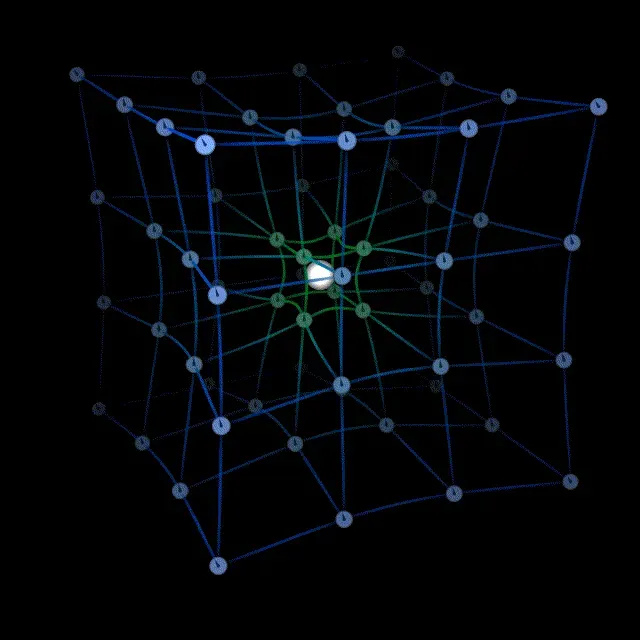
Modern physics, especially relativity, nudges us toward a radical picture called the “block universe.” In this view, past, present, and future all coexist as different slices of a four‑dimensional spacetime structure. Your birth, this moment of reading, and your last day on Earth all occupy their own coordinates, as fixed as different places on a map. What changes is not the universe itself flowing, but where your conscious perspective is located within that block.
In that picture, there is no global, objective “Now” sweeping across reality like a cosmic cursor. Instead, each observer has their own slice, and what you call present is just the local edge of your own worldline through spacetime. The apparent flow from earlier slices (which you remember) to later ones (which you anticipate) comes from how information and entropy behave, not from time itself moving like a river. It is a harsh idea on the ego: instead of being carried forward by time, you might just be a pattern laid out across the entire block.
Why You Never See Time Run Backward In Daily Life

If the block universe is right and the laws are mostly time-symmetric, why do you never watch tea reheat itself back into a kettle or hear people casually recall tomorrow’s news? The short answer is probability. States of low entropy are extremely special and rare, whereas high‑entropy states are overwhelmingly common. While the equations allow the improbable, the universe almost never serves it up at human scales and timescales.
Practically speaking, all the systems around you – your body, your phone, the air in your room – are constantly moving from more ordered to more disordered configurations, nudged along by countless tiny interactions. Your brain’s memories, your sense of cause and effect, and your habits of reasoning all get trained in this environment where entropy has a consistent orientation. So your intuition becomes blind to the alternative. You do not see time reversal in daily life for the same reason you never see a deck of cards randomly jump into perfect order: it is allowed in principle, but vanishingly unlikely in practice.
Is The Flow Of Time An Illusion, Or Just The Wrong Metaphor?
Calling the flow of time an illusion can sound dramatic, but it might be more accurate to say that our usual metaphor for time is badly incomplete. We talk as if time is like water in a river, carrying us along. Yet the deeper picture suggests something closer to a landscape of events, with consciousness tracing a one‑way path through it, constrained by thermodynamics. The “flow” is not in the universe; it is in our sequence of experienced brain states.
From my own perspective, that makes the world feel stranger but not emptier. It is like discovering that a familiar city is actually built on a complex network of tunnels and hidden infrastructure. Daily life still happens on the streets, but you can never unsee the deeper structure once you learn about it. The feeling that the past is fixed, the present is vivid, and the future is open might be a mental user‑interface layered over a far more static and symmetric reality.
What This Means For Free Will, Meaning, And How We Live

Once you start to see time as a byproduct of entropy plus consciousness, uncomfortable questions pop up: if all moments exist in some block‑like way, are you really choosing anything? Are your decisions just another part of the fixed pattern? Personally, I think this is where we need to be careful not to overreach. Physics can tell us about correlations and structures; it does not automatically cancel your lived sense of agency or the importance of your choices.
Even if the future is “already there” in some abstract spacetime sense, you still do not know it, and you still experience meaningful uncertainty. From the inside, you deliberate, care, and act based on limited information. That subjective process matters. Thinking about time this way does not have to make life feel pointless; it can just remind you that your conscious story, marching along the entropy gradient, is a very special way of sampling the universe’s possibilities, not the whole show.
Conclusion: Time’s Arrow Might Be In Our Heads, But Its Bite Is Real

If physics is right, the universe does not come with little arrows labeled “forward” and “back.” The preference for one direction over the other emerges from a peculiar low‑entropy past and from how conscious, information‑processing brains like ours build memories and expectations. In that sense, the flow of time may be less a fundamental cosmic feature and more a side effect of how we ride the entropy tide.
My own opinion is that this view is both humbling and liberating. It undercuts the comforting story that reality simply moves in lockstep with our clocks, but it also reveals how astonishing it is that a blob of matter like a human brain can carve out a sense of history, identity, and purpose in a mostly indifferent spacetime. Maybe time does not truly flow, but as long as entropy keeps climbing and we keep waking up into new moments of awareness, the arrow will feel sharp enough. Knowing what you know now, would you still say time is as simple as “before and after” ever again?