
You might think of camouflage as something reserved for soldiers or fashion trends, but in the desert, it is literally a matter of life and death. For a Texas horned lizard, every grain of sand, every patch of dirt, and every shadow can mean the difference between becoming lunch and living another day. When you look closely, you realize you are watching a living physics experiment in color, texture, and light. You are not just looking at a lizard that “blends in.” You are looking at millions of years of evolutionary trial and error refined into a compact, spiky reptile that knows how to disappear in plain sight. Once you understand how its camouflage works, you start seeing the landscape differently too – as if the desert itself is helping to hide the lizard right in front of you.
Why Camouflage Is Life or Death in the Desert
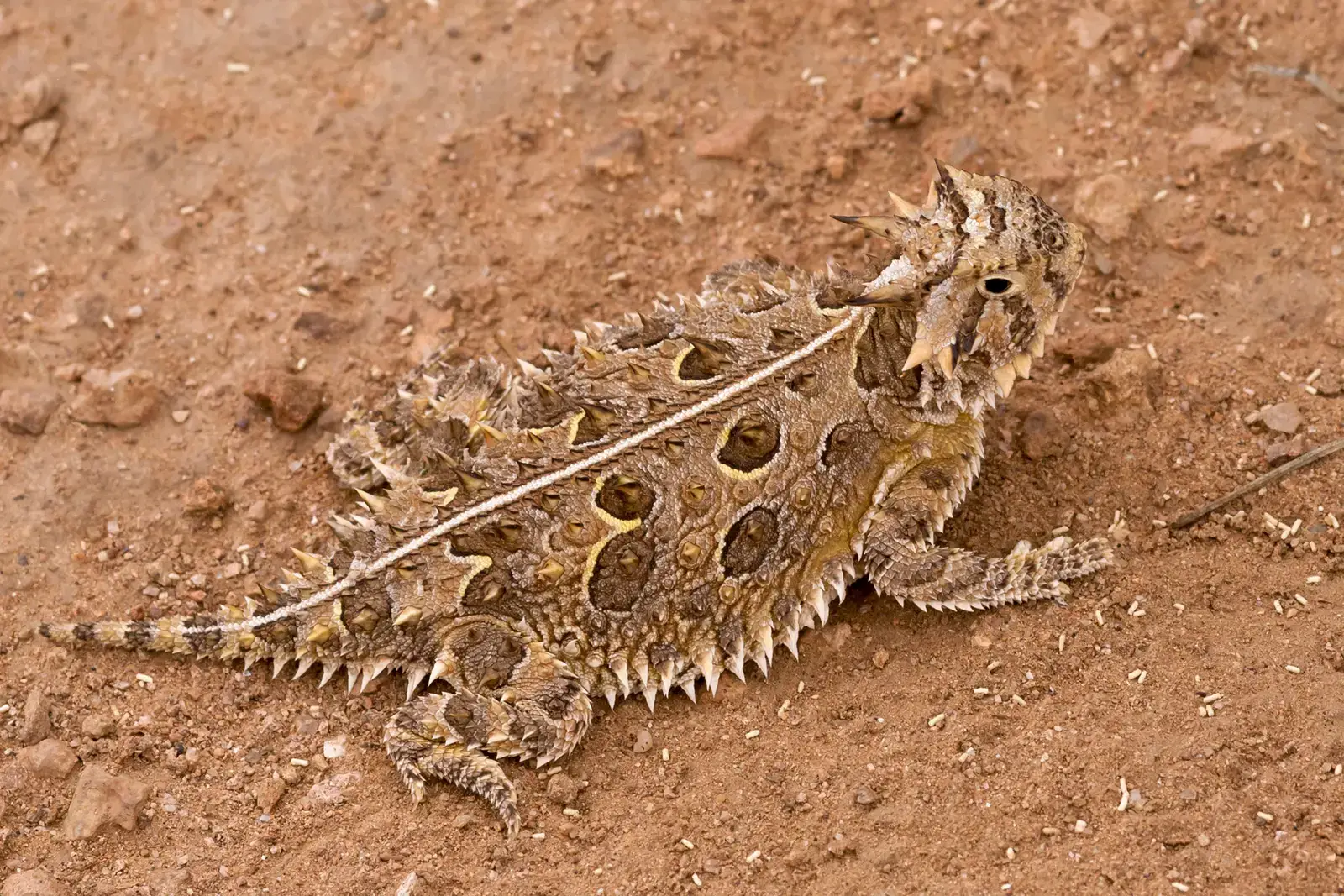
If you were a Texas horned lizard, your day would start with a brutal reality: you are slow, you are small, and you are surrounded by predators that are faster and hungrier than you. Hawks scan from above, roadrunners patrol on foot, snakes probe through scrub and sand – none of them care how cute or interesting you are. Your only serious advantage is the ability to become nearly invisible against the desert floor. In that kind of world, staying unseen is far more important than running away. The open, sun-baked habitat does not offer many trees or deep burrows to hide in. Instead, you rely on the exact color and pattern of your body to match your surroundings. Camouflage is not a bonus feature for you – it is a survival system that has to work every single day.
Your Desert-Colored Skin: Matching the Background Like a Pro
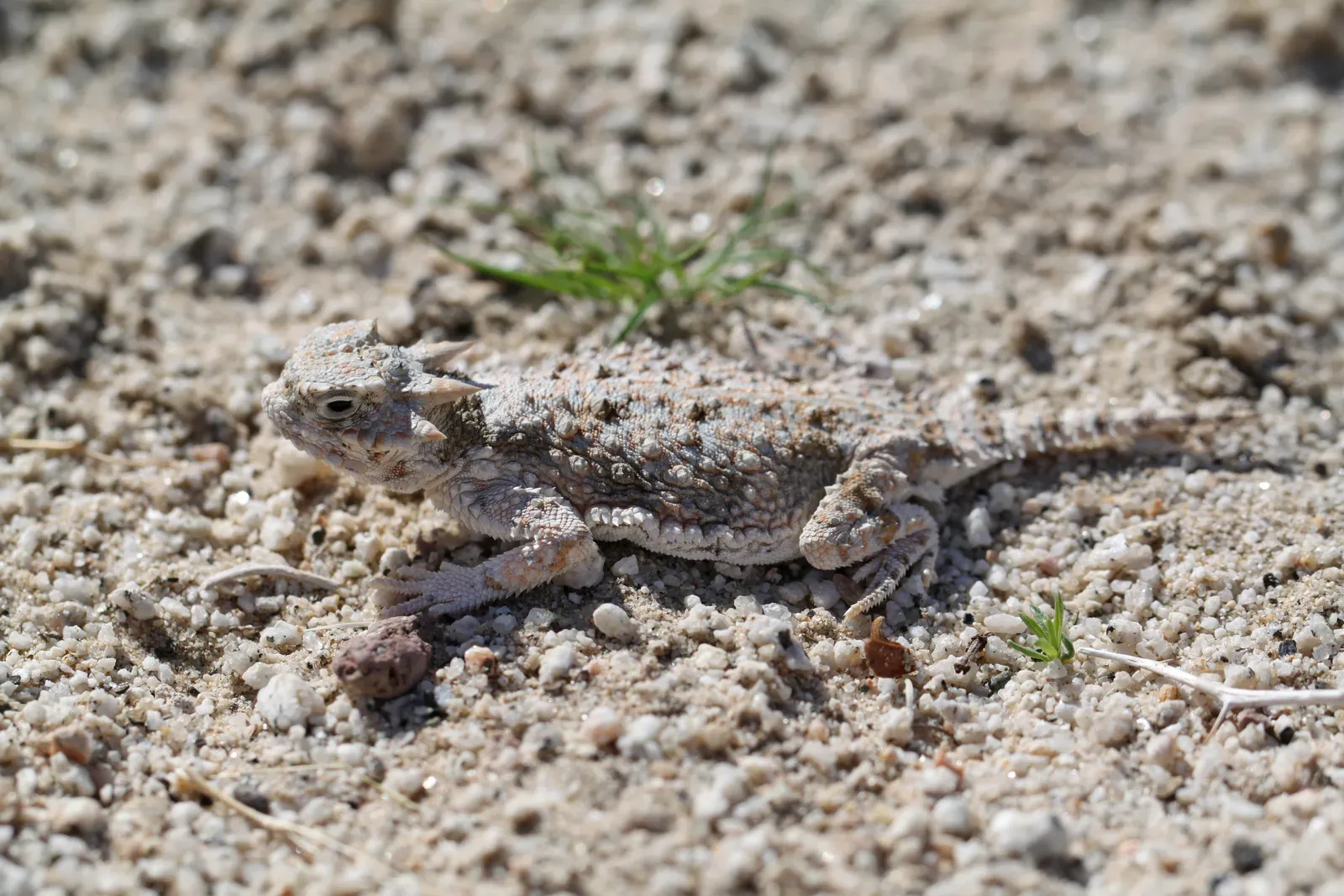
When you look at a Texas horned lizard up close, you notice its skin is not one flat color. You see patches of browns, tans, grays, and rusty reds that look like weathered rock and dry soil. If you were this lizard, your skin would be your desert uniform, tuned to the tones of sandy plains, gravelly roadsides, and scrubby grasslands where you spend your life. Scientists describe this as background matching, and it is one of the most reliable camouflage strategies you could have. By having a body that echoes the average colors of your environment, you reduce the sharp contrast that makes you stand out. To a predator’s eyes, you are no longer a clear shape on a flat surface; you are just another irregular patch of earth that does not seem worth a second glance.
Patterns That Break Your Outline Instead of Just Coloring It
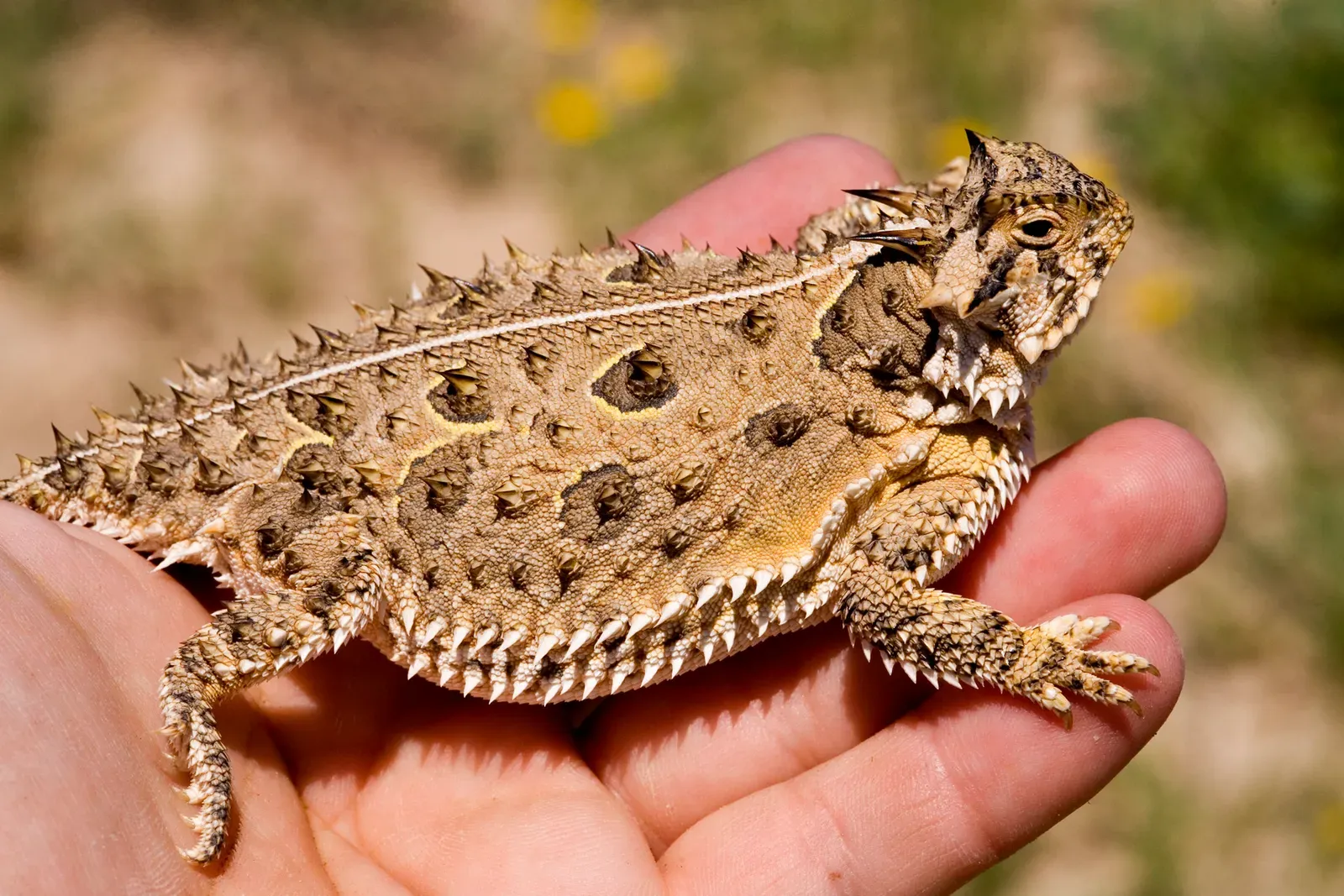
If you only matched the background color, you would be harder to see, but not impossible to spot. The Texas horned lizard takes it further by breaking up its own outline with irregular blotches, speckles, and darker patches. If you were peering through a hawk’s eyes from above, that broken pattern would make it much harder to pick out where the lizard begins and the ground ends. This is called disruptive coloration, and you see it in everything from military uniforms to big cats. On the horned lizard, those scattered dark and light markings act like visual “noise,” confusing the edges of the body. Instead of reading as a neat, lizard-shaped silhouette, you read as a messy, random patch of landscape that a predator’s brain struggles to lock onto.
Spikes, Bumps, and Shadows: Using 3D Texture as Camouflage
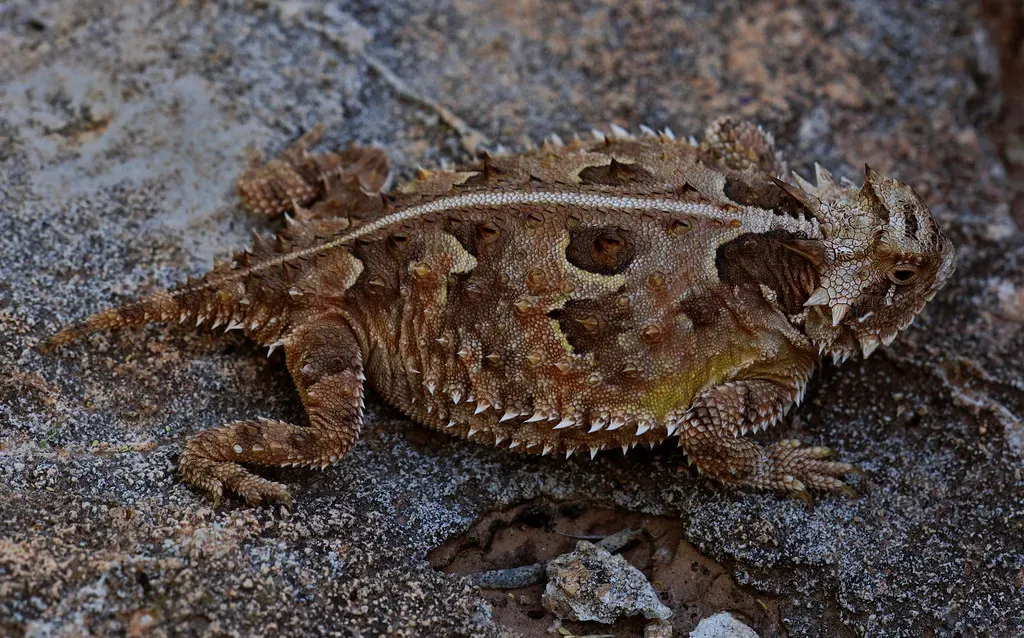
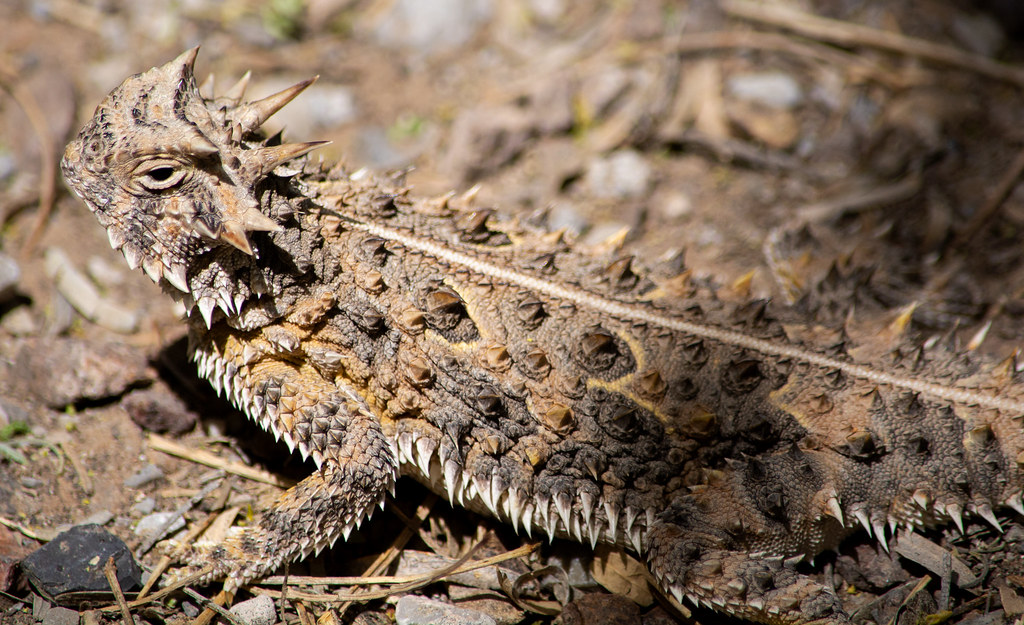
Camouflage is not just about color; it is also about shape and texture. If you run your eyes over a Texas horned lizard, you see a body full of knobs, spikes, and ridges that make it look like a tiny, medieval tank. But those structures are not just for show or defense – they also help you disappear by mimicking the rough texture of rocks and dry clumps of soil. Those spikes and bumps cast tiny shadows across your body that break up smooth surfaces. In the harsh desert light, where shadows and bright highlights are everywhere, your uneven texture helps your body blend into the natural chaos of pebbles, grass roots, and cracked ground. You are not offering a neat, smooth outline that screams “animal” – you are mimicking the random lumpiness of the desert itself.
Staying Still: Turning Behavior into Part of Your Camouflage
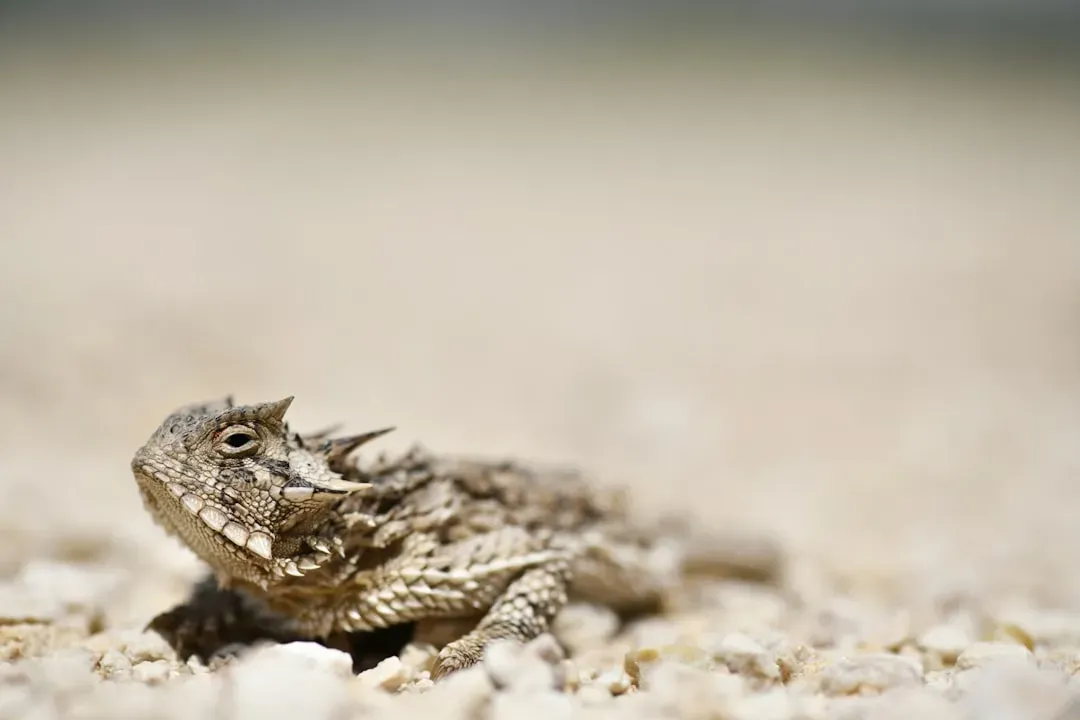
Even perfect colors and textures will not save you if you are constantly moving. One of the most powerful tricks you have as a Texas horned lizard is behavioral: when you sense danger, you simply freeze. To a predator that hunts by noticing movement – like many birds – that sudden stillness makes you drop right out of their attention. Think of it like hitting a “pause” button on your own visibility. If you were to scurry, even a few inches, your movement would trigger a chase response. But by staying still, you give your camouflage time to do its job. Your mottled skin, broken outline, and bumpy texture take over, and you become just another quiet patch of ground, not worth the energy of pursuit.
Reading the Ground and Choosing the Right Spot
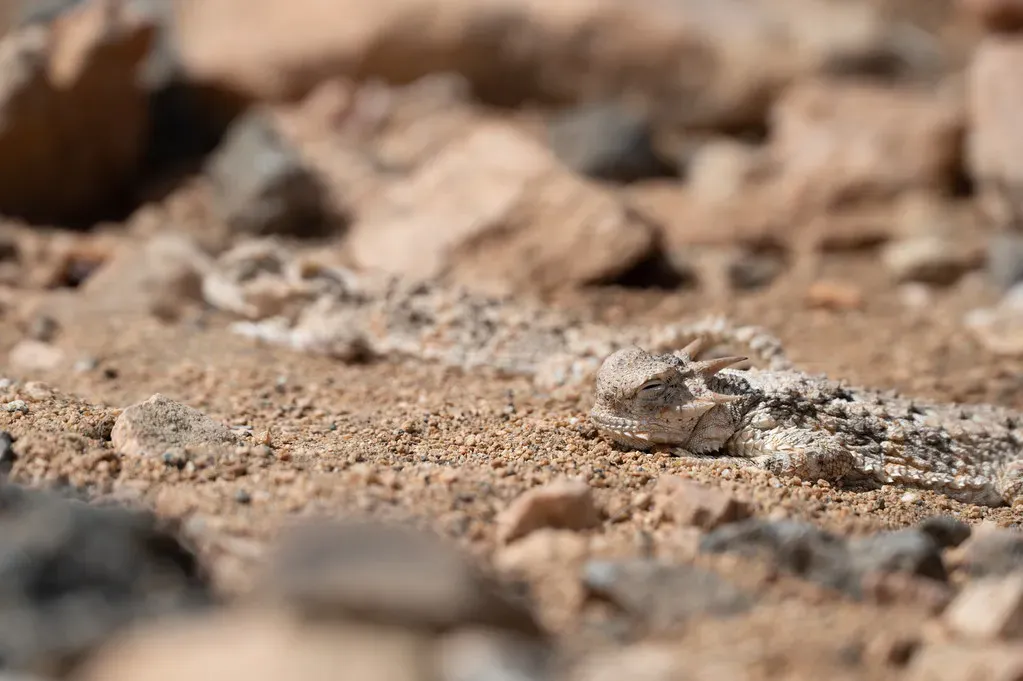
Camouflage is not passive; you have to know where to sit for it to work. If you were a Texas horned lizard dropped onto a patch of dark volcanic rock while your body matched pale sand, you would stand out immediately. That is why these lizards are picky about where they rest. They choose spots where their colors and patterns blend best – gravel that matches their tones, sand with similar speckles, or leaf litter with comparable shades. By making smart choices about background, you amplify the effectiveness of your natural design. This is something you can actually watch if you spend time in horned lizard country: they tend to settle where the ground looks a lot like their backs. What seems like a random resting place is almost always a carefully “selected” backdrop that helps them vanish.
Light, Shadow, and the Physics of Not Being Seen
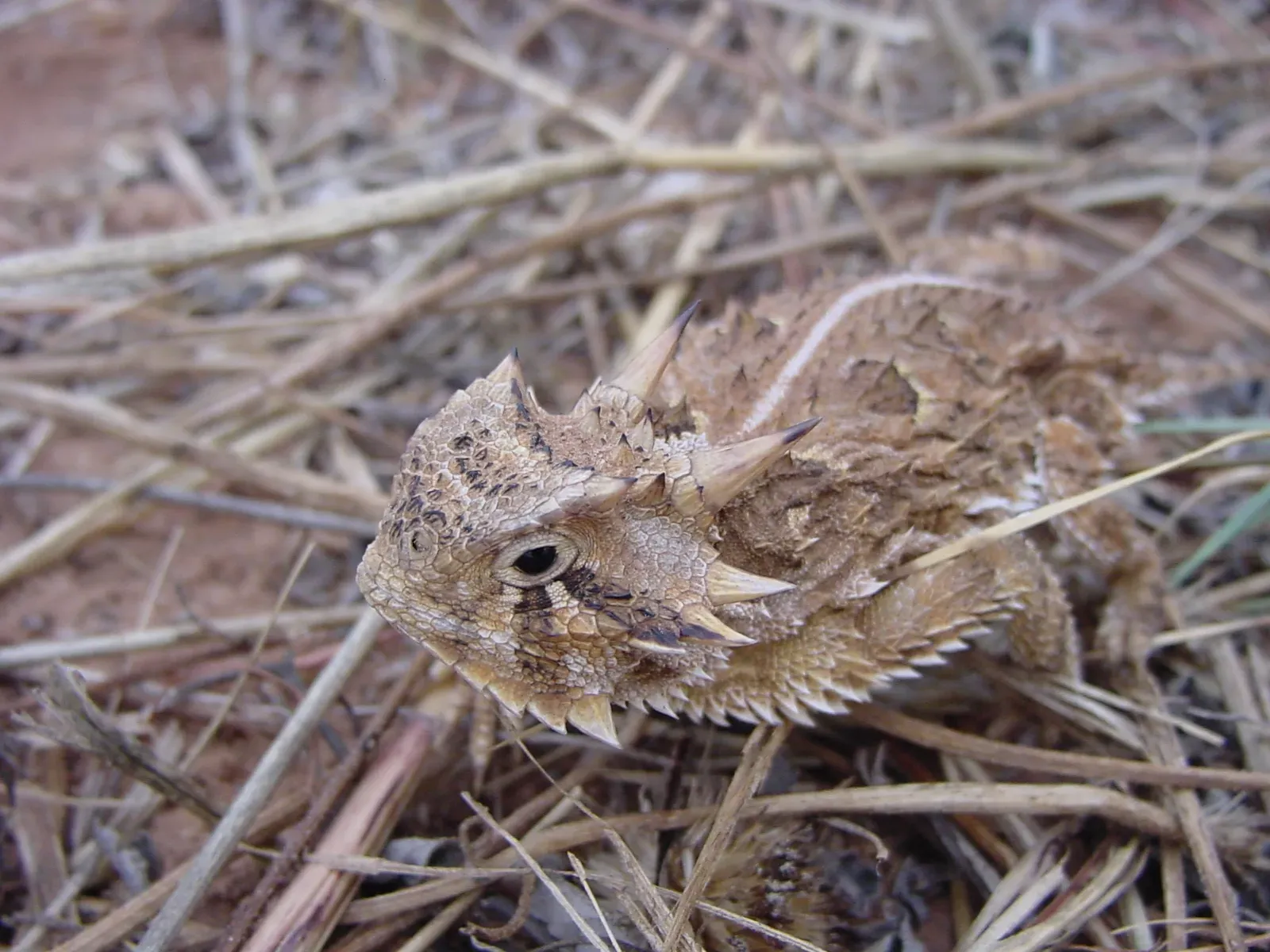
The desert sun is harsh, and that can work for or against you. From a physics point of view, the brightness and angle of the sun change how your body reflects light. The Texas horned lizard benefits from a mix of lighter and darker patches that can handle both bright glare and deep shadow. If you were that lizard, your lighter areas would blend with sunlit ground, while your darker zones echo the small shadows cast by rocks and plants. You also tend to orient and position your body in ways that keep reflections low and contrast minimal. By hugging the ground and flattening yourself, you reduce the number of sharp shadows your body casts. That way, you do not throw a big, obvious outline that screams “living thing.” Instead, you become part of the desert’s patchwork of small, overlapping shadows and highlights.
When Camouflage Is Not Enough: Backup Defenses You Still Need
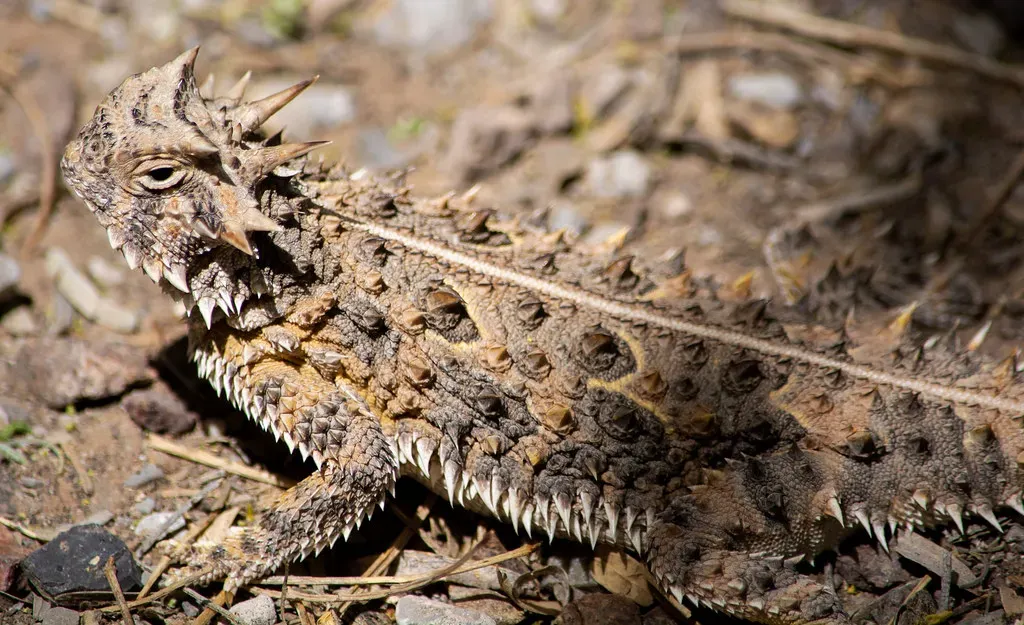
Even the best camouflage fails sometimes. A particularly sharp-eyed roadrunner, an unlucky movement at the wrong moment, or a shifting shadow can give you away. That is why the Texas horned lizard has backup defenses you would rely on when stealth breaks down – like puffing up your body to look bigger, or using those harsh spikes to make swallowing you a painful task. Some species of horned lizards can even deploy more dramatic defenses, but as a Texas horned lizard, you mostly lean hard on not being seen in the first place. The key point for you is that camouflage is the first line of defense, not the only one. The science of blending in buys you precious seconds; your physical defenses help you cash in those seconds when the situation turns desperate.
How You Can Actually See This Camouflage in Action
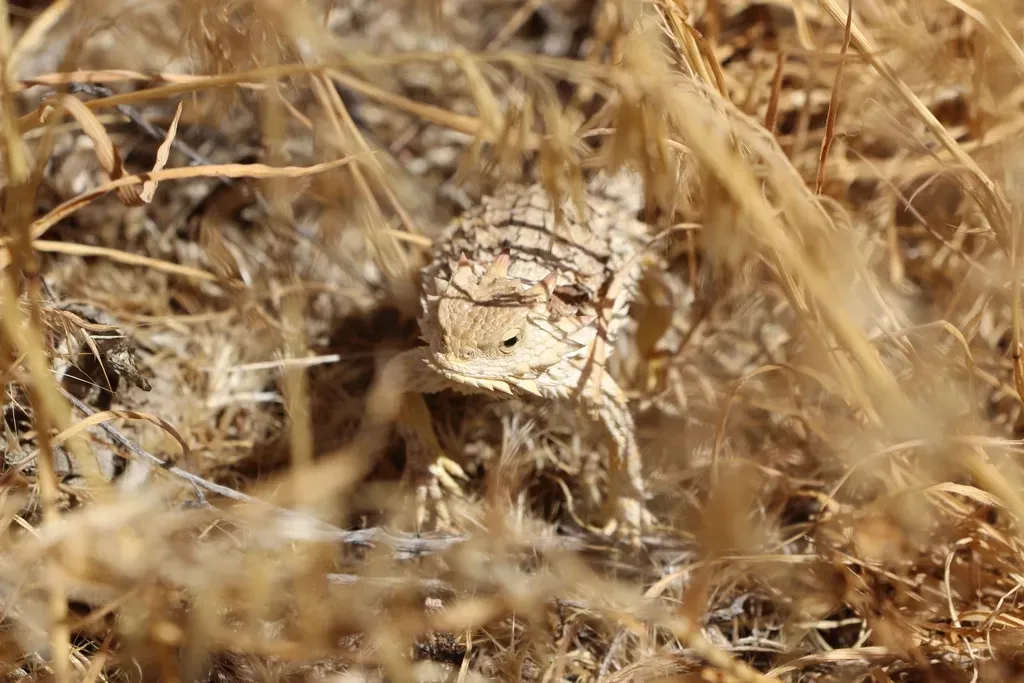
If you ever visit habitats where Texas horned lizards live, you can test all of this yourself. Stand still, scan the ground slowly, and ask: if you were a predator, what would you look for? At first you see just dirt, rocks, and sparse plants. Then, almost shockingly, you notice that one “rock” has tiny horns and a pair of eyes staring back at you. Once you finally spot one, try looking away and then back again. You will realize how easily your brain loses track of the animal when you break visual contact. That little experiment lets you feel firsthand what their predators experience: unless you are paying very close attention, the camouflage wins. You are essentially watching science and evolution at work, right under your feet.
Conclusion: A Masterclass in Not Being Noticed
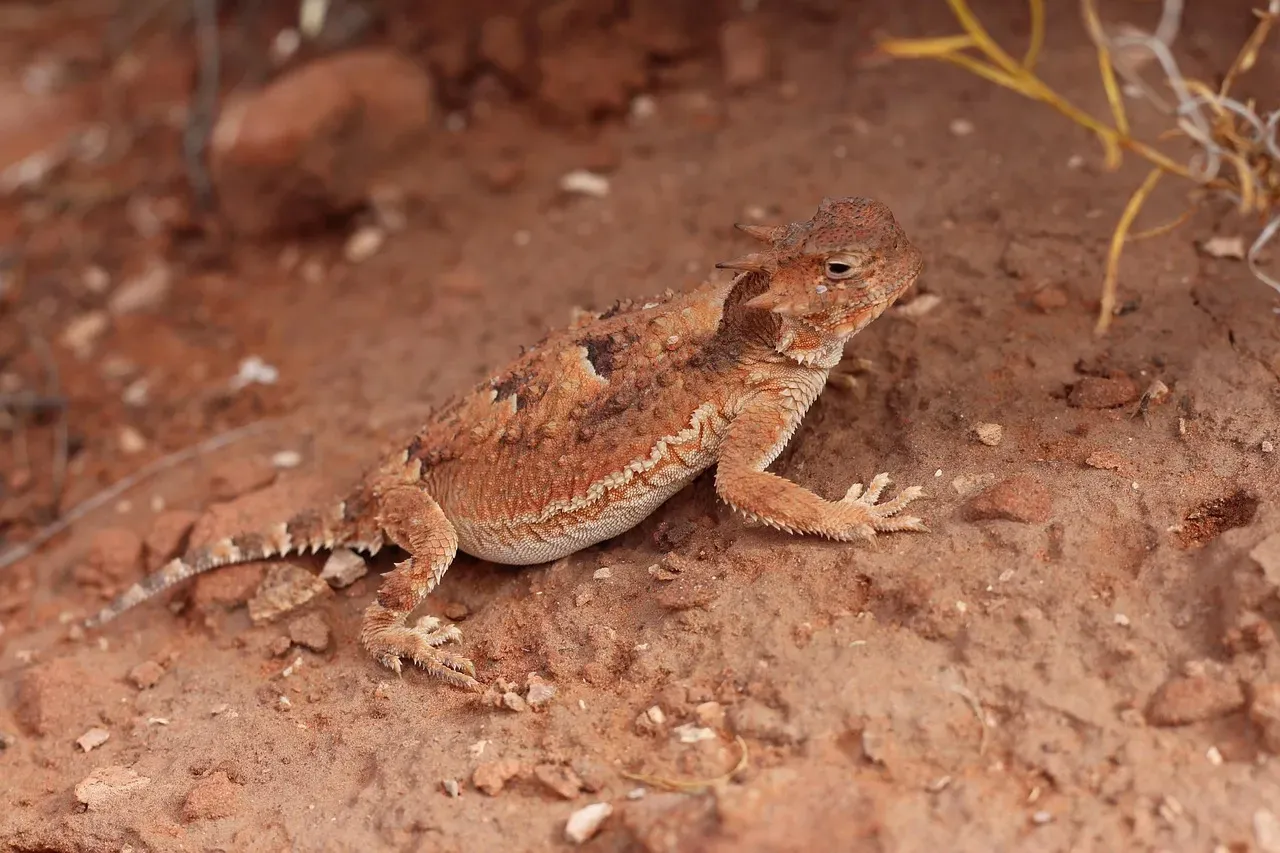
When you really take in how a Texas horned lizard survives, you are not just looking at a cute desert reptile – you are looking at a full survival system built on physics, biology, and behavior. Your colors match the ground, your patterns break your outline, your texture mimics rocks, your stillness turns you into a prop, and your choices of where to sit amplify it all. Every piece fits together to answer one ruthless question: how do you avoid being eaten today? The next time you walk through a dry, scrubby landscape, you might feel the urge to slow down and really look. Somewhere nearby, a horned lizard might be trusting its camouflage so much that it decides not to move at all while you stroll past. Knowing what you know now, how many of these little desert ghosts do you think you have already walked right by without ever seeing?