
If you look up at the night sky, you’re really seeing only the icing on a cosmic cake. All the glowing stars, swirling nebulae, and bright galaxies we obsess over are just a small fraction of what is actually out there. The rest, according to modern physics, is dominated by something we can’t see, can’t touch, and still can’t fully describe: dark matter.
Here’s the wild part: dark matter shapes the universe on the largest scales, yet we still do not know what it is made of. We can map its influence, simulate its effects, and even plan billion‑dollar experiments to catch a glimpse of it, but the core questions remain stubbornly unanswered. Below are ten of the strangest, most fascinating facts about dark matter that continue to puzzle scientists today – and might just change the way you think about reality.
1. Dark Matter Makes Up Most Of The Matter In The Universe
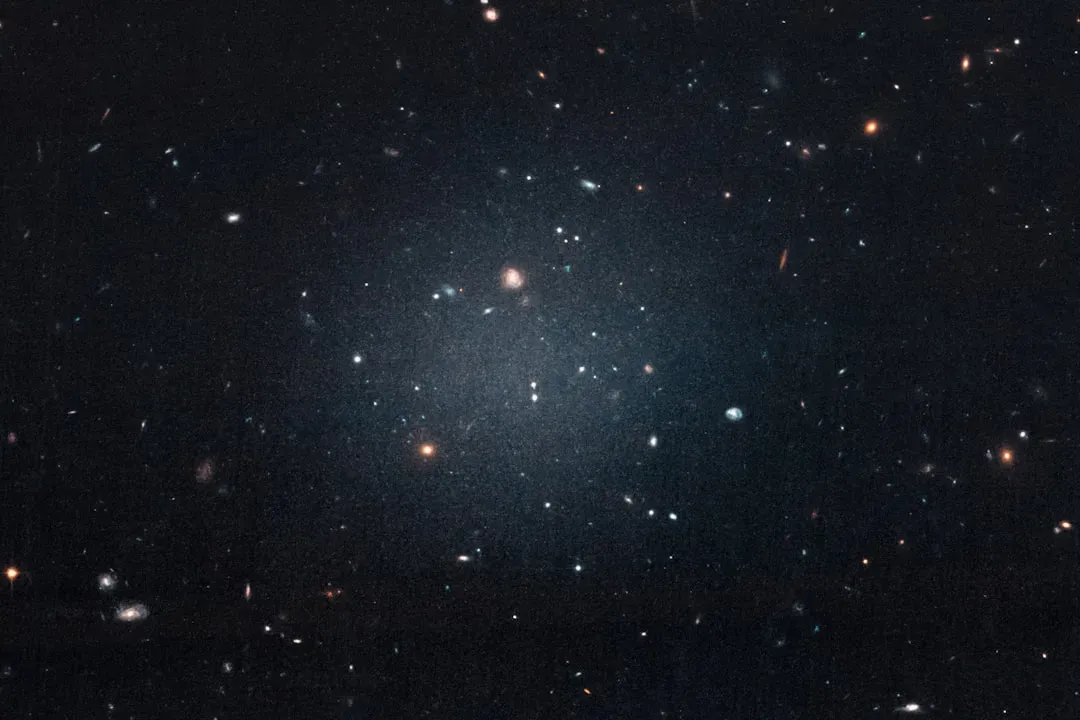
One of the most mind‑bending facts is that everything you’ve ever seen, touched, or experienced is just a tiny minority of the universe. Ordinary matter – the stuff that makes up planets, people, coffee mugs, and smartphone screens – is only a small slice of the total cosmic budget. The rest of the matter appears to be dark matter, invisible and detectable only through its gravity. In other words, the universe is like a house where the furniture you see is only a thin layer over a massive, hidden structure.
What scientists cannot yet explain is why dark matter so thoroughly dominates over normal matter. There are complicated models about how matter and antimatter annihilated in the early universe, leaving behind a surplus of matter, and even more dark matter, but these explanations are still full of gaps. When I first learned that almost all of the universe’s matter is this unseen component, it felt like finding out that your bank balance is mostly in a mysterious account you can’t access or even verify directly. That sense of cosmic imbalance is exactly what drives a lot of current research.
2. We Only Know It Exists Because Of Its Gravity
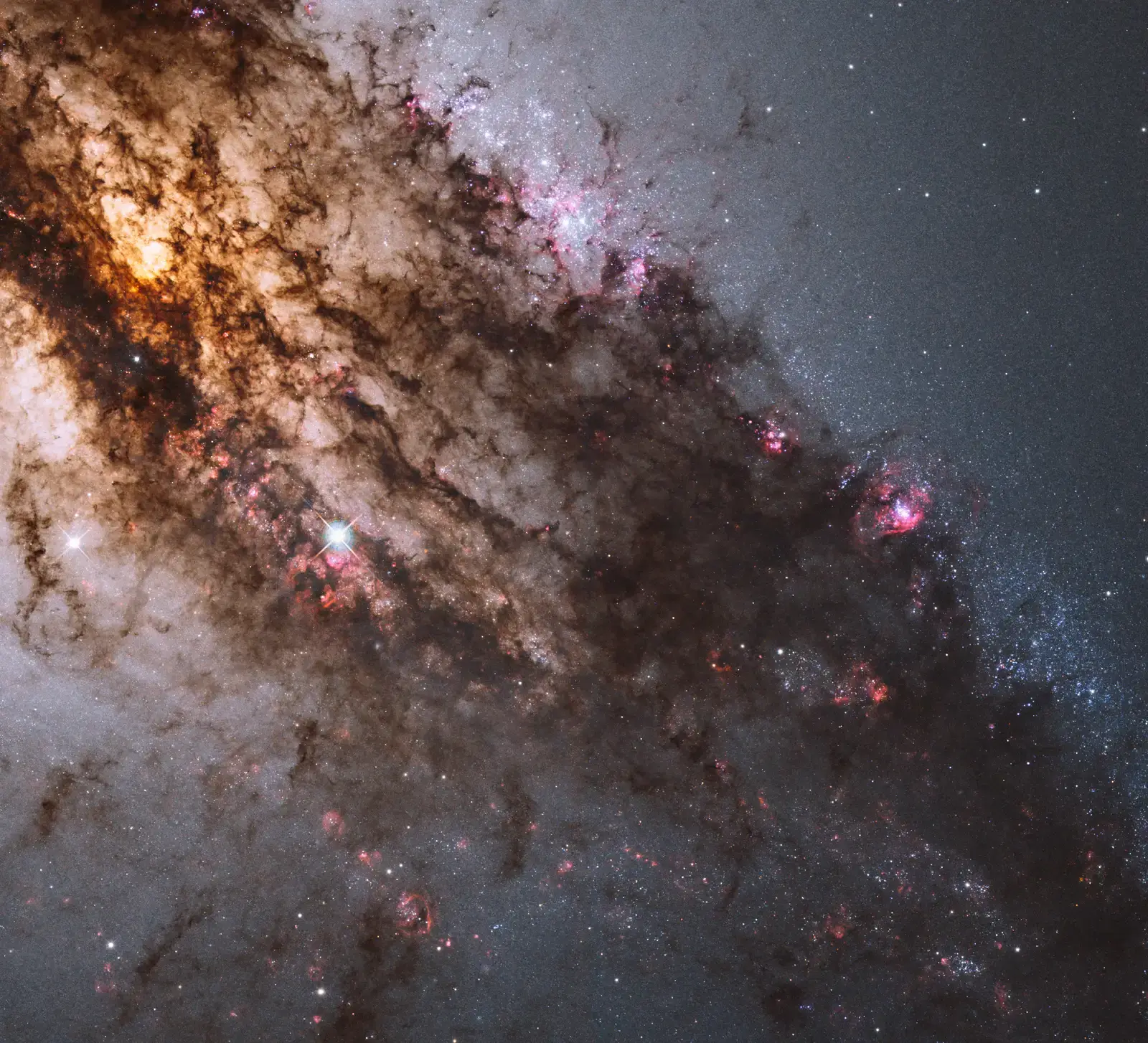
The entire case for dark matter started with things moving too fast. When astronomers measured how quickly stars orbit around the centers of galaxies, they found that the outer stars were whipping around way too fast to be held in place by visible matter alone. According to basic gravity, those stars should be flying off into space like mud flung off a spinning tire, but they don’t. Something unseen must be providing extra gravitational glue, and that “something” became what we call dark matter.
Despite decades of work, gravity is still the only reliable way we see dark matter’s fingerprints. It bends light from distant galaxies through a phenomenon called gravitational lensing, creates the scaffolding for galaxy clusters, and shapes the large‑scale web of cosmic structure. But this dependence on gravity alone leaves a huge question hanging: is dark matter really some new kind of particle, or have we misunderstood gravity itself on very large scales? The honest answer right now is that we just do not know, and that uncertainty is both frustrating and thrilling.
3. It Might Be Made Of Entirely New Particles

One of the boldest possibilities is that dark matter is built from particles that don’t fit into our current best model of physics, the Standard Model. Physicists have proposed a whole zoo of candidates, from weakly interacting massive particles (often nicknamed WIMPs) to axions, sterile neutrinos, and more exotic ideas. These hypothetical particles would barely interact with normal matter, slipping through planets, stars, and your body like ghosts in a crowded room. That would explain why we do not see them, even though they may be passing through us all the time.
The confusing part is that each candidate solves some problems and creates others. WIMPs were once the favorite, partly because certain theories naturally predicted them, but decades of sensitive experiments have not found clear evidence. Axions offer another intriguing route, potentially solving other puzzles in particle physics, but they too remain elusive. It feels a bit like standing in front of a locked door with a massive ring of keys, trying them one by one while knowing the right key may not even be on your ring.
4. Direct Detection Experiments Keep Coming Up Empty

Around the world, scientists have built insanely sensitive detectors buried deep underground, chilled to almost absolute zero, or shielded in old mine shafts to hide them from cosmic rays and background noise. These experiments are designed to catch the tiniest possible nudge from a passing dark matter particle bumping into an atomic nucleus or an electron. The idea is deceptively simple: if dark matter is all around us, occasionally one of its particles should collide with the detector and leave a measurable signature.
The strange and uncomfortable truth is that, so far, these experiments have not found a definitive, repeatable signal. Every now and then, hints and blips appear, sparking excitement and debate, only to fade under further scrutiny or be contradicted by other detectors. This ongoing string of “not quite” results forces physicists to rethink how strongly dark matter interacts with ordinary matter, how massive it might be, and even whether they are looking in entirely the wrong way. It is a humbling reminder that nature does not care about our expectations or our favorite theories.
5. Dark Matter Seems To Form An Invisible Cosmic Web
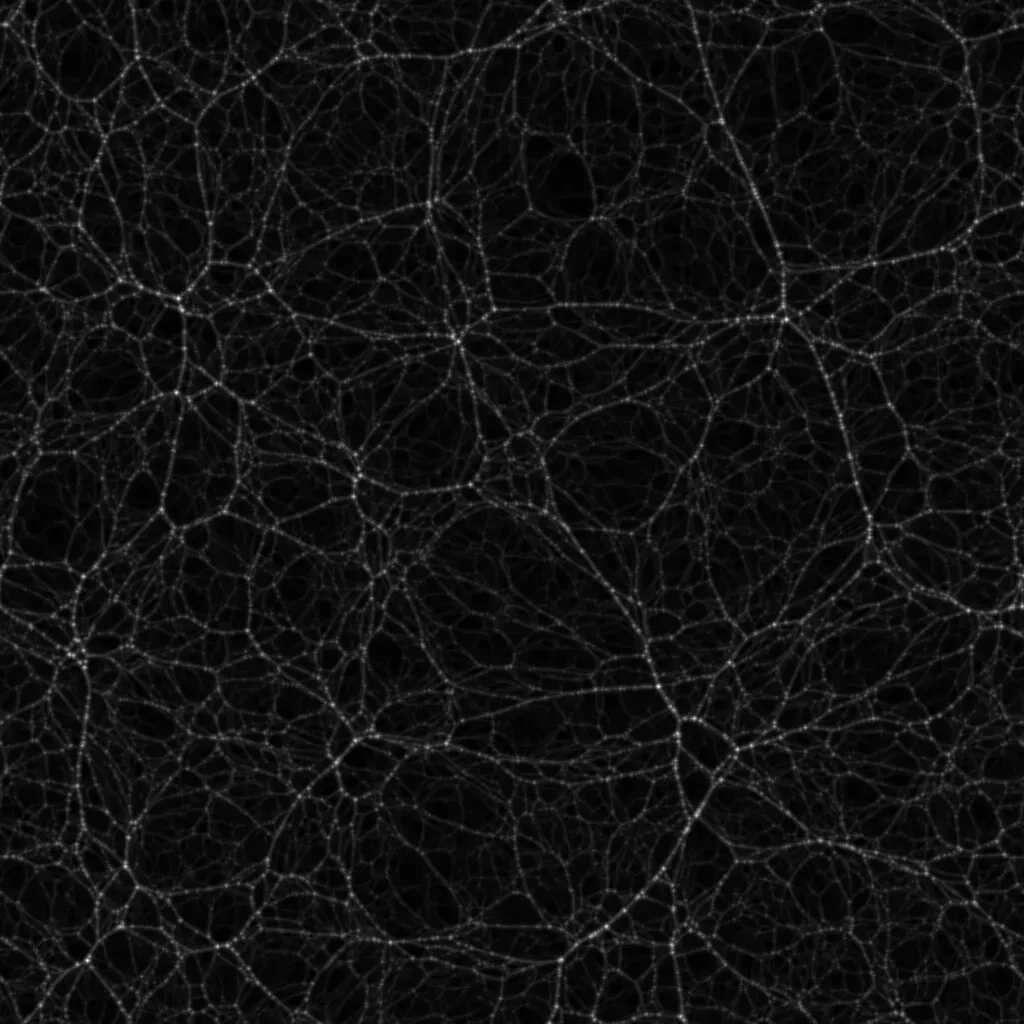
On the largest scales, simulations and observations suggest that dark matter is not just scattered randomly. Instead, it seems to form a vast, interconnected web of filaments and nodes, with galaxies and galaxy clusters sitting like glowing drops of dew along invisible threads. This “cosmic web” shapes how matter clumps and how structures grow over billions of years, acting like the rebar skeleton inside a skyscraper of gas and stars. Without dark matter, the universe would look radically different, with far fewer galaxies and less dramatic structure.
Yet the detailed behavior of this dark web is still mysterious. For example, do dark matter particles collide or interact with each other in subtle ways beyond gravity, changing how the filaments evolve? Are there regions of dark matter that never managed to form many visible galaxies at all, essentially dark galaxies that are almost pure invisible mass? Observations of how galaxies cluster and lens background light give some clues, but it still feels a bit like trying to reconstruct an entire spiderweb by only seeing how it catches sunlight at a few scattered points.
6. It Might Hardly Interact – Or Interact In Ways We’ve Never Considered
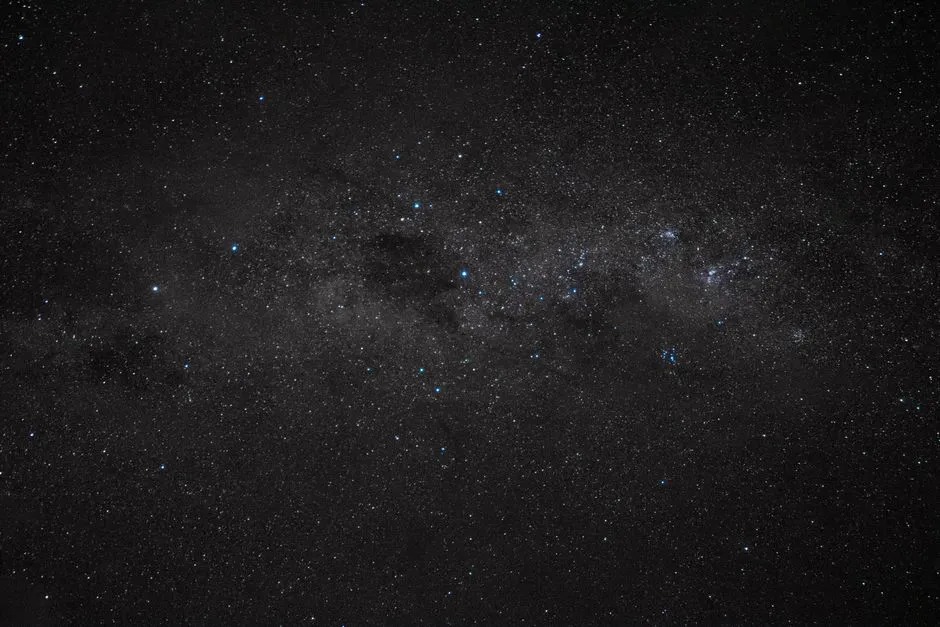
The word “dark” in dark matter really just means “non‑luminous and hard to detect,” but it also hints at how frustratingly shy this stuff is. If dark matter only feels gravity and ignores the other fundamental forces of nature – electromagnetism and the nuclear forces – then it becomes incredibly challenging to study. That would explain why we do not see it emitting, absorbing, or scattering light, and why it does not behave like familiar gases or plasmas. In this picture, dark matter is a kind of cosmic wallflower, affecting everything from a distance but never joining the party directly.
However, some models suggest dark matter could have its own forces and interactions, a bit like a hidden sector with its own rules. There might even be “dark photons” or other dark forces mediating interactions between dark matter particles that have almost no effect on normal matter. If that is true, we are essentially blind to an entire shadow world overlapping our own. Personally, I find this possibility irresistibly eerie: imagine discovering that the universe has been running a second, secret physics engine in the background this whole time.
7. It Could Be Clumped In Ways We Still Don’t Understand

We know dark matter helps form galaxies and clusters, but the finer details of how it clumps are still up for debate. Early simulations assumed dark matter was “cold,” meaning the particles move relatively slowly and pile up into dense halos with sharply cusped centers. Observations of some small galaxies, though, seem to prefer a softer, more spread‑out core rather than a sharp spike of dark matter in the middle. This mismatch between theory and observation is sometimes called the core‑cusp problem, and it has not been fully resolved.
Another headache is the so‑called missing satellites problem: some simulations predict more small satellite galaxies around big galaxies like the Milky Way than we actually see. Are these satellites really missing, are we just not detecting them, or does dark matter behave slightly differently on small scales than our simplest models assume? These questions may sound technical, but they hint at something deeper: our picture of how dark matter clumps and organizes itself could still be incomplete, and small‑scale structures might be the place where the cracks in our assumptions finally show.
8. It Might Not Be Particles At All – It Could Be New Physics Of Gravity
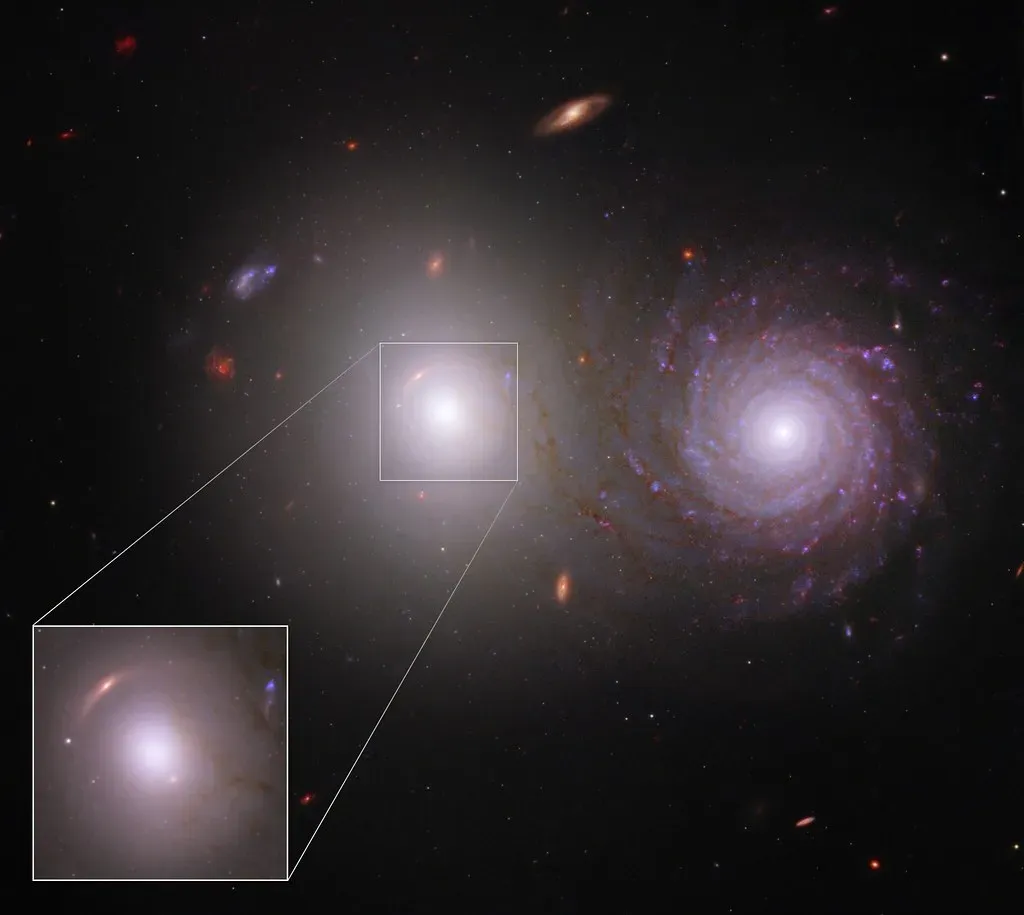
Whenever scientists propose something as dramatic as an invisible, universe‑dominating substance, some people understandably ask whether we are simply misunderstanding the rules. Alternative theories suggest that maybe gravity itself behaves differently on very large or very small scales, making galaxies rotate the way they do without the need for dark matter. These modified gravity theories adjust the equations that describe how mass curves spacetime, hoping to explain galactic motions with no unseen matter at all. Conceptually, it is a bold attempt to fix the map instead of adding a mysterious new territory.
The challenge is that dark matter does not just show up in galaxy rotation; it also seems to explain gravitational lensing patterns, galaxy cluster dynamics, and the detailed ripples in the cosmic microwave background. Any alternative theory of gravity has to match all of those successes simultaneously, and so far, none have convincingly outperformed the dark matter hypothesis across the board. Still, the fact that serious physicists are ready to question our deepest assumptions about gravity shows just how unsettling this whole puzzle really is. If dark matter turns out to be a sign that our theory of gravity is incomplete, it would rank among the biggest scientific shocks of the century.
9. Some Galaxies Appear To Have Very Little Dark Matter – And That’s Weird
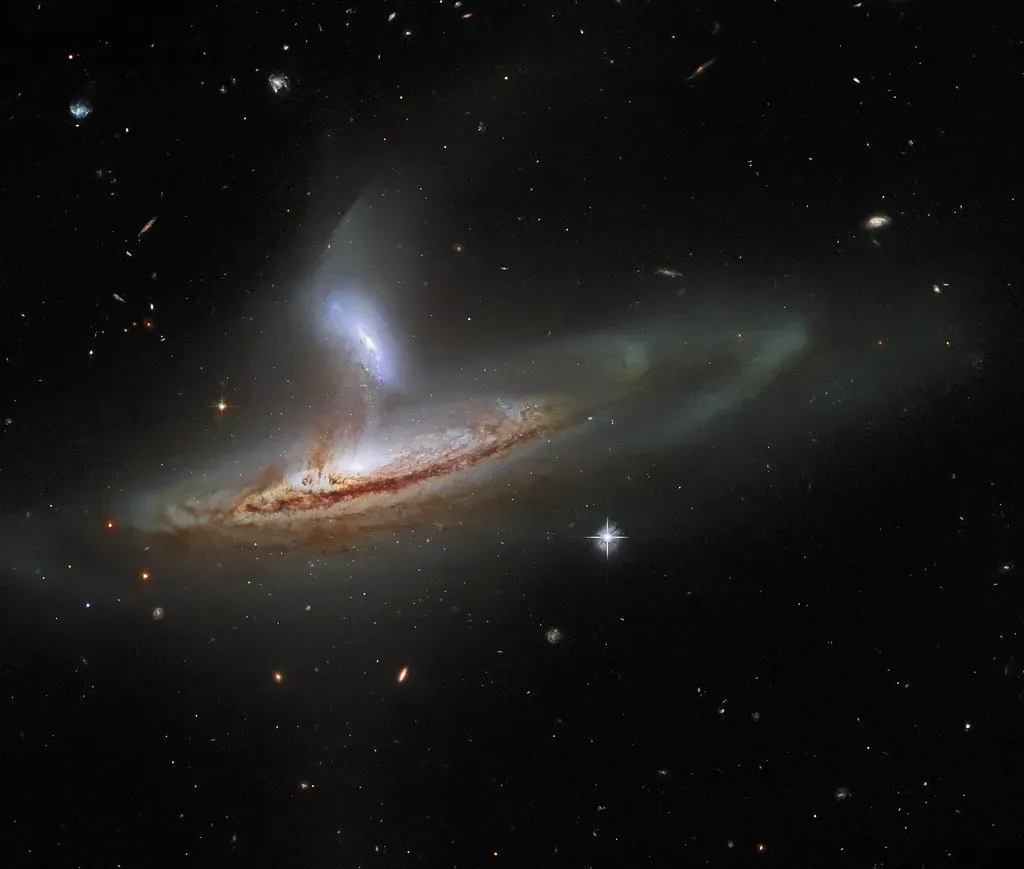
In recent years, astronomers have found a handful of strange galaxies that seem to have far less dark matter than expected, and in some cases, possibly almost none. These objects are controversial and hard to measure, but if the results hold up, they pose a serious challenge to simple, one‑size‑fits‑all models. If dark matter is the basic building material of cosmic structure, how do you end up with a galaxy that looks like it skipped the usual recipe? It is a bit like finding a giant, elaborate building that appears to be standing without much of a foundation.
There are attempts to explain these oddballs through exotic formation histories, tidal interactions, or observational uncertainties, but they remain a topic of hot debate. What makes them so interesting is that they test our theories from the opposite direction: instead of looking at places overflowing with dark matter, we are probing apparent exceptions to the rule. Personally, I’m skeptical that dark‑matter‑free galaxies are common, but I love that they force scientists to sharpen their arguments and double‑check their assumptions. In science, the weird misfits are often where real breakthroughs begin.
10. Dark Matter Might Be Linked To Dark Energy – Or Not At All
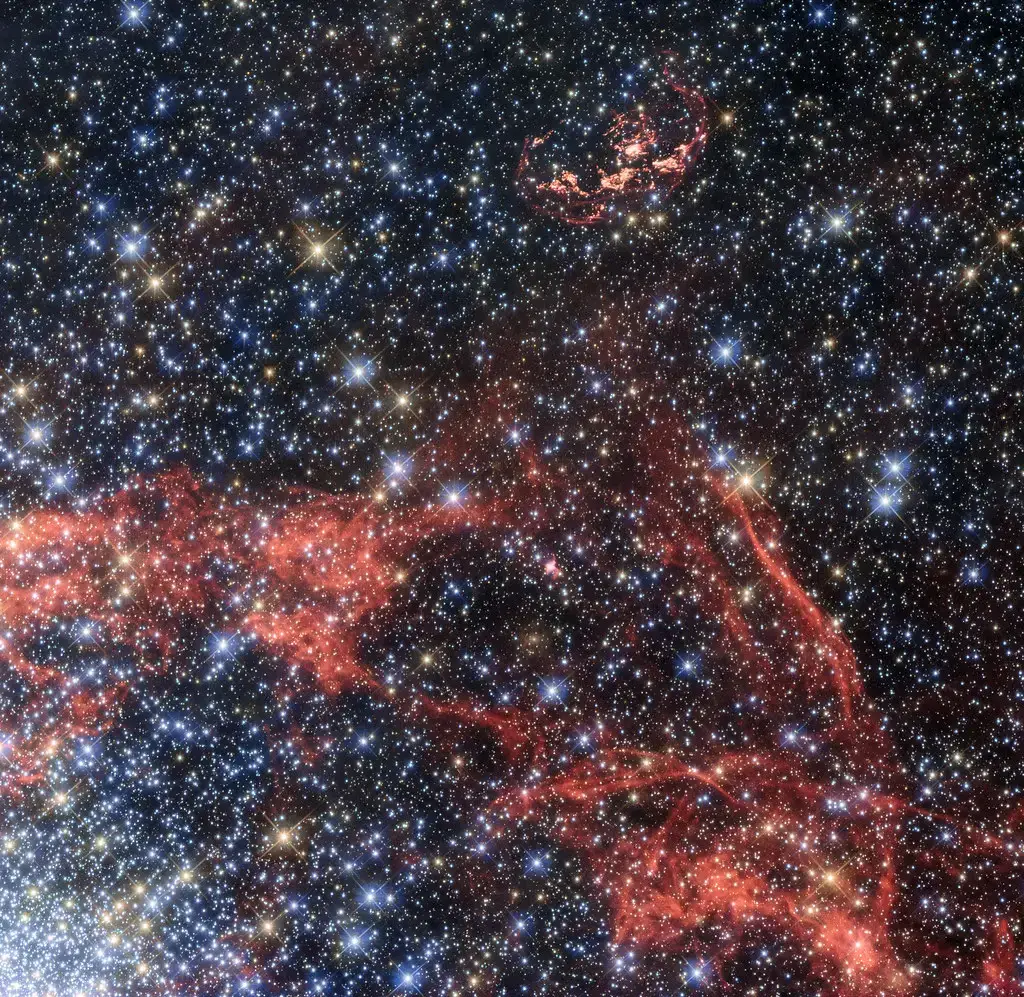
As if one dark mystery were not enough, the universe also seems to be filled with dark energy, a strange form of energy that drives the accelerated expansion of space. Dark matter pulls things together through gravity, while dark energy pushes space apart, almost like two invisible cosmic players in a continuous tug‑of‑war. Some theorists wonder whether dark matter and dark energy are two faces of a deeper underlying phenomenon, perhaps different behaviors of a single field or component we do not yet understand. If that is true, then our entire cosmic inventory might need to be rewritten from the ground up.
On the other hand, it is entirely possible that dark matter and dark energy are unrelated, sharing only the unfortunate label “dark” because we detect them indirectly. Right now, the data do not clearly favor a unified explanation, but the idea is too tantalizing to ignore. To me, this is where cosmology feels closest to philosophy: are we looking at two separate mysteries, or are we seeing just fragments of a bigger, hidden pattern? Either way, the fact that both dominate the universe while remaining so mysterious makes our current theories feel oddly provisional, like a first draft waiting for a major rewrite.
Conclusion: The Most Important Stuff Is What We Can’t See
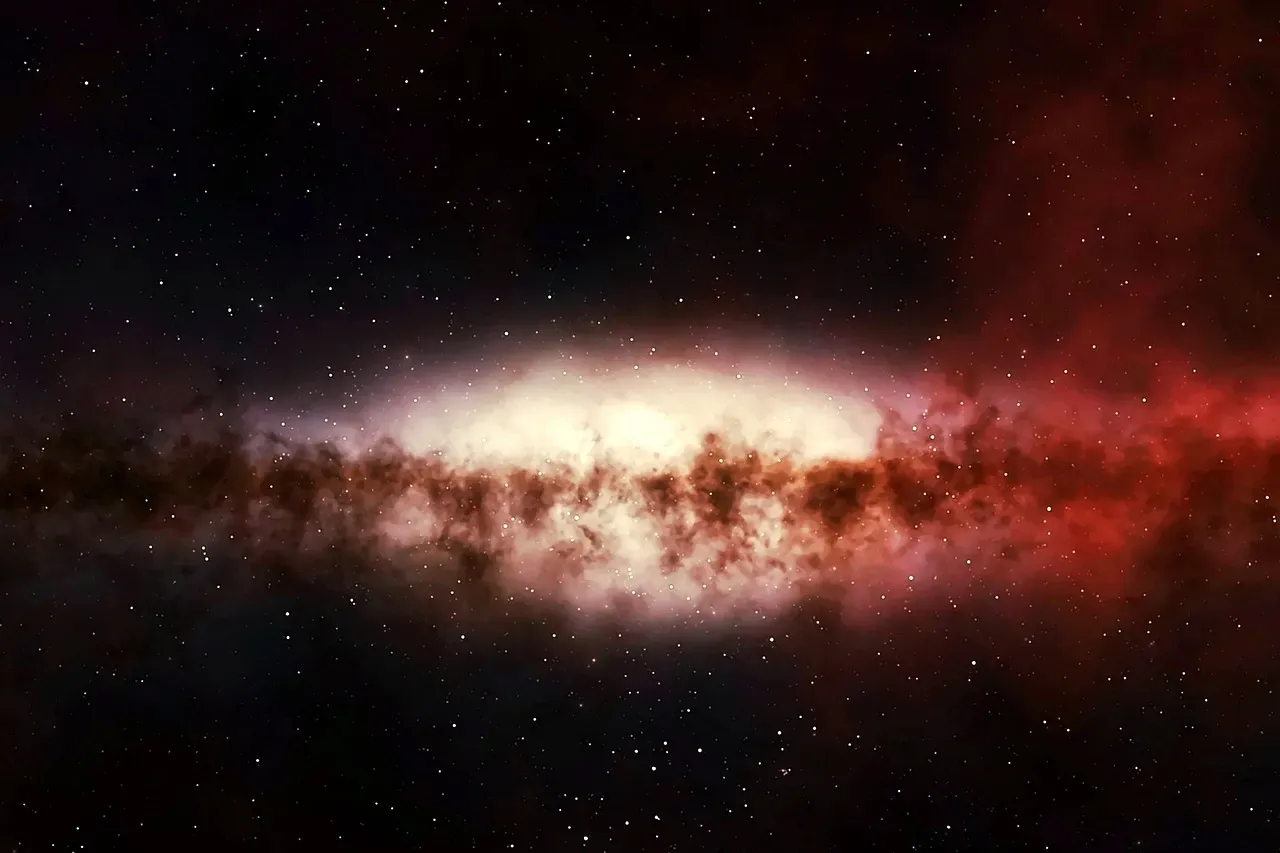
Dark matter is a rare kind of scientific problem: it is everywhere, it shapes almost everything, and yet it stubbornly refuses to step into the spotlight. After decades of clever experiments, powerful telescopes, and sophisticated simulations, we are still left with a story that feels unfinished. In my view, that’s not a failure, it’s a sign that we’re brushing up against the limits of what our current tools and ideas can handle. The universe is effectively telling us that our picture of reality is still missing a few crucial pages.
What makes dark matter so compelling is that any real answer will shake something deep: either we discover wholly new particles and forces, or we admit that our understanding of gravity and spacetime needs a serious upgrade. Both options are revolutionary, and both would force us to rethink our place in a universe where most of the matter is unseen. The next big clue could come from a buried detector, a subtle pattern in the sky, or a radical new theory scribbled on a whiteboard at 2 a.m. Until then, we live in a cosmos where the visible is only a thin crust over a vast, invisible ocean – and honestly, would it really be as exciting any other way?