You are used to hearing that science has at least a rough explanation for how things got where they are: continents drift, plates collide, seafloor spreads, and the puzzle pieces more or less fit. Now imagine staring at a feature on the deep-ocean floor that simply does not fit, no matter how you rotate the pieces. You are told that under every known model of plate tectonics, this thing should not be sitting where it sits, at the depth it occupies, with the properties it shows.
That is the kind of mystery geoscientists sometimes bump into when survey data, seismic imaging, and rock samples clash with the predictions of standard models. You are not dealing with fantasy or internet myths here, but with the uncomfortable edge where data and theory stop lining up neatly. In this article, you will step into that edge space: how such a “cannot exist” deep-ocean formation can even be identified, why its depth is such a scandal to tectonic logic, which explanations are still on the table, and how you can make sense of the uncertainty without falling for hype or overconfident claims.
The Impossible-Depth Problem: Why This Kind of Formation Should Not Be There
When geoscientists say a formation “cannot exist” at a given depth, they do not mean the data is hallucinated; they mean that every standard tectonic process you know about fails to put that kind of rock, structure, or chemistry where it is found. You are dealing with a clash between observation and mechanism: the formation is real, but the route that should place it there does not add up. Under normal plate-tectonic behavior, certain rocks belong in the crust, some in the upper mantle, and others only at extreme depths that never return to the surface or near-surface ocean floor.
In your mental picture of the Earth, think of depth as zoning laws: mid-ocean ridges produce young basaltic crust, subduction zones drag old crust downward, and mountain belts crumple things upward. If you suddenly found a “forbidden” neighborhood of rocks or structures way below where they should live, your zoning rules have failed. That is what geoscientists mean when they talk about an impossible-depth formation: the zoning rules of tectonics – built from decades of seismic data, lab experiments, and field mapping – do not offer any straightforward, step-by-step history that lands this feature where it now sits.
How You Even Detect a Deep-Ocean Anomaly in the First Place
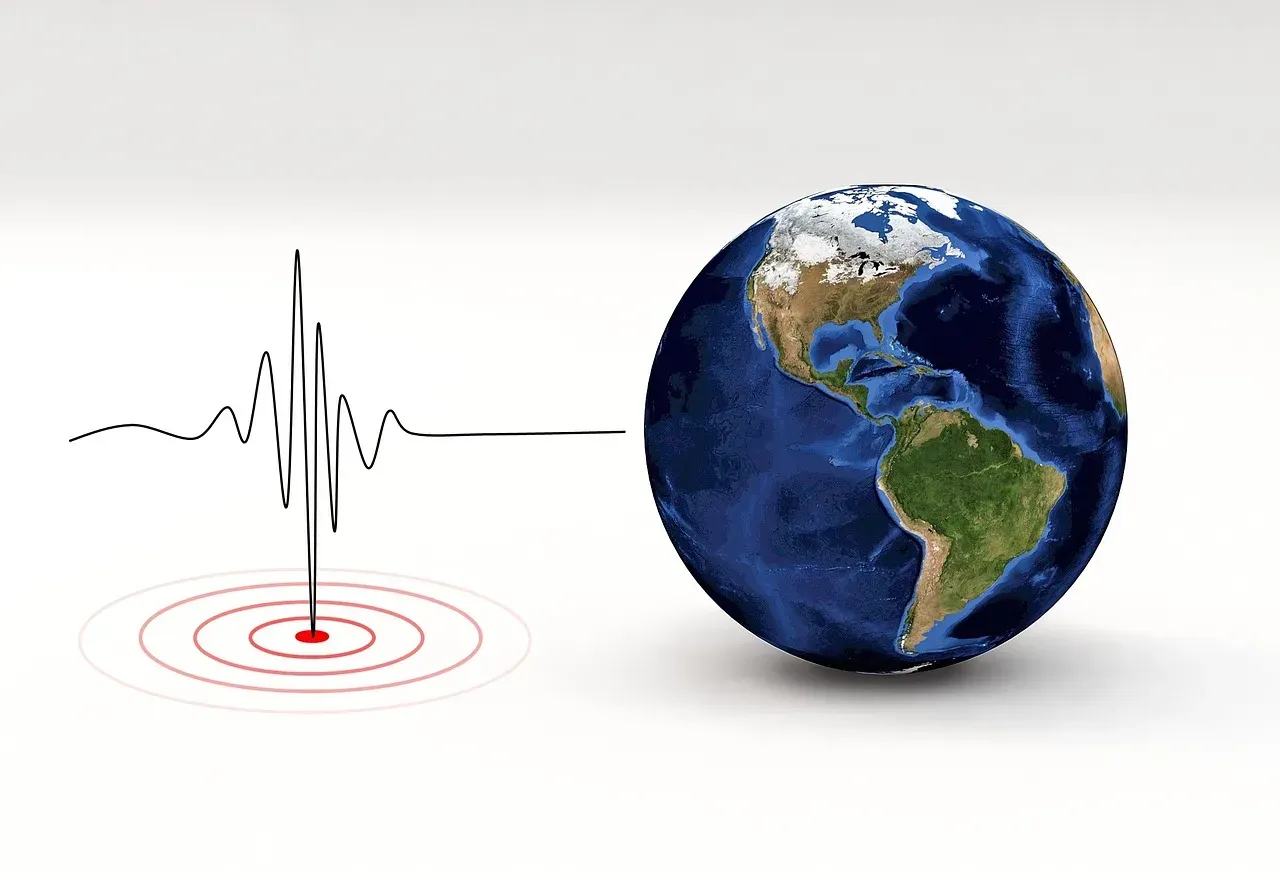
You might wonder how anyone can feel so sure about something at several kilometers beneath the ocean surface and buried under more rock. You are not looking at a high-resolution photograph; you are inferring structure from sound waves, gravity, and magnetism. Ships or autonomous underwater vehicles tow instruments across the region, firing seismic pulses into the subsurface and recording how those waves bounce and bend. Changes in wave speed and reflection patterns tell you about rock types and structures that you will never see directly.
On top of that, you get gravity and magnetic data, which reveal subtle mass changes and magnetic signatures across the seafloor. In a few lucky spots, you may have drilling cores or dredged rock samples that give you a direct peek at the composition. When all of these tools line up and insist, again and again, that a given body of rock is denser, older, or differently layered than it has any right to be at that depth, you are forced to treat it as a stubborn fact. The anomaly stops being a glitch in the data and becomes a problem in your understanding.
What Plate Tectonics Says “Should” Happen at Those Depths
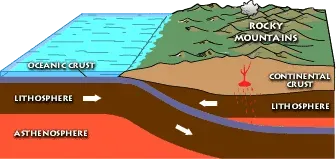
To see why a feature can look impossible, you need a feel for what is supposed to happen deep below the ocean. You are dealing with a system where new oceanic crust forms at mid-ocean ridges, cools and thickens as it moves away, and eventually dives back down into the mantle at subduction zones. Over tens of millions of years, this conveyor belt recycles most oceanic crust, grinding it down into the planet’s interior. That is why very old crust is rare on the modern seafloor; the conveyor tends to clear it away before it can get truly ancient.
At certain depths, you only expect particular kinds of rocks and structures: basalt near the surface, gabbro and ultramafic rocks deeper in the oceanic lithosphere, and then fully mantle material further down. Metamorphism and partial melting alter these materials but still follow recognizable pressure–temperature paths. If you detect a block that looks chemically like shallow continental crust, or like a piece of mantle that has been held at conditions that do not match any realistic burial-and-return path, you are staring at a violation of that conveyor logic. Your standard tectonic movie – plates spreading, colliding, and diving – does not have a scene that ends with this object in this place.
When the Seafloor Looks Continental: A Geological Identity Crisis
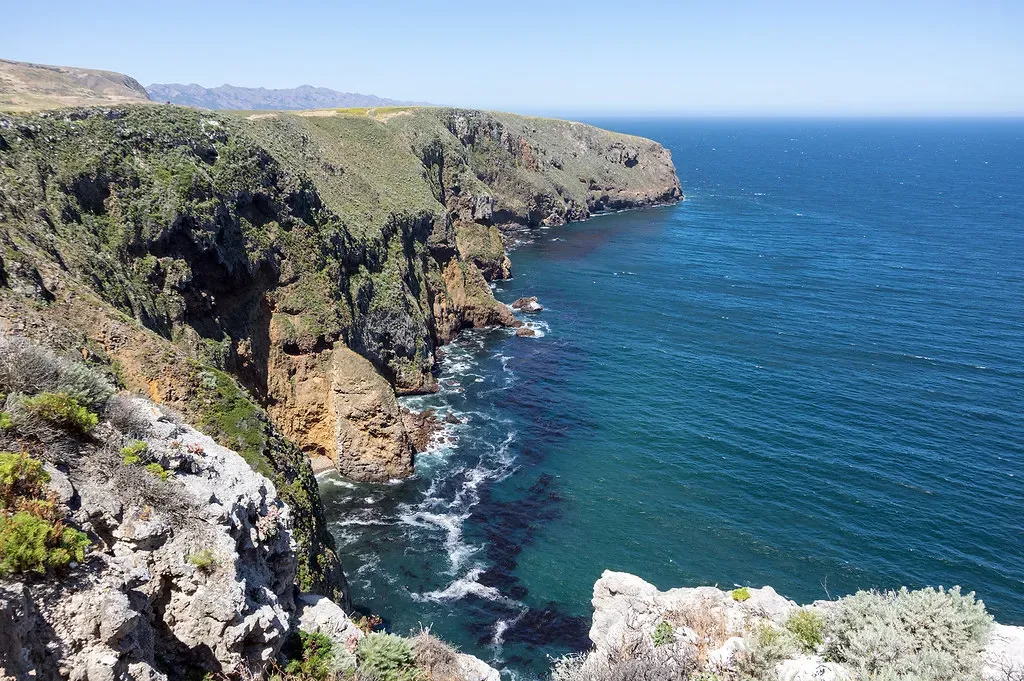
One of the most jarring classes of anomalies for you to think about is when deep-ocean geology starts looking suspiciously continental. You have probably heard about microcontinents and continental fragments stranded in the middle of ocean basins, but those usually sit at shallower depths and show up clearly in gravity and crustal thickness data. If you instead find signs of thick, buoyant, continental-style crust or granitic compositions at depths more typical of regular, thin oceanic crust, you have an identity crisis on your hands.
In that case, you are essentially seeing rocks that should float higher on the mantle “sea” than they do now, like an iceberg that somehow sits too low. Plate tectonics can strand fragments and stretch them, but buoyant continental material should resist being pushed deep into the mantle and left there in stable equilibrium. When it appears to be sitting too low, with no obvious rift or collision history to explain that position, geoscientists are telling you that the usual rifting, drifting, and subducting pathways do not produce anything like the configuration the data is hinting at.
Exotic Explanations: Plumes, Delamination, and Broken Slabs
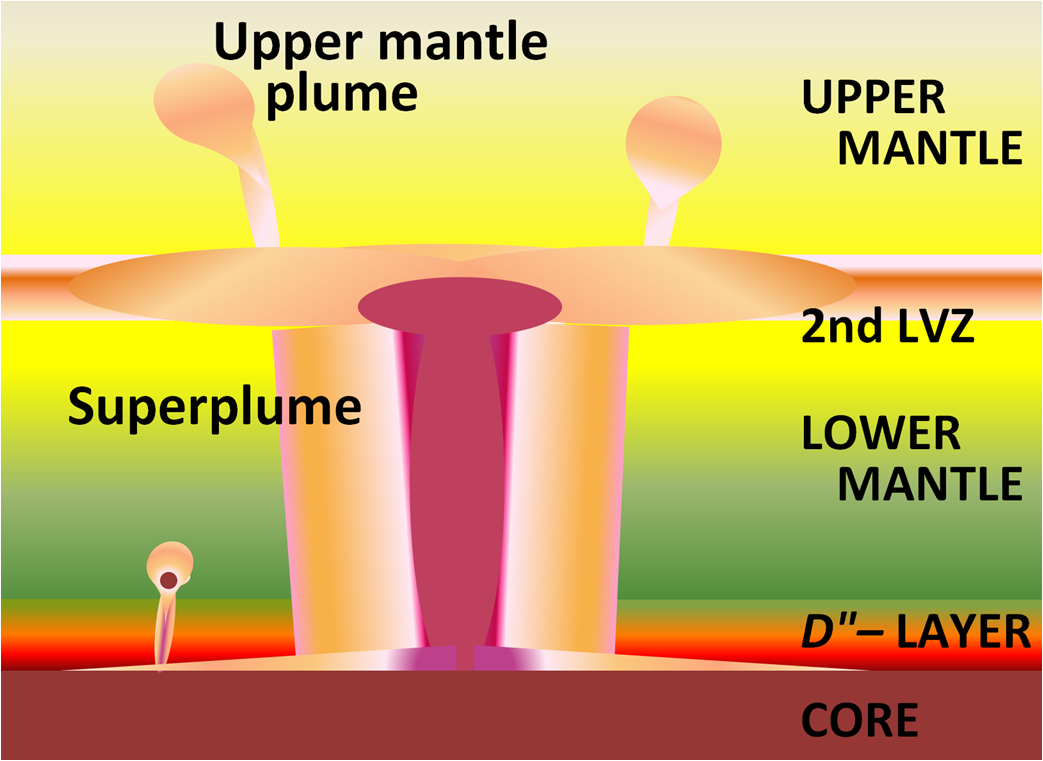
When the simple stories fail you, geoscientists turn to more exotic tectonic and mantle processes to see if any of them can rescue the situation. You will hear about mantle plumes, where hot upwelling material can modify crustal thickness or chemistry in strange ways, and about delamination, where chunks of the lower lithosphere peel off and sink into the mantle. Subducted slabs can also break, fold, and stagnate at certain depths, leaving behind dense, slab-like bodies that do not behave like typical crust or upper mantle.
If your deep-ocean formation is sitting at an impossible depth, models might try to build a chain of events where a piece of crust was thickened, then partially subducted, then thermally modified, and finally stranded at a level it would not normally reach. The problem for you is that many of these scenarios require fine-tuned conditions or a long series of low-probability events. You end up with histories that feel like Rube Goldberg machines: technically conceivable but not strongly supported by independent evidence. That is why, even with exotic mechanisms on the table, you will still hear sober voices say that no current tectonic model fully explains what is being observed.
How Uncertainty and Sparse Data Shape What You Are Allowed to Say
Out in the deep ocean, your data is always patchy compared with what you have on land. You get fewer drill holes, less direct access to rocks, and far more reliance on geophysical inference. That means, if you are being honest with yourself, you have to live with a pretty wide cone of uncertainty around any interpretation. A small change in assumed seismic wave speeds, or a slightly different sediment thickness, can shift your calculated depths and densities enough to change the story.
Because of that, responsible researchers will often frame a deep-ocean “impossible” feature as something like: under currently accepted parameters and models, this looks inconsistent. You, as a reader, should be wary of anyone claiming absolute impossibility based on incomplete data. The formation might still be unusual and hard to explain, but instead of declaring that it overturns tectonics, you are better off viewing it as a stress test for the models, a reminder that the deep ocean is still under-sampled and that some apparent contradictions may soften as new surveys and better seismic imaging come in.
What This Mystery Really Means for Your Picture of Earth

If you are tempted to jump from “cannot exist under any model” straight to “plate tectonics is wrong,” it helps to slow down and see how science usually evolves. Tectonic theory has survived plenty of puzzles over the past century and has absorbed them by adding complexity rather than throwing everything out. For you, that means that a bizarre formation at impossible depth is more likely to refine the theory’s details – things like rheology, phase changes, and mantle flow patterns – than to demolish the entire framework.
At the same time, it is healthy for you to appreciate how fragile some of your mental pictures really are. The nice diagrams in textbooks, with neat cross-sections of plates and mantle, are massively simplified. The real Earth is messy, full of leftovers, hybrids, and relics from long-vanished configurations. Anomalies in the deep ocean are like forgotten pages in a geologic diary: they do not rewrite the whole story, but they remind you that your current summary is missing chapters you have not read yet.
How You Can Think Critically About Claims of “Impossible” Geology

As you encounter headlines or conversations about deep-ocean formations that supposedly defy all tectonic models, you can equip yourself with a few grounding questions. You can ask what kind of data is actually available: high-quality seismic lines, multiple survey campaigns, or just a few sparse profiles? You can look for whether alternative explanations have been carefully tested or quickly brushed aside. And you can pay attention to whether the language used is cautious and conditional, or sweeping and absolute.
You can also remind yourself that the word “model” covers a wide spectrum, from simple textbook cartoons to advanced numerical simulations that include temperature, composition, and complex rheology. When someone says “no model can explain this,” they usually mean no existing, realistic model within a certain set of assumptions has yet reproduced the observations convincingly. That is a lot less dramatic but more accurate. If you hold on to that nuance, you can stay curious about the mystery without being pulled into overstatements on either side.
Conclusion: Living With a Planet That Still Surprises You

In the end, a deep-ocean formation that seems to violate every tectonic rule you know is not a failure of science; it is a sign that the planet is richer and more complicated than your current mental models. You are looking at a reminder that even in the twenty-first century, with satellites overhead and research vessels crawling across the seas, huge regions of Earth’s interior are still only sketchily understood. Instead of demanding instant, clean answers, you can treat such anomalies as open invitations to observe more, measure better, and think more flexibly.
If you let that mindset sink in, you may find that the mystery makes the world feel larger rather than smaller. Having at least one formation on the deep-ocean floor that geoscientists grudgingly admit they cannot yet fit into any tidy tectonic story is not a bug in your understanding; it is a feature of doing science at the edge of what you can know. The real question for you is not whether the anomaly should exist, but how ready you are to let your favorite diagrams be wrong and keep following the evidence anyway. Would you expect anything less from a living, shifting planet that has been working on its secrets for billions of years?