
You know that eerie moment when your cat suddenly freezes, locks its gaze on an empty corner, and refuses to look away? You check for spiders, shadows, ghosts… nothing. Still, your cat is riveted, tail twitching like it just tuned into a channel you cannot see. It feels mysterious, maybe even supernatural, but modern veterinary neuroscience suggests there might be a far more down‑to‑earth explanation: your cat could be responding to subtle electromagnetic cues that your own senses filter out.
That idea sounds wild at first, but when you zoom out and look at what science already knows about animal perception, it becomes much less far‑fetched. Many species navigate, hunt, and communicate using cues you barely notice, from low‑frequency sounds to magnetic fields. Your cat is not a tiny wizard; it is a precision‑tuned biological sensor. Once you look at it that way, those long, unsettling stares into “nothing” start to seem less like weird quirks and more like the visible tip of a hidden sensory iceberg.
The Strange Stillness: What Your Cat Might See When You See Nothing

When your cat suddenly goes statue‑still and drills its attention into a blank wall, it is easy to assume it is just being dramatic or bored. But if you watch closely, you often notice small details: the pupils might dilate slightly, the whiskers fan forward, and the ears make tiny micro‑adjustments as if they are triangulating something. Your cat is not just vaguely gazing; it looks like it is tracking, scanning, and analyzing, even though you cannot link that behavior to any obvious stimulus.
You might also notice that these “corner stares” are not random in your home. They often happen in the same spots: near a Wi‑Fi router, behind a TV, by a cluster of power cables, or close to household appliances that hum, vibrate, or cycle on and off. To you, those spaces are just dead zones you forget about, but to a nervous system tuned to tiny shifts in sound, vibration, and possibly electromagnetic fields, they might be buzzing with invisible activity. Your cat’s stillness is not empty; it is concentration.
How Animals Sense Invisible Forces (And Why Your Brain Filters Them Out)

If you have ever watched documentaries about birds using Earth’s magnetic field to migrate, or sharks honing in on faint electrical signals from prey, you already know that animals are experts at tapping into forces you never consciously notice. Some species have specialized cells that respond to magnetic fields, while others detect minuscule electrical gradients in water or air. You live on the same planet, bathing in the same invisible forces, but your senses mostly shrug and move on. Evolution pushed your brain to prioritize what kept your ancestors alive: faces, threats, food, social cues, not abstract magnetic patterns in the environment.
Your nervous system, in many ways, is a ruthless editor. It constantly suppresses or discards information that would overwhelm your conscious awareness: tiny changes in light flicker, incredibly low rumbles from distant machinery, the faint buzz of power lines, the sway of the magnetic field as you move. Your cat’s brain makes its own trade‑offs, but it may leave more of those subtle signals “in the mix,” especially if they could be relevant to stalking, navigation, or detecting hidden movement. So while you move through your day in a heavily filtered reality, your cat might be quietly tuning into a richer, stranger version of the same room.
What Makes Cat Senses So Uncannily Sensitive

You already know your cat has razor‑sharp hearing and night vision that leaves you stumbling in comparison, but the details are even more extreme than most people realize. Cats can pick up higher‑frequency sounds than dogs, and far above what you can detect, which means any tiny electronic whine, motor hum, or cable vibration has a better chance of catching their attention. Their eyes can register faint changes in light and movement that you would never see, especially in low‑light corners where you just perceive dull shadow.
On top of that, your cat’s whiskers are not just cute face decorations; they are deeply wired tactile sensors that pick up air currents, vibrations, and subtle shifts in the nearby environment. When your cat is fixated on a corner, the whiskers often tell part of the story: they go forward, as if sampling the air for changes you cannot feel. Add in a flexible spine, fine‑tuned balance, and a brain built for tracking prey in complex environments, and you get an animal primed to notice the tiniest cues. Where you see “nothing,” your cat perceives a layered, dynamic scene full of micro‑signals.
Electromagnetic Fields in Your Home: The Invisible Landscape

If you could suddenly see all the electromagnetic fields in your home, it would probably feel like stepping into a neon fog. Power lines, wall wiring, Wi‑Fi routers, Bluetooth devices, phone chargers, induction cooktops, monitors, and televisions all produce shifting fields and pulses. Some are steady and weak; others flicker and spike as devices turn on, off, or change modes. You walk through this tangle all day, blissfully unaware, because your brain simply does not surface this information to your conscious mind.
Your cat, however, lives closer to the floor, sleeps near appliances, and spends long chunks of time in quiet observation instead of constant distraction. Even if cats do not “see” electromagnetic fields the way you see light, they might be indirectly responding to them through sound, vibration, temperature changes, or possibly magnetically sensitive structures in their body, much like other animals do. Certain corners of your home, where electrical cables loop, transformers sit, or devices cluster, could create tiny hotspots of invisible activity. To you, those spots are bland; to your cat, they might be the sensory equivalent of a flickering streetlamp in an empty alley.
Are Cats Really Tracking Electromagnetic Fields? What Science Actually Supports

Here is where it helps to be both open‑minded and cautious. There is strong evidence that many animals can detect or respond to magnetic fields, and there is growing interest in how domestic species, including pets, might share some of those abilities. At the same time, the idea that your specific cat is consciously “tracking electromagnetic fields” in the way a scientist talks about them is still more hypothesis than proven fact. What you can say with confidence is that cats are extremely sensitive to environmental changes that often ride along with or result from electronics, wiring, and powered devices.
You might notice that your cat favors certain spots when storms roll in, when you plug in or unplug high‑draw appliances, or when a device starts to fail and whine. That suggests that something about shifting electrical and electromagnetic activity in the environment is landing on your cat’s radar, even if we do not fully understand through which mix of senses. For now, it makes sense to treat the “electromagnetic field” idea as a useful lens rather than a settled explanation: a reminder that your cat’s world includes layers you have not yet measured, much less fully mapped.
Why Humans Evolved to Tune Out What Your Cat Might Still Notice

Imagine your distant ancestors trying to survive in the wild while being hyper‑aware of every faint hum, flicker, and magnetic fluctuation around them. They would have been overwhelmed. Your brain had to streamline things: emphasize social signals, language, visible threats, and patterns in sound and movement that predicted danger or opportunity. Over tens of thousands of years, anything that did not clearly boost survival in a complex social world was likely pushed into the background or kept below conscious awareness.
Your cat’s evolutionary path was different. Cats evolved as solitary or loosely social hunters, operating at dawn and dusk, keying into tiny prey movements, faint rustles, and subtle changes in the air. Their survival did not depend on decoding facial expressions across a crowded group; it depended on spotting the hint of a mouse under a board or the subtle vibration of something moving in the dark. So while your brain became an expert at reading other humans and handling language, your cat’s brain remained a specialist in noticing small, environmental cues. You filter out the sensory noise they still treat as meaningful signal.
How to Tell If Your Cat Is Reacting to EM Hotspots or Just Being Weird

You cannot ask your cat to fill out a survey about household electromagnetic fields, but you can pay attention to patterns. Do the intense stares at certain corners always happen near plugged‑in electronics, power strips, or routers? Do they increase when new devices arrive, when a big appliance cycles on, or when light dimmers are set a certain way? If you unplug or move something in that area, does your cat seem less fixated on that spot over the next few days? These small experiments can give you clues about whether your cat’s obsession is tied to environmental changes you can control.
At the same time, you have to allow for your cat’s personality and occasional randomness. Sometimes a corner stare really is just a reaction to a tiny bug, a mote of dust in a beam of light, or an echo from a sound outside. Instead of trying to diagnose every behavior, you are better off treating these episodes like data points in a bigger pattern. Over time, you might notice your cat is a “tech corner watcher,” fixating near electronics, or more of a “window‑edge sentinel,” focused on reflections and outdoor noise. The goal is not to prove a theory perfectly, but to develop a more observant, respectful relationship with what your cat is trying to tell you.
What This Means for Your Cat’s Comfort, Stress, and Environment

If your cat is indeed more sensitive to electromagnetic and related environmental changes than you are, that has implications for how you set up your home. A spot that feels convenient for you, like stacking a Wi‑Fi router on top of a power strip next to your cat’s bed, might be an invisible storm of hums, flickers, and tiny vibrations for them. When you see your cat avoiding certain resting spots or repeatedly staring at the same “empty” area with clear tension in its body, you might be seeing a stress response to stimuli you do not consciously register.
You can experiment with small adjustments: moving chargers away from favored sleeping areas, not placing beds directly next to big appliances, and reducing cluttered cable nests where possible. If your cat seems calmer and more relaxed after these tweaks, you have learned something valuable about how their nervous system interacts with your space. You are not going to turn your home into a perfect sensory sanctuary, but you can be a bit more deliberate and compassionate about the invisible landscape your cat lives in every day.
How to Engage Your Cat’s Hyper‑Tuned Senses in Healthier Ways

Instead of viewing your cat’s strange corner‑watching as a problem to eliminate, you can treat it as a clue about what kind of stimulation they naturally seek. Your cat enjoys tracking, detecting, and decoding subtle signals; that is their ancestral job description. You can feed that need with interactive toys that mimic unpredictable movement, puzzle feeders that require careful attention, and play sessions that let them stalk, pounce, and investigate. When their brain has satisfying outlets, they are less likely to obsess over the odd corner for lack of better stimulation.
You can also give your cat controlled access to richer sensory environments, like a safe window perch overlooking a busy street or a screened‑in balcony where they can feel wind shifts and hear outdoor sounds. These spaces provide natural “signals” to process, instead of relying on the artificial hum of electronics. When your cat’s sensory brain is well fed, those eerie stillness moments around the house often become less frequent or at least less intense. You are not trying to erase their extra sensitivity – you are honoring it and giving it a healthier playground.
When to Worry: Corner Stares Versus Medical Red Flags

While many instances of corner staring are probably harmless responses to subtle environmental cues, you should also keep an eye on when the behavior crosses into something more concerning. If your cat stares at walls or corners for long stretches, seems unresponsive when you call or touch them, or pairs the staring with odd movements like head tilts, circling, sudden freezing, or frantic dashes, it is worth talking to your veterinarian. In some cases, repetitive or trance‑like staring can be linked to neurological issues, vision problems, or other medical conditions that need attention.
You know your cat’s baseline better than anyone else, so trust your instincts if something feels different or wrong. It is one thing for your cat to pause for thirty seconds, focused and curious; it is another thing entirely if they seem “checked out,” confused, or distressed. Veterinary teams today are more aware than ever of subtle behavioral cues as early warning signs. If you bring in a video of what you are seeing at home, you are giving your vet a powerful tool to distinguish between normal hypersensitivity and something that might need deeper neurological investigation.
Conclusion: Sharing a Home With a Creature From a Richer Sensory World
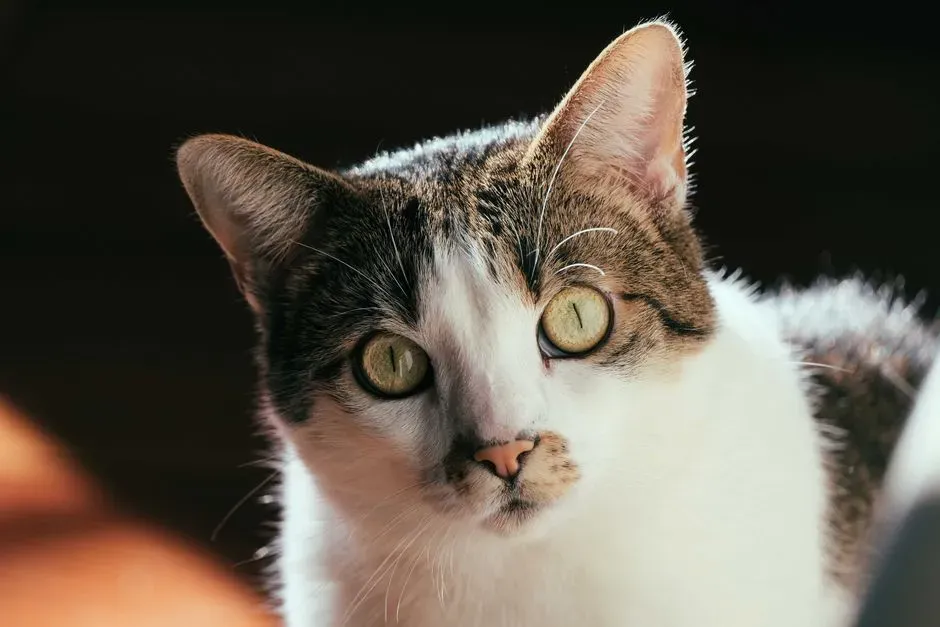
Once you start thinking of your cat not as a smaller, furrier version of you but as a creature living in a denser, more layered sensory world, those empty‑corner stares feel different. They are not just creepy; they are glimpses into a reality your own brain has trained itself not to see. Electromagnetic fields, faint hums, tiny vibrations, air currents, and subtle shifts in light all swirl together into a tapestry your cat reads more fluently than you ever will. You may never get full scientific closure on exactly what they detect in each moment, but you can appreciate that their attention is rarely truly “random.”
By watching your cat more closely, rearranging their environment a bit more thoughtfully, and staying open to both scientific evidence and genuine uncertainty, you become a better partner to this highly tuned little predator sharing your couch. You do not have to perceive every invisible signal to respect that they do. The next time your cat locks eyes with an empty corner, you might find yourself less spooked and more curious, wondering what kind of hidden map they are quietly reading. If you could borrow their senses for just a minute, what do you think your own living room would really feel like?