

Imagine being told that the way your thoughts flicker in and out of awareness might have something in common with how particles behave in the quantum world. At first glance, that sounds like late-night dorm room philosophy, not something sober physicists or neuroscientists would even entertain. Yet when you look closely at both , some patterns line up in ways that are honestly hard to ignore, even if we have to be extremely careful not to overhype the connection.
In this article, we are not going to claim that the brain is literally a quantum computer or that you can manifest reality by thinking hard enough. Instead, we will walk a narrow path: exploring uncanny conceptual parallels between quantum theory and the way consciousness feels from the inside, without pretending the science says more than it actually does. Along the way, you might notice that both worlds seem to be built from probabilities, shaped by observers, and haunted by uncertainty, and that alone is already pretty wild.
The World As Probabilities, Not Solid Certainties
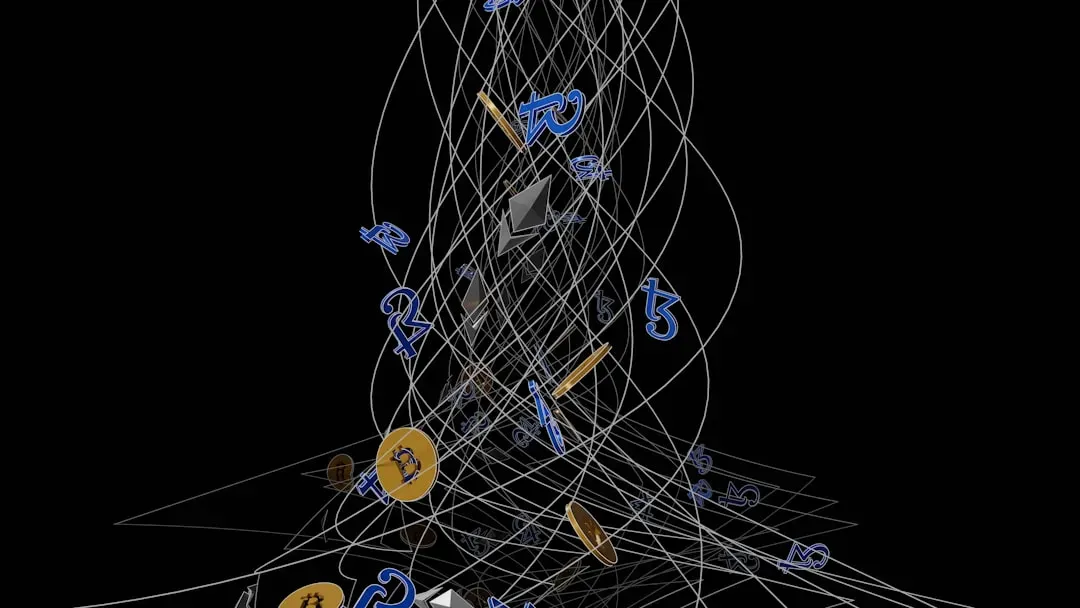
One of the most unsettling lessons of quantum mechanics is that, at the deepest levels we have probed, reality is not made of little solid marbles with fixed positions and speeds. Instead, particles are described by wave functions, which give probabilities for different outcomes rather than definite answers. Before a measurement is made, what exists is better described as a spread of possibilities than as a single concrete fact. This is not just a gap in our knowledge; it is built directly into the mathematics that keeps predicting experiments correctly, again and again.
Conscious experience, in its own very different way, often feels probabilistic too. Our attention does not sit still; it hovers, leans, and wavers between options, like a mental cloud of likelihoods before we finally settle on a thought, memory, or decision. You can feel this when you are trying to remember a name: it is on the tip of your tongue, you can sense a kind of fuzzy nearness, but it is not yet a clear, discrete item. The mind, like the quantum world, seems to spend a lot of its time in states of partial readiness and possibility, rather than in sharp, all-or-nothing certainties.
Superposition And The Flicker Of Unmade Decisions
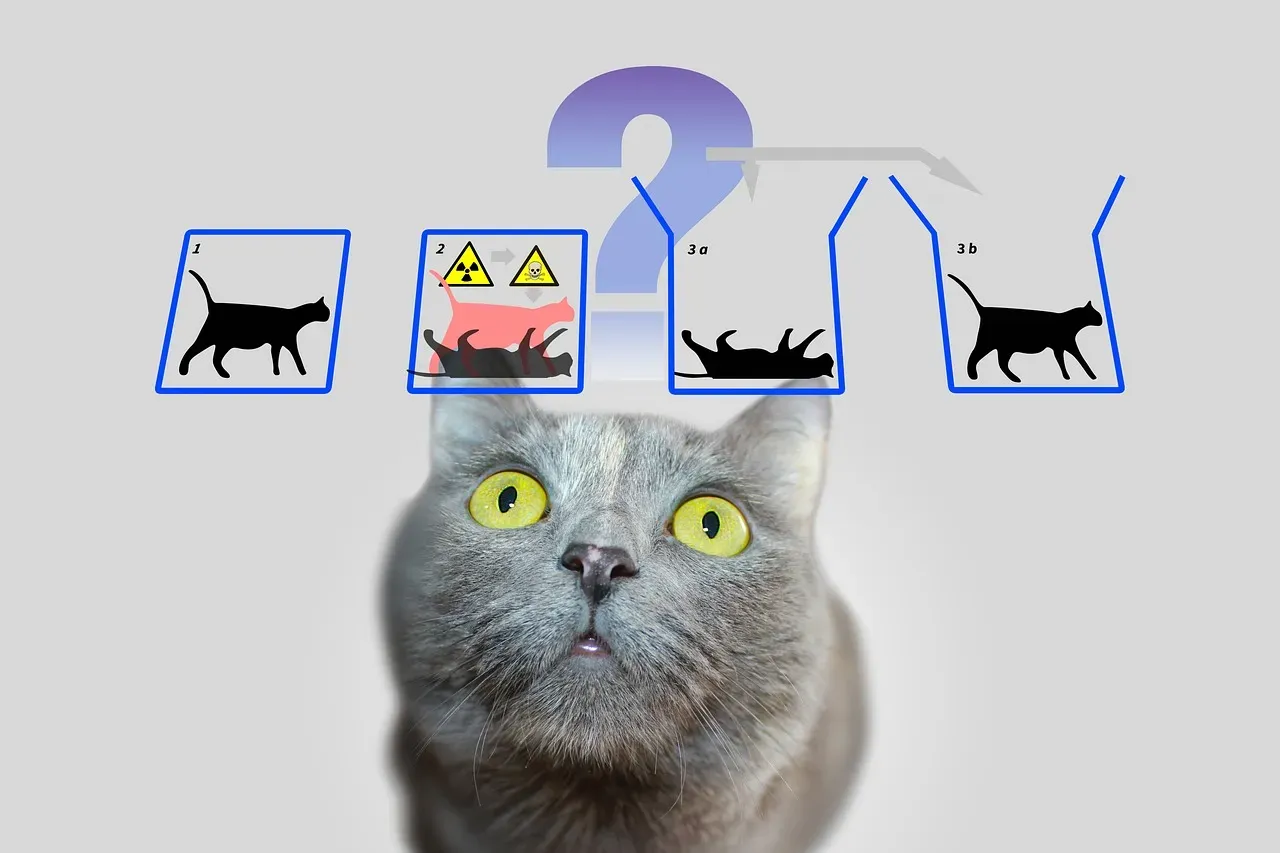
In quantum mechanics, superposition describes a situation where a system can exist in multiple potential states at once, with each state carrying its own probability weight. Only when a measurement takes place does the system appear to “choose” a particular outcome, at least from the observer’s point of view. The classic example is a particle that behaves as if it travels through two paths simultaneously until an observation forces it to reveal one path or the other. This is not mere imagination; it is backed by experiments that consistently defy classical common sense.
Conscious life has its own flavor of superposition, especially when we are torn between choices. Before you decide to quit your job, send that text, or move to a new city, your mind often entertains multiple lived futures at once. You can feel what it would be like if you stayed, if you left, if you spoke up, or if you stayed silent, almost as if you are briefly living several parallel realities. Then, at the moment of decision, one path becomes your actual life and the others stay as ghostly might-have-beens. Of course, this is not literal quantum superposition in the brain, but the structural similarity – many overlapping possibilities collapsing into a single lived outcome – is hard not to notice.
The Observer Problem And The Role Of Awareness
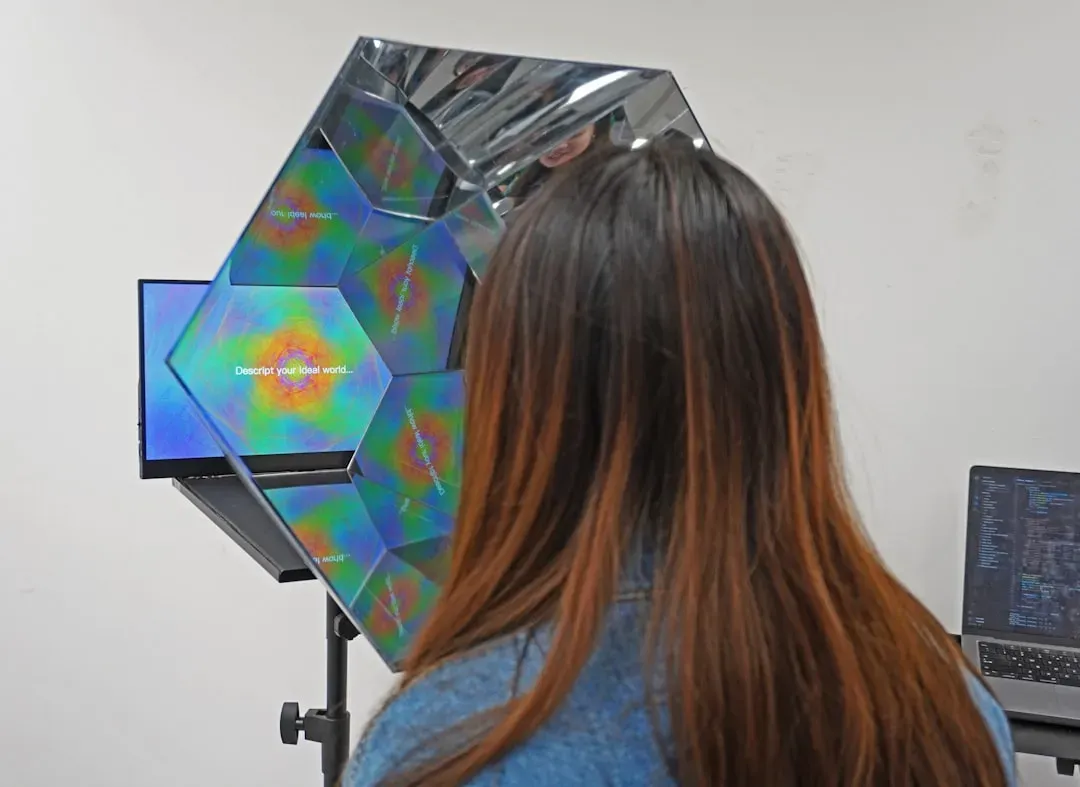
One of the strangest features of quantum mechanics is that measurements matter. How, where, and even whether we measure a system can change the results we see. This does not mean the universe waits for a human scientist to look at it, but it does mean that interaction, detection, and observation are woven into the way reality unfolds at microscopic scales. Experiments like the double-slit setup show that the behavior of particles shifts depending on whether information about their paths is in principle available, which has sparked endless debates about what counts as an “observer.”
Consciousness brings its own observer problem. Our subjective world only exists, for us, when we are aware of it. A pain in your leg that you are not currently paying attention to might as well not exist in your lived reality; it only snaps into being when attention lands on it. In a sense, awareness is the measurement device of the mind: it selects, amplifies, and stabilizes certain signals into conscious experience while leaving others in a kind of unconscious background. While physicists are rightly skeptical of claims that human consciousness “creates” quantum events, both domains clearly give a privileged status to observation and raise deep questions about what it even means to be an observer.
Nonlocal Connections And The Feeling Of Being Instantly Linked
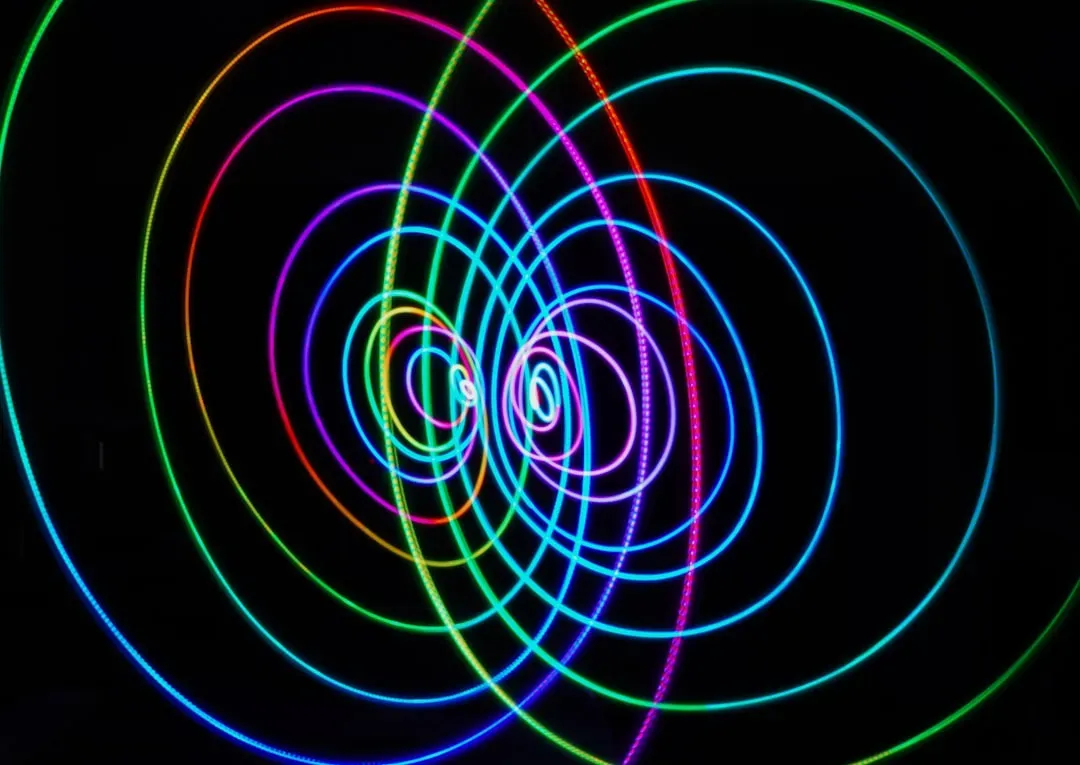
Quantum entanglement reveals correlations between particles that remain tightly linked even when the particles are far apart. When two particles are entangled, measuring one seems to immediately influence the state description of the other, no matter the distance. This “spooky action at a distance,” as it has often been nicknamed, does not let you send signals faster than light, but it does show that the world’s underlying fabric is more interconnected than everyday intuition suggests. The universe, on this view, cannot always be carved up into independent parts without losing something essential.
Human consciousness can feel strangely nonlocal too, at least subjectively. You can be sitting in your kitchen while your mind is flooded with vivid sensations from a childhood moment thousands of miles away and decades in the past, and both feel present at once. Relationships add another layer: many people experience a sudden, intense sense of connection or disturbance just before hearing important news about someone close, even if they later chalk it up to coincidence. These are not proof of literal quantum entanglement between minds, but they echo the idea that our inner life often feels less like isolated mental atoms and more like a web of instant, far-reaching connections.
Uncertainty, Limits Of Knowledge, And The Edges Of Introspection
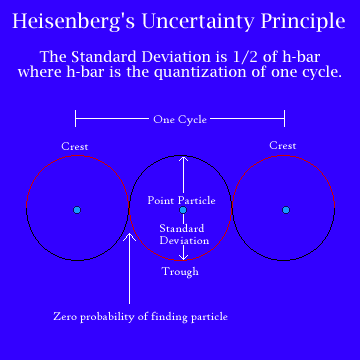
Heisenberg’s uncertainty principle tells us there are built-in limits to how precisely we can know certain pairs of properties, like the position and momentum of a particle, at the same time. The more accurately we pin down one, the less precisely we can know the other. This is not a technical problem that better instruments will solve; it is a fundamental feature of how the quantum world works. There are boundaries beyond which exact knowledge is simply not available, no matter how clever or determined we are.
Conscious experience has its own uncertainty principle. Try to fully examine your present moment of awareness, and you will find that the act of turning attention onto an experience changes how that experience feels. You cannot be both completely immersed in a feeling and perfectly detached in analyzing it at the same time; the closer you get to one, the more you lose the other. Psychologists and contemplative traditions have known for a long time that introspection is always a bit self-distorting. Just as quantum theory says we cannot extract all the details from a system without altering it, consciousness seems to resist total transparency under its own spotlight.
From Discrete Quanta To The Graininess Of Experience
Another key idea in quantum mechanics is that many quantities come in discrete chunks, or quanta, rather than in smooth, continuous stretches. Energy, for instance, can only jump between certain allowed levels in an atom. This quantization explains phenomena like atomic spectra and the stability of matter, and it shattered the older picture of the world as infinitely divisible. Underneath the apparent continuity of the macroscopic world, there is a kind of pixelated structure.
Something similar shows up when you look closely at consciousness. Our experience feels flowing and continuous, but tools like brain imaging, reaction-time experiments, and even careful self-observation suggest that perception and awareness might have a subtle rhythm or grain. We do not notice individual “frames,” but our ability to detect changes depends on how quickly they occur, and at some speed our perception simply blurs them into one event. Subjectively, you can sense this when a song you know well seems to be made of distinct beats and notes, not an undifferentiated mass of sound. Just as the quantum world is continuous in some senses and discrete in others, consciousness seems to hover between a smooth stream and a sequence of finely spaced moments.
Are Quantum Mechanics And Consciousness Really Linked, Or Just Rhyming?

At this point, it is tempting to jump to bold conclusions: that the brain must be using quantum computation, or that consciousness collapses wave functions. A few theories do argue for direct links, and some brain processes, especially at very small scales, certainly obey quantum rules. But the hard truth is that there is currently no widely accepted scientific proof that quantum effects are the secret sauce of consciousness. The parallels we have explored are conceptual and structural, and while they are fascinating, they do not automatically mean that mind and quantum matter are two sides of the same coin.
That said, I think it would be a mistake to dismiss the similarities as mere poetic coincidence. Even if the brain mostly behaves like a messy, warm, classical machine, the language of quantum mechanics gives us fresh metaphors for talking about the weirdness of inner life: its probabilities, its branching futures, its observer-dependent nature. Personally, I suspect that the deepest connection is not that consciousness is magically quantum, but that both quantum theory and introspection are human attempts to describe systems that push our everyday intuitions to the breaking point. They both force us to admit that reality, whether outer or inner, is stranger, more fragile, and more entangled than our common sense wants to allow.
Conclusion: Two Mysteries, One Uncomfortable Lesson

When you put side by side, what jumps out is not a neat solution but a shared sense of resistance to being pinned down. Both refuse to fit entirely into simple, mechanical pictures of the world, and both seem to give the observer a central, awkward role. To me, the most honest stance is to admit that we are dealing with two deep mysteries that happen to rhyme in surprising ways, without pretending we have already solved either one. The similarities are real enough to be worth taking seriously, but incomplete enough that anyone claiming to have “the answer” is probably overselling it.
My opinion is that these parallels are a kind of intellectual warning sign: whenever we reach for intuition in domains like quantum physics or consciousness, we are likely to be misled, because both live on the edges of what our brains evolved to understand. Instead of forcing them into comforting stories, we might be better off letting the strangeness stand, and letting it humble us a bit. After all, if the foundation of matter and the core of our own awareness both turn out to be radically weird, maybe the bigger mistake is expecting reality to behave like a tidy diagram in a textbook. Given all that, which do you find more unsettling: that the universe is so strange, or that your own mind might be just as bizarre?