

If you quietly look around the room you are in right now, it feels obvious that there is a solid, objective world out there, and a mind inside your head simply watching it. But the deeper physics digs into the nature of reality, the more that clean separation starts to wobble. Some of the most unsettling ideas in modern science hint that what we call “reality” is tightly entangled with the very act of observing it.
This does not mean that the universe is a magical wish factory that bends to every passing thought. It does mean, though, that the simple story we tell ourselves about a purely objective world, existing entirely independent of observers, might be too shallow. In this article, we’ll walk through how quantum experiments, information theory, and some bold interpretations of physics have led a subset of physicists and philosophers to a radical possibility: you cannot fully describe reality without talking about consciousness.
The Quantum Measurement Problem: When Observations Change Reality

One of the most shocking lessons of quantum physics is that at tiny scales, particles do not behave like little billiard balls with definite positions and paths. Instead, they are described by a wave of possibilities, a kind of mathematical cloud of “might be here, might be there.” Yet, when you actually measure a particle, you never see a blur of maybes. You see one specific result: this detector clicked, that one did not. The puzzle is what, exactly, causes this shift from spread-out possibility to concrete outcome.
This is known as the measurement problem, and it has been keeping physicists up at night for roughly about a century. The equations by themselves happily evolve smooth superpositions of possibilities; they never say “and here is the magical point where a single reality pops out.” Once you admit that a measurement is special, you have to ask what makes it special. Is it the measuring device, the environment, or, as some have argued, the conscious observer who registers the result in their mind? For those who lean toward the last option, the act of conscious observation is not just a passive reading of reality; it is a necessary part of how reality becomes definite.
Wigner, Von Neumann, and the Mind at the Edge of Physics

Two towering figures in twentieth‑century physics, John von Neumann and Eugene Wigner, pushed this line of thought further than most of their colleagues were comfortable with. They saw that if you keep treating everything as a quantum system – particles, measuring devices, even lab walls – you never find a clean place where a definite outcome is forced. Everything just becomes one big superposition, a tangle of different possible worlds evolving together. To actually pin down a single experienced result, they argued, you need something that is not just more quantum machinery.
That “something,” in their view, was consciousness. Wigner in particular suggested that the collapse of the wave function – the jump from many possibilities to one actual outcome – might happen when a result enters a conscious mind. Many modern physicists do not adopt this view, because it feels like smuggling the mind into the equations without a clear mechanism. Still, their argument makes a lot of people pause: if you refuse to give consciousness any special role at all, you have to explain where, in an entirely mindless universe, a single experienced reality actually shows up.
Interpretations of Quantum Mechanics That Blur Objectivity

Quantum theory works superbly well in practice, but what it means is still up for debate. Different interpretations try to tell a coherent story about what is really going on behind the math, and several of them chip away at the idea of a fully observer‑independent world. One well‑known example is the Copenhagen‑style view, which more or less says that quantum states are not descriptions of what exists out there, but tools for predicting the results of experiments we, as observers, might perform.
Other interpretations, like QBism (short for quantum Bayesianism), go even further and treat the quantum state as a reflection of an agent’s personal expectations, not an objective physical field filling space. From that perspective, quantum theory is about how any thinking observer should update beliefs when interacting with the world. The universe still exists, of course, but its description is inseparable from the perspective of the conscious agent using the theory. When you start treating physical states as inseparable from what some observer knows or expects, the line between reality and consciousness begins to look more like a fuzzy gradient than a sharp edge.
Information, Bits, and the Idea That Reality Is “About” Observers

Over the past few decades, physics has become increasingly obsessed with information. Black hole research, for example, has suggested that the content of a region of space can be encoded on its boundary, leading to the idea that the fabric of reality might be, at a deep level, informational. Some physicists sum this up with a catchy phrase: the world is not made of stuff, but of bits. If that is even approximately true, then any complete picture of reality has to deal with who or what those bits are meaningful for.
Information is not just a pattern; it is a pattern interpreted by some system. A sequence of zeros and ones on a hard drive only counts as a photograph or a novel because some mind or information‑processing system can read it that way. When physicists lean into the idea that physical states are fundamentally about the information available to observers, they inch closer to a view where reality is not a brute collection of objects, but a structured field of potential experiences. In that picture, consciousness – the thing for which information actually matters – is not just an accidental side effect; it sits near the core of what the universe is doing.
I remember the first time I seriously thought about this, staring at a simple diagram of a qubit on a whiteboard. It hit me that the same mathematical object could be seen as a property of an electron, a set of experimental settings, or my own knowledge about a system. That slippery quality made me feel, almost uncomfortably, that the boundary between world and mind might be more like a negotiated contract than a hard wall. Once you see physics framed as a theory of information, it becomes much harder to tell a story where reality is completely indifferent to the existence of observers.
Participatory Universe: Wheeler’s “It from Bit” Vision
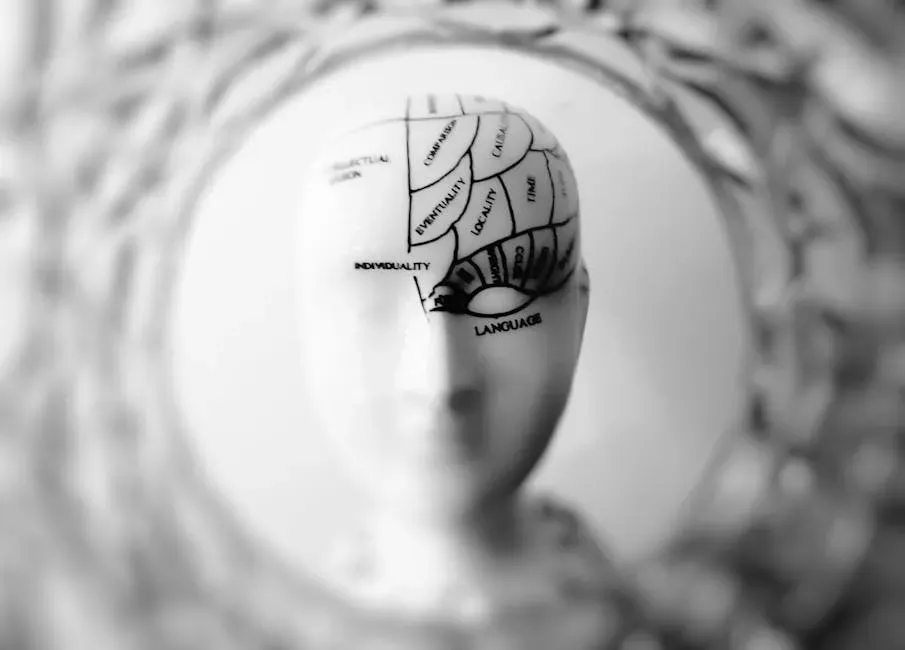
John Archibald Wheeler, a highly respected physicist who worked closely with Einstein, pushed a daring idea he called the participatory universe. In his view, the universe is not simply a stage on which observers appear late in the game. Instead, acts of observation are woven into the very fabric of how reality crystallizes from countless possibilities into the specific history we see. He liked to summarize this with a phrase that reality arises from “it from bit” – the physical world from acts of questioning and answering.
Thought experiments such as delayed‑choice setups, where a decision to measure something in one way or another seems to affect how we describe its past behavior, inspired Wheeler’s way of thinking. In these scenarios, the choice of what to observe appears to shape the story we can consistently tell about what “really happened.” For Wheeler and those who resonate with his ideas, this means that observers are not just tiny, irrelevant specks in a cold cosmos. They are participants whose questions, measurements, and ultimately conscious experiences help write the script of reality’s unfolding.
Consciousness as a Fundamental Feature, Not a Late‑Stage Accident
A growing group of thinkers, spanning physics, neuroscience, and philosophy, take seriously the possibility that consciousness is not something that magically appears when matter becomes complicated enough. Instead, they explore the idea that awareness might be a basic feature of the universe, closer to a primitive ingredient than an emergent froth. This does not mean rocks think or make plans, but it suggests that the roots of subjective experience may be present, in incredibly simple forms, all the way down.
When you combine this with quantum puzzles, you get a bold proposal: the world we measure and model is one face of reality, and the world we experience from the inside is another, equally real face. Some frameworks argue that the structure of physical processes corresponds directly to the structure of conscious experiences, as if the universe speaks two languages that translate into each other. If anything like that is true, then trying to describe reality while ignoring consciousness is like writing a biography while leaving out what the main character thinks and feels. The story might be tidy, but it would miss what actually matters most.
Why Many Physicists Still Disagree (And Why the Debate Matters)
It is important to be honest: most working physicists do not spend their days worrying about consciousness. They run experiments, build models, and use quantum theory as a tool that delivers reliable numbers, without feeling a need to drag the mind into it. Many of them suspect that once we discover the right interpretation or a deeper theory, the role of observers will be explained in purely physical terms. From that angle, leaning too hard into consciousness feels premature, even risky, like inviting confusion instead of clarity.
At the same time, the fact that such fierce disagreement still exists tells you this is not a trivial side issue. When you reach the point where experiments force you to talk about measurement, information, and observation, you are already brushing up against questions of what an observer is. Personally, I think this tension is healthy. It forces physics to admit that its deepest theories are not just about particles bumping in the dark; they are also about the conditions under which any observer, human or otherwise, can carve a world out of the raw flow of events. Whether or not consciousness turns out to be truly fundamental, it has already proven too entangled with our best theories to be ignored.
Conclusion: My Take on a Universe That Knows It Is Being Watched

If you press me to take a stand, I do not think consciousness literally creates mountains or galaxies out of nothing. The universe was around long before any human brain lit up, and it will go on just fine without our opinions. But I do think the clean picture of a fully observer‑independent reality is giving way to something stranger and more interesting. Quantum theory, information‑focused physics, and the stubborn fact of our own inner lives are all nudging us toward a view where reality and consciousness are woven together, even if we do not yet know how tight the stitching is.
To me, the most honest position right now is that consciousness and reality cannot be neatly peeled apart without losing something essential on both sides. Reality, as physics describes it, is a network of possibilities that only becomes a lived world through the filter of experience. Consciousness, as we know it, is shaped from birth by the regularities and constraints of this physical universe. They are dance partners, not strangers. The real question is not whether they are connected, but how deep that connection runs – and how much of it we are finally ready to face.