
You probably know herons as those tall, still birds standing in the shallows like statues, but once you start paying attention, they feel more like stealth specialists than simple water birds. Hidden under that calm posture is a ruthless, highly tuned hunting machine that has evolved around one basic idea: get close without being noticed, then strike before anything can react.
When you watch a heron properly, you see just how many tiny details work together: the way it places each foot, the way the neck coils, how the bill lines up with the water’s surface, even how the feathers help it disappear into the reeds. By the time you’re done with these ten facts, you’ll never look at that “quiet bird by the pond” the same way again.
1. You’re Watching a Perfect Blend of Stealth and Patience
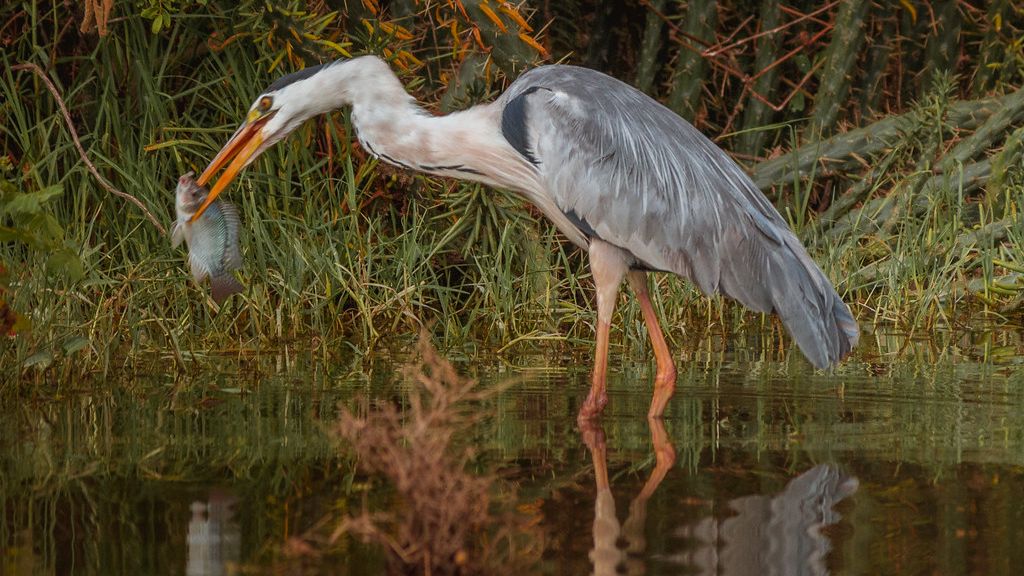
If you stand quietly near a marsh and watch a heron hunt, you’ll notice something almost unsettling: it can stay completely motionless for minutes at a time. You might shift your weight five times in that period; the heron just waits, locked in place, eyes fixed on the water as if time has stopped. This is not laziness, it’s strategy – the bird is letting fish, frogs, and insects forget it exists.
When the moment is right, that “statue” suddenly comes alive. The body barely moves, but the head and neck shoot forward in one sharp, controlled motion that looks like a spring being released. That contrast – long stretches of stillness broken by a lightning stab – is what makes herons such effective wetland hunters. You’re basically watching a living version of a loaded crossbow that only fires when the shot is perfect.
2. Their Long Necks Work Like Built‑In Springs
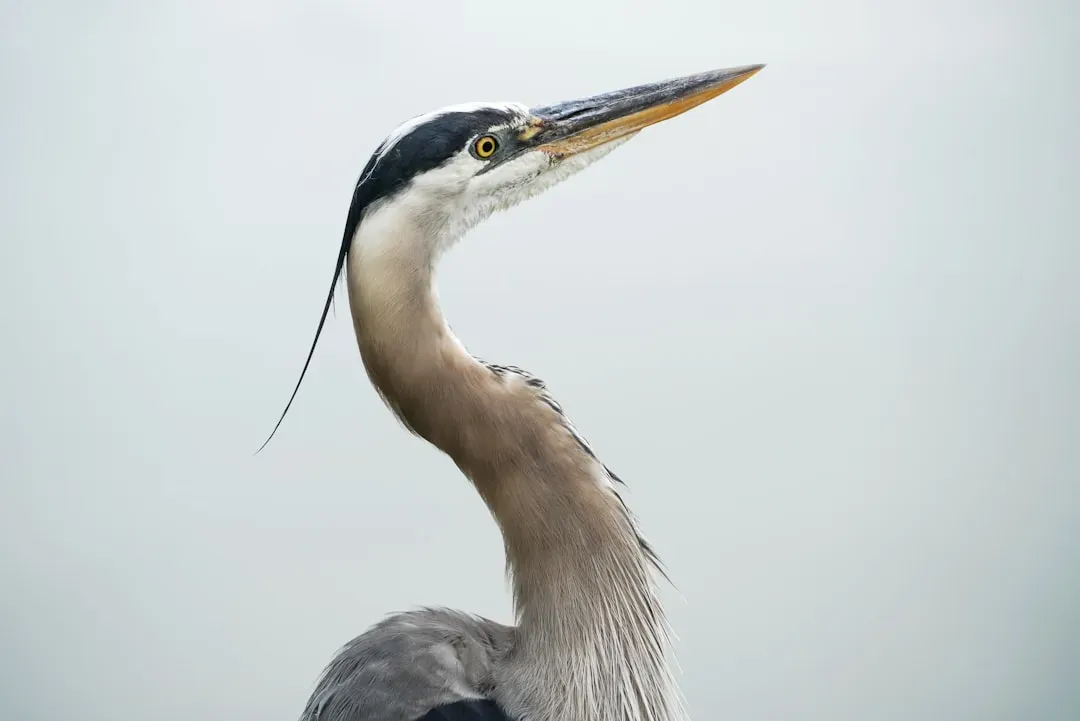
At first glance, a heron’s neck just looks…long. But when you watch closely, you see the trick: the neck is usually folded into an S‑shape, not stretched out like a crane’s or stork’s. Inside that curve are specially shaped neck vertebrae that let the bird coil and uncoil with surprising speed, turning the whole neck into a flexible spring. You see this most clearly when a heron goes from a slow, careful stalk to a sudden strike that seems to come out of nowhere. ([britannica.com](https://www.britannica.com/animal/ciconiiform?utm_source=openai))
That coiled posture also keeps the head closer to the water, which helps with depth perception and accuracy when it’s aiming at prey. When it finally launches the strike, the neck shoots forward while the body stays grounded and balanced on those long legs. You might think of it like a frog’s tongue or a mantis shrimp’s punch in bird form – the power is preloaded, and the prey never sees it coming.
3. The Bill Is a Spear, Not Just a Beak
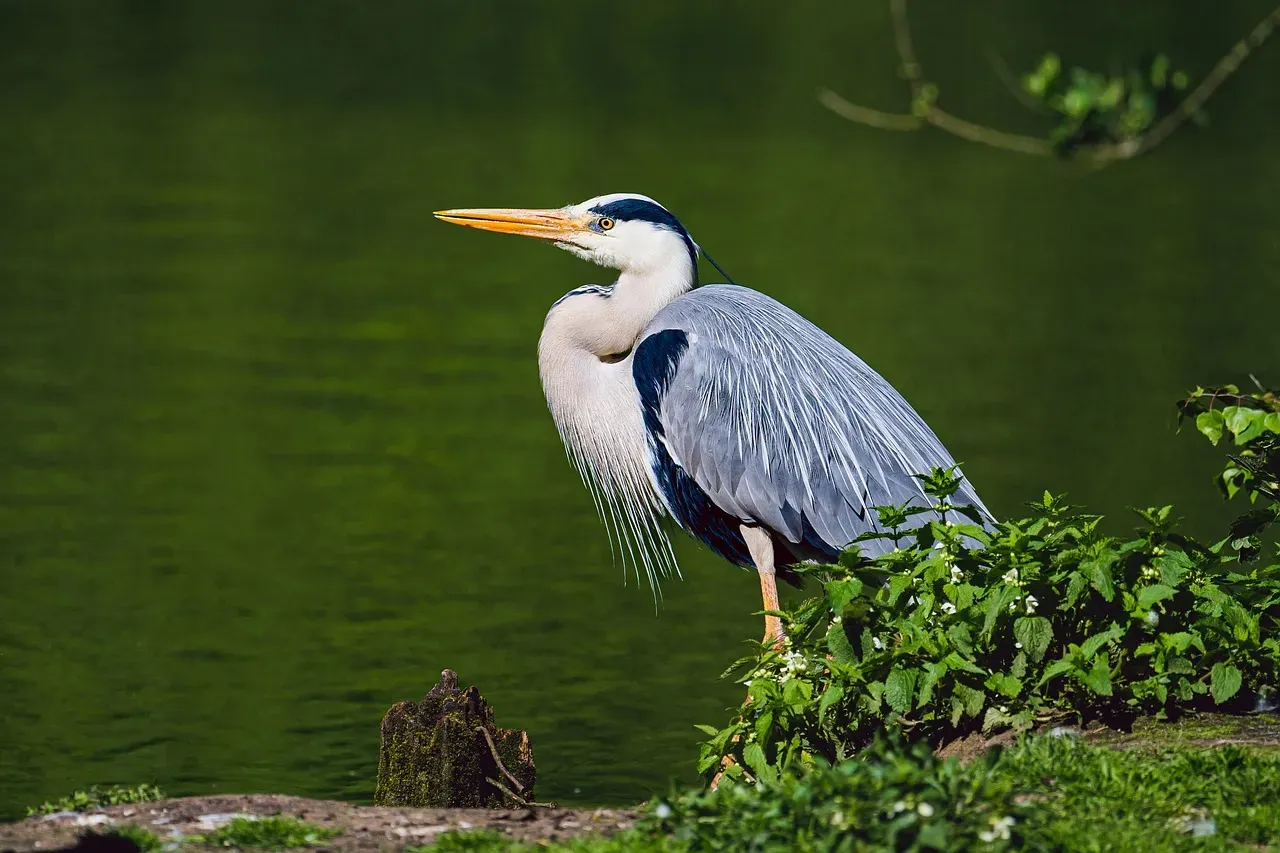
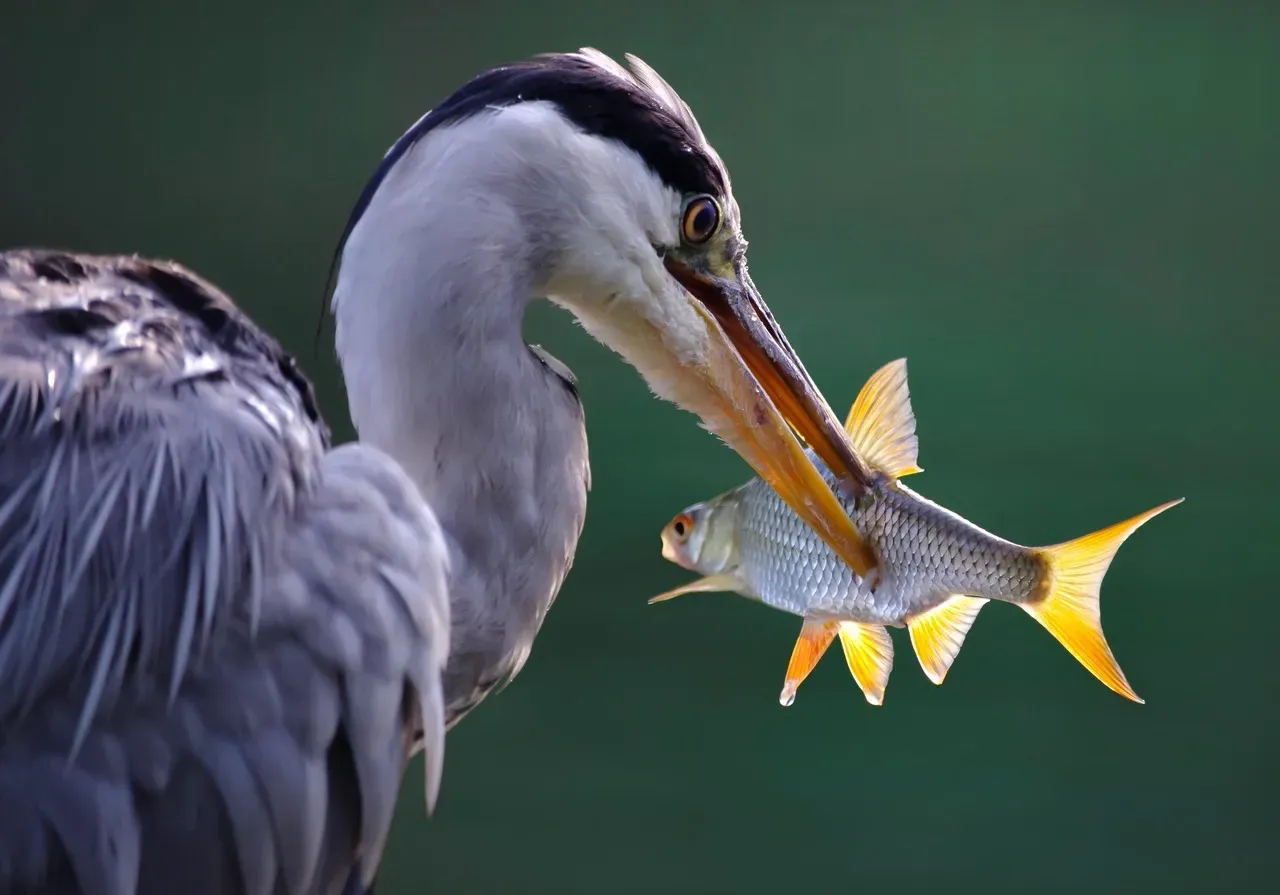
When you look at a heron’s head in profile, the bill is not delicate or dainty; it’s long, straight, and sharply pointed, more like a dagger than a typical bird beak. That shape is not for pecking at seeds; it’s for stabbing straight into water, mud, or vegetation with minimal resistance. Herons often use what biologists call a bill stab – a rapid, forward thrust with enough force to impale or firmly grab slippery prey. ([enviroliteracy.org](https://enviroliteracy.org/how-do-herons-eat-prey/?utm_source=openai))
Once the prey is caught, the heron usually flips it around until it’s facing head‑first and then swallows it whole. That includes fish, frogs, crayfish, snakes, and even small mammals or young birds if the opportunity appears. You could say a heron’s bill is part spear, part tweezers, and part conveyor belt – first it impales or clamps, then it adjusts, then it delivers the whole package down the hatch in one smooth gulp.
4. Those Long Legs Turn Shallow Water Into a Buffet Line
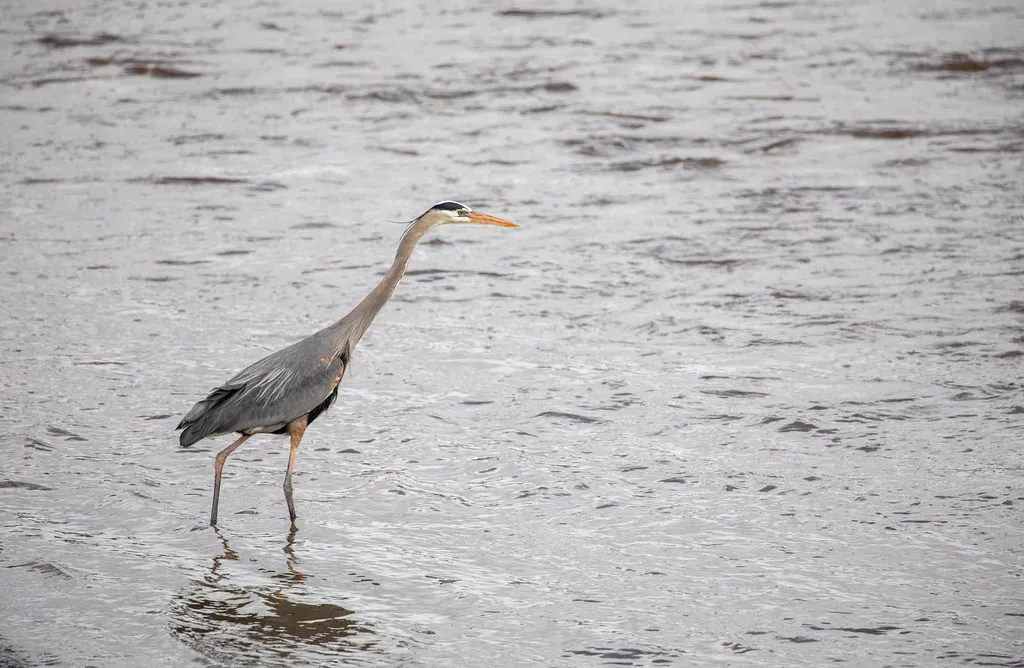
It’s easy to underestimate those ridiculous legs, but they’re a major reason you see herons where you do. The extra height lets them wade into deeper shallows than many other birds can reach, turning flooded fields, marsh edges, and river margins into private hunting grounds. While smaller birds are stuck picking around the shoreline, a heron just steps in up to its knees or even its belly and keeps going. ([pa.gov](https://www.pa.gov/agencies/pgc/wildlife/discover-pa-wildlife/herons?utm_source=openai))
Long legs do something else that matters for a stealth hunter: they let the bird move slowly without making much disturbance. A heron will lift each foot in slow motion, feel its way forward, then place it down gently so the water barely ripples. To you it might look exaggerated and almost comical, but to a fish watching from below, the surface stays calm and unthreatening – right up until the point where a bill suddenly breaks through from above.
5. Their Vision Is Tuned for Reflections, Ripples, and Low Light
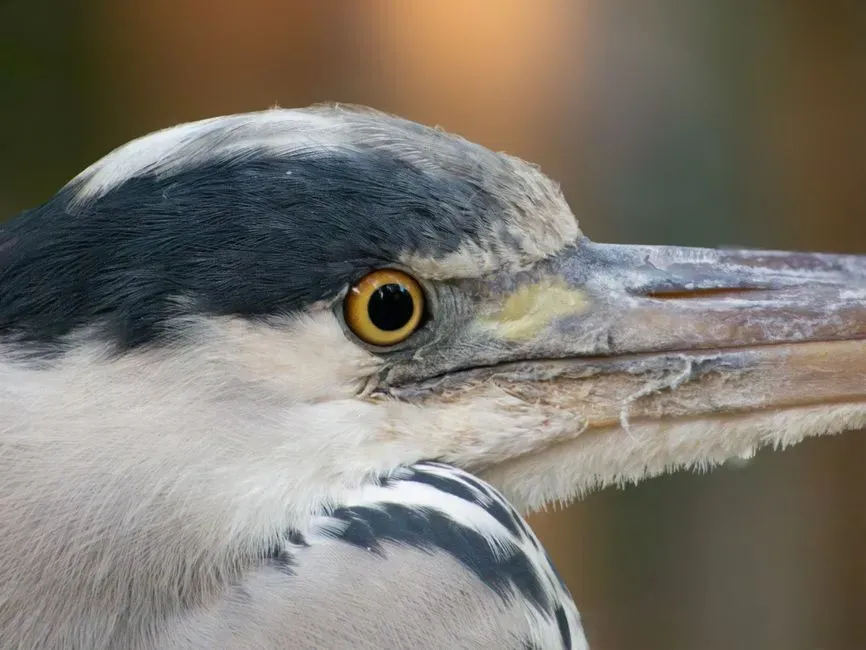
If you think the eyes are just along for the ride, you’re underestimating the most important hunting tool after the bill. Herons have forward‑facing, sharp eyes that give them excellent depth perception, which they absolutely need to judge distance through a shifting, reflective water surface. When you see a heron staring at the same patch of water for ages, it’s reading every tiny flick of movement and every slight change in light as potential prey.
Some herons, like night herons, lean heavily on low‑light hunting and start becoming active at dusk, using their vision to work the same wetlands long after you’ve headed home. Even daytime hunters often work in dim, shaded spots under overhanging vegetation, where strong contrast between moving prey and still surroundings helps them line up the perfect strike. Once you realize how much their eyes are doing, that fixed stare feels less blank and more like hardcore target tracking. ([en.wikipedia.org](https://en.wikipedia.org/wiki/Night_heron?utm_source=openai))
6. Silence Is Their Superpower – Even in a Noisy Colony Life
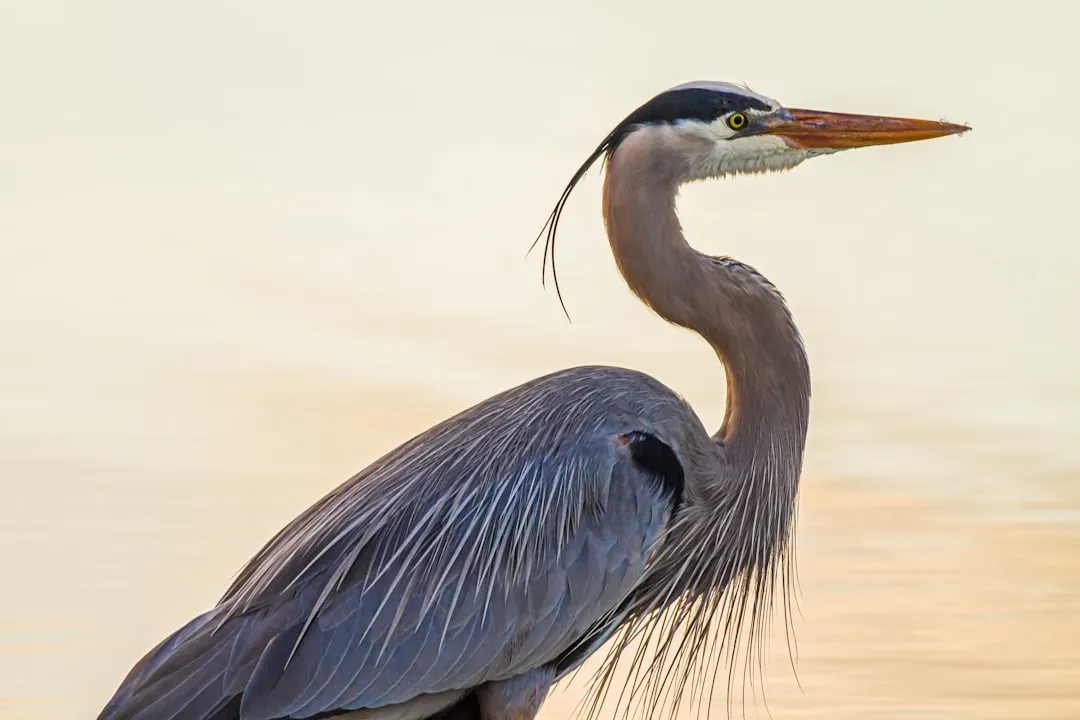
Out on the feeding grounds, you’ll usually see herons alone or well spaced out, and that’s not an accident. They often defend individual hunting territories and prefer to stalk silently without competition or commotion nearby. If another heron gets too close, the “quiet” bird can suddenly become very animated, throwing its head back, opening its wings, and chasing the intruder away with surprisingly dramatic body language. ([allaboutbirds.org](https://www.allaboutbirds.org/guide/Great_Blue_Heron/lifehistory?utm_source=openai))
The twist is that the same birds that hunt in silence often nest in large, noisy colonies called heronries or rookeries. In these treetop neighborhoods, you can have dozens or even hundreds of nests clumped together, full of calling chicks and squabbling adults. So you get this odd double life: when you see a heron in a marsh, it’s a solitary, stealthy hunter; when you see it in the breeding season, it’s one of many neighbors in a very crowded bird city. ([en.wikipedia.org](https://en.wikipedia.org/wiki/Heronry?utm_source=openai))
7. They Hunt Far More Than Just Fish
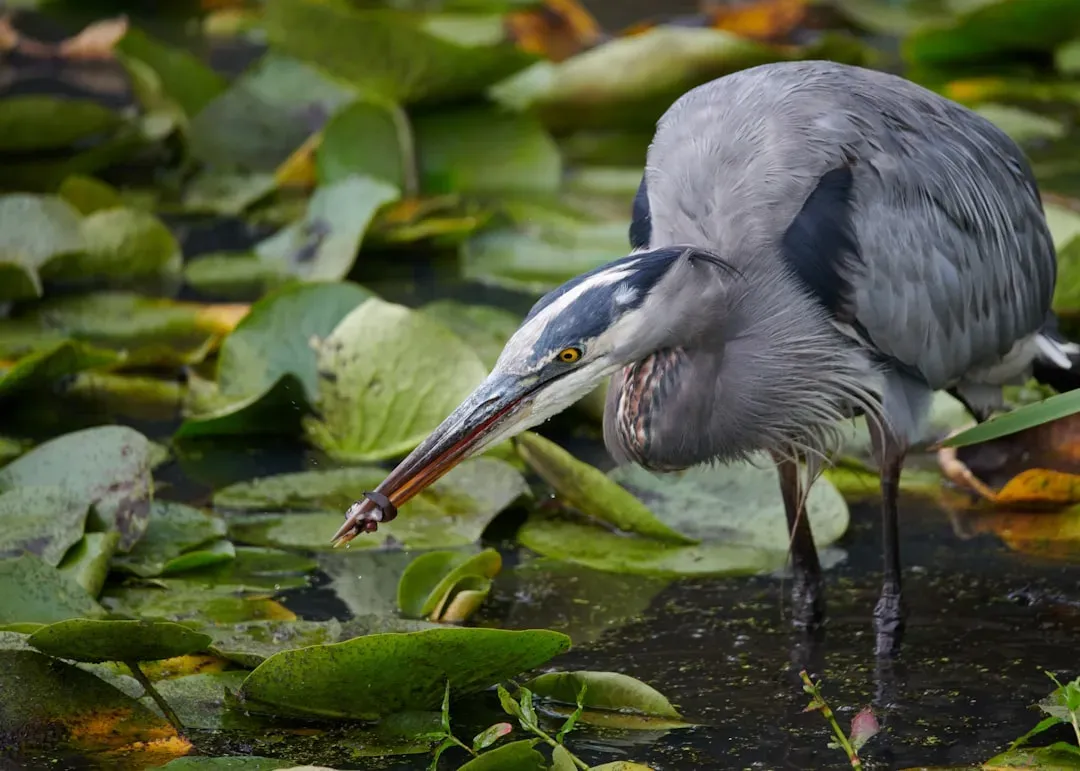
When you picture a heron, you probably imagine it pulling a fish from the water, and that’s definitely a big part of the menu. But if you watch long enough, you’ll see a much more flexible predator. Herons will happily grab frogs, tadpoles, crayfish, aquatic insects, small turtles, snakes, and even unsuspecting voles or mice wandering near the water’s edge. In some areas, people have watched them stalk open fields for small mammals just as eagerly as they work the shallows. ([pa.gov](https://www.pa.gov/agencies/pgc/wildlife/discover-pa-wildlife/herons?utm_source=openai))
This “eat whatever you can catch” approach is one reason herons do well in so many different wetlands, from roadside ditches and suburban ponds to vast marshes and coastal lagoons. For you, that means you can spot herons almost anywhere there’s shallow water and some kind of small animal life. For the prey, it means that if it moves and fits down a heron’s throat, it’s fair game – whether it has fins, legs, or fur.
8. Their Flight and Posture Are All About Balance and Control
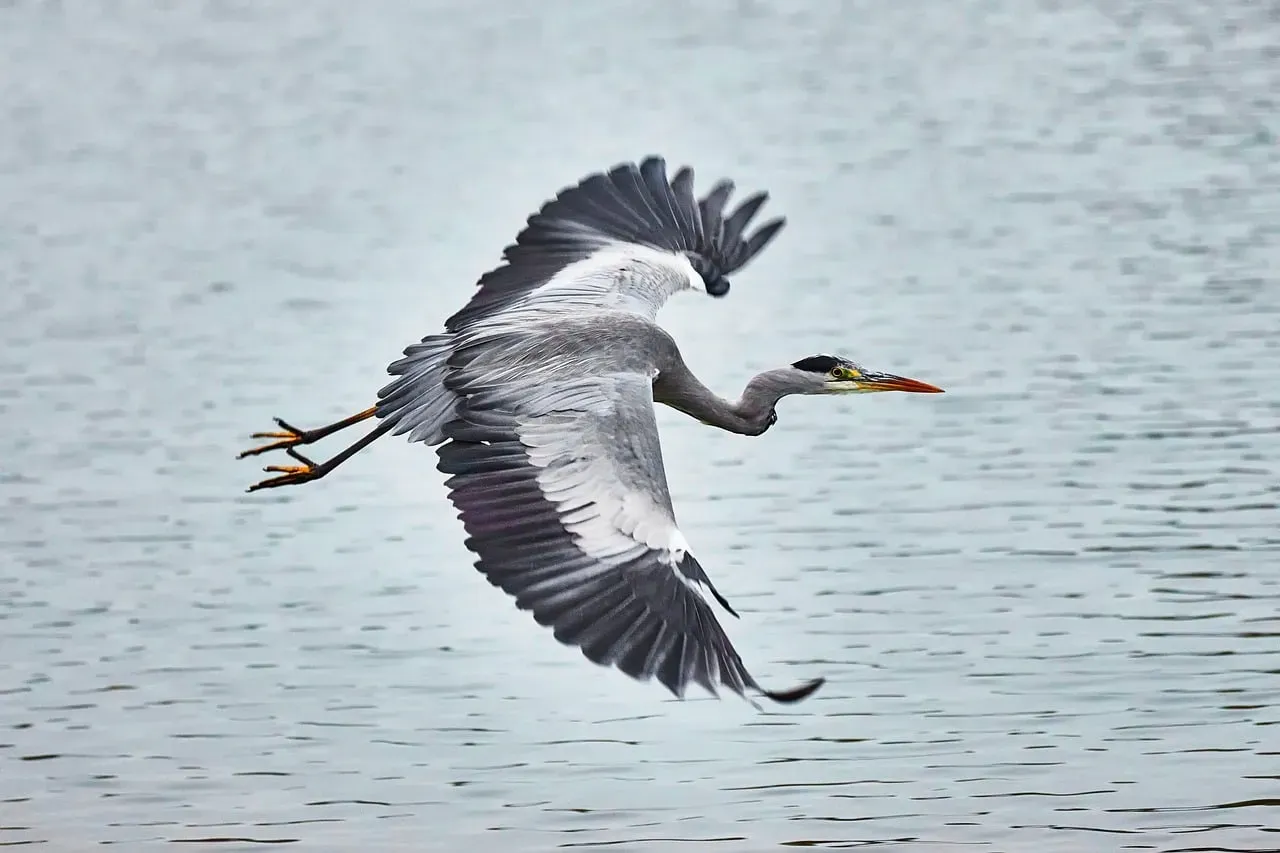
If you get lucky enough to see a heron take off, notice what happens to its neck. Instead of flying with the neck stretched out like a goose, it pulls the head back into that familiar S‑curve while the long legs stream straight behind. This tucked‑neck posture keeps the bird’s center of gravity closer to its body and makes flight more stable, especially with those big, slow wingbeats. In the air, a heron looks both powerful and surprisingly economical, like it’s measuring each beat of its wings. ([en.wikipedia.org](https://en.wikipedia.org/wiki/Heron?utm_source=openai))
That same emphasis on balance shows up when a heron lands or changes position while hunting. Watch how it leans forward, tilts its wings slightly, or shifts its weight from one leg to the other before making any bigger movement. It’s like a slow‑motion martial arts routine, all about keeping the center of mass exactly where it needs to be. This control lets the bird move through reeds, roots, and soft mud without slipping, splashing, or scaring away every potential meal.
9. Their Hunting Skills Depend on Fragile Wetland Homes
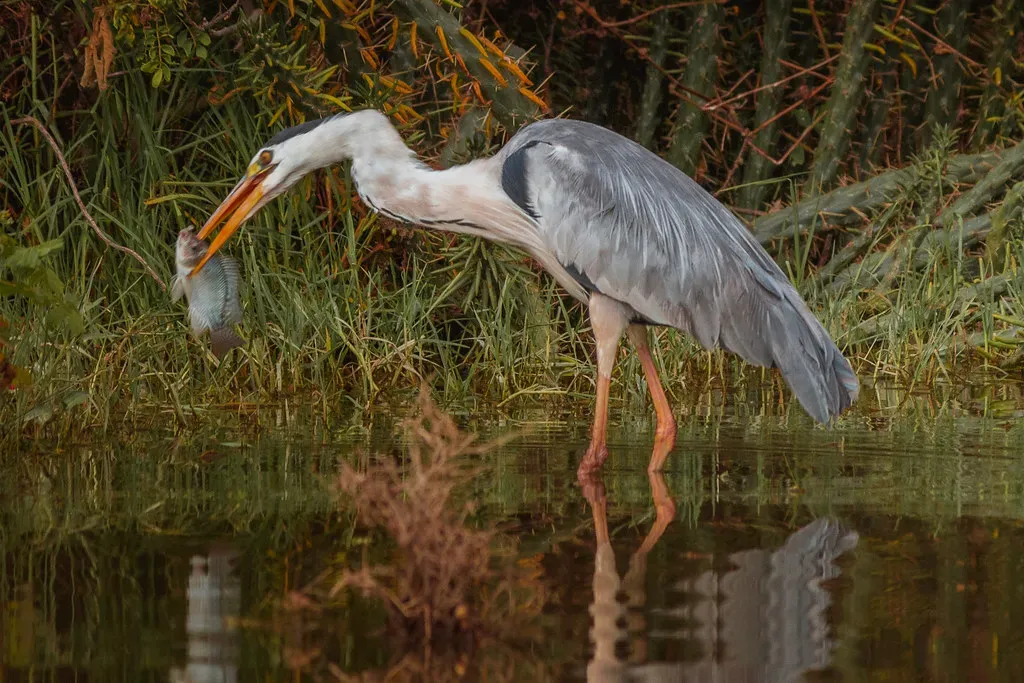
Everything that makes herons impressive hunters – from their long legs and stealth tactics to their generalist diet – still depends on one basic thing: healthy wetlands. They need shallow water full of small creatures, safe roosts, and relatively undisturbed nesting sites nearby. When rivers are straightened, marshes are drained, or shorelines are built up, those quiet feeding zones and nesting trees can disappear shockingly fast. ([allaboutbirds.org](https://www.allaboutbirds.org/guide/Great_Blue_Heron/lifehistory?utm_source=openai))
In many places, herons have managed to hang on or even increase where wetlands are protected or restored, which is a hopeful sign. But they’re still vulnerable to disturbance at nesting colonies, noise from boats, and loss of food‑rich shallows. For you, that means every intact marsh or pond with a natural shoreline is not just a pretty view – it’s part of the life‑support system for these birds and the quiet hunting performances you get to watch for free.
10. You Can Learn a Lot Just by Watching One Bird for 10 Minutes
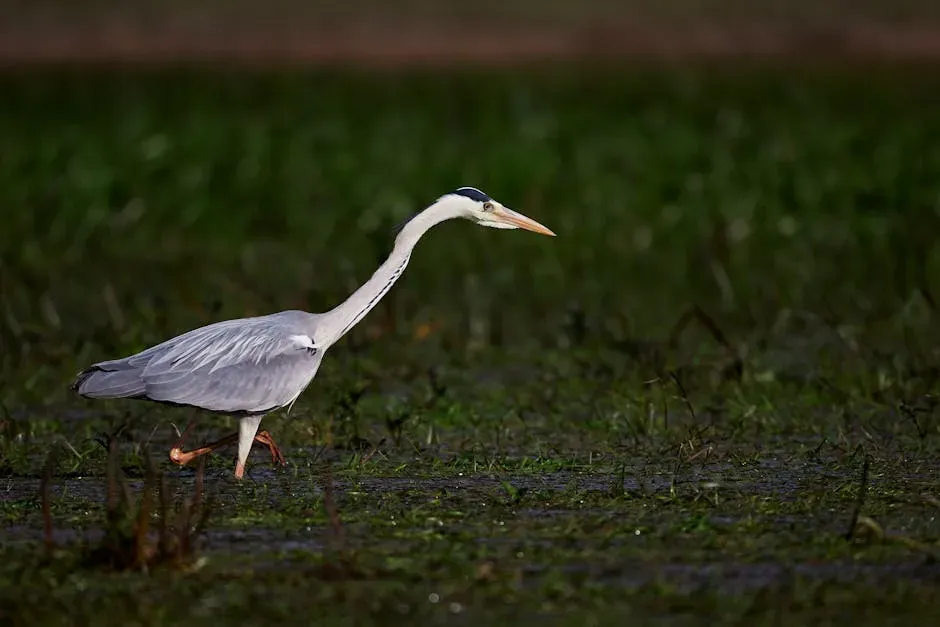
The next time you pass a pond, slow stream, or marshy corner of a lake, try this simple experiment: stop, pick out one heron, and give it ten undistracted minutes of your attention. You’ll probably see a whole story unfold – the careful stepping, the long pauses, the tiny head tilts as it tracks movement, and maybe, if you’re fortunate, that split‑second strike followed by a quick gulp. It’s like watching a nature documentary in real time, except you’re the camera operator and the narrator in your own head.
Once you’ve watched a heron like that, you start noticing how much is going on behind the stillness. You begin to see the wetland differently too: every ripple becomes a clue, every patch of reeds a possible ambush point. Over time, you might even find yourself rooting for the bird, then for the fish, then for the frog – appreciating the whole silent drama that plays out in these places every day. And suddenly, that “ordinary” heron turns into one of the most fascinating neighbors you have.
Conclusion: The Quiet Hunter You’ll Never Ignore Again
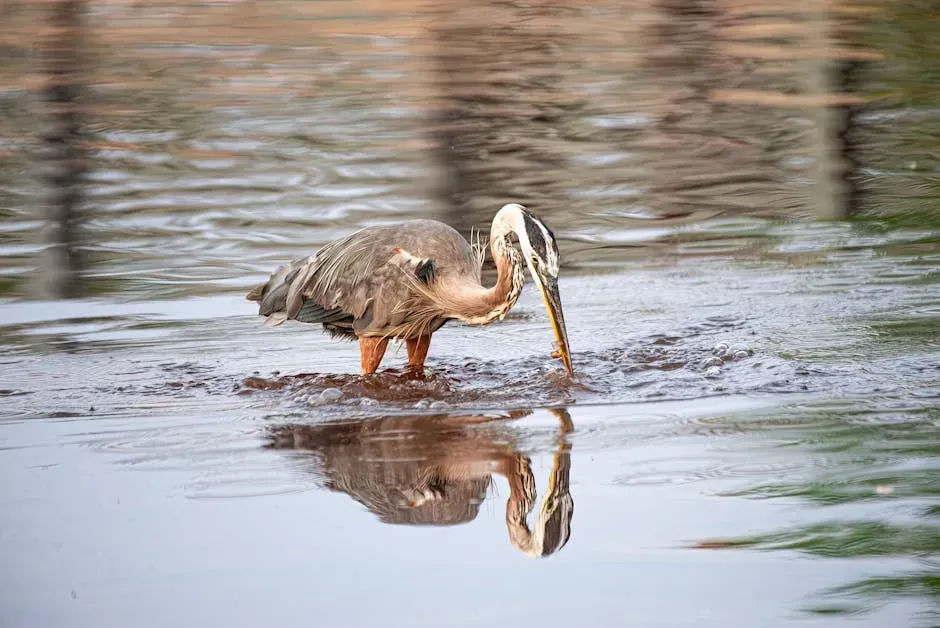
When you put all these pieces together – the coiled neck, spear‑like bill, ghost‑quiet steps, sharp vision, and flexible menu – you realize a heron is not just a tall bird standing in water; it’s a specialist built for calm, focused predation. Every part of its body has a job that feeds into the same goal: get close without being noticed and make that one perfect strike. The more you watch, the more you see a kind of patient genius at work in those shallow edges of ponds and marshes.
And maybe that is the most amazing fact of all: you do not have to travel far or buy special gear to witness any of this. You only have to stop, look, and give a little time to the next heron you see. In a world that moves fast and shouts loudly, a bird that wins by standing still and staying quiet feels almost radical. The question is, now that you know what’s really happening in that silence, will you ever walk past a heron without pausing again?