You would think that by now, with lasers scanning ruins and satellites mapping the planet, you would have a clear idea of how most ancient artifacts came to be. Yet some objects stubbornly sit there in museums and deserts, quietly whispering that you might not know as much as you think. These are the pieces that force you to imagine people thousands of years ago doing things you still struggle to explain today.
As you explore these mysteries, you are not just looking at old stone and metal. You are stepping into unfinished conversations between the past and the present. Each artifact in this list has been studied, debated, and measured, and still leaves a frustrating gap between what you can prove and what you can only guess. That uncomfortable uncertainty is exactly what makes them so compelling.
The Antikythera Mechanism: A Computer From the Ancient World
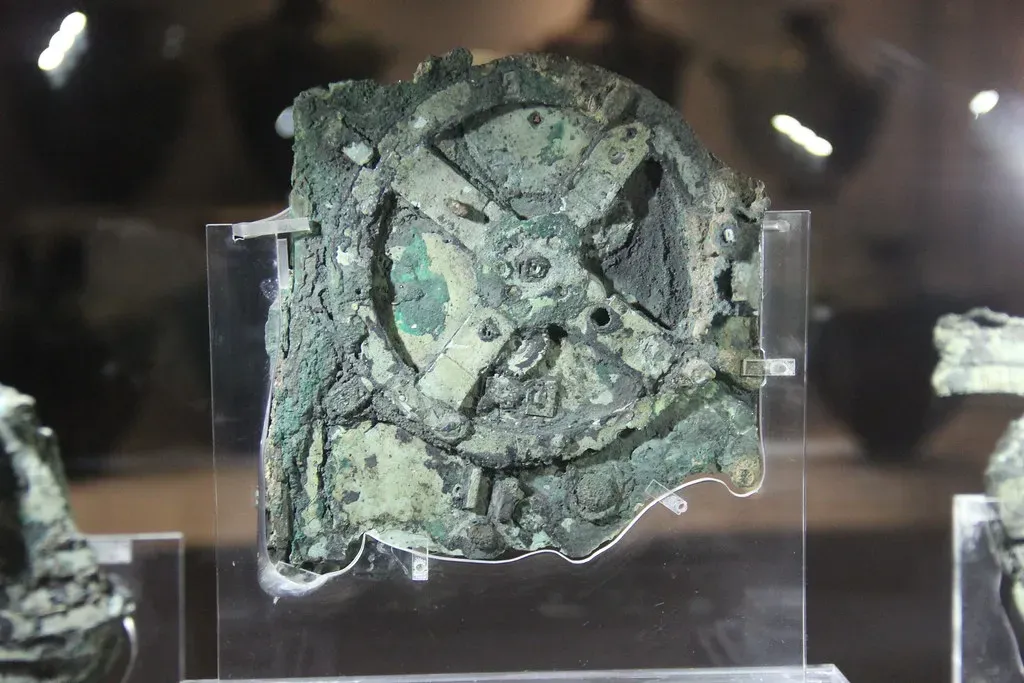
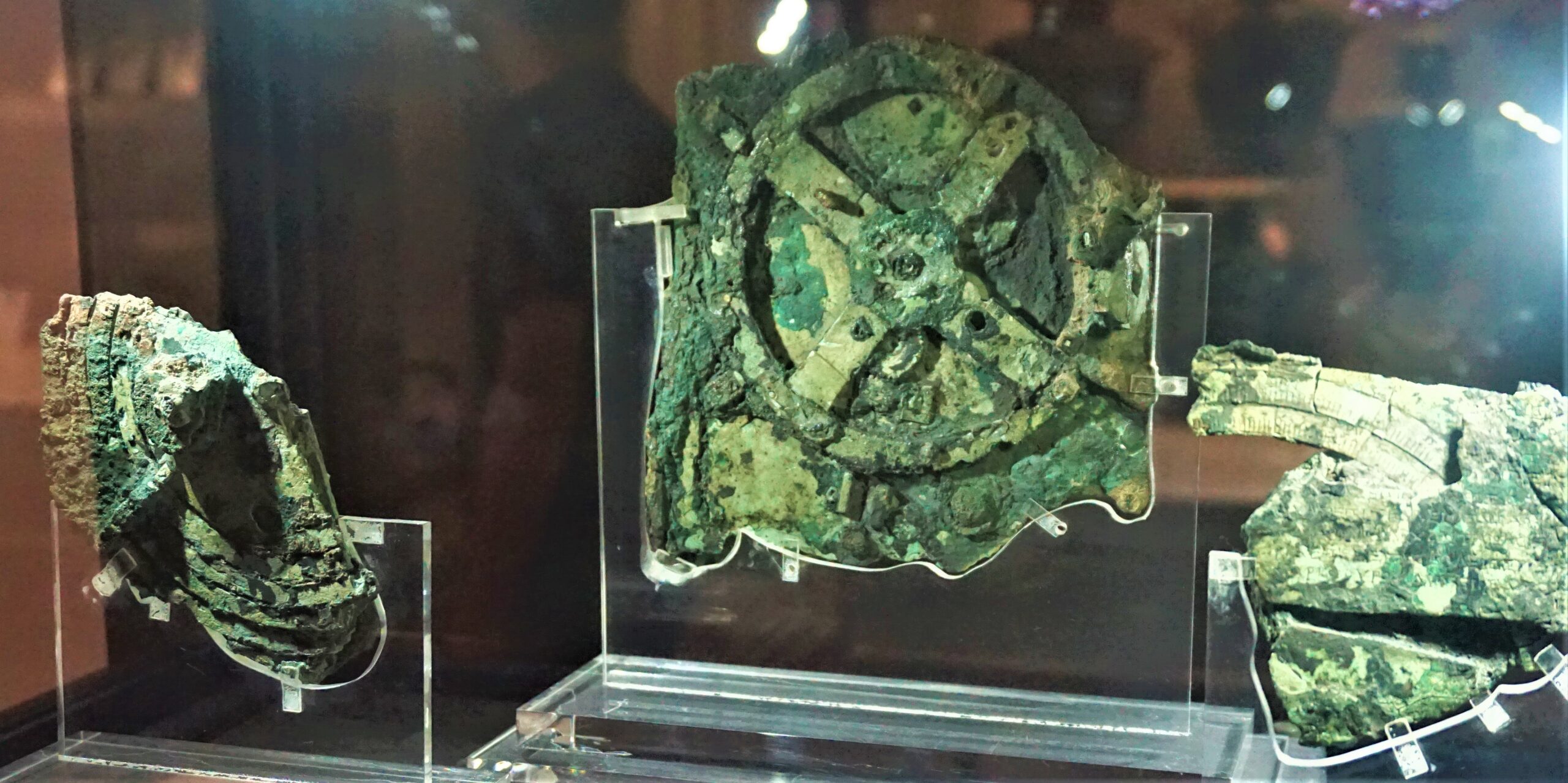
When you look at the Antikythera Mechanism, it feels like you’ve stumbled onto something that should not exist for its time. Pulled from a shipwreck off the Greek island of Antikythera and dated to roughly two thousand years ago, it is a corroded lump of bronze that turned out to be a breathtakingly complex system of gears. You are essentially staring at an ancient analog computer that could predict eclipses, track planetary positions, and likely guide important festivals and games.
What makes this device so hard to explain is not just its sophistication but its loneliness. You do not have a warehouse full of similar devices or an obvious workshop tradition to place it in. Instead, you have one extraordinary mechanism with fine gear teeth and intricate dials that seem to appear out of nowhere, then vanish from the archaeological record. You are left wondering: if people back then could build this, what else were they doing that you simply have not found yet?
The Nazca Lines: Messages Written on the Earth Itself
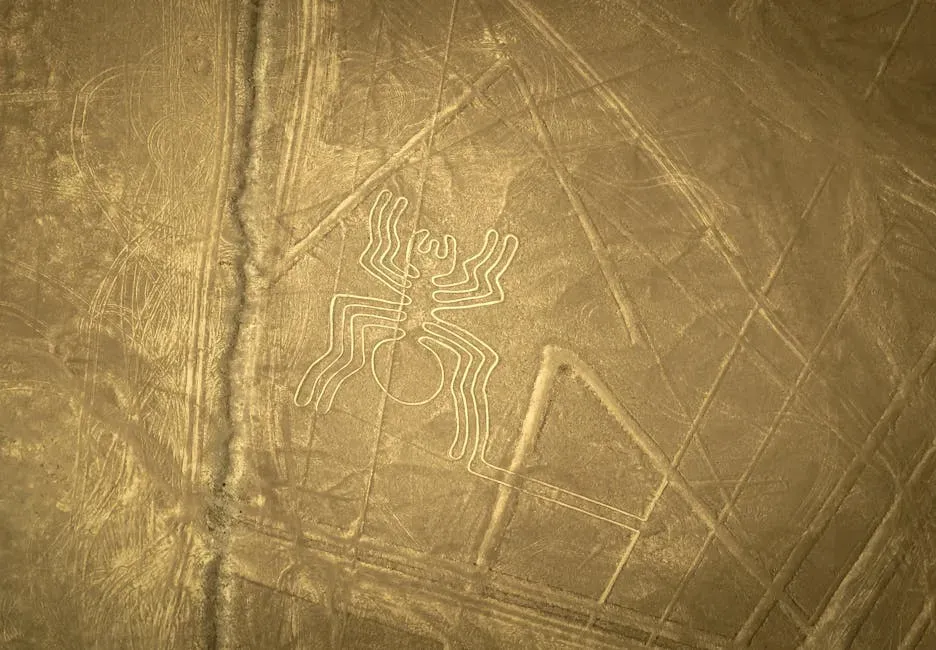
If you ever see aerial photos of the Nazca Lines in Peru, you might feel like someone doodled giant patterns across the desert just to confuse you. From the ground, you are mostly just walking among shallow grooves in the soil, but from above, huge shapes appear: hummingbirds, monkeys, spiders, straight lines stretching for kilometers, and geometric figures that seem almost too precise. These were made between many centuries ago by the Nazca culture, long before airplanes existed to reveal the full designs.
The big question for you is why anyone would invest that much effort in artwork they could barely see in full. Some researchers suggest that you are looking at ritual pathways, astronomical markers, or offerings to deities watching from the sky, while others see a sophisticated way of mapping water or organizing sacred landscapes. The truth is that, despite many clever theories, you are still guessing from patterns and context rather than concrete written explanations. The desert has preserved the lines beautifully, but not the instructions manual that would tell you what they were really for.
The Phaistos Disc: A Message No One Can Read
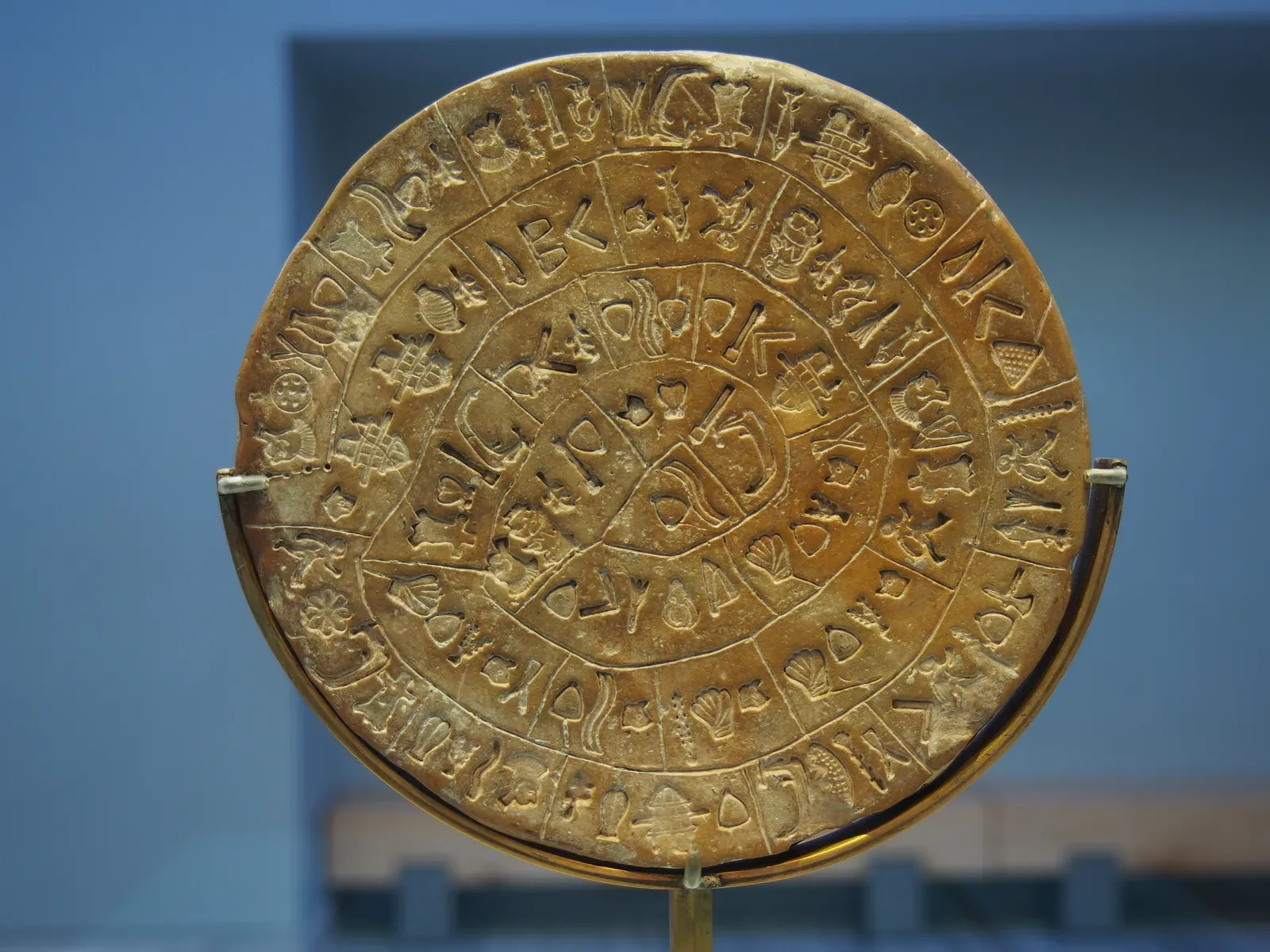
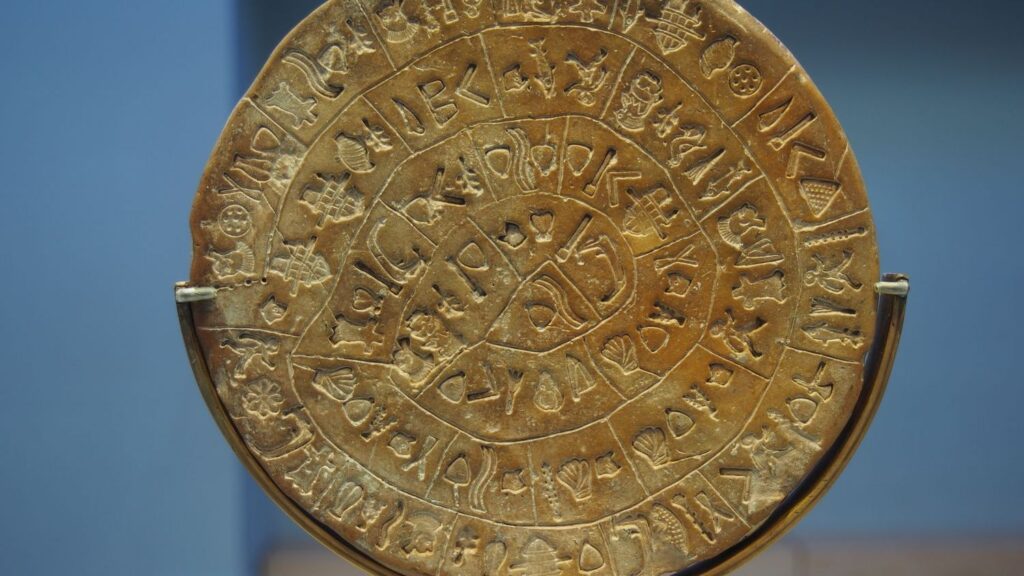
Imagine holding a clay disc in your hands that feels like a deliberately encoded message, but you cannot read a single word. That is the Phaistos Disc, found on the island of Crete and usually dated to the second millennium BCE. On both sides, you see spiraling bands of stamped symbols: human figures, tools, animals, and abstract shapes, all arranged as if they clearly meant something to the person who created them.
You can recognize that the symbols are not simply random art, and you can compare them to other scripts from the region, but the disc stands alone with no bilingual key, no longer inscriptions, and no clear link to a known language. Some people suggest it could be a hymn, a legal text, a ritual chant, or even a game, but these are all educated guesses that you cannot firmly prove. Until you find more examples or some kind of translation guide, you are stuck staring at what feels like a deliberately sealed message from a world that never expected you to read it.
The Baghdad “Battery”: Primitive Power Source or Misunderstood Jar?
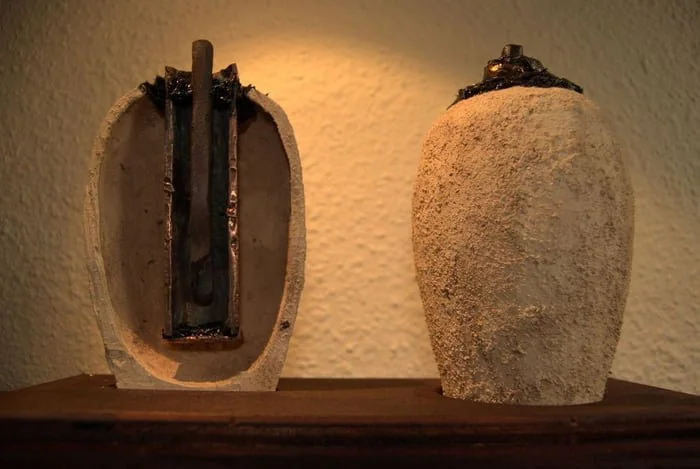
If you are drawn to stories of lost technology, the so‑called Baghdad Battery probably sits near the top of your list. It is essentially a clay jar with a copper cylinder inside and an iron rod, discovered near modern‑day Baghdad and often dated to a couple of millennia ago. When you look at reconstructions, it is easy to imagine it as a simple galvanic cell that could produce a weak electric current if filled with an acidic liquid.
Here’s the problem for you: no one has found wires, lamps, or devices that clearly show how such a current would have been used. Some researchers argue you might be looking at a mundane storage container or a ritual object that just happens to resemble a crude battery when interpreted through modern eyes. Experiments show you can generate a small voltage using similar jars, but that does not prove ancient people saw it the same way. You are caught balancing between an exciting narrative of early electricity and the sober reality of limited evidence.
The Saqqara Bird: Toy, Symbol, or Ancient Glider?
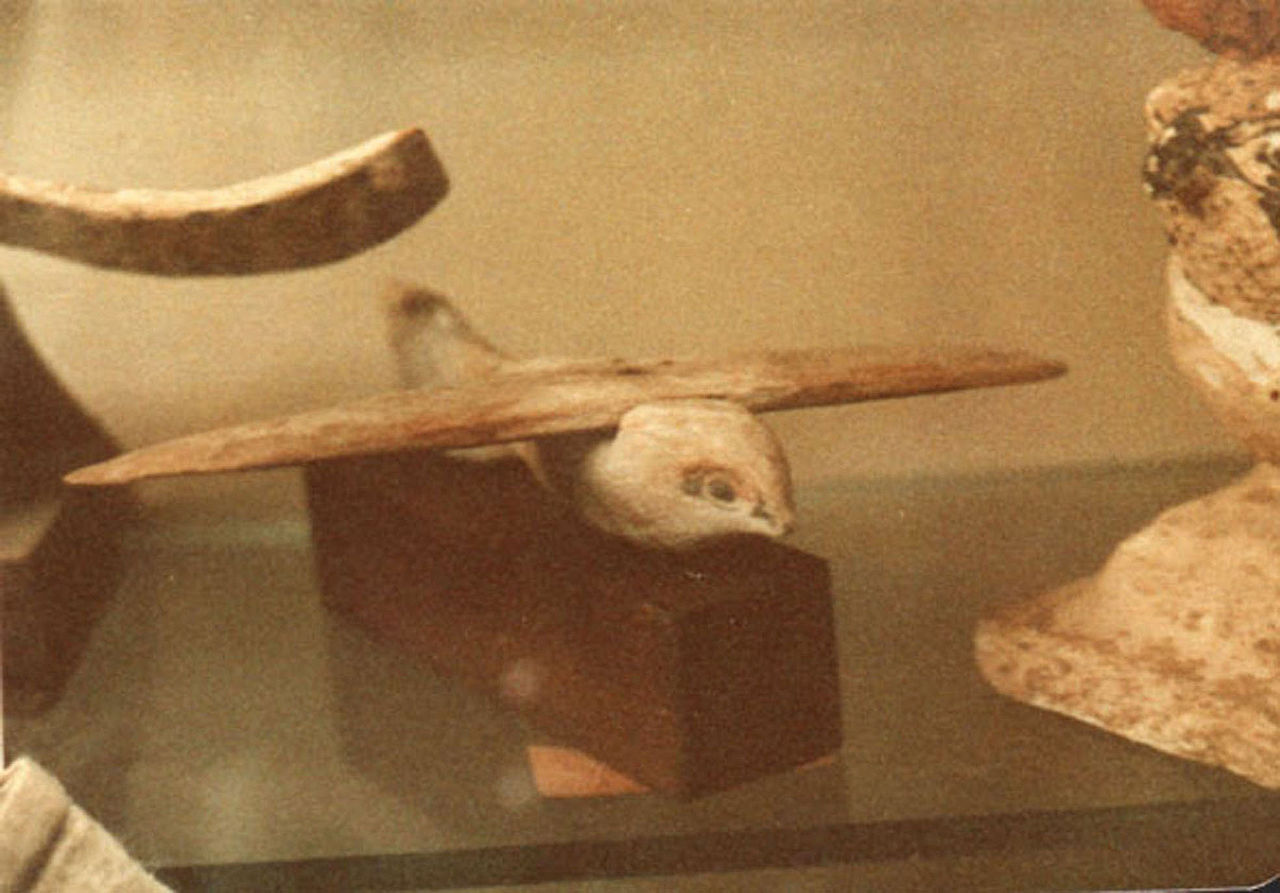
In an Egyptian tomb at Saqqara, you meet a small wooden object shaped like a bird with outstretched wings, dating back many centuries before modern flight. At first glance, it looks like a simple carved toy or symbolic offering. But when you examine the shape of the wings and the tail, you notice that it resembles a basic glider design, which has led some enthusiasts to wonder if you are seeing early experimentation with aerodynamics.
Conventional explanations suggest you are dealing with a stylized representation of a bird or perhaps a symbol related to the soul’s journey, ideas that fit well with Egyptian religious beliefs. However, aerodynamic tests on replicas show that, with slight modifications, the model can actually glide. This leaves you in an awkward middle ground: it could be a toy that happened to fly decently, an accidental aerodynamic shape, or a lost branch of practical knowledge about air currents. You are left without records, just one small bird and a lot of speculation about where it truly belongs.
The Voynich Manuscript: A Book That Refuses to Talk
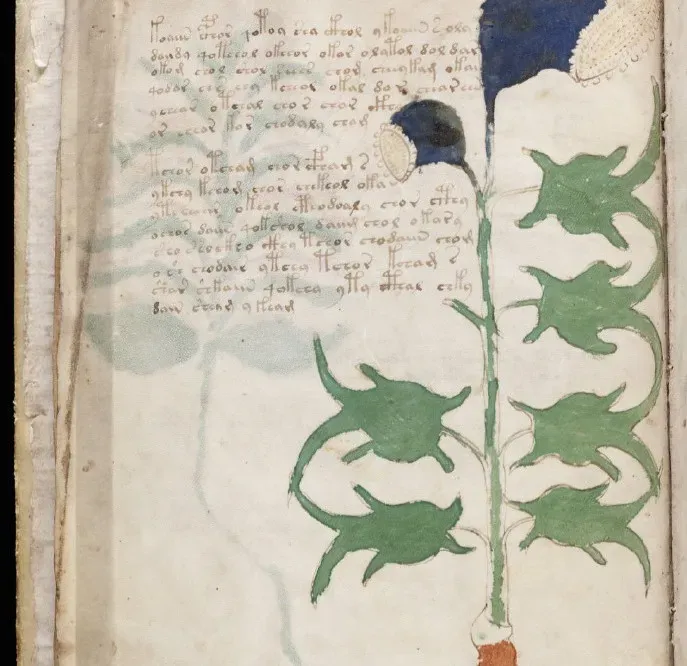
Open the pages of the Voynich Manuscript, and you find yourself surrounded by a forest of strange plants, unknown stars, swirling diagrams, and text written in an alphabet no one can confidently read. Radiocarbon dating suggests the parchment is from the early fifteenth century, but the language, script, and illustrations create a puzzle that still keeps professional coders and casual hobbyists awake at night. You might feel, just from flipping through it, that someone was trying to explain a whole system of knowledge you no longer understand.
Over the years, you have probably heard that it is everything from a coded medical text to an herbal guide, a hoax, or even a constructed language. Some patterns in the text look like real language, not random nonsense, yet no one has mapped it convincingly to any known tongue or broken its logic in a way that convinces most scholars. Every time a new theory makes headlines, it eventually runs into contradictions or gaps. As a reader, you are left staring at glossy, colorful pages that seem eager to teach you something, while stubbornly refusing to say anything at all.
The Shroud of Turin: Relic, Icon, or Medieval Creation?
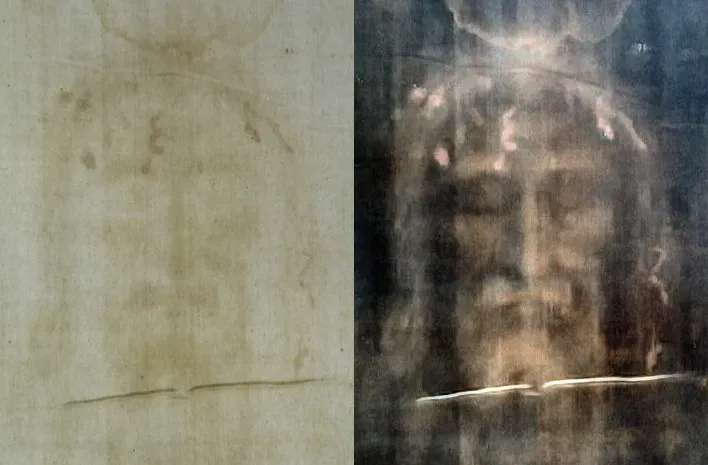
When you see photos of the Shroud of Turin, what hits you first is the faint, ghostly image of a man’s face and body appearing across the linen. Many people over the centuries have believed you are looking at the burial cloth of Jesus, while others see it as a powerful religious icon or even a clever medieval artwork. Scientific testing has examined everything from the fabric weave to tiny particles on the fibers, but those tests have not settled the issue in a way that satisfies everyone.
Radiocarbon dating done decades ago pointed to a medieval origin, but critics argue about possible contamination, repairs, or sampling errors, leaving you with more debate than finality. Explanations for how the image formed range from natural chemical reactions to deliberate artistic techniques and more unconventional proposals. You are caught between faith, science, and the limits of what you can reconstruct from a single piece of cloth. No matter where you land personally, you are left with an object that continues to blur the line between history and belief.
Sacsayhuamán’s Megalithic Walls: Stonework That Shrugs at Earthquakes
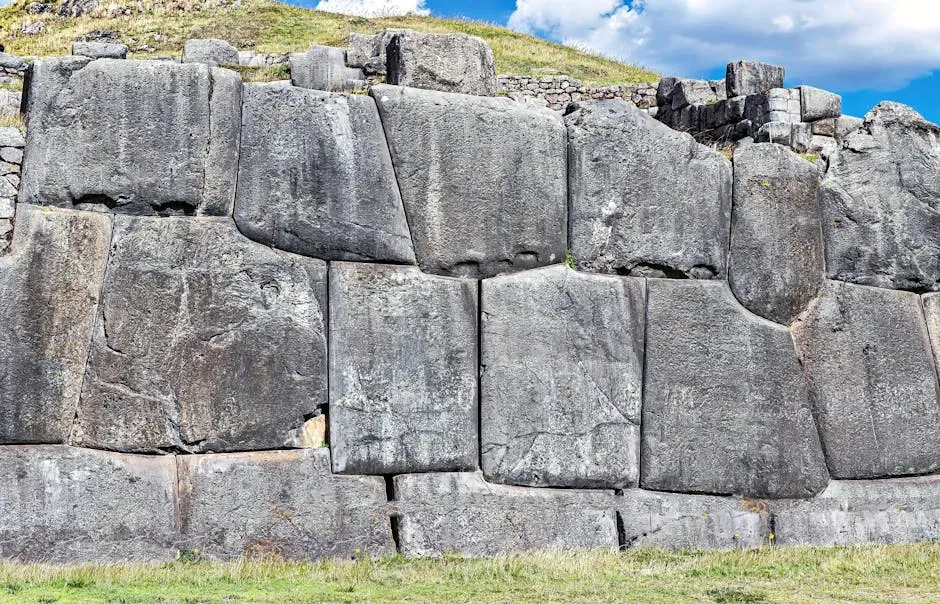
High above the city of Cusco in Peru, you stand in front of the massive zigzag walls of Sacsayhuamán and feel oddly small. The stones are enormous, some weighing many tons, yet they are shaped and fitted together so precisely that you can barely slip a knife blade between them. You are looking at work credited to the Inca, although there is evidence that some foundations could be even older, and the joints still challenge your understanding of pre‑industrial stone masonry.
What puzzles you is not just the size of the blocks, but the complex interlocking shapes that help the walls survive frequent earthquakes. Without metal cranes or modern cutting tools, how did builders move, shape, and fit these stones so neatly? You can suggest patient trial and error with simple tools, ramps, and levers, and that is probably closer to the truth than anything supernatural. Still, the lack of written construction manuals or detailed contemporary descriptions means you are reconstructing methods from scattered clues and your own engineering imagination.
The Longyou Caves: A Gigantic Underground Project Without a Story
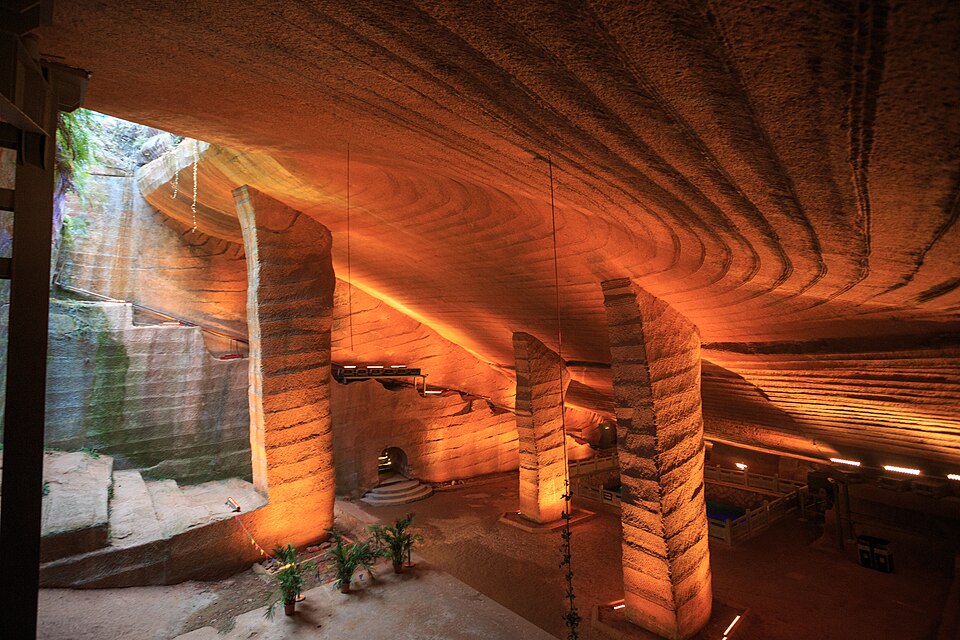
In eastern China, you can walk into the Longyou Caves and feel like you have stepped into the aftermath of a massive construction project that somehow left no paperwork. These are large, hand‑carved underground chambers with straight walls, stone pillars, and a distinctive pattern of chisel marks covering the surfaces. Based on what little evidence you have, they appear to be ancient, but there are no clear historical records describing who ordered them, why they were dug, or how long the work took.
For you, that absence is almost more shocking than the caves themselves. Digging out that much stone with basic tools would have required an enormous amount of organized labor, planning, and resources. Yet unlike famous tombs or temples, you do not have inscriptions boasting about the builders or dedicating the space to a certain purpose. Were these storage facilities, ritual spaces, quarries turned into something else, or even unfinished projects abandoned midway? You are left wandering through echoing halls, surrounded by effort but starved of explanation.
The Stone Spheres of Costa Rica: Geometry Scattered in the Jungle
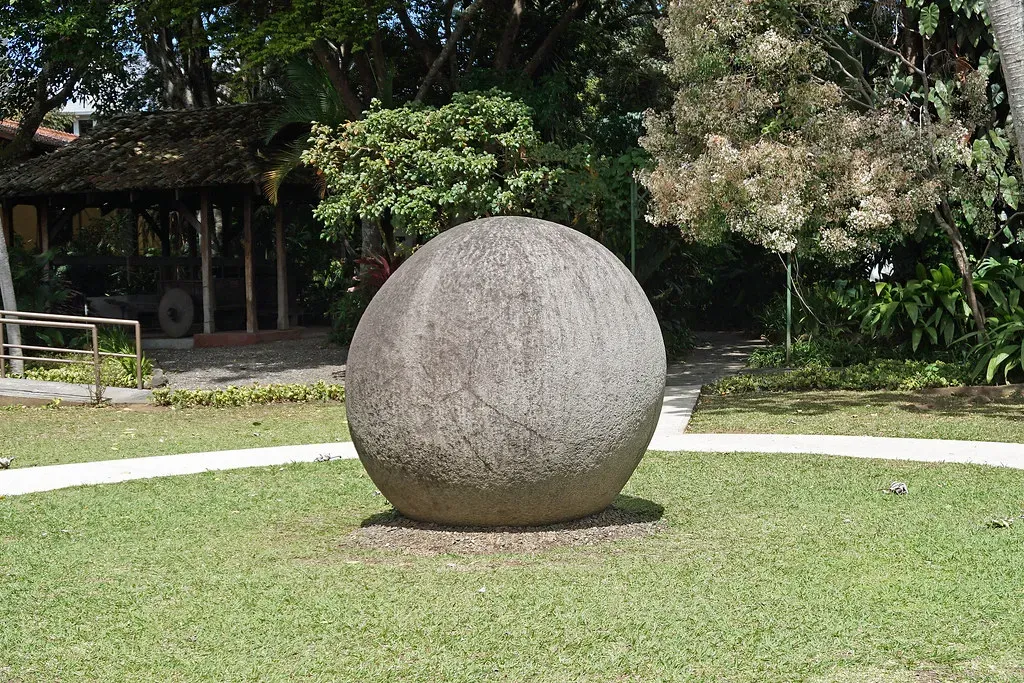
Imagine walking through the jungles of Costa Rica and stumbling upon a nearly perfect stone sphere, and then another, and another. These mysterious spheres range from hand‑sized to several tons in weight and were carved centuries ago by pre‑Columbian cultures whose exact identities and practices are still not fully understood. You see them in former village sites, lined up in patterns, or moved to modern gardens and plazas as decorative curiosities.
Their purpose, though, refuses to settle into a neat box for you. Some scholars think you are seeing status symbols or markers of elite power, while others suspect astronomical alignments or territorial boundaries. The fact that many spheres have been moved, damaged, or removed from their original context has stripped away valuable clues you might otherwise have used. You are left with the undeniable skill required to shape hard stone into clean spheres and a nagging question about why someone chose this exact form, over and over again.
Gobekli Tepe: A Monument That Rewrites Your Timeline
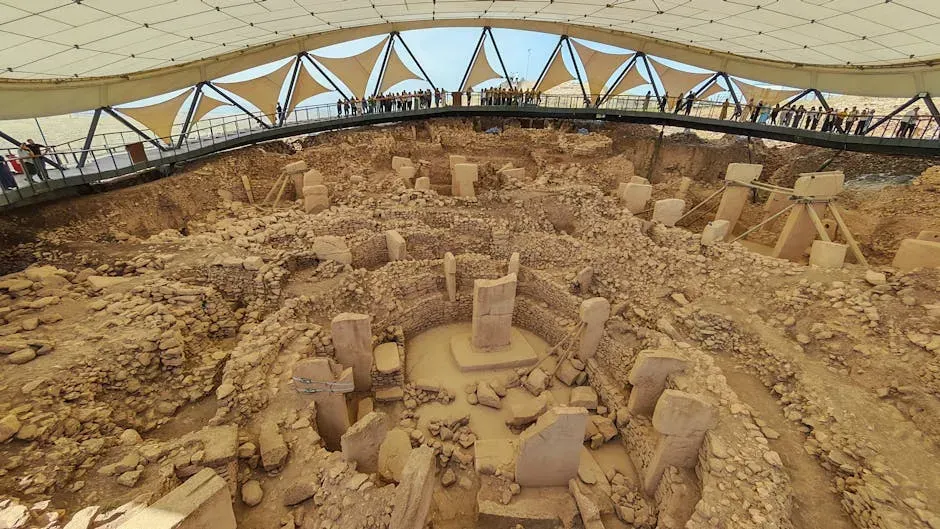
When you first hear about Gobekli Tepe in southeastern Turkey, it can feel like someone pushed back the starting line of complex human culture. Here you have massive T‑shaped stone pillars arranged in circles, decorated with carvings of animals and abstract symbols, built at a time when you usually imagine people as small bands of hunter‑gatherers. The site is many thousands of years older than the famous stone circles of Britain, which forces you to rethink when large‑scale ritual architecture began.
The hardest part for you is figuring out why people who did not yet farm extensively would invest so much energy into building such a place. Was this a seasonal gathering center, a ritual complex, or the heart of some early belief system that encouraged people to come together and cooperate? Some researchers even suggest that sites like this may have helped trigger the shift toward settled life and agriculture, rather than the other way around. With only a fraction of the site excavated and no written records, you are left piecing together a story from stones and animal bones, knowing that much of the narrative is still buried.
The Dendera Light Relief: Symbolism or Lost Technology?
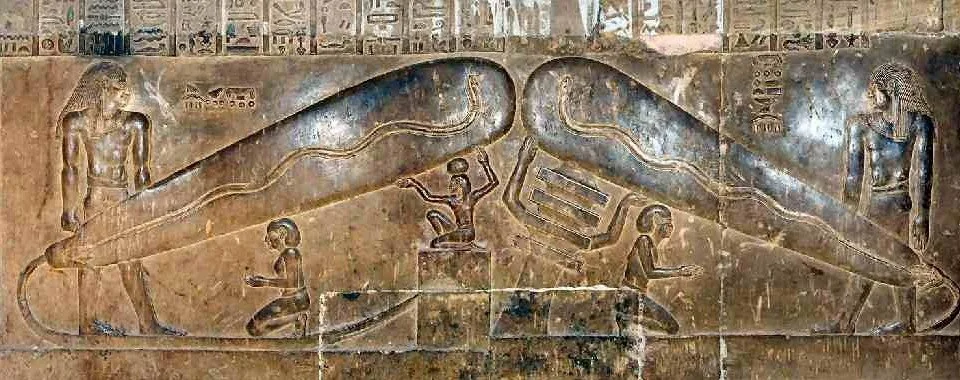
On the walls of the Hathor Temple at Dendera in Egypt, you might notice reliefs that show figures holding what look, to modern eyes, like large bulb‑shaped objects connected to cables. If you approach them already thinking about electricity, it is easy to imagine you are seeing ancient light bulbs powered by some forgotten technology. This idea has captured a lot of public imagination, especially in illustrations and documentaries.
Egyptologists usually interpret these scenes very differently, seeing them as symbolic representations tied to mythology, such as lotus flowers, serpents, and cosmic forces. When you consider how Egyptian art often used layered symbolism and repeated religious motifs, that explanation fits well. Yet, because you live in a world full of cords and bulbs, your brain keeps circling back to that modern resemblance. You are effectively caught between a conservative reading grounded in language and context and a more sensational idea that is not strongly supported by direct evidence, but lingers in your imagination anyway.
The London Hammer: An Iron Tool in the Wrong Layer
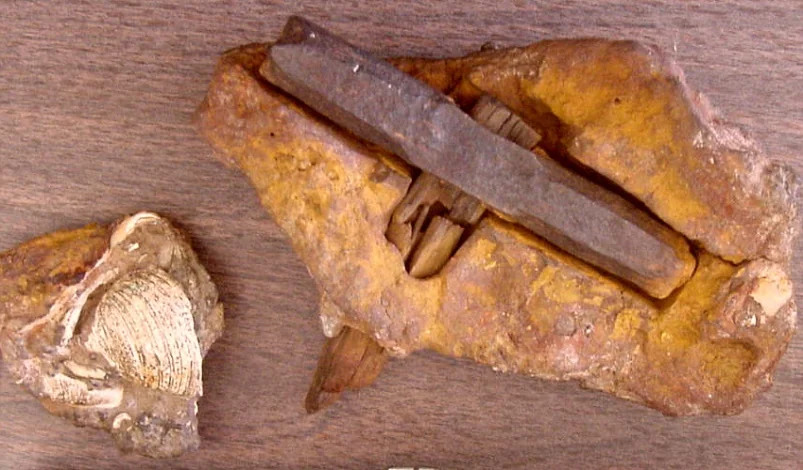
The so‑called London Hammer, found in Texas in the twentieth century, is a small iron hammer embedded in a piece of rocklike material that some people claim is extremely ancient. If you take that claim at face value, you end up with the confusing image of a clearly modern‑style tool locked inside very old stone. That kind of mismatch is irresistible if you enjoy stories of out‑of‑place artifacts that challenge standard timelines.
However, when you look closer, you find that the situation is much more tangled for you. Many geologists suggest that you are not dealing with solid ancient bedrock, but with a chunk of more recent sediment or concretion that formed around the hammer through natural processes. The hammer itself appears consistent with nineteenth‑century tools, not anything oddly advanced or prehistoric. The mystery, then, is less about rewriting all of human history and more about understanding how easy it is for context to be misread when a curious object is pulled from the ground without thorough documentation.
The Shamir of Temple Lore: A Legendary Tool Without a Trace
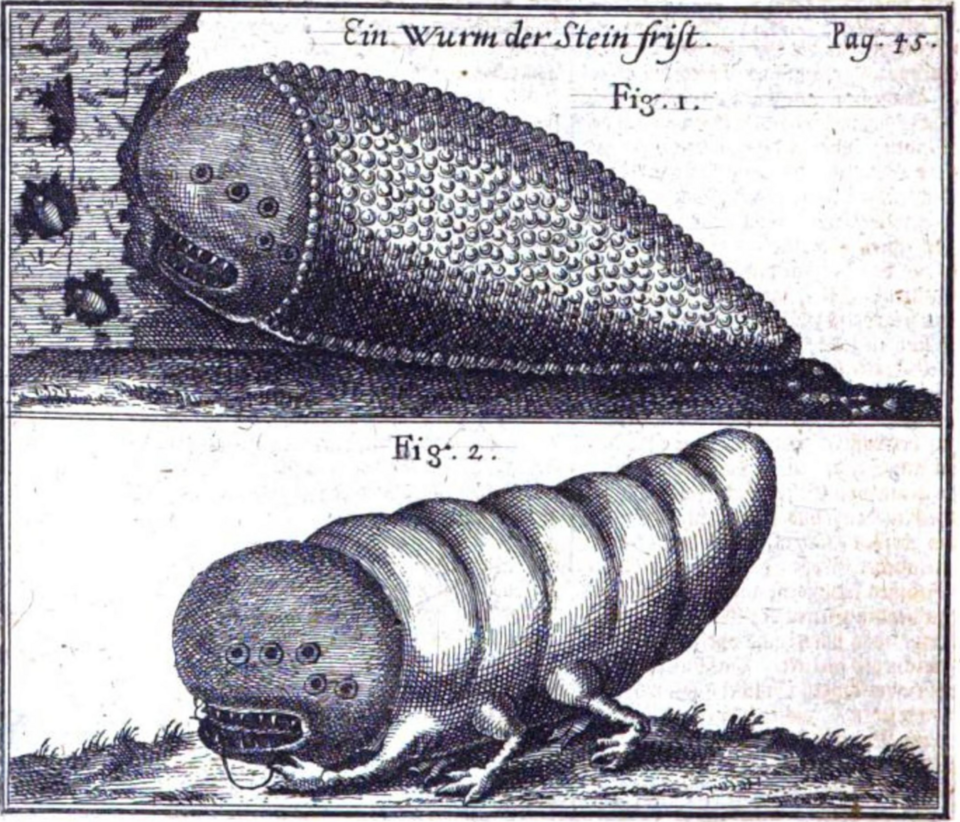
Unlike most objects on this list, the Shamir lives mainly in ancient texts and traditions rather than in a display case. In certain descriptions tied to the building of sacred structures, you hear about a mysterious tool or creature capable of cutting stone without using metal. If you take the stories literally, you are asked to imagine a tiny, powerful agent that could split or shape even the hardest materials in ways normal tools could not.
From your modern perspective, it is tempting to link this legend to lost technologies, unknown minerals, or even symbolic descriptions of techniques you have not yet identified. But without physical remains or clear matching tools, you are dealing more with how people remembered and retold impressive construction feats than with a specific, testable artifact. The Shamir reminds you that sometimes the most puzzling ancient “objects” exist only in the thin space between myth and memory. You are left wondering whether you are chasing a real device, a poetic metaphor, or both at once.
Conclusion: Living Comfortably With the Unknown
When you step back and look at all these artifacts together, you realize they are less about proving wild theories and more about mapping the edges of what you honestly do not know. Each object sits at a crossroads where evidence runs out and interpretation begins, forcing you to confront the fact that the past is not a neat, completed puzzle. Instead, you are holding scattered pieces that sometimes fit beautifully and sometimes refuse to lock into place, no matter how much you want them to.
If anything, these mysteries invite you to be more curious and less certain. You are allowed to marvel at craftsmanship you cannot fully explain, to entertain multiple explanations without clinging to any single one too tightly, and to accept that new discoveries could reshape your understanding overnight. The real wonder is not just in the objects themselves, but in your willingness to keep asking questions you cannot yet answer. When you look at these ancient puzzles, you might ask yourself: what else is still buried, waiting to tell you that your story of the past is only just getting started?