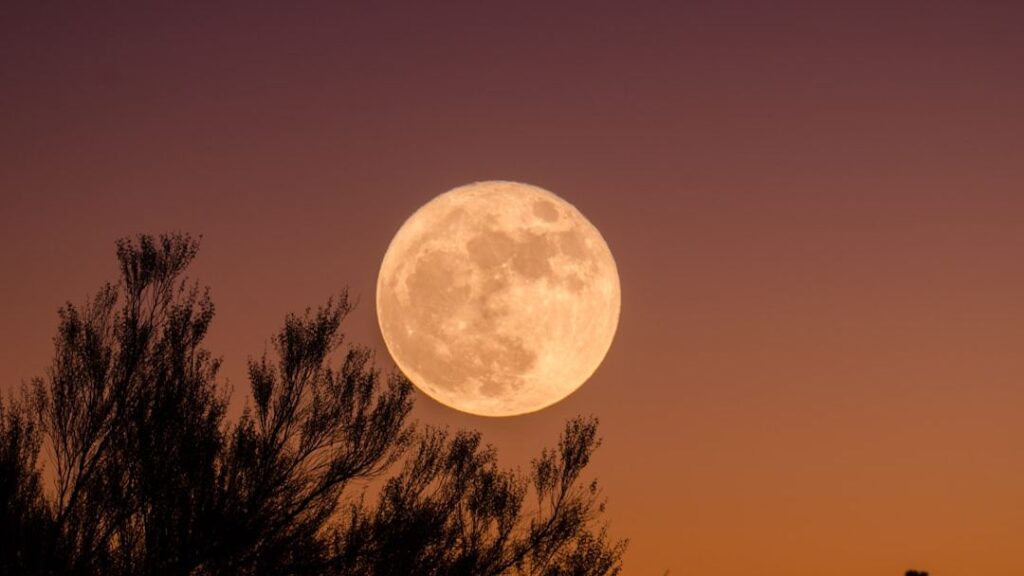
Earth’s position between the Sun and Moon creates the striking sight of a full Moon, when the entire face visible from our planet reflects sunlight. This alignment repeats roughly every 29.5 days as the Moon completes its orbit. Observers can plan ahead for each occurrence in 2026, including traditional names tied to seasonal events and one notable repeat appearance.
The Science Behind the Phase
The full Moon occurs only when the Sun, Earth, and Moon form a straight line, with our planet in the middle. Sunlight then illuminates the entire lunar hemisphere that faces Earth, producing the bright disk seen at night. Slight variations in the Moon’s orbit mean the exact moment of fullness shifts by a few hours each cycle, sometimes placing the peak during daylight hours in certain time zones.
These alignments remain predictable because the Moon’s orbital period stays consistent. Astronomers calculate the precise times using established orbital mechanics, allowing calendars to list exact moments down to the minute. No special equipment is required to witness the event, though clear skies and a view toward the eastern horizon at moonrise improve the experience.
Complete 2026 Schedule
Every full Moon in 2026 carries a traditional name drawn from historical and cultural associations with weather, agriculture, or wildlife. The following list shows the date and common name for each occurrence, based on Eastern Time:
- January 3 – Wolf Moon
- February 1 – Snow Moon
- March 3 – Worm Moon
- April 1 – Pink Moon
- May 1 – Flower Moon
- May 31 – Blue Moon
- June 29 – Strawberry Moon
- July 29 – Buck Moon
- August 28 – Sturgeon Moon
- September 26 – Harvest Moon
- October 26 – Hunter’s Moon
- November 24 – Beaver Moon
- December 23 – Cold Moon
The May 31 event stands out as a Blue Moon because it is the second full Moon within the same calendar month. Such repeats happen roughly every two to three years and draw extra attention from sky watchers.
Planning Observations
Full Moons rise at sunset and set at sunrise, remaining visible all night when skies are clear. The May 31 Blue Moon peaks at 4:45 a.m. Eastern Time, so early risers in the Americas will see it high in the sky before dawn. Later dates, such as the December 23 Cold Moon, occur during shorter winter days, often making the Moon appear larger near the horizon due to an optical illusion.
Urban observers benefit from finding darker viewing spots away from streetlights. Binoculars or small telescopes reveal surface details like craters and maria even during the bright full phase, though the high contrast reduces fine shadow detail compared with other phases.
Looking Ahead
Tracking these dates helps both casual viewers and dedicated astronomers anticipate optimal nights for lunar photography or simple appreciation. The predictable cycle continues without interruption, offering repeated opportunities to connect with the night sky throughout the year.