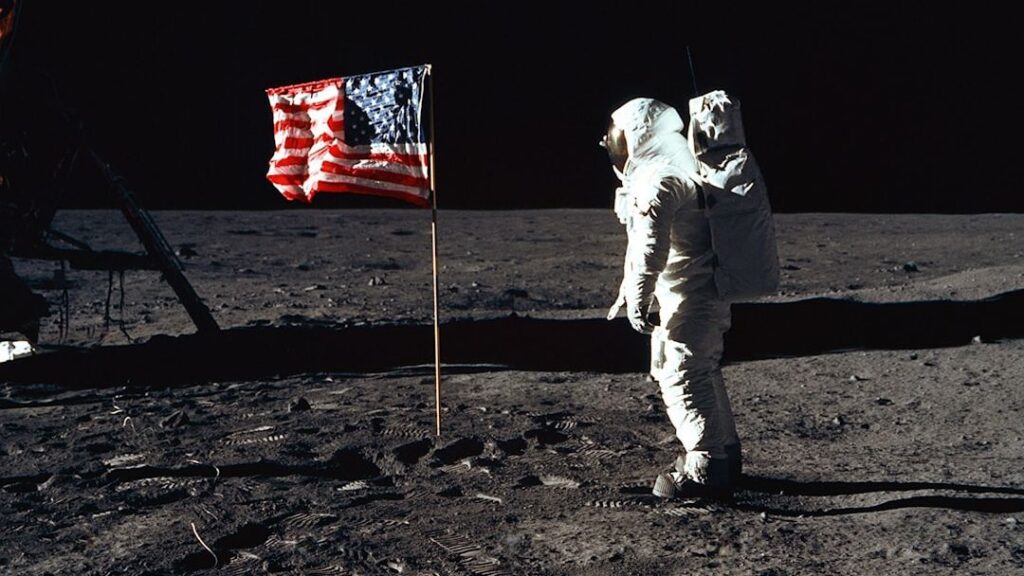
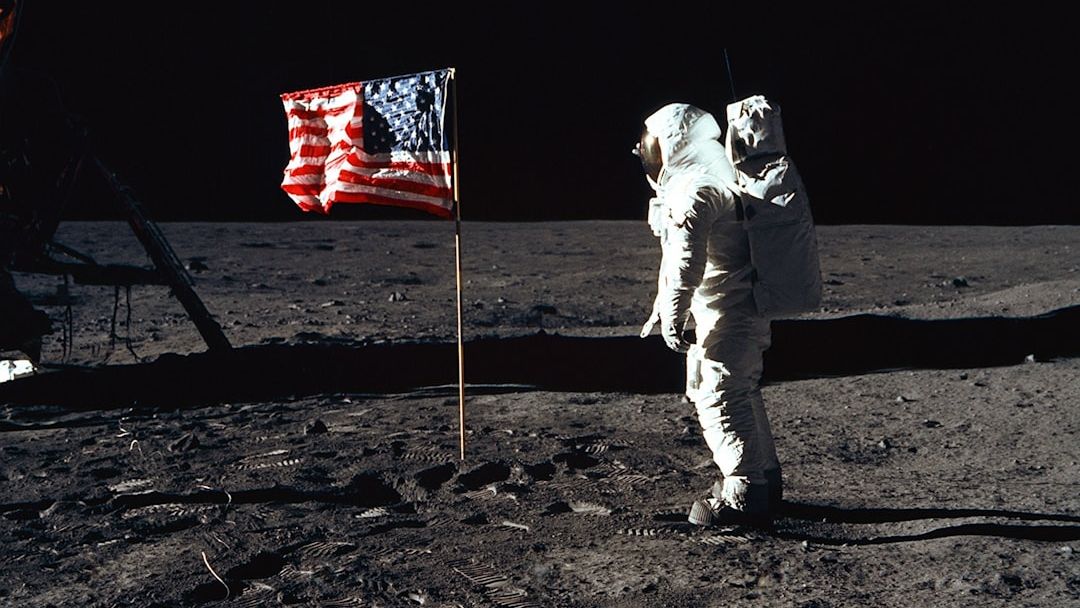
I spent years convinced the moon landing was faked – and the single piece of evidence that changed my mind isn’t one most conspiracy debunkers ever bring up – Image for illustrative purposes only (Image credits: Unsplash)
For years, holding onto doubts about the Apollo missions shaped how one person navigated conversations and personal convictions. The belief lingered not because of dramatic theories but through a quiet resistance to what seemed like an overly settled narrative. Over time, that stance created small social frictions at gatherings and required constant internal justification. Eventually, a single observation about international politics cut through the uncertainty in a way technical explanations never had.
Years of Holding the Question Open
The skepticism began in late adolescence and persisted through the twenties and into the early thirties. It centered on familiar points raised in public discussions: the behavior of the American flag on the lunar surface, the absence of stars in photographs, and questions about radiation exposure during transit. These details felt unresolved enough to keep the possibility of fabrication alive, even while rejecting broader conspiracy frameworks involving unrelated topics.
At social events, the position surfaced as gentle pushback rather than confrontation. It allowed the holder to feel slightly apart from the mainstream without aligning with fringe communities. The appeal lay partly in maintaining an independent stance, though it also meant repeated explanations that rarely changed anyone’s view. The belief remained private enough to avoid major personal costs yet persistent enough to influence how evidence was weighed.
Why Standard Rebuttals Fell Short
Responses to the technical objections usually focused on physics and engineering details. Explanations covered how the flag moved due to the planting process in a vacuum, why camera settings excluded faint stars, and how brief exposure to radiation belts avoided lethal doses. Each answer addressed a specific claim with domain-specific knowledge.
The difficulty arose because evaluating those answers required trusting experts in fields outside personal expertise. The original objections came from one set of sources, while the rebuttals came from another. Without independent means to verify either side, the choice of whom to believe preceded any technical assessment. This pattern repeated across multiple points, leaving the underlying doubt intact despite the volume of counter-information.
The Observation That Cut Through the Uncertainty
A different line of reasoning emerged from reading about broader historical events. It centered on the Soviet Union’s position during the late 1960s and afterward. As the primary rival in the space race, the Soviets possessed both the technical capability to analyze American claims and strong geopolitical reasons to discredit any falsehood. Their state media and intelligence resources could have publicized evidence of fabrication at any point over subsequent decades.
Instead, Soviet leaders and scientists accepted the landings from the outset. Public congratulations followed the missions, and no official challenge appeared even after the Soviet collapse opened archives. Later cooperation between Russian and American space programs continued without raising doubts about the original events. This consistent acceptance stood in contrast to what a successful deception would have required from the one actor with both motive and means to expose it.
Why Structural Arguments Receive Less Attention
Most efforts to address conspiracy claims emphasize technical corrections because those making the corrections often work in scientific fields. The focus stays on measurable details that can be demonstrated through data or experiment. Structural considerations, such as the incentives and behavior of major powers, receive less emphasis even though they require no specialized equipment to evaluate.
Geopolitical reasoning draws on patterns most adults recognize from history and current events. It asks what kind of world would allow a rival nation to remain silent about the greatest possible propaganda victory of its opponent. In this case, the actual historical record shows no such exposure occurred, despite every apparent reason for it. That mismatch between expected behavior and observed actions provides a form of evidence independent of camera settings or radiation calculations.
A Practical Approach to Similar Questions
The experience led to a recurring test for other contrarian positions. Rather than examining each technical objection in isolation, the question becomes what the surrounding world would need to look like for the alternative view to hold. When that imagined world conflicts with well-documented actions by multiple independent actors, the alternative view becomes harder to sustain.
Applied to the moon landings, the test highlighted that the Soviet acceptance aligned with the mainstream account and contradicted the requirements of a sustained deception. The same method later applied to other topics produced similar outcomes, gradually reducing the number of positions held without strong supporting reasons. Over time, the preference shifted toward conclusions that fit the broader pattern of how nations and institutions actually behave.
The moon landings stand as established events precisely because the record shows no contradiction from the party best positioned to reveal one. That consistency across decades remains the element that resolved the earlier doubts.