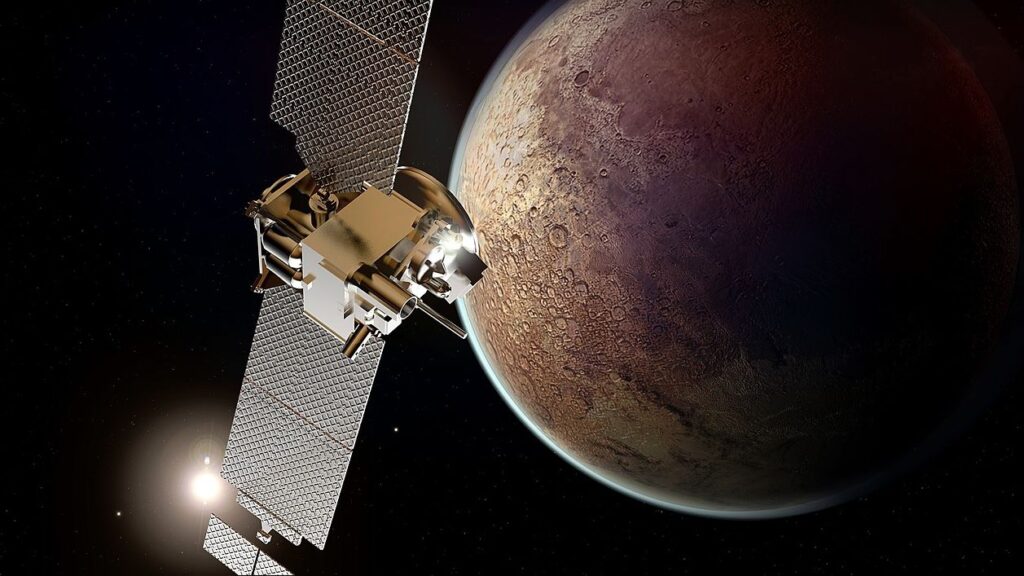
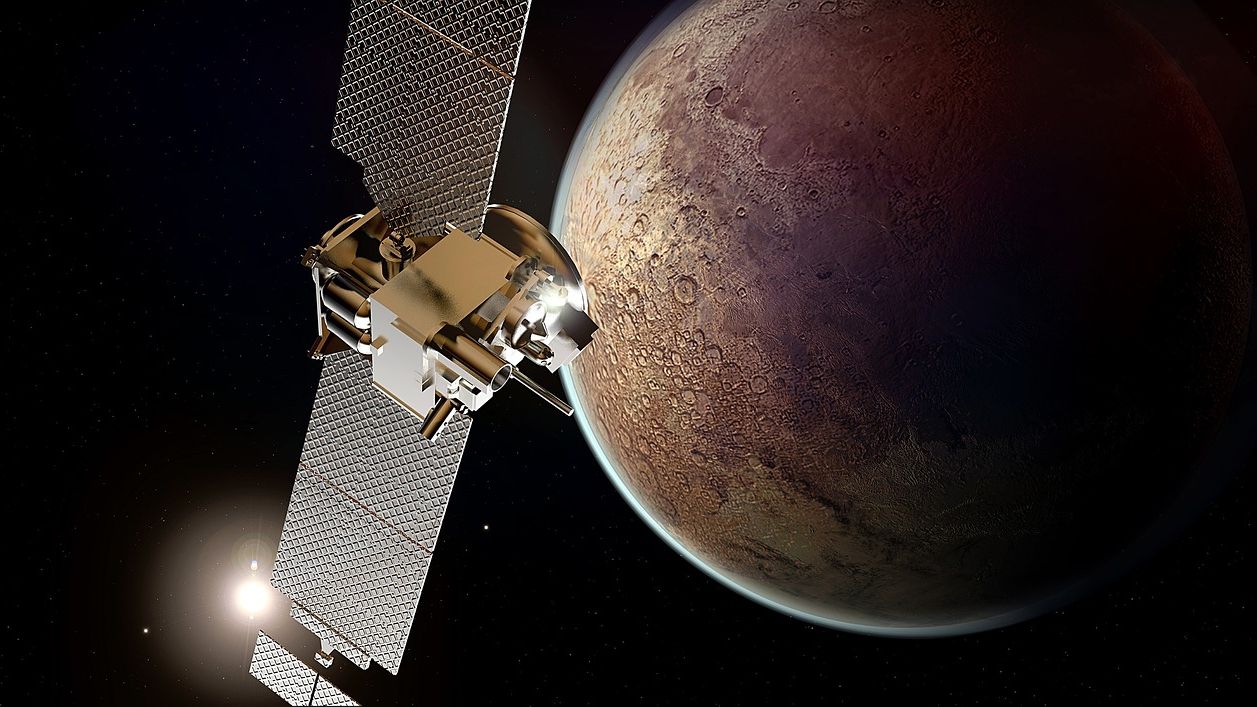
NASA’s Psyche asteroid probe will fly within 3,000 miles of Mars on May 15: Here’s what to expect – Image for illustrative purposes only (Image credits: Pixabay)
On Friday, May 15, NASA’s Psyche spacecraft will pass within about 2,800 miles of the Martian surface. The encounter will harness the planet’s gravity to increase the probe’s speed and refine its trajectory. This gravity-assist maneuver arrives at a key stage in the mission, which launched in 2023 and aims to reach the metal-rich asteroid Psyche in 2029.
The Mechanics of the Close Approach
The spacecraft will streak past Mars at approximately 12,333 miles per hour. At that velocity, the planet’s gravitational field will act like a slingshot, adding momentum without consuming extra propellant. Mission planners designed the flyby to occur at a safe altitude that still delivers the necessary boost while tilting the spacecraft’s orbital plane toward its final destination in the main asteroid belt.
During the hours surrounding closest approach, the probe will coast with its solar-electric thrusters largely inactive. This configuration simplifies navigation and reduces the risk of small thrust variations affecting the precise timing required for the assist. Ground teams at NASA’s Jet Propulsion Laboratory have spent months refining the trajectory to ensure the spacecraft arrives at the correct point and speed relative to Mars.
Instrument Checks and Early Science Opportunities
The flyby also serves as a rehearsal for operations at the asteroid. Engineers will use the passage to calibrate cameras and other sensors under conditions similar to those expected in 2029. Images already captured from several million miles away have shown Mars as a thin crescent, providing data on how the instruments perform against a bright planetary backdrop.
These calibration activities help confirm that the spacecraft’s systems remain healthy after more than two years in flight. The data gathered will refine software and procedures ahead of the more demanding approach to Psyche, where the asteroid’s irregular shape and rapid rotation will present additional challenges.
Why Gravity Assists Remain Essential
Psyche relies on solar-electric propulsion, which delivers steady but modest acceleration over long periods. Without the Mars assist, the mission would require significantly more xenon propellant or a longer flight time. The gravity assist therefore represents an efficient use of the spacecraft’s limited resources while preserving margin for the science phase at the asteroid.
Such maneuvers have become standard in deep-space exploration because they allow missions to reach distant targets that would otherwise exceed launch-vehicle capabilities. For Psyche, the technique also aligns the arrival date with optimal lighting conditions for mapping the asteroid’s surface and interior structure.
Looking Toward Arrival at Psyche
After the Mars encounter, the spacecraft will continue its gradual acceleration through the asteroid belt. Arrival is currently targeted for 2029, when the probe will enter a series of orbits to study the asteroid’s composition, magnetic field, and possible metallic core. Scientists hope the data will shed light on the formation of planetary cores and the early solar system.
The upcoming flyby therefore functions as both a trajectory correction and a systems check. Success on May 15 will clear the way for the final leg of the journey and bring the mission one step closer to its primary science objectives.