
Most of us grew up with a simple story: first there was a cold, empty universe, then stars, then planets, then life, and only very late in the game did something weird and fragile appear – minds like ours. It sounds tidy, but once you look a bit closer, that story starts to wobble. Conscious experience feels so intensely real from the inside that it is hard to believe it is just a late-stage side effect of atoms bumping around in the dark.
So we stumble into a huge question: did the universe somehow generate minds as a kind of cosmic afterthought, or is mind baked into the very fabric of reality from the start? This is not just a stoner-dorm-room topic. It sits right at the intersection of physics, neuroscience, philosophy, and even the way we live our daily lives. If minds are just accidental, we can treat them one way. If minds are fundamental, the whole meaning of “reality” quietly shifts under our feet.
The Strange Fact We Keep Forgetting: Everything You Know Is in a Mind
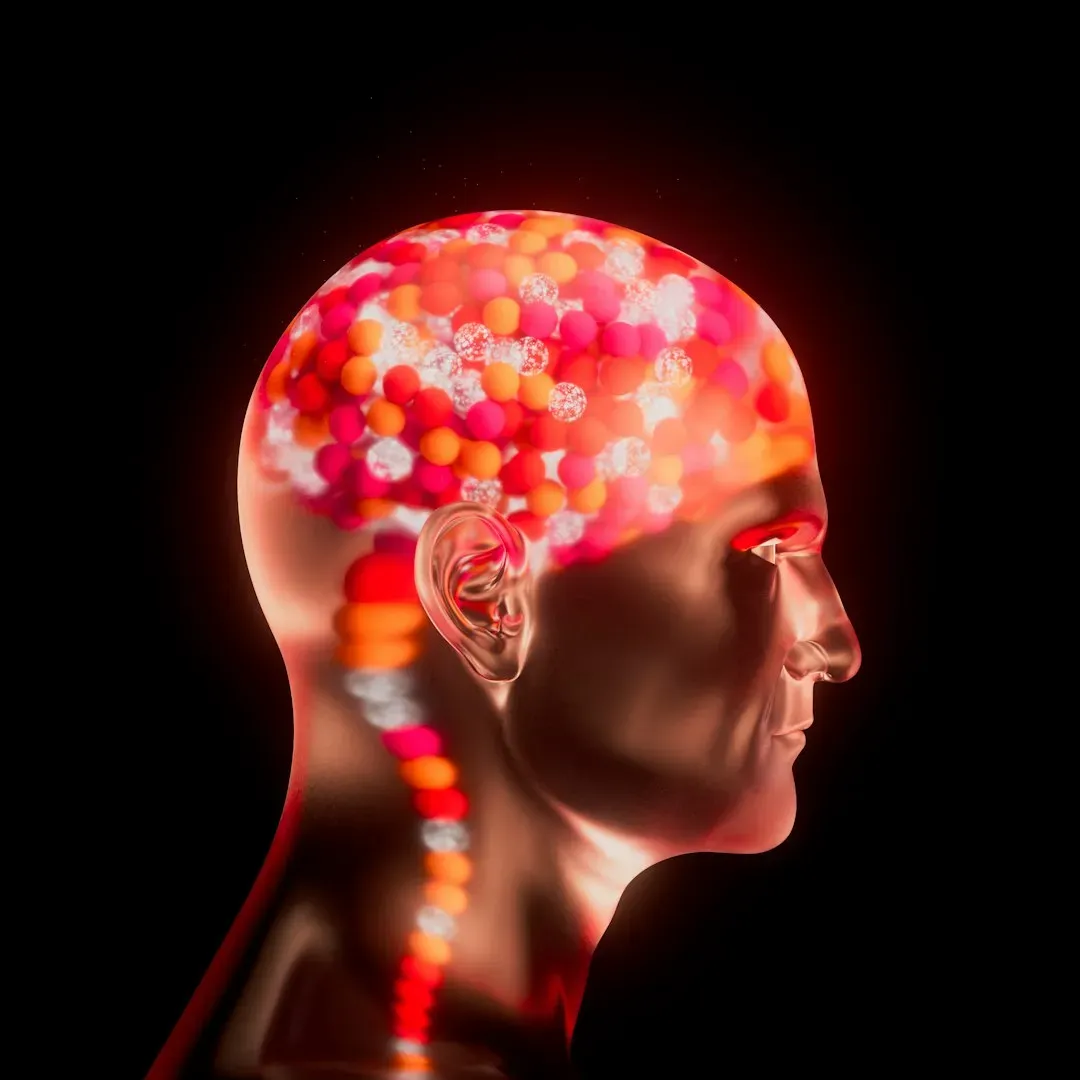
Here’s a slightly unsettling thought: you have never directly touched the external universe. You have only ever experienced patterns of light, sound, and sensation as they show up inside your awareness. When you see a tree, photons hit your retina, signals crackle through your brain, and somehow a vivid green image appears in experience. That image does not live in the tree; it lives in your mind. In a sense, your entire universe is an “inside job.”
Modern neuroscience is very good at describing the signals and circuits involved, but it still does not explain why any of that electrical activity should feel like something from the inside. We call this gap the “hard problem” of consciousness: how do physical processes give rise to subjective experience at all? The fact that nothing seems more obvious than your own awareness, and yet it is the hardest thing to fit into our scientific picture, is already a red flag that maybe our starting assumptions about mind and universe are a bit too simple.
How Physics Accidentally Made the Question Weirder
For a while, classical physics let people pretend that minds were optional. The universe could be imagined as a giant, perfectly predictable machine: if you knew all the positions and velocities of all particles, you could calculate everything, at least in principle. Mind, in that view, became a projection or an illusion layered on top of the real, underlying machinery. It was psychologically comforting in a way, like believing the cosmos is just a big clock that never surprises itself.
Then quantum mechanics showed up and ruined the neatness. At very small scales, particles do not behave like tiny billiard balls; they exist in overlapping possibilities that only become definite when some kind of interaction or “measurement” happens. The role of observation in quantum theory has been interpreted in different ways, and serious physicists still argue about what it really means. But at minimum, the theory forces us to admit that the old picture of a completely mind-independent, clocklike universe was too naive. Whether or not consciousness plays a special role in quantum events, the clean wall between “observer” and “world” is not as solid as we thought.
Brains as Mind-Machines: What Neuroscience Actually Shows
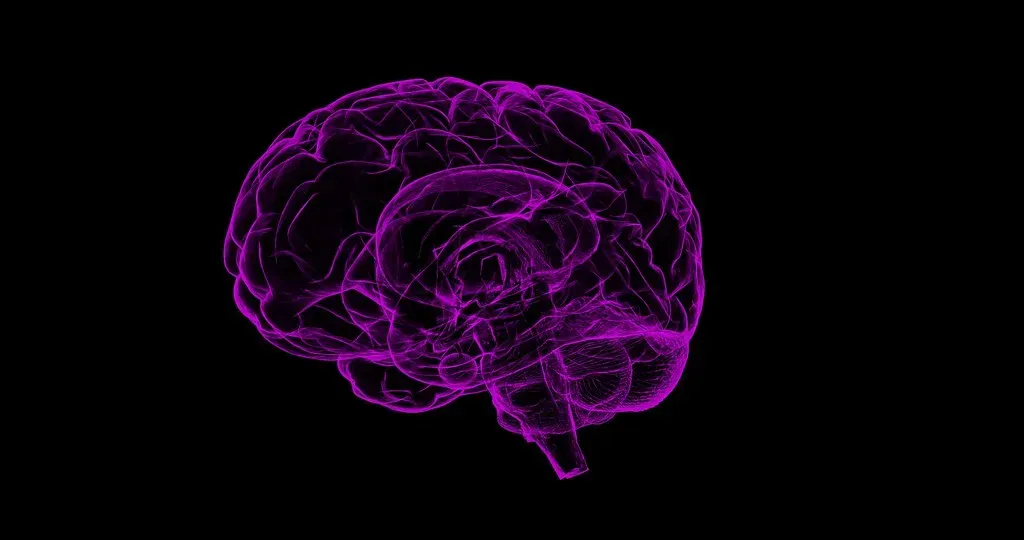
On the other hand, you can take a brain, damage it in certain ways, and watch specific pieces of the mind fall apart. Change the chemistry and you can radically shift mood, perception, and sense of self. Brain imaging studies show reliable correlations between patterns of neural activity and states of consciousness: when someone reports seeing red, recalling a childhood memory, or feeling fear, certain networks light up in systematic ways. This tight coupling is not an illusion; it is one of the most robust findings in all of cognitive science.
From this, many scientists conclude that minds are what brains do. In this view, the universe did create minds, in the same way it created thunderstorms and black holes: through the lawful unfolding of matter and energy over time. When conditions on a planet become right for complex nervous systems, those systems emerge, and with them, conscious experience. The tricky part is that even if this picture is broadly correct, it still leaves a crucial question hanging in the air: why does all that information processing feel like anything at all, instead of happening silently, like computation inside a laptop?
Materialism, Panpsychism, and Other Ways of Framing the Mystery
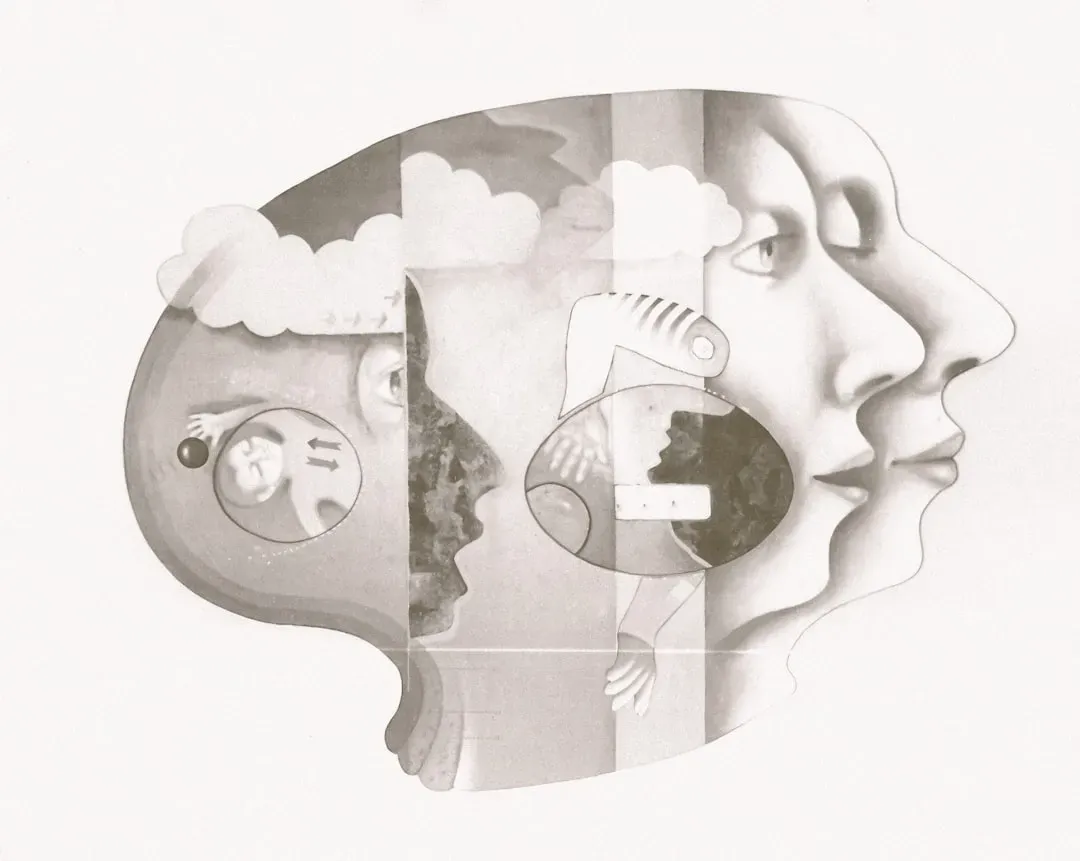
Broadly speaking, there are a few main camps trying to answer whether minds are created by the universe or built into it. Classic materialism says that only physical things are fundamental, and minds emerge when matter is arranged in the right, very complex way. Idealism flips this and claims that mind or experience is fundamental, with the physical world being more like a stable pattern or rule set within a deeper mental reality. Then there is panpsychism, which sits awkwardly in the middle and suggests that some kind of primitive experience is a basic feature of all matter, although not at all like human consciousness.
Panpsychism sounds wild at first, like claiming rocks have secret inner lives, but its more serious versions are more modest. They suggest that what we call “physical properties” and “mental properties” might just be two ways of describing the same underlying stuff. In that case, saying “the universe created minds” is a bit like saying “water created wetness” – the potential for mind was always folded into reality, just waiting for complex forms like brains to express it in a rich way. This does not solve every problem, but it does offer a way to avoid treating consciousness as a late-stage bolt-on to an otherwise mindless cosmos.
Are Minds Just an Illusion? What That Really Means

Some thinkers bite a very different bullet and claim that consciousness, at least as we normally think of it, is an illusion generated by brain processes. On this view, there is no inner “movie” of experience, just complex information processing and verbal reports that make it seem like there is. I find this move clever but unconvincing, because an illusion is still something that appears. You can say a mirage in the desert is not really water, but you cannot say there is no appearance of shimmering water at all. The experience is undeniable, even if its interpretation is wrong.
More nuanced versions of this idea suggest that what is illusory are certain stories we tell about our minds, like the idea of a single, unified, unchanging self sitting in the driver’s seat. That critique has bite: experiments in psychology and neuroscience show that our sense of being a fixed “I” can be manipulated and fractured. But none of this gets rid of raw experience itself. In fact, the fact that the brain can so easily distort and reassemble our sense of self might actually hint that consciousness is more deeply woven into reality than we realize, because the feeling of “being someone” can be rearranged without the basic light of awareness going out.
If Minds Are Fundamental, What Changes? If They Are Not, What Changes?
Suppose for a moment that some form of mind or experience is baked into the universe from the start. That does not mean every rock or electron has rich inner thoughts; it might just mean that the basic stuff of reality has an interior aspect that becomes more vivid and structured in complex systems like brains. In this picture, our minds are not alien intruders in a dead universe but local expressions of something the universe has always had in potential. The appearance of conscious life on Earth would then be less of a freak accident and more of a natural flowering.
If instead you hold that consciousness is a pure emergent result of complex information processing, you still end up with a universe that, at least in some regions, wakes up and looks back at itself. That is no small thing. It means that a reality that did not need to include subjective experience somehow does, and does so in a way that cares, suffers, imagines, and creates. Whether mind is fundamental or emergent, the fact that it exists at all gives the universe a very different flavor than a purely mechanical story would suggest. It also raises uncomfortable moral questions about any place in the cosmos where similar complexity might appear.
My Take: Minds Are Not an Accident the Universe Tacked On
Here is where I land, at least today: I do not think minds are an optional extra the universe slapped on top of matter once things got fancy enough. The tight link between brains and experience is real, but it looks more like a relationship between shape and sound in a musical instrument than a relationship between cause and entirely new kind of stuff. The wood and strings of a guitar shape the music, but they do not create the very possibility of sound from nothing. Likewise, brains might organize and amplify a more basic capacity for experience that reality carries everywhere in seed form.
This view stays honest about what science actually shows while admitting that subjective experience refuses to be crammed into a purely external, third-person story. It also quietly shifts the emotional tone of the universe from indifferent machine to something more like an unfolding field of potential awareness. That does not automatically hand us easy answers about purpose or meaning, but it does suggest that when you wonder about your place in the cosmos, you are not just a mistake of chemistry asking pointless questions. You are the universe noticing itself and trying to understand what it is. Did you really think that would turn out to be simple?