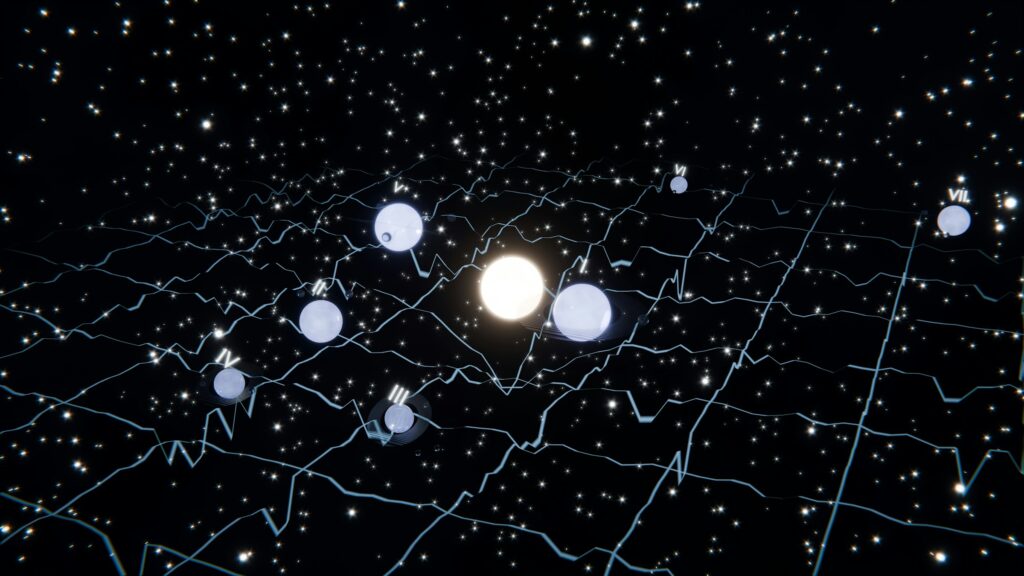
You are used to thinking of space and time as the solid stage on which everything plays out: planets move, stars explode, and you simply live your life from one moment to the next. But what if that stage is not fundamental at all? What if, instead, your own awareness is closer to the real bedrock of reality, and space-time only shows up as a kind of user interface that your mind helps to build?
This is the provocative idea behind a growing family of theories in physics, neuroscience, and philosophy that take consciousness seriously as part of the fundamental picture, instead of treating it as an accidental latecomer. You are not being asked to swallow a wild fantasy; you are being invited to explore a carefully argued possibility on the frontier of science. The evidence is not settled, and you should stay skeptical, but if you follow the arguments, you may never look at reality – or your own mind – the same way again.
Why Space-Time Might Not Be Fundamental Anymore
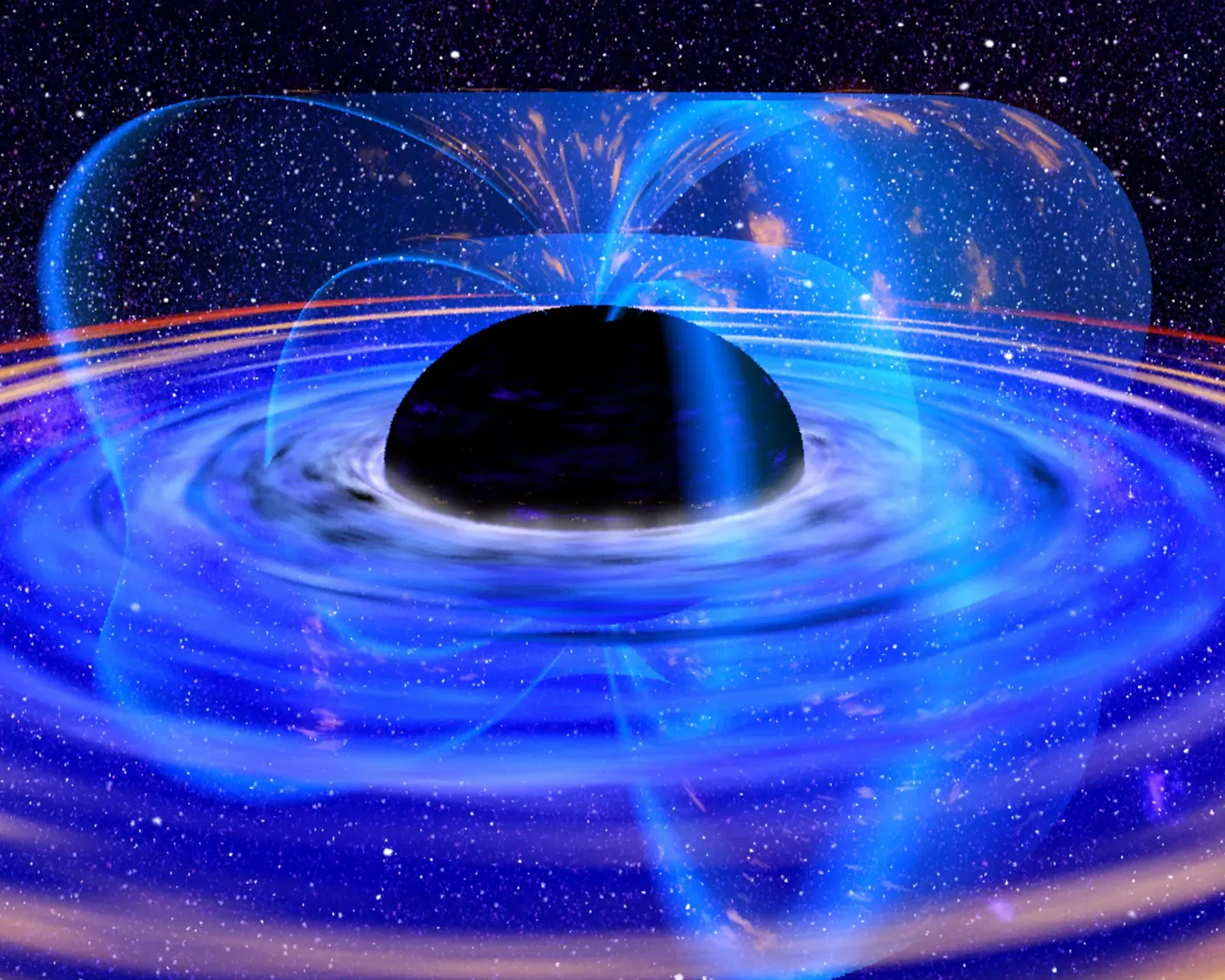
You probably grew up with the story that space and time are the basic fabric of the universe, a four-dimensional arena described by Einstein’s relativity. For a long time, physicists treated this as the firm foundation. Yet when you look closely at black holes, quantum entanglement, and the earliest instants after the Big Bang, the equations start to hint that space-time itself breaks down. You are left with uncomfortably fuzzy edges where the old concepts stop making sense.
Modern theoretical work in quantum gravity often that space-time could be emergent, like how temperature emerges from the chaotic motion of atoms. If temperature is not a single tiny thing but a collective behavior, then space and time might be something similar. You are not staring at the ultimate reality when you measure distances and durations; you are reading off a large-scale pattern that hides whatever is truly fundamental underneath. That open question is exactly where consciousness-based ideas try to step in.
How Consciousness Enters the Picture
When you hear that consciousness might generate space-time, your first reaction might be that it sounds mystical. But in this context, you should think of consciousness as the raw fact that you have experiences at all: colors, sounds, thoughts, pains, hopes. No one has a complete scientific theory of how brain activity gives rise to this inner life. So instead of simply assuming that matter is primary and experiences are secondary, some researchers ask whether you have it backwards.
From this angle, you treat conscious experience as the primitive ingredient and then ask how the world you see could arise from patterns in that experience. You already know that your brain constructs the world you perceive: your eyes capture light, but your mind turns it into a stable three-dimensional scene. Extending that idea, these theories suggest that what you call space-time might be the grand, shared construction generated by networks of conscious agents interacting. You are not just passively inside the universe; you could be part of the process that builds the stage on which everything appears.
Space-Time as a User Interface for the Mind

To grasp this more easily, you can picture your computer desktop. When you see a folder icon, you do not believe that tiny colored rectangles literally exist inside the machine. The icon is a simplified interface that hides voltages and circuits, letting you act effectively without knowing the electronic details. In the same spirit, some consciousness-focused models propose that space, time, and physical objects function as icons your mind uses to navigate a much deeper reality.
According to this view, you never see reality as it is; you only see a useful representation tuned by evolution to help you survive. When you reach for a coffee mug, you interact with an icon that your perceptual system invented to summarize something far more complex underneath. Your brain and senses compress unimaginable detail into manageable symbols: distances, shapes, colors, and motions. Space-time, in this sense, becomes your shared operating system, shaped by consciousness to keep experience organized and actionable.
What Physics Says About Emergent Space-Time
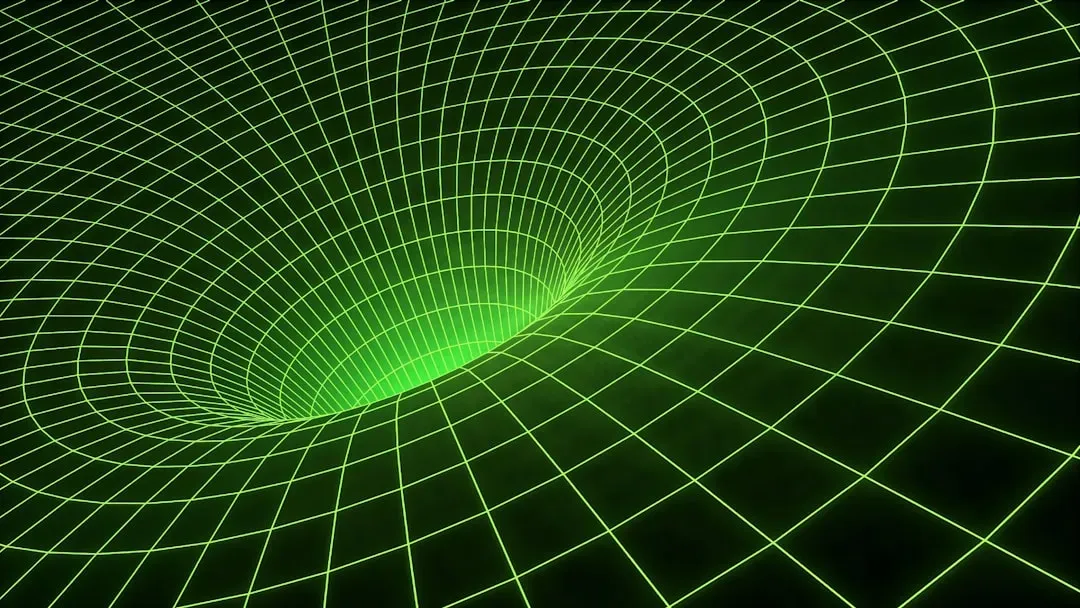
You might wonder how this lines up with serious physics, and not just philosophy. Interestingly, several research programs in quantum gravity already treat space-time as emergent, even if they do not always bring consciousness into the story directly. In some models, networks of quantum information or more abstract mathematical structures combine in such a way that familiar space and time appear only as large-scale approximations. You are effectively looking at a coarse-grained picture, not the underlying code.
These ideas sometimes use the language of entanglement and information to explain how geometry can arise from correlations between more basic elements. You can imagine weaving a fabric: individual threads do not look like a smooth surface, but when you intertwine enough of them, a continuous sheet appears. In a similar way, the geometry you move through every day could emerge from invisible relationships that do not live in any preexisting arena. When you connect that to consciousness, you are invited to think of those underlying relations as involving experiential agents, not just abstract bits.
Conscious Agents and the Idea of a Deeper Network
Some theorists propose that instead of particles bumping around in space, you should start from interacting units of consciousness, often called agents. Each agent has experiences and can act on the basis of those experiences, influencing other agents. You can picture a vast, layered social network where each node is not a person but a tiny locus of awareness, constantly exchanging information. This network is not inside space-time; instead, space-time is what you see when you look at part of that network through your perceptual interface.
In this framework, what you call an electron, a table, or even your own body becomes a kind of graphical icon summarizing complex interactions among many agents. The laws of physics that you learn – mass, charge, spin, and so on – turn into rules about how those icons behave on your interface, not full descriptions of the underlying reality. You do not see the real mechanisms directly, just as you never see the transistors when you drag a file to your trash bin. Your conscious experience is both part of the network and one of the tools the universe uses to display itself.
Where Neuroscience Fits Into This Story
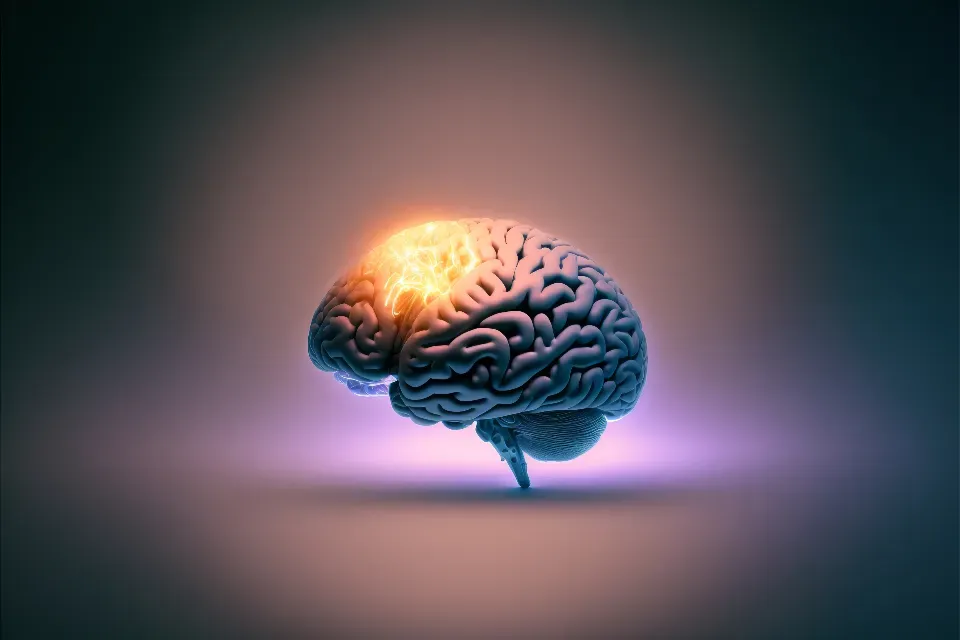
You might ask how any of this can be taken seriously if your everyday evidence points to the brain as the source of consciousness. After all, when neurons are damaged or drugs are taken, your experience clearly changes. Neuroscience has made powerful progress mapping patterns of brain activity to states of awareness. From the perspective of these bold theories, your brain becomes not the ultimate generator of consciousness, but the local interface through which a deeper conscious network expresses itself in your life.
On this view, when you look at brain scans, you are seeing the physical footprint of processes that organize your experience, much like the visible animation on a screen shows traces of software instructions. You still need detailed neural models to explain why you see colors the way you do, or how memory works, but you no longer have to assume that matter alone somehow produces consciousness from nothing. Instead, you allow for the possibility that your brain is a sophisticated translator between an underlying realm of conscious relations and the space-time world you can measure.
How You Might Test or Challenge These Ideas
You are right to be cautious with any claim that flips your usual picture of reality upside down. A theory that treats consciousness as fundamental only becomes scientifically useful if it makes testable predictions or leads to new calculations that match experiments. Some proponents are working on mathematical frameworks that try to recover known physics – like the behavior of particles or the structure of space-time – from interacting conscious agents. You would then be able to check whether those models reproduce what particle colliders and telescopes already see.
At the same time, you can challenge these ideas by asking whether they really explain anything or just rename mysteries. If a model cannot be distinguished from standard physical theories in experiments, you might view it as a reinterpretation rather than a breakthrough. Staying skeptical does not mean you should ignore the possibility, though. You can use this perspective as a creative lens, asking whether certain quantum puzzles or paradoxes about observers become easier to understand if you let consciousness play a more central role in the structure of reality you inhabit.
What It Means for You If Consciousness Shapes Reality
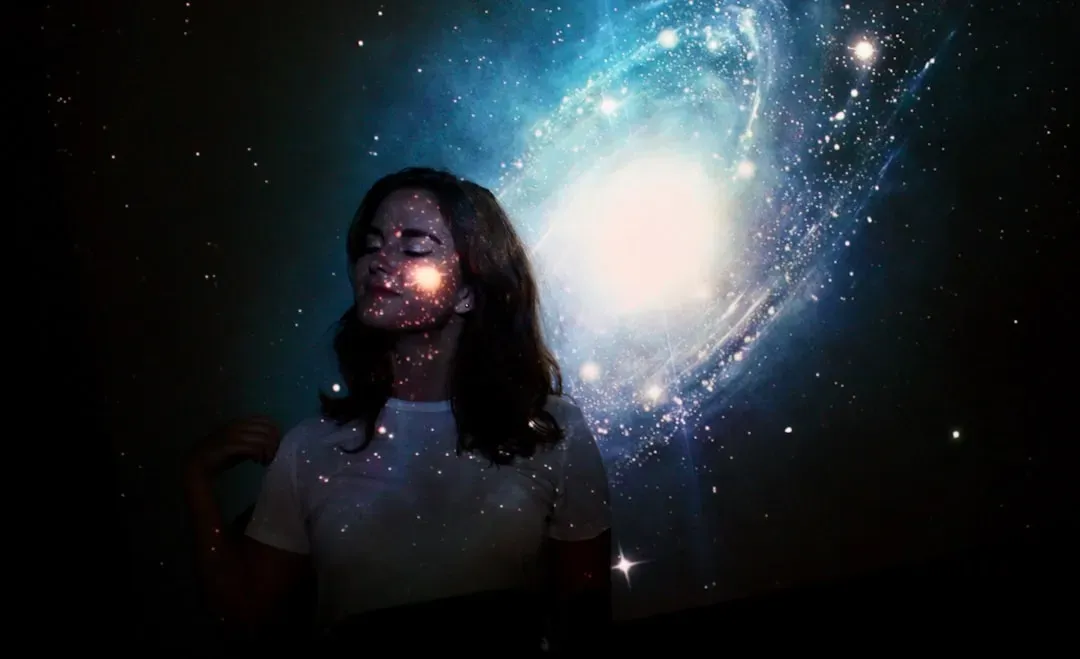
If you take seriously the idea that consciousness helps generate space-time, your relationship with reality subtly shifts. You are no longer just a small object drifting in a cold, prebuilt cosmos; you are part of the process that brings the world you see into being. That does not mean you can casually bend the laws of physics with your wishes, but it does hint that experience is not a side effect. Your inner life becomes a genuine feature of the universe’s foundation, not merely noise produced by neurons.
This shift can change how you think about meaning and responsibility. If your awareness is woven into the very fabric that creates the world of space and time, your choices and perceptions matter in a deeper way. You might start to treat attention as a fundamental act, not just a mental habit. Even if future experiments end up pinning consciousness back down as a product of matter, you will have stretched your imagination by considering the opposite. In a universe where space and time might be emergent, you are invited to ask not just where you are, but how much your being here helps shape the stage itself.
In the end, you are standing at a crossroads where physics, philosophy, and neuroscience meet, and none of them has the final answer yet. You do not have to pick a side today, but you can let the question reshape how you look at a sunrise, a memory, or the feeling of simply being aware. If consciousness truly helps generate space-time, then every moment you experience is tied into the deepest workings of reality. Even if that bold theory turns out to be wrong, the act of wrestling with it can leave you more awake to the mystery of being conscious at all. When you look around now, are you just seeing the universe – or are you helping to build it as you go?