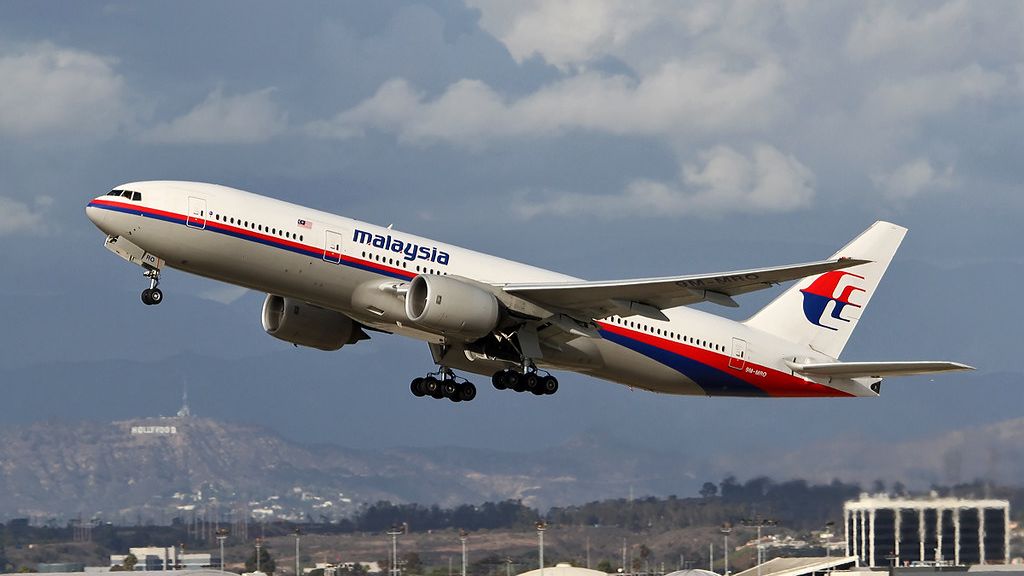
You have probably heard so many wild theories about MH370 that it all blurs together now: hijacking, secret bases, mid‑air explosions, even science‑fiction style scenarios. Yet more than a decade later, what quietly changed the story was not a dramatic confession or a piece of wreckage dragged into a press conference, but something much less glamorous: patient, stubborn science. Data logs, radio pings, ocean currents, and acoustic signals that once looked like background noise started to reveal patterns, almost as if the clues had been sitting in front of you the whole time.
When you zoom out, you see a very different kind of mystery story. Instead of a single twist that suddenly explains everything, MH370 has become a lesson in how modern science works when the stakes are unbearably high. You watch experts from wildly different fields argue, revise, and recalculate, sometimes getting it wrong, sometimes getting closer, but always anchored to one hard rule: you do not get to make things up. If you want to understand what has really been decoded so far, and what is still unknowable, you have to follow the trail of evidence that was hiding in plain sight the whole time.
The satellite handshakes that quietly redrew the flight path
The most surprising twist in the MH370 investigation is that the main witness was never meant to track airplanes at all. You are used to thinking of radar screens or ADS‑B flight trackers, but when those signals went dark, the only thing still “talking” was a satellite system whose job was basically billing and connectivity. Every hour or so, the plane’s satellite terminal exchanged tiny “handshakes” with a geostationary satellite over the Indian Ocean, and for a while nobody imagined those scraps of technical noise would become the backbone of the search.
What changed is how scientists treated those handshakes. By studying the time it took signals to travel and the tiniest changes in frequency, analysts were able to infer arcs of possible positions and a likely southward track into the remote Indian Ocean. You can think of it like being in a dark room where you cannot see the object, but you can hear faint echoes when you snap your fingers. With each echo, you narrow down where the walls might be. That is how those mundane satellite logs, once dismissed as routine, ended up redrawing your mental map of MH370’s final hours.
How radio silence and turns tell you more than words ever could

When you picture a missing plane, you might instinctively look for last words from the cockpit, a distress call, or some dramatic radio exchange. MH370 gave you none of that. Instead, you are left with something that feels eerily quiet: a good‑night call to air traffic control, then a series of radar returns showing the aircraft making unexplained turns and leaving its planned route. That silence is unsettling, but it is also data. It forces you to ask what kind of event allows a big jet to keep flying for hours without any official communication.
Here, investigators leaned hard on what you might call “negative evidence.” You know what should have happened in a fire, a sudden structural failure, or a rapid decompression because other incidents leave a trail of frantic calls, transponder messages, and clear debris patterns. With MH370, the combination of deliberate course changes, loss of standard reporting systems, and long continued flight pushes you towards scenarios that involve human agency and controlled flight for at least part of the journey. It does not hand you a clean motive or a signed confession, but it strongly shapes which explanations you can take seriously and which ones belong in the realm of speculation.
The Indian Ocean: a moving graveyard that scrambles your clues

You might think that once pieces of wreckage started washing up, the mystery would quickly collapse into a neat solution. In reality, the Indian Ocean behaves less like a static crime scene and more like a constantly shifting conveyor belt. Oceanographers had to treat each washed‑up fragment like a message in a bottle that has been drifting for months or even years, twisted around by winds, currents, and eddies that change with the seasons. Tracing those paths backward is not like drawing a straight line on a map; it is closer to trying to guess where a leaf entered a river after it has gone through countless bends and whirlpools.
Still, the debris that has been identified does tell you something solid. It supports the conclusion that the aircraft really did end up in the southern Indian Ocean, broadly consistent with the satellite‑based arcs, and not in some secret hangar or distant continent. At the same time, the gaps are loud: you have only a fraction of the airplane, and no single piece screams out a definitive cause like a clear explosion pattern or an obvious mechanical failure. So you are left with a frustrating combination of confirmation and ambiguity: the ocean confirms where, but stubbornly refuses to say exactly how or why.
Why acoustic “bangs” and deep‑sea searches did not give you the Hollywood ending

In a movie, someone would pick up a single underwater sound, point to a monitor, and announce that they had found the wreck. Real life did not cooperate. Over the years, various teams sifted through data from underwater microphones and seismic stations, looking for any unusual acoustic signatures that could match a large aircraft hitting the ocean. A few candidate “bangs” were identified and modeled, and at times you might have felt like a big reveal was just around the corner. But as more scrutiny was applied, most of those signals turned out to be too ambiguous or poorly located to serve as a smoking gun.
The same sober reality hit the deep‑sea search efforts. Massive swaths of seafloor were scanned with sonar, with techniques often borrowed from submarine hunting and oil exploration. Each pass revealed mountain ridges, trenches, and rock formations that had never been mapped before, which is thrilling from a scientific point of view but devastating when you are hoping to find a very specific set of wreckage. You are forced to accept an uncomfortable truth: sometimes, even with cutting‑edge tools and sincere effort, the ocean wins, and the absence of a dramatic discovery does not automatically mean the underlying science was wrong.
The thin line between careful inference and wild speculation

Because MH370 sits at the intersection of grief, fear of flying, geopolitics, and modern technology, it naturally attracts theories. You have probably seen everything from plausible reconstructions to ideas that require major conspiracies or sci‑fi level technology. The hard part is that your brain loves a complete story, especially for something this emotionally loaded. Science, by contrast, is stubbornly willing to stop at the edge of what evidence can actually support, even if that leaves the ending unsatisfying.
This is where you, as a reader trying to make sense of MH370, have to become a bit of a scientist yourself. When you evaluate any explanation, you can ask: does it match the satellite handshakes, the radar track, the debris locations, and what you know about similar incidents? Does it require entire governments, airlines, and independent teams to be secretly coordinating a cover‑up for years without a single solid leak? If an idea cannot stand up to those simple checks, it belongs in the category of speculation, not decoded truth. It might be tempting, it might even be emotionally comforting, but it is not the same as what the evidence actually tells you.
What science has really decoded – and what it honestly still cannot

If you strip away the noise, you can now say that science has decoded several crucial parts of the MH370 story that once seemed completely opaque. You know the aircraft almost certainly turned away from its planned route, crossed back over parts of Southeast Asia, and flew for hours into the remote southern Indian Ocean. You know this path is supported by independent lines of evidence: satellite handshake analysis, radar data, and the drift of confirmed debris. That alone is remarkable, considering how much of this reconstruction leaned on data that was never designed for accident investigation.
But you also have to face the limits with the same honesty. Science has not definitively decoded who made which decisions on board, what precise chain of events led to the loss of communication, or the exact moment and manner of impact with the ocean. Those pieces live in a zone where the physical record is incomplete and key human testimonies are missing. So the “mystery hiding in plain sight” is partly about the clues that were always there and only later understood, and partly about your expectation that every tragedy must eventually come with a fully solved, storybook ending. In this case, the evidence lets you draw a sharp outline, but some of the most haunting details remain shaded in.
Living with unanswered questions in an age that hates uncertainty
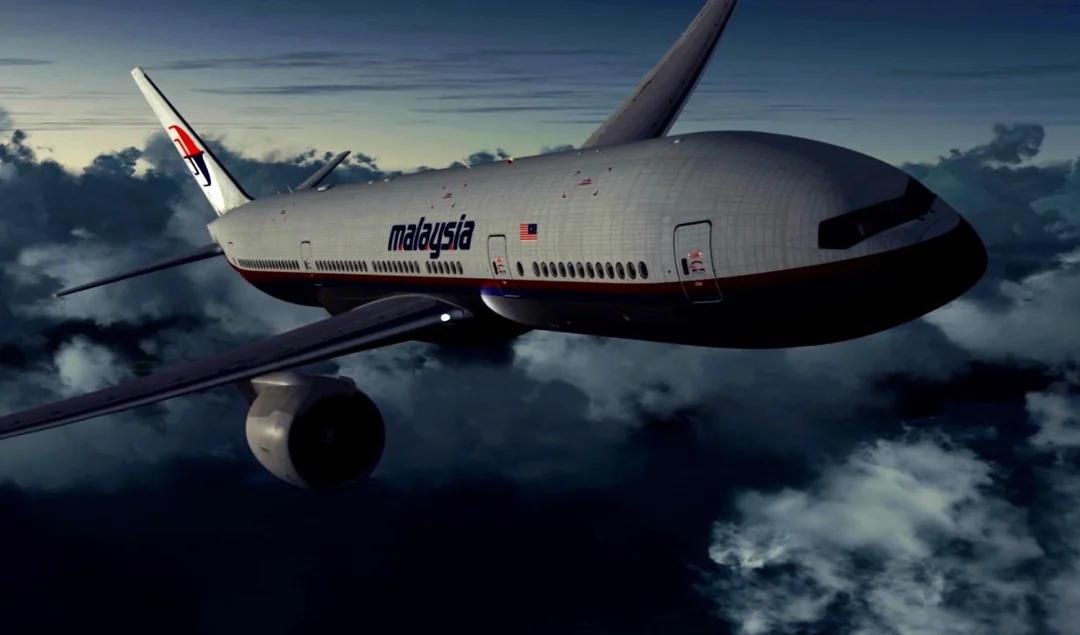
In a world where you can track a parcel across continents in real time, it feels almost intolerable that a large passenger jet can vanish and never be found in full. That tension is at the heart of why MH370 still grips you. The case forces you to confront the gap between your everyday experience of technology – instant maps, live updates, video from space – and the messy reality of global infrastructure, patchy coverage, human error, and an ocean so deep and vast that it can still swallow whole machines without a trace. It is unsettling to admit that even in 2026, there are things you simply do not get to know.
Yet there is also a quieter kind of meaning here. By following MH370’s scientific trail, you see how much progress can happen even without a neat conclusion. Satellite communication data is being rethought, tracking standards have been debated and improved, and the techniques for using drift models and deep‑sea mapping have grown more sophisticated. You may never get the perfectly resolved narrative that your storytelling instincts crave, but you do get a more honest one: some mysteries shrink with time and effort, but do not disappear entirely, and learning to live with that is its own form of wisdom.
Conclusion: The mystery that reshaped how you see the sky and the sea

When you first heard about MH370, you might have imagined a single missing puzzle piece that, once found, would make everything click into place. Instead, what you actually got over the years was a slow, sometimes frustrating education in how evidence works when it is scattered across satellites, radars, shorelines, and the deepest parts of the ocean. Science did not wave a magic wand and produce a simple answer, but it did pull a rough outline of truth out of fragments that were always there, hiding in data logs and currents you barely noticed before. It showed you that “decoded” can mean narrowing the realm of the possible, not turning tragedy into a tidy story.
As you look ahead, the legacy of MH370 is not just about a single flight; it is about how you expect the world to account for itself when things go horribly wrong. You now know that invisible handshakes can tell you where a plane went, that silence on the radio can speak volumes, and that the ocean still holds power over even your best technology. The next time you watch an aircraft icon glide across a flight‑tracking app, you may feel a little more awe, a little more humility, and a sharper sense of how fragile that line of information really is. In the end, maybe the real decoding is not only about the flight, but about your own relationship with uncertainty – how would you rewrite the story if you insisted on only what the evidence can truly bear?