

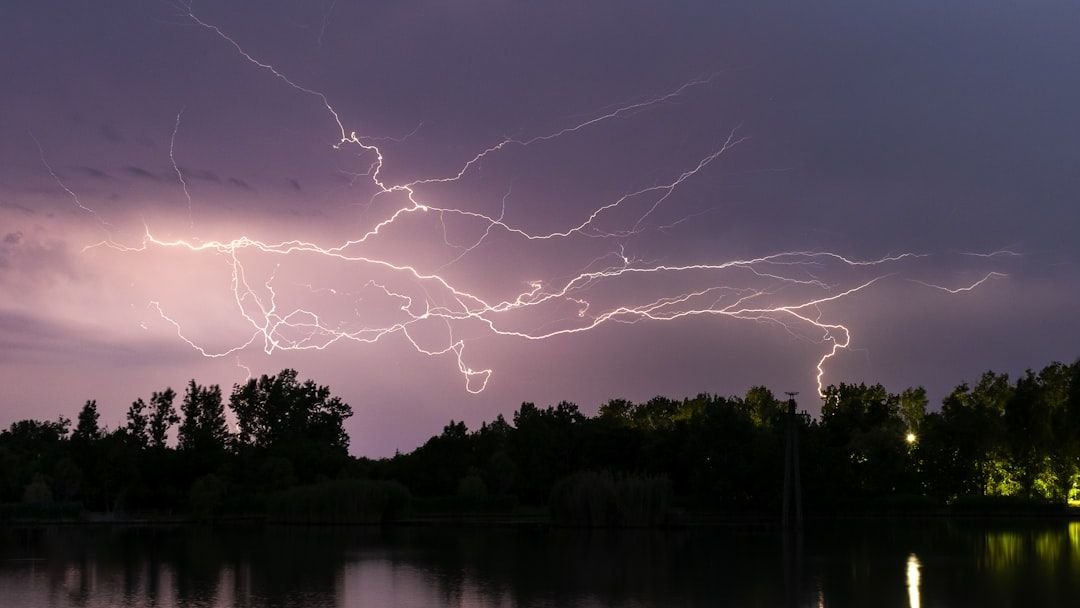
Building Momentum in the Forecast (Image Credits: Unsplash)
St. Louis – A pleasant weekend gave way to growing concerns Sunday as forecasters raised the alert for significant severe weather across the St. Louis region on Monday. Confidence built steadily for storms capable of producing multiple hazards during the afternoon and evening hours. The Storm Prediction Center assigned a Level 3 out of 5 severe risk to much of the greater metropolitan area, signaling a notable escalation from earlier outlooks.[1][2]
Building Momentum in the Forecast
Forecasters noted that ingredients aligned increasingly well for an outbreak of severe thunderstorms. Plentiful moisture from the Gulf streamed northward, combining with strong upper-level winds and wind shear to fuel storm development. A potent low-pressure system approached from the Plains, providing the lift needed to spark widespread activity.
This setup echoed patterns known to produce robust storms, though factors like cloud cover or slight timing shifts could influence the final outcome. The National Weather Service office in St. Louis emphasized the threat’s expansion to cover the entire forecast area.[3] Earlier projections had focused farther south, but models shifted the highest risks northward into the bi-state region.[4]
Overnight into Monday morning, scattered thunderstorms remained possible mainly north of Interstate 70, with risks of quarter-sized hail and localized flooding in isolated spots.
Hazards That Could Pack a Punch
All modes of severe weather entered the picture, from hail and winds to potential twisters. Very large hail stood out as a primary concern, with sizes reaching baseball proportions in the strongest storms. Damaging wind gusts threatened to down trees and power lines, while tornadoes loomed as a realistic possibility, including some stronger than those observed earlier this season.
The storms promised to deliver not just isolated punches but scattered to numerous severe cells. Heavy rainfall added another layer, raising flash flood potential amid the chaos.[1][3]
- Very large hail, up to baseball-sized
- Damaging straight-line winds
- Tornadoes, potentially EF-2 or stronger
- Heavy rain leading to localized flooding
Timing, Reach and Regional Impacts
The window for peak threats narrowed to Monday afternoon through early evening, roughly 2 p.m. to 10 p.m. Heaviest activity concentrated between midday and late evening, affecting nearly every corner of the St. Louis metro. Central Missouri could see earlier initiation, spilling into the metro area later.
This broader risk level 3 outlook blanketed the bi-state region, from eastern Missouri into southwestern Illinois. Morning convection introduced some uncertainty, but forecasters expected discrete supercells to evolve into more organized clusters by peak heating.[2][4]
Urban areas faced heightened vulnerability to wind damage and hail accumulation, while rural spots contended with tornado traversal risks.
Steps Residents Should Take Now
Officials urged proactive measures ahead of the storms. Families needed to identify a safe room or interior space away from windows. Multiple alert methods proved essential, from weather apps to NOAA radios, to catch rapidly issuing warnings.
More sunshine during the day could intensify storms, so monitoring hourly updates became critical. Power outages loomed possible, prompting backups for charged devices and medications.
- Review and practice your severe weather plan
- Secure outdoor items against high winds
- Download local news apps for real-time radar and alerts
- Stay informed via National Weather Service channels
As the storms cleared, cooler air settled in Tuesday onward, with highs in the 60s and lows near freezing. Frost risks emerged on subsequent nights. For St. Louis, Monday’s test reminded all of the region’s volatile spring weather patterns – vigilance remained the best defense against nature’s unpredictability.