
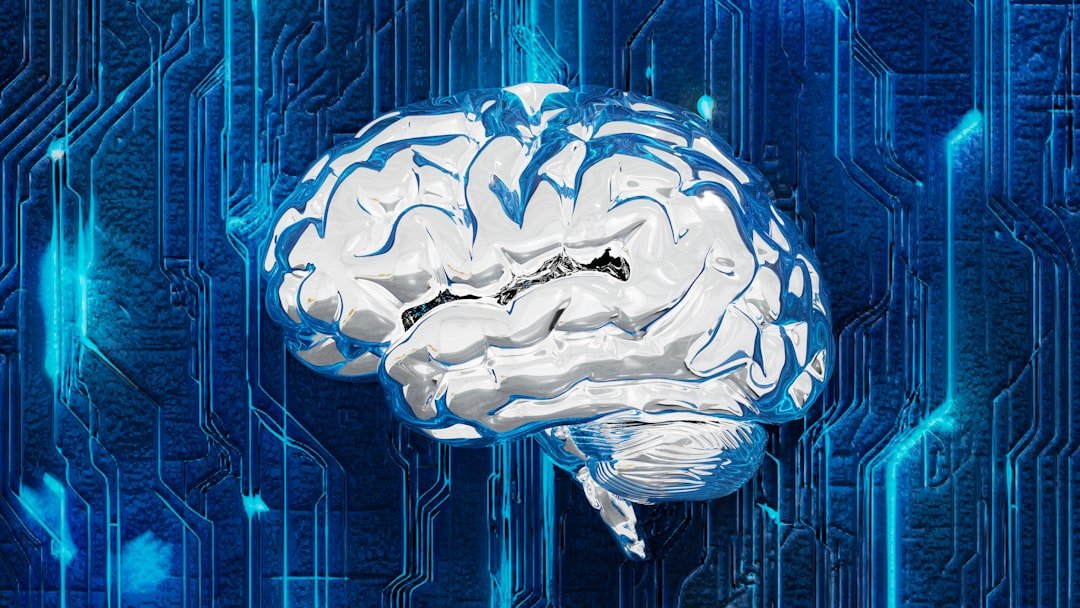
Replicating the Brain’s Firing Patterns (Image Credits: Unsplash)
People with spinal cord injuries or conditions like Parkinson’s often face barriers to regaining natural control over their bodies. A recent engineering breakthrough offers a glimpse of more intuitive solutions. Researchers developed minuscule artificial neurons that exchanged electrical signals with mouse brain tissue, demonstrating synchronized firing patterns in laboratory settings. This advance, detailed in a study published earlier this month, edges closer to brain implants that integrate smoothly with human neural networks.
Replicating the Brain’s Firing Patterns
Conventional electronics struggle to match the brain’s dynamic signaling. Traditional silicon chips deliver rigid, predictable pulses that fail to replicate the nuanced spikes of biological neurons. The new artificial neurons, however, employed a unique mechanism known as “snap back negative differential resistance” to produce energy bursts akin to real neural activity.
Engineers printed these devices using specialized inks containing flakes of molybdenum disulfide, a semiconductor, and graphene, an electrical conductor. Deposited onto a flexible polymer base via an aerosol jet printer, the setup allowed partial decomposition of the polymer into filaments. This configuration enabled tunable responses, from spaced-out spikes to rapid flurries, closely mirroring how living neurons operate. “We can achieve all different types of spiking responses that mimic biology,” noted Mark Hersam, a professor of materials science and engineering at Northwestern University and co-author of the research.
Direct Communication in Lab Tests
To verify functionality, the team positioned the artificial neurons adjacent to slices of mouse brain tissue in a controlled dish environment. Biological neurons in the tissue responded by aligning their firing rates with the synthetic ones. This synchronization indicated that the brain matter interpreted the artificial signals much like those from fellow neurons.
The interaction relied on electrical cues rather than chemical synapses, yet the tissue decoded the patterns effectively. Such harmony suggests these devices could one day relay information bidirectionally in living systems. Experiments confirmed short bursts of mutual activity, a critical proof of concept for hybrid neural interfaces.
Key Components and Innovations
The choice of materials addressed longstanding trade-offs in neuromorphic devices. Soft gels mimic tissue flexibility but fire too slowly, while rigid silicon spikes too quickly for biological relevance. The hybrid inks struck a balance, leveraging the polymer’s decomposition for precise current control.
| Aspect | Description | Benefit |
|---|---|---|
| Materials | Molybdenum disulfide and graphene inks on polymer | Flexible, tunable spiking |
| Mechanism | Snap back resistance | Mimics natural energy release |
| Printing Method | Aerosol jet | Scalable fabrication |
Hersam emphasized the broader motivation: “We are trying to mimic the brain as faithfully as possible. What motivates us is to come up with an alternative to conventional digital computing to handle large amounts of data in a more energy-efficient way.” The work appeared in Nature Nanotechnology on April 15, 2026.
Persistent Challenges Ahead
Despite promising results, the devices managed communication only briefly. Sustained interaction remains elusive, limiting immediate applications as permanent implants. Timothée Levi, a bioelectronics professor at the University of Bordeaux not involved in the study, observed, “We can control them for a short time but not yet for a long time.”
Integration poses another hurdle. Individual neurons function well in isolation, but assembling them into synapse-linked circuits demands further refinement. “The frontier problem is that we have a series of devices that mimic different elements of the brain, but we need to integrate them together into circuits that achieve the full functionality,” Hersam explained. These gaps highlight the iterative nature of such research.
Pathways to Real-World Impact
Successful scaling could transform brain-computer interfaces. Patients might direct prosthetic limbs or communication aids through thought alone, bypassing current clunky systems. The technology also holds potential for replacing damaged cells in diseases such as Alzheimer’s, where neural loss disrupts function.
- Prosthetic control: Seamless thought-to-action translation.
- Restorative therapy: Substituting lost neurons in degenerative conditions.
- Neuromorphic computing: Energy-efficient processing inspired by biology.
- Assistive devices: Enhanced interfaces for speech or mobility.
While full realization lies in the future, this demonstration shifts the paradigm from crude stimulation to genuine neural dialogue. For those awaiting better options, it underscores steady progress toward devices that truly converse with the brain.