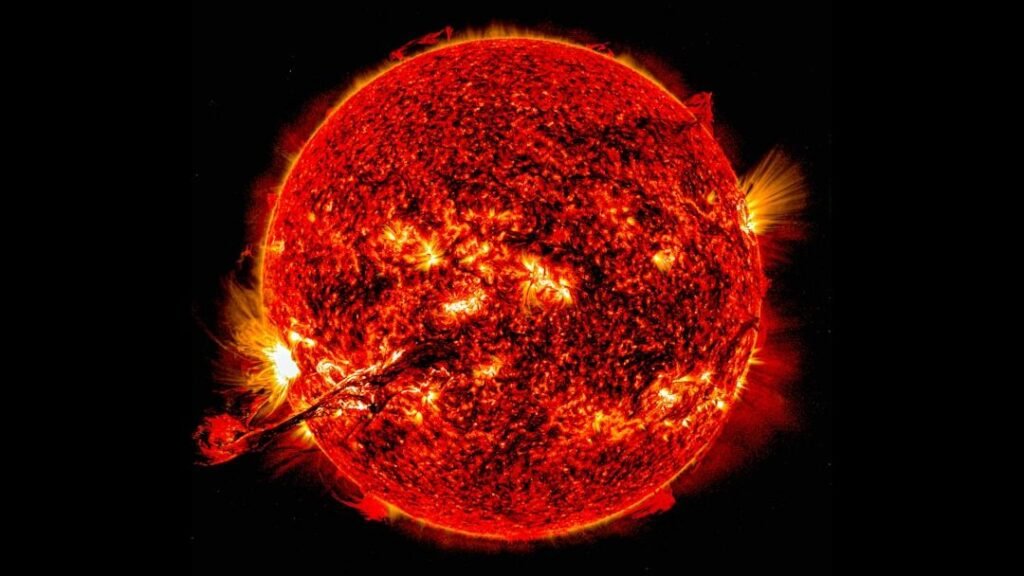

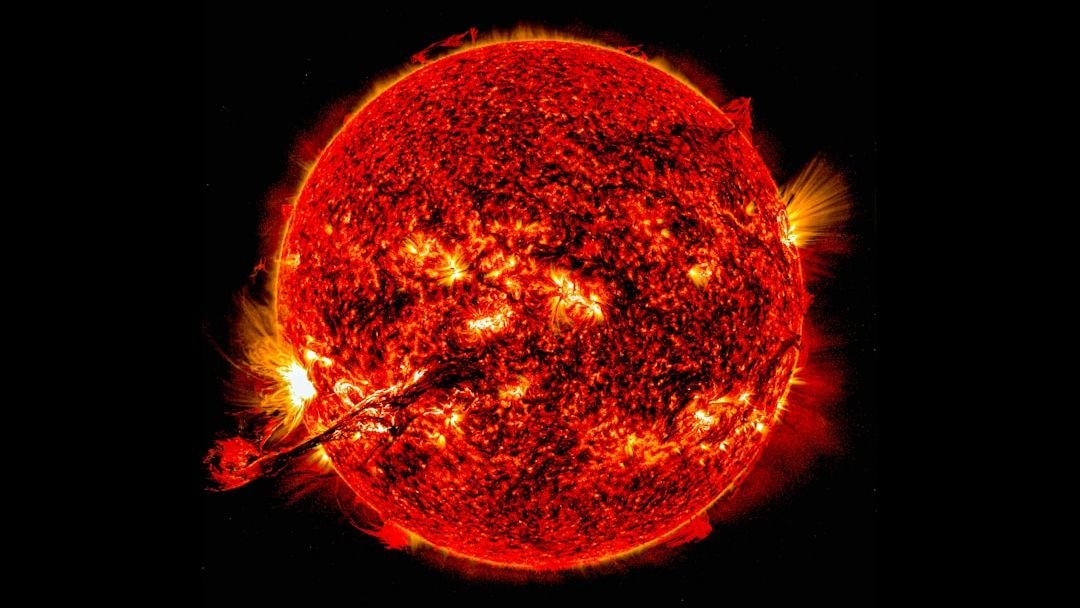
Rapid-Fire Eruptions from Active Regions (Image Credits: Unsplash)
The Sun released two potent X-class solar flares within roughly seven hours, briefly knocking out high-frequency radio signals across the illuminated side of Earth. The first event peaked late on April 23, 2026, while the second followed early the next morning.[1][2] These eruptions highlighted the ongoing intensity of solar activity during Solar Cycle 25.
Rapid-Fire Eruptions from Active Regions
Solar monitors detected the initial flare at 9:07 p.m. ET on April 23, classifying it as an X-class event.[1] Roughly seven hours later, a second X2.5 flare erupted at 4:13 a.m. ET on April 24, originating near the northwest limb just northwest of Active Region 4419.[3][2]
X-class flares represent the most powerful category of solar eruptions, releasing immense bursts of X-ray and ultraviolet radiation. The close timing of these blasts underscored the volatility of the Sun’s magnetic fields in complex sunspot groups.
| Flare Event | Peak Time (ET) | Classification | Sunspot Proximity | Primary Impact |
|---|---|---|---|---|
| First Flare | 9:07 p.m., Apr 23 | X-class | Not specified | Radio degradation |
| Second Flare | 4:13 a.m., Apr 24 | X2.5 | NW of AR 4419 | R3 blackout |
Radio Blackouts Grip the Dayside
The flares triggered strong radio blackouts, rated R3 on the NOAA scale for the second event. High-frequency signals, vital for aviation, maritime operations, and amateur radio, faded or vanished entirely on the sunlit portion of Earth.[3] These disruptions typically last minutes to hours, depending on the flare’s intensity and ionospheric response.
Current conditions showed lingering minor R1 effects, with occasional losses in low-frequency navigation. Affected areas shifted with Earth’s rotation, primarily impacting regions facing the Sun during peak times.
Surging Solar Activity in Solar Cycle 25
Solar Cycle 25, which began in 2019, nears its maximum phase, fueling frequent flare activity. Active regions like AR 4419 harbor twisted magnetic fields prone to sudden releases of energy.[4]
Monitors such as NASA’s Solar Dynamics Observatory and NOAA’s GOES satellites captured the events in real time. Recent days saw elevated X-ray flux, with M-class flares also contributing to the unrest.
Monitoring Risks and Future Outlook
Forecasters noted a 35% chance of additional R3 or stronger blackouts on April 24, rising slightly the next day. A 25% risk of solar radiation storms accompanied these odds, potentially affecting satellites and high-altitude flights.[3]
- 75% probability of minor to moderate radio events persisting.
- High likelihood of radiation impacts into April 25.
- No confirmed Earth-directed coronal mass ejections from these flares yet.
Space weather experts continue tracking sunspot evolution as regions rotate into view. While everyday impacts remain limited, these events remind operators to prepare for intermittent communications challenges.
As the Sun’s magnetic drama unfolds, such flares serve as a vivid display of cosmic power – and a call for vigilance in our technology-dependent world.