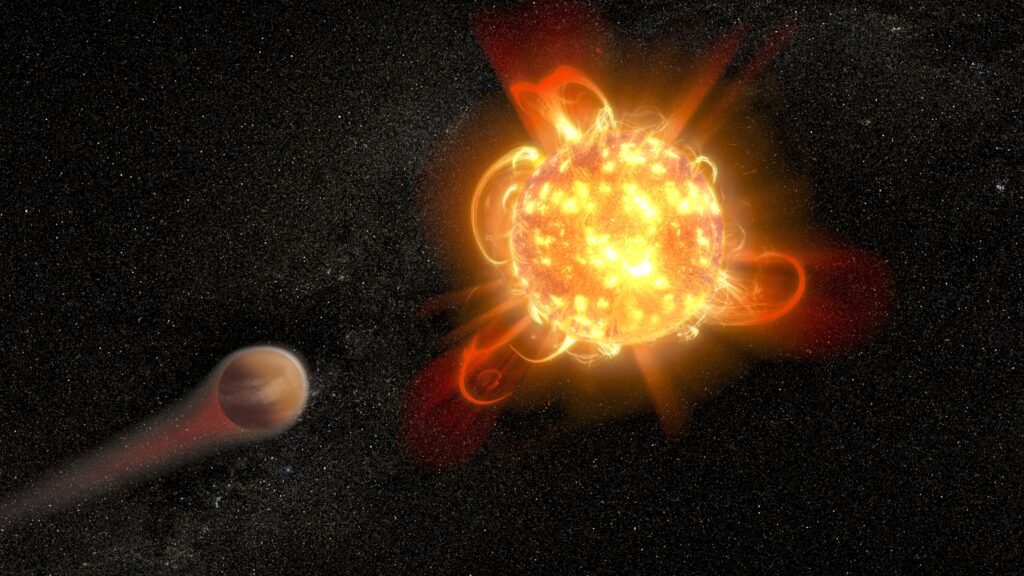
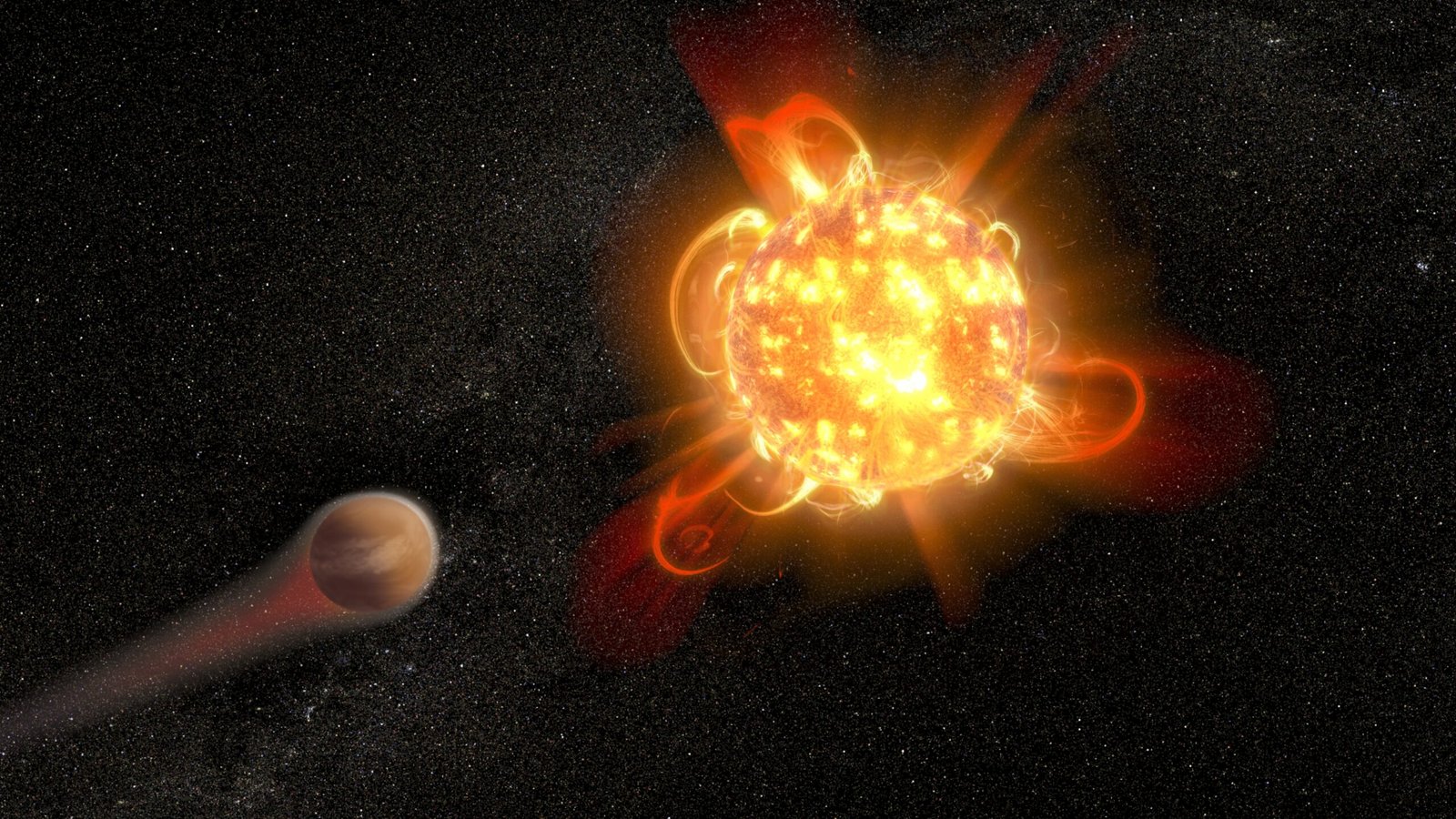
For years, stellar flares have been cast as cosmic villains—violent bursts of radiation capable of stripping atmospheres and sterilizing planets. But new research is flipping that narrative in a surprising way. Instead of being purely destructive, these energetic outbursts may actually help create the conditions needed for life, especially around small, dim stars.
This shift in perspective could dramatically expand the number of worlds considered potentially habitable. By rethinking the role of stellar activity, scientists are opening new doors in the search for life beyond Earth—suggesting that some of the most turbulent stars in the universe may also be among the most promising.
Rethinking the Habitable Zone
Traditionally, the “habitable zone” around a star is defined as the region where temperatures allow liquid water to exist on a planet’s surface. This concept has guided the search for life for decades.
However, the new study argues that this definition is incomplete. It overlooks the importance of ultraviolet radiation, which is essential for driving the chemical reactions that may lead to life. Without sufficient UV energy, even a water-rich planet might remain chemically stagnant and unable to kickstart biology.
The Hidden Power of Stellar Flares
This is where stellar flares come into play. These sudden bursts of energy release intense radiation, including ultraviolet light, into surrounding space.
For low-mass stars—especially red dwarfs—this is crucial. In their normal state, these stars emit too little UV radiation to support prebiotic chemistry. But frequent flares can provide periodic surges of energy that compensate for this.
In effect, flares may act as intermittent “energy injections” that help spark the building blocks of life.
Expanding the Boundaries of Life Friendly Worlds
By incorporating the effects of flares, researchers propose a revised concept known as the ultraviolet habitable zone. This overlaps with the traditional liquid water zone but extends its boundaries in key ways.
The findings suggest that habitable regions around small stars could be larger than previously thought. Planets once dismissed as too cold or inactive may actually receive enough flare-driven energy to support life. This dramatically increases the number of potential life-bearing planets in the galaxy.
The Double Edged Nature of Stellar Activity
Despite these promising insights, stellar flares are not purely beneficial. Their intense radiation can also erode planetary atmospheres or damage emerging life forms.
Scientists emphasize that the balance is delicate. Too little flaring may leave a planet chemically inactive, while too much could make it uninhabitable. Understanding this balance is now one of the key challenges in astrobiology.
Targeting New Worlds for Exploration
The study also highlights specific exoplanets orbiting flaring stars that may fall within both the traditional and ultraviolet habitable zones.
These worlds are now prime targets for future observations. With next-generation telescopes, scientists hope to analyze their atmospheres and search for signs of chemical activity—or even life itself. This refined approach could sharpen the search for habitable planets and make it more efficient.
A Universe More Alive Than We Thought
Perhaps the most profound implication of this research is philosophical. It suggests that life may not require calm, stable conditions as once believed—instead, it might emerge in environments shaped by bursts of chaos and energy.
In my view, this discovery reshapes how we imagine life in the universe. We have long searched for Earth-like serenity, but the cosmos may favor something far more dynamic. If stellar flares can both threaten and nurture life, then the universe is not just a place where life survives—it is a place where life is forged in the very storms we once feared.