

If you pause for a second and really think about it, time is the one thing you never step outside of, yet you have no idea what it actually is. You feel it in your schedule and your aging body, you see it on your phone’s clock, but none of that tells you what time itself really amounts to. Modern physics has quietly been whispering a wild possibility for more than a century: time might not be what your instincts insist it is.
In the last few decades, new theories and experiments have pushed that idea even further. You now have serious scientists suggesting that your sense of flowing time may be an illusion, that the universe may already contain every moment at once, or that time might even emerge from something deeper and more mysterious. As you walk through these ideas, you are not just learning abstract equations; you are being invited to question the most basic way you experience reality.
The Shocking Idea That Time Does Not “Flow”
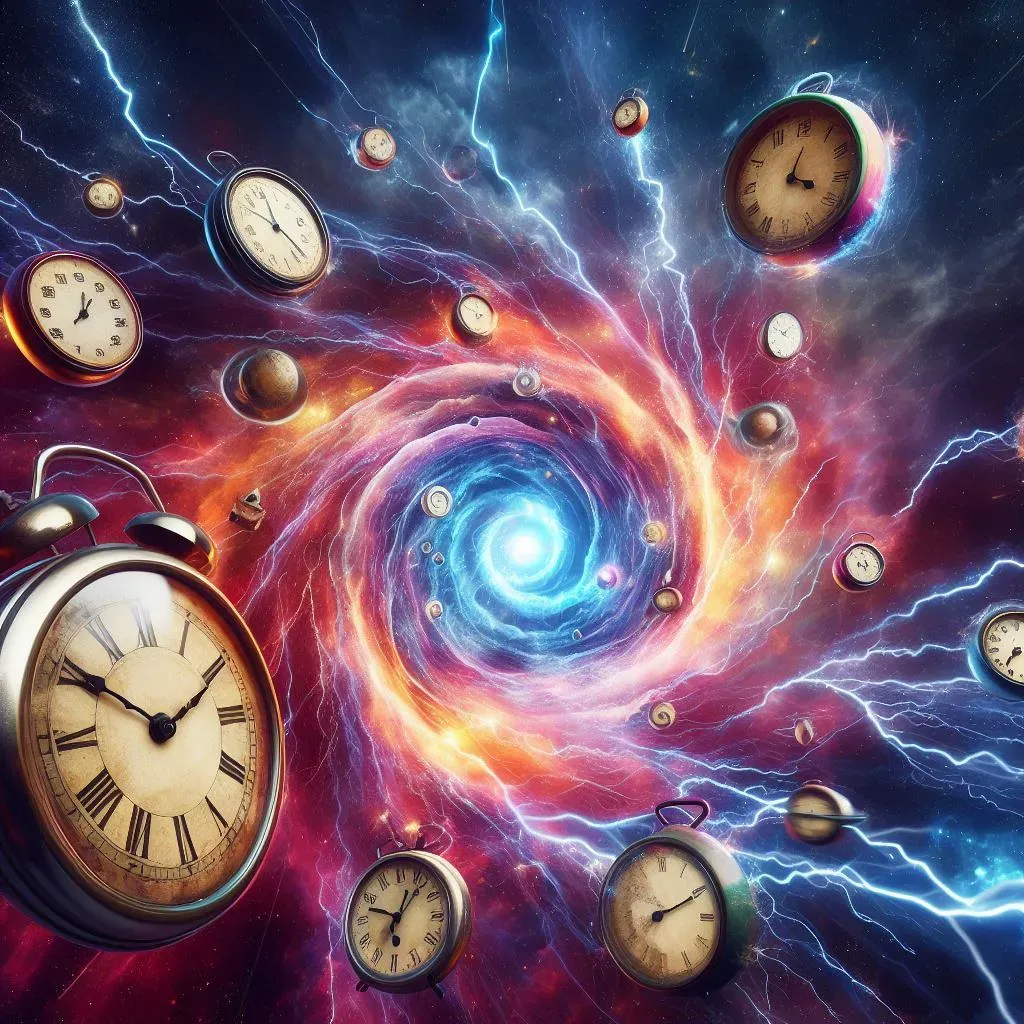
When you look at a clock, you feel time slipping away, second by second, as if there’s a cosmic river sweeping you along. Physics tells a different story. The laws that describe motion, gravity, and particles mostly work the same whether you run them forward or backward, like a movie that looks natural in reverse. That symmetry suggests that past, present, and future are all part of a single, fixed structure rather than a film strip being played in one direction.
You can picture this as a giant block of spacetime: every event that ever happens, from the formation of the Earth to your next birthday, already sits somewhere inside this four‑dimensional geometry. In that view, you are not watching time flow; you are moving along a particular path inside a pre‑existing landscape of moments. Your feeling of “now” becomes a kind of spotlight sweeping over that landscape, not a unique instant being created out of nothing.
Einstein’s Relativity: Your “Now” Is Not the Same as Mine
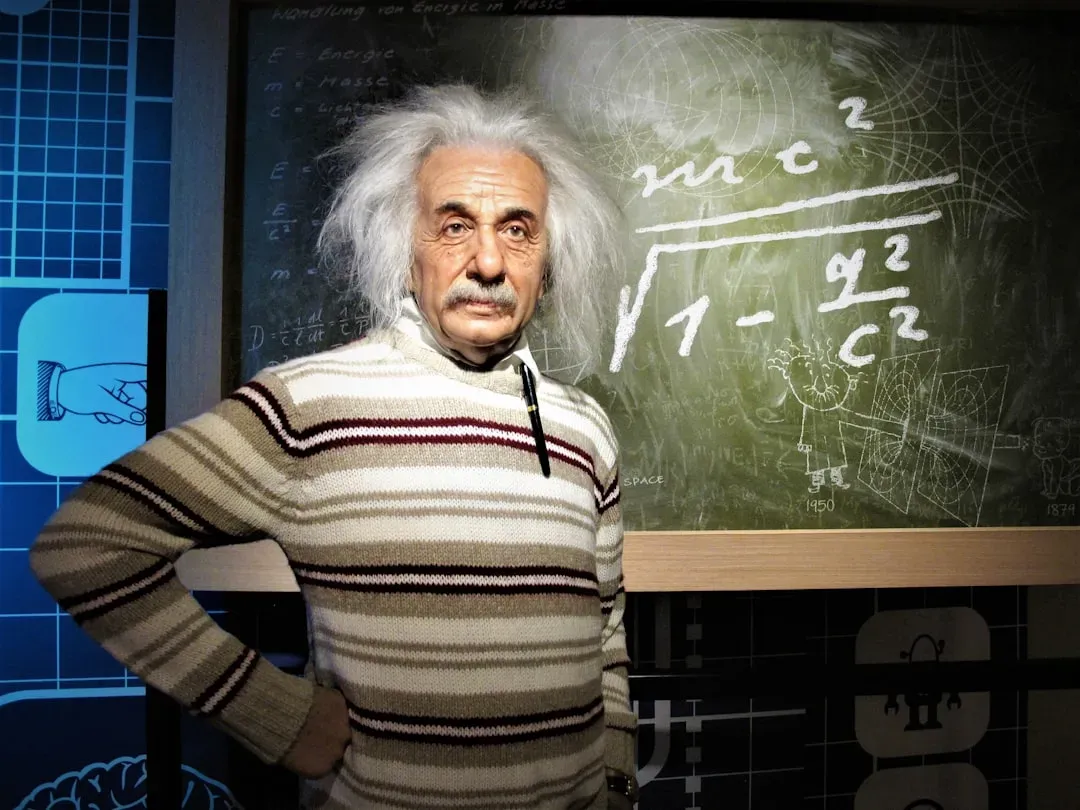
You probably grow up thinking there’s one universal now that everyone shares, like a giant synchronized clock for the whole cosmos. Einstein’s theory of special relativity shattered that comforting picture. If you move very fast compared with someone else, or if you sit in a different gravitational field, your measurement of time will not match theirs. Two people can honestly disagree about whether two events happened at the same time, and both can be right according to the rules of physics.
This relativity of simultaneity means that what you call the present is not absolute; it depends on how you are moving and where you are. Once you give up a universal now, it becomes natural to think of all moments as coexisting in spacetime rather than being generated one after another. You still experience a story, with before and after, but that ordering is tied to your personal path through the universe, not to a single cosmic clock ticking above everything.
The Arrow of Time and the Mystery of Entropy
Despite all that symmetry in the equations, you still sense a clear direction to time: you remember the past but not the future; eggs break but do not un‑break; your room gets messy much more easily than it gets tidy. This one‑way behavior is tied to entropy, a measure of disorder. As systems evolve, the vast majority of possible outcomes are more disordered than the tidy states they start from, so you overwhelmingly tend to see entropy increase.
You can think of it like shuffling a deck of cards: there are only a few ways to get a perfectly ordered deck, but an enormous number of jumbled arrangements. That imbalance makes it incredibly likely you will go from order to disorder, not the other way around. In physics, this gives time its arrow, but it also raises a deep question for you: why did the universe begin in such a remarkably low‑entropy, ordered state that allowed an arrow of time to emerge at all?
Block Universe vs. Growing Block: Is the Future Already Real?
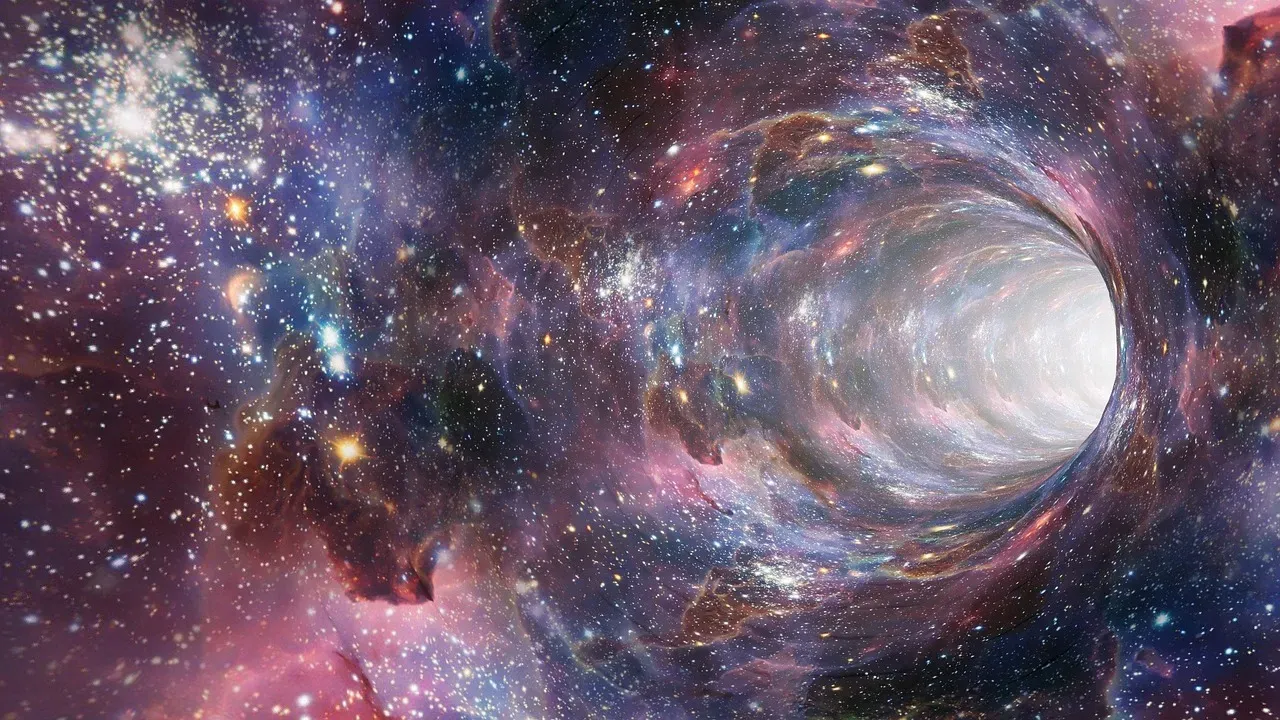
Once you accept that relativity encourages a four‑dimensional spacetime picture, you are pushed toward different philosophical interpretations. In the block universe view, past, present, and future are equally real slices of spacetime. You feel like you are moving from one slice to the next, but in this picture your entire life – from first breath to last – already exists as a single worldline laid out in the block. Your sense of flow becomes a feature of consciousness, not of physics itself.
Another idea, sometimes called the growing block view, suggests that the past and present exist, but the future does not yet. In that story, you can imagine the universe constantly “adding” new layers of reality as events happen. You still give up a universal now, but you keep the intuition that the future is genuinely open. When you choose between options, you really are shaping which new slice gets added, instead of walking through a path that was always there.
Quantum Weirdness: Superpositions, Measurements, and Time
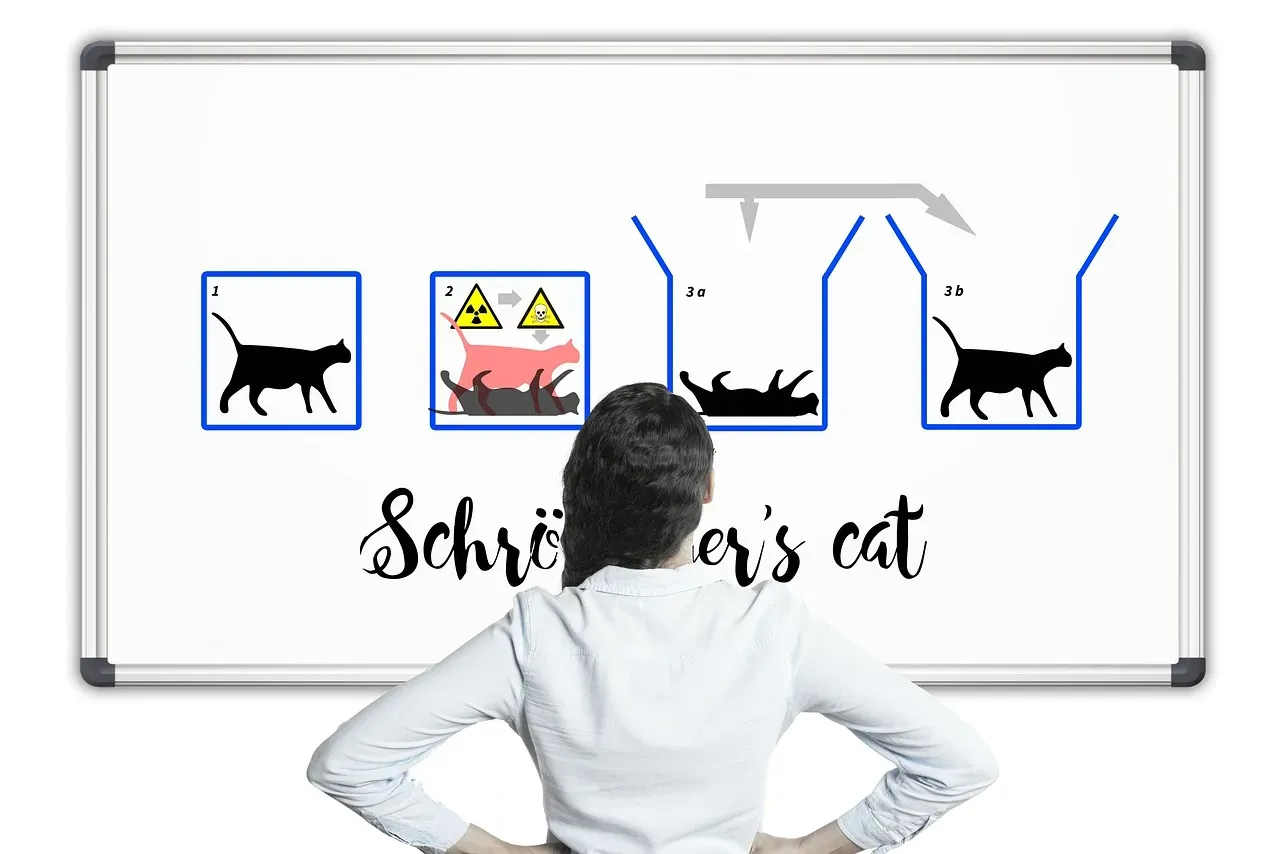
If relativity bends your sense of time, quantum theory tears it apart and rearranges the pieces. At tiny scales, particles do not have definite properties until you measure them; instead, they live in superpositions, like overlapping possibilities. When you perform a measurement, you see one outcome, but the mathematics treats all the possibilities as coexisting until that moment. This raises an uncomfortable question for you: when exactly does an event become part of reality, and how does that relate to your experience of time?
Some interpretations, like the many‑worlds approach, say that all the possible outcomes really occur in branching realities, and you simply find yourself in one branch. Others try to tie the collapse of possibilities to interactions with the environment or with conscious observers. In all of these stories, your notion of a single, crisp timeline becomes blurry. Time starts to look less like a steady line and more like a tangled network of potential histories that only feel simple when you zoom out.
Is Time an Emergent Property Rather Than Fundamental?
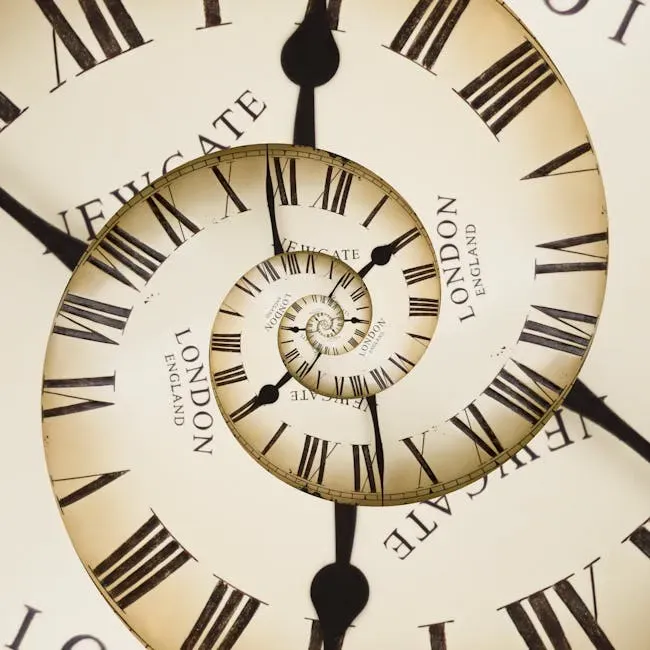
In recent years, more researchers have been exploring the idea that time might not sit at the deepest level of reality at all. Instead, it could emerge from more basic ingredients, such as quantum entanglement or abstract mathematical structures. You can compare it to how temperature emerges from the motion of countless atoms: individual atoms do not have a temperature on their own, but when you look at them collectively, a new property appears. Time may arise in a similar way when you look at large‑scale patterns rather than the tiniest details.
Some approaches in quantum gravity and cosmology hint that if you zoom in far enough, the very notion of before and after may lose its meaning. Only when you average over many underlying processes do you recover something that behaves like time as you know it. From this angle, asking what time really is becomes a bit like asking what a wave “really is” in the ocean: it is not a separate thing, just a way you describe a pattern in the water. That thought can be unsettling, but it also frees you to see time as one layer in a deeper hierarchy of reality.
How These Ideas Affect Your Everyday Life (Even If You Never Do the Math)

At first glance, these theories might feel like distant abstractions that have nothing to do with your daily routine. You still have deadlines, aging relatives, and memories that pull you backward. Yet when you let these ideas sink in, they can subtly reshape how you think about choices, regrets, and the weight of each moment. If the future is not strictly predetermined, you can see yourself as genuinely participating in the unfolding of reality, not just replaying a script.
On the other hand, if time is part of a larger spacetime block, you might find a strange comfort in the idea that every moment you cherish is, in some sense, eternally inscribed in the structure of the universe. You may start to treat your present not as something that is constantly evaporating, but as a slice of the cosmos that will always exist. Either way, these scientific theories invite you to hold your experience of time a little more lightly, to question your assumptions, and to stay curious about what might lie beneath the ticking of every clock you see.
When you step back from all of this, you realize that science is not just giving you new gadgets; it is quietly rewriting your basic story about existence. You live as if time is obvious, linear, and solid, but the best ideas you have suggest it is far stranger, more flexible, and possibly not fundamental at all. You do not have final answers yet, and that uncertainty can feel unsettling, but it is also a kind of invitation. What else that feels obvious to you today might someday turn out to be just another useful illusion?