

Imagine changing something in your living room and, in the same instant, a matching change appears in a lab on the other side of the planet. No signal, no delay, no visible connection at all. That is roughly what quantum entanglement seems like at first glance: a kind of invisible choreography happening between particles that refuse to act independently, no matter how far apart they are pulled.
Physicists used to argue fiercely over whether this could possibly be real. Today, the evidence is overwhelming that entanglement is not only real, but fundamental to how nature works at the deepest level. It underpins ideas for quantum computers, ultra-secure communication, and a new way of thinking about information itself. The story is strange, a little unsettling, and quietly beautiful.
The Strange Heart of Entanglement
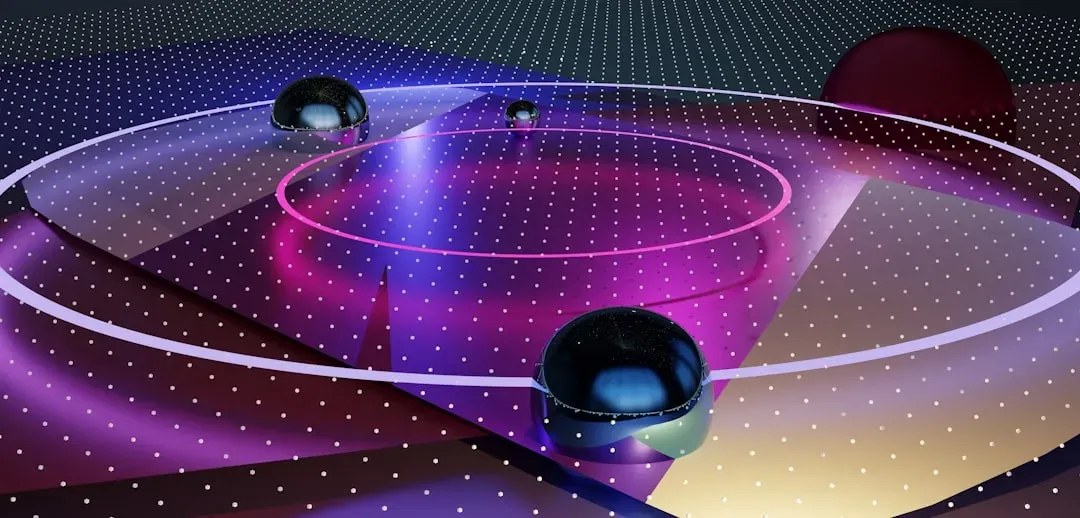
The unsettling part about entanglement is how it breaks our everyday intuition about separate things staying separate. When two particles become entangled, their properties stop being independent and instead become parts of a shared, unified state. You can think of them less like two coins and more like two sides of the same coin, even if those sides are separated by light-years.
What shocks people first is that measuring one of the particles seems to instantly fix the outcome you get when you later measure the other, in a way that cannot be explained by hidden instructions they carried from the start. The universe appears to say: these two were created together, and they will keep behaving like one system, no matter what distance you put between them. It feels almost like a stubborn cosmic relationship that refuses to break up.
Einstein’s Worry About “Spooky Action”
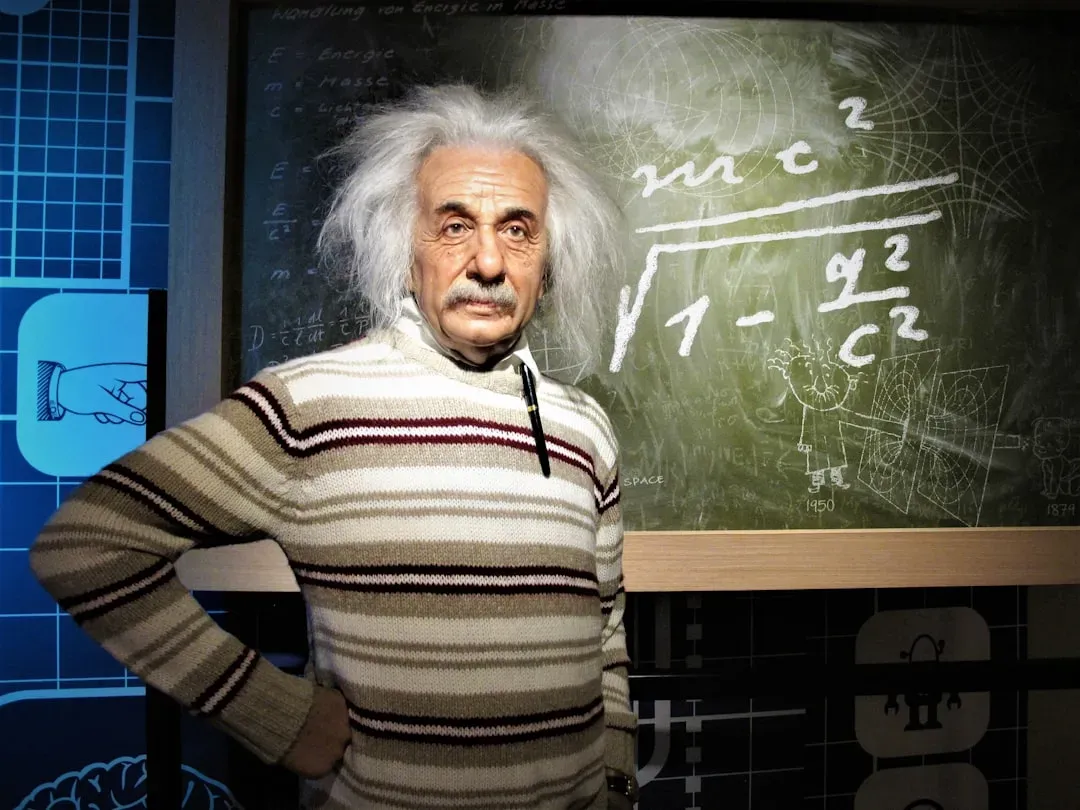
The phrase “spooky action at a distance” comes from Albert Einstein’s deep discomfort with what entanglement implied. To him, the idea that a choice of measurement here could immediately influence something over there sounded like a direct attack on the speed limit set by light. He believed there had to be some more reasonable explanation, some hidden layer of reality carrying predetermined outcomes.
Einstein and collaborators framed this as a challenge, asking whether quantum theory was incomplete rather than outright wrong. Their hope was that underlying variables, unknown to us, would restore a sense of locality and common sense. In a way, they voiced what many of us feel: surely the universe cannot be that strange. Yet decades later, precise experiments would push back forcefully against Einstein’s intuition and, surprisingly, side with the weirdness.
Bell’s Theorem: When Nature Picks a Side

John Bell, a quietly brilliant physicist, turned the philosophical debate about entanglement into a concrete, testable question. He showed that if there really were hidden instructions guiding particles in a local, classical way, then measurements on entangled particles would obey certain statistical limits. If quantum mechanics was right, those limits would be violated in a very specific pattern.
Over many years, experiments grew more careful and more convincing, and the results repeatedly broke those classical limits. The universe seems to reject any explanation that relies on local hidden rules acting in the background. Nature effectively chose the “spooky” option over the comforting one. When I first learned this, it felt like discovering that the world had quietly voted against common sense and decided to stay mysterious.
Does Entanglement Mean Faster-Than-Light Signals?
It is tempting to say entanglement lets you send instant messages across the galaxy, but that is one place where pop science badly misleads people. Even though entangled particles show correlated outcomes instantly, you cannot control those outcomes in a way that carries usable information faster than light. Each side still sees random results; it is only when they later compare notes that the pattern of correlation emerges.
This limitation protects one of the most deeply tested principles in physics: no signal, no influence that can be turned into a message, travels faster than light. The “spookiness” lives in the correlations, not in some ghostly communication channel. In a sense, the universe keeps its drama carefully confined to what is observable only when pieces of information are brought together the slow, ordinary way.
How Entanglement Shows Up in the Real World
For a long time, entanglement sounded like something trapped in blackboards and thought experiments. Now, it is showing up in labs, startups, and engineering projects around the world. Researchers routinely create entangled photons, ions, and even larger systems, and use them to probe the boundaries between quantum and classical behavior. The idea that this was once dismissed as philosophical fluff feels almost amusing today.
In practical terms, entanglement is the fuel behind quantum key distribution, where two parties share encryption keys in a way that exposes any eavesdropper through the disturbance they cause. It also appears in devices that link distant quantum memories, trying to build the backbone of a future “quantum internet.” Seeing headlines about networks built on entanglement can feel a bit like watching science fiction quietly drift into the news section.
Entanglement and Quantum Computing’s Promise
Quantum computers rely heavily on superposition and entanglement to do something classical machines struggle with: explore many possible paths at once in a coordinated way. When qubits are entangled, operations on one affect the combined state of many, allowing certain problems to be tackled with far fewer steps than traditional algorithms would need. It is not magic, but it does feel like using the grain of reality instead of working against it.
We are still in the early, noisy, imperfect era of quantum hardware, and many bold promises from a decade ago turned out to be overly optimistic. But slowly, carefully, researchers are scaling up devices and finding small, concrete tasks where entangled qubits can offer an edge. It is less a sudden revolution and more like watching a strange, new kind of engine being painstakingly assembled, bolt by quantum bolt.
What Entanglement Might Mean for Reality Itself
Beyond the gadgets and experiments, entanglement forces a deeper question: what does it mean for things to be separate at all? Some modern ideas in physics treat entanglement as more fundamental than space itself, suggesting that the fabric of reality might be woven from patterns of quantum correlation. In that view, distance is not what limits connection; connection gives rise to the very sense of distance.
For me, the most haunting part of all this is how entanglement blurs the boundary between “this” and “that,” between here and there. It hints that the universe is less like a collection of isolated objects and more like a single, sprawling conversation where everything participates. Whether or not these ideas about spacetime ultimately hold up, it is hard not to feel a bit more connected to the world knowing that, at a deep level, separation is partly an illusion.
Conclusion: Living With the Spooky

Quantum entanglement started as an uncomfortable puzzle at the edge of theory and ended up as a central feature of how we understand and use the quantum world. It challenged Einstein, reshaped philosophy, and is now quietly driving new technologies that may redefine computing and communication. Along the way, it has forced us to loosen our grip on common sense and accept that reality is more intertwined than it appears.
We may never fully shake the feeling that there is something eerie about distant particles behaving as one, yet that eeriness has become part of the landscape of serious science rather than a fringe curiosity. Perhaps the real shift is learning to be at peace with a universe that is both lawful and deeply strange at the same time. When you think about everything around you being connected in ways you cannot see, does it change how alone you feel in the world?