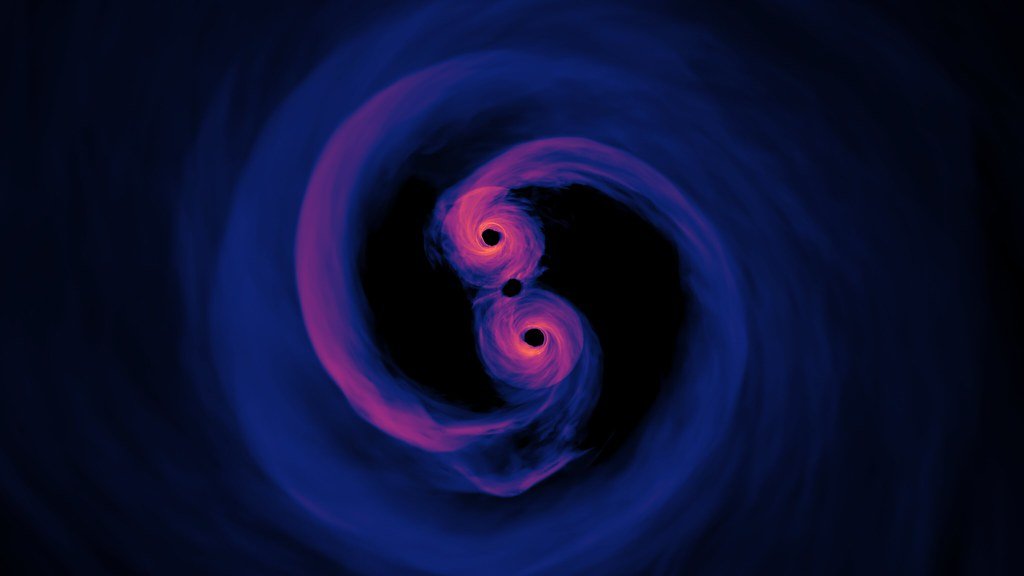

Every time astronomers think they have the universe figured out, space throws something utterly bizarre at them. From stars that spit matter faster than anything we can imagine to planets that should not exist on any chart, the cosmos seems almost determined to mess with our neat theories. The objects in this list are not just curious oddities; they are the kinds of discoveries that force scientists back to the drawing board.
What fascinates me most is how often the wildest stuff starts with someone noticing a tiny anomaly in a graph or a faint flicker of light that just “looks wrong.” Behind each of these discoveries is the same story: patient people staring at data, then suddenly realizing the universe is doing something no textbook prepared them for. Let’s dive into eight of the weirdest objects out there that quietly (and sometimes loudly) break the rules.
1. Tabby’s Star: The Flickering Mystery That Wouldn’t Behave
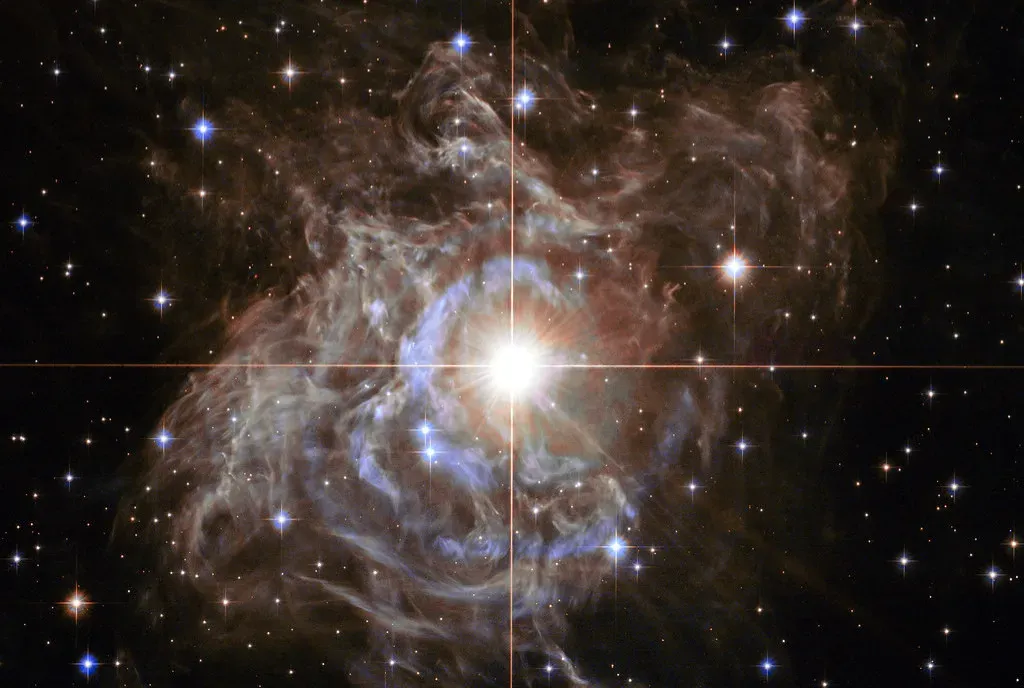
Imagine staring at a star that keeps dimming in strange, irregular ways, like a cosmic lighthouse having a nervous breakdown. That’s Tabby’s Star, officially known as KIC 8462852, and its wildly uneven dips in brightness have puzzled astronomers for more than a decade. Most stars that dim do so with regular, predictable patterns caused by orbiting planets, but this one fades by dramatic amounts at odd intervals and then brightens again without a clear rhythm.
Early on, people tossed out all kinds of explanations, from swarms of comets to dust clouds to, yes, even hypothetical megastructures built by advanced civilizations. As observations piled up, the explanation that fits best involves enormous, uneven clouds of dust or debris partially blocking the starlight. Still, the pattern is so complex that there’s no single, simple model everyone fully agrees on, which makes Tabby’s Star a humbling reminder that even something as “basic” as a star’s brightness can hide tangled physics we barely understand.
2. ‘Oumuamua: The Interstellar Visitor That Didn’t Make Sense
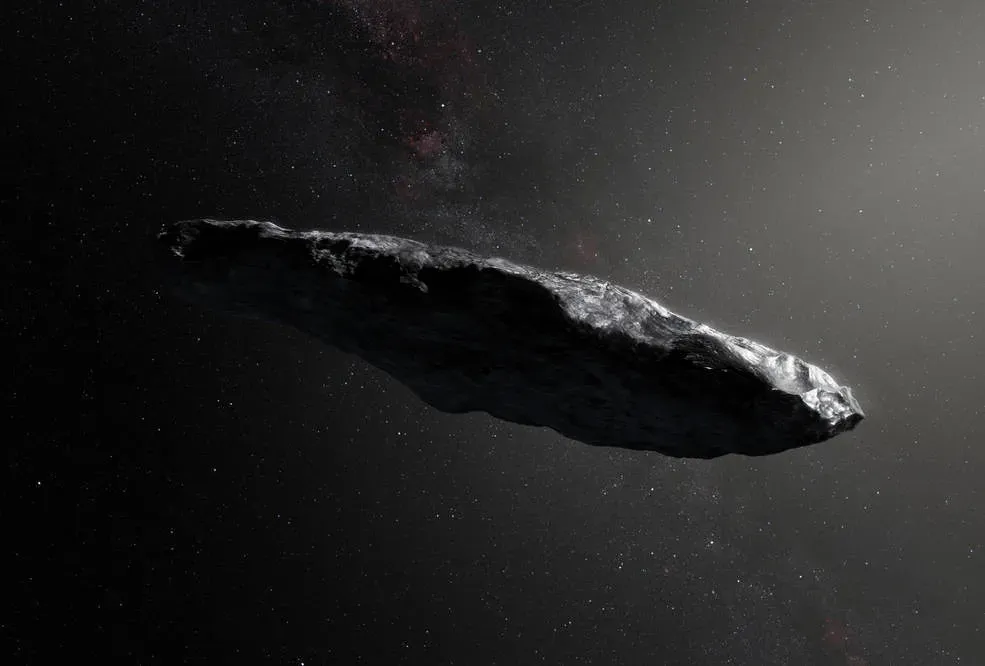
In 2017, astronomers spotted something tumbling through our solar system on a trajectory that proved it came from outside, from deep interstellar space. This object, named ‘Oumuamua, did not look or act like any comet or asteroid we’d seen before. It was small, dim, and seemed oddly elongated, with its brightness changing in a way that suggested a very unusual shape, more like a stretched-out shard than a roughly round rock.
Then it did something even stranger: as it moved away from the Sun, it sped up slightly, as if a gentle, invisible force was pushing on it. Comets can do that when sunlight heats their ice and releases gas, but ‘Oumuamua showed no obvious signs of a traditional comet tail. The leading explanation today is that it might have been made of unusual ices or materials that vaporize in subtle ways, or perhaps a fractured, fragile object affected strongly by sunlight. We still do not know exactly what it was, and that lingering uncertainty keeps it firmly in the “this changes our expectations” category.
3. Fast Radio Bursts: Millisecond Blasts from the Deep Unknown
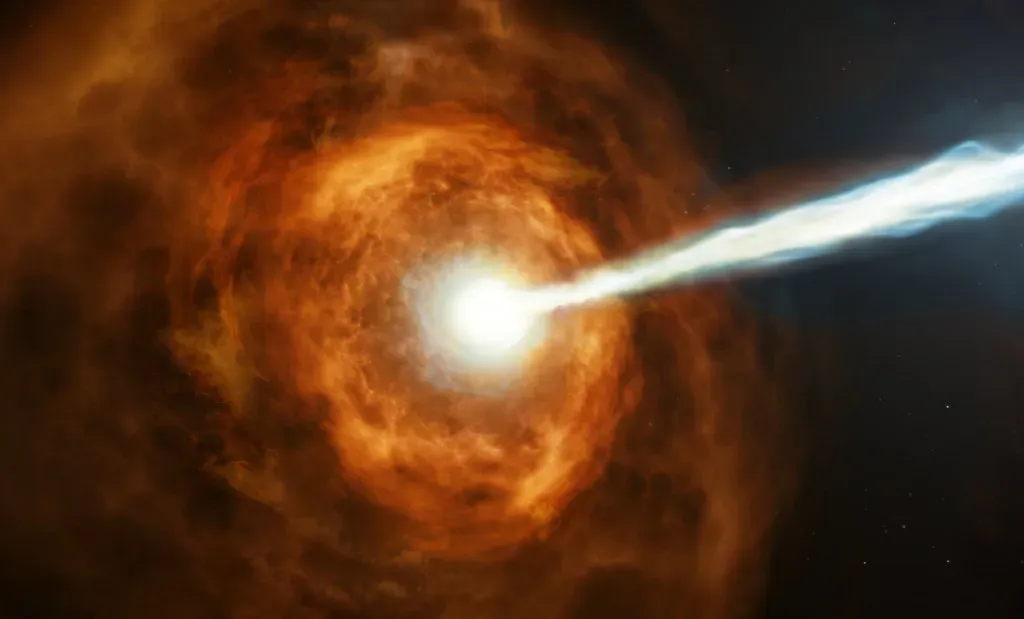
Fast radio bursts, or FRBs, are like space sending out terrifyingly powerful, ultra-short radio “pings” that last only milliseconds yet release enormous energy. The first one was only noticed after the fact in archived data, and for years each new detection just deepened the mystery. One of the weirdest things about them is how they come from all over the sky, from distant galaxies, and appear randomly, with no obvious warning or simple pattern.
Some FRBs seem to repeat from the same source, while others have been seen only once, which makes them even harder to categorize. Theories range from highly magnetized dead stars called magnetars to exotic interactions we don’t fully grasp yet, and recent detections of FRBs from within our own galaxy support the magnetar idea for at least some of them. Still, FRBs force astrophysicists to confront the reality that the universe has channels of violent, rapid energy release that we barely know how to describe. It’s like discovering thunder before you even understand what lightning is.
4. Pulsar Planets: Worlds That Shouldn’t Be There
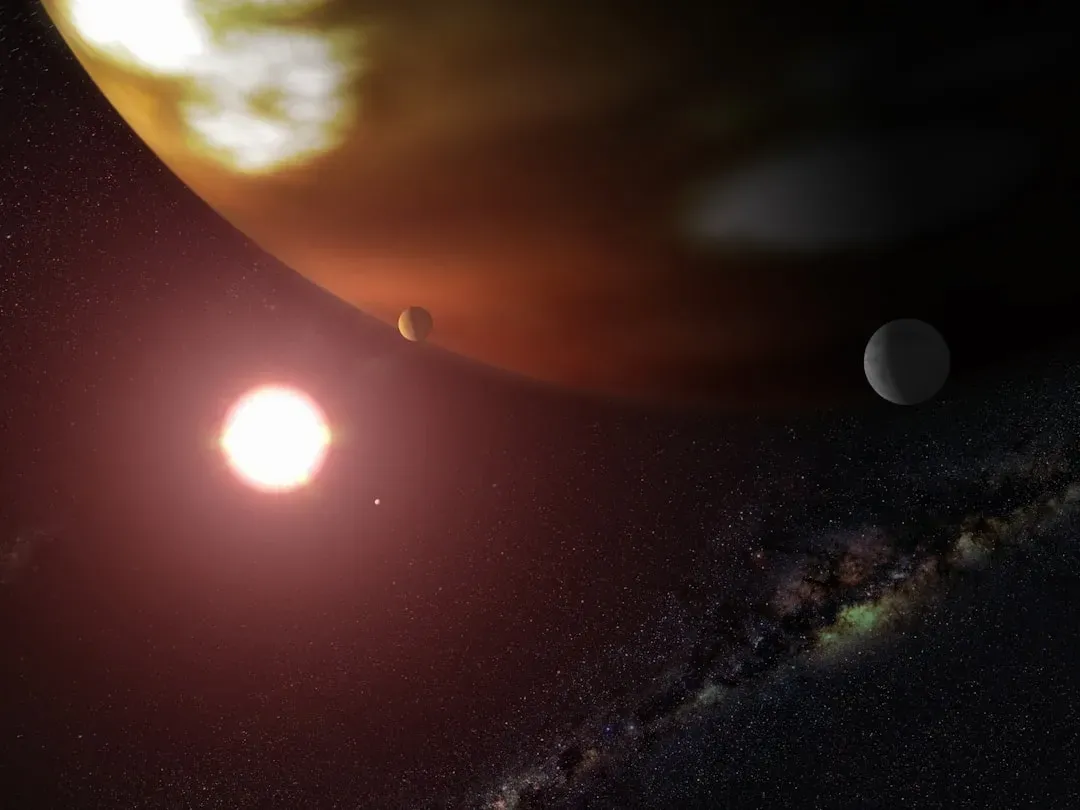
When you picture a place to find planets, you probably imagine a calm, stable star like our Sun. Instead, the first confirmed exoplanets were found orbiting a pulsar, a rapidly spinning, ultra-dense corpse of a star that had already exploded as a supernova. This pulsar, known as PSR B1257+12, emits extremely regular pulses of radio waves, and tiny variations in those pulses revealed the gravitational tug of orbiting planets. The shock was enormous: planets had somehow either survived or formed around a stellar remnant that went through a catastrophic explosion.
Pulsars are extreme environments, blasting intense radiation and spinning like cosmic lighthouses many times per second. The idea that stable, Earth-mass planets could exist in that chaos upended the then-simple picture of where planets “should” live. These pulsar planets are almost certainly hostile to life as we know it, but their mere existence makes planet formation theories more complicated and more interesting. It’s like discovering a thriving garden in the middle of a blast zone and realizing your mental map of what’s possible is way too narrow.
5. Hypervelocity Stars: Runaways Shot from the Galactic Heart
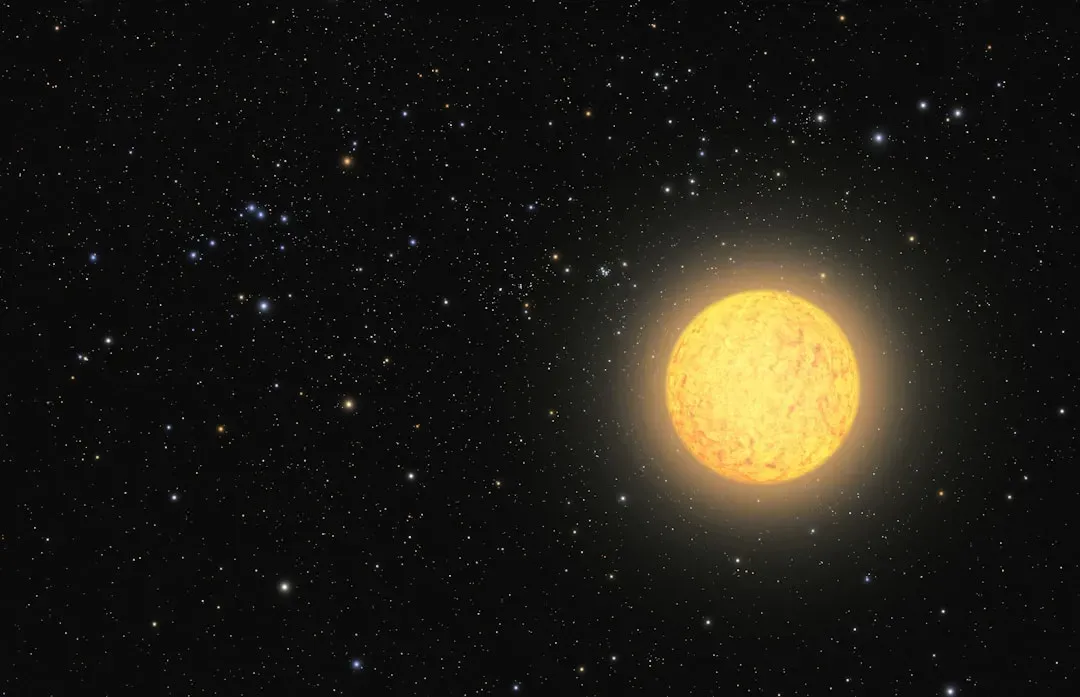
Most stars, including our Sun, move sedately through the galaxy, orbiting its center like long-distance runners on a track. Hypervelocity stars, by contrast, are like sprinters launched from a cannon, racing through the Milky Way at such high speeds that some of them will eventually escape it entirely. The leading idea is that these stars got too close to the supermassive black hole in the center of our galaxy, and complex gravitational interactions slingshotted them outward at incredible velocities.
What makes them so unsettling is how they shatter our cozy idea of the galaxy as a mostly stable, slow-moving environment. A single close pass near the central black hole can rip apart a binary star system, capturing one star and hurling the other away at thousands of kilometers per second. That means there are literal stellar exiles flying through intergalactic space, carrying with them chemical clues to the regions they came from. Hypervelocity stars remind us that even on the grandest scales, gravity can act like a brutal pinball machine.
6. Rogue Planets: Worlds Adrift with No Sun at All
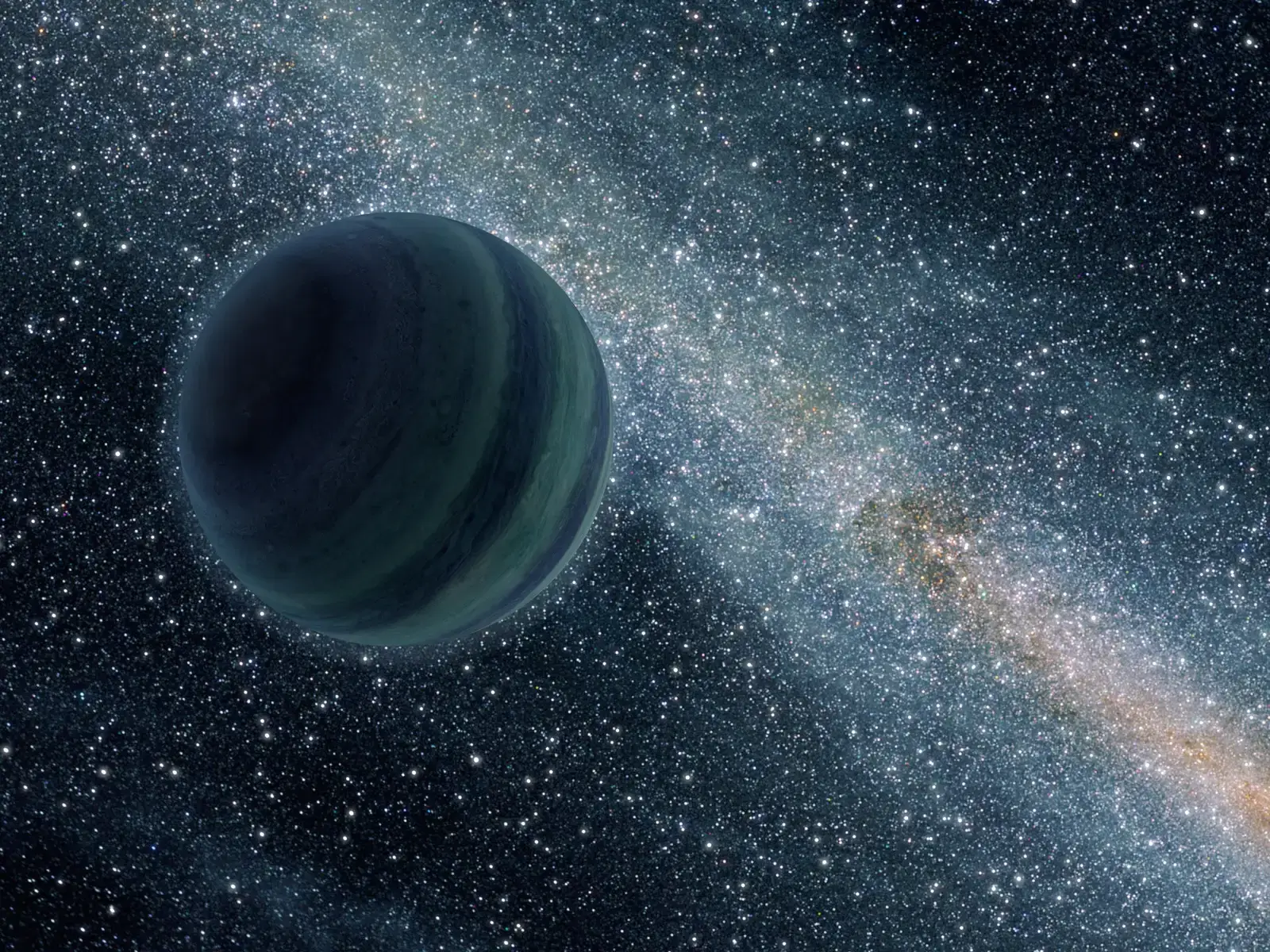
For most of human history, the word “planet” meant a world that orbits a star, bathed in its light and bound by its gravity. Rogue planets break that definition in the most direct way possible: they drift through space alone, apparently not bound to any star at all. Astronomers have spotted candidates for these free-floating worlds through subtle gravitational lensing events and deep infrared surveys, and there could be enormous numbers of them wandering the galaxy in darkness.
Some of these worlds might have been flung out of their original solar systems through violent gravitational encounters, while others could have formed in isolation from clumps of gas that never quite became stars. The thought of countless lonely planets, possibly with atmospheres, storms, and even subsurface oceans, moving through cold interstellar night is both haunting and oddly beautiful. They push us to expand what we mean by a “planetary system” and force habitability discussions to include worlds that are lit only by their internal heat. In a strange way, rogue planets feel like cosmic orphans, proof that even planets can be exiled.
7. Neutron Star Mountains: Bumps on the Densest Objects We Know
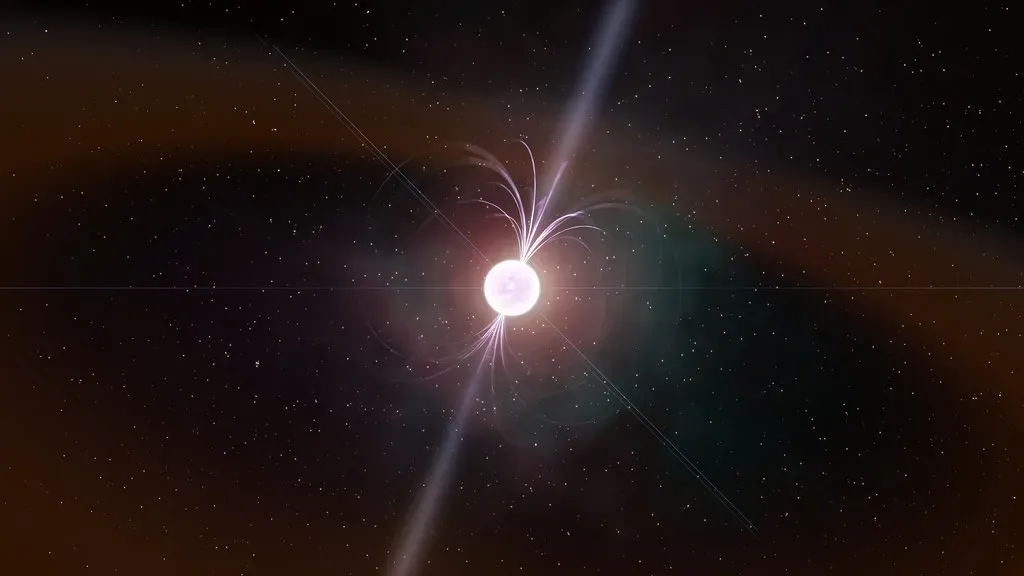
Neutron stars are already mind-bending: city-sized spheres packing more mass than our Sun into an object only a few tens of kilometers wide. But recent research suggests they may also have tiny “mountains” on their crust, bumps so small in height you could step over them, yet so incredibly dense that each one could weigh as much as a mountain range on Earth. These minuscule deformations matter because as the star spins, they can generate powerful gravitational waves, ripples in spacetime itself.
To me, neutron star mountains are the perfect example of how scale breaks our intuition. We call them mountains, but they might be millimeters to centimeters high, supported by crust material harder than anything we can imagine. Their existence ties together nuclear physics, general relativity, and the behavior of matter under absurd pressure. When scientists talk about listening for gravitational waves from these tiny bumps, it feels like trying to hear the footsteps of a flea shaking the entire planet.
8. Black Hole Mergers: Collisions We Only Hear, Never See
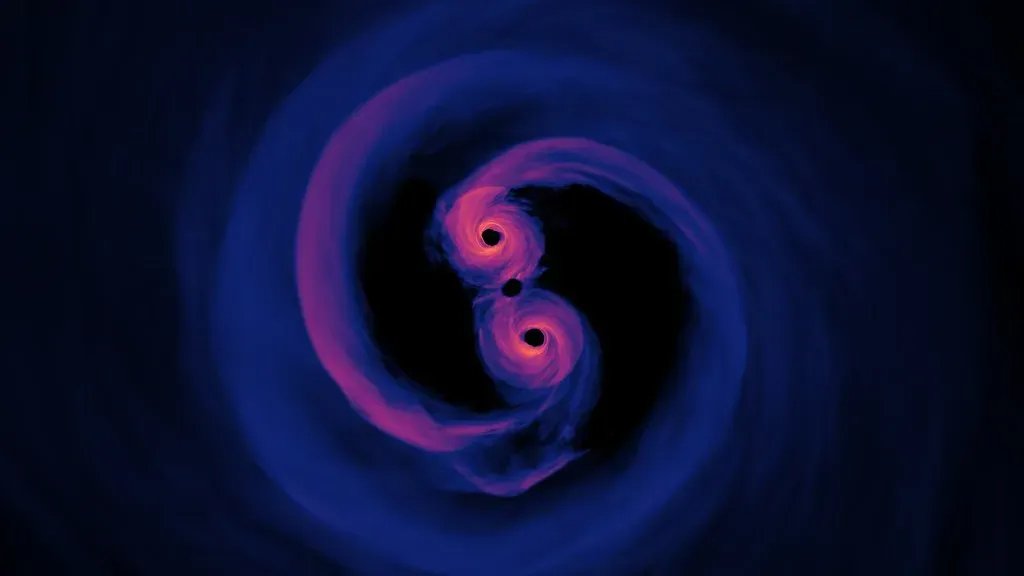
For most of history, black holes were theoretical monsters lurking in equations more than in telescopes. That changed dramatically when detectors began picking up gravitational waves from pairs of black holes spiraling into each other and merging. These events briefly release staggering amounts of energy, but almost all of it goes into rippling spacetime rather than light, so in many cases we “hear” the merger as a gravitational chirp before we ever see any electromagnetic signal.
The strange part is not just that we can detect invisible collisions; it’s that the black holes we’ve found this way often have masses and spins that challenge older models of how stars die and black holes grow. Some are heavier or paired in ways that suggest they might themselves be the products of earlier mergers, hinting at complex black hole “family trees” in crowded star clusters. These observations force theorists to rethink how common massive black holes are and how they come together. It’s like realizing you’ve been listening to a cosmic drum solo for ages without knowing there was a drummer at all.
Conclusion: A Universe That Refuses to Sit Still
When you line up objects like Tabby’s Star, ‘Oumuamua, rogue planets, and black hole mergers, a theme jumps out: the universe is far messier, stranger, and more creative than the tidy diagrams in school textbooks. Each of these discoveries started as an annoyance, a signal that did not fit, a number that seemed off, and then slowly grew into a full-blown challenge to our understanding. Instead of breaking science, though, they stretch it, forcing new ideas, better models, and more honest humility about what we still do not know.
I find that oddly comforting. If the cosmos were simple, we’d run out of questions, and curiosity would dry up. The fact that we keep stumbling into celestial objects that defy expectations means the adventure is very much alive, with more surprises almost guaranteed. The next “impossible” object might already be hiding in some telescope’s data, just waiting for someone to notice that something looks a little too weird. When you look up at the night sky now, it’s hard not to wonder: which of those faint points of light is quietly rewriting the rules, right under our noses?