Pinpointing the Bacterial Shield (Image Credits: Unsplash)
Antibiotic-resistant infections claim countless lives each year, but a recent scientific advance offers a promising countermeasure. Researchers identified pseudaminic acid, a sugar molecule unique to certain bacterial surfaces, as a potential vulnerability in notorious superbugs. By engineering antibodies to latch onto this sugar, known as Pse, the team demonstrated a way to unmask these pathogens and unleash the immune system’s full force against them.[1]
Pinpointing the Bacterial Shield
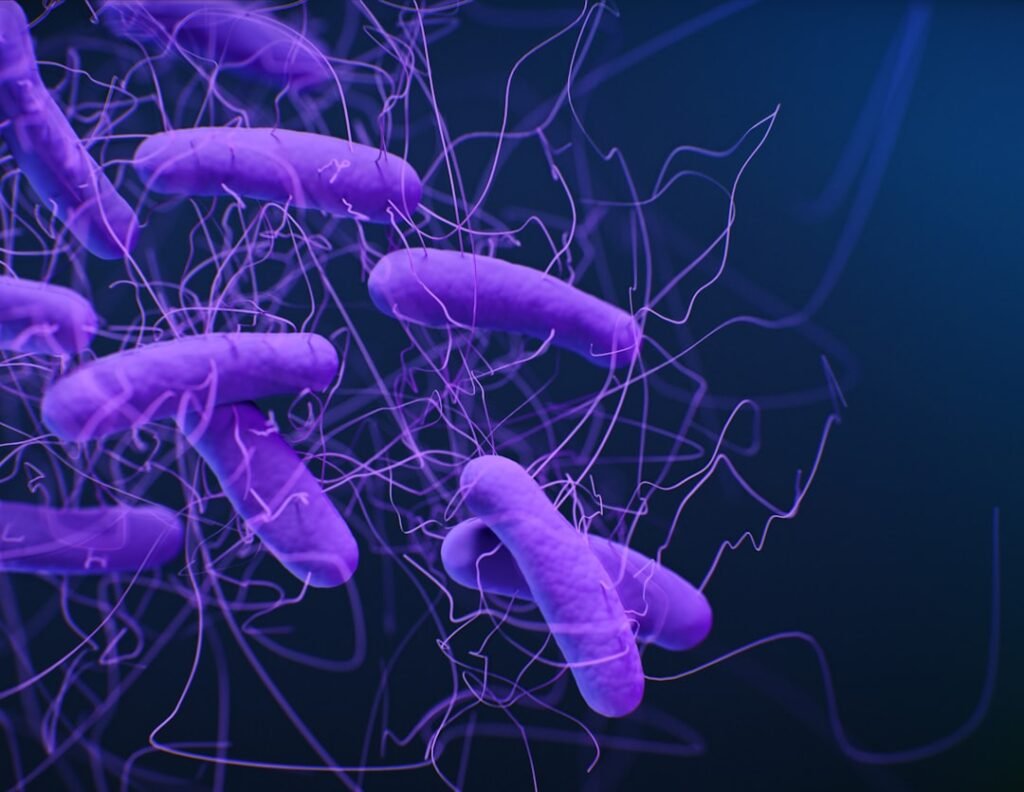
Gram-negative bacteria pose one of the toughest challenges in modern medicine due to their double-layered protective barriers. These superbugs, including Acinetobacter baumannii, Helicobacter pylori, and Campylobacter jejuni, often thrive in hospitals and evade both antibiotics and immune cells. Their secret lies in a sugary outer coat that mimics molecules on human cells, allowing them to blend in undetected.
Pseudaminic acid emerged as the key component of this disguise. Found only on bacterial exteriors and absent in humans, Pse provides a precise target. Scientists at Australia’s Walter and Eliza Hall Institute synthesized Pse in the lab, overcoming past hurdles in extracting the scarce molecule from bacteria. This enabled the creation of monoclonal antibodies that bind tightly to Pse across different species.[1]
From Lab Breakthrough to Mouse Survival
Experimental results stunned observers. In tests with mice infected by antibiotic-resistant A. baumannii, untreated animals perished within a day. Those receiving Pse-targeted antibodies achieved complete survival over a full week, highlighting the approach’s potency.
The antibodies flagged bacteria as invaders, prompting immune cells to engulf and destroy them. Binding occurred effectively despite variations in the sugar structures among species. Ethan Goddard-Borger, a co-author from the institute, noted the potential: “The next stage in the development of this concept is to produce an antibody that is suitable for use in humans.”[1]
| Treatment Group | Survival Rate (1 Week) |
|---|---|
| Untreated (10 mice) | 0% |
| Pse-targeted antibodies | 100% |
Mechanism Unlocks Immune Defenses
The process unfolds in precise steps. First, antibodies recognize and adhere to Pse on the bacterial surface. This binding exposes the pathogens, drawing in phagocytes – immune cells specialized in consumption.
Unlike broad-spectrum antibiotics, this method spares human tissues since Pse does not appear there. Researchers designed the antibodies to handle structural differences in Pse, broadening their reach. The study, detailed in a Nature Chemical Biology paper published in February 2026, validated this pan-specific targeting.[1]
- Pse synthesis enables antibody production.
- Antibodies bind across bacterial species variations.
- Immune cells engulf and eliminate flagged bacteria.
- No harm to human cells due to Pse exclusivity.
Challenges and the Road Ahead
Experts caution that hurdles remain. Brian Luna, an assistant professor at the University of Southern California, observed that Pse does not coat all bacterial strains. “Additional work would be needed to show that these antibodies bind a high percentage of clinical isolates,” he said.[1]
Human trials demand “humanized” antibodies to avoid rejection. Broader testing against diverse isolates will determine real-world efficacy. Still, the strategy holds promise for vaccines or preventive treatments in high-risk settings like hospitals.
Key Takeaways
- Pseudaminic acid uniquely marks superbug surfaces for immune targeting.
- Mouse studies showed 100% survival with antibody treatment.
- Next steps include human-adapted therapies and expanded testing.
This discovery reignites hope in the battle against antimicrobial resistance, shifting focus from chemical weapons to the body’s own arsenal. As development progresses, it could transform care for vulnerable patients. What do you think about this approach to superbugs? Tell us in the comments.