A Fresh Trail of Cosmic Debris Emerges (Image Credits: Unsplash)
Networks of automated cameras scan the night skies worldwide, capturing thousands of meteors each evening. These glowing streaks reveal fragments from distant solar system bodies entering Earth’s atmosphere. Scientists recently pinpointed a compact group of 282 such meteors, linking them to an unidentified asteroid suffering intense solar disruption.[1][2]
A Fresh Trail of Cosmic Debris Emerges
Astronomer Patrick M. Shober sifted through millions of meteor observations from camera arrays in Canada, Japan, California, and Europe. His analysis uncovered the tight cluster, signaling recent activity from a hidden asteroid. The debris followed an orbit that dipped nearly five times closer to the Sun than Earth orbits.[1]
These meteors entered the atmosphere at speeds exceeding 15 miles per second, vaporizing into brief flashes. Unlike typical comet dust, the fragments proved moderately fragile yet more resilient, hinting at rocky asteroid origins. Researchers published the findings in March 2026 in the Astrophysical Journal.[2]
Solar Fury: The Force Behind Asteroid Demise
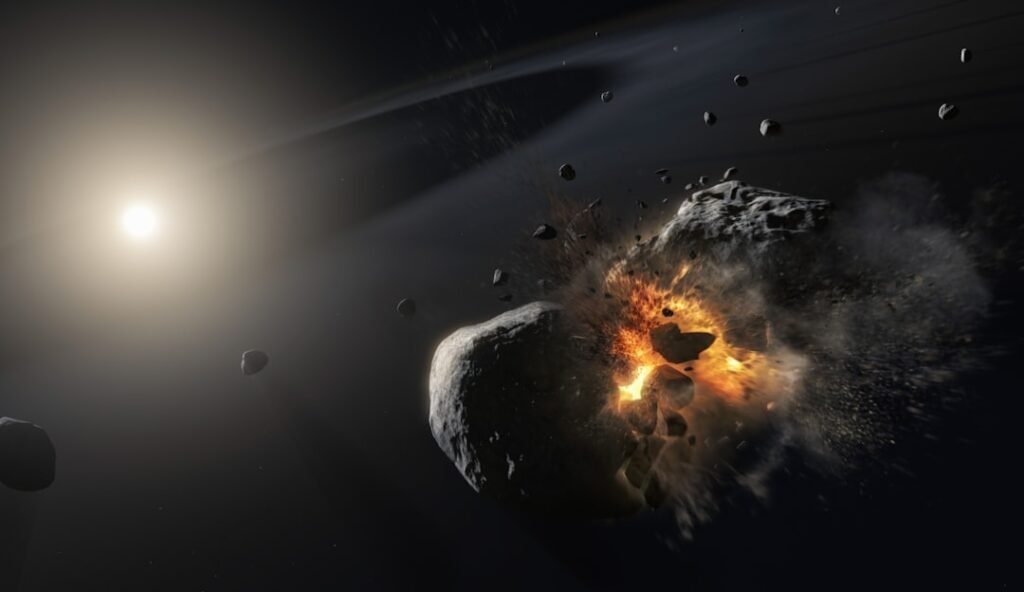
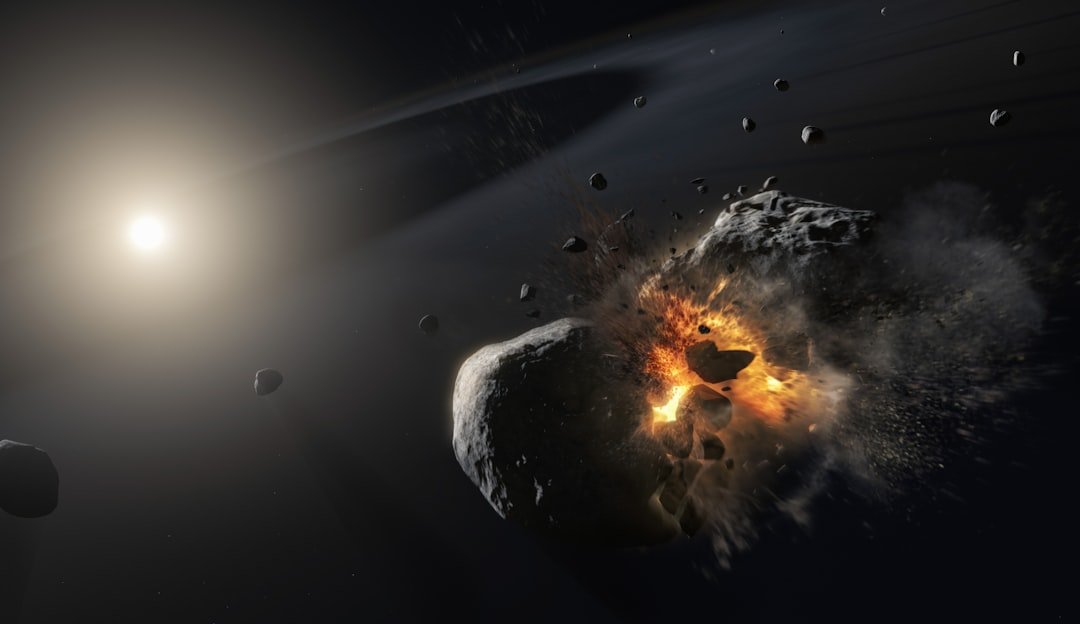
Intense solar radiation baked the asteroid’s surface during its close solar pass, cracking rock and releasing trapped gases. This thermal stress caused the body to shed dust and chunks, forming the observed stream. Earth now intersects this young debris trail, producing the new shower.
Asteroids differ from comets, lacking ices that sublimate easily. Instead, heat-induced fracturing dominates for sun-grazing rocks. Past examples include NASA’s OSIRIS-REx observations of particles ejecting from Bennu due to thermal effects and minor impacts.
- Surface cracking from rapid heating and cooling cycles
- Gas expulsion weakening structural integrity
- Fragmentation into dust streams along orbital paths
- Gradual dispersion by planetary gravitational influences
Echoes of the Geminid Parent: 3200 Phaethon
The discovery mirrors the behavior of 3200 Phaethon, source of the annual Geminid shower. Phaethon shed vast debris during prior solar encounters, spreading along its path. The new asteroid likely undergoes similar processes, contributing to meteorite diversity on Earth.
Debris streams start compact but spread over time under gravitational pulls from planets. Early detection, like this cluster, captures events close to their origin. Such insights explain why some showers intensify or vary yearly.
Meteor monitoring serves as a probe for invisible objects too faint for telescopes. Dark, sun-approaching asteroids evade direct observation but betray presence through atmospheric encounters.
Implications for Planetary Defense and Solar System Evolution
This finding highlights hidden near-Earth threats. Upcoming missions like NASA’s NEO Surveyor, set for 2027 launch, will target such elusive bodies. Enhanced detection aids in tracking potential hazards.
Beyond defense, the event illuminates asteroid evolution. Daily influxes of rubble refine models of solar system formation and material distribution. Diverse meteor compositions stem from varied disintegration mechanisms.
Key Takeaways:
- A new meteor shower stems from solar-induced asteroid breakup, detected via 282 clustered events.
- Debris orbits plunge far closer to the Sun, enduring extreme heat that fragments rocky surfaces.
- Global camera networks enable discovery of otherwise invisible cosmic activity.
As Earth continues through this debris, skygazers may witness heightened activity. The event underscores the solar system’s ongoing dynamism, where even small rocks play outsized roles. What cosmic fragments have you spotted lately? Share your observations in the comments.