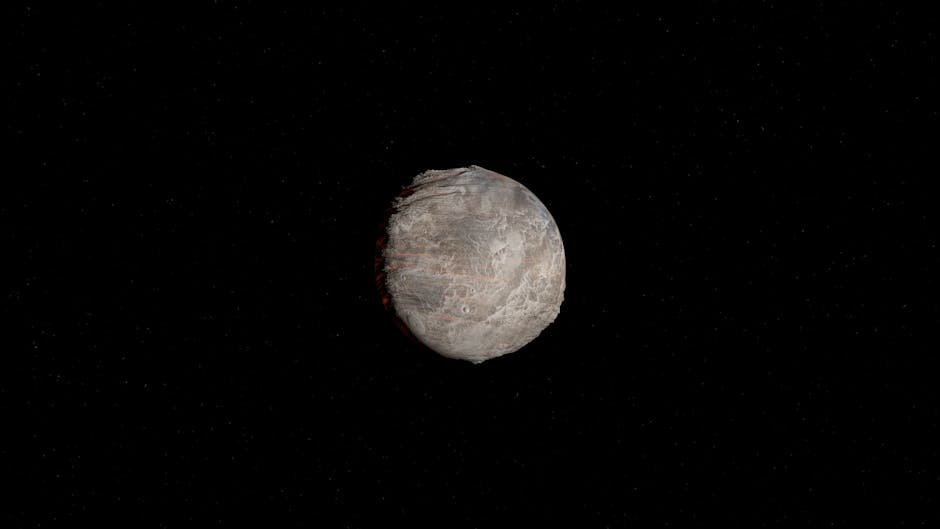
Asteroid with a Dramatic Past (Image Credits: Pexels)
Europe and Africa – Skywatchers across these continents will have a front-row seat to one of the rarest astronomical events in modern history. On April 13, 2029, the asteroid known as Apophis will streak past Earth at a mere 32,000 kilometers from the surface, closer than many geostationary satellites.[1][2] This once-in-a-lifetime spectacle offers a chance to witness a massive space rock up close without telescopes. Scientists and enthusiasts alike anticipate profound insights from the encounter.
Asteroid with a Dramatic Past
Discovered in 2004, Apophis quickly captured attention when early calculations suggested a possible collision with Earth decades later. Astronomers tracked its path meticulously, refining orbits over years. Fears eased as observations confirmed no impact risk for at least the next century.[1]
The asteroid earned its ominous nickname from the Egyptian god of chaos and destruction, reflecting initial concerns. Radar imaging revealed its peanut-like shape, with a mean diameter of 340 meters and a long axis stretching up to 450 meters. Classified as an S-type, it consists of rocky silicates mixed with nickel and iron, a remnant from the solar system’s formative era.[2]
Details of the Nail-Biting Close Pass
Apophis will reach its nearest point to Earth on Friday, April 13, 2029, passing within 31,600 to 32,000 kilometers above the surface. This trajectory places it inside the orbits of some satellites, a proximity unmatched for an object of its size in recorded history. The flyby occurs over the Eastern Hemisphere, primarily visible from Europe, Africa, and parts of Asia.[3]
Earth’s gravity will exert powerful tidal forces during the encounter, potentially altering the asteroid’s spin rate and even triggering surface changes like landslides. Its orbit will shift from the Aten group to the Apollo group, expanding its path around the Sun. Such transformations provide a natural laboratory for studying near-Earth objects.[2]
Visibility: A Show for Billions
Up to two billion people could spot Apophis with the naked eye under clear skies, appearing as a bright, slow-moving star-like point. Its magnitude will make it prominent during evening hours in the affected regions. The event unfolds over several hours, with the asteroid crossing the sky visibly before and after closest approach.
Prime viewing stretches from western Europe to eastern Africa and into western Asia. Cities like Paris, Nairobi, and Cairo offer excellent vantage points away from city lights. Weather and light pollution remain key factors, so rural spots enhance the experience.[3]
- Choose dark-sky locations in Europe or Africa for optimal naked-eye viewing.
- Track real-time apps or websites for precise position updates closer to the date.
- Binoculars will reveal subtle motion as it drifts against stars.
- Avoid urban glare; head to observatories or national parks.
- April evenings provide mild weather in many viewing zones.
- Join organized stargazing events for guided observations.
Scientific Windfall from the Encounter
The proximity enables unprecedented study using ground telescopes, radar, and spacecraft. NASA’s OSIRIS-APEX mission, redirected from Bennu, will rendezvous post-flyby to analyze stirred-up surface material. ESA’s Ramses probe plans to arrive during the event, deploying CubeSats to monitor gravitational effects in real time.[3]
Researchers expect data on Apophis’ internal structure, composition, and response to Earth’s pull. “For the first time ever, nature is bringing one to us and conducting the experiment itself,” notes an ESA statement on the unique opportunity. Findings will bolster planetary defense strategies against future threats.[3]
Reasons This Event Demands Your Attention
Asteroids of Apophis’ scale pass this close only every few thousand years, marking a milestone in human observation. Unlike distant comets, its brightness and motion create a dynamic display. The psychological thrill of seeing a “potentially hazardous” object safely by adds allure.
Traveling positions viewers in the heart of the visibility zone, turning a global event into a personal memory. Families and friends can share the moment, fostering wonder about our cosmic neighborhood. Preparations already buzz among astronomy clubs worldwide.
Key Takeaways
- Apophis passes safely at 32,000 km on April 13, 2029, visible naked eye over Europe, Africa, Asia.
- Earth’s gravity may reshape the asteroid, offering rare study data via OSIRIS-APEX and Ramses.
- No impact risk; a once-in-millennia spectacle for two billion potential viewers.
This flyby reminds us of our place in a dynamic universe, where ancient rocks tell stories of creation. Plan ahead to catch Apophis – future generations may envy the chance. What do you think about this cosmic visitor? Tell us in the comments.