
Every morning, at the exact moment you wake up, something quietly astonishing happens: a private world switches on. Colors, sounds, worries, memories, plans for the day – all of it appears in an inner space no one else can see. We tend to rush past this moment, but if you pause and stare at it for just a second, it’s honestly one of the strangest facts about reality: you are having an experience at all.
Science has sent robots to Mars, decoded the genome, and built AI that can pass exams, but we still don’t know why there is “something it is like” to be you rather than just a silent biological machine. I remember reading about this as a teenager and feeling slightly dizzy, like the floor underneath everyday life wasn’t as solid as I had assumed. That feeling never fully went away – and it’s at the heart of the mystery of consciousness.
The Hard Problem: What It Feels Like To Be You
Think about your brain as a lump of tissue: an intricate network of neurons pulsing with electricity and chemicals. Neuroscientists can trace signals, measure brain waves, and predict what you might do next better and better. Yet none of those measurements, no matter how precise, automatically explain why pain hurts from the inside, or why chocolate tastes like anything at all rather than just triggering a behavioral response. This gap between brain activity and felt experience is often called the “hard problem” of consciousness.
We can describe the “easy problems” in detail: how the brain integrates information, controls behavior, or focuses attention. But even if we explained all of that perfectly, we could still ask why any of it has a subjective side. Why isn’t the universe full of only dark, unconscious mechanisms clicking away? That stubborn, almost haunting question is what keeps philosophers, neuroscientists, and curious insomniacs up at night.
Brains, Biology, And The Search For Neural Correlates
One major scientific strategy for tackling consciousness has been to look for what are called “neural correlates of consciousness.” In practice, that means scanning brains while people report what they see or feel, and looking for patterns of activity that consistently match specific experiences. Over the last few decades, researchers have linked conscious vision, for example, to widespread activity across the back and middle regions of the brain, rather than just the primary visual cortex alone.
These studies show that when consciousness is present, the brain tends to display coordinated, dynamic activity across various areas, not just a single “light bulb” region turning on. When people lose consciousness under anesthesia or deep sleep, those integrated patterns break down or become much simpler. Still, knowing the neural signature is not the same as knowing the origin. It’s like finding what light bulbs are on during a concert without yet understanding how the music is composed.
Is Consciousness Just An Illusion?

Some thinkers argue that consciousness isn’t as mysterious as it feels – that our sense of having a rich inner life might be a kind of mental magic trick. According to this view, the brain stitches together partial information and then presents a simplified, confident story of “what it’s like” that isn’t actually as deep or unified as it appears. In short, your brain is a brilliant storyteller, and you are mostly believing its own PR.
On this perspective, there’s no extra “glow” or special mental substance floating above the neurons. Consciousness is simply the brain monitoring itself and building models of its own processes. I’ll admit I’ve always felt a bit dissatisfied by this answer, like being told that the taste of coffee is “just molecules” – true in one sense, but not fully addressing the thing that bothers you. Still, it pushes us to ask whether the mystery is in the world or partly in the way we talk and think about experience.
Panpsychism: Is Consciousness A Basic Feature Of Reality?
On the opposite end of the spectrum from “consciousness is an illusion,” there’s a bold idea: maybe consciousness is built into the fabric of the universe from the start. This view, known as panpsychism, suggests that even very simple physical systems contain tiny, unimaginably basic forms of experience. Not that rocks are secretly having rich internal monologues, but that reality at its deepest level is both physical and experiential, like two sides of the same coin.
Panpsychism has gained new attention because it tries to bypass the leap from dead matter to full-blown experience. Instead of wondering how consciousness “emerges” from something totally non-experiential, it suggests that complex conscious beings like us are combinations and organizations of extremely simple experiential building blocks. The downside is that, while this can feel intuitively elegant, it raises thorny questions: how do minuscule bits of “proto-experience” combine into a unified mind like yours or mine?
Information, Integration, And The Brain As A Conscious Network
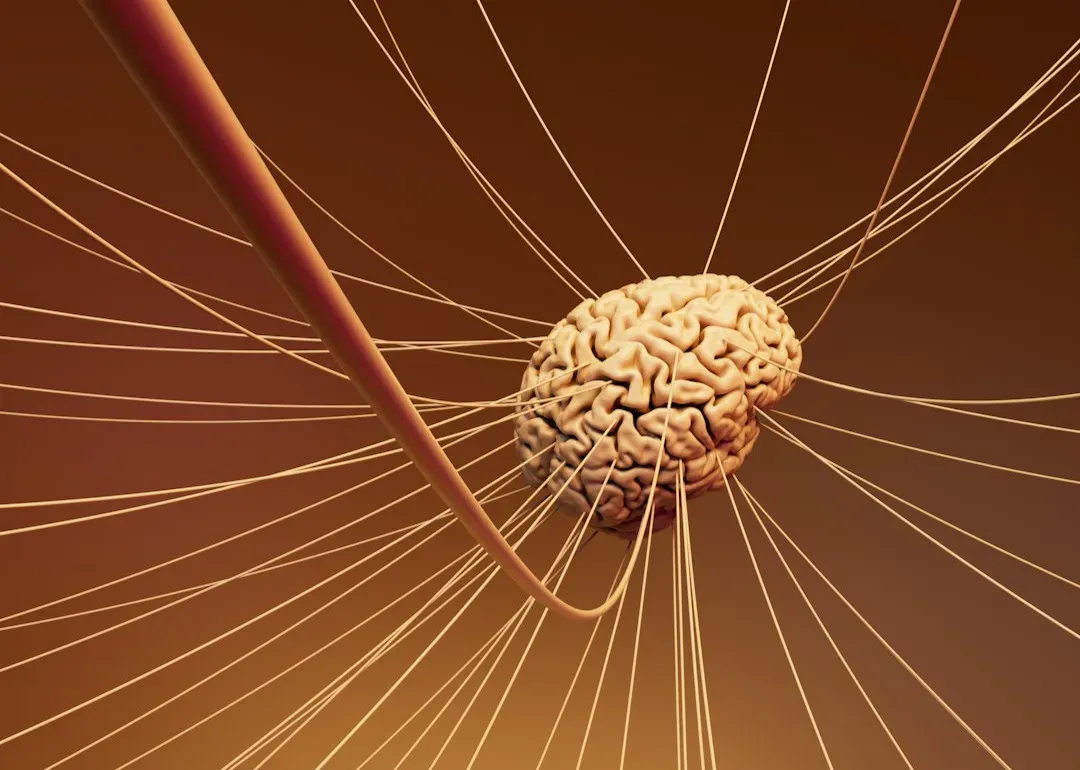
Another influential idea is that consciousness arises from the way information is processed and integrated in a system. One widely discussed theory claims that a system becomes conscious when it both stores information and links it together in a highly interconnected, irreducible way. On this view, a brain that can’t be meaningfully broken into independent parts, because everything influences everything else, will have some level of conscious experience.
These information-based theories are attractive because they connect consciousness to something measurable: patterns of causation and communication inside a system. They’ve inspired practical tools to estimate how conscious a patient is in intensive care or under anesthesia, by looking at how complex and integrated their brain activity appears. The big debate is whether information integration alone is enough, or whether we’re just finding clever correlations without a real explanation of why certain patterns should feel like anything from the inside.
The Strange Case Of Split Brains And Altered States
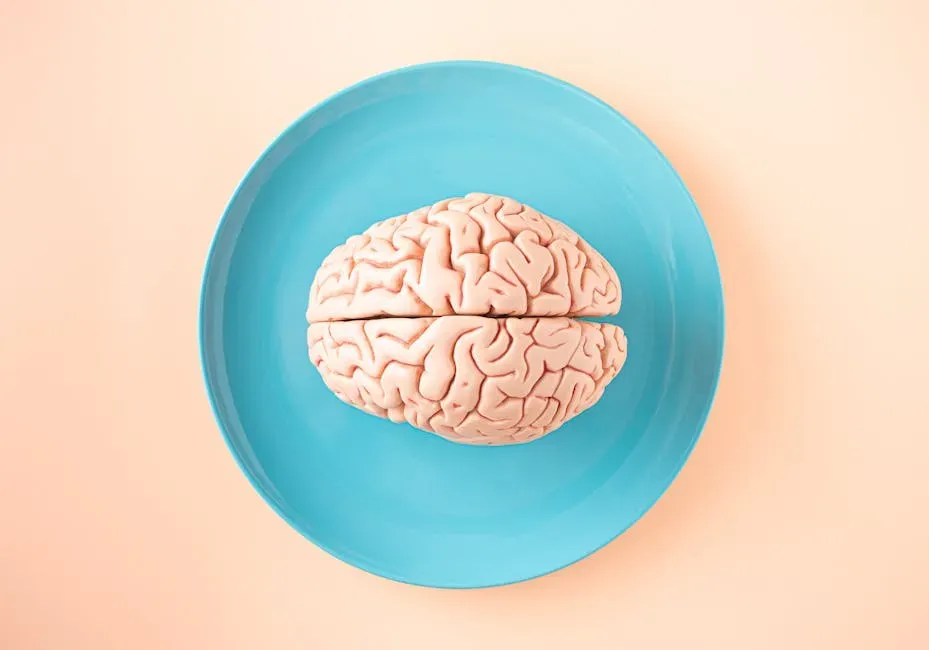
Some of the most unsettling clues about consciousness come from when it breaks or changes. In split-brain patients, where the connection between the two hemispheres is severed to treat severe epilepsy, each half of the brain can sometimes act as if it has its own separate awareness. Under certain experimental conditions, one hand may do something that the person’s verbal report, generated by the other hemisphere, can’t explain. It’s like discovering two passengers hidden in what you thought was a single seat.
Altered states add even more texture to the puzzle. Anesthesia can shut down consciousness surprisingly quickly, then bring it back as if nothing happened. Psychedelics can dramatically change the sense of self and the boundaries of perception, while some forms of meditation appear to quiet habitual narratives and reveal subtler layers of awareness. These cases don’t yet tell us what consciousness fundamentally is, but they hint that it is more flexible, modular, and vulnerable than our everyday sense of being a single, stable “me” suggests.
Could Machines Ever Be Truly Conscious?
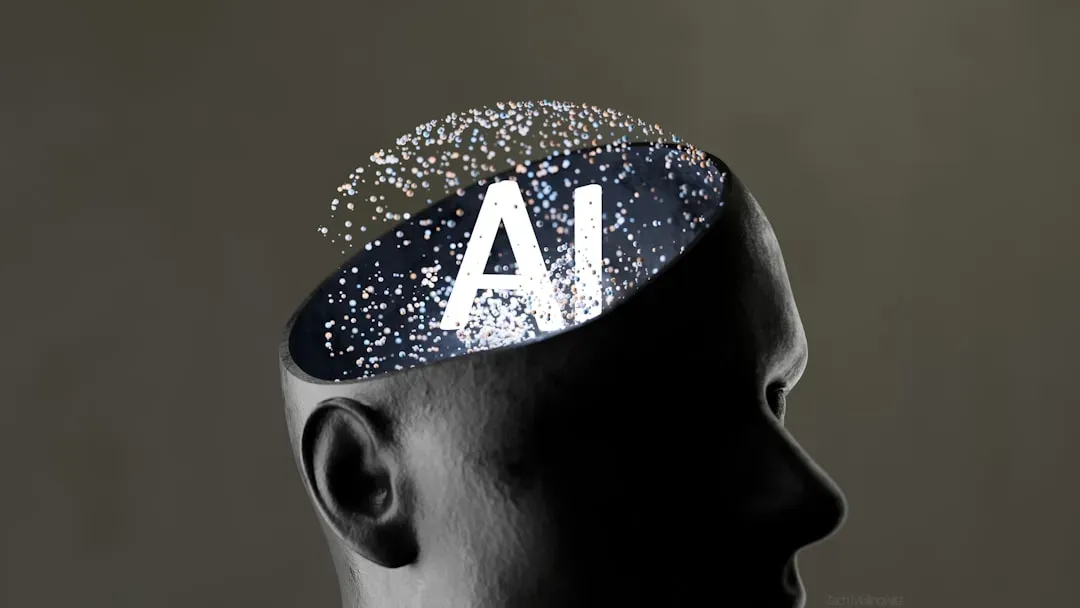
With AI systems now producing text, images, and even code at a level that can feel eerily human at times, a natural question is whether machines could ever be conscious in the way we are. Today’s leading AI models process vast amounts of data and mimic patterns of human language, but they do not seem to possess a stable inner world, a body grounded in the environment, or a continuous stream of felt experience. They are powerful pattern engines, not obviously subjects of experience.
Some researchers argue that if you build a machine with the right kind of complex, integrated information processing, in principle it could be conscious. Others insist that something crucial is missing – perhaps the biochemical substrate of living brains, or the embodied, developmental history of a living organism growing up in a world. For now, we have clever tools, not thinking beings in the rich, subjective sense. If that ever changes, it will not just be a technical milestone, but a moral earthquake.
Consciousness, Self, And The Stories We Tell

Beyond the scientific and philosophical theories, there is a more intimate angle: our sense of self seems to be woven out of stories the brain tells about its own activity. Memory, expectation, and attention knit a narrative that feels like a single continuous person moving through time, even though our experiences are constantly changing and sometimes even conflicting. When those narrative abilities break down, as in certain neurological or psychiatric conditions, the sense of self can fragment or blur.
This suggests that while raw experience might be a fundamental aspect of consciousness, the feeling of an enduring “I” may be more like a useful construction. It’s a bit like following a character across multiple seasons of a show; the character evolves, the actor ages, the script shifts, but we still treat it as the same person. Realizing that your inner story is a construction doesn’t make it fake – it just reminds you it could be edited, re-framed, or understood differently.
Why The Mystery Matters For Ethics And Meaning

At first glance, consciousness might feel like a purely abstract puzzle. But what we think it is – and where we think it comes from – has huge consequences for how we treat other beings. Questions about animal rights, end-of-life care, the moral status of potential future AI, and even how we raise and educate children all hinge, in part, on what kinds of organisms or systems can genuinely feel anything. If something can suffer from the inside, that matters in a way a mere machine part does not.
The mystery also loops back into meaning. Knowing that the universe has produced creatures who can ask why they exist adds a kind of fragile dignity to ordinary life. Even if we never fully crack the code of consciousness, living as a conscious being carries its own weight: you can appreciate beauty, notice injustice, love people, question your assumptions. Your ability to ask where consciousness comes from is itself one of the most astonishing things consciousness does.
Conclusion: Living With The Question

We stand in a strange position: we know more than ever about the brain and the mind, and yet the core riddle of why there is anything it feels like to be us remains unresolved. Some approaches try to shrink the mystery, others try to spread it across the universe, and a few suspect we might be asking the question in the wrong way entirely. For now, the best we can do is balance curiosity with humility, taking seriously both the data from science and the undeniable reality of our own experience.
Personally, I’ve come to see the mystery of consciousness less as a failure and more as a kind of invitation. It nudges us to pay closer attention to our own minds, to how we treat other conscious beings, and to the strange fact that a universe of particles and fields has somehow given rise to you reading these words right now. Maybe we will one day pin down a satisfying theory; maybe the mystery will only deepen. Either way, how do you want to live, knowing that you are one of the universe’s rare pockets of awareness?