If you’ve ever stared into the ocean at night and felt a quiet unease, you’re not entirely wrong to feel it. Beneath the surface, especially past the point where sunlight disappears entirely, the rules of biology seem to bend in ways that feel more science fiction than science fact. Creatures down there don’t just look different from anything you’ve seen in a zoo or a nature documentary. They look like something no human imagination could have invented on its own.
Scientists define the deep sea as encompassing all ocean waters below roughly 650 feet, where sunlight filtering through the water begins to dwindle and gives way to a realm of complete darkness, frigid temperatures, and crushing pressure. What lives there has had millions of years to adapt to those extremes. The results are nine creatures that will genuinely make you question what planet you’re standing on.
1. The Barreleye Fish: The Ghost With a Glass Head
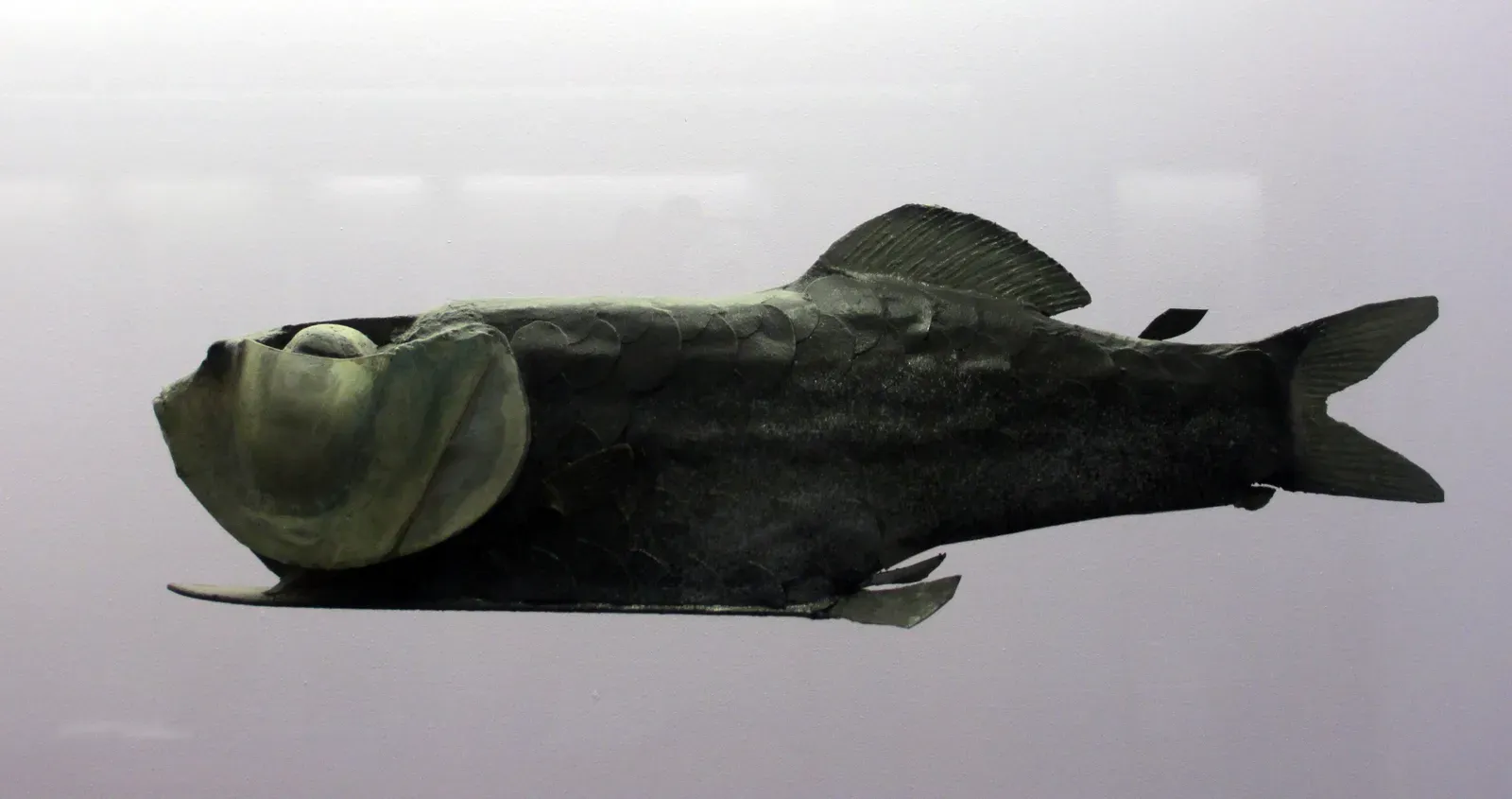
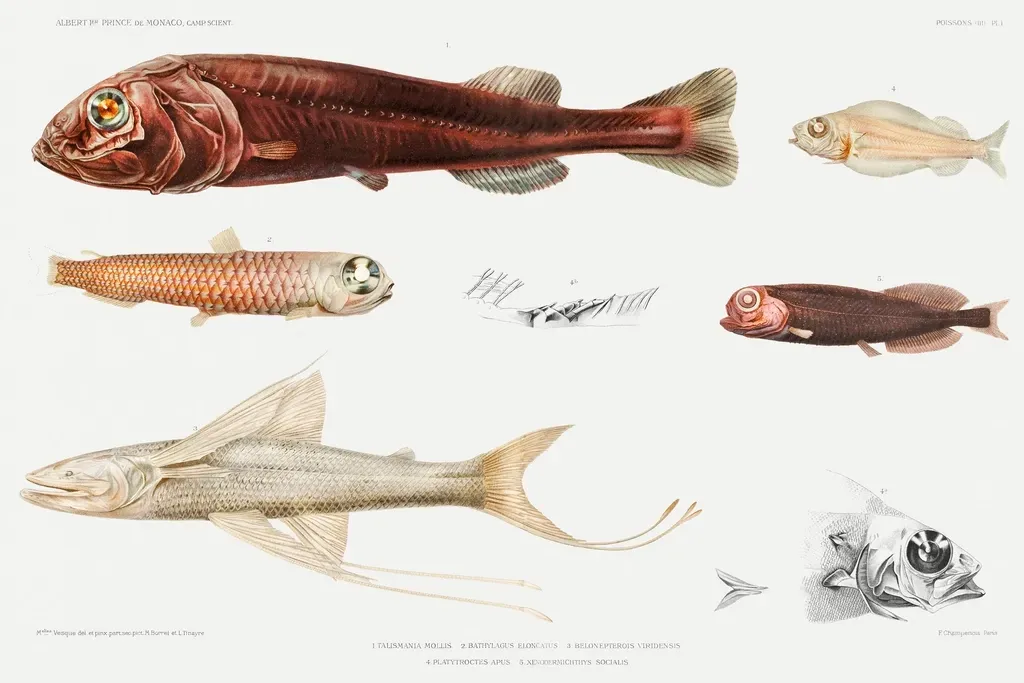
If you could look a barreleye fish in the face, you’d be staring straight through its skull. All species in this family have large, telescoping eyes that dominate and protrude from the head, enclosed within a large transparent dome of soft tissue. The effect is deeply unsettling, like peering into a fishbowl that is also somehow a living animal.
Barreleye fish remain just below the limit of light penetration and use their sensitive, upward-pointing tubular eyes, which are adapted for enhanced binocular vision, to survey the waters above. The high number of rods in their retinas allows them to resolve the silhouettes of objects overhead in the faintest ambient light and to accurately distinguish bioluminescent light from that of their surroundings. What makes this even stranger is that those glowing green orbs you see inside the transparent dome aren’t their eyes in the conventional sense. The two dark circles that look like they should be eyes are in fact the fish’s equivalent of nostrils, where the olfactory organs are located.
2. The Goblin Shark: A Living Fossil With a Spring-Loaded Face
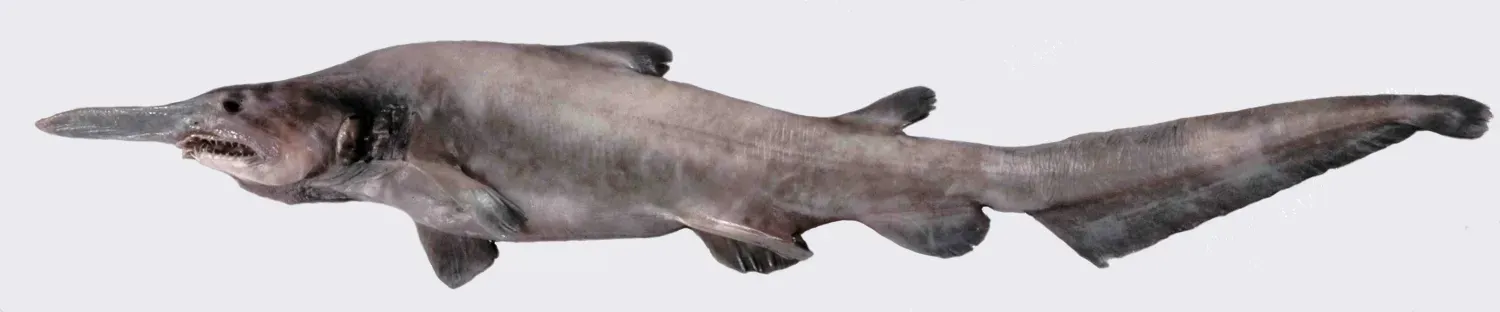
If the deep sea had a monster from a prehistoric nightmare, it would be the goblin shark. Often called a “living fossil,” this strange shark has changed little in 125 million years, a survivor from an ancient world that has long vanished. For most of its time in the water, it appears almost mundane. Then the hunt begins.
Its most striking feature is its long, flattened snout and extendable jaws filled with needle-like teeth. When hunting, the goblin shark’s jaws can shoot forward faster than the blink of an eye, snatching prey in a mechanism known as “slingshot feeding,” with high-speed video showing jaw extension happening at nearly three meters per second. Its translucent pink skin reveals blue veins beneath, making it look more like a creature of nightmares than a real animal. Very few live specimens have ever been studied in the wild, and most of what scientists know about it comes from individuals caught by accident in deep-water nets.
3. The Anglerfish: Darkness’s Most Deceptive Predator
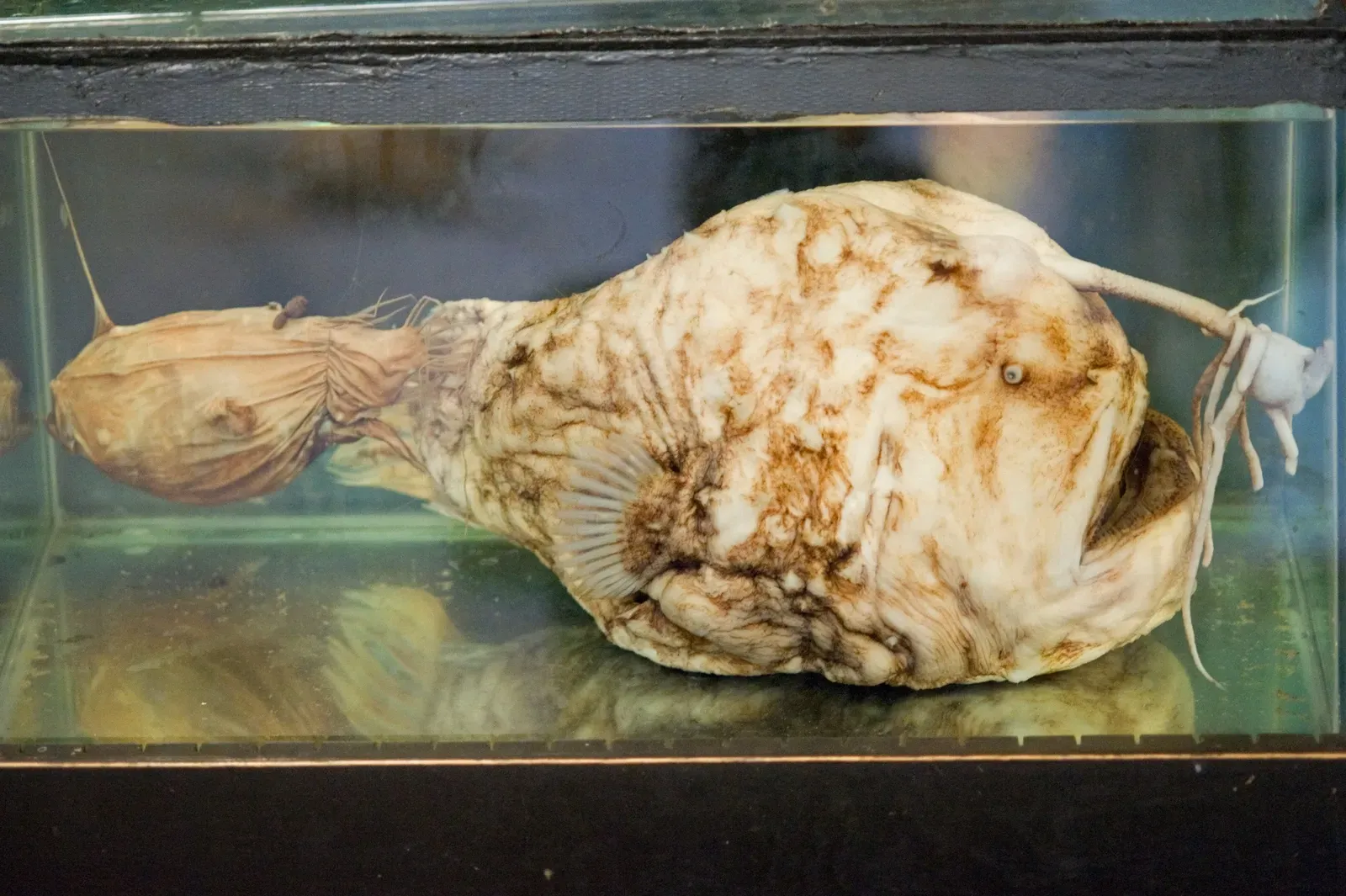
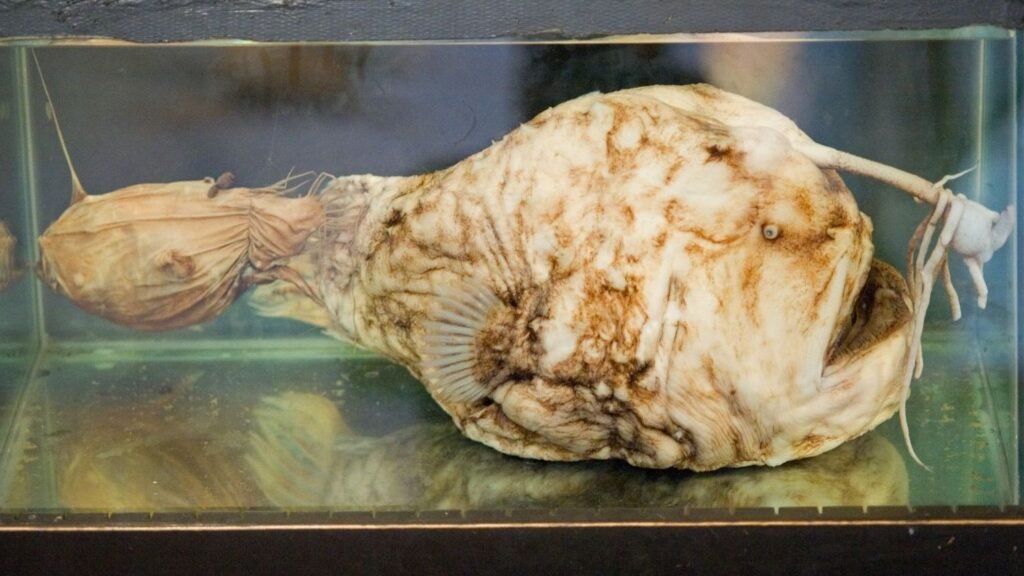
The depths of the ocean reveal an extraordinary collection of life forms whose bizarre adaptations make them appear almost alien. Anglerfish are deep-sea predators known for their glowing bioluminescent lure, which they use to attract unsuspecting prey in the pitch-black waters of the ocean’s abyss. That fleshy, glowing rod protruding from the female’s forehead acts like a lantern dangled in front of the world’s most dangerous trap.
In many species, tiny males permanently fuse to much larger females, merging tissues and circulatory systems. The male becomes little more than a living source of sperm, ensuring that reproduction can occur whenever the opportunity arises. This extreme solution reflects the vastness of the deep ocean, where encountering a mate may be a once-in-a-lifetime event. Some females carry multiple fused males, creating a grotesque chimera of merged flesh. It’s a reproductive strategy that reads less like nature and more like something out of a dark fantasy novel.
4. The Vampire Squid: Neither Vampire Nor Squid
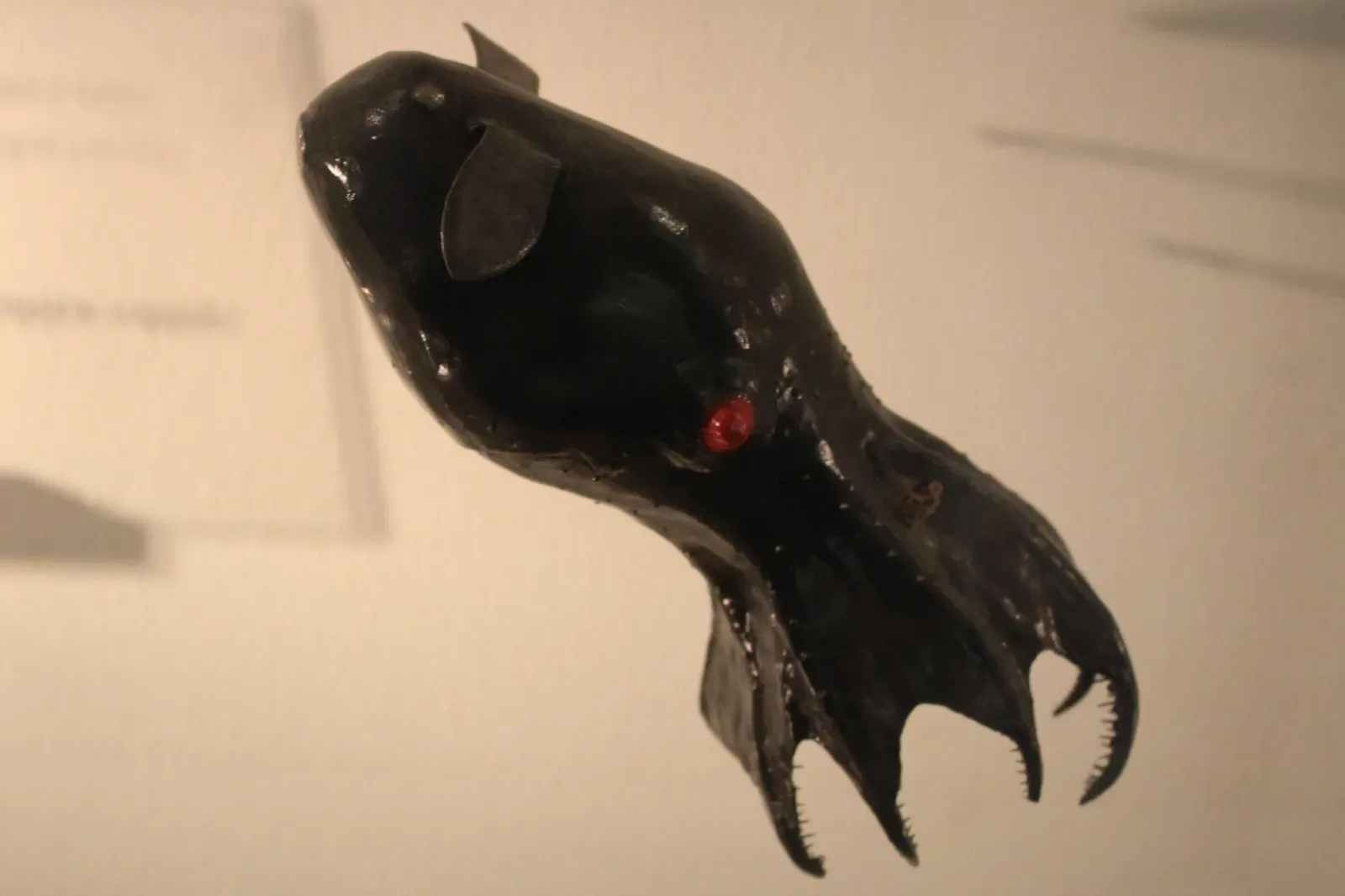
Despite its fearsome name, the vampire squid is not a bloodsucker. It is a small, delicate cephalopod that drifts slowly through the oxygen-poor depths of the ocean, surviving where few others can. Its jet-black body, cloak-like webbing between its arms, and glowing blue eyes give it a haunting appearance. Its scientific name, Vampyroteuthis infernalis, translates to “vampire squid from hell,” which is perhaps the most dramatic naming in all of marine biology.
Unlike most squid, the vampire squid does not hunt active prey. Instead, it feeds on “marine snow,” a continuous rain of organic debris that drifts down from the upper ocean. Using long, sticky filaments, it collects particles of dead plankton, fecal matter, and detritus, rolling them into balls and consuming them. When threatened, the vampire squid does not squirt ink like its shallow-water relatives. Instead, it releases a cloud of bioluminescent mucus filled with glowing particles, confusing predators long enough to escape into the darkness.
5. The Giant Isopod: A Roly-Poly the Size of a Football
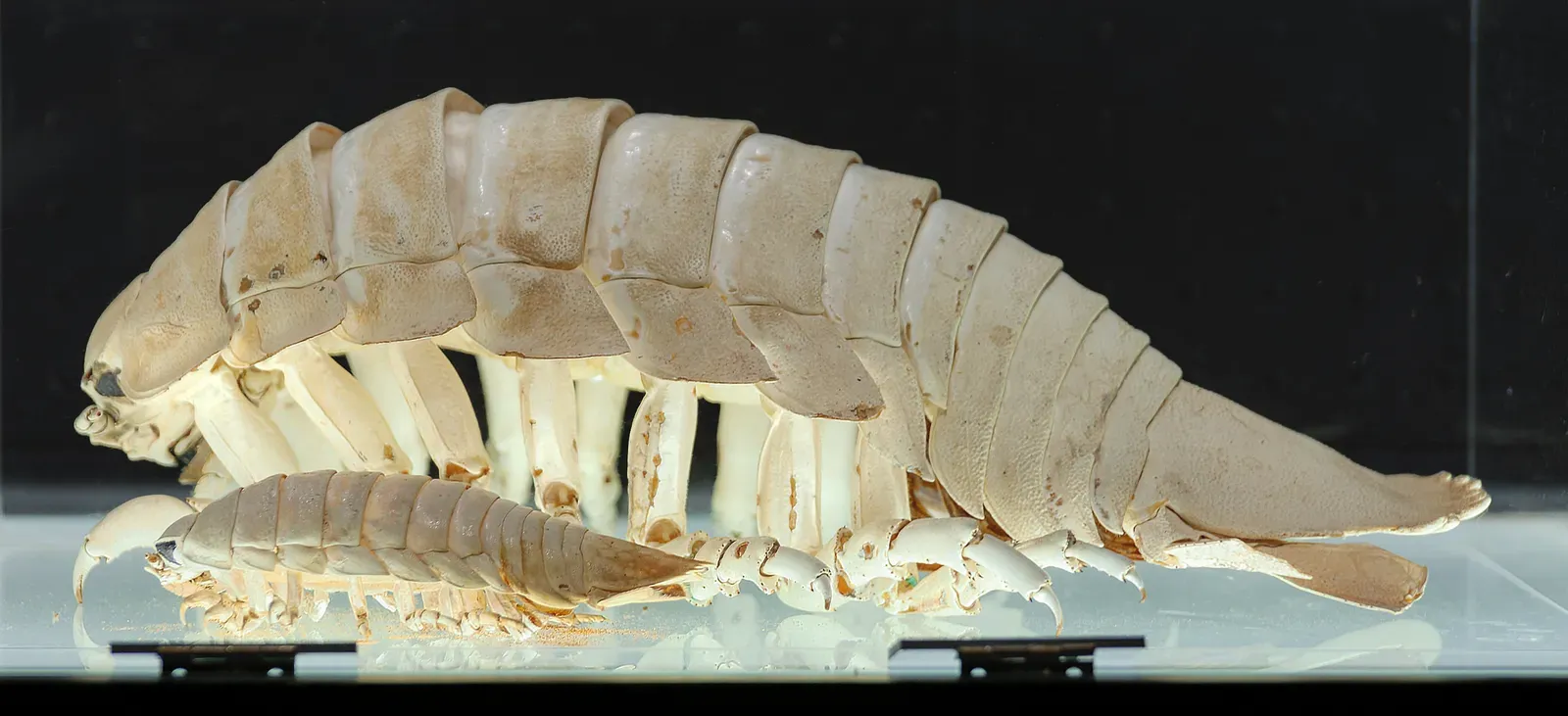
The giant isopod looks like a massive version of the common pill bug or woodlouse. Found at depths between 500 and 7,000 feet, it can reach lengths of up to half a meter, making it one of the largest crustaceans in the deep ocean. Its armored, segmented shell and spiny legs give it an ancient, almost prehistoric appearance. If you’ve ever curled up a woodlouse in your garden, you already know the basic blueprint. Just imagine it the size of your shoe and lurking in total darkness.
Giant isopods are an example of deep-sea gigantism, which is an evolutionary pattern in which deep-dwelling creatures grow much larger than their relatives in other habitats. Scientists can’t fully explain why deep-sea gigantism occurs, though theories include slower metabolisms in cold water, reduced predation pressure, and the need for larger bodies to handle extreme pressure. What makes the giant isopod truly otherworldly is not aggression or speed, but endurance. These animals can survive for years without eating, relying on stored energy and an extraordinarily efficient metabolism.
6. The Giant Tube Worm: Life Without a Mouth or Stomach
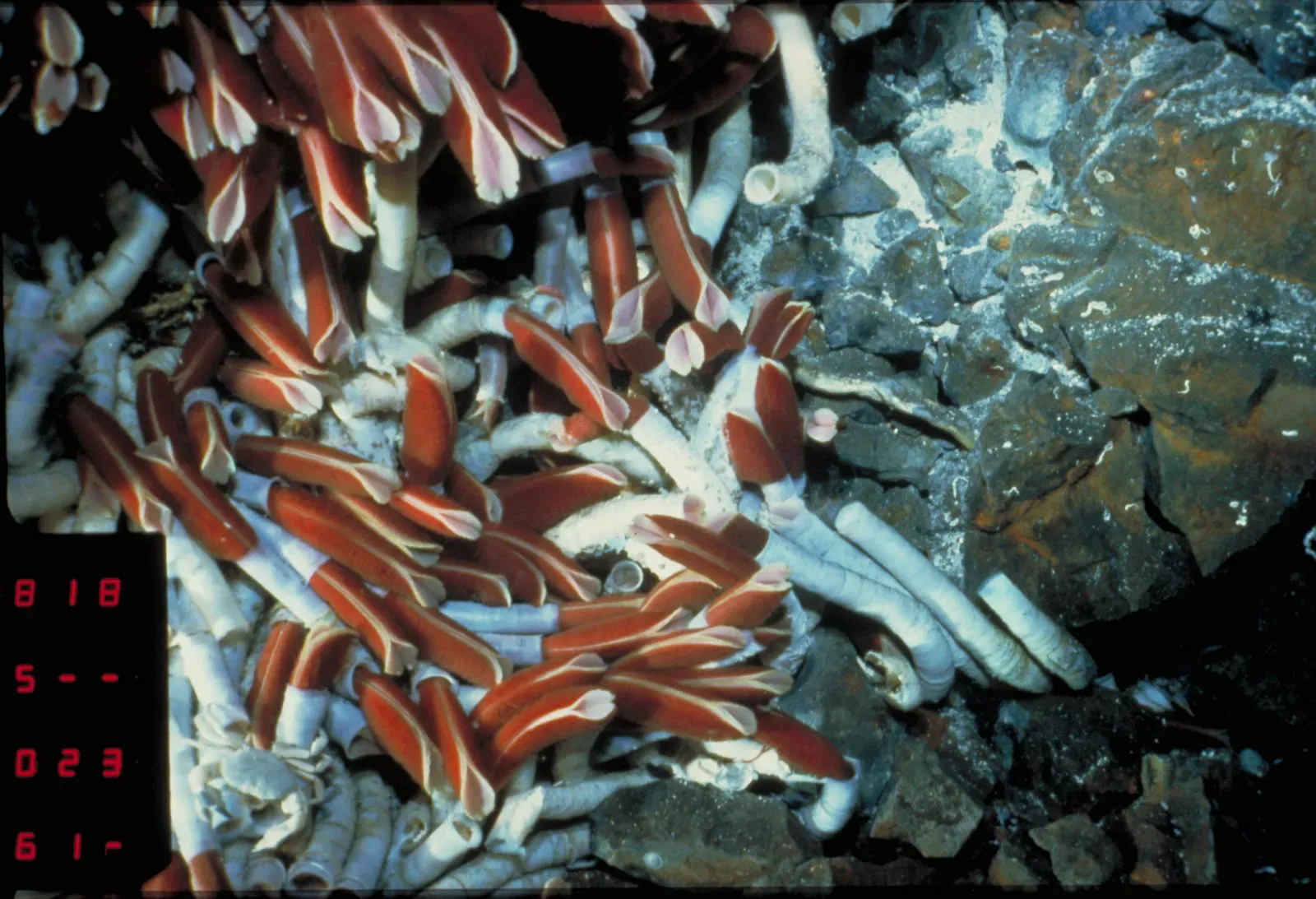
The giant tube worm, also known as Riftia pachyptila, was totally unknown to science until researchers exploring the deep Pacific Ocean floor discovered strange hydrothermal vents. Powered by volcanic heat, these vents recirculate water that seeps down through cracks or faults in the rock. When the water emerges from the vent, it is rich in chemicals and minerals. This toxic soup would be lethal to most animals, so scientists were shocked to find entire ecosystems of animals living around these vents.
The worms have no mouth, no gut, and no anus, and instead get their nutrition from symbiotic bacteria that harness energy from hydrogen sulfide and use it to fix carbon and make food for the worm. These worms can reach a length of three meters, with tubular bodies about four centimeters in diameter. Hydrothermal vents and giant tubeworms were discovered in 1977, eight years after Neil Armstrong walked on the Moon, which tells you something remarkable about how much closer we were to space than to our own ocean floor.
7. The Frilled Shark: A Sea Serpent That Actually Exists
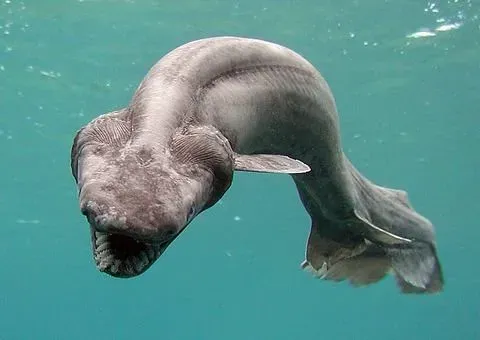
The frilled shark is another ancient species, often called a “living fossil” due to its primitive anatomy. Its eel-like body and rows of 300 needle-like teeth give it a serpent-like appearance, leading some to believe it inspired old sailor tales of sea serpents. This deep-sea predator lives at depths between 500 and 1,500 meters and preys on squid and other fish. When you see one, it’s difficult not to think of every terrifying sea monster ever described by exhausted sailors returning from long voyages.
The frilled shark’s jaws are lined with rows of sharp, trident-shaped teeth, ideal for gripping slippery prey such as squid. Its flexible body allows it to strike quickly when an opportunity arises, despite its generally unhurried demeanor. Unlike most sharks, the frilled shark’s gills are fringed with frilly edges, giving it its name. Its slow movements and ability to survive in low-oxygen environments make it perfectly suited to life in the dark depths. Encounters in the wild are extraordinarily rare, which is probably a relief for everyone involved.
8. The Antarctic Strawberry Feather Star: Twenty Arms and Counting
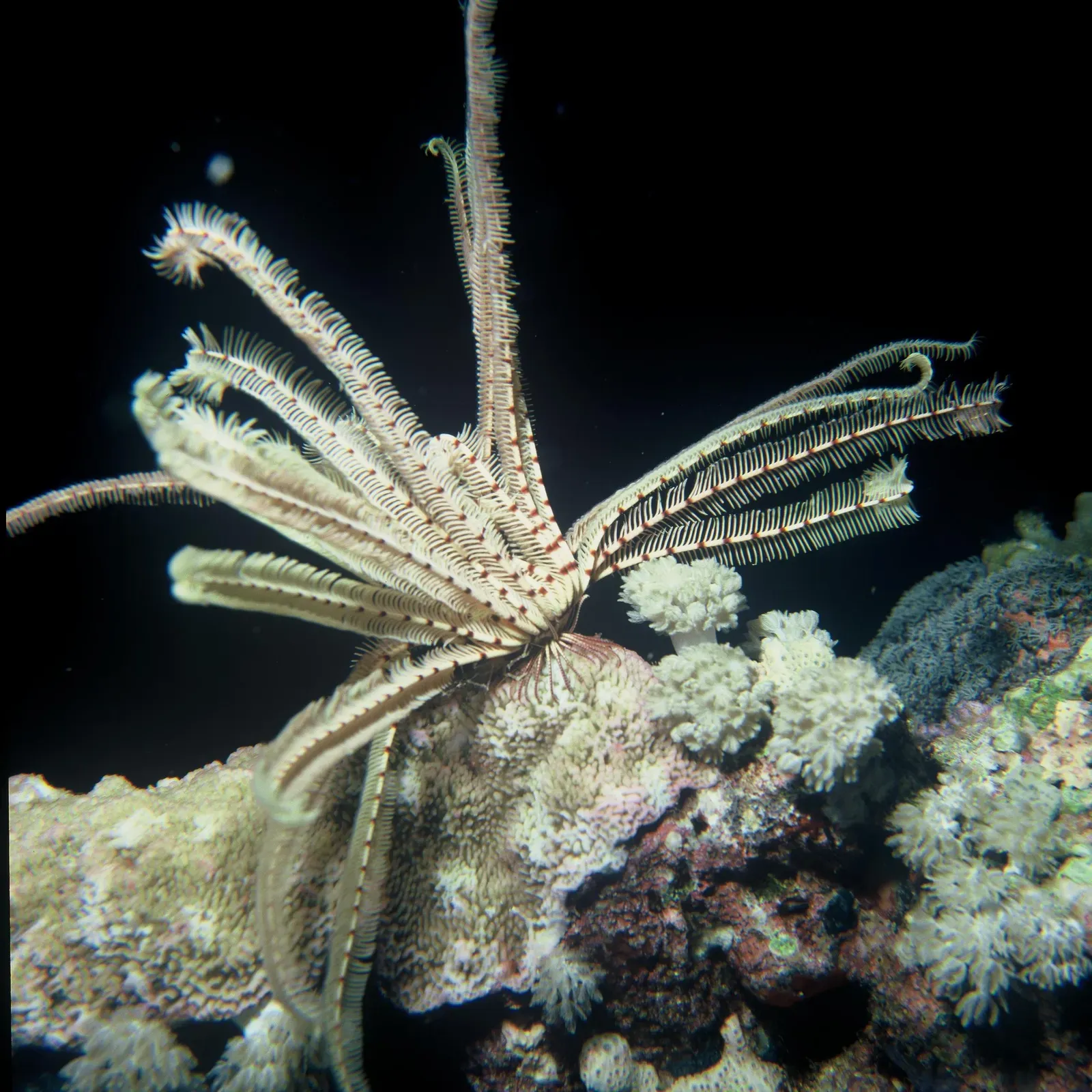
The Antarctic strawberry feather star is one of several new species of crinoids that scientists found at the bottom of the ocean. Crinoids are a group of eerie, perfectly symmetrical creatures that include sea lilies and sea feathers. The Antarctic strawberry feather star gets its name from the strawberry-like nub on its body, from which stringlike appendages called cirri protrude to anchor the animal to the seafloor.
When feather stars take flight, they spread their arms wide and paddle with rhythmic pulses, dancing through the water and capturing plankton with thousands of tiny, mucousy filaments along their arms. Crinoids like these dominated the young seas of our planet, but were largely wiped out along with nearly all other life on Earth during the Permian mass extinction roughly 251 million years ago. That this ancient lineage survived at all, let alone in such spectacular form, is its own quiet miracle.
9. The Colossal Squid: The Real Leviathan
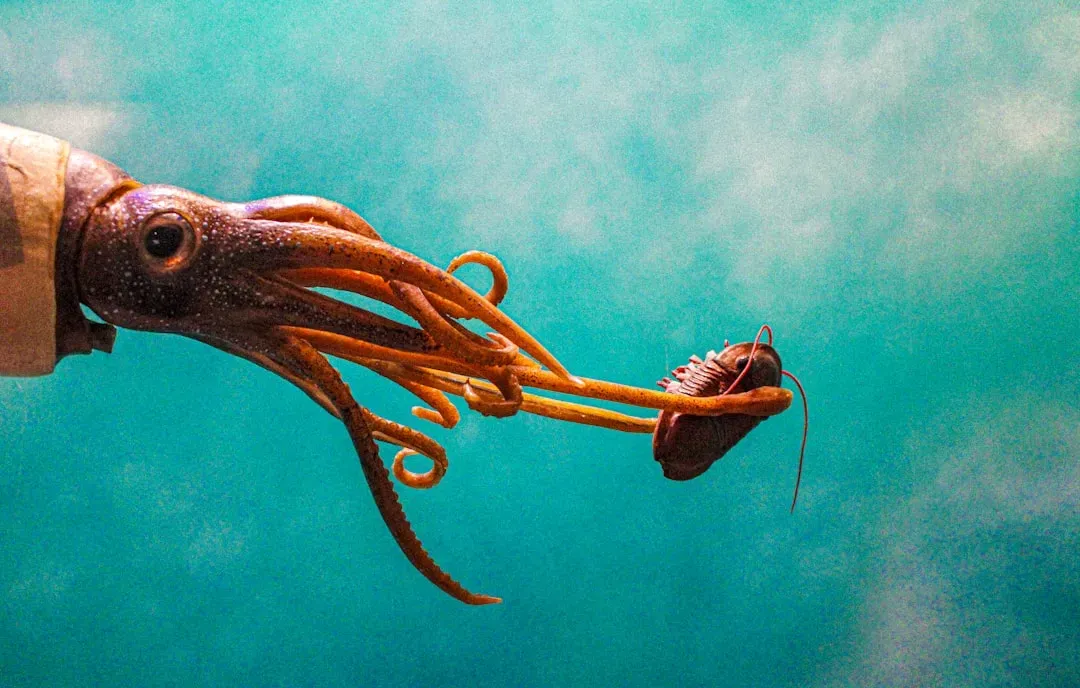
We still know very, very little about the colossal squid. It wasn’t until April 2025 that a remotely controlled research sub belonging to the Schmidt Ocean Institute managed to capture video footage of a live colossal squid in its natural environment, and even then, the specimen was a small baby under 12 inches long. The colossal squid is the largest known invertebrate on the planet. This hulking, elusive beast can weigh over 1,100 pounds, and ambushes its prey with massive tentacles covered in powerful hooks that can rotate a full 360 degrees each.
Reaching lengths of up to 43 feet, the giant squid is a creature of legend made flesh. With eyes the size of dinner plates, the largest eyes in the animal kingdom, it can detect even the faintest shimmer of light in the abyss. The colossal squid is believed to be even larger and heavier than its famous relative. The species seems to commonly find itself in conflict with none other than the sperm whale. When two of the ocean’s largest predators clash in total darkness at crushing depths, it’s a battle that happens entirely beyond human witness. We only catch glimpses of scars left behind.
The Ocean Still Holds More Surprises Than We Can Count
What’s remarkable about all nine of these creatures is that they aren’t speculative or mythological. They’re real, documented, and in many cases, still poorly understood. Over the course of just three weeks of exploration in one deep-sea canyon, one research team recorded more than 40 species that may be new to science. Some creatures found there might not exist anywhere else in the world.
These discoveries showcase how global collaboration and advanced imaging are transforming marine taxonomy. By accelerating how species are documented and named, scientists can better understand and potentially protect the countless forms of life still hidden in Earth’s vast and mysterious oceans. Every dive with a remotely operated vehicle uncovers something that breaks a rule we thought we understood about biology.
The deep sea is, in many ways, the last great frontier on this planet. You don’t need to look to the stars to find life that seems impossible. It’s already down there, in the dark, waiting to be discovered. The ocean floor isn’t just another habitat. It’s proof that life on Earth is far stranger, and far more resilient, than we give it credit for.