
There’s a particular kind of vertigo that comes from truly confronting the scale of the universe. Not the poetic kind you feel staring at stars on a clear night, but a deeper, almost destabilizing recognition that the structures out there don’t just exceed our intuition – they break it entirely. Galaxies, as enormous as they are, barely count as building blocks at this level.
What you’re about to read isn’t science fiction. These are real structures, mapped and measured by some of the most sophisticated observatories humans have ever built. Some of them challenge the very models we use to explain how the universe works. A few are so large they arguably shouldn’t exist at all.
1. Quipu – The Largest Reliably Measured Structure in the Universe
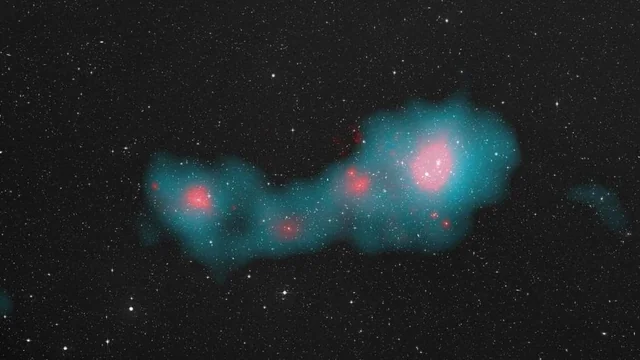
Among the most prominent superstructures discovered in the nearby universe, the largest stretches longer than 400 megaparsecs and carries an estimated mass of about 200 quadrillion solar masses. Researchers have named this entity Quipu, calling it the largest cosmic structure discovered to date. The name itself comes from knotted cord recording devices used by ancient Andean civilizations, a fitting metaphor for a structure built from one long filament with smaller side filaments branching off it.
Consisting of 68 clusters of galaxies and stretching around 1.4 billion light-years in length, Quipu breaks the size record of all reliably measured cosmic structures. Together with four other recently identified superstructures, Quipu and its neighbors contain roughly 45 percent of galaxy clusters, 30 percent of galaxies, and 25 percent of all matter in their surveyed region of space.
2. The Hercules–Corona Borealis Great Wall – A Structure That Shouldn’t Exist
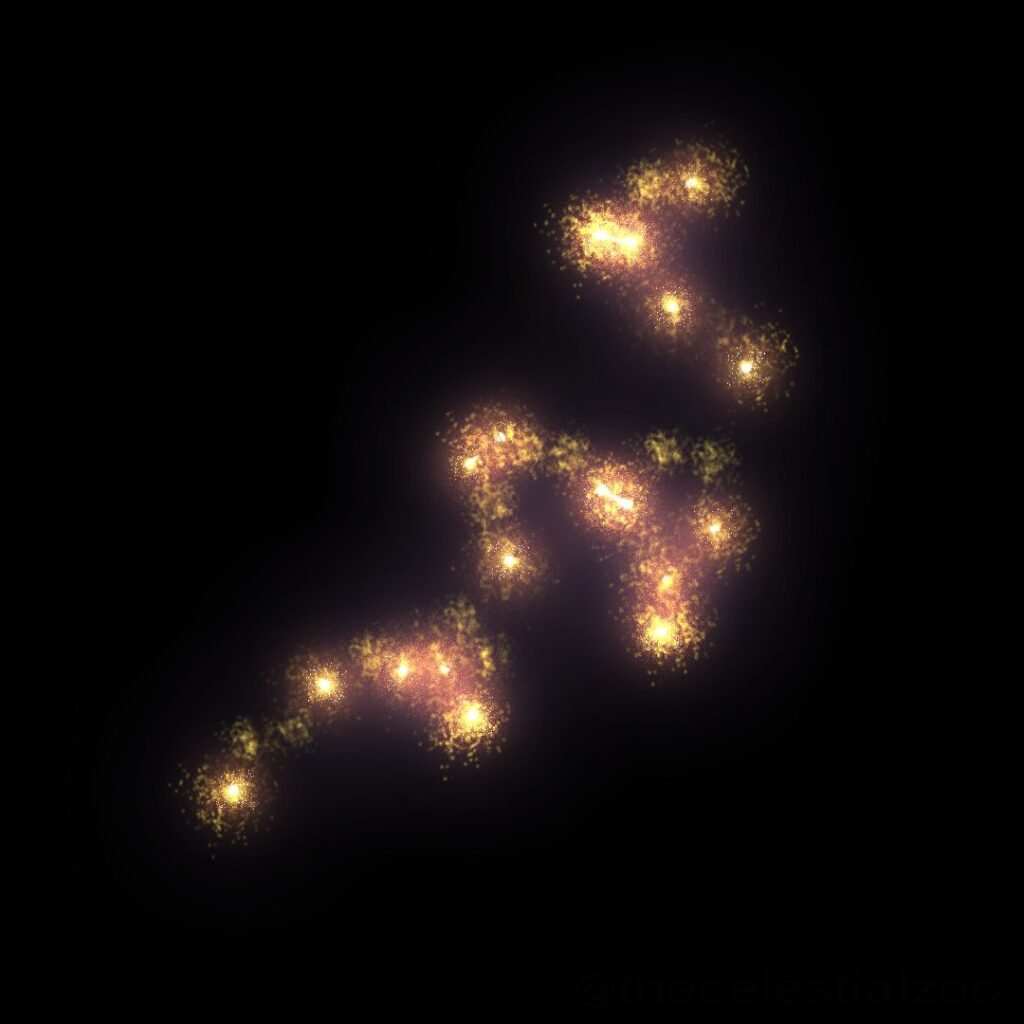
The Hercules–Corona Borealis Great Wall is a putative galaxy filament that, if confirmed, would be one of the largest known structures in the observable universe, measuring approximately 10 billion light-years in length. To put that in perspective, the Great GRB Wall is 10 billion light-years wide – that’s roughly 10 percent of the entire diameter of the observable universe.
The Hercules–Corona Borealis Great Wall represents such an immense irregularity that it defies the laws of cosmic inflation. The supercluster is so enormous that it actually exceeds the maximum structural size allowed by the inflationary model of the universe. More recently, a re-examination of the distribution of powerful space explosions suggests it could actually be as large as 15 billion light-years in size – roughly 50 percent larger than previously thought.
3. The Cosmic Web – The Universe’s Invisible Scaffolding
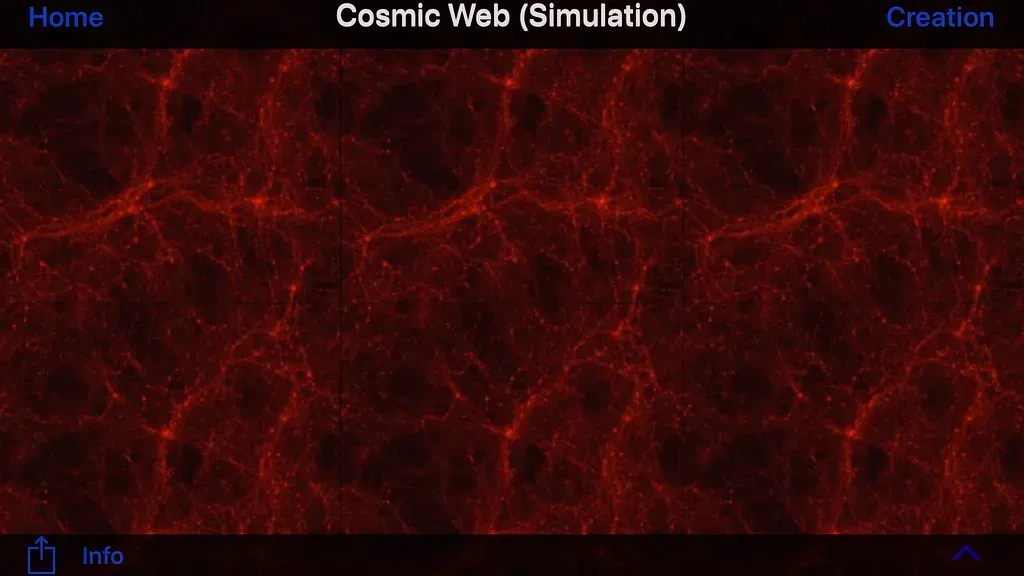
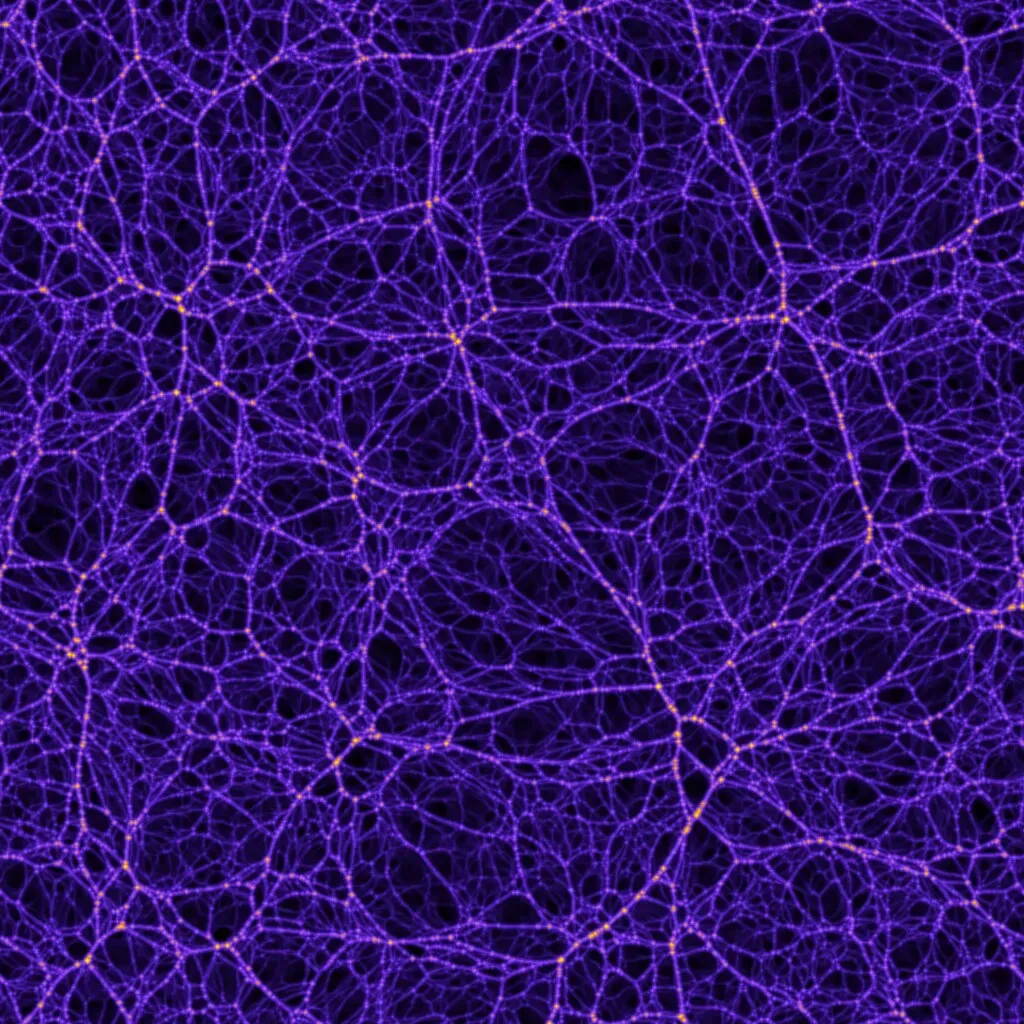
Galaxies, galaxy groups and clusters, superclusters, and galactic walls are all arranged in twisting, threadlike structures called the cosmic web. The web forms as the gravitational attraction of the universe’s matter draws larger and larger objects together, leading to concentrations of galaxies with voids of space in between, as if the galaxies were resting on empty bubbles. You can think of it as the universe’s connective tissue – invisible, vast, and everywhere at once.
Cosmic filaments are the largest known structures in the universe: vast, thread-like formations of galaxies and dark matter that form a cosmic scaffolding. They also act as highways along which matter and momentum flow into galaxies. Due to the accelerating expansion of the universe, the individual clusters of gravitationally bound galaxies that make up galaxy filaments are moving away from each other at an accelerated rate, meaning that in the far future they will dissolve.
4. The Laniakea Supercluster – Our Cosmic Home
File:Earth’s_Location_in_the_Universe_(JPEG).jpg
NOTE: Please contact the author if requiring alterations or changes to the image for different language wiki’s or for publication questions and concerns.
I do ask that when redistributing my work, it be credited with the my name: Andrew Z. Colvin as I am the original author. I appreciate the cooperation and consideration of the Creative Commons Attribution-ShareAlike 3.0 Unported License and the GNU Free Documentation License agreements., CC BY-SA 3.0)
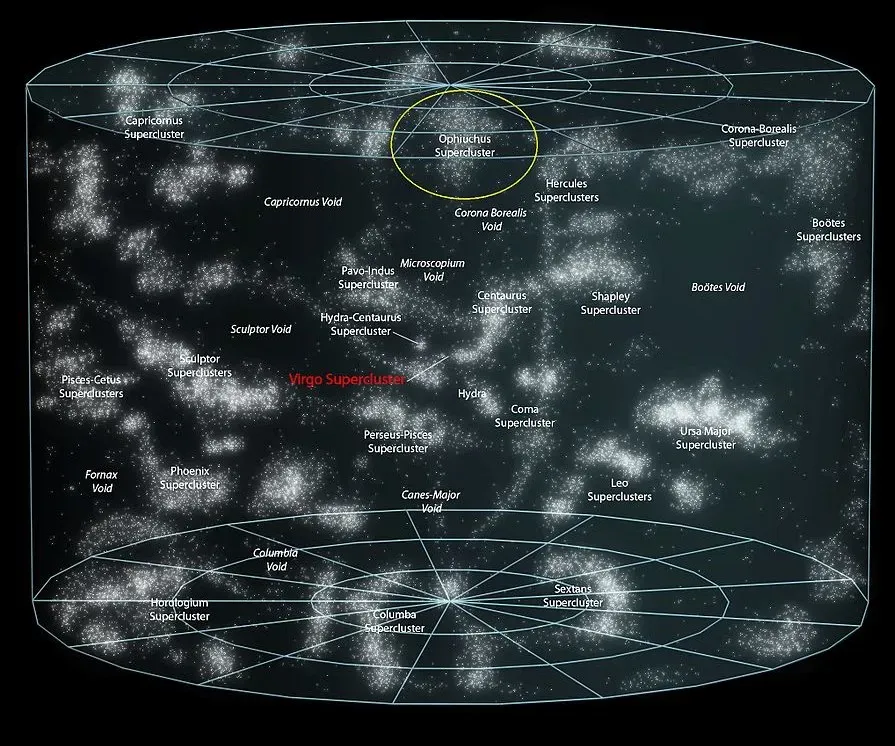
The Laniakea Supercluster, whose name comes from Hawaiian meaning “open skies” or “immense heaven,” is the large-scale structure centered around the Great Attractor that is home to the Milky Way and approximately 100,000 other nearby galaxies. It is a colossal gravitational basin spanning approximately 500 million light-years in diameter. The sheer scale of your own cosmic neighborhood is quietly staggering.
Follow-up studies suggest that Laniakea is not actually gravitationally bound – it will ultimately disperse rather than continue to maintain itself as an overdensity relative to surrounding areas. Each group and cluster within it is bound only to itself and will be driven apart from the others due to dark energy and the expanding universe. In other words, the supercluster you call home is already slowly coming apart.
5. The Sloan Great Wall – The Structure That Rewrote the Maps
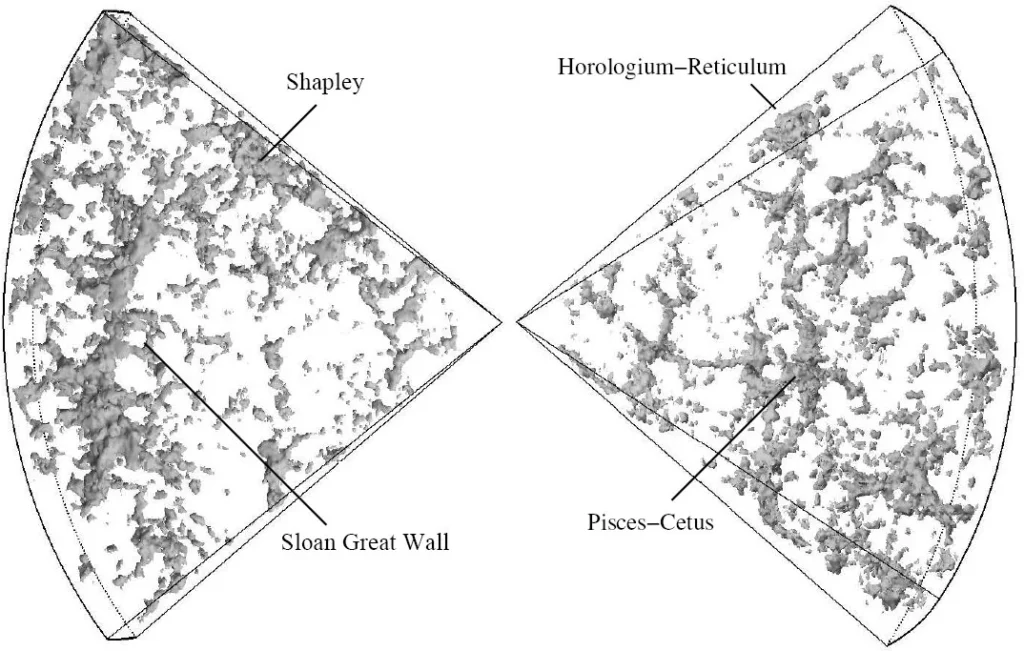
The Sloan Great Wall is one of the largest known structures in the observable universe, spanning over 1.3 billion light-years. Discovered in 2003 using data from the Sloan Digital Sky Survey, it revealed an immense filamentary network of galaxies and clusters woven into the cosmic web. This enormous wall stretches across multiple constellations, including Leo, Coma Berenices, and Virgo, containing hundreds of thousands of galaxies grouped in clusters, superclusters, and filaments.
Its discovery was a milestone in cosmology, providing direct evidence of the filamentary nature of the universe’s large-scale structure. Studying the Sloan Great Wall helps astronomers understand how matter aggregates under gravity, how dark matter is distributed, and how galaxy superstructures form billions of years after the Big Bang. The largest basin of attraction recovered in the Cosmicflows-4 data is associated with the Sloan Great Wall, with a volume more than twice the size of the second-largest Shapley basin.
6. The Giant Arc – A Curve That Challenges Everything
An almost symmetrical arc of galaxies sits at a distance of 9.2 billion light-years away, and at roughly 3.3 billion light-years across, it’s one of the biggest structures ever identified. Astronomers call it the Giant Arc. The Giant Arc was discovered in data from the Sloan Digital Sky Survey. Researchers studied the light from quasar galaxies – the brightest galaxies in the universe, illuminated by voraciously active supermassive black holes. When the light from these galaxies passes through gas in intergalactic space, some wavelengths are absorbed, and the spectral absorption lines generated can be used to map the distribution of matter.
The Big Ring, a related discovery by the same researcher, has a circumference of nearly 4.1 billion light-years and sits approximately 9.2 billion light-years from Earth. Statistical tests on the data show departures from random expectations of up to 5.2 sigma, making a chance alignment unlikely. The structure also appears not to be a flat circle but a coil-like arrangement when viewed nearly face-on. Both the Giant Arc and the Big Ring occupy the same region of sky, which makes their combined existence even harder to explain.
7. The Huge Large Quasar Group – An Ancient Monster from the Early Universe
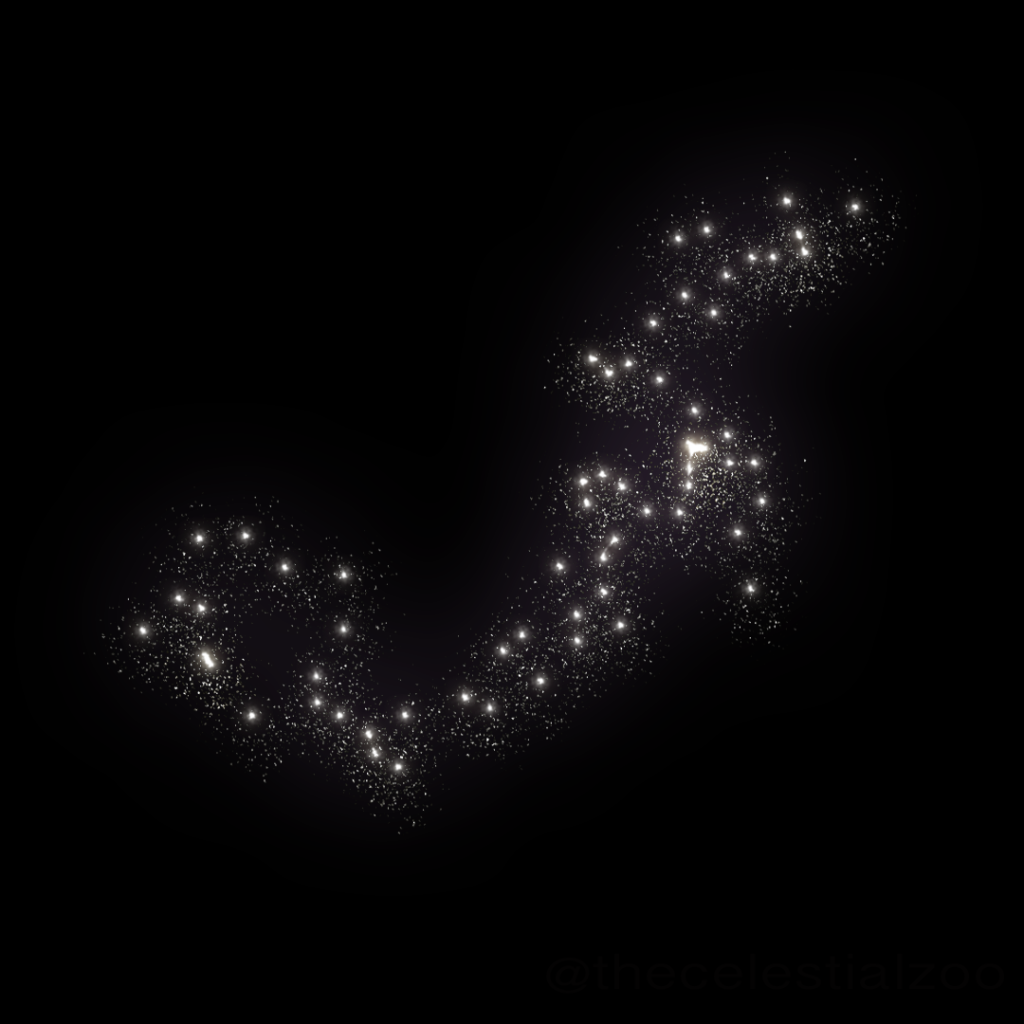
The Huge Large Quasar Group, identified using redshifts of quasars, has a length of more than 1,400 megaparsecs – roughly 4 billion light-years. The Clowes-Campusano LQG group of galaxies is 2 billion light-years across, while the Huge Large Quasar Group stretches to 4 billion. These groups are thought to be precursors to the massive filamentary structures we see in the universe today.
Large quasar groups are some of the largest structures known, and they are theorized to be protohyperclusters – early-stage precursors to galaxy filaments and supercluster complexes. Several large structures, including the Sloan Great Wall, the Huge Large Quasar Group, and the Hercules–Corona Borealis Great Wall, appear to exceed the maximum structural size predicted by universal inflationary models, and their existence might necessitate cosmological model modifications.
8. Galactic Walls and Sheets – When Superclusters Stack Up
Groupings of superclusters can form walls or sheets of galaxies, which are likely the largest known superstructures within the observable universe. They can stretch hundreds of millions of light-years across but are relatively thin – only about 20 million light-years deep. The first galactic wall astronomers discovered, called the Coma Wall, is about 500 million light-years long, 16 million light-years deep, and roughly 300 million light-years away.
An international team led by the University of Oxford has identified one of the largest rotating structures ever reported: a razor-thin string of galaxies embedded in a giant spinning cosmic filament, 140 million light-years away. The researchers found 14 nearby galaxies rich in hydrogen gas, arranged in a thin, stretched-out line about 5.5 million light-years long and only 117,000 light-years wide. This structure sits inside a much larger cosmic filament containing over 280 other galaxies and roughly 50 million light-years long.
9. Cosmic Voids – The Vast Emptiness That Shapes Everything
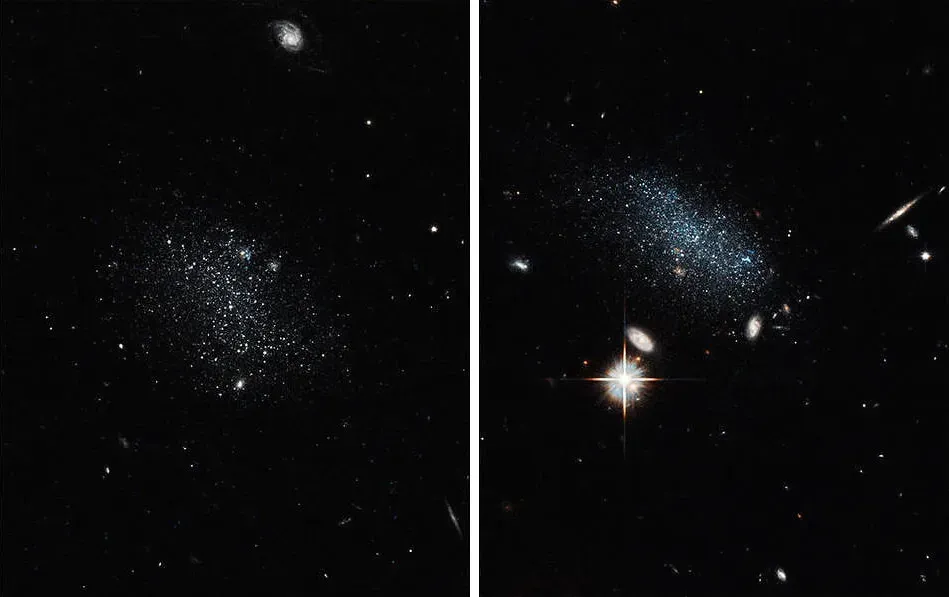
Between the great clusters and filaments of the universe are great cosmic voids, some of which can span hundreds of millions of light-years in diameter. As matter continued to clump under gravity, it formed an intricate network of filaments, drawing material from surrounding regions. Between these filaments lie vast, underdense regions known as cosmic voids. These voids aren’t simply empty space. They actively shape the motion of everything around them.
The Local Void, adjacent to the Local Group, measures about 23 megaparsecs across in its nearest extent and exerts a repulsive gravitational influence, contributing to the definition of Laniakea’s edge by diverting galaxy motions away from the supercluster’s core. The underdense regions of the universe give up their matter to surrounding structures, becoming great cosmic voids. Galaxies dot the filaments and fall into larger cosmic structures where multiple filaments intersect. What looks like nothingness is, in fact, one of the most powerful shaping forces in existence.
10. The Observable Universe Itself – The Grandest Structure of All
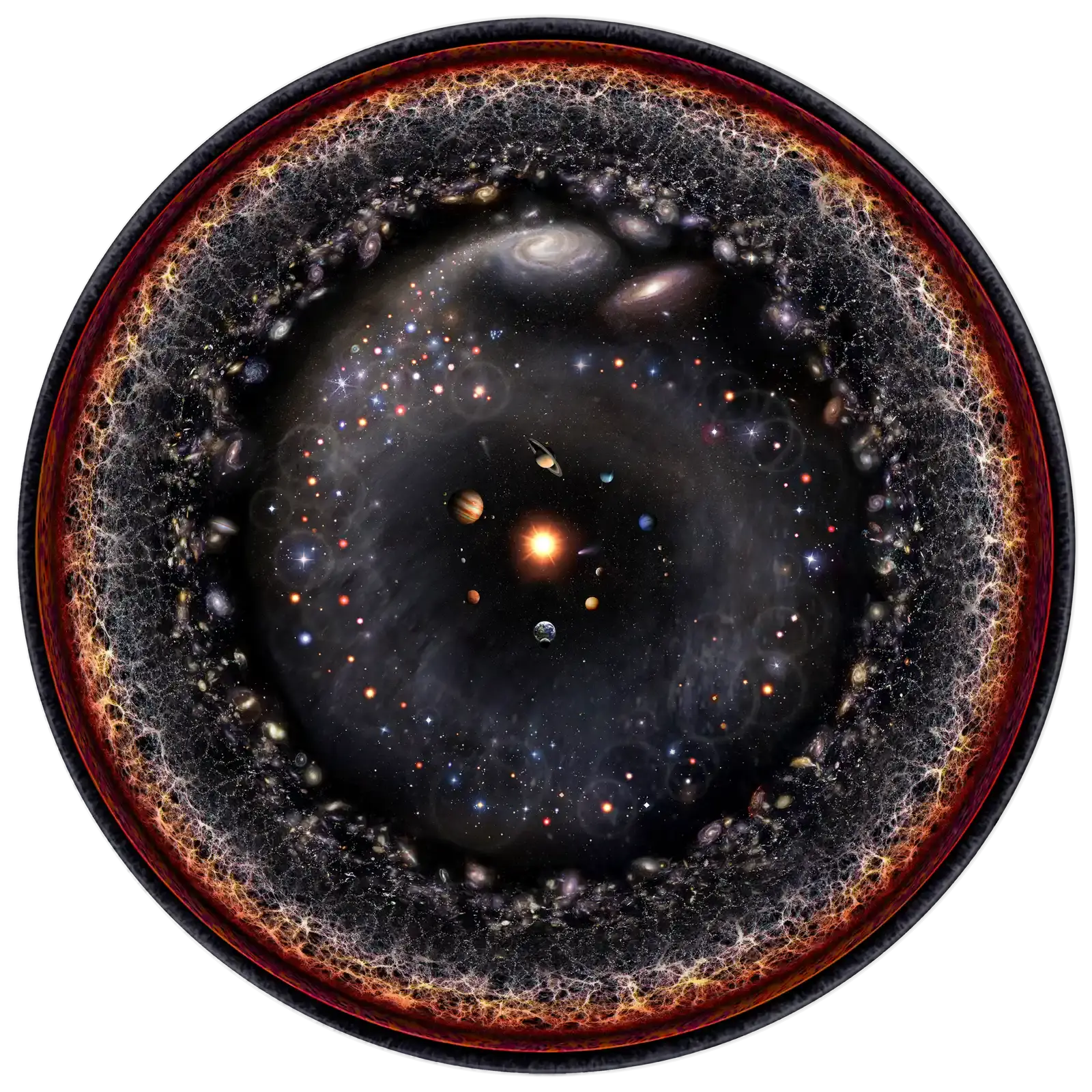
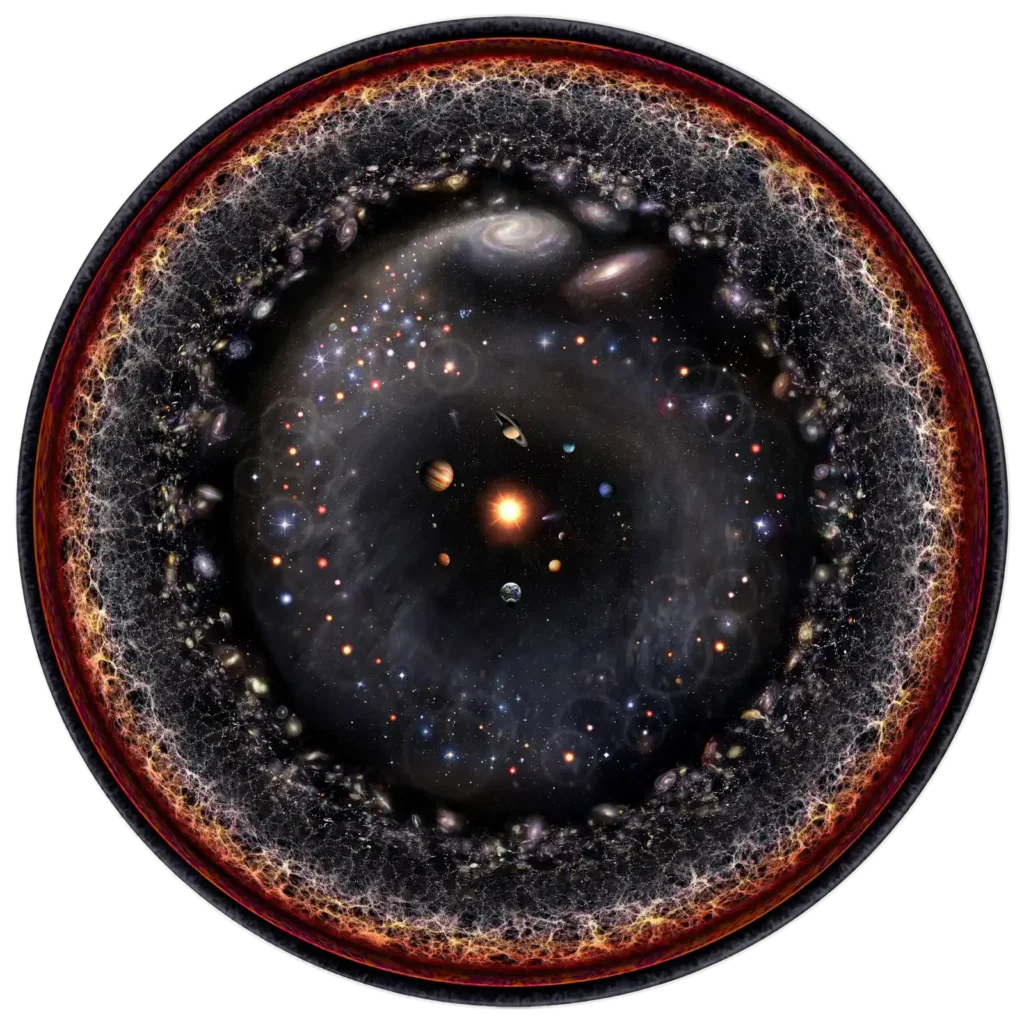
The largest superstructures leave an imprint on the Cosmic Microwave Background, the relic radiation from the Big Bang and key evidence supporting it. The CMB’s properties match theoretical predictions with near-surgical precision. These superstructures’ gravity alters the CMB as it passes through them, producing fluctuations that are difficult to filter out. At the very top of this cosmic hierarchy sits the observable universe itself – a sphere of space roughly 93 billion light-years across, encompassing every galaxy, filament, and void we’ve ever detected.
Superstructures can also impact measurements of the Hubble constant, the fundamental value in cosmology that describes how fast the universe is expanding. The Big Ring, the Giant Arc, and the revised picture of Laniakea all press on a single question: at what scale does the universe become genuinely smooth? The cosmological principle – the foundational assumption that no region of space is special and that matter averages out at large scales – has held up well through most of modern cosmology’s history. Yet it is not a directly observed fact; it is an assumption that gets tested every time a new survey maps the large-scale structure of the universe.
Conclusion
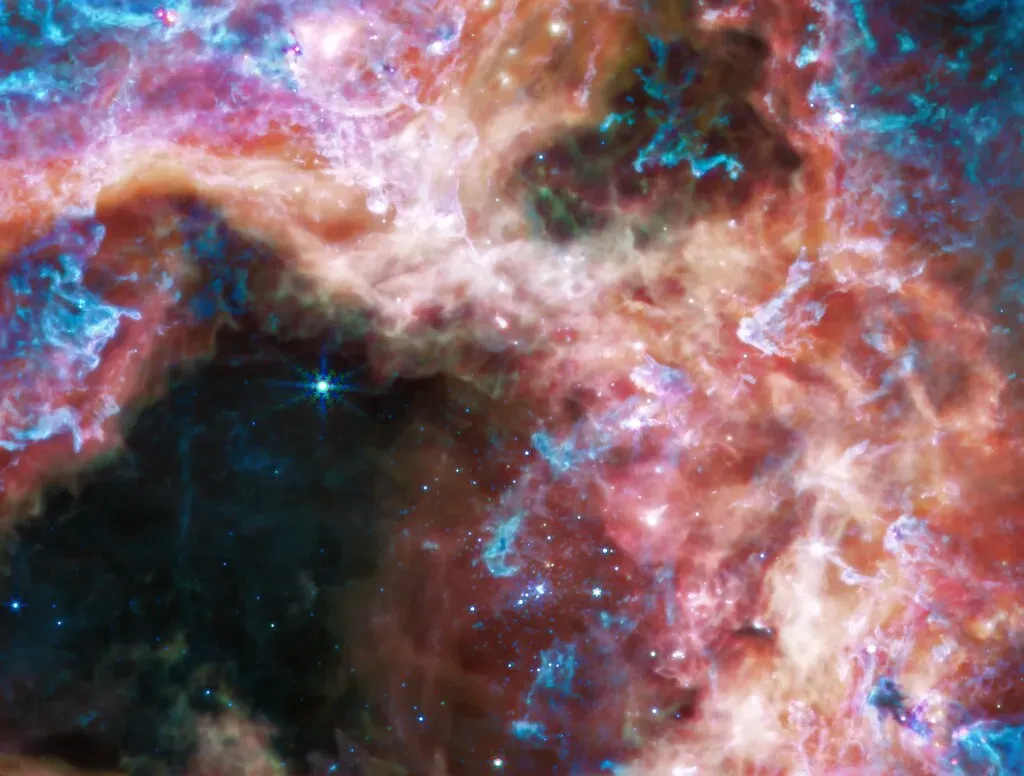
Every one of these structures quietly dismantles the idea that the universe is something we can wrap our heads around in a sitting. From the spinning filaments 140 million light-years away to a wall of galaxies that spans a tenth of the observable universe, the cosmos keeps revealing itself as stranger and grander than any framework we build to contain it.
What’s remarkable isn’t just the scale. It’s that we’re finding these things at all – using X-ray satellites, gamma-ray burst data, and redshift surveys to map matter across billions of light-years. New satellites under development may sharpen the data needed to sort out lingering unknowns, and scientists see current findings as a reason to reevaluate large-scale structures and how they might push the boundaries of our cosmic road maps. The universe, it turns out, doesn’t owe us simplicity. It just keeps going.