There’s a version of our planet you’ve probably never seen, and it looks nothing like the sunlit world you know. Several kilometers beneath the ocean’s surface, where no ray of light has ever reached and pressure would crush an unprotected human body in moments, entire communities of living creatures are thriving. They eat, grow, reproduce, and even compete for space, all without any connection to the sun.
Life is typically sparse on the deep seafloor, where organisms endure high pressure, near-freezing temperatures, and pitch-black darkness. Yet at certain spots where tectonic plates meet, unique ecosystems teem with unusual animal species. What you’ll find when you explore these places challenges some of the most deeply held assumptions about what life actually needs to survive.
How Hydrothermal Vents Actually Form
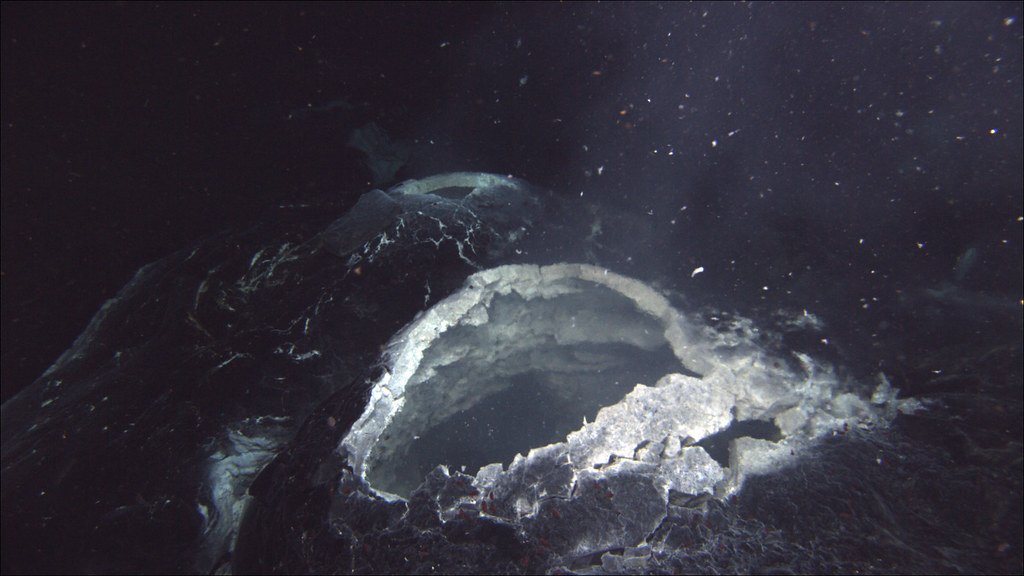
Deep-sea hydrothermal vents are located along the mid-ocean ridge system, near volcanically active areas where tectonic plates are moving away from each other. Seawater penetrates the fissures of the volcanic bed and is heated by magma. This heated seawater rises back toward the surface, dissolving large amounts of minerals that provide energy and nutrients to the organisms living there.
The hot, mineral-rich waters then exit the oceanic crust and mix with the cool seawater above. As vent minerals cool and solidify, they form different types of hydrothermal vent structures, each characterized by different physical and chemical factors including the minerals present, temperatures, and flow levels of their plumes. Think of them as underwater geysers that never stop, steadily pumping out scalding, mineral-rich fluid into one of the darkest places on Earth.
Black Smokers, White Smokers, and the Structures in Between
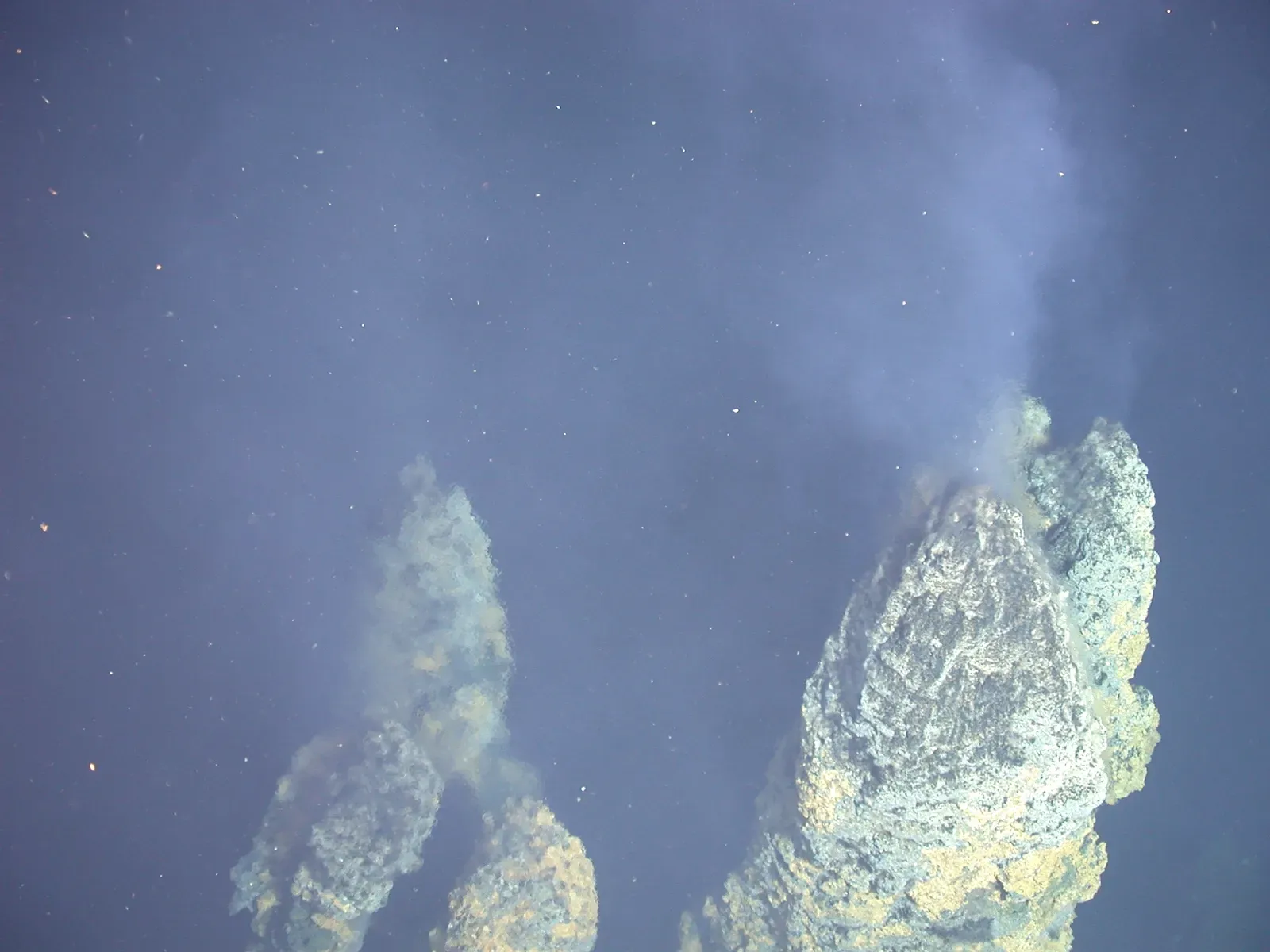
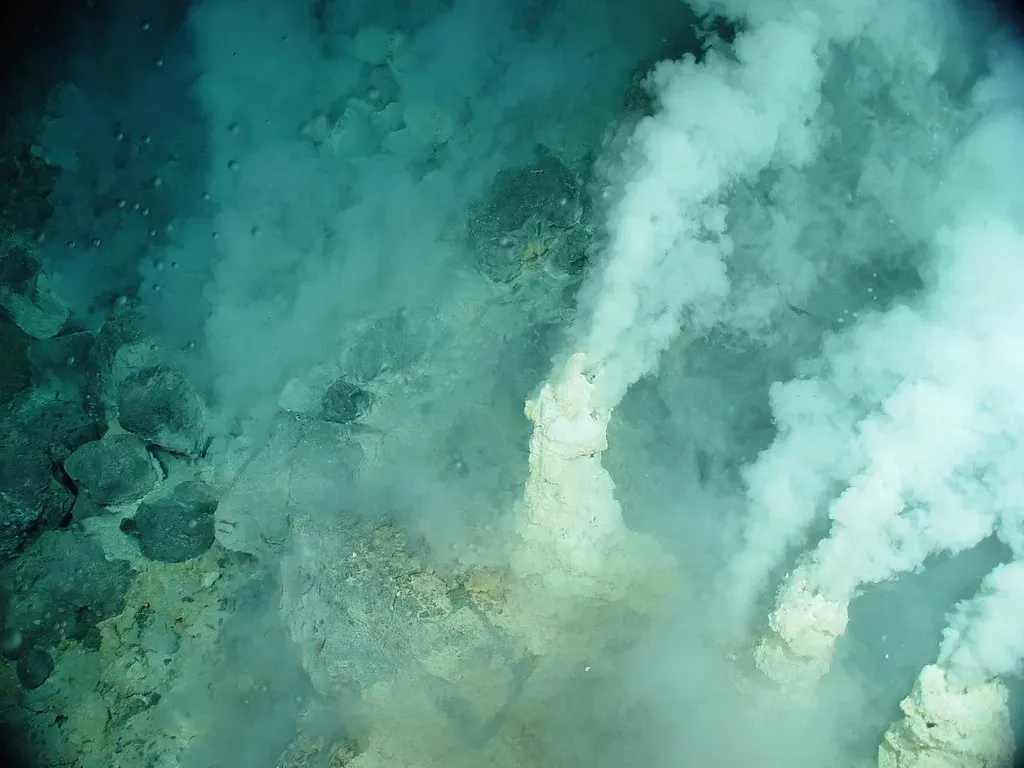
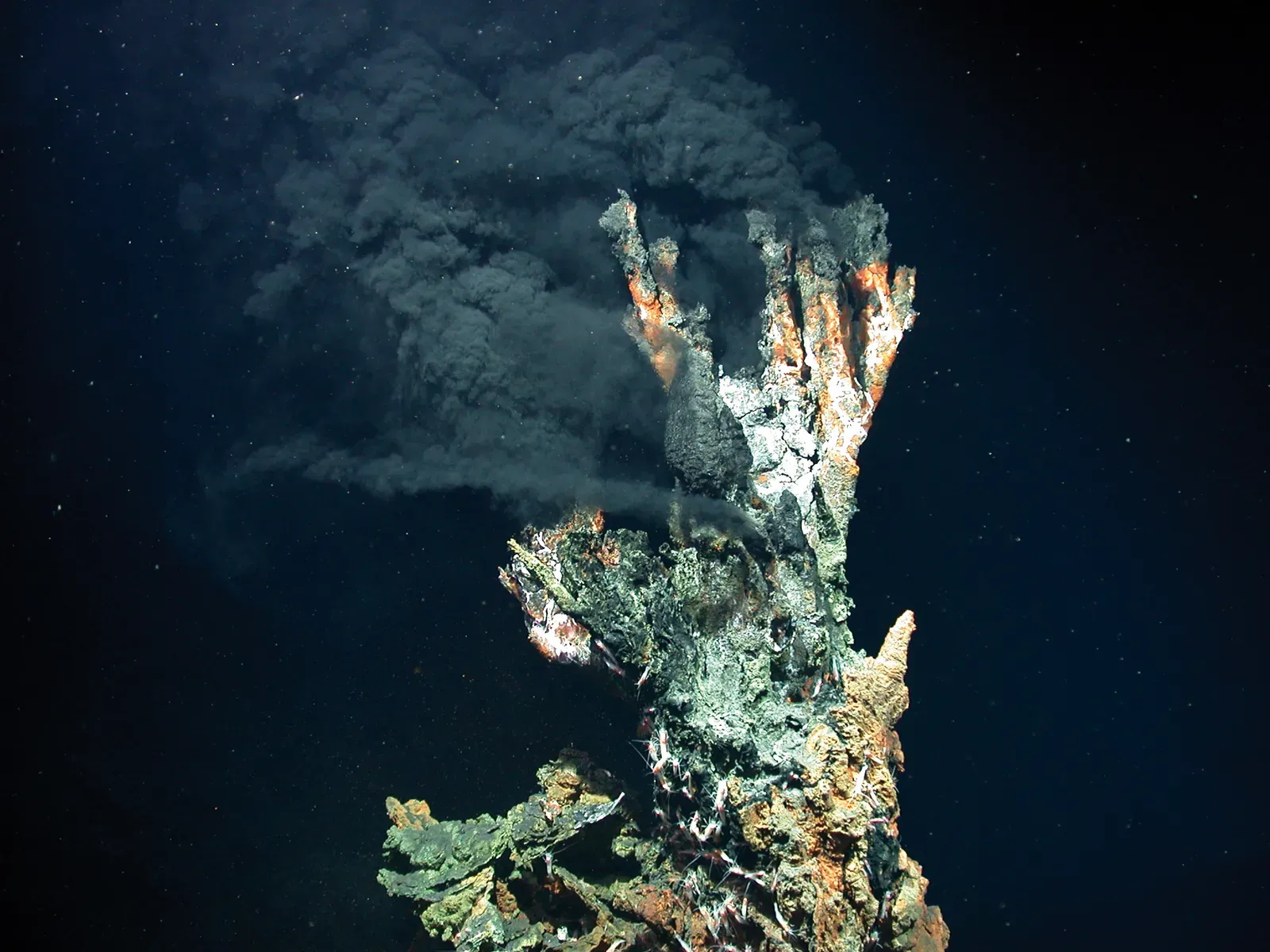
Black smokers emit the hottest and darkest plumes, which are high in sulfur content and can form chimneys up to 18 stories tall. The plumes of white smokers are lightly colored and rich in barium, calcium, and silicon. Compared to black smokers, white smokers usually emit cooler plumes and form smaller chimneys.
At approximately 400 degrees Celsius, the vent fluid of black smokers is hot enough to melt solid metal. You might wonder how anything survives near that. The answer lies in how quickly that superheated fluid cools as it meets the surrounding seawater. These chimney-like structures continuously release hot water containing various metal ions into the cold seawater, gradually growing over time and sometimes reaching heights of up to 60 meters. The chemistry that results from that collision of extreme temperatures is precisely what fuels life down there.
Chemosynthesis: Life’s Other Engine
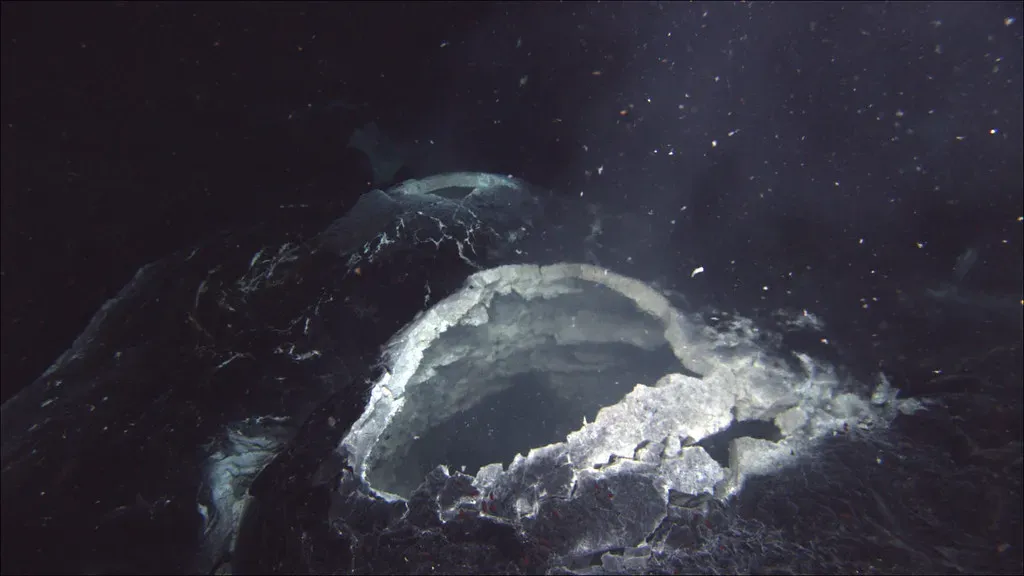
Without access to sunlight, the foundation of nearly all known ecosystems, life at hydrothermal vents depends on an entirely different process: chemosynthesis. You’ve probably been taught since school that plants convert sunlight into energy through photosynthesis, and that everything in a food chain ultimately traces back to that process. Hydrothermal vents break that rule entirely.
Instead of using light energy to turn carbon dioxide into sugar like plants do, microbes at vents harvest chemical energy from the minerals and chemical compounds that spew out, including hydrogen sulfide, hydrogen gas, ferrous iron, and ammonia. After chemosynthesis, the microbes release new compounds, some of which are toxic, but others can be taken in nutritionally by other organisms. In a world without access to the sun’s energy, chemosynthesis provides the basis for the development of rich, diverse communities, and the deep-sea bacteria that carry it out form the base of a food web that includes shrimp, tubeworms, clams, crabs, fish, and octopods.
The Remarkable Creatures That Call Vents Home
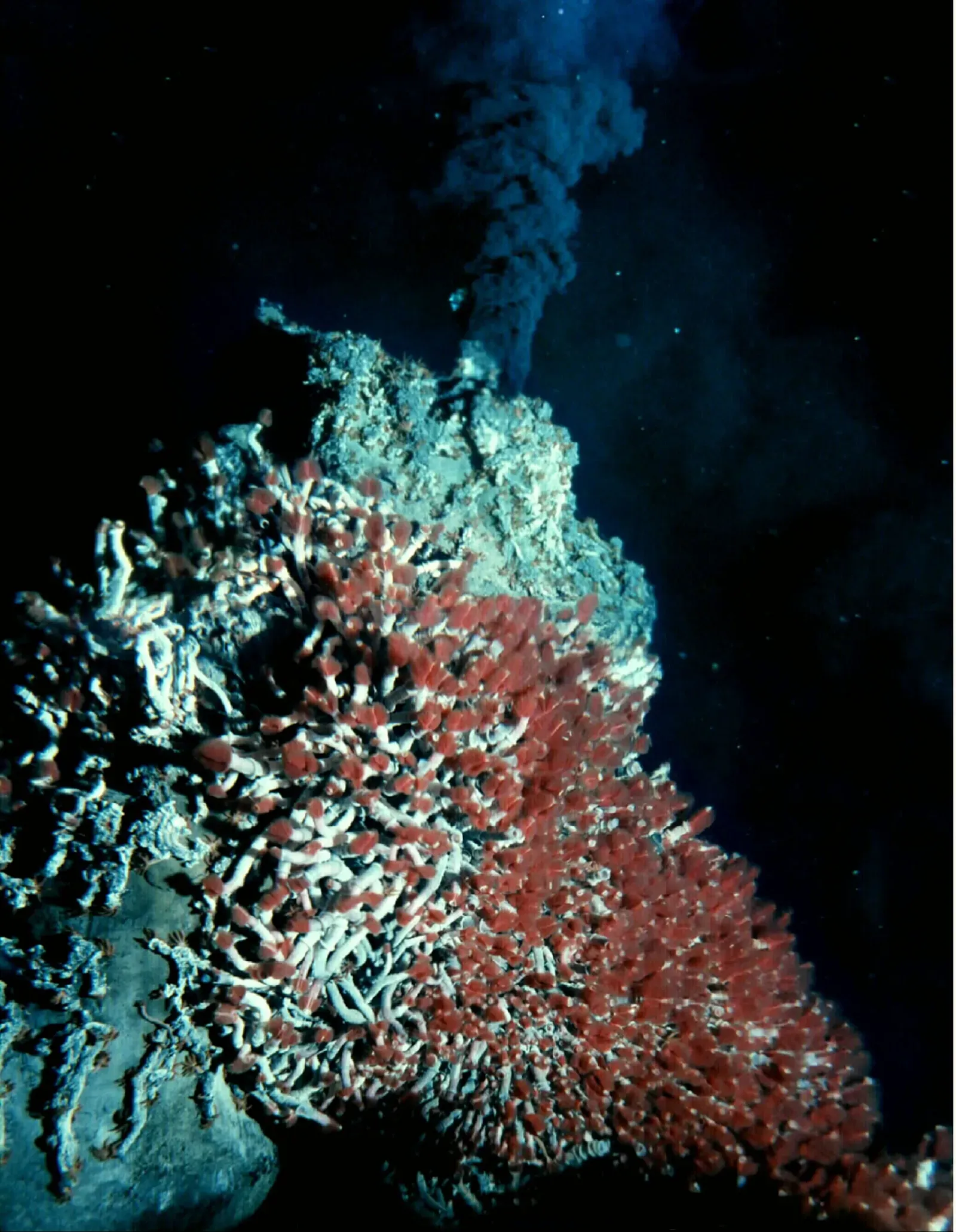
Huge red-tipped tubeworms, ghostly fish, strange shrimp with eyes on their backs, and other unique species thrive in these extreme deep-ocean ecosystems found near undersea volcanic chains. Some of these animals are found nowhere else on Earth. Some species appear to have become fully reliant on these thermal sites, including scaly-foot gastropods and yeti crabs, which have only ever been recorded at hydrothermal vents.
In the deep-sea environment of the East Pacific Rise, where sunlight does not penetrate and conditions involve extreme temperatures, skull-crushing pressures, and toxic compounds, lives Riftia pachyptila, the giant hydrothermal vent tubeworm. Growing up to six feet tall with a deep-red plume, Riftia has no digestive system, but thrives through its symbiotic relationship with bacteria that live deep within its body. Those billions of bacteria fix carbon dioxide into sugars to sustain both themselves and the tubeworm. It’s one of the most striking examples of biological cooperation you’ll find anywhere on the planet.
Extreme Microbes and the Art of Surviving the Impossible
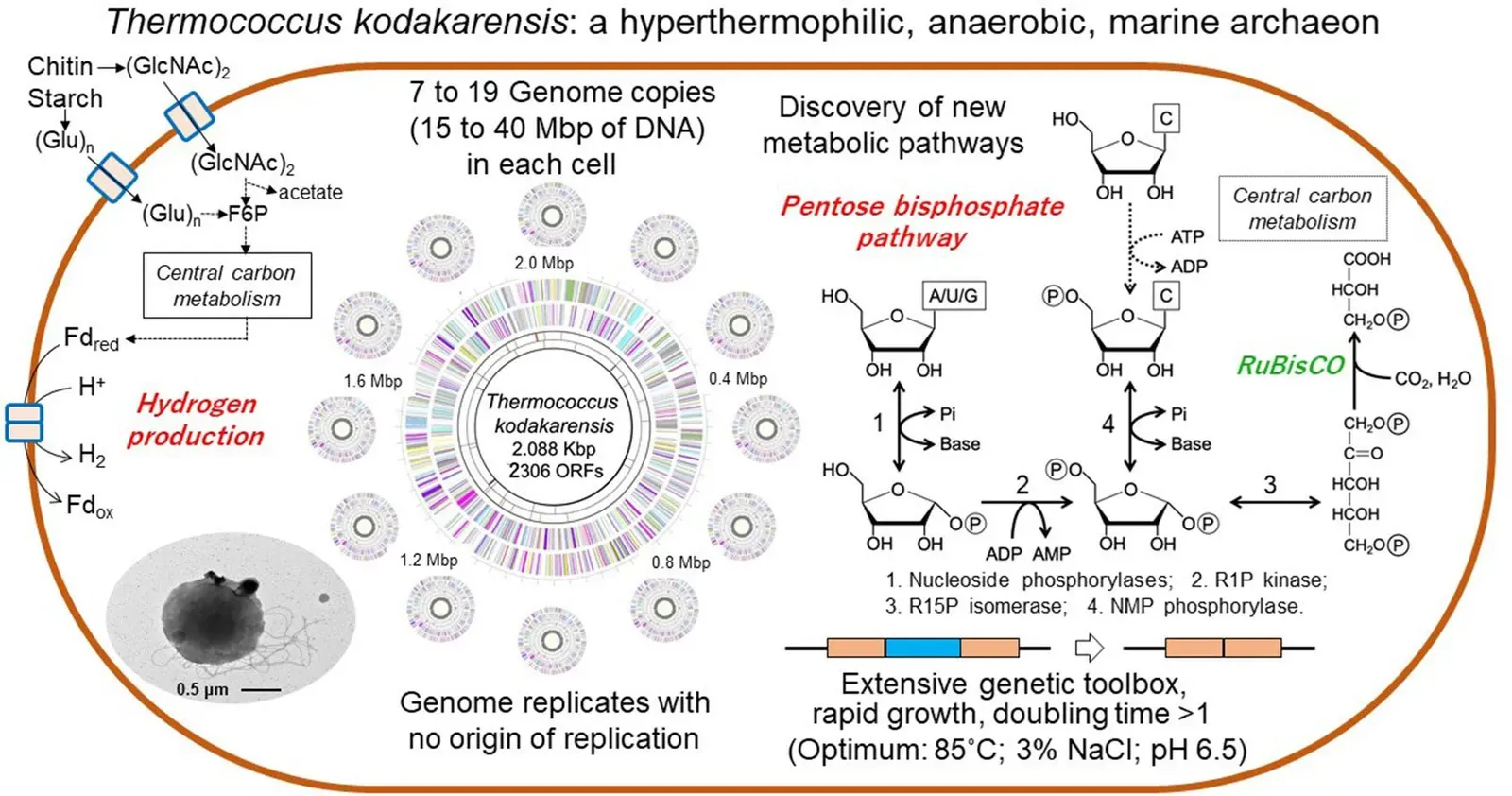
The extreme conditions of the hydrothermal vent environment mean that microbial communities living there need specific adaptations. Microbes that live here are known as hyperthermophiles, microorganisms that grow at temperatures above 90 degrees Celsius. These organisms are found where vent fluids are expelled and mixed with surrounding water, and they are thought to contain proteins with extended stability at higher temperatures due to intramolecular interactions, though the exact mechanisms are not yet fully understood.
In laboratory conditions, the cells of Methanopyrus kandleri can even divide at 122 degrees Celsius, the highest temperature known to be compatible with microbial growth. Microbial communities inhabiting deep-sea hydrothermal vent chimneys appear to be highly enriched in genes that encode enzymes employed in DNA mismatch repair and homologous recombination, suggesting these communities have evolved extensive DNA repair capabilities to cope with the extreme DNA-damaging conditions in which they exist. You’re looking at biology that has been pushed to its absolute limits and responded by innovating.
What Vents Reveal About the Origin of Life and Beyond
![What Vents Reveal About the Origin of Life and Beyond ([1], CC BY 4.0)](https://nvmwebsites-budwg5g9avh3epea.z03.azurefd.net/dws/87b4faf8d0c8af29767cd0490ba523f3.webp)
Some of the earliest evidence for microbial life on Earth comes from rocks located in Canada that formed within hydrothermal vent environments around 4 billion years ago. The hostility of the planet’s surface at that time suggests that life is more likely to have begun within the Earth’s crust or in the deep sea, and research also indicates that early life relied on chemosynthetic processes like those seen in the ocean today. This makes hydrothermal vents a likely candidate for the origin of life on Earth.
Scientists have shown that under extreme pressure, fluid from ancient seafloor cracks mixed with ocean water could have reacted with minerals from hydrothermal vents to produce organic molecules, the building blocks that compose nearly all life on Earth. That research also lays important groundwork for studies of ocean worlds such as Saturn’s moon Enceladus and Jupiter’s moon Europa, which are both thought to have liquid-water oceans beneath thick icy crusts and may host hydrothermal activity. This revelation transformed the search for life elsewhere in the solar system, and Jupiter’s moon Europa and Saturn’s moon Enceladus are now considered among the most likely places to find extraterrestrial life.
Conclusion
What the deep-ocean vents teach you, more than anything else, is that life is far more creative and persistent than we tend to assume. For most of human history, we looked at the dark, crushing depths of the ocean and saw a dead zone. What we found instead was a parallel biosphere, one that runs on chemistry rather than sunlight, that built its own food chains, its own ecosystems, and possibly its own early chapter in the story of life on Earth.
The long-held notion that life at the bottom of the ocean couldn’t exist without food that rained down from the sunlit surface was tossed aside. Along with photosynthesis, there was chemosynthesis, supporting an entirely new kind of ecosystem in the abyss. That discovery didn’t just rewrite ocean science. It quietly expanded our understanding of where life is possible, in this solar system and potentially far beyond it. The vents are still down there right now, still pumping, still feeding creatures that have never needed the sun, and still holding questions we haven’t thought to ask yet.