
Every so often, science drops a discovery that makes even the wildest science fiction feel tame. You read it twice, maybe three times, just to be sure it isn’t some elaborate prank. Yet the deeper researchers look into the fabric of reality, the more it seems the universe was never designed for our comfort or intuition. It behaves in ways that are not just counterintuitive, but almost mischievous.
What follows isn’t a list of speculative ideas or late-night conspiracy theories. These are real, peer-reviewed, deeply studied discoveries that working scientists grapple with every day. From black holes that evaporate to particles that seem to “know” about each other across vast distances, each of these findings pulls at a different loose thread in reality. Tug on enough of them, and you start to realize: our everyday sense of what’s possible barely scratches the surface.
Quantum Entanglement: The Universe’s “Spooky” Secret
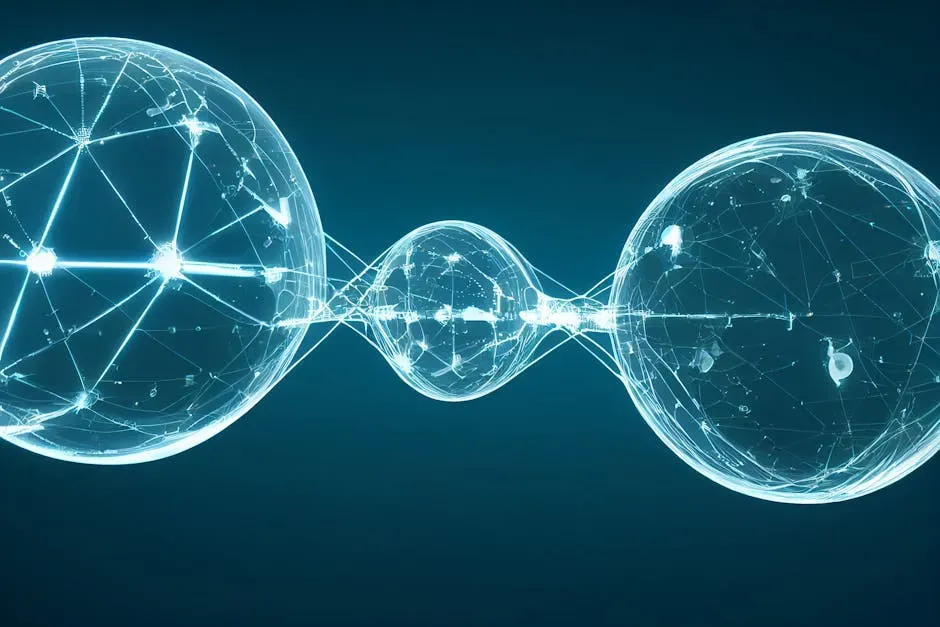
Imagine two coins that always land on opposite sides, no matter how far apart you flip them, and you get a tiny taste of quantum entanglement. In the quantum world, particles can become linked so that measuring one instantly tells you something about the other, even if they’re on opposite sides of a galaxy. This isn’t a vague philosophical idea; it’s a laboratory-tested phenomenon that has been confirmed again and again in increasingly precise experiments.
What makes this so disturbing is that it seems to laugh in the face of the old rule that nothing can affect anything else faster than light. The catch is that entanglement can’t be used to send meaningful messages faster than light, so relativity survives, but just barely. Physicists have tested “loophole-free” versions of these experiments and still find the same unnerving result. When people say reality is nonlocal, this is what they’re talking about: the universe, on some level, behaves as if it’s one deeply connected whole, not a collection of independent parts.
Black Holes and the Information Paradox
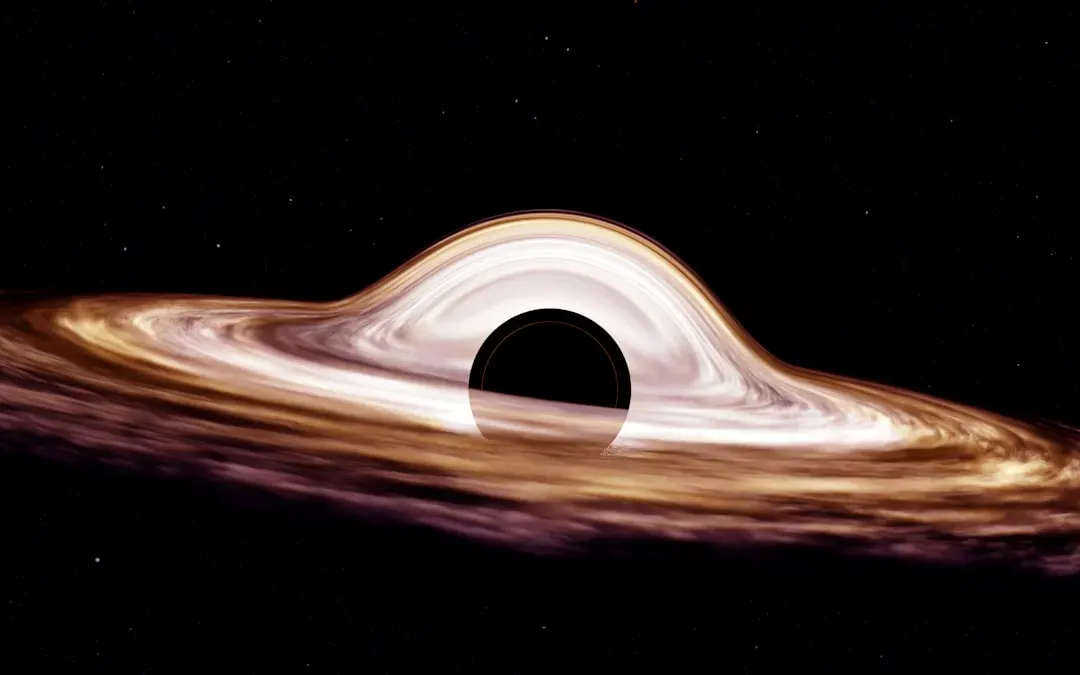
Black holes already sound like something ripped from a movie script: regions of space where gravity is so intense that nothing, not even light, can escape. For a long time, they were mainly theoretical monsters lurking in equations, but we’ve now detected them through gravitational waves and even imaged the shadow of one sitting at the center of a galaxy. Then things got even weirder when calculations showed that black holes can slowly evaporate through what’s now called Hawking radiation.
Here’s the nightmare puzzle: if a black hole can evaporate away completely, what happens to the information about everything it swallowed? Physics says information can’t just vanish from the universe, but naïve black hole math seems to say it does. This clash is known as the black hole information paradox, and it’s still not fully resolved, despite decades of furious work. Some of the most interesting ideas in modern physics, from holographic principles to complex quantum gravity models, are driven by trying to make sense of these cosmic shredders that apparently must obey rules we don’t yet fully understand.
Dark Matter: The Invisible Skeleton of the Cosmos
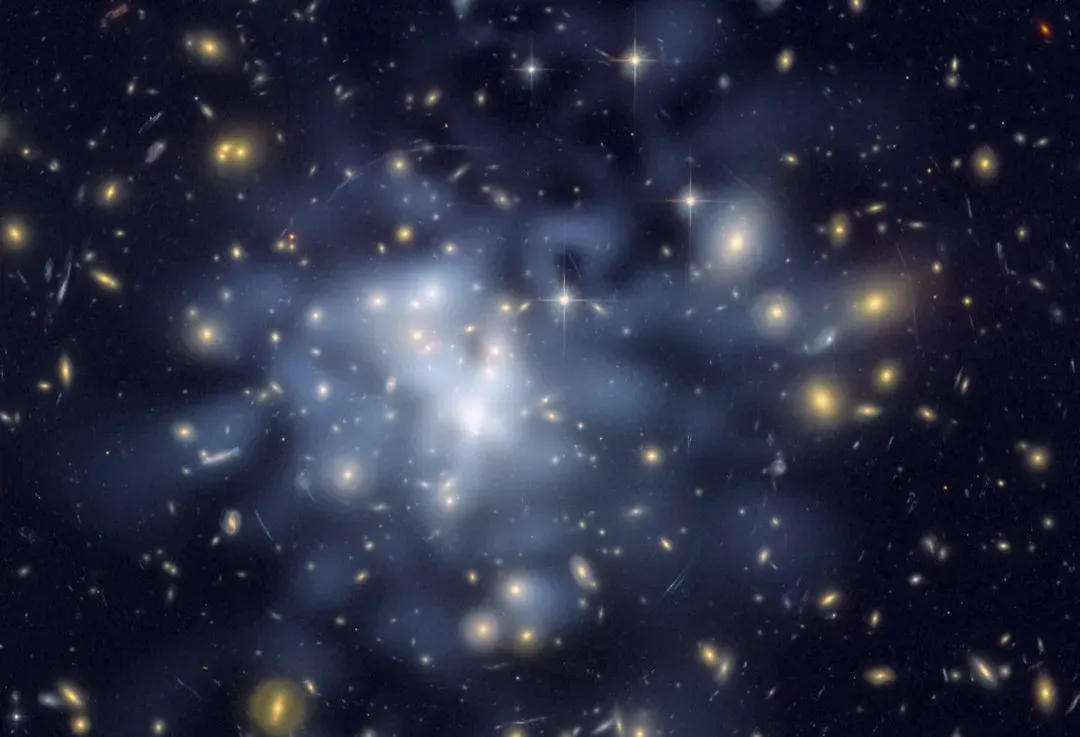
When astronomers started measuring how fast galaxies rotate, they stumbled onto a result that made no sense at all. The visible stars and gas didn’t provide nearly enough gravity to hold those systems together at the speeds observed. It was as if some invisible mass was quietly adding extra weight, like a hidden skeleton giving shape and stability to each galaxy. That missing mass is what we now call dark matter.
Dark matter doesn’t shine, reflect, or absorb light in any obvious way, which is why our telescopes can’t see it directly. We only know it’s there because of how it tugs on visible matter and bends light through gravity. Multiple independent lines of evidence, from galaxy clusters to the afterglow of the Big Bang, point toward this mysterious ingredient making up most of the universe’s matter. Yet despite decades of searching in underground detectors and particle colliders, we still don’t know what dark matter actually is, which is both frustrating and wildly exciting.
Dark Energy: A Force Tearing Space Apart
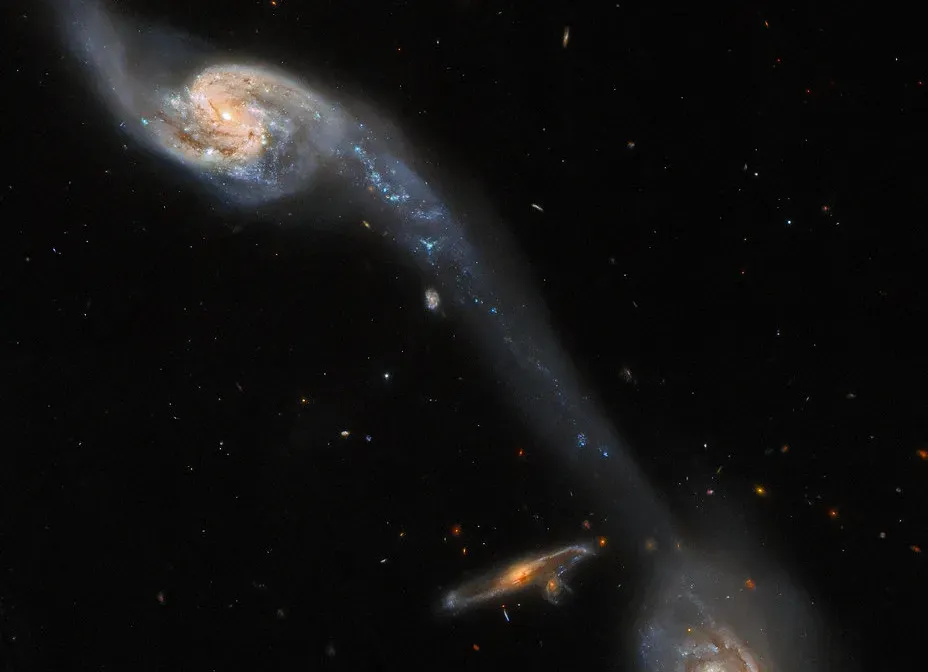
Just when scientists thought they had the universe’s expansion roughly under control, the data delivered a gut punch. Distant exploding stars, used as cosmic mile markers, showed that the universe isn’t just expanding; the expansion is accelerating. Something is acting like an anti-gravity force, pushing galaxies away from each other faster and faster over time. That nameless something has been given a rather bland label: dark energy.
Dark energy is not just a small detail in our cosmic bookkeeping; it appears to make up the vast majority of the universe’s total energy content. What’s maddening is how little we understand about it. Some theories link it to the energy of empty space itself, while others suggest we might be missing something fundamental in our understanding of gravity on very large scales. For now, it behaves like a quiet, relentless pressure stretching the fabric of the universe, reminding us that even “nothing” in space isn’t really nothing at all.
Time Dilation: Why Time Doesn’t Tick the Same Everywhere

Most of us casually talk about time as if it flows at one universal rate, like a single cosmic clock ticking away in the background. Relativity drove a stake through that idea. Experiments with extremely precise atomic clocks have shown that time actually passes at different rates depending on how fast you’re moving and how strong the gravitational field is around you. A clock on a fast-moving satellite really does tick more slowly than one on your desk.
This isn’t just theoretical clutter in physics textbooks; it’s built into everyday technology. The GPS in your phone would be wildly off if engineers didn’t account for time dilation affecting the satellites orbiting Earth. Time, it turns out, is elastic, bending and stretching in response to speed and gravity. The unsettling implication is that there is no single “now” shared everywhere, only local nows, stitched together into a universe where simultaneity is more a matter of perspective than an absolute fact.
Quantum Vacuum: Empty Space That Isn’t Empty
If you picture a vacuum as a perfectly empty box, quantum physics asks you to throw that picture away. Even in regions stripped of particles and radiation, the so-called vacuum seethes with activity. Virtual particles flicker in and out of existence too quickly to be directly seen but with effects that can be measured in careful experiments. One striking example is the tiny force that appears between two uncharged metal plates placed extremely close together, a phenomenon known as the Casimir effect.
This restless vacuum isn’t just a curiosity; it may connect to some of the biggest questions in cosmology. Theoretical estimates of vacuum energy wildly overshoot what we infer from observations of the universe’s expansion, by factors that are almost comically large. This mismatch, often called the vacuum catastrophe, suggests we’re missing some deep piece of the puzzle. The fact that “nothing” in physics turns out to be one of the most complicated and energetic things we know about might be the most ironic twist of all.
Neutrinos: Ghost Particles That Pass Through You
Right now, unimaginable numbers of neutrinos are streaming through your body, through the Earth, and out the other side, with almost no interaction at all. They’re created in nuclear reactions, from the core of the Sun to exploding stars, and even in human-built reactors. For a long time, physicists assumed these ghostly particles had no mass and barely any interesting properties beyond their ability to ignore almost everything in their path.
Then experiments studying neutrinos from the Sun and from particle accelerators uncovered something astonishing: neutrinos change “flavor” as they travel, which can only happen if they have mass. This was a direct contradiction of earlier assumptions and required revising the Standard Model of particle physics, one of the most successful theories ever built. The fact that such plentiful, fundamental particles had been hiding such an important secret for so long is a humbling reminder of how much the universe can keep up its sleeve, even in plain sight.
Cosmic Inflation: The Universe’s Split-Second Growth Spurt
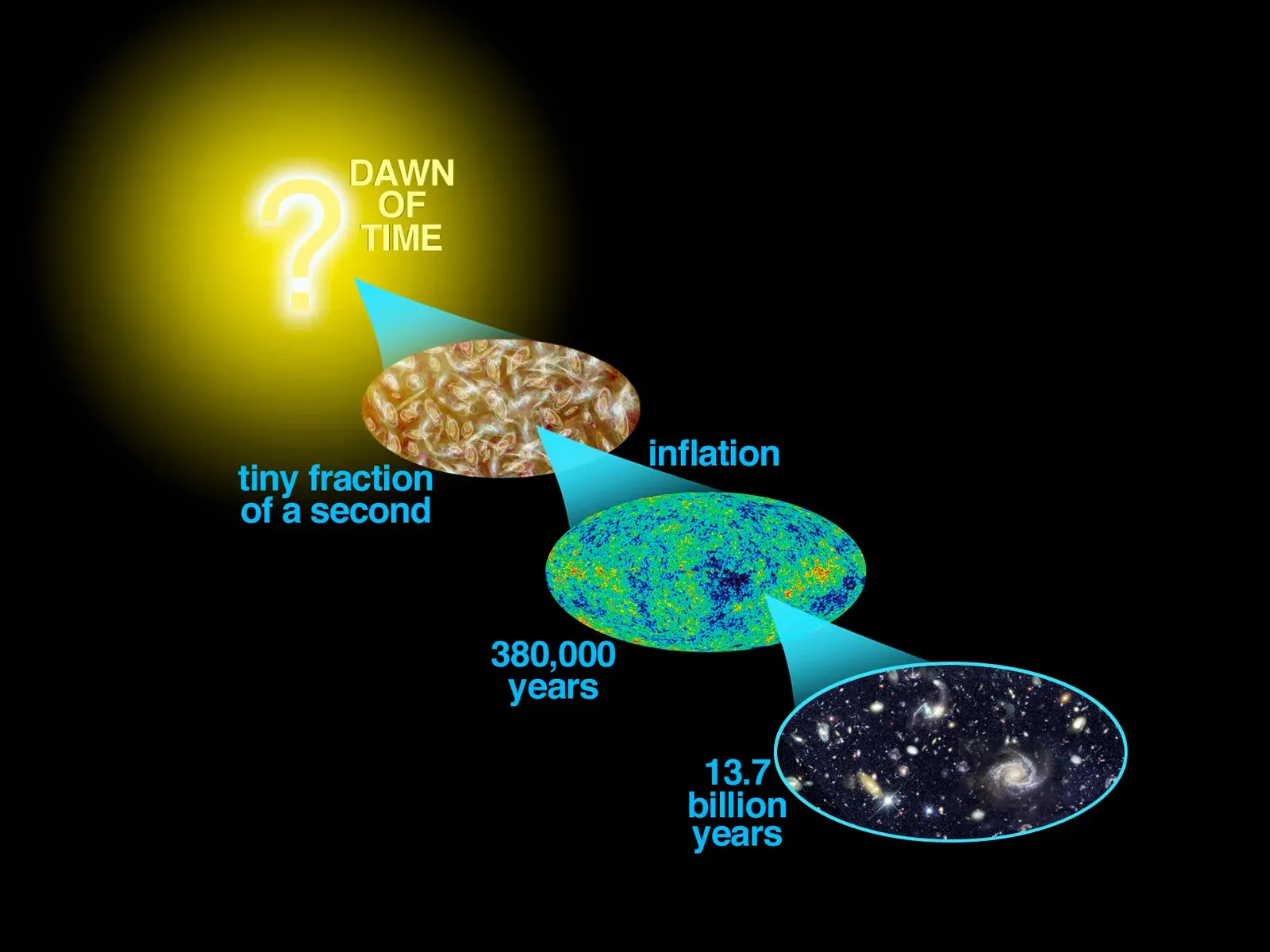
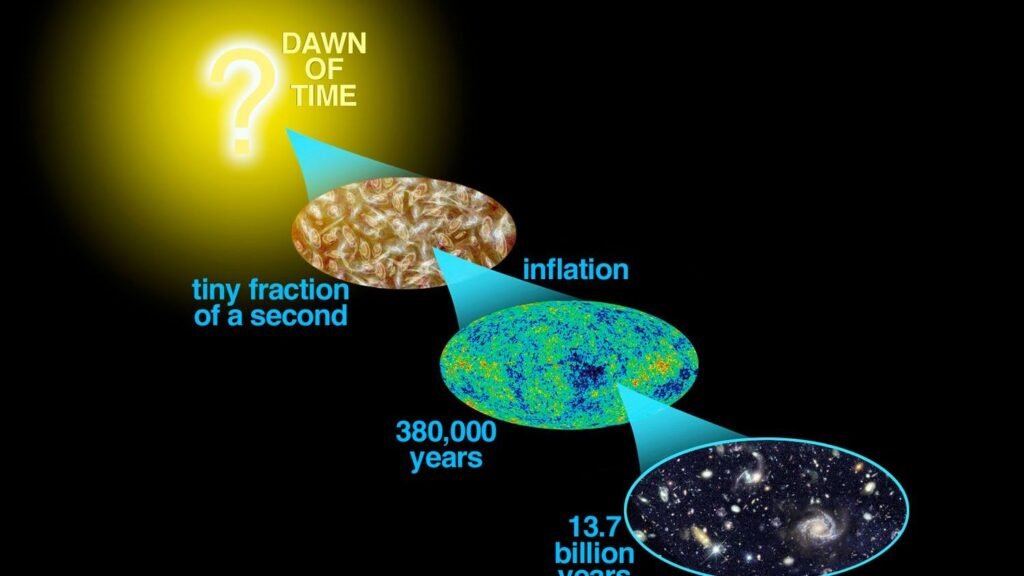
When cosmologists traced the universe back in time, the early moments looked suspiciously neat and uniform. Regions of space that should never have had time to “talk” to each other somehow ended up with nearly identical properties. To resolve this, theorists proposed that in the tiniest fraction of a second after the Big Bang, the universe underwent a mind-boggling growth spurt called inflation, expanding faster than anything we’ll ever see again.
This rapid stretching would smooth out irregularities and explain why the cosmos looks so uniform on huge scales, while tiny quantum fluctuations got blown up into the seeds of galaxies. Measurements of the cosmic microwave background, the faint afterglow of the Big Bang, line up remarkably well with this picture. Yet the details of what drove inflation, and whether it might connect to ideas like multiverses, remain hotly debated. It’s a reminder that the universe’s first moments may have been far stranger than the already bizarre reality we inhabit now.
Exoplanets and the Possibility of Exotic Worlds
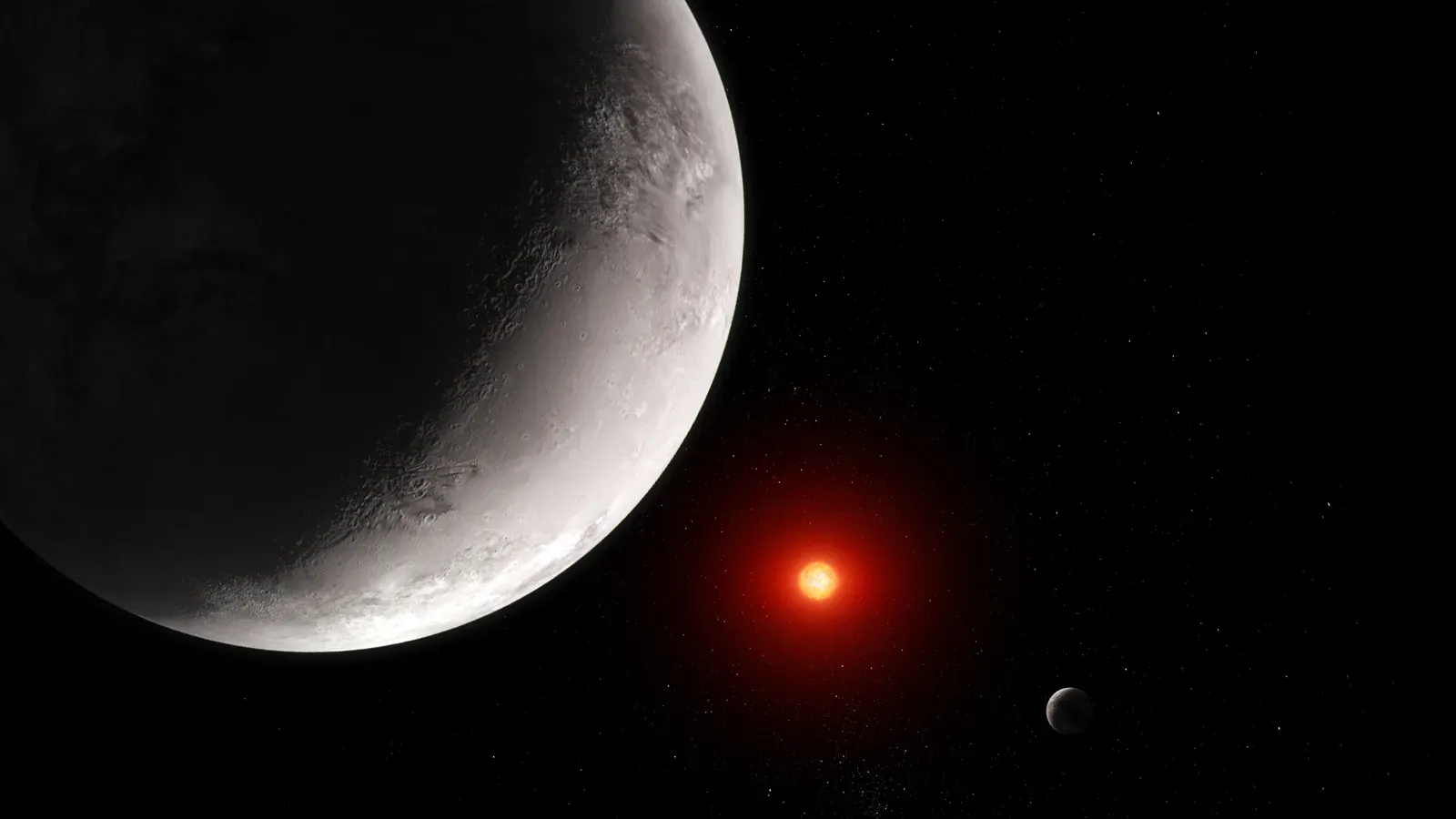
Not long ago, planets around other stars were mostly the stuff of speculation and imagination. Now, astronomers have confirmed thousands of exoplanets, with many more candidates waiting to be fully checked. What’s striking is not just how many there are, but how wildly different they can be from the planets in our own solar system. We’ve found “hot Jupiters” hugging their stars in blistering orbits, super-Earths with masses several times that of our planet, and worlds that may be largely covered in deep global oceans.
Some exoplanets orbit in the so-called habitable zone, where temperatures might allow liquid water to exist on the surface, at least in theory. Others have densities that suggest exotic compositions, like giant balls of ice or rock wrapped in thick, crushing atmospheres. As detection methods improve, we’re beginning to probe exoplanet atmospheres for signs of water vapor, clouds, or even molecules associated with life processes. The range of possible worlds out there is so vast that our once-comfortable picture of “what a planet is” feels almost laughably narrow now.
Quantum Superposition: Objects in Many States at Once
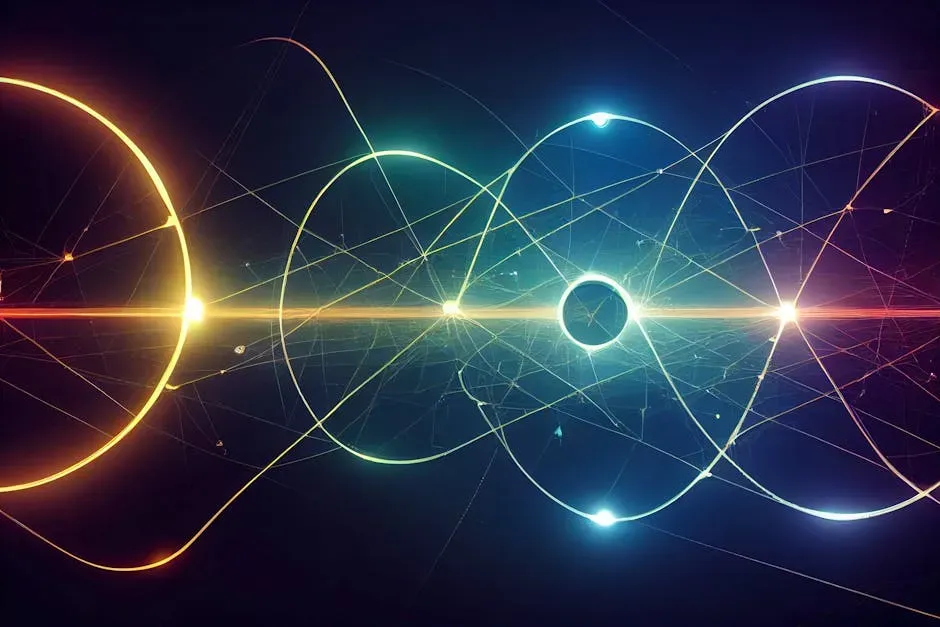
At the heart of quantum mechanics lies a concept that’s as unsettling as it is central: superposition. A quantum object, like an electron, doesn’t simply have a definite position or state before you measure it. Instead, it exists in a blend of possibilities, a kind of overlapping stack of maybes, all at once. Only when a measurement is made does this cloud of possibilities “collapse” into a single, definite outcome that we can record and talk about.
This isn’t just philosophical hand-waving; it’s been demonstrated in countless experiments, including versions where increasingly large molecules show wave-like behavior. The strange logic of superposition powers technologies like quantum computers, which exploit many simultaneous states to perform certain calculations far more efficiently than classical machines. But it also raises uncomfortable questions: what exactly counts as a measurement, and why does reality seem to snap into focus only when we look? In a very real sense, the quantum world suggests that what “is” depends on how and whether we ask.
Conclusion: Living in a Universe That Refuses to Be Normal
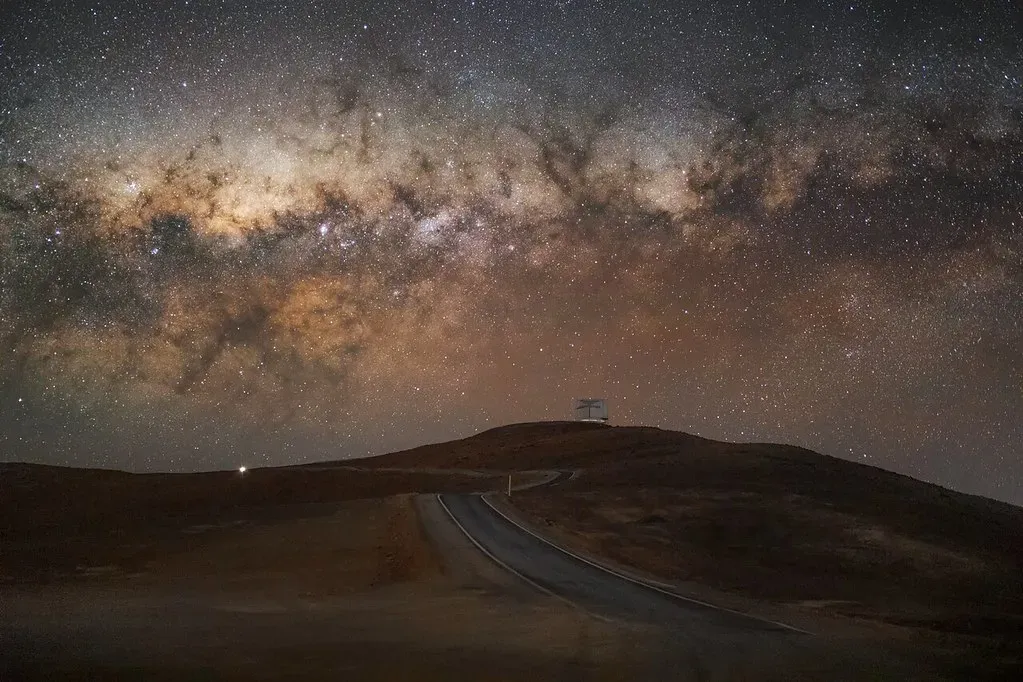
When you line these discoveries up next to each other, a pattern emerges that’s hard to ignore. The universe consistently refuses to behave in ways that match our everyday instincts. Space is filled with invisible matter and mysterious energy, time bends, “empty” vacuum seethes with activity, and the very act of looking at something can change what you find. It’s not that reality is random or lawless; it’s that its rules operate on a level our brains didn’t evolve to intuitively grasp.
I remember the first time I tried to really understand entanglement and ended up pacing my apartment at midnight, half convinced I’d misunderstood everything. That feeling – of the floor shifting just a little under your feet – is exactly what good science does when it brushes up against the deepest layers of reality. We can either cling to old, comfortable notions, or accept that the universe is stranger, richer, and more intricate than the neat stories we grew up with. Knowing all this, the real question might be: which of today’s “impossible” ideas will tomorrow’s experiments quietly prove right – what would you bet on?