
Earth has a habit of refusing to play by its own rules. You can study plate tectonics for decades, build supercomputers to model the mantle, and still come up empty when confronted with certain formations that simply shouldn’t exist, or at least shouldn’t look the way they do. These aren’t fringe mysteries whispered about on obscure forums. They’re structures that serious geologists and geophysicists openly acknowledge as puzzling, some of which are reshaping how you understand the planet beneath your feet.
What makes these formations genuinely unsettling isn’t that they lack explanations. It’s that every explanation so far either falls apart under scrutiny or opens up new, deeper questions. These are six of the most striking examples.
The Richat Structure: Earth’s Mysterious Bull’s-Eye
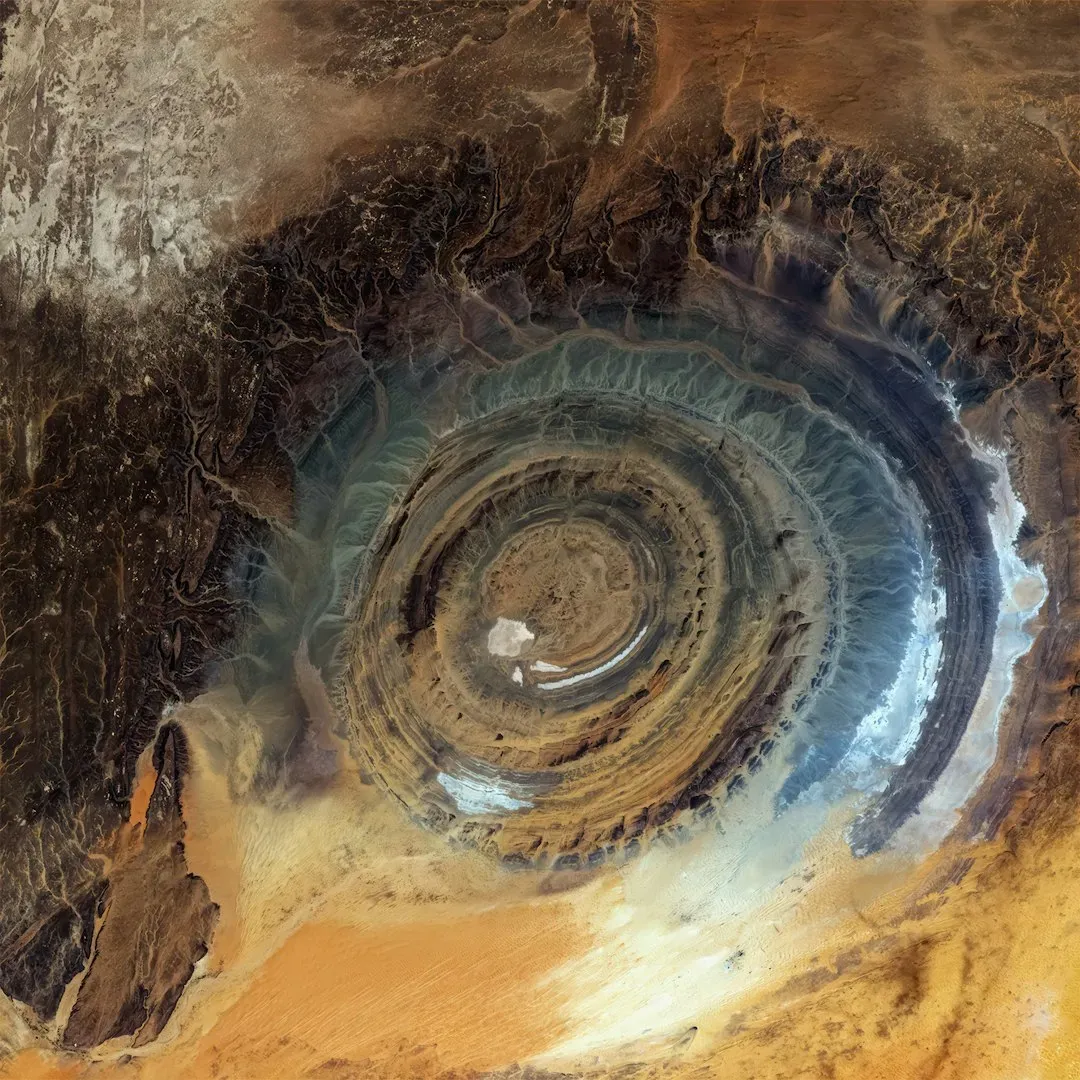
If you were looking down from orbit and spotted a perfectly concentric circle nearly 30 miles wide carved into the Sahara Desert, you’d probably assume something catastrophic had happened there. The Eye of the Sahara, also known as the Richat Structure, is a 28-mile-wide site of huge concentric circles found in the western African nation of Mauritania. The mysterious formation is large enough for early space missions to have used it as a landmark.
Geologists initially thought the site was created by an asteroid impact, but there isn’t enough melted rock among the rings to support this theory. Similarly, there’s no evidence to suggest a volcanic eruption. More recently, geologists have proposed that it could be an eroded, collapsed geological dome, formed some 100 million years ago when the supercontinent Pangea broke up. Bolstering this theory are ancient rocks found on the surface, which originated as much as 125 miles beneath the Earth’s crust and before life existed on Earth. Research continues, and no single explanation has yet closed the case.
The Great Unconformity: Over a Billion Years of Missing Rock
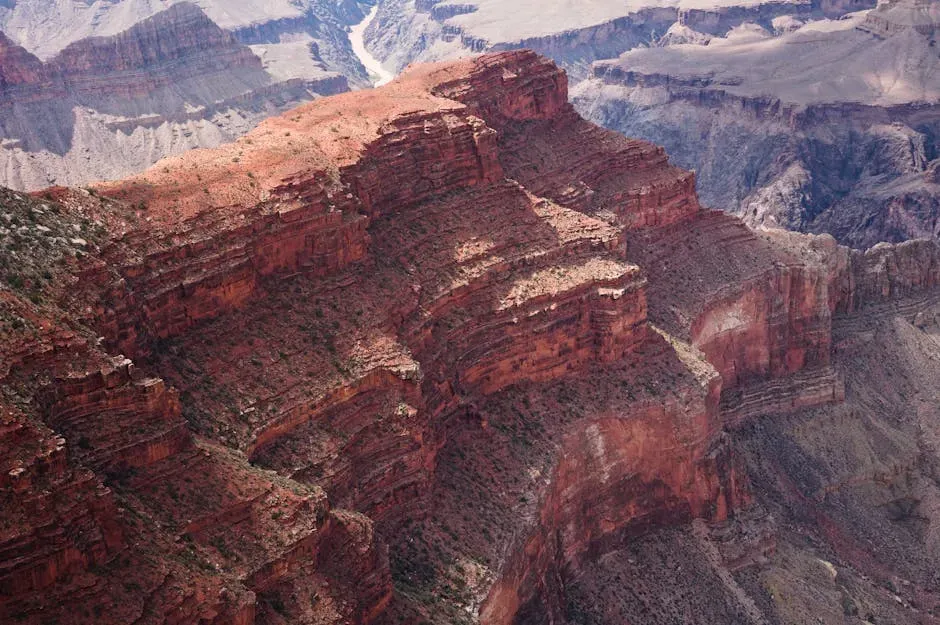
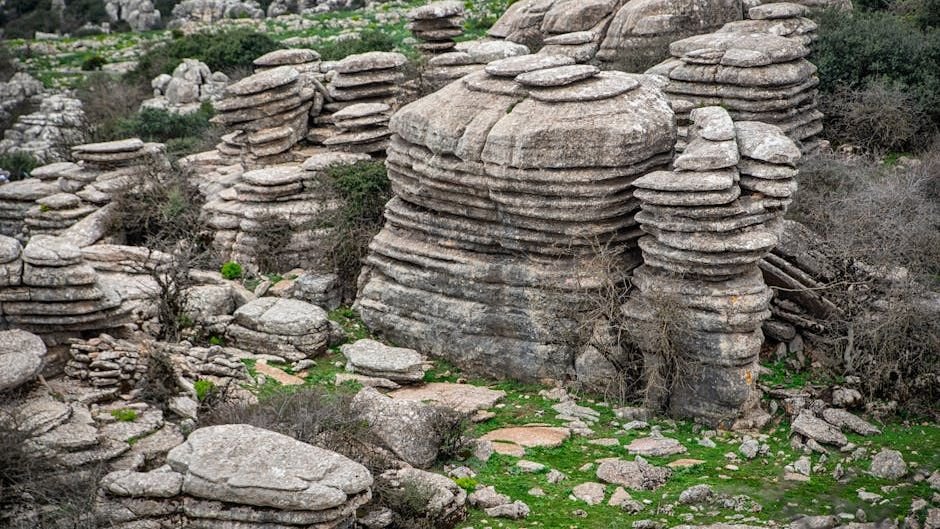
Imagine picking up a history book only to find that hundreds of pages in the middle have been ripped out, with no note explaining what happened. That’s essentially what you encounter when you study the Great Unconformity. First noticed by John Wesley Powell in 1869 in the layers of the Grand Canyon, the Great Unconformity accounts for more than one billion years of missing rock in certain places. In the Grand Canyon, for instance, 500-million-year-old rocks sit directly on top of rocks that are more than 1 billion years older.
Even stranger, the Great Unconformity shows up in rocks worldwide, and always in rocks from the same era: about 550 million years ago and earlier. Two main theories have competed for decades. One explanation is that these missing rocks were carved away during a Snowball Earth event about 700 million years ago, when much of the planet was covered in glaciers. Another theory is that the formation around that same time of a supercontinent known as Rodinia lifted up the older rocks in a burst of mountain building, exposing them to weathering and erosion. The trouble is that neither theory fits perfectly everywhere, leading some researchers to wonder whether what you’re calling one event was actually many separate ones.
The Mantle Anomalies Beneath the Pacific Ocean
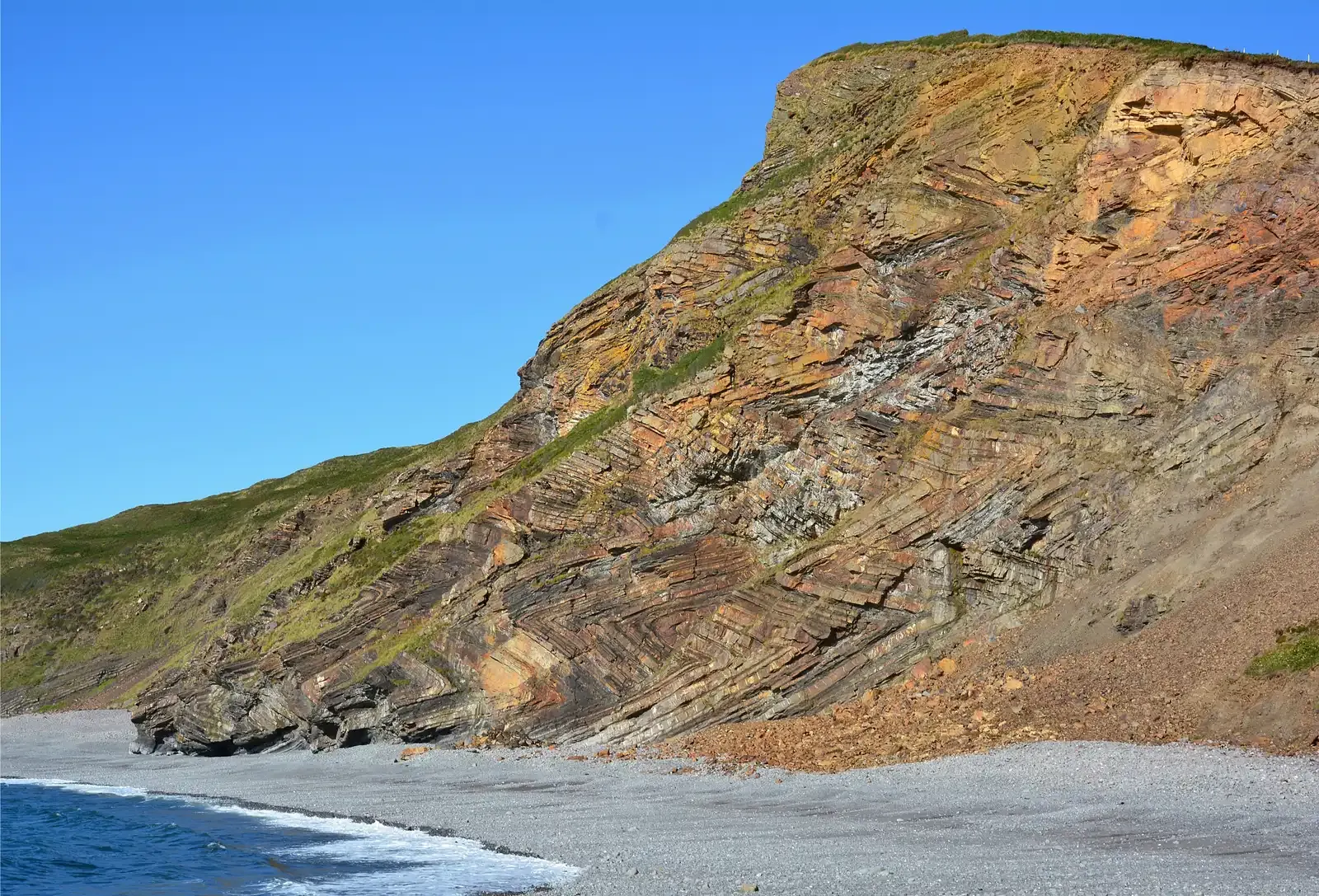
Deep beneath the floor of the Pacific Ocean, hundreds of miles underground, lie enormous structures that have left geophysicists genuinely puzzled. Researchers have identified massive, unexplained structures deep beneath the Pacific Ocean, challenging existing theories about Earth’s formation and evolution. These anomalies, detected at depths of 900 to 1,200 kilometers, defy conventional plate tectonics explanations. The discovery was made using full-waveform inversion, a cutting-edge seismic imaging technique that analyzes the complete spectrum of earthquake waves. This method, combined with the computational power of the Piz Daint supercomputer, provided unprecedented insights into Earth’s mantle.
The structures could be remnants of ancient silica-rich materials from Earth’s early mantle or zones of accumulated iron-rich rocks. Their presence in regions without recent tectonic activity has left scientists puzzled about their origins and composition. What makes this particularly striking is that the findings suggest that Earth’s mantle is far more complex and dynamic than previously thought, challenging the idea that seismic anomalies are primarily linked to subduction. You are, in effect, looking at structures that sit in places they have no clear reason to be in.
The Fairy Circles of Namibia
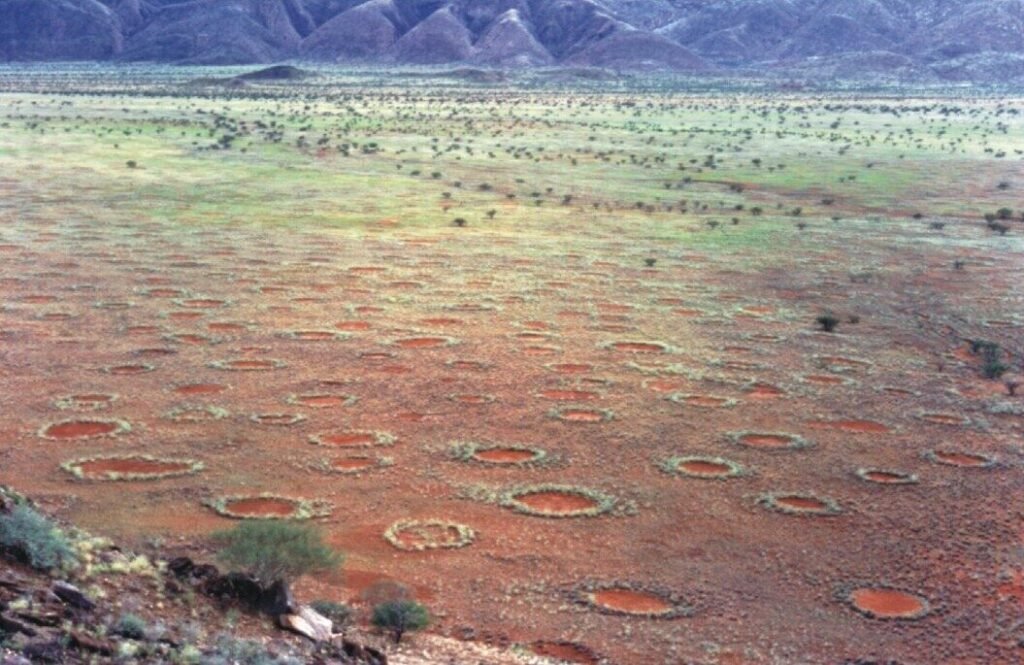
Spread across a vast stretch of the Namib Desert, millions of nearly perfect circular bare patches sit ringed by grass, arranged with an eerie regularity that looks almost deliberate. Until 2014, the phenomenon was only known to occur in the arid grasslands of the Namib Desert in western parts of Southern Africa, being particularly common in Namibia. The circles occur in a band lying about 100 miles inland and extending southward from Angola for some 1,500 miles down to the Northwestern Cape province of South Africa. In central Namib, the mysterious circles range from about 5 to nearly 20 feet in diameter. In northwestern Namibia, they are almost four times as large and can reach up to 82 feet wide.
Ecologists have hypothesized about why fairy circles appear in arid landscapes, and these can be grouped into two main theories: a termite origin hypothesis, and a vegetation self-organization hypothesis. Researchers show that the grasses within the fairy circles died immediately after rainfall, but termite activity did not cause the bare patches. Instead, continuous soil-moisture measurements demonstrate that the grasses around the circles strongly depleted the water within the circles and thereby likely induced the death of the grasses inside the circles. Yet the debate hasn’t truly settled. To date, there is still no universally accepted theory as to the source of these curious patterns.
The Mima Mounds: Thousands of Identical Earthen Bumps
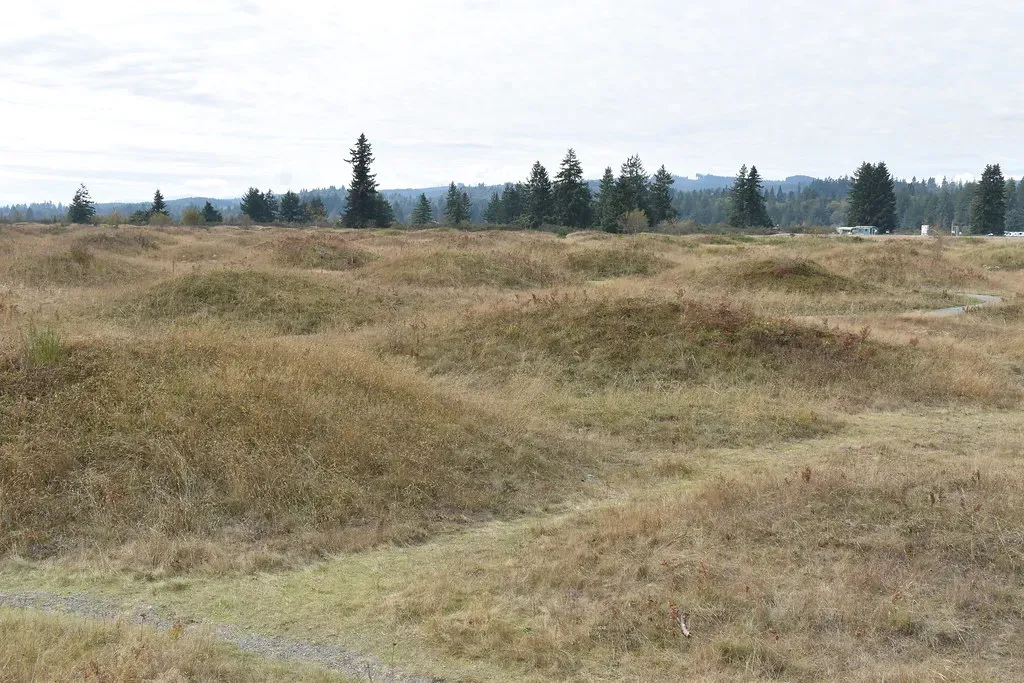
If you wandered into the grasslands near Olympia, Washington, you’d notice the ground doing something strange. The Mima Mounds are mysterious, uniform undulations in the grasslands of Washington State near Olympia, ranging from 10 to 164 feet in diameter and up to 6.5 feet tall. When American explorer Charles Wilkes set eyes on them in 1841, he believed they were human-made burial mounds and had three of them excavated, only to find them filled with loose stones. Similar mounds are found from California to Colorado and have puzzled naturalists for years.
The problem isn’t just what made them. It’s their age. Scientists suggest that some of the mounds may be 30,000 years old, which makes decoding them complex; humans are believed to have arrived in North America several thousand years later than that. Proposed explanations have ranged from glacial activity to pocket gophers rearranging soil over centuries. Each theory runs into evidence it can’t quite account for. The mounds remain one of North America’s most understated geological oddities, sitting quietly in plain sight, still keeping their secret.
The Giant Crystal Cave of Naica, Mexico
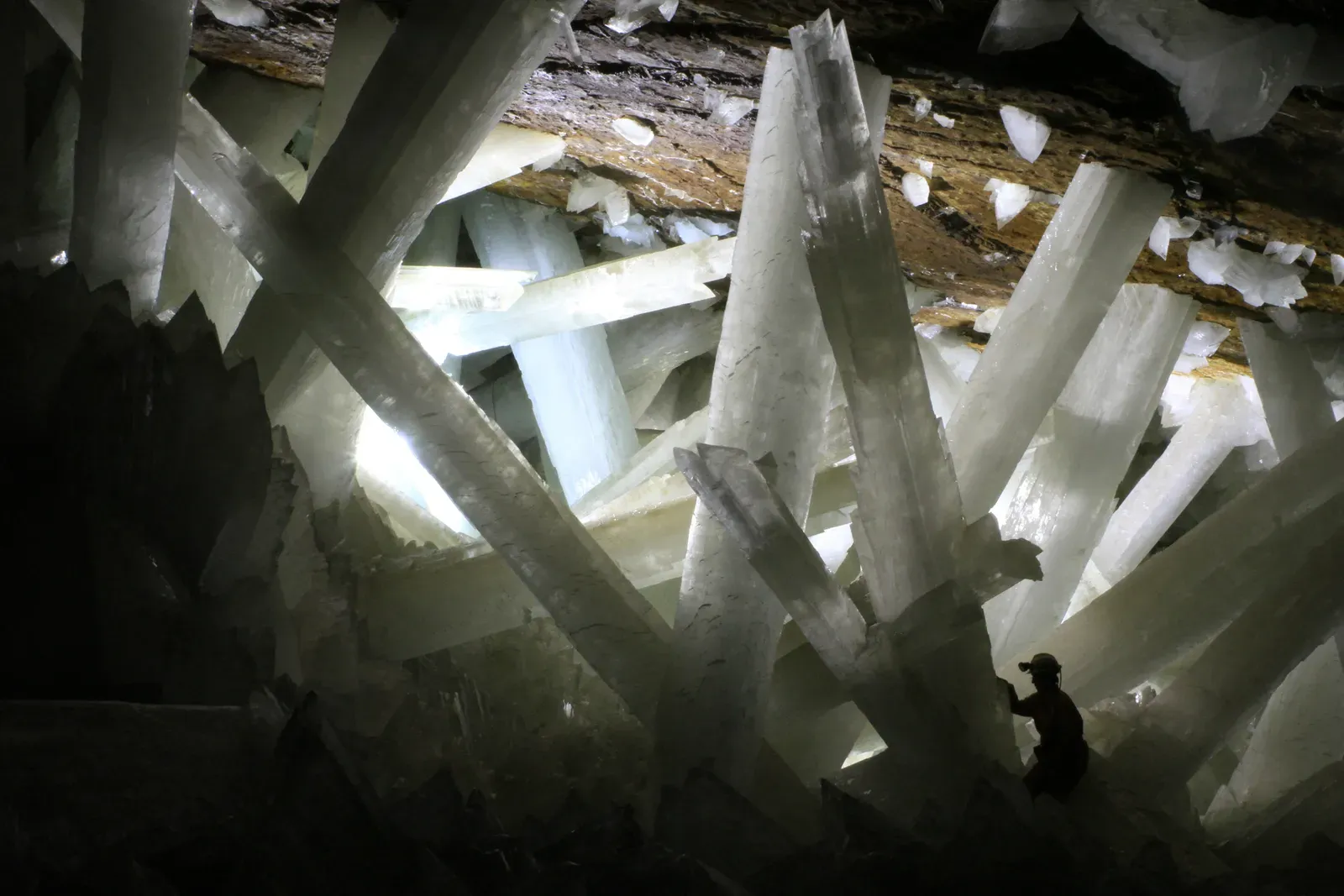
In the town of Naica in northern Mexico, deep within an active lead and silver mine, you’d find yourself in a chamber that looks almost impossible. The otherworldly crystals in the Cave of the Crystals in Mexico can reach sizes larger than houses, by far the largest such crystals known on the planet. They apparently grow at incredibly slow rates, gypsum formations that take as long as a million years to reach more than two stories tall. The cave sits roughly 300 meters underground and was only discovered in the year 2000 when miners accidentally broke through its wall.
The crystal formations jut out from every angle in the horseshoe-shaped cave. While scientists can confidently point to the mineral-rich waters inside the cave as the reason the crystals grew in the first place, they can’t explain their massive size. Most crystal structures don’t grow to the enormous dimensions of the ones found in the Naica cave. In fact, even crystals in neighboring caves started by the same mineral water don’t grow to nearly the same scale. The temperature inside hovers around 58 degrees Celsius with humidity near saturation, making extended human exploration nearly impossible. What you’re left with is a geological marvel that science can partly explain but can’t fully account for.
A Final Thought
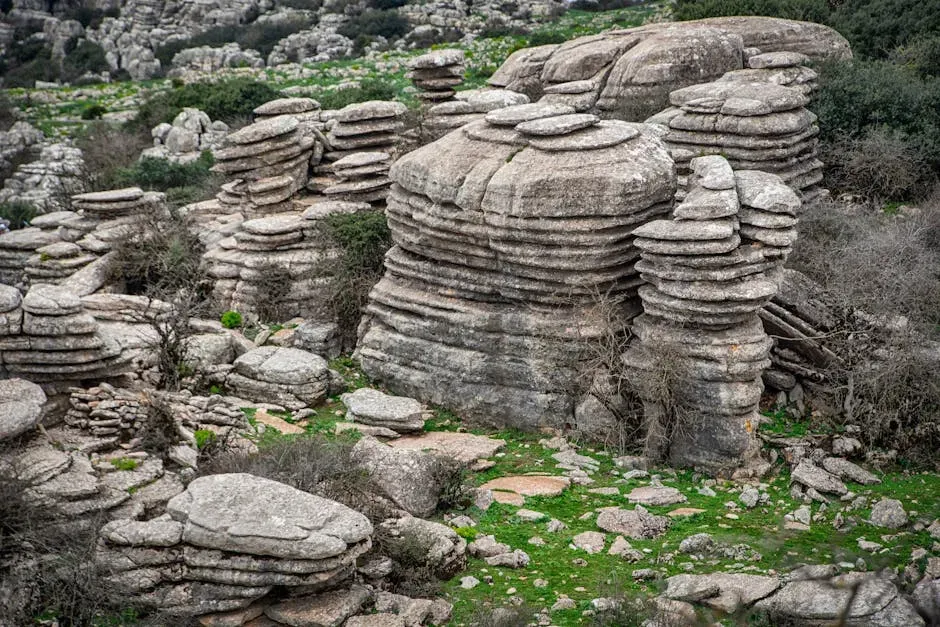
What ties all six of these formations together isn’t chaos or supernatural origin. It’s the honest limits of current knowledge. Scientists aren’t hiding answers; in many cases, the tools to find those answers are only just becoming available, from supercomputer-driven seismic imaging to precise isotopic dating of ancient rock.
These formations should probably be read less as proof that science has failed and more as a reminder of how young the discipline of geology really is relative to the age of the planet it’s studying. The mystery of the Great Unconformity is inherently tied to two of geology’s other great enigmas: the rise and fall of Snowball Earth and the sudden emergence of complex life in the Ediacaran. Every unexplained structure is connected to other open questions, like threads in a web that spans billions of years.
You’re living on a planet that is still revealing itself. That’s not a problem to solve so much as a condition to appreciate.