Think about this for a moment. You have walked on solid ground your entire life, marveled at mountains, and stared out at oceans. Yet the most breathtaking geological features on this entire planet are ones you will never lay eyes on with the naked eye. They sit hidden in crushing darkness, miles beneath the surface of the sea, operating on timescales we can barely comprehend.
For most of human history, the ocean floor has been one of the least explored places on Earth. Even today, scientists estimate that more than roughly four fifths of the world’s oceans remain unmapped or unexplored. That is genuinely humbling. We have better maps of the surface of Mars than we do of our own ocean floor. So if you thought you knew this planet pretty well, get ready to rethink that. Let’s dive in.
The Mariana Trench: Earth’s Most Extreme Geological Scar
![The Mariana Trench: Earth's Most Extreme Geological Scar (self-made replacement designed for en:Image:Mariana_trench_location.jpgusing data from NOAA[dead link]., CC BY 2.5)](https://nvmwebsites-budwg5g9avh3epea.z03.azurefd.net/dws/945d7b653190d64e68f8748549619e0e.webp)
using data from NOAA[dead link]., CC BY 2.5)
Honestly, no list about underwater geological wonders could start anywhere else. The Mariana Trench is located in the western Pacific Ocean, about 200 kilometers east of the Mariana Islands, and it is the deepest oceanic trench on Earth. It is crescent-shaped and measures about 2,550 kilometers in length and 69 kilometers in width. If you can picture a scar carved into the face of the planet, this is it.
The maximum known depth is nearly 11,000 meters at the southern end of a small slot-shaped valley known as the Challenger Deep. The deepest point of the trench is more than 2 kilometers farther from sea level than the peak of Mount Everest. Let that sink in. Even Everest would be swallowed whole.
The Mariana Trench was formed through a process called subduction. Earth’s crust is made up of comparably thin plates that float on the molten rock of the planet’s mantle. While floating on the mantle, the edges of these plates slowly bump into each other and sometimes even collide head-on. When two plates crash into each other, an oceanic plate plunges downward into the mantle while the other plate rides up over the top. This movement creates a trench where the descending oceanic plate drags down the edge of the overriding plate.
At the bottom of the trench, the water column above exerts a pressure of roughly 1,086 bar, approximately a thousand times the standard atmospheric pressure at sea level. The temperature at the bottom is just 1 to 4 degrees Celsius. Yet life still finds a way down there. Despite the extreme pressures and lack of light at such depths, the trench hosts unique ecosystems, including various life forms such as microbes, amphipods, and foraminifera, some of which thrive near underwater mud volcanoes. It’s nothing short of astonishing.
Deep-Sea Hydrothermal Vents: Underwater Chimneys of Life
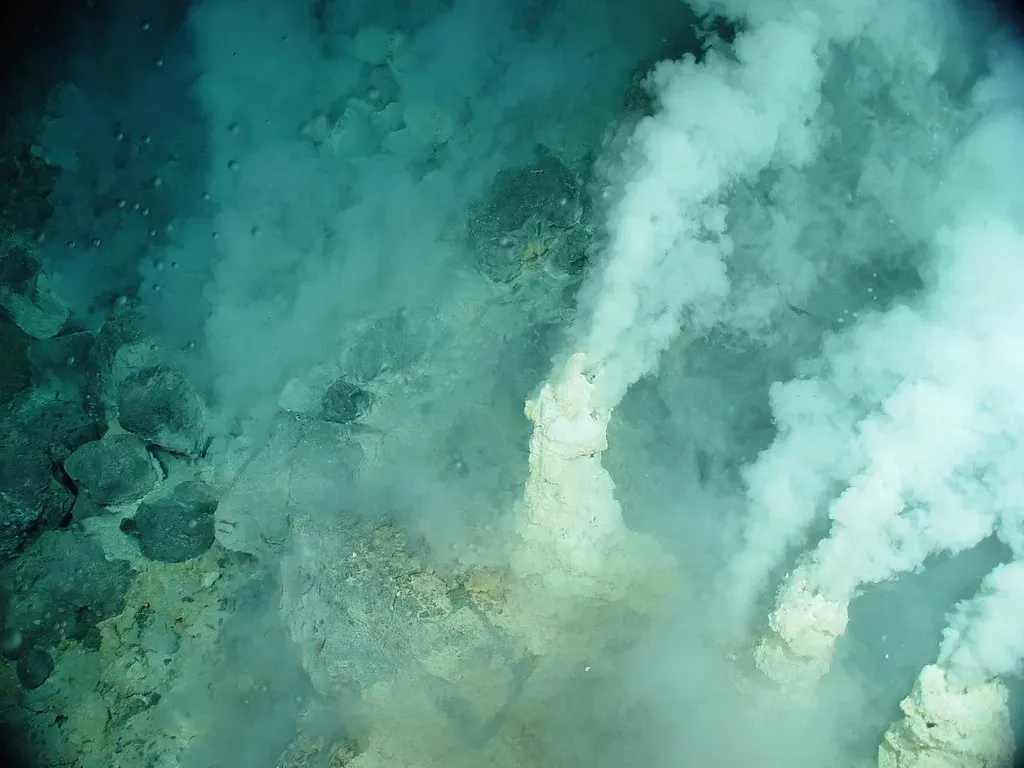
Here is the thing about hydrothermal vents. They should not exist as ecosystems. No sunlight reaches them. The temperatures are extreme. The chemistry is, by most standards, toxic. Underwater volcanoes at spreading ridges and convergent plate boundaries produce hot springs known as hydrothermal vents. Scientists first discovered hydrothermal vents in 1977 while exploring an oceanic spreading ridge near the Galapagos Islands. Before that discovery, no one believed complex life could exist without sunlight.
In 1977, scientists exploring an oceanic spreading ridge near the Galapagos Islands made a stunning discovery: openings in the Pacific Ocean seafloor with warm, chemical-rich fluids flowing out. Later trips revealed previously unknown organisms and entire ecosystems around the vents, thriving in the absence of sunlight, a phenomenon that scientists did not think was possible. These discoveries fundamentally changed our understanding of life on Earth.
Seawater in hydrothermal vents may reach temperatures of over 700 degrees Fahrenheit. Hot seawater in hydrothermal vents does not boil because of the extreme pressure at the depths where the vents are formed. Think of it like a pressure cooker the size of a building. The sheer geological forces at play here are extraordinary.
Researchers discovered the first hydrothermal vent in 1977 about 400 kilometers northeast of the Galapagos Islands. Most vent deposits are a few meters tall, but one chimney off the Oregon coast reached the towering height of a 15-story building and was dubbed “Godzilla.” And the life these structures support? The food web in the ecosystems of hydrothermal vents is 300 to 500 times more concentrated than that of the surrounding waters. It is based not on photosynthesis but on bacteria that use the energy found in hydrogen sulfide, a chemical poisonous to most animals.
Underwater Brine Pools: The Ocean’s Own Deadly Lakes
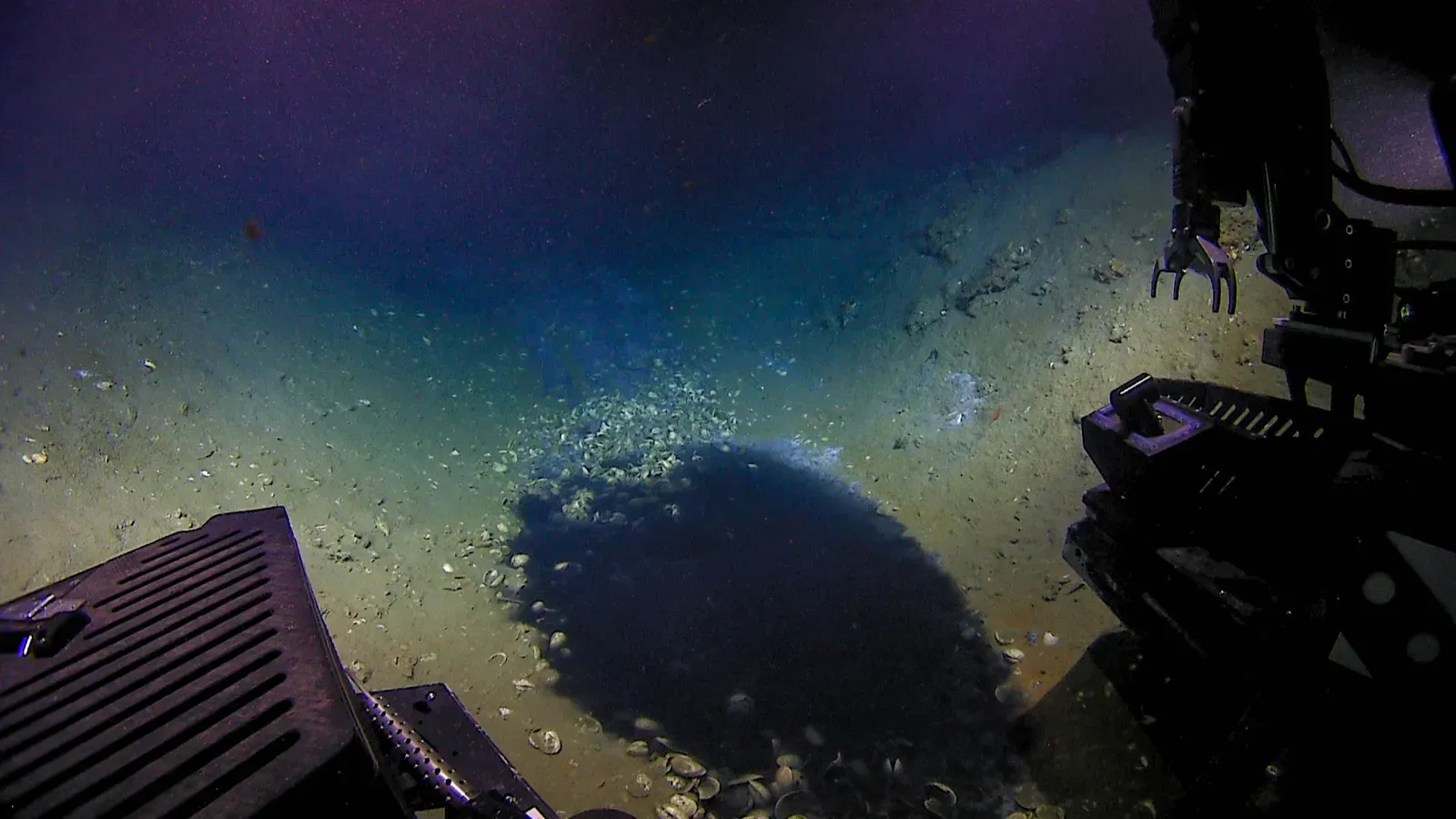
I know it sounds crazy, but there are lakes sitting at the bottom of the ocean. Real, actual lakes, with their own distinct surfaces, shorelines, and slow-moving waves, all in complete darkness. Brine pools are some of the rarest and most extreme environments on Earth, underwater lakes so salty and dense they form their own surfaces, shorelines, and slow-moving waves in complete darkness. Three to eight times saltier than normal seawater, the brine becomes so dense that it sinks into seafloor depressions and remains unmixed, forming a separate, self-contained body of water within the ocean itself.
Brine pools are among the most haunting and scientifically fascinating features hidden within the deep ocean. These underwater lakes, formed from hypersaline, mineral-rich brine trapped in seafloor depressions, create environments so hostile that any living creature that touches them dies almost instantly. Yet, paradoxically, these same conditions possess remarkable preservation powers, keeping bodies and biological materials intact for astonishingly long periods.
Due to the methods of their formation and lack of mixing, brine pools are anoxic and deadly to aerobic organisms, including most eukaryotes and multicellular organisms. When an organism enters a brine pool, it attempts to breathe the environment and experiences cerebral hypoxia due to the lack of oxygen and toxic shock from the hypersalinity. Organisms that cannot surface long enough to retreat to the rim quickly die. When observed by remotely operated vehicles, brine pools are found to be littered with dead fish, crabs, amphipods, and various other organisms that ventured too far into the brine.
Only a small number of brine pools have ever been documented, and they are concentrated in just three regions of the world: the Gulf of Mexico, the Mediterranean Sea, and the Red Sea. Still, right at the toxic boundary, life gathers with surprising abundance. Bacteria in the gills of mussels living on the rims of brine pools feed off the methane and other gases that seep from the ocean floor. This symbiotic relationship between bacteria and mussels means deadly brine pools are surrounded by life.
Methane Hydrate Deposits: Fire Ice on the Ocean Floor
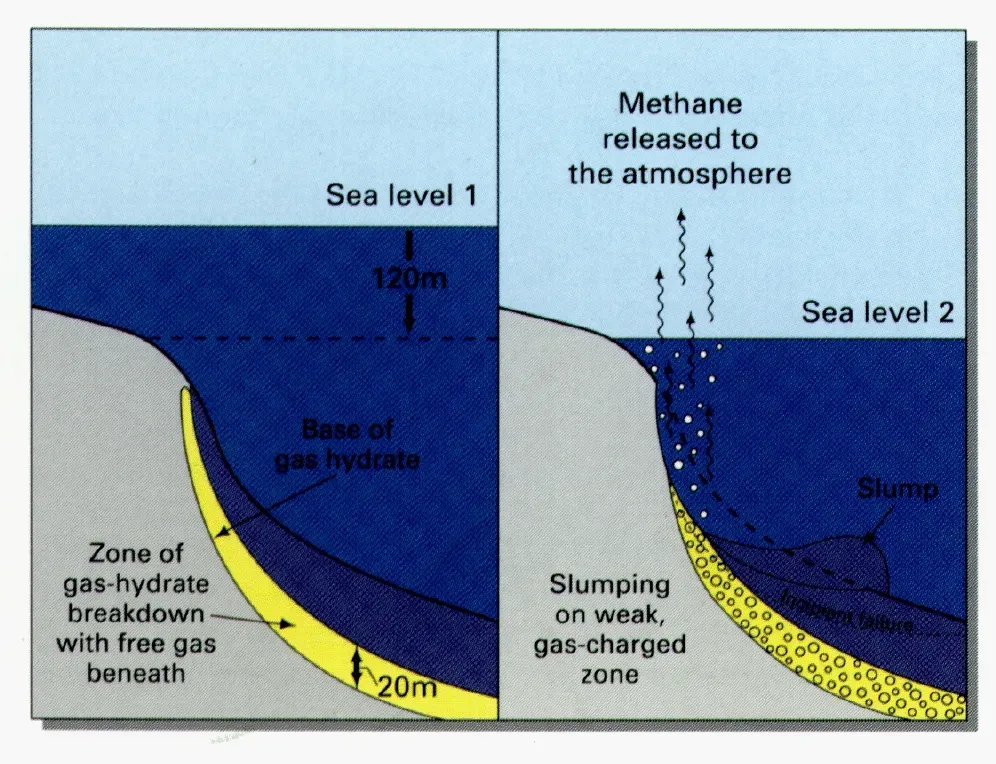
This one still blows my mind every time I think about it. Deep beneath the ocean floor, scientists have discovered strange deposits known as methane hydrates, crystalline structures of water and methane gas. At first glance, they look like ice, but when lit, they can burn like fire. That is not a metaphor. You can literally hold a chunk of ocean-floor ice and set it on fire.
Methane hydrate, also called methane ice or fire ice, is a solid compound in which a large amount of methane is trapped within a crystal structure of water, forming a solid similar to ice. Originally thought to occur only in the outer regions of the Solar System, significant deposits of methane clathrate have been found under sediments on the ocean floors of the Earth. The universe, it turns out, hid one of its strangest phenomena right here in our own ocean.
These hydrates may hold more carbon than all known fossil fuels combined, making them a potential energy source. However, they also pose environmental risks, as sudden releases of methane could accelerate climate change. It is hard to say for sure how this energy source will ultimately be handled, but the stakes are enormous either way.
Relatively modest changes in global ocean temperatures or sea level could trigger a massive release of oceanic methane. If a change in ocean bottom pressure or a rise in water temperatures passes a certain threshold, sizable methane hydrate deposits could decompose rapidly and release a large quantity of heat-trapping gas back into the atmosphere. This scenario has been proposed as a possible cause for some past episodes of rapid global warming. Think of it as a geological ticking clock, quiet, invisible, and enormous.
The Hidden Ocean Inside the Earth’s Mantle
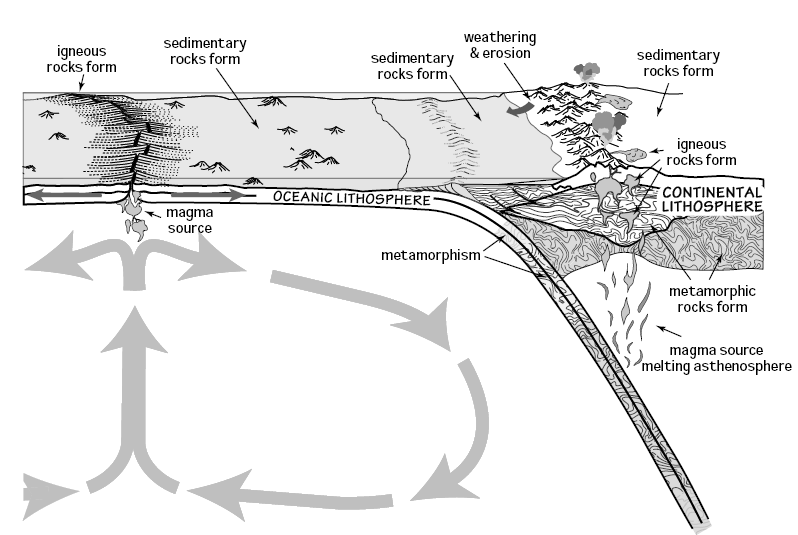
Let’s be real. When you think of oceans, you think of the surface. But what if you were told there is an ocean so vast it dwarfs every body of water on Earth’s surface, and it exists not above the seafloor but far, far beneath it? A team working with data from thousands of seismic stations has found evidence of an enormous reservoir of water about 700 kilometers beneath Earth’s surface, locked inside deep mantle rock and estimated to hold roughly three times as much water as all the surface oceans combined.
This massive subterranean store is not an underground lake or ocean in the traditional sense, but rather water trapped inside the mineral ringwoodite, a sponge-like crystal buried deep within the Earth’s mantle. The discovery, detailed in a study published in Science, not only reshapes how we understand Earth’s internal water cycle, but could also redefine our broader view of planetary geology, both on Earth and beyond.
This underground store is not a free-flowing sea. It sits inside a blue mineral called ringwoodite that forms under the extreme pressure of the mantle’s transition zone between the upper and lower mantle. In that zone, water is bound to the crystal structure of the rock at the molecular level, more like a planet-sized sponge than a buried lake. The analogy of a sponge is perfect here. Not a drop of liquid water in sight, yet enormous quantities of it locked in stone.
This vast underground reservoir suggests a whole-Earth water cycle, where water moves not just across the surface, but also between the crust, mantle, and core over millions of years. This internal flow may help regulate volcanic activity, plate tectonics, and even Earth’s magnetic field, processes that affect life on the surface but are driven by interactions deep inside the planet. It changes everything we ever thought we knew about how water behaves on this planet.
Conclusion
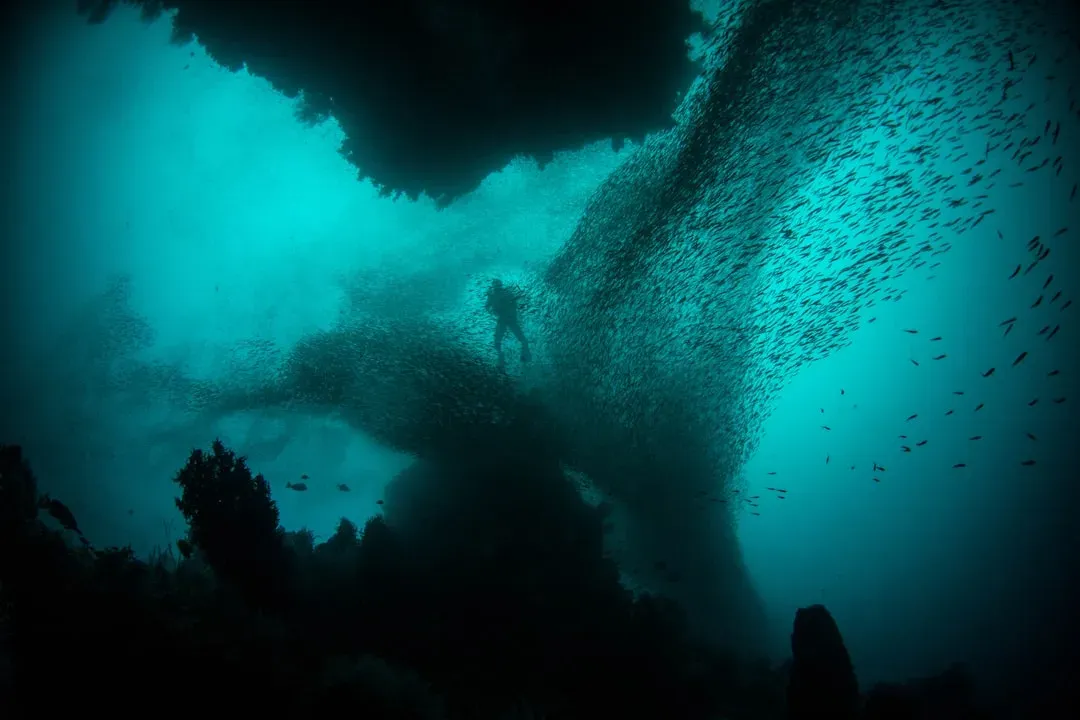
The ocean has always seemed like the final frontier of our planet, and honestly, it still is. From the bone-crushing depths of the Mariana Trench and the alien ecosystems of hydrothermal vents, to the deadly elegance of brine pools, the fire-ice mystery of methane hydrates, and a hidden ocean buried in rock hundreds of kilometers below your feet, these five geological wonders are a reminder of just how little we truly know about the world we live on.
Each of these features is not just spectacular for its own sake. Together, they reshape how we understand water cycles, life’s resilience, planetary formation, and even the possibility of life on other worlds. The deeper we look, the more Earth reveals itself to be stranger and more magnificent than we imagined.
The most humbling thought? Despite the human descents and robotic explorations to date, our oceans remain relatively unexplored. In fact, only less than five percent of the ocean has been explored. Which means the greatest geological discoveries are almost certainly still out there, waiting in the dark. What do you think we will find next? Drop your thoughts in the comments below.